White Flour
The brightest warm white almost nobody has heard of, reviewed honestly: what it does that Extra White and Alabaster can't, and where its warmth still needs help.

Jessica has spec'd whites and neutrals for more than 300 rooms and keeps a sample wall of painted drawdowns in her studio. Every color review is checked against real reader rooms in the comments and re-tested when a formula changes. About the testing process →
- 1Classic Gray74
- 2Alabaster82
- 3White Flour87
- 4Sleek White92
- 5Ultra Pure White97
The Fast Verdict
White Flour solves a problem most whites can't: it is genuinely bright — LRV 87, brighter than Alabaster — and it still carries real warmth instead of going stark the way most whites do once they climb that high. It is not a color anyone requests by name; it shows up as the quiet answer when a room needs a soft, floury near-white that reads clean without reading cold. Nobody is writing think-pieces about it, and that is fine — it does not need the attention to do its job.
Ceilings and crown molding in warm-toned rooms · trim you don't want competing with the wall color · bright rooms that still want warmth, not a stark white · cabinets that should read soft, not clinical
You want a true, neutral white with zero warmth for a gallery look · your room is dim, north-facing, and runs on cool LEDs · you're placing it right next to a cooler SW white like Extra White or Pure White · you want a color with a searchable identity and design pedigree
- Genuinely bright (LRV 87) while keeping real, honest warmth
- Excellent ceiling and trim white for warm-toned rooms
- Cabinets read soft and clean, not clinical
- Flatters warm wood, brass, and cream without effort
- No trend baggage — it isn't going to look dated in five years
- Almost no name recognition, so real owner reviews are hard to find
- Reads slightly dingy right next to cooler SW whites like Extra White
- Too warm for a stark, gallery-white, high-contrast look
- Its warmth still needs decent light — dim, cool-lit rooms flatten it
What Color Is White Flour, Really?
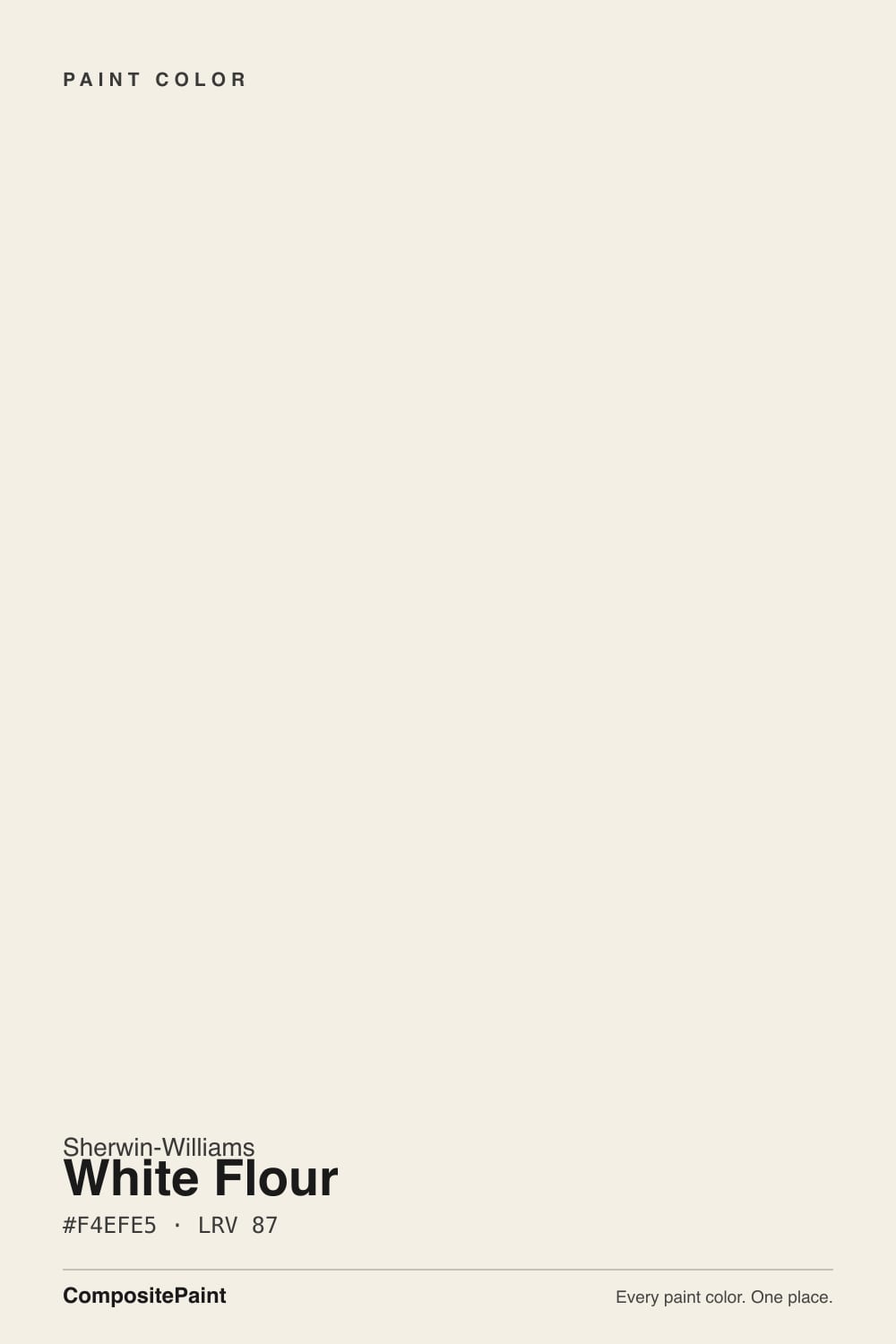
White Flour is a warm, wheat-cream near-white — the name is literal, right down to the soft powdery undertone. What makes it worth a second look is the LRV: at 87 it reflects more light than Alabaster (82), Snowbound (83), or Pure White (84), which normally means a color has been diluted toward neutral or cool to hit that brightness. White Flour keeps its warmth anyway. Most bright near-whites lean cool on purpose — Extra White, Pure White, Chantilly Lace — because warmth and high reflectance usually fight each other. White Flour is one of the rare colors that gets both.
That combination should make it a headline color in the SW deck, and it just isn't. It sits quietly behind Alabaster, Extra White, and Pure White in search volume, in designer mentions, in "best whites" round-ups — not because it underperforms them, but because those three already own the conversation and nobody went looking for a fourth option. If you found this page, you likely found the color on a fan deck or a contractor's suggestion, not a trend list. That is an honest description of where White Flour sits: capable, dependable, and almost entirely unfamous.
Undertone in one line: warm, yellow-cream with a soft peachy edge that surfaces in strong afternoon sun or next to a whiter trim — never gray, never blue. It reads closer to unbleached flour or raw linen than to any bright white you'd call clinical. If your sample looks flat or slightly gray, that's the room's light working against it, not the paint changing character.
Where It Shines
Give it real daylight and it does something few whites manage: it stays bright without going sterile. Ceilings are its best-kept secret — most warm whites read too creamy overhead and most bright whites read too blue-white against a warm wall color, and White Flour splits the difference. Trim is its second home, for the same reason: it disappears into warm wall colors instead of drawing a hard line the way a starker white would.
Where It Fails
White Flour doesn't have a famous failure story the way some colors do — it's too quiet for that. But the regrets that do show up follow three predictable patterns, and all three come from expecting it to be a different kind of white than it is.
White Flour is bright, but it is not neutral — the warmth is real and it will show, especially against a crisp, high-contrast, gallery-style room. If the goal is a color that reads as pure, cold white next to black frames and chrome, this isn't it; look at Extra White instead.
This is the version of the White Dove problem: put White Flour beside a cooler SW white on the same wall plane — say, White Flour walls against a whiter trim — and the warmer one doesn't just look dingy, it can flash a faint pink or peachy cast it never shows on its own. Pick one white per plane, or lean into the warm-vs-cool contrast on purpose.
The LRV is high, but reflectance isn't the same as warmth — in a north-facing room under cool LEDs, the wheat undertone flattens out and the color can look plain gray-white rather than the soft cream it is in good light. Warm 2700K bulbs bring it back; the paint isn't the problem.
Room by Room
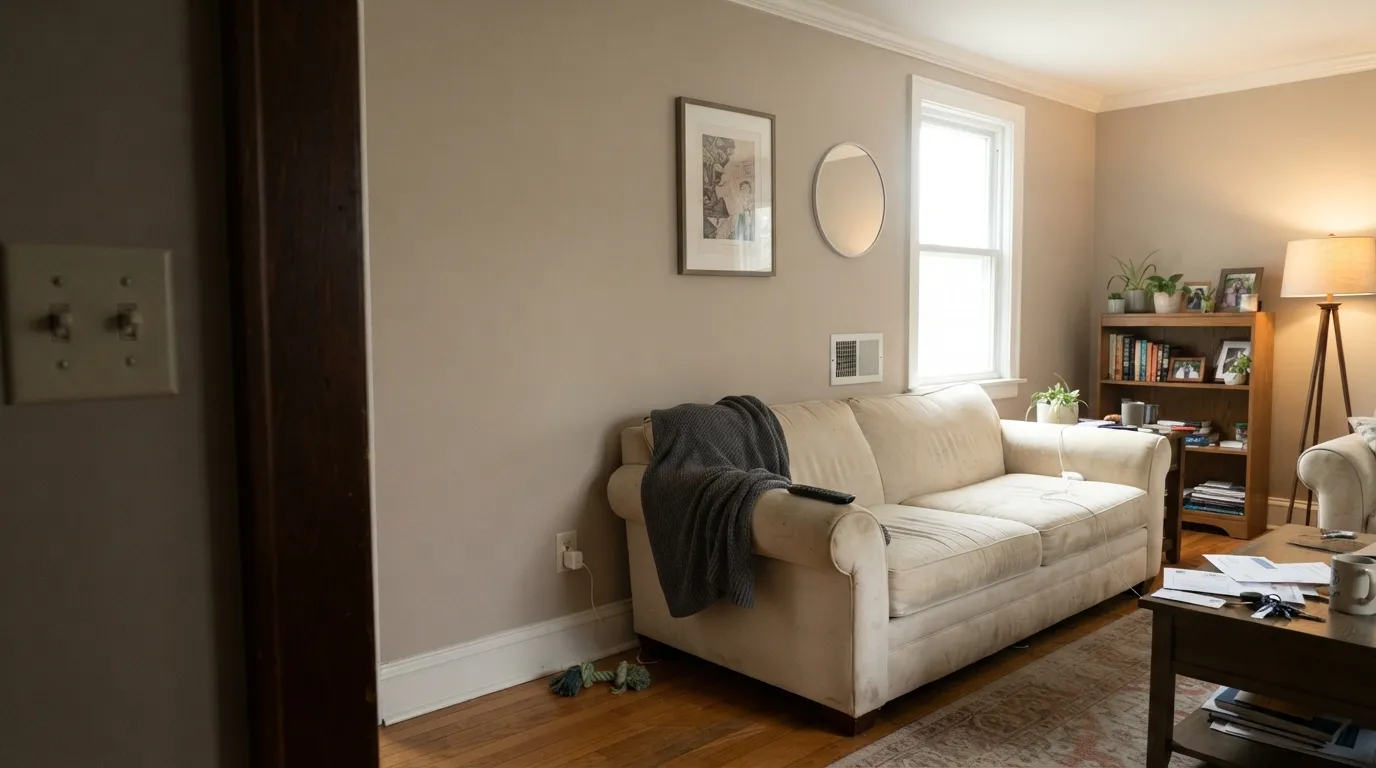
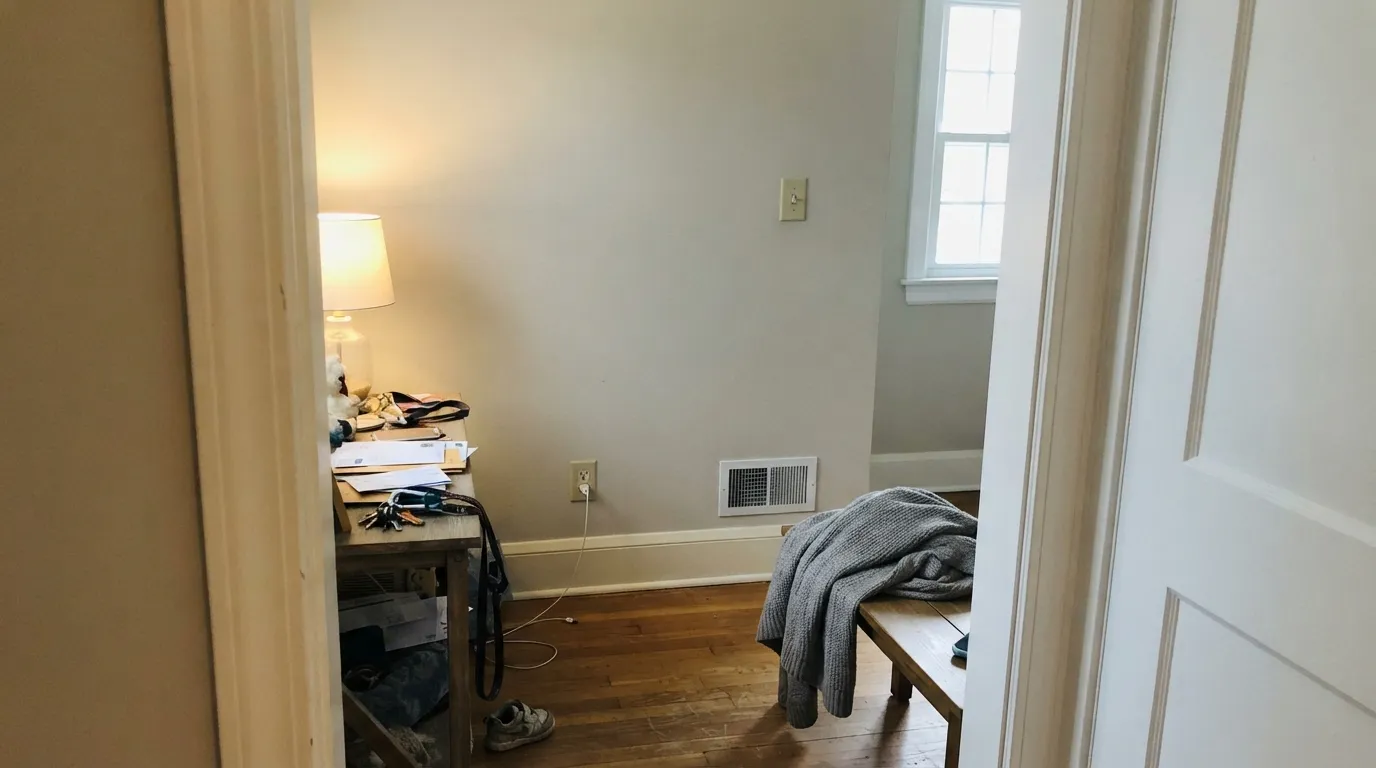
In a bright room it reads calm and finished without the flat, clinical edge a colder bright white gives. Eggshell on the walls; keep any adjacent white on the same warm side of the fence.
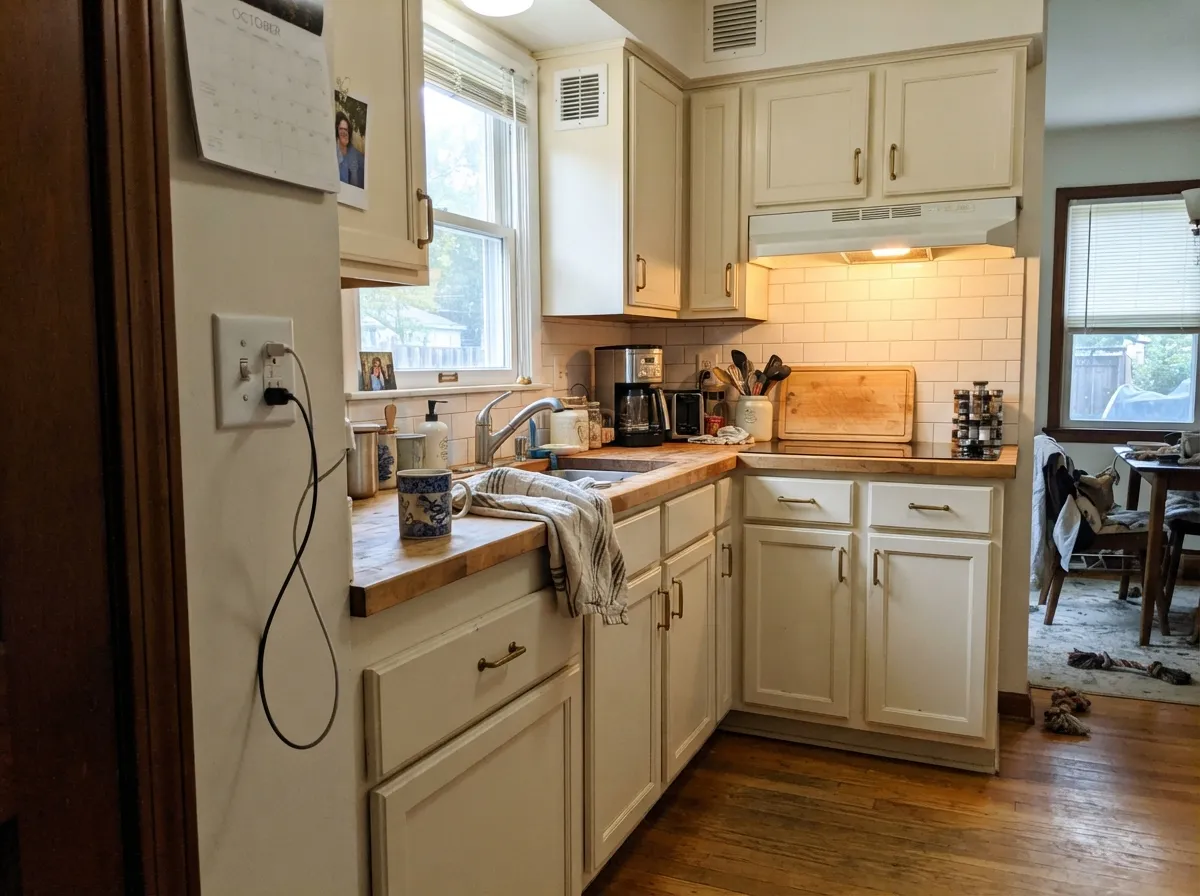
At LRV 87 it brightens a kitchen the way a stark white does, but it still flatters warm wood and brass instead of fighting them. Satin cabinet enamel wipes clean and hides handprints better than a colder white would.
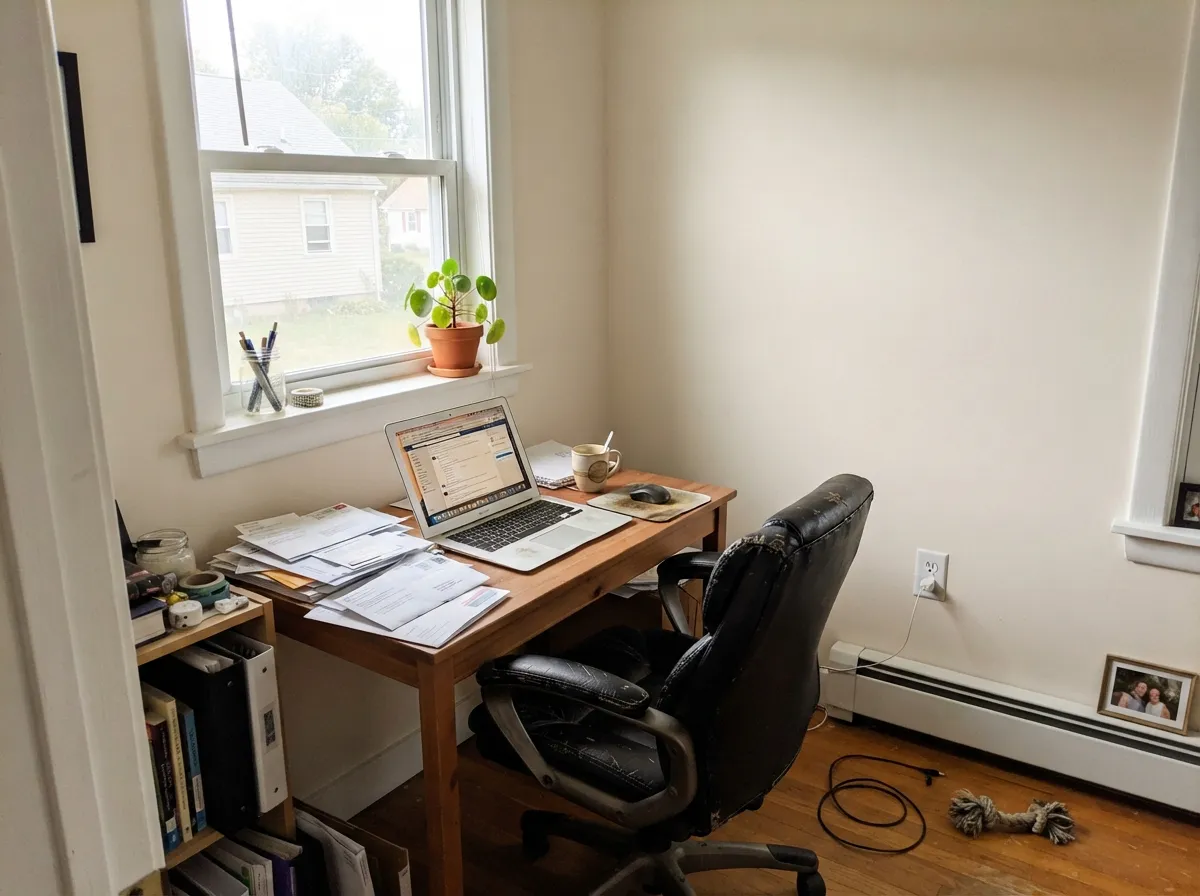
It stays soft under warm lamps at night. If the room is north-facing and dim during the day, sample it before committing — the warmth needs some help to show up.
With warm tile, wood vanities, and brass, it's an easy, clean choice. Against cool grey marble or chrome it will read slightly yellow by contrast — not wrong, just worth testing first.
This is where the high LRV and warm undertone actually pay off together: bright enough to read as a real ceiling white, warm enough not to fight a warm wall color. The most under-the-radar useful job in the SW near-white lineup.
It reads brighter and cooler-adjacent in full sun than indoors, which softens some of its warmth. It works fine as body or trim on a warm-toned house, and it's a particularly easy match against brick, where the warmth keeps the mortar lines from looking stark; a crisper white like Extra White will out-crisp it if that's the specific look you want.
Your Light Is the Risk
Full, direct daylight is where the warmth and the brightness show up together — soft, floury, and clean at once.
The high LRV can't do all the work alone. Without warm light, the wheat undertone flattens toward plain gray-white.
Warmest and creamiest at the sun hours, quieter and more neutral the rest of the day — a gentle shift, not a dramatic one.
2700K bulbs bring the warmth forward and make it feel soft at night. Cool white LEDs push it toward flat and slightly gray.
Most complaints about White Flour are a light mismatch. Upload a photo of your actual room and see it on your walls — then ask for the same wall in north light or evening lamps before you buy a single sample.
Need It From Another Brand?
Any paint counter can custom-tint Sherwin-Williams SW 7102 directly. If you would rather stay in one brand's own deck, these are the closest stock matches, measured as ΔE2000. Under 2 is a difference you will not see on the wall.
| Brand | Closest color | ΔE | LRV | |
|---|---|---|---|---|
| Behr | MarshmallowPPH-18 · Behr | 0.5 | 87 | Color page → |
| Benjamin Moore | Pink Damask890 · Benjamin Moore | 0.8 | 85 | Color page → |
| Valspar | Crisp Cotton7007-4 · Valspar | 0.9 | 87 | Color page → |
| PPG / Glidden | Crumb CookiePPG18-01 · PPG / Glidden | 2.1 | 87 | Color page → |
| Glidden | Floral White61YY 85/050 · Glidden | 0.5 | 85 | Color page → |
| Dutch Boy | Simplified White020W · Dutch Boy | 1.1 | 86 | Color page → |
Similar Sherwin-Williams Colors
The nearest shades to White Flour within Sherwin-Williams's own range, ranked by perceptual color distance — useful when you want the same look a touch lighter, darker, or warmer.
WCAG 2.1: AA is 4.5 : 1 for normal text, 3 : 1 for large text, AAA is 7 : 1.
White Flour vs the Colors You're Also Considering
Every White Flour sample board has the same rivals on it. The numbers show the real lightness gap — then it comes down to which risk you would rather live with.
Pick this when you want that same brightness but a room that still feels warm, not clinical.
Sherwin-Williams SW 7006 · LRV 86Extra WhitePick this for the same brightness with none of the warmth — the true stark white for a gallery look.
Pick this if you specifically want more reflectance without losing the warmth Alabaster is known for.
Sherwin-Williams SW 7008 · LRV 82AlabasterPick this if you want the famous, most-recommended version of a warm SW white — five points less bright, decades more name recognition.
White Flour Coordinating Colors
The rule for coordinating with White Flour is the same as any warm white: stay warm-neutral or go deep and warm-dark, and be careful pairing it directly with SW's cooler bright whites on the same plane. These are the partners that keep the wheat undertone reading intentional instead of accidental:
The Case for the White Nobody's Heard Of
White Flour is not a Color of the Year, it doesn't have a viral room, and it isn't the answer any paint-store employee reaches for first — Alabaster, Extra White, and Pure White get asked for by name; White Flour usually gets found on a fan deck by someone who already knows it's the right LRV and the right undertone for the job. That kind of quiet, unmarketed usefulness doesn't photograph well for a trend roundup, but it's exactly what a color needs to be for a ceiling, a trim run, or a cabinet job that shouldn't compete for attention.
There's a practical upside to the obscurity, too: a color with no trend cycle has nothing to date. White Flour's warm-cream, high-reflectance combination will still make sense in ten years the same way it makes sense today — it was never chasing a moment.
White Flour With Wood Tones and Floors
Warm wood is the easy pairing: oak, walnut, and butcher block all sit comfortably against White Flour because both are working the same warm side of the color wheel. On honey oak floors it doesn't fight the orange the way a cool white would; on darker walnut it stays bright without feeling stark against the contrast.
The one floor that needs a real sample is cool grey LVP or grey-washed wood. Against a cool floor, White Flour's warmth becomes more obvious and can read a shade too cream for a strictly modern, cool-toned room — not a dealbreaker, but worth testing a large sample above the actual floor before committing to walls or trim.
Three Ready Palettes Built on White Flour
A color is never alone on the wall. These are complete combinations in the 60-30-10 pattern, with the reason each one holds together. Every one opens in the visualizer.
One color at two sheens keeps the whole house bright without any wall-to-trim seam to argue about. Iron Ore supplies the single dark note the scheme needs, and its warm-neutral base doesn't fight White Flour's wheat undertone.
Try this palette in your roomAgreeable Gray shares White Flour's warm-neutral base, so the wall-to-cabinet handoff is seamless. Urbane Bronze grounds the room with a warm dark instead of a stark black, matching the whole scheme's temperature.
Try this palette in your roomWhite Flour doing the job it's actually best at — bright, warm trim and ceiling under a deeper warm wall color — with one muted green accent for a single quiet color note.
Try this palette in your roomWhite Flour FAQ
Is White Flour warm or cool?
Warm. It's a wheat-cream near-white, not a neutral or cool white, even though its LRV of 87 puts it in the same brightness range as some of SW's coolest whites. If your sample reads flat or gray, that's dim or cool-toned light working against it, not a hidden cool undertone.
Why haven't I heard of White Flour before?
It isn't a marketing color. Sherwin-Williams already has three whites that dominate the conversation — Alabaster, Extra White, Pure White — and White Flour never displaced any of them in search or design mentions, despite being capably bright and warm. It's an honestly quiet, workhorse color, not a hidden defect.
Is it good for kitchen cabinets?
Yes. It flatters warm wood and brass and reads clean without going clinical. Use a satin, urethane-fortified cabinet enamel; against cool grey marble it will look slightly yellow by comparison, so sample it against your actual counter first.
What's the difference between White Flour and Extra White?
Both are bright — 87 versus 86 LRV — but Extra White is built to be neutral-to-cool, while White Flour keeps a real wheat-cream warmth. Pick Extra White for a stark, gallery-white look; pick White Flour when you want that same brightness in a room that should still feel warm.
Does it work as a ceiling white?
It's one of its best jobs. Most bright whites read slightly blue-white against a warm wall color; White Flour's warmth keeps the ceiling from feeling like a mismatched plane, while its high LRV still reads as a real, bright ceiling rather than a dim off-white.
Does White Flour work on exteriors?
It works, especially as trim on a warm-toned house — full sun reads it brighter and slightly cooler-adjacent than it looks indoors. If you specifically want the crispest, starkest exterior white, Extra White will out-crisp it; White Flour is the softer, warmer alternative.
Have you painted with White Flour?
Rate it — one tap helps the next reader decide.
Ask a Question