Minwax
Minwax is the default name in American wood finishing, and the line is uneven enough that brand loyalty costs you money. Here is every product with its real shelf price, the forum complaints that keep repeating, and the categories where Varathane and General Finishes win outright.

Maya spent five years running comparative product testing at a consumer testing nonprofit before joining CompositePaint. She has put Minwax cans against Varathane and General Finishes on the same sanded boards, which is the only way differences in this category actually show up. About the testing process →
The Fast Verdict
Minwax is genuinely good at the products that built the name and merely adequate at the rest. Wood Finish oil stain is the most forgiving penetrating stain in the consumer tier, and Wipe-On Poly, Gel Stain, and Pre-Stain Conditioner all earn their shelf space. The clear topcoats are where it slips: Fast-Drying Polyurethane runs thin on solids, and Polycrylic flashes before it levels. Buy Minwax by product, not by brand. Varathane and General Finishes each take real categories off it.
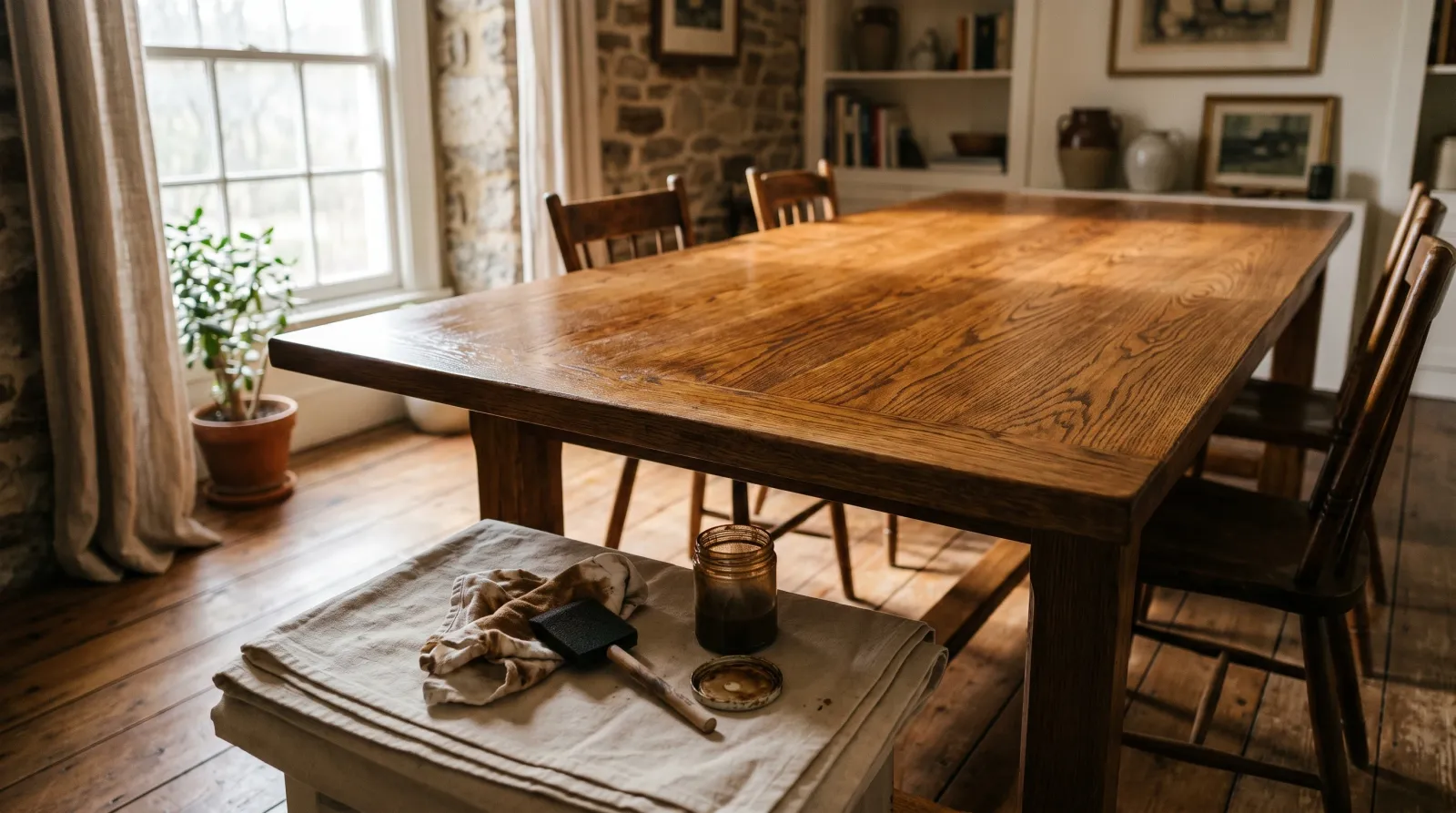
- Wood Finish has the longest open time of any consumer penetrating stain, which is what saves you on a floor or a six-foot tabletop
- Forty years of published results mean 'Provincial on red oak' is a known quantity you can look up before you buy
- Pre-Stain Wood Conditioner at $8 to $14 a quart is the cheapest insurance against blotched pine on the shelf
- Wipe-On Poly is the most beginner-proof finish in the category: a rag cannot leave brush marks
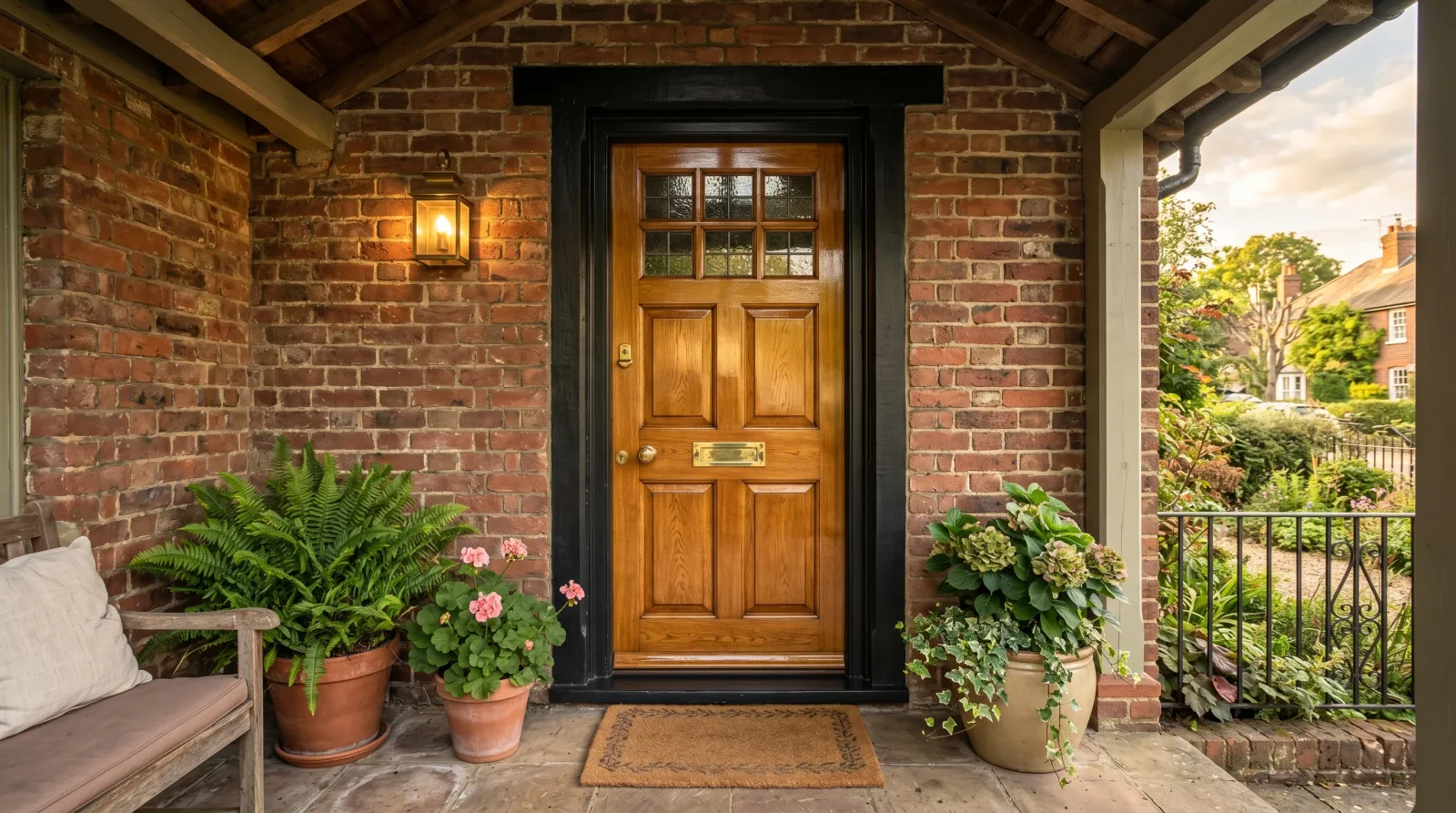
- Gel Stain colors fiberglass entry doors and previously finished wood, where a penetrating stain simply will not take
- Stocked at Lowe's, Ace, Walmart, Amazon, and Sherwin-Williams stores, so a replacement can is usually 15 minutes away
- Half-pints exist across the stain line, which matters when one drawer front needs four ounces and not a quart
- Fast-Drying Polyurethane is one of the lowest-solids polys sold; woodworkers call it the thinnest on the shelf and build the same film in more coats
- Polycrylic flashes faster than it levels, and brush marks plus bubbles are the single most reported problem with the product
- Helmsman is a consumer spar, not marine varnish, and full-sun exterior wood commonly needs a maintenance coat by year two
- PolyShades sits on the surface instead of penetrating, so a chip goes straight through to bare wood
- Home Depot dropped Minwax from store shelves after Sherwin-Williams bought the brand, and Varathane owns that aisle now
- Water-Based Wood Stain raises grain more than Varathane's does and reads warmer than the chip you picked it from
The Line Ladder: Which Minwax Stain or Finish to Buy
This is the block most people came for. Prices are 2026 US shelf prices at Lowe's, Ace, Walmart, and Amazon, and they barely move across the year. Rows are ordered by where they fall in the job — prep, color, topcoat, repair — not by price.
 Flagship oil stain
Best for Bare interior wood, large surfaces
The long open time is the whole product. On a floor or a dining table nothing consumer-grade is more forgiving. Condition pine first or own the blotching.
Full review →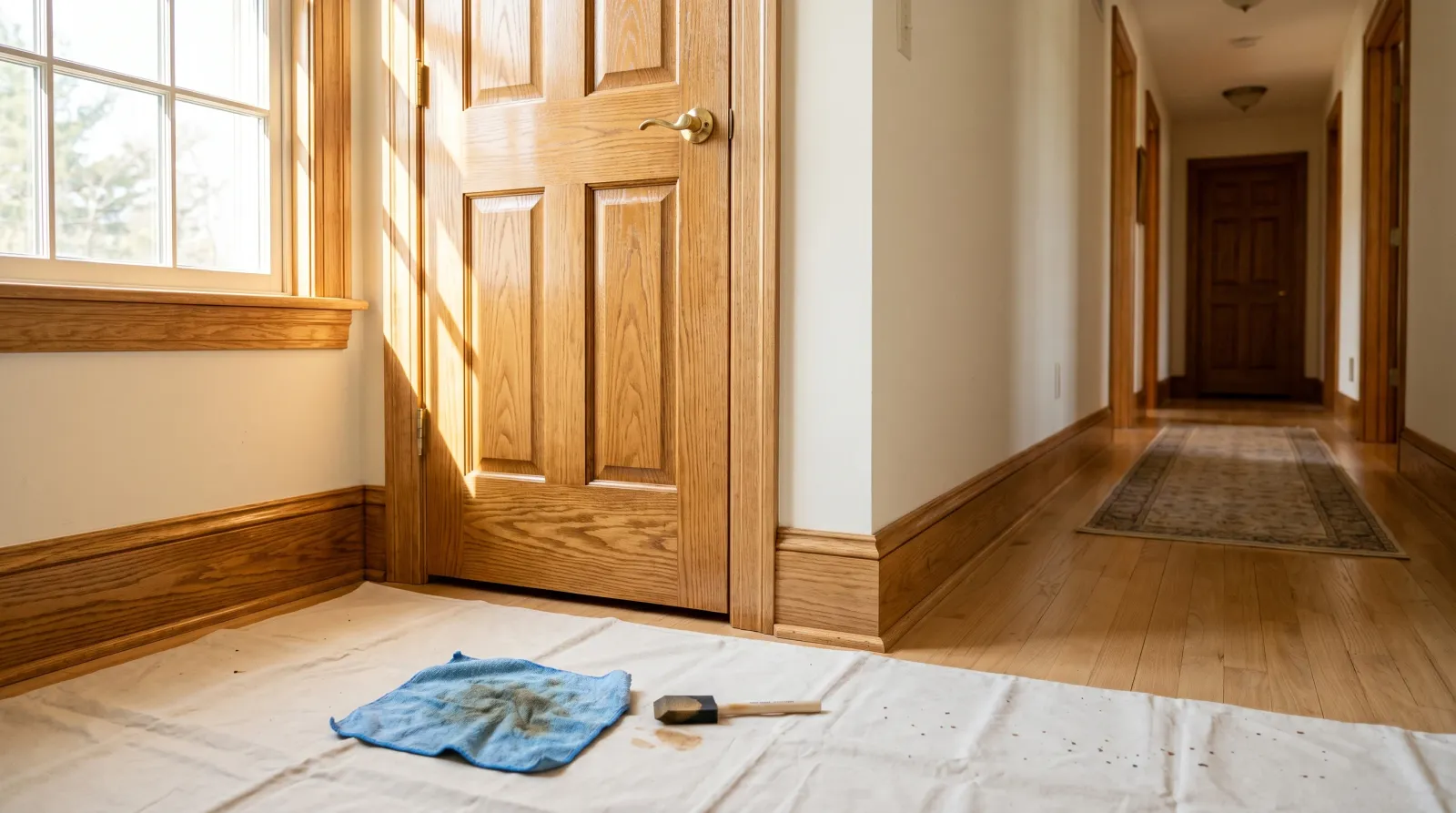 Low-odor stain
Best for Same-day topcoat, small indoor jobs
Buy it for the two-hour dry time, not the color. Varathane's water-based reads cleaner and raises less grain for the same money.
Full review →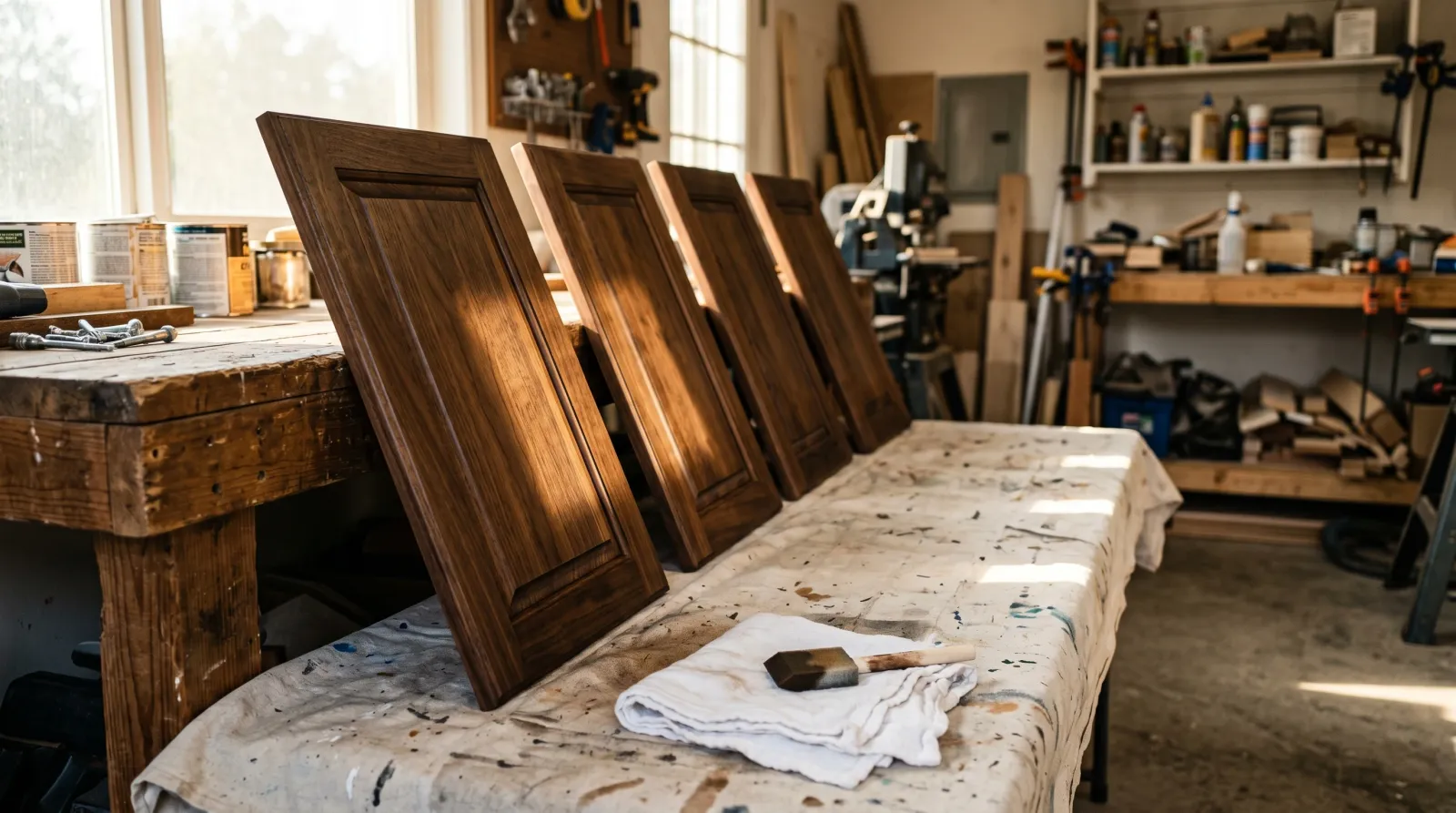 Surface stain
Best for Fiberglass doors, finished wood, verticals
The right tool when the substrate will not absorb anything. General Finishes goes deeper on color if your store carries it.
Full review → Touch-up tint
Best for Small fixes and color tweaks
Stain and poly in one wipe-on tube. Genuinely handy on a scratched stair rail; not a finish for a whole piece.
Full review → One-step stain and poly
Best for Small, low-visibility pieces
Skip it on anything you see across a room. Color lays on top rather than soaking in, laps show, and a chip reveals bare wood.
Full review → Default oil topcoat
Best for Stained furniture, trim, warm woods
Durable and stocked everywhere, but thin on solids — budget three coats, not two. It ambers, which flatters walnut and ruins white pine.
Full review →Best for Dark stain under a clear coat
The SKU almost nobody knows exists. It stays clearer over Jacobean and Ebony than oil poly and brushes far better than Polycrylic.
Best for Refinished hardwood floors
The floor-specific can, not the furniture can in a bigger size. Use this on floors instead of stretching Fast-Drying Polyurethane to cover the job.
Best for Dull but unworn factory floors
A refresher, not a refinish. It buys a year or two on a tired floor and does nothing for scratches that already cut through the finish.
 Prep
PrepBest for Pine, maple, birch, cherry
Cheap and close to mandatory on blotch-prone wood. It evens the color and caps how dark you can go — that trade is the entire point of it.
Full review →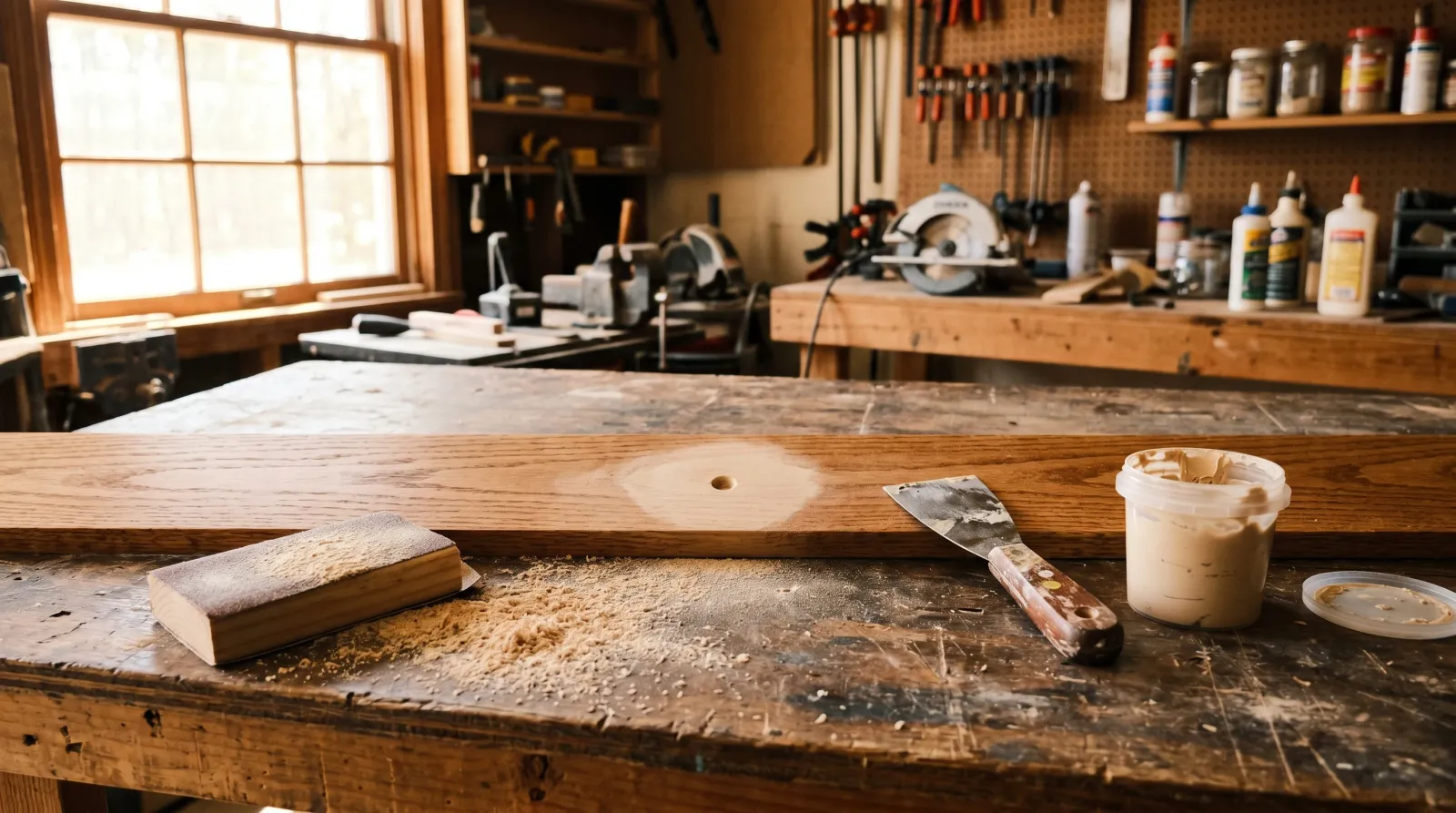 Repair
Best for Nail holes and small gouges
Stainable is optimistic. It takes color, just never the same color as the wood beside it. Test a filled scrap before you patch a visible face.
Full review →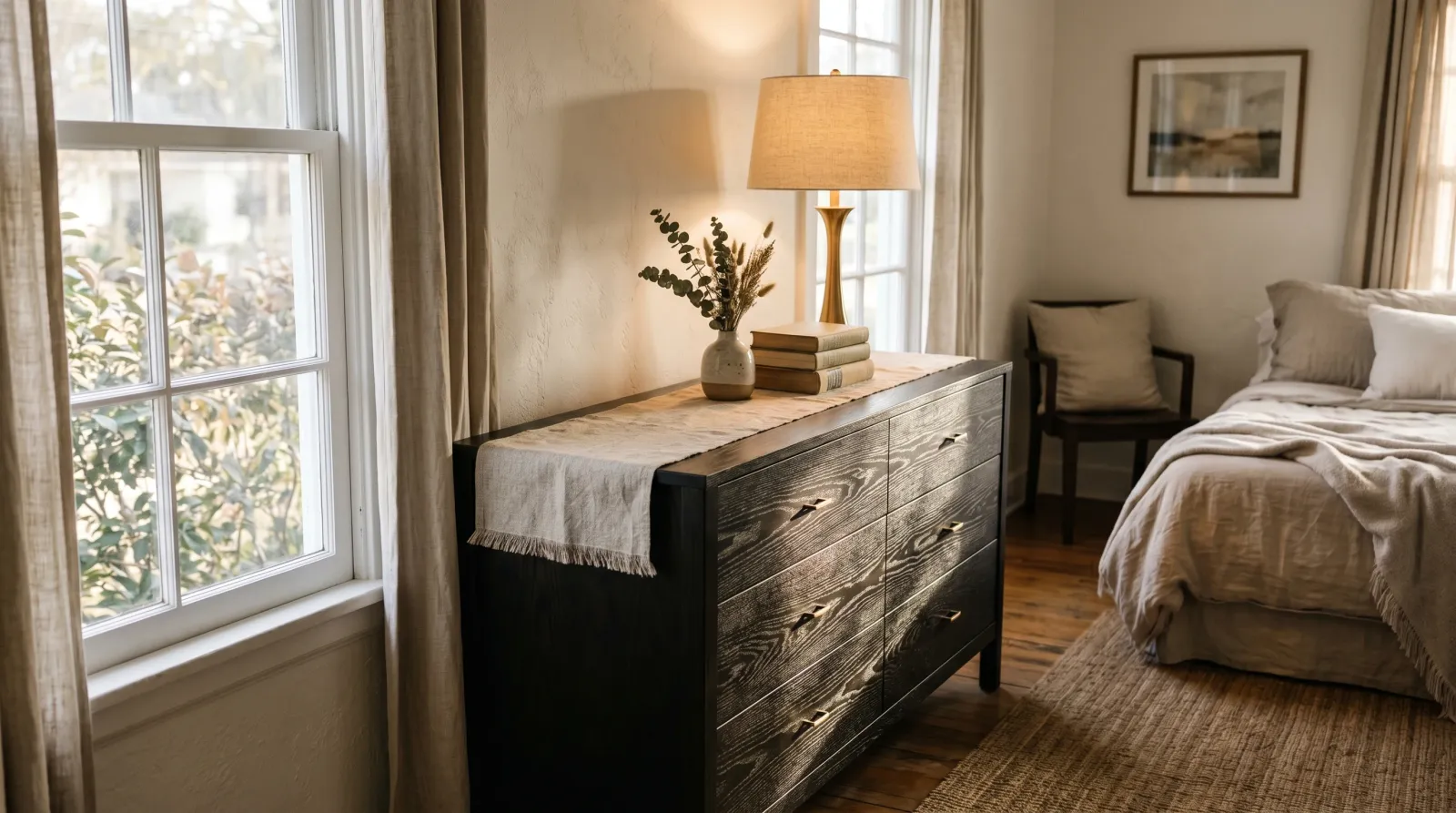 Signature color
Best for Near-black oak, walnut, poplar
The most-searched color in the line and the least forgiving to apply. Two thin passes beat one heavy one every time.
Full review → Non-yellowing water topcoat
Best for Light wood and painted pieces
Right chemistry, wrong applicator for most people. Spray it or use a foam pad; a bristle brush leaves marks you will sand out later.
Full review →Best for Tabletops and high-wear light wood
The newer, harder-wearing Polycrylic at a premium over the standard can. If standard Polycrylic left you sanding, try this before leaving the brand.
 Beginner-proof topcoat
Best for Small furniture and carved detail
The highest-rated can in the line, and the reason is simple: a rag cannot leave brush marks. Slow, four to five coats, worth it.
Full review →There Is No Sale — Here Is What a Fair Price Looks Like
Stop waiting for a Minwax sale. Unlike Sherwin-Williams, which owns Minwax and discounts its own store paint 30 to 40 percent every few weeks, Minwax sells through other people's shelves — Lowe's, Ace, Walmart, Amazon, regional hardware chains, and a curated subset at Sherwin-Williams stores. None of them run a Minwax promotional calendar. The shelf price moves a couple of dollars a year, there is no loyalty program handing money back, and a quart of Wood Finish costs within about a dollar of the same thing at every retailer that stocks it.
So the lever is size, not timing, and the size math is unusually lopsided here. Wood Finish runs $16 to $22 a quart and $45 to $60 a gallon, so the gallon gives you four times the stain for about two and a half times the money. Anything bigger than a bookcase should be bought in gallons. Going the other way, the half-pint is the trap: you pay close to half a quart's price for a quarter of the volume, and the only time it makes sense is a job you will finish in one sitting, because leftover oil stain skins over in a part-full can within a year. Wipe-On Poly is the exception worth buying small — pints at $12 to $18 are the correct purchase for a single piece of furniture.
Cross-shop on the specific SKU, not the brand, and know where the brand actually lives now. Home Depot pulled Minwax off store shelves after Sherwin-Williams bought it, and Varathane took that aisle, so if you are standing in a Home Depot the answer is not Minwax. Lowe's carries the deepest in-store Minwax selection including the gallons; Ace and True Value are reliable for odd colors and small sizes; Amazon is the only easy source for the boutique SKUs like Express Color, Polycrylic Max, and Water-Based Oil-Modified Polyurethane. As a sanity check: more than $25 for a quart of anything except Helmsman means you are in the wrong store.
The Cons Only Forums Talk About
The Oil Poly Is Thin, and That Is the Whole Complaint
The most consistent professional criticism of Minwax on woodworking forums has nothing to do with durability claims and everything to do with solids. Finishers on Sawmill Creek and LumberJocks describe Fast-Drying Polyurethane as the thinnest poly they know of, already close to a wiping consistency out of the can, and warn that thinning it further leaves you with almost nothing to build on. That matters practically: two coats of Minwax is not two coats of a higher-solids varnish. Budget three, sand 220 between them, and if you want fewer coats and a harder film, General Finishes Arm-R-Seal is the standard upgrade people name.
Polycrylic Does Not Level, and a Brush Makes It Worse
Search any woodworking forum for Polycrylic and you get the same thread over and over: streaks, drag marks, bubbles that dry in place. The cause is flash time. Polycrylic skins fast enough that you cannot hold a wet edge across a panel, so brush strokes set before they flow out, and going back over a tacky area tears it. The fixes that actually work are consistent across forums: spray it with an HVLP gun, or use a foam pad or foam brush, work in one direction with the grain, and never re-brush. Plenty of long-time users simply switch to General Finishes High Performance instead.
Conditioner Cannot Make Pine Both Dark and Even
The most common Minwax disaster is blotchy pine after using Pre-Stain Conditioner, and the reason is not a defective can. Conditioner works by partially sealing the thirstiest parts of the wood, which is exactly why dark colors stop landing. Forum consensus on the technique is specific: sand to 180 grit minimum and 220 is better, wipe the conditioner off within 5 to 10 minutes, then leave the stain on only a couple of minutes before wiping everything off. Leaving stain to soak for ten minutes defeats the conditioner entirely. For dark color on pine without blotch, people move to a shellac washcoat or a dedicated blotch control product.
Helmsman Fails Faster Than People Expect Outdoors
Helmsman is the strongest exterior product Minwax sells and it is still a consumer spar urethane. Forum reports on outdoor projects cluster around the same number: roughly two years in real sun and weather before the film starts looking bad, with peeling on horizontal and south-facing surfaces the usual failure. Boaters rate it well below real marine varnish. Treat that as the spec rather than a defect. Three coats minimum, sand and recoat lightly before it fails rather than after, and if the piece is a varnished boat brightwork job, buy actual marine varnish instead.
PolyShades Chips Straight Through to Bare Wood
PolyShades sells a shortcut that mostly does not work. Because it is pigmented poly rather than a penetrating stain, the color lives in the film on top of the wood, not in the wood. Users report exactly what that predicts: a chip or a deep scratch shows raw wood underneath instead of stained wood, so touch-ups never disappear. The second recurring complaint is blotch on large pieces, where one area sets before the next coat reaches it. Three coats is typical to get even color. Stain plus separate poly costs you a day and buys years of better-looking finish.
Home Depot Does Not Stock It Anymore
This surprises people mid-project. After Sherwin-Williams acquired Minwax, Home Depot dropped the brand from its store shelves rather than stock a direct competitor's product, and Varathane moved into that aisle. Some Minwax still appears on homedepot.com through online listings, but if you drive to the store expecting a can of Wood Finish, you will be looking at Varathane. Lowe's is the big-box home for Minwax, along with Cabot and Thompson's WaterSeal, which are also Sherwin-Williams brands. Plan the store, not just the product, before you start sanding.
The Questions Between Two Cans
They are different companies — Minwax is Sherwin-Williams, Varathane is Rust-Oleum — and each wins real categories. Minwax takes oil penetrating stain on open time and color depth, which is what matters on floors and tabletops. Varathane takes water-based stain on cleaner grain and truer color, and its water-based clears level better than Polycrylic. Buy by category, and note the aisle: Varathane is the Home Depot brand, Minwax is the Lowe's brand.
Full comparison →General Finishes is the better product line and Minwax is the more available one. GF Gel Stain goes deeper on color, Arm-R-Seal builds a harder film in fewer coats, and High Performance levels where Polycrylic streaks. What Minwax has is a store in every town and a price roughly half of GF's. If your project is a keeper piece, order General Finishes. If it is trim, a shelf, or a first attempt, Minwax is fine and you will not wait for shipping.
All comparisons →Pick by wood color, not by durability. Oil polyurethane ambers permanently, which adds depth on walnut, cherry, and dark-stained oak and yellows white pine, maple, and anything painted white. Polycrylic stays clear and dries in two hours instead of eight. The oil version is tougher and more forgiving to apply; Polycrylic is the only right answer over light or painted wood, and you handle it with a foam pad rather than a brush.
Full comparison →Gel Stain is a surface coating in stain's clothing. It is the correct pick when the substrate will not absorb — fiberglass entry doors, already-varnished cabinets, vertical surfaces where a liquid stain would run. On bare wood you actually want to see the grain of, Wood Finish wins, because gel sits on top and mutes figure. Large flat panels are where gel streaks under raking light, so keep it off dining tables.
Full comparison →Same brand, same color names, different products, and shoppers mix them up constantly. Oil-based Wood Finish gives you fifteen minutes of working time and the deeper color; water-based dries in about two hours, cleans up with water, and reads roughly half a shade lighter than the same name in oil. Use oil on anything big enough that you might chase a dry edge. Use water-based when odor or same-day topcoating decides the job.
Full comparison →PolyShades saves a day and costs you the finish. Because the color sits in the topcoat film, chips show bare wood, laps read as dark stripes, and you usually need three coats anyway. Stain then a separate poly is one extra day of drying and gives you real penetrated color plus a clear film you can repair independently. Keep PolyShades for closet doors and shelf edges nobody studies.
All comparisons →Minwax Questions, Answered
Who owns Minwax?
Sherwin-Williams. It acquired Minwax's parent in 1990 and runs it inside the Wood Finishing Group alongside Thompson's WaterSeal, Krylon, and Cabot. Minwax still operates as its own brand with its own product team and its own retail channel, so you buy it at Lowe's, Ace, Walmart, and Amazon rather than by default at a Sherwin-Williams store.
What is Minwax?
Minwax is an American wood finishing brand founded in 1904, and it is the default name in the category for most US homeowners. The catalog covers prep (conditioner, filler, sanding sealer), stains in oil, water-based and gel form, clear topcoats in oil and water-based polyurethane, exterior spar urethane, and hardwood floor products. It sells nothing for walls — no wall paint, no primer for drywall.
Are Minwax and Varathane the same company?
No. Minwax belongs to Sherwin-Williams; Varathane belongs to Rust-Oleum, which is owned by RPM International. They get compared constantly because they sit in the same category at competing retailers: Varathane is the wood finish brand on Home Depot shelves, and Minwax is the one on Lowe's shelves. Different chemistry, different color names, and colors do not cross-match between them.
Is Minwax stain good?
The oil-based Wood Finish is the best penetrating stain in the consumer tier — deep color, roughly fifteen minutes of working time, about $16 to $22 a quart everywhere. Gel Stain is strong on substrates that will not absorb. The water-based stain is mid-pack, beaten by Varathane on grain raise and color neutrality. So yes on the oil stain, qualified yes on gel, and shop around on water-based.
Minwax vs General Finishes — which is better?
General Finishes is the better product, Minwax is the more practical one. GF Gel Stain reads deeper, Arm-R-Seal builds a harder film in fewer coats, and High Performance levels where Polycrylic leaves brush marks. Minwax costs roughly half as much and is stocked within a short drive of almost anyone. Buy GF for a piece you will keep for decades; buy Minwax for trim, shelving, and learning projects.
Is Minwax Wood Finish oil-based or water-based?
Wood Finish, the classic in the dark red can, is oil-based — a thin penetrating stain in mineral spirits with a long open time and the deepest color in the line. Minwax Water-Based Wood Stain is a separate product that happens to share color names. It dries in about two hours, raises grain on the first coat, and reads roughly half a shade lighter than the oil version of the same name.
Does Minwax polyurethane yellow over time?
The oil-based Fast-Drying Polyurethane ambers visibly on white pine, maple, and white oak within a year and more by year three. That is oil chemistry, not a defect, and every oil poly does it. On walnut, cherry, or anything stained dark you will never notice. For light wood or a white-painted piece, use Polycrylic or the Water-Based Oil-Modified Polyurethane instead.
PolyShades vs gel stain — which should I use to refinish without stripping?
Gel Stain, in almost every case. Both go over an existing finish, but gel stain is color only, so you top it with a separate clear coat you can repair or recoat later. PolyShades puts color and poly in one film, which means chips expose bare wood, laps show as dark stripes, and touch-ups never blend. Gel stain plus poly is one extra day for a much better result.
How many coats of Minwax polyurethane do I need?
Three on anything that gets used, not the two the can implies. Minwax's oil poly is low on solids compared with pro-grade varnishes, so each coat leaves less film behind. Sand lightly with 220 grit between coats, wipe the dust off with a tack cloth, and recoat at four to six hours in dry conditions, closer to eight when it is humid. Floors and tabletops want four.
Where do I buy Minwax now that Home Depot dropped it?
Lowe's is the main big-box source and carries the deepest in-store selection including gallons. Ace and True Value reliably stock quarts and half-pints in more colors than you expect. Walmart carries the common colors cheaply. Amazon is the only easy route to the boutique SKUs — Express Color, Polycrylic Max, Water-Based Oil-Modified Polyurethane. Sherwin-Williams stores carry a curated subset if you are already buying paint there.
How long should Minwax stain dry before polyurethane?
Eight hours is the label minimum for oil-based Wood Finish, and 24 is the honest number on dense woods or in humid weather. Rush it and the poly lifts and smears the stain. The test is your nose and a fingertip in a hidden spot: if it still smells strongly of solvent or feels the least bit tacky, wait. Water-based stain is ready in about three hours.
Do I really need pre-stain wood conditioner?
On pine, maple, birch, alder, and cherry, yes — those woods absorb unevenly and blotch without it. On oak, ash, walnut, and mahogany you can skip it. Know the trade-off before you use it: conditioner works by sealing the thirstiest fibers, so your final color lands lighter. Wipe it off within 5 to 10 minutes, stain within two hours, and keep the stain dwell short.
Ask a Question