Product review · Minwax · Updated August 7, 2026
Fast-Drying PolyurethaneMinwax paint review
8.2/10The most durability per dollar you can brush — on warm wood, in a room you can keep empty for three days.
Still the toughest clear film a homeowner can brush for twenty bucks a quart. It also ambers as it cures and keeps warming for years, and on white paint or raw maple there is no undo.

Mark Thompson · Pro Contractor & Field Editor · Updated August 7, 2026
22 years of residential repaints and finish work. Mark has topcoated stained-oak floors with this poly that took ten years of a Labrador and a kitchen chair and still only needed a screen-and-recoat. About the testing process →
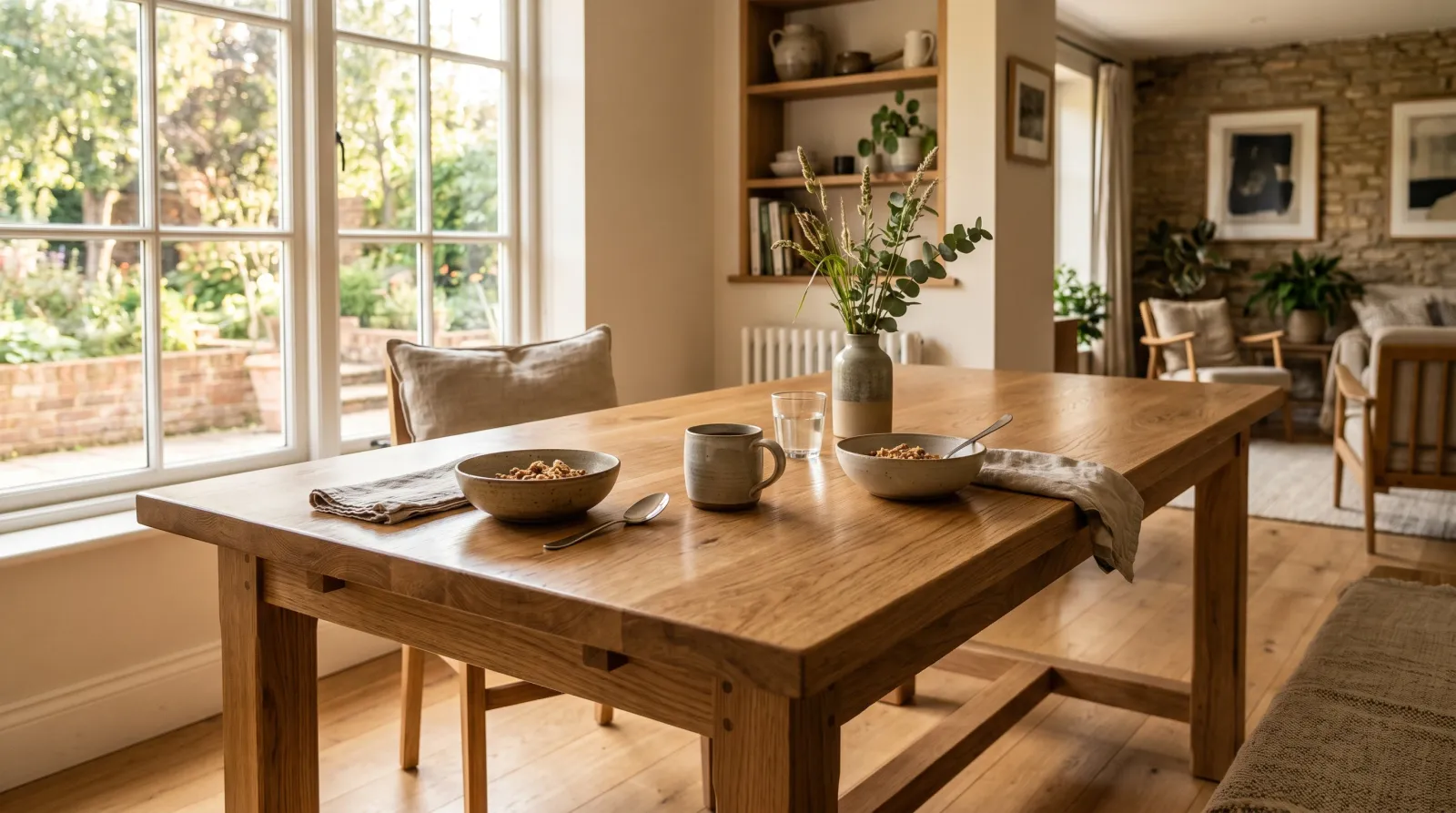
Minwax Fast-Drying Polyurethane4 sheens
Coverage125 sq ft per quart
Recoat3–4 hr
VOCOil-based
Sheens Warm GlossWarm Semi-GlossWarm SatinWarm Ultra Flat
Read this first
The Fast Verdict
On warm-toned wood that takes abuse — a hardwood floor, a solid oak table, stained trim — buy it. It is $18 to $24 a quart from a store ten minutes away, and on oak, walnut, or cherry the amber reads as depth. On white paint, raw maple, or birch, no. It goes visibly yellow inside a year and the fix is stripping. And fast-drying is the recoat, not the cure: socked feet at 24 hours, no furniture or rugs for 72.
Best for
Hardwood floors · Solid-wood tabletops · Stained trim and doors · Warm-toned furniture · Oak, walnut, cherry · Maximum durability per dollar
Skip if
White-painted wood · Raw maple, birch, pale ash · You need the room back tomorrow · Solvent smell and cleanup are dealbreakers · Anything that lives outdoors
What it's good at
- Raw film hardness — cured oil poly takes chair legs and dog nails for years
- Grain depth on warm wood; the amber reads as richness on red oak, walnut, and cherry
- Being everywhere and cheap, so a Sunday-night shortfall does not stop the job
- Self-leveling out of a brush when you keep the coats thin
- Warm Satin hiding dust nibs and brush texture better than any gloss
- The 11-oz aerosol on spindles, frames, and carved detail a brush pools in
What it's not good at
- Anything white-painted, raw maple, birch, or pale — it ambers and keeps ambering
- Fast turnaround; the room stays empty 72 hours and full hardness is a week out
- Staying clean while it dries, because the long open time lets dust settle in
- Heavy coats, which sag, trap solvent, and stay soft for weeks
- Low-odor work — this is mineral-spirits chemistry and the room reeks for a day
- Spot-repairing a worn floor lane, which needs the whole board sanded and recoated
Same shelf, different cans
Which Minwax Polyurethane Are You Actually Buying?
Minwax puts polyurethane on half a dozen cans and the names blur on the shelf. Grab the wrong one and you get a yellow cast where you wanted clear, or a thin furniture finish where you needed floor build. This review is the oil-based Fast-Drying can.
Fast-Drying Polyurethane, oil-based (this review)
BaseAliphatic urethane in mineral spirits
SheensWarm Gloss, Warm Semi-Gloss, Warm Satin, Warm Ultra Flat
Recoat3–4 hr
YellowingYes — ambers as it cures and keeps warming for years
Buy it if
The wood is warm. Stained oak, walnut, cherry, mahogany, or a warm stain on floors, tables, doors, and trim, and you want the hardest brushable film for the least money.
Avoid if
The surface is white-painted, raw maple, birch, or any pale wood you want to stay pale. The amber is permanent.
Water Based Polyurethane
BaseWater-based
YellowingNo — dries clear
Buy it if
Light woods and white-painted pieces where amber would ruin the look, or any job where low odor and water cleanup matter.
Avoid if
You want the warm, lit-from-within depth oil gives red oak and walnut. Water-based reads flatter and cooler.
Water-Based Oil-Modified Polyurethane
BaseOil-modified, water cleanup
YellowingSlight amber
Buy it if
You want the oil look on a floor but you do not want the solvent smell or the mineral-spirits cleanup.
Avoid if
You need a dead-clear film over white paint or pale wood. It still carries a little warmth.
Super Fast-Drying Polyurethane for Floors
BaseOil-based, floor SKU
YellowingYes
Buy it if
You are refinishing whole hardwood floors and the schedule is the problem. It is built to turn coats over faster than the general-purpose can.
Avoid if
You are finishing one table, one door, or a set of shelves. This is a floor product and the size and price follow that.
Polycrylic
BaseWater-based clear topcoat
YellowingNo
Buy it if
Light wood, white-painted furniture, craft pieces. It is the right call any time amber would show.
Avoid if
Floors, wet bars, and hard-use tabletops. The film is softer and it is not built for that abuse.
Numbers, not adjectives
Spec Sheet
- Coverage
- 125 sq ft per quart, about 500 sq ft per gallon, per coat
- Sheens
- Warm Gloss, Warm Semi-Gloss, Warm Satin, Warm Ultra Flat
- Touch dry
- 4–6 hr
- Recoat
- 3–4 hr
- Light use
- 24 hr in socks; 72 hr before furniture and rugs
- Full hardness
- 7–10 days
- VOC
- Oil-based, roughly 450 g/L; a 350 VOC version ships in restricted states
- Primer
- None. Bare wood takes a stain or a thinned wash coat first
- Surfaces
- Interior bare or stained wood: floors, doors, trim, furniture
- Sizes
- Half-pint, quart, gallon, 2.5-gallon, plus 11-oz aerosol
- Cleanup
- Mineral spirits
- Price
- $18–24 / qt, $55–70 / gal; aerosol around $9
Application Settings That Work
- Brush
- Natural-bristle or foam brush. Lay it on thin with the grain and tip off lightly to pull the brush marks out. Three coats on a floor or tabletop, two on low-wear trim. Stir slow with a stick and never shake it — shaking whips in bubbles that dry as a pebbled surface. The 11-oz aerosol is the honest answer for spindles, frames, and carved detail a brush pools in.
- Thinning
- Not needed as it comes out of the can. On bare wood, a first coat cut with mineral spirits works as a wash coat and seals the grain before the full-strength coats. Cleanup is mineral spirits, not water.
- Primer
- No primer. Bare wood gets stain or a thinned wash coat, then poly. Between coats: 220-grit scuff, vacuum, tack cloth. Used rags go flat outside to dry or into a metal can with water — bunched-up oily rags really do combust.
Dry Fast, Cure Slow
Fast-drying is about the recoat window, not the cure, and that one word costs people finishes. Touch dry runs 4 to 6 hours and you can recoat at 3 to 4. After the last coat, light socked feet at 24 hours. Shoes, furniture, and rugs wait 72 hours minimum. Full hardness lands a week to ten days out. Drop a rug on day two and you trap solvent under it and print the rug backing into the film, and then you are sanding it back off. Plan the job around an empty room for three days or do not start it.
Mid-project panic
When It Goes Wrong, and How to Fix It
White trim or pale wood went yellow
Why it happens. Oil poly ambers as it cures and keeps warming for years under UV. On white-painted cabinets, a maple butcher block, or birch ply it goes visibly yellow inside a year, and worse near a window. I see it every spring on tables somebody clear-coated over white paint the previous summer.
The fix. There is no fix short of stripping. Take it back to bare and recoat with Polycrylic or the water-based polyurethane, which dry clear and stay clear. Any time the wood is light or painted, this can is the wrong can before you open it.
The finish is still soft or gummy days later
Why it happens. Almost always a flooded coat. People brush it on heavy to save a coat, and a thick film sags, traps solvent under a skinned surface, and stays soft for weeks. Cold or humid rooms stretch it further.
The fix. Give it air and time first — a fan in the room and a few more days will save a lot of them. If it is still gummy after that, sand it back and rebuild with thin coats. Thin coats are the whole game with oil poly.
The rug backing printed into a new floor
Why it happens. The floor felt dry, so the rug went down on day two. Solvent was still coming out of the film. The rug traps it and the backing pattern presses into a surface that has not hardened.
The fix. Nothing but sanding that section and recoating. Prevent it: socked feet at 24 hours, no furniture and no rugs until 72 hours, and give it a week to ten days before you treat it like a finished floor.
Dust nibs and grit in the dried film
Why it happens. It stays wet long enough to self-level, and everything floating in the room lands in it while it does. In a shop or a busy house you will get nibs.
The fix. Scuff with 220-grit and wipe with a tack cloth between coats — that is what the sanding step is for. Settle the room before the last coat: vacuum, let the dust drop, no traffic, and no fan pointed at the wet film.
Coats peeling apart in the traffic lane
Why it happens. Somebody skipped the scuff between coats. Cured poly is slick, and a fresh coat over an unsanded one has nothing to grip. It holds until the floor gets worked, then it delaminates right where the wear is.
The fix. Sand every coat after the first with 220-grit and tack it off before you recoat. Where it has already let go, sand that area back to sound film and rebuild.
Side by side
Fast-Drying Polyurethane vs Polycrylic vs Bona Traffic HD
Three clear coats cover almost every job this one gets bought for. The choice is usually decided by the color of the wood and how long the room can stay empty, not by the durability numbers.
| Minwax Fast-Drying Poly | Minwax Polycrylic | Bona Traffic HD | |
|---|---|---|---|
| Base and cleanup | Oil in mineral spirits. Solvent cleanup. | Water-based. Rinses under the tap. | Two-part waterborne. Water cleanup, mixed pot. |
| Color over time | Ambers as it cures and keeps warming. | Dries clear, stays clear. | Cures clear. No yellow. |
| Film toughness | The toughest thing a homeowner can brush. | Furniture grade. Softer film. | Harder than any oil poly. The pro floor finish. |
| Best surface | Warm-toned floors, tabletops, stained trim. | Light wood, white-painted pieces, crafts. | Whole-house hardwood floors. |
| Odor | Strong. The room reeks for a day. | Low. | Low. |
| Price | $18–24 / qt | $14–20 / qt | $90–110 per 1.32-gal kit |
| The catch | Amber is permanent, and the room sits empty 72 hours. | Not a floor finish and not for a wet bar. | Mix the hardener in and you use it that day. |
Base and cleanup
Minwax Fast-Drying PolyOil in mineral spirits. Solvent cleanup.
Minwax PolycrylicWater-based. Rinses under the tap.
Bona Traffic HDTwo-part waterborne. Water cleanup, mixed pot.
Color over time
Minwax Fast-Drying PolyAmbers as it cures and keeps warming.
Minwax PolycrylicDries clear, stays clear.
Bona Traffic HDCures clear. No yellow.
Film toughness
Minwax Fast-Drying PolyThe toughest thing a homeowner can brush.
Minwax PolycrylicFurniture grade. Softer film.
Bona Traffic HDHarder than any oil poly. The pro floor finish.
Best surface
Minwax Fast-Drying PolyWarm-toned floors, tabletops, stained trim.
Minwax PolycrylicLight wood, white-painted pieces, crafts.
Bona Traffic HDWhole-house hardwood floors.
Odor
Minwax Fast-Drying PolyStrong. The room reeks for a day.
Bona Traffic HDLow.
Price
Minwax Fast-Drying Poly$18–24 / qt
Minwax Polycrylic$14–20 / qt
Bona Traffic HD$90–110 per 1.32-gal kit
The catch
Minwax Fast-Drying PolyAmber is permanent, and the room sits empty 72 hours.
Minwax PolycrylicNot a floor finish and not for a wet bar.
Bona Traffic HDMix the hardener in and you use it that day.
Warm wood that takes abuse and a tight budget: the oil can, and it is not close. Anything light or painted: Polycrylic, because no amount of durability makes up for a yellow dresser. A whole-house floor refinish you want to last fifteen years: Bona Traffic HD, and pay for it once instead of recoating a cheaper film twice.
If not this one
Honest Alternatives
MP
Minwax Polycrylic$14–20 / qt
Same brand, water-based, non-yellowing, low odor, water cleanup. The right call on white-painted furniture and light woods where amber would wreck the look. Thinner and less abrasion-tough, so it is a furniture-and-trim finish, not a heavy-traffic floor finish.
Full review →BT
Bona Traffic HD$90–110 per 1.32-gal kit
The two-part waterborne finish real hardwood-floor crews put down. Cures harder and clearer than any oil poly, no yellow, low odor, and it takes furniture back sooner. The catch is price and pot life — mix the hardener in and you use it that day.
MH
Minwax Helmsman Spar Urethane$20–26 / qt
For doors and trim that see sun and weather. It stays more flexible and carries UV blockers, so it does not crack and chalk outdoors the way interior poly does. Right on an exterior door or a windowsill, wrong on a floor.
Full review →Questions people actually ask
Fast-Drying Polyurethane Questions, Answered
Is Minwax Fast-Drying Polyurethane worth it?
On warm-toned wood that takes abuse, yes. At $18 to $24 a quart it is the toughest film a homeowner can brush, it is stocked in every hardware store in the country, and on oak, walnut, cherry, or a warm stain the amber reads as depth rather than a flaw. On white-painted wood, raw maple, or birch, no — it ambers as it cures and keeps warming for years, and there is no fix short of stripping. It also needs the room empty: light socked feet at 24 hours, no furniture or rugs for 72.
How many coats of Minwax polyurethane do I need?
Three on a floor or a tabletop. Two on a door or trim you will not drag chairs across. Each coat goes on thin, dries 4 to 6 hours, gets a light 220-grit scuff, then the next coat. One thick coat sags and never hardens right. Thin coats are the whole game with oil poly.
Does Minwax Fast-Drying Polyurethane yellow over time?
Yes. It is oil-based, so it ambers as it cures and keeps warming for years. On oak, walnut, or anything already warm, it looks good. On white-painted wood, raw maple, or birch, it will go visibly yellow. Use the water-based Polycrylic or Water Based Polyurethane on light and painted surfaces instead.
How long before I can walk on a floor finished with it?
Light foot traffic in socks at 24 hours. Hold off on shoes, furniture, and rugs for 72 hours minimum. Full cure runs closer to a week to ten days. Drop a rug down early and you will trap solvent and print the backing into the finish. Wait it out.
Do I need to sand between coats?
Yes, every coat after the first. A light pass with 220-grit knocks down dust nibs and gives the next coat something to grip. Wipe with a tack cloth before you recoat. Skip the scuff and your coats can delaminate later, usually right where the floor gets the most wear.
Does it need a primer?
No. It is a topcoat, not a paint system. Bare wood gets stain first, or a first coat thinned with mineral spirits as a wash coat to seal the grain. After that it is straight poly, thin, with a 220-grit scuff between coats.
Which sheen should I buy?
Warm Satin for most jobs. It hides dust nibs and brush texture far better than gloss, and it is the right default on floors and trim. Gloss is there when you want a piano-top look on a small surface where every flaw is going to show anyway. Warm Ultra Flat exists for furniture restorers who hate shine.
Can I use it outside?
No. This is an interior finish. Outdoors it has no UV package and no flex, so on a door or a sill in the sun it crazes and peels. Use Minwax Helmsman Spar Urethane for exterior doors, window sills, and outdoor furniture instead.
What do I do with the used rags?
Lay them flat outside to dry, or drop them in a metal can with water. Bunched-up oily rags really can combust on their own — that is a genuine hazard, not a label formality. Same rule for the rags you wipe up mineral spirits with.
Keep exploring
Minwax brand guide and product lineupPolyurethane vs Polycrylic: which clear coat to useDry time vs cure time explainedWhy a finished floor scratches and wears
We may earn a commission when you buy through the retailer link above. It never changes the score or the verdict.
Ask a Question