What Is Spar Urethane?
Spar urethane is a flexible, UV-resistant clear finish built for wood that moves and sits in sunlight. Here is what it does, where to use it, and where to skip it.

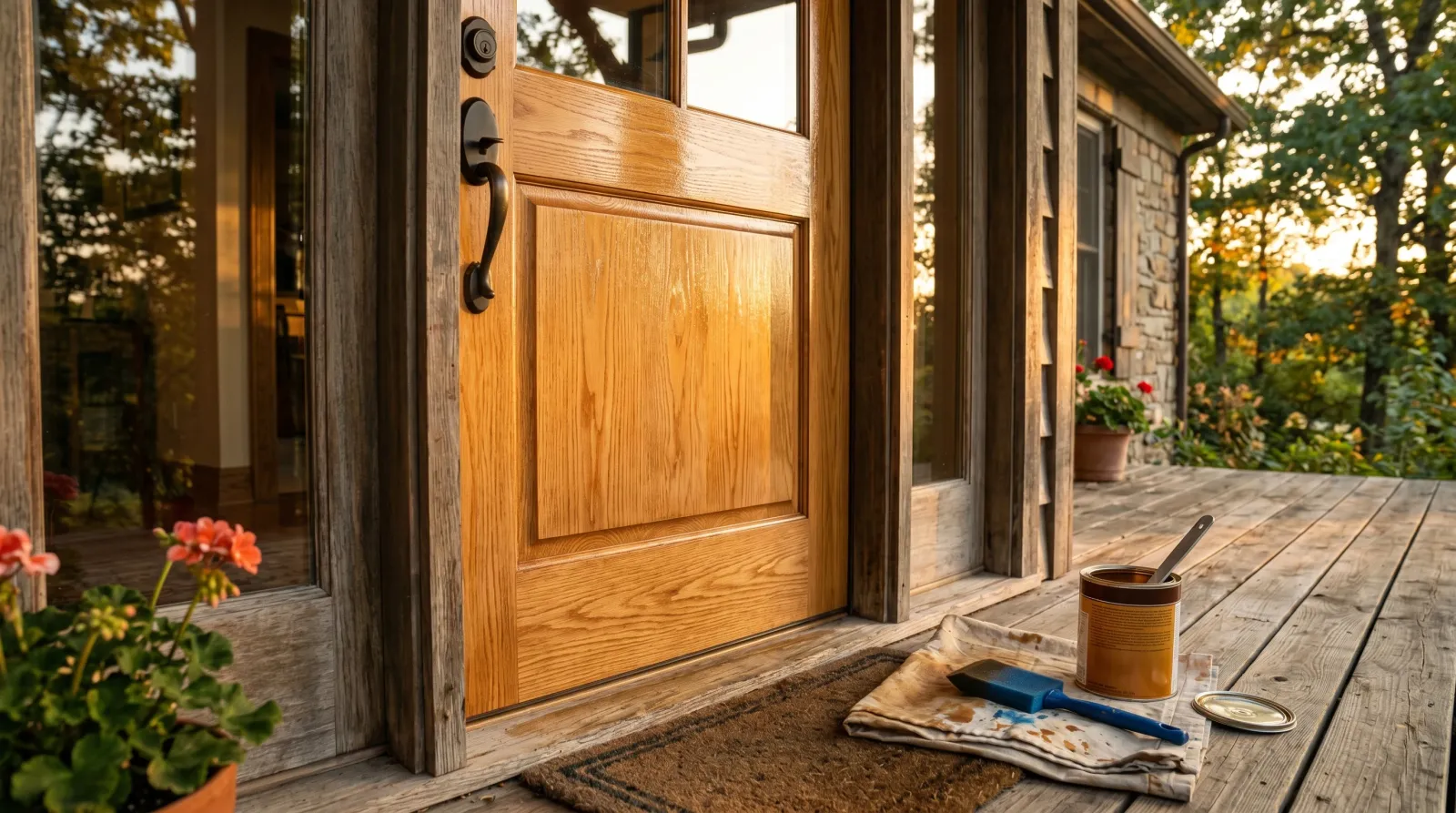
You finish an outdoor table with the same clear coat you used on an interior floor, and a year later it’s a mess: hazy, cracked along the grain, peeling at the edges where the sun hits hardest. The finish didn’t fail because it was cheap. It failed because indoor wood barely moves and outdoor wood never stops. Spar urethane is the clear finish built for the wood that moves.
Spar urethane is a clear, oil- or water-based protective coating that cures into a flexible film with built-in UV absorbers. The name comes from “spar,” the masts and booms on a sailboat — wood that flexes in wind and bakes in sun, the original problem this chemistry was designed to solve. A typical exterior application is three to four coats, each adding roughly 1 to 1.5 mils of dry film, with a service life of one to three years before re-coating outdoors.
TL;DR
- Spar urethane is a clear wood finish made to flex and resist sunlight. It’s the outdoor-and-sunlight version of polyurethane.
- The flexibility is the whole point. Outdoor wood swells and shrinks with humidity. A flexible film moves with it instead of cracking.
- UV absorbers protect the wood underneath. Sunlight breaks down both the finish and the lignin in the wood. The absorbers slow both.
- Water-based dries clear; oil-based dries amber and ambers more with age. Pick by the look you want.
- It’s water-resistant, not waterproof. Re-coat exterior surfaces every one to three years.
- For an indoor floor or hard tabletop with no sun, use regular polyurethane instead. It cures harder.
Why Spar Urethane Bends Instead of Cracking
Here’s the chemistry. A clear film finish is a binder — a resin that cures from a liquid into a continuous solid film. Regular interior polyurethane uses a tightly cross-linked resin: the molecules knit into a dense network, which is what makes a polyurethane floor finish hard and scratch-resistant. Dense and hard is what an indoor floor wants.
Outdoor wood wants the opposite. Wood is hygroscopic, meaning it pulls moisture out of humid air and releases it in dry air, and it changes dimension as it does — a wide board can move a sixteenth of an inch across its width between a damp morning and a dry afternoon. A hard, densely cross-linked film can’t stretch that far. It cracks, water gets under the crack, and the film peels off in sheets.
Spar urethane uses a longer, more flexible resin (formulators call it a long-oil alkyd in the oil-based versions). The cured film has more give built into the molecular chain, so it stretches and relaxes as the wood swells and shrinks. It trades some surface hardness for elasticity. On the substrate that’s moving every day, that trade is the right one.
The second piece is UV. Sunlight is high-energy enough to break chemical bonds, and it attacks two things at once: the finish itself, and the lignin in the wood underneath that the clear film is supposed to show off. Spar urethane carries UV absorbers — molecules that soak up ultraviolet energy and release it as harmless heat before it can break those bonds. That’s why a clear coat with no UV package goes chalky and the wood greys beneath it, while a spar finish holds the grain color longer.
When to Use Spar Urethane
Use it for:
- Exterior doors, especially front doors in direct sun.
- Outdoor furniture, railings, gates, and trellises.
- Adirondack chairs, benches, and tabletops that live on a patio or deck.
- Boat trim, oars, and anything marine. This is the original use case.
- Interior wood next to big south-facing windows or in a sunroom, where indoor finishes still see real UV.
- Light woods where you want the natural color preserved (use the water-based version).
When Not to Use Spar Urethane
Don’t use it for:
- Interior floors with no sun exposure. They want a hard floor-grade polyurethane that resists scuffs and furniture drag.
- Hard-use indoor tabletops and desks. The softer film marks and dents more easily.
- A surface that sits in standing water or stays submerged. Spar is water-resistant, not waterproof.
- Anything you want bone-white or pure-clear forever using the oil-based version. It ambers. Reach for water-based or a different finish.
- Bare exterior wood you’d rather let weather to grey naturally. A clear film fights that look.
Spar Urethane vs the Finishes It Gets Confused With
| Spar urethane | Interior polyurethane | Polycrylic | Exterior stain | |
|---|---|---|---|---|
| Film flexibility | High | Low | Medium | N/A (penetrates) |
| UV protection | Built in | Little to none | Some | Yes (pigment-based) |
| Surface hardness | Medium | High | Medium | None |
| Best for | Outdoor + sunlit wood | Indoor floors, trim | Indoor light woods | Decks, siding |
| Color shift | Amber (oil) / clear (water) | Amber (oil) / clear (water) | Near-clear | Adds color |
For the deep version of the clear-coat question, see polyurethane vs polycrylic. For the resin-carrier question underneath all of this, the oil-based vs water-based breakdown covers cure, cleanup, and yellowing across both families.
A note on terms: “spar varnish,” “marine varnish,” and “spar urethane” get used interchangeably at the store. Traditional spar varnish is a phenolic or alkyd resin with no urethane in it. Spar urethane adds urethane to the resin for a tougher, faster-curing film. For exterior wood at home, the urethane versions are easier to work with and more durable.
Common Mistakes
- Using interior polyurethane outdoors to save a trip. It has no UV package and a rigid film. It will crack and peel within a season on a sunny door. The reason for that is the wood movement the hard film can’t follow.
- Thinking three coats is overkill. The UV absorbers live in the film. Two thin coats protect less than four, and the absorbers deplete over time, which is why exterior spar needs re-coating every one to three years even when it still looks fine.
- Skipping the light sand between coats. Each coat needs a slightly roughened surface to grip. A quick pass with 220-grit gives the next coat tooth so it bonds instead of sitting on top and delaminating later.
- Using oil-based spar over a white or light surface. The amber tint reads as a yellow cast on anything pale. Water-based spar dries clear and stays close to the wood color.
- Brushing it on thick and fast. Spar self-levels best in thin coats. A heavy coat traps solvent, stays tacky, and sags on vertical surfaces like a door or railing.
What to Look For When You Buy
Decide on the carrier first. Oil-based spar urethane builds a warmer, slightly thicker film, ambers the wood, and takes longer to dry (8 to 24 hours between coats). Water-based dries fast (4 to 6 hours), cleans up with water, dries nearly clear, and smells far less. Both protect well; the choice is about look and working time. Well-known options include Minwax Helmsman and Varathane Spar Urethane in both oil and water-based versions.
Match the finish to the surface, not just the wood. Most spar urethane comes in satin, semi-gloss, and gloss. Gloss shows the most film build and the most water beading but also the most surface scratches; satin hides wear better on a door people touch every day. If you’re choosing a sheen for the first time, the paint sheen guide explains how each one behaves under light.
If your project is a horizontal deck rather than a vertical door or a piece of furniture, a clear spar film is the wrong tool — foot traffic abrades it fast and it peels. Use a penetrating pigmented product instead; the best deck stain round-up covers what actually survives being walked on. And before any of this, the guide to finishing exterior wood walks through the prep that decides whether the finish lasts one year or five.