How to Paint a Front Door (curb Appeal)
Front door repaint that holds up: pull the door, sand or BIN-prime if the old paint is oil, two coats of waterborne alkyd, 12 hours to reinstall.

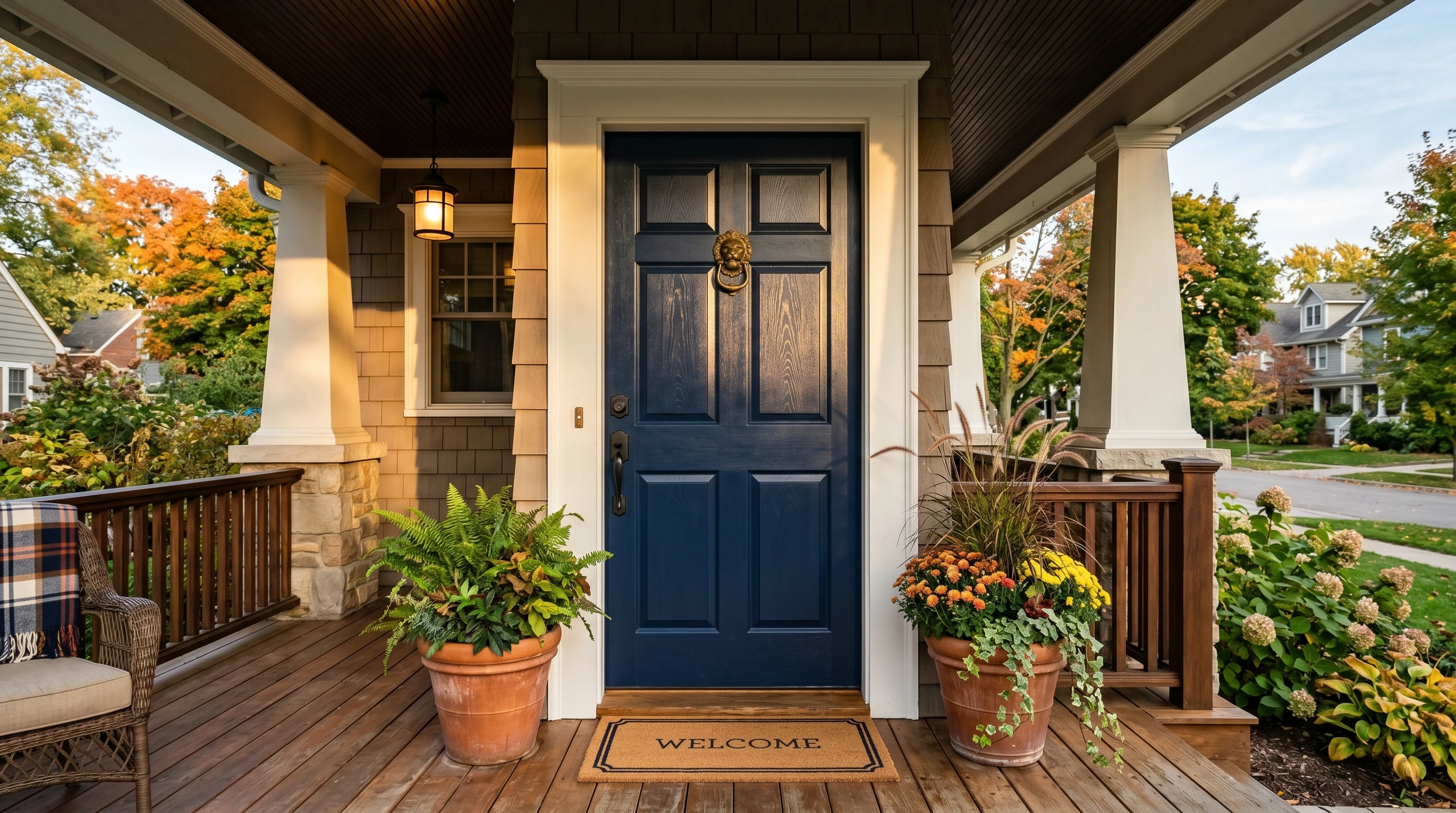
A front door is the smallest exterior repaint you’ll ever do and the one people see first. Get it wrong and the failure is loud — peeling at the bottom rail by the second summer, brush marks running down the stiles, a sticky latch edge where the paint never cured. Get it right and the door looks better than the rest of the house.
Most front-door jobs fail for the same reason. The old paint was oil, the new paint is waterborne, and nobody bridged the gap. We’ll bridge it.
What You’ll Get
A door that reads as new from the curb. Smooth panels, clean reveals, no holidays at the stile-rail joints, and a finish that survives a Midwest winter. One weekend of calendar time, four hours of active work.
Honest Take on Difficulty and Time
| Method | Active time | Calendar time | Skill |
|---|---|---|---|
| Door off, brush + foam roller | 3–4 hrs | 1 weekend (12-hr cure between coats) | Medium |
| Door on, brush only | 2 hrs | 2 evenings, worse finish | Easy |
Take it off. The on-the-hinges method exists because some doors can’t come off easily — old security doors, swollen frames, irreplaceable hardware. For a standard residential front door, pulling it is half an hour and the finish is in a different league.
What You’ll Need
Paint and Primer
- Topcoat: Benjamin Moore Aura Grand Entrance (satin) or Modern Masters Front Door Paint. See the best exterior paint round-up for the broader exterior conversation.
- Primer for oil-to-waterborne transitions: Zinsser BIN shellac.
- Primer for sound latex repaints or bare wood: INSL-X Stix bonding primer.
Tools
- 2.5” Wooster Silver Tip angled sash brush
- 4” foam-mini roller with a mohair sleeve, not yellow foam
- 120-grit and 220-grit sanding sponges
- Two sawhorses or painter’s pyramids
- Cordless drill and a nail set for the hinge pins
- Zip-top baggie and a Sharpie for hardware
- Floetrol latex extender (5% additive, extends the wet edge)
See the brush round-up if you don’t already own a Silver Tip.
Method Variants — Door off vs. Door On
Door off, on sawhorses, is the right answer. The door lays flat, paint self-levels, no gravity-driven sags, and you can paint the top and bottom edges (which nobody does and which is why front doors rot from the bottom up).
Door on the hinges is the emergency-only method. Mask the hinges with painter’s tape, paint top to bottom, work fast, accept the brush marks. Use it for a touch-up, not a refinish.
Step 1 — Pull the Door, Bag the Hardware
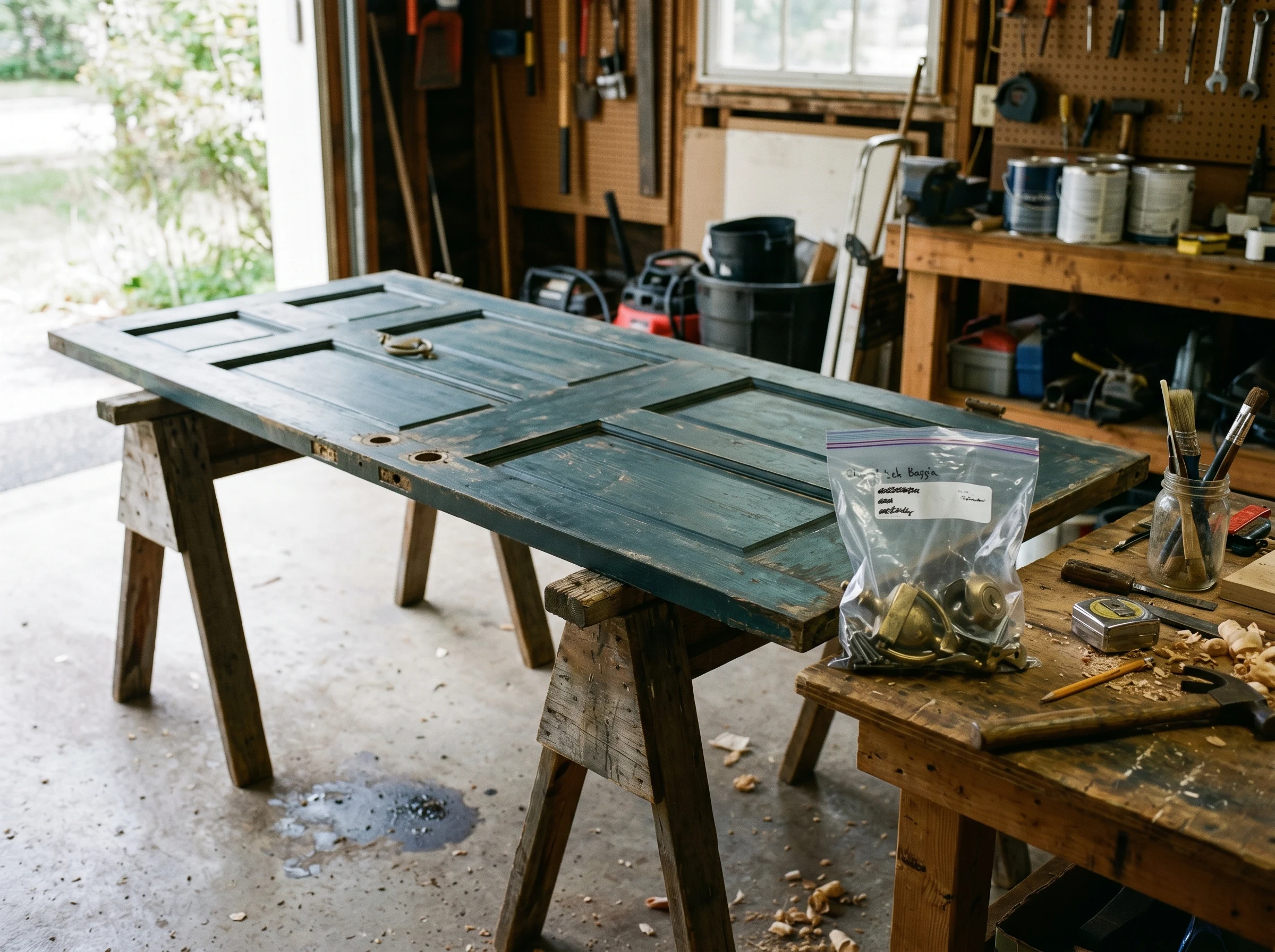
Hinge pins tapped out from the bottom. Knocker, knob, deadbolt, strike plate, screws all into one labeled baggie.
Tap the hinge pins out from the bottom with the nail set and a light hammer. Lift the door off and lay it flat across the sawhorses with the exterior face up.
Pull the knocker, the knob, the deadbolt, the strike plate, and every screw. Into the baggie they go, taped to the back of the door. Don’t paint around hardware — masking takes longer than removing, and tape lifts wet paint when you peel it.
Watch out for: the weatherstripping. Pull the rubber sweep off the bottom edge and the foam strip off the jamb side. Paint won’t bite if it’s there, and putting it back is two minutes with a flathead.
Step 2 — Test for Oil, Sand, Prime
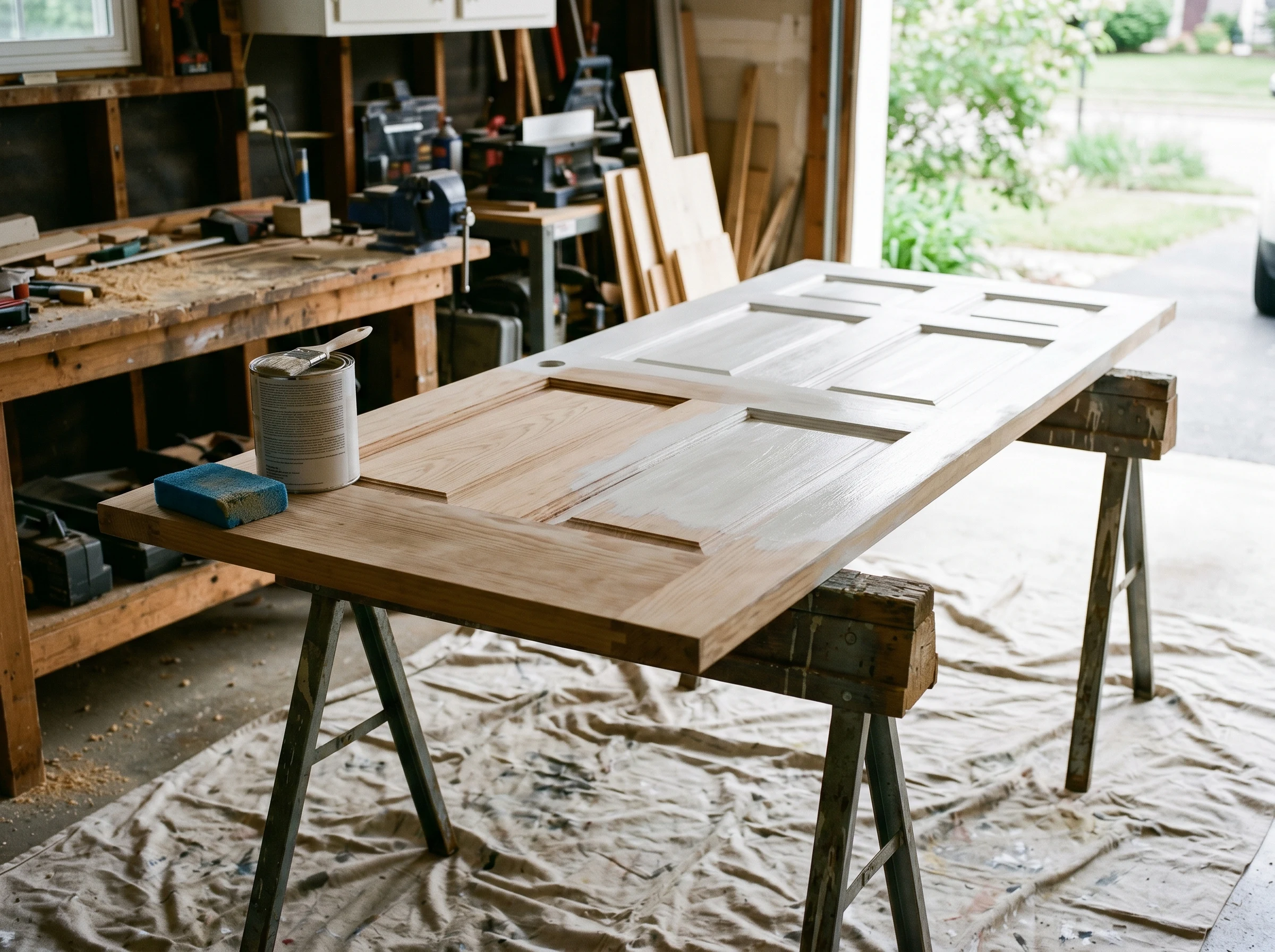
Old gloss scuffed with 120, oil-painted doors get BIN shellac, sound latex gets Stix. Bare wood gets primer too.
Hidden spot, denatured alcohol on a cotton ball, rub for ten seconds. Color on the cotton means latex. Nothing on the cotton means oil. If it’s oil, you’re going waterborne over it, which means BIN shellac is the bridge. Skip this step and your topcoat peels off in sheets in 18 months.
Scuff the whole door with the 120-grit sponge first — knock the gloss off, feather the edge of any chips, expose fresh paint for the primer to grab. Vacuum, tack cloth. Hit it again with the 220 to smooth. Tack cloth.
One coat of BIN over oil, or one coat of Stix over sound latex, or one coat of either over bare wood. BIN dries in 45 minutes; Stix wants two hours. Roll the flats with the foam-mini, cut in the panels and the routed reveals with the brush.
Watch out for: the top and bottom edges of the door. The factory leaves them bare. Prime them.
Step 3 — First Color Coat
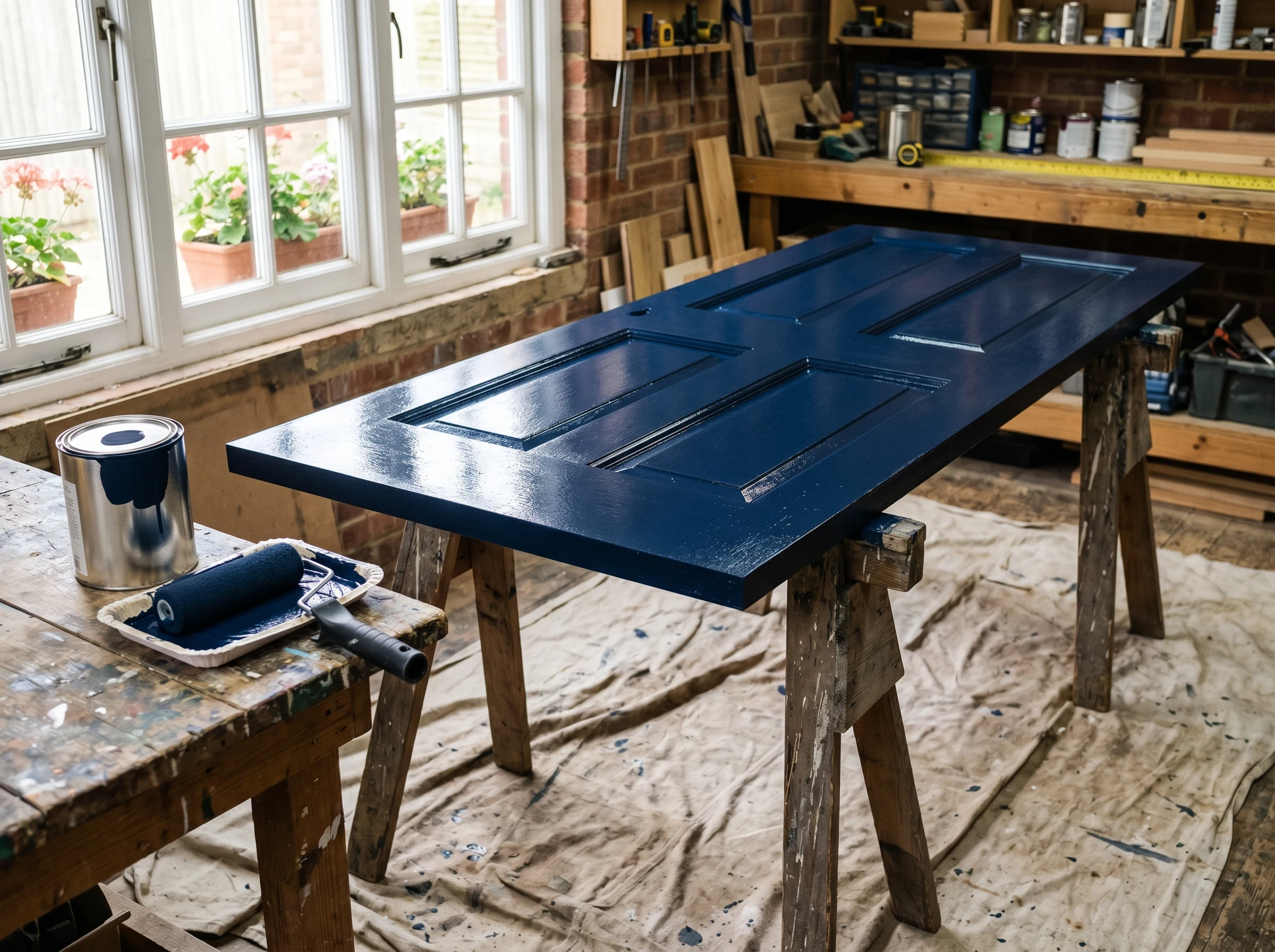
Foam-mini for the flats, angled brush for the routed reveals. Wet edge moves outward.
Stir the can for two minutes, not thirty seconds. Front-door paints are heavily pigmented and the color settles to the bottom; under-stirred paint dries patchy. Pour a working amount into a roller tray, add 5% Floetrol, stir again.
Order on a panel door: panels first, then the center stile between them, then the top and bottom rails, then the two outer vertical stiles last. The wet edge moves outward and you never cut into half-dry paint.
Brush technique: load a third of the bristle, tap once on the inside of the can, lay paint into the recessed corners with the bristle tip, then drag outward across the panel face. Don’t go back over a stroke that’s started to set. Roll the larger flats in two passes with the foam-mini. Watch for holidays at the stile-rail joints — easy to miss, obvious from the curb.
Step 4 — Second Coat, Then Cure
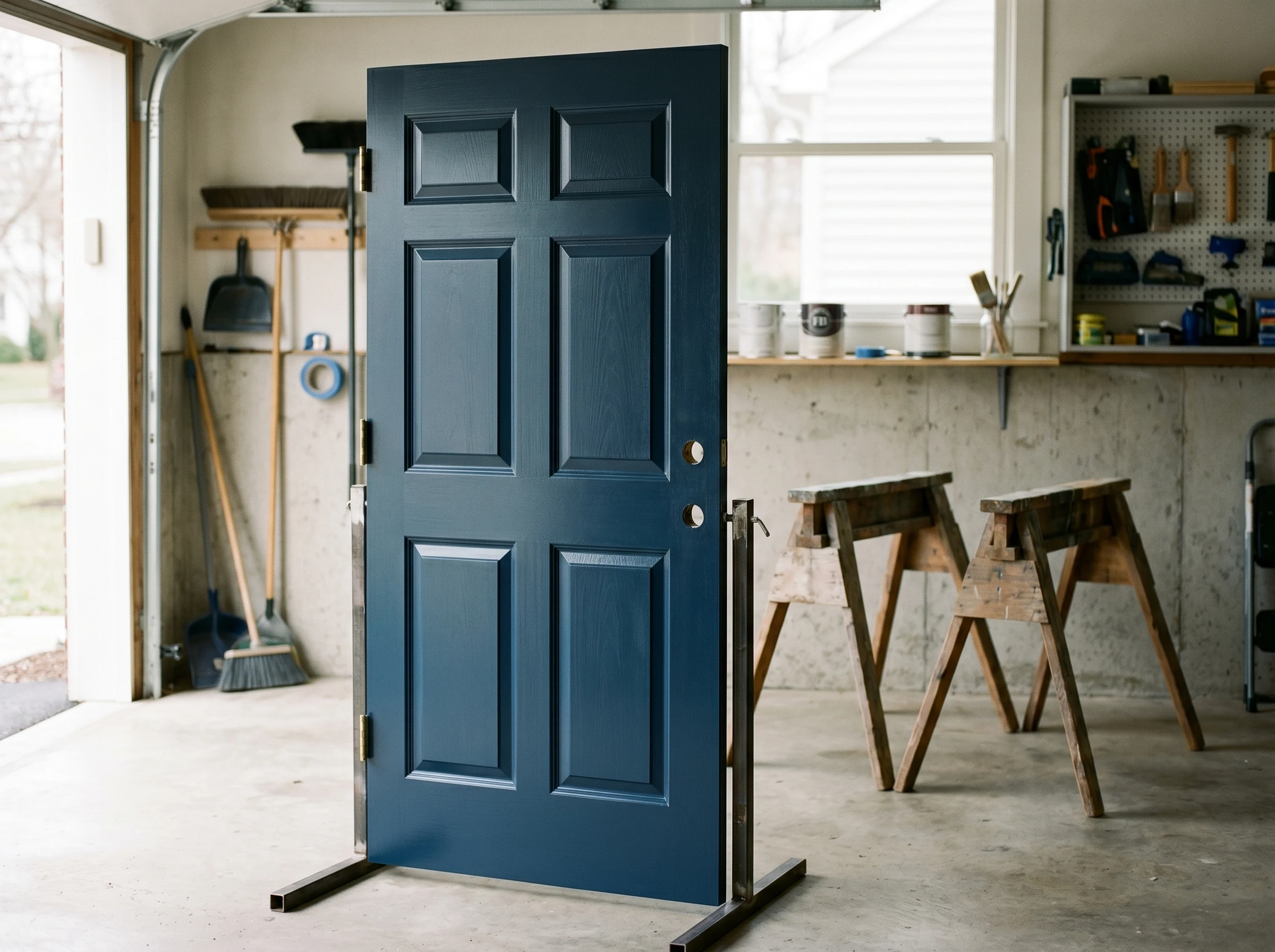
Second coat down. Door stays flat two hours, then upright on a hinge stand to finish the 12-hour cure.
Aura Grand Entrance wants four hours between coats. Modern Masters wants six. Read the can, set a timer, don’t touch the door until it goes off. Recoat too early and the second coat lifts the first; you get wrinkles you can’t fix without sanding back to primer.
Second coat same order, same Floetrol, same brush. After the second coat, leave the door flat for two hours so the paint can flow and self-level. Stand it upright too soon and the still-wet film sags on the lower stiles.
After two hours, move the door to the hinge stand and finish curing upright for the rest of the 12-hour return-to-service window. The hinge stand: a long screw driven partway into a 2x4 base, with the bottom hinge knuckle slid onto the screw. Door balances on the single pin.
Step 5 — Re-Hang
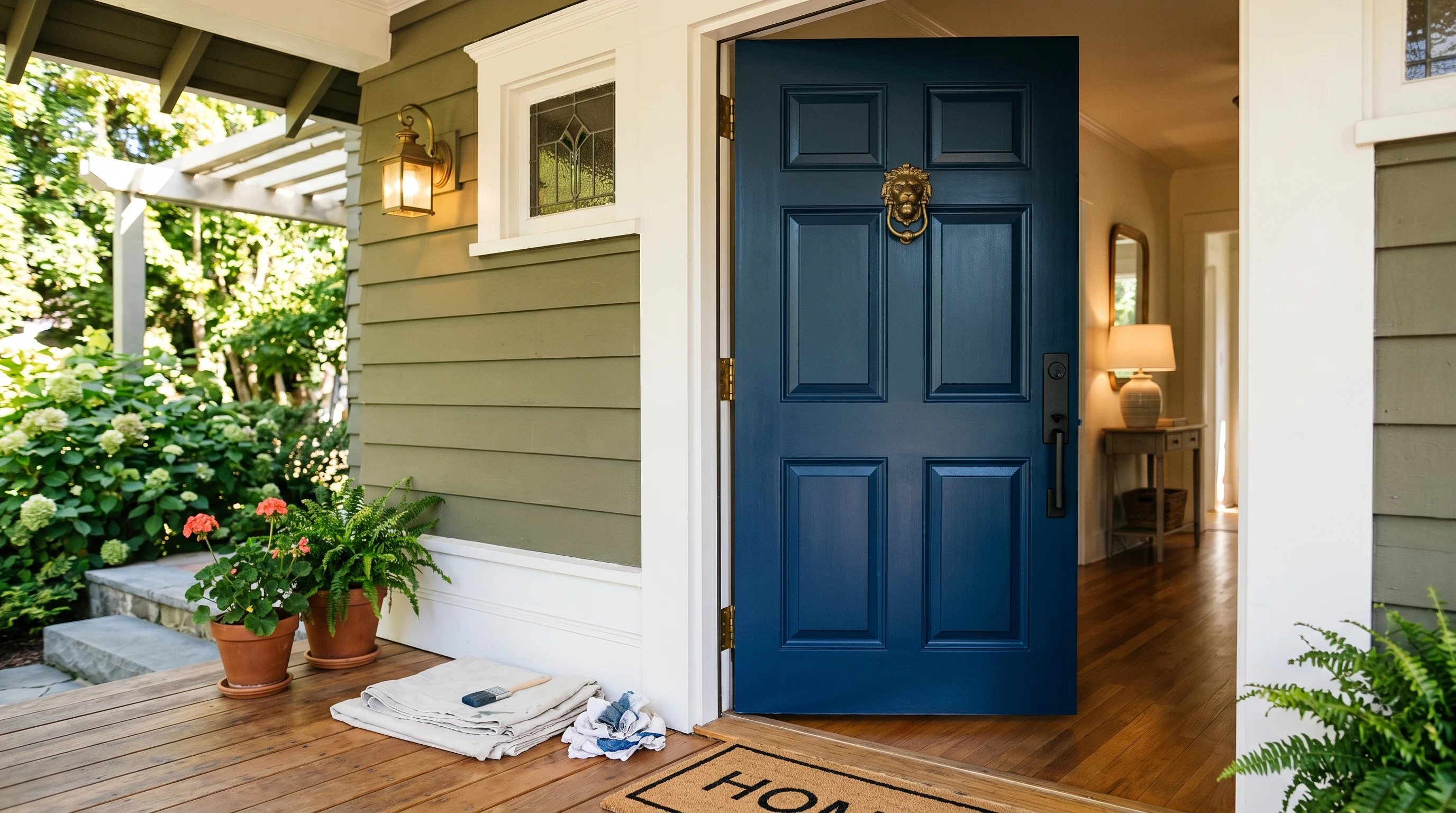
Hinges re-pinned at 12 hours. Knocker, knob, deadbolt, weatherstripping back on last.
Twelve hours after the final coat, the film is hard enough to handle. Walk the door back to the jamb, line up the hinge leaves, drop the pins. Reinstall the knocker, knob, deadbolt, strike plate, and weatherstripping from the baggie.
Don’t slam the door for a week. The paint is dry to touch but curing for 30 days; slamming compresses the latch edge against the strike plate and leaves a divot. Soft-close.
Cure Schedule
| Time after final coat | What’s safe |
|---|---|
| 2 hours | Move from flat to upright on the hinge stand |
| 12 hours | Re-hang the door, reinstall hardware, close it |
| 7 days | Normal use, don’t slam, don’t scrub |
| 30 days | Full cure, wipe down with mild soap |
Common Mistakes
- Skipping the alcohol test on an old door. Waterborne paint over uncoated oil peels in sheets by year two. Two minutes of testing prevents the whole job.
- Painting on the hinges to save time. Drips on the lower rail, brush marks on the stiles, paint on the hinges. The 30 minutes you save costs you the finish.
- Leaving the top and bottom edges bare. That’s where water enters the door and where rot starts. Paint all six sides.
- Recoating before the can’s recoat window. The second coat lifts the first. Wrinkles you can’t sand out. Set a timer.
- Reinstalling the knocker before twelve hours. Pulls a halo of paint off when you tighten the screws.
Maintenance
Five to eight years on a covered porch with mild exposure. Three to five if it gets afternoon sun. The bottom rail and the top edge fail first — the two surfaces nobody paints. Keep a labeled quart of leftover Aura or Modern Masters in the garage; for a chip, sand the spot with 220 and dab it on with an artist’s brush. Don’t feather a touch-up across a whole stile or you’ll see the seam from the sidewalk.
Cost
| Item | Cost |
|---|---|
| Topcoat (1 quart Aura Grand Entrance) | $45 |
| Primer (1 quart BIN or Stix) | $25 |
| Wooster Silver Tip 2.5” | $22 |
| Foam-mini roller + sleeve | $14 |
| Sponges, tack cloth, Floetrol | $18 |
| Drop cloth, painter’s tape | $12 |
| Total | ~$136 |
What’ll Bite You in Two Years
The bottom edge. Almost nobody paints it because the door is hung and they don’t see it. Water wicks up from the threshold, the bottom rail swells, the paint above lifts, and the whole lower third of the door is gone by year three. Take the door off, paint the bottom edge, and the next repaint is five years out instead of two.
Ask a Question