Polyurethane vs Polycrylic: When to Use Each Topcoat
Polyurethane yellows and cures hardest. Polycrylic stays clear and dries fast. A topcoat verdict by wood color, sheen, and where the piece lives.

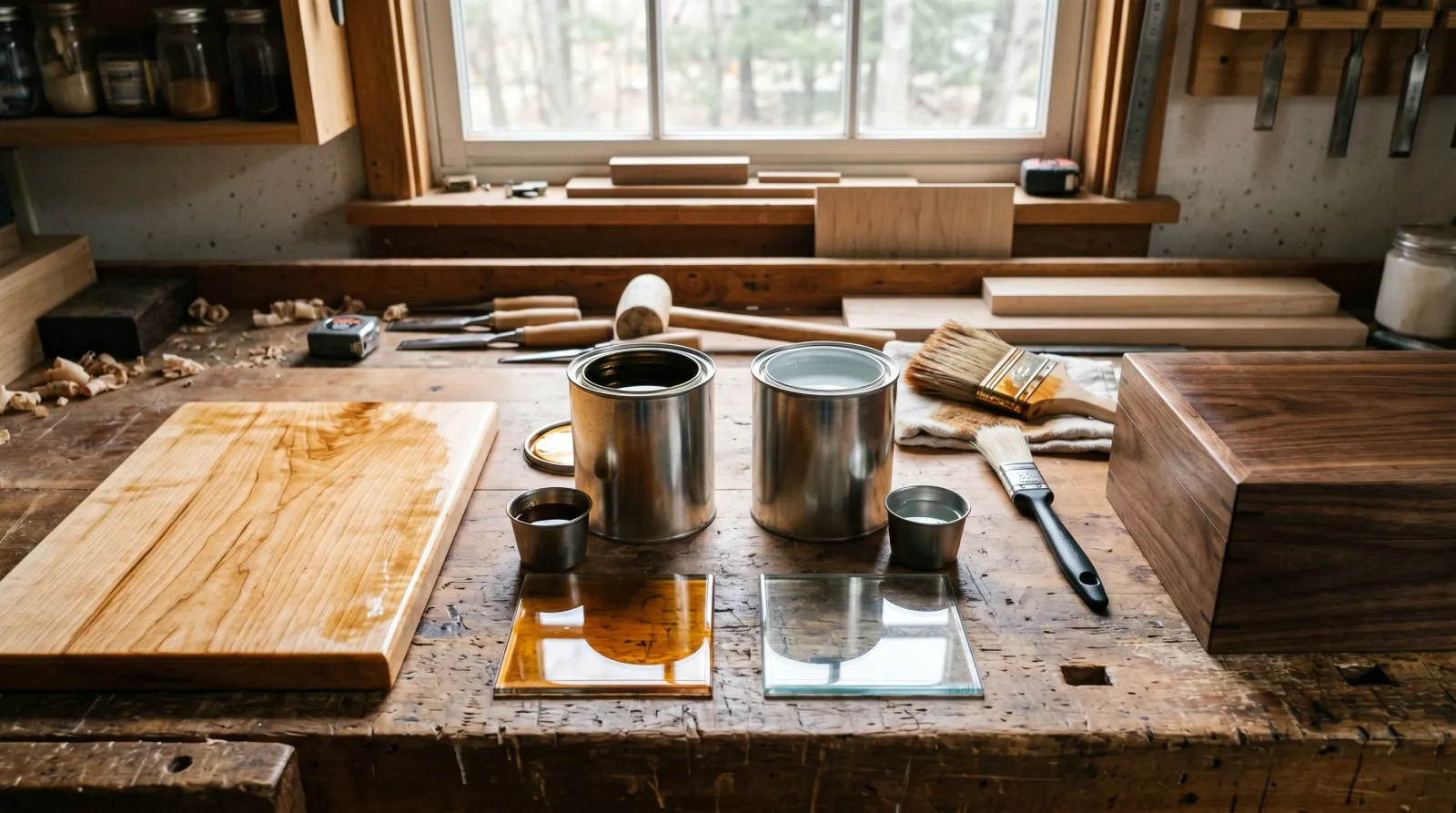
The 30-Second Answer
Polyurethane on dark wood, floors, and anything that takes daily abuse. Polycrylic on white paint, light-stained maple or birch, and any piece where a warm amber cast would read as a stain.
Oil-based poly cures into the hardest film of the three. It also yellows. Water-based poly stays clearer and dries faster, but it’s softer. Polycrylic is Minwax’s water-based acrylic-poly hybrid. It’s the clearest of the bunch, the easiest to apply, and the weakest under foot traffic. Pick by color first, then by wear.
At a Glance
| Oil-based poly | Water-based poly | Polycrylic | |
|---|---|---|---|
| Film hardness | 🟢 Hardest | 🟡 Medium | 🔴 Softest |
| Color cast | 🔴 Warm amber | 🟢 Clear | 🟢 Clearest |
| Yellowing risk | 🔴 Yes (year one) | 🟡 Minimal | 🟢 None |
| Dry time (recoat) | 🔴 8–24 hours | 🟢 2–4 hours | 🟢 2 hours |
| Floors and high-wear | 🟢 Yes | 🟡 Three-coat minimum | 🔴 No |
How to Tell What’s Already on the Wood
Wipe a hidden spot with denatured alcohol on a cotton ball. If the finish softens and you get a milky transfer, it’s water-based — poly or polycrylic. If nothing comes up, it’s oil. To tell water-based poly from polycrylic, you can’t, really. Both are acrylic-modified urethane in a water carrier. The label on the old can is the only honest answer there.
For yellowing diagnosis: hold a fresh sheet of printer paper next to the finish in north-facing daylight. Oil-based poly that’s a year old reads visibly warmer than the paper. Polycrylic doesn’t.
Film Hardness
Oil-based polyurethane cures into the hardest topcoat you can buy at a big-box store. Three coats on a hardwood floor will hold up to a decade of foot traffic, dog nails, and chair drag. Water-based poly cures softer at one month but keeps hardening for six. Polycrylic plateaus early and stays there — about 70% as hard as oil-based at full cure.
For floors and dining tables, that gap matters. For a bookshelf nobody touches, it doesn’t.
Winner: Oil-based polyurethane.
Color Cast and Yellowing
Oil-based poly goes on with a warm amber cast and gets warmer over time. On walnut, mahogany, and dark-stained oak, that warmth deepens the wood and looks correct. On maple, birch, ash, or anything painted white, the same warmth reads as dirt. Twelve months in and the white trim looks tobacco-stained.
Water-based poly goes on water-clear and stays close to clear. A faint cast develops over years on north-facing pieces but it’s nothing like the oil shift.
Polycrylic is the clearest of the three on day one and stays color-stable for the life of the finish. That’s the whole point of the chemistry.
Winner: Polycrylic on whites and blonde wood. Oil-based wins on dark wood where the amber reads as character.
Dry Time
Oil-based poly wants 8 to 24 hours between coats and 30 days to full cure. Polycrylic recoats in 2 hours and lets you put the piece back in service in 3 days for normal use. Water-based poly sits between them, closer to polycrylic.
The recoat window matters more than the absolute number. Brush a second coat of oil-based poly at hour 10, and you’ll drag the first coat. Brush a second coat of polycrylic at hour 2, and it lays down clean.
Winner: Polycrylic.
Application
Polycrylic has one real problem: brush marks. It dries fast, which means a slow brush leaves ridges that don’t level. The fix is a synthetic-bristle brush (never natural — natural bristles bloat in water), thin coats, and one direction of stroking per coat. Or spray it.
Oil-based poly flows out under any brush. Brush marks disappear as the solvent flashes off. The trade is a four-hour open time where dust lands and sticks. Cover the room and pick a still day.
Water-based poly behaves like polycrylic with slightly better leveling.
Winner: Oil-based poly for brush-only work. Tie when sprayed.
Where It Belongs
Decision tree by wood and use:
- Dark-stained wood, dining tables, floors, exterior doors: oil-based polyurethane. Accept the amber, get the hardness.
- Maple, birch, ash, painted white: polycrylic or water-based poly. Oil-based will yellow the surface and ruin the finish you paid for.
- Bathroom vanity (light wood): polycrylic. The yellowing alone disqualifies oil-based, and polycrylic shrugs off the humidity.
- Kid’s furniture, cabinetry interiors, picture frames: polycrylic. Fast recoat, no smell, no fume worry.
- Workshop bench, garage door interior: oil-based poly. Cheap, hard, who cares if it ambers.
For pieces that live somewhere in the middle (a stained oak coffee table in a normal living room) water-based poly is the safer middle bet. Slightly clearer than oil, harder than polycrylic, and fast enough to recoat in a day.
A Note on Floors
Polycrylic on a floor is a mistake. Minwax doesn’t rate it for foot traffic and the film will wear through inside two years on high-traffic boards. Use oil-based polyurethane (three coats, screened between) or move up to a true floor finish like Bona Traffic HD. Polycrylic belongs on furniture, trim, and cabinet doors. Not under your feet.
Water-based poly is borderline on floors. Three coats of a flooring-rated product like Bona Mega will hold up for five to seven years in a normal house. Brand matters. The hardware-store water-based poly sitting next to the polycrylic on the shelf is not a floor product even if the can doesn’t say so plainly.
VOC and Smell
Oil-based polyurethane runs 350 to 500 g/L VOC. The smell hangs in the room for three days and the off-gassing continues at a low level for two weeks. Open the windows, run a fan, and don’t sleep in the room until day three. In California, New York, and most OTC states, the high-VOC oil products are getting harder to buy at retail. You’ll see “modified alkyd” hybrids on the shelf that behave like oil but stay under the cap.
Polycrylic runs under 275 g/L. Water-based poly is similar. Both are tolerable to work with indoors in a single afternoon. Neither smells anything like oil. If you’re finishing a kid’s room, a nursery, or a piece for somebody with a sensitivity, polycrylic is the only one of the three you should be brushing on inside.
Verdict by Use Case
- Pick oil-based polyurethane if: the wood is dark or stained dark, the piece takes daily wear, or you’re finishing a floor.
- Pick polycrylic if: the wood is light or painted white, the piece is indoors at normal humidity, and you can recoat in two-hour windows.
- Pick water-based polyurethane if: you want hardness closer to oil with the color clarity closer to polycrylic. It’s the middle answer when you can’t commit.
Top Picks by Side
Going with polyurethane on stained wood? See the best wood stain round-up for color choices that pair with each topcoat type.
Going with polycrylic on white cabinets? See the best paint for kitchen cabinets for the painted base that polycrylic seals best.