How to Fix Scratched or Worn Painted Floors
Painted floor wear traffic paths, scuffs, and chips usually mean the wrong product or no topcoat. Sand, spot-prime, recoat, and seal so it actually holds.

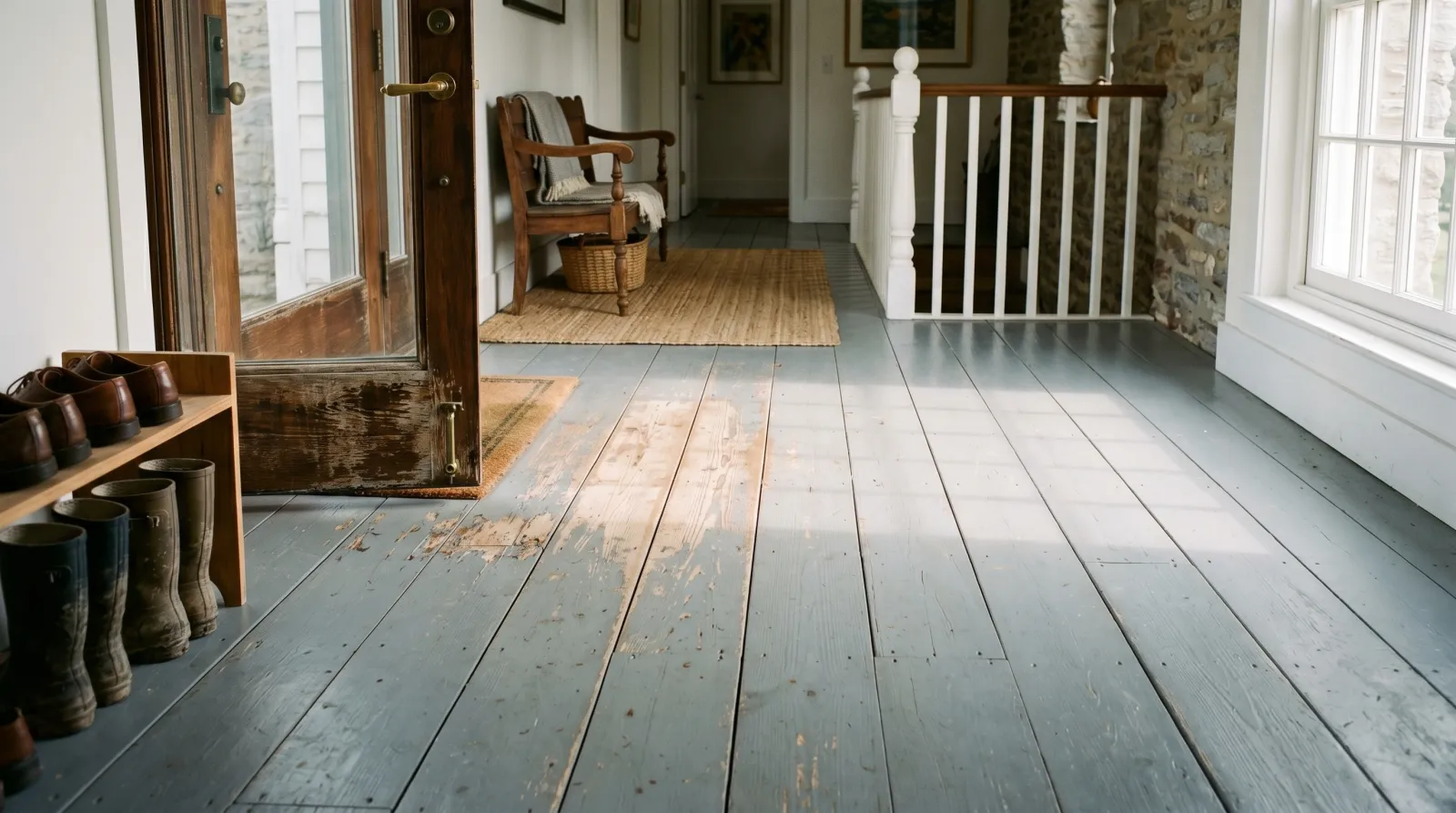
A painted floor wears in the traffic lanes first because somebody used wall paint and skipped the clear topcoat. That’s the cause nine times out of ten. The color coat takes every footstep and every bit of grit dragged in on a shoe, and a soft film loses that fight fast. Fix the product, add a wear layer, and the floor stops going bald.
Does This Match What You’re Seeing?
Look at where the wear is and what the worn spot looks like. The pattern tells you the cause.
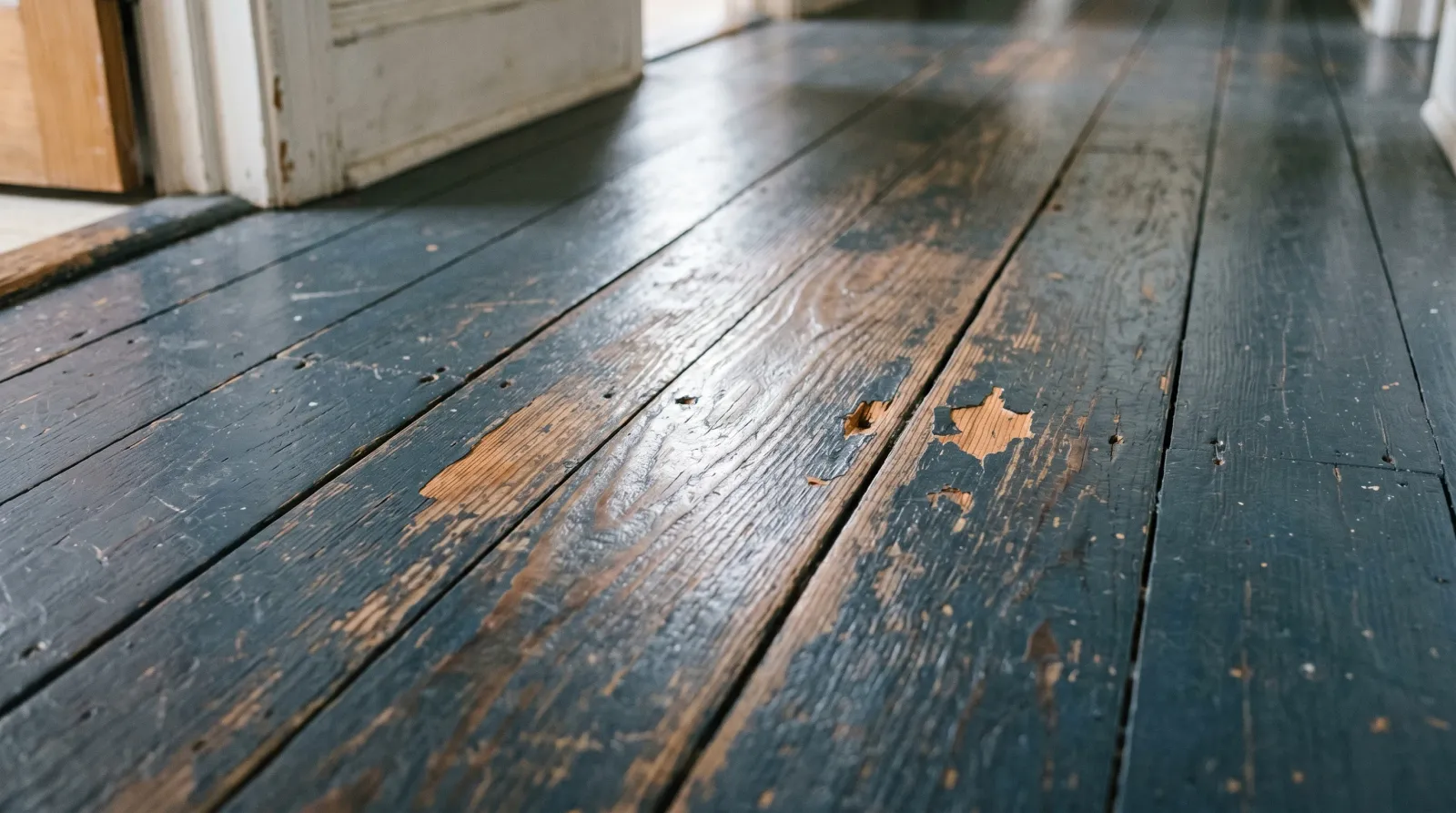 Wear concentrated in the walking lane, thinning to bare wood. Classic no-topcoat failure.
- A lighter, shiny-bald path through a doorway or down the middle of a room: abrasion wear. The film is too thin or too soft and foot traffic sanded it down. No clear topcoat.
- Fine scratches and scuff marks, color still mostly there: surface scuffing. Grit and shoe soles. A clear coat would have taken these instead of the paint.
- Chips popping off down to bare wood or concrete: adhesion failure under the wear. Paint went over a glossy, dusty, or unprimed floor and never bonded. Traffic just found the weak spots first.
- Worn spots only under chair legs, a desk, or a stool: point-load abrasion. Soft film plus a hard pivoting load.
- Powdery or chalky color rubbing off on a wet rag: the paint is failing on its own, not just from traffic. Wrong product for a floor, or it never cured.
If the floor is both worn in the lanes and chipping at the edges, you’ve got a soft film and a bond problem at once. The fix below handles both.
How Serious Is This?
Most of the time this is a one-weekend job. The film is cosmetic and the substrate underneath is fine.
Three things push it up the ladder:
- Chips down to bare wood that’s gone soft, dark, or spongy: water got into the wood under the paint. Dry it out and check for the source before you recoat. Paint won’t save wet wood.
- A pre-1978 floor with chipping paint: assume lead until you test. Sanding a floor kicks up a lot of dust, and dust is the dangerous part. Test first.
- Concrete floor that’s bubbling or peeling in sheets, not just wearing: that’s usually moisture coming up through the slab, not traffic. Different problem. Check for a vapor issue before you put another coat down.
If it’s just worn lanes and a few scuffs, keep reading. Same-weekend fix.
Why This Is Happening (root Cause)
Floors fail for reasons walls never do, because nothing walks on a wall.
Wrong product. This is the big one. Latex wall paint never cures hard enough to take foot traffic. It stays a little soft so it can flex on a wall, and on a floor that softness is the problem. Grit presses into it, shoes drag across it, and it abrades like a pencil eraser. I see this every time someone paints a porch or a kid’s room floor with whatever was left in the garage.
No clear topcoat. A painted floor needs a sacrificial wear layer. The clear poly takes the scuffs, the grit, and the chair legs so the colored paint stays sealed. Skip it and the color coat is your wear surface. It loses. Even a real floor enamel lasts twice as long with two coats of clear over it.
Bad prep under the paint. Floors get walked on, so any weak bond shows up faster than it would on a wall. Paint over a glossy old finish with no sanding, over concrete dust, or over bare wood with no primer, and the film never grabbed. Traffic peels it where the bond was weakest first. Those are your chips.
Film too thin. One stretched coat wears through in the lanes in a season. Floors need full film thickness built in two coats, not one thin pass.
To confirm it’s a soft-film problem, press a coin into the worn area and twist. If the paint scuffs or marks easily, it never cured hard. That’s a wall-paint film, and recoating with the same product won’t fix it.
The Fix
This works for wood and plywood floors, porches, and stairs. Concrete and garages follow the same logic but want an epoxy-based product instead of enamel; I’ll flag where they differ.
Safety First
Sanding old floor paint makes dust, and dust is what gets in your lungs and your kid’s lungs. Wear an N95 at minimum, P100 if the floor is pre-1978. Open windows, run a fan blowing out. If you treat any mildew or grease, never mix bleach with vinegar, ammonia, or hydrogen peroxide. It makes toxic chlorine gas. Gloves and eye protection for any cleaning chemical.
Step 1. Test the Old Paint and the Substrate
If the house was built before 1978, swab the floor with 3M LeadCheck before you sand anything. Positive means wet methods only and containment, or hire a certified RRP contractor.
Then check the wood. Press the worn bare spots. Soft, dark, or spongy means water, and you stop and dry it out first.
Step 2. Clean the Whole Floor
Sweep, then scrub with TSP or a TSP substitute to cut the body oils, food grease, and floor wax that’s worked into a painted floor over the years. Rinse with clean water. Let it dry overnight. Wax and grease are why a recoat won’t stick, and you can’t see either of them.
Step 3. Sand the Entire Floor Dull
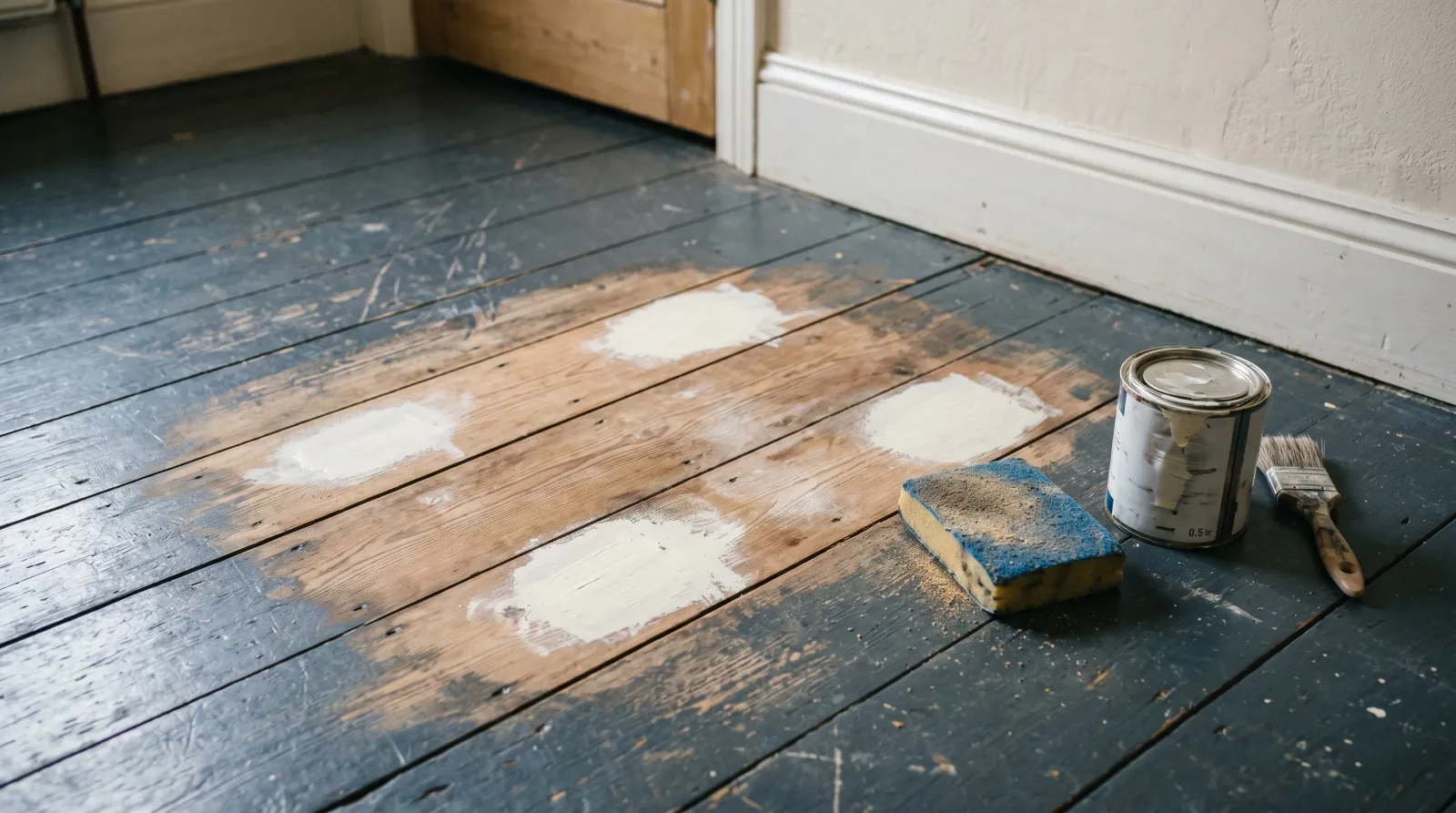 Whole floor scuffed flat, worn edges feathered, bare patches primed. This is where the bond comes from.
Not just the worn spots. The whole floor. 120 grit on a pole sander or a random-orbit, work until the sheen is gone and the surface feels uniformly dull. This gives the new coat a tooth to grab. Where the old paint is thick next to a worn-through bald spot, feather that edge so your fingertip can’t feel the step. A recoat over a cliff telegraphs the line through forever.
For concrete, you’re not sanding, you’re profiling. Etch with a masonry etcher or grind it to a CSP-1 to CSP-2 profile so the coating can key in. A slick troweled slab is the number one reason concrete floor paint peels.
Vacuum, then wipe with a tack cloth or a damp microfiber. Any dust left behind is a bond breaker.
Step 4. Spot-Prime the Bare Areas
Anywhere you sanded through to bare wood or bare concrete, spot-prime. Bare wood drinks binder out of the topcoat and you get flat dead spots and short film life. On glossy or slick old finishes that wouldn’t dull, use a bonding primer so the new coat grabs. INSL-X STIX or Zinsser Bulls Eye 1-2-3 for general bonding. For more on when a floor needs one, see what bonding primer actually does.
For concrete, a masonry or epoxy primer that matches your topcoat system. Let the primer dry per the can, usually an hour or two, before you topcoat.
Step 5. Recoat With a Real Floor Product
This is the step that decides whether you’re back here next year.
- Wood floors, plywood floors, stairs: porch-and-floor enamel. INSL-X Tough Shield, Benjamin Moore Floor & Patio, or a urethane-fortified floor paint. These cure hard and take abrasion. See the best wood floor paint round-up for the picks that hold.
- Porches, decks, outdoor stairs: an exterior porch-and-floor enamel rated for foot traffic and weather. The best porch floor enamel guide covers the difference between oil and acrylic here.
- Concrete floors and garages: two-part epoxy or a one-part epoxy-acrylic. See how to paint a concrete floor for the full system, primer through topcoat.
Two coats. Always two coats on a floor. One stretched coat wears through in the lanes in a season. Cut in the edges, roll the field with a 3/8-inch nap, and don’t stop in the middle of a run or you’ll get lap marks. Let the first coat dry the full recoat window on the can before the second.
Step 6. Seal It With Clear Poly
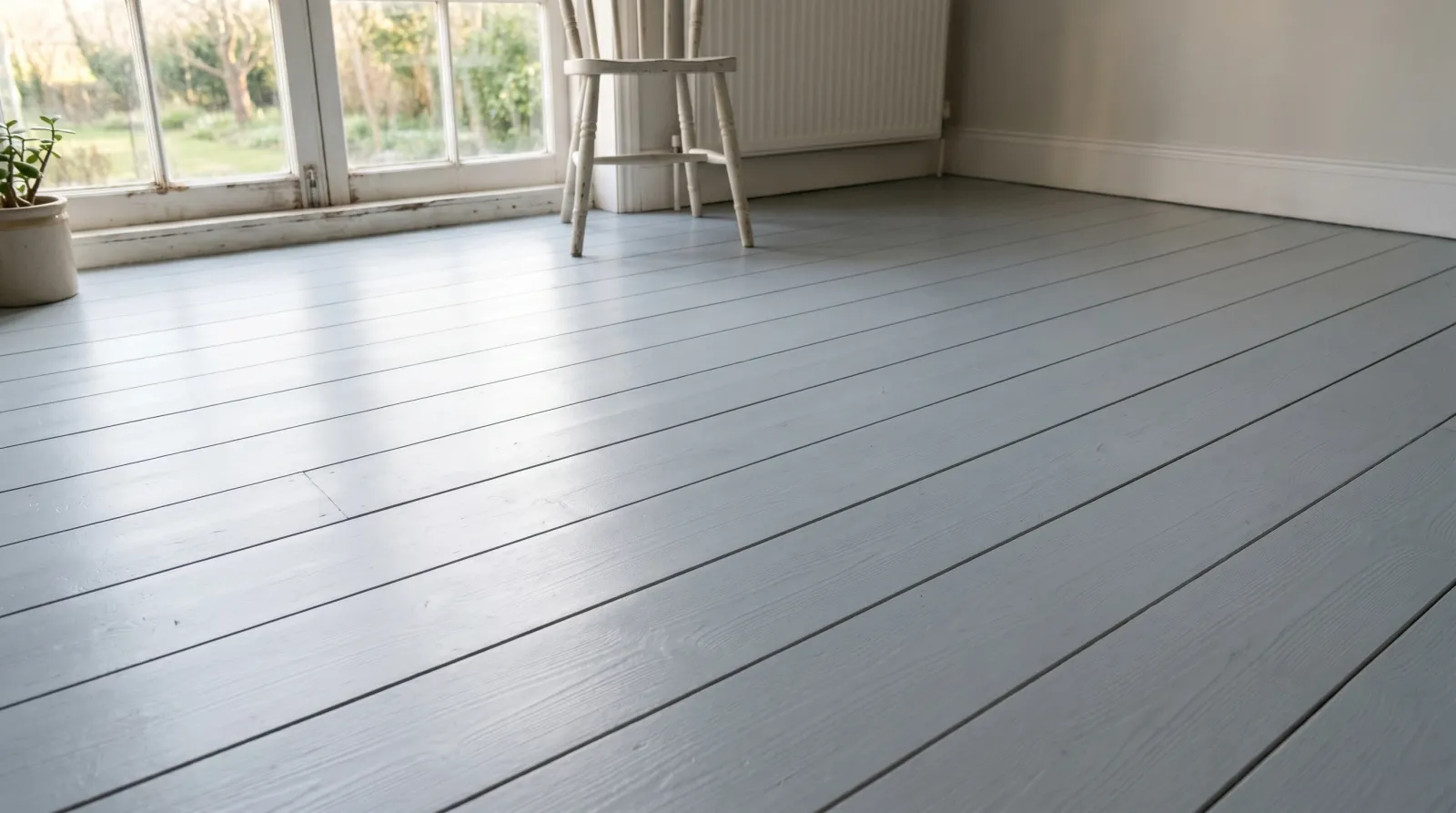 Two coats of floor enamel under two coats of clear poly. Now the poly takes the wear, not the color.
This is the step everybody skips and the reason the floor wore out in the first place. The clear topcoat is the sacrificial wear layer. It takes the scuffs, the grit, and the chair legs so the colored coat underneath stays sealed.
Use a water-based floor polyurethane. Bona Traffic HD on a wood floor that gets real traffic, or Varathane Floor Finish for a lighter-duty room. Two to three thin coats, screened lightly between coats with a maroon pad. Water-based poly stays clear and won’t amber the color the way oil-based poly will.
On concrete and garages, the epoxy system is self-sealing if you used a two-part product, but a clear urethane garage topcoat over it adds years and chemical resistance.
Prevention
The fix above is also the prevention. Once the floor has a hard enamel and a clear wear layer, the rest is keeping grit off it.
- Put a real floor product down, never wall paint. Color match a floor enamel to the shade you want instead of using the wall color in the can. Any paint store can tint floor enamel.
- Always clear-coat a painted floor. Two coats of floor poly. The poly is cheaper to recoat every few years than repainting the whole floor.
- Walk-off mats at every door. Most floor wear is grit tracked in on shoes. A mat catches the grit before it gets to the paint. This one thing doubles the life of the finish.
- Felt pads under furniture legs and chair feet. The worn rings under a desk chair are point-load abrasion. Pads stop them.
- Re-screen and recoat the clear poly before it wears through to the color. When the clear starts to look dull in the lanes, scuff and add a fresh coat of poly. Catch it before the color shows wear and you never repaint again.
- Give the floor a full week to cure before rugs go down. A rug on a green floor finish traps solvent, marks the surface, and pulls the coating when you lift it.
When to Call a Pro
- Pre-1978 floor with chipping paint and a positive lead test. Floor sanding throws a lot of dust; this is a containment job.
- Concrete that’s bubbling or peeling in sheets, which usually means moisture coming up through the slab. That’s a vapor problem, not a paint problem.
- Bare wood under the chips that’s gone soft, dark, or spongy from water. The boards need drying or replacing first.
- A large stair or commercial floor where you can’t take the space out of service long enough to cure properly.
What’ll Bite You in Two Years
Recoat the same wall paint over the same worn floor with no clear topcoat and you’ve bought yourself one more season, maybe two. The lanes go bald again, same path, same reason. The floor doesn’t need more paint. It needs a hard floor enamel and a clear wear layer over it. Do the system once and the only thing you touch again is a fresh coat of poly when the clear starts to dull. Skip the poly and you’ll be on your knees sanding this floor again before the next election.