Product review · Minwax · Updated August 8, 2026
Stainable Wood FillerMinwax paint review
6.8/10A good cheap latex patch under paint or dark stain, and a poor stain match anywhere the eye lands.
About a dollar an ounce, sands flush in two hours, and disappears under paint. The word stainable on the front of the tub is the part that does not hold up.

Maya Patel · Reviews Editor & Product Tester · Updated August 8, 2026
Maya spent five years running comparative product testing at a consumer testing nonprofit before joining CompositePaint. She fills and stains scrap boards before she trusts a patch on anything visible, which is the same five-minute test this review keeps insisting on. About the testing process →
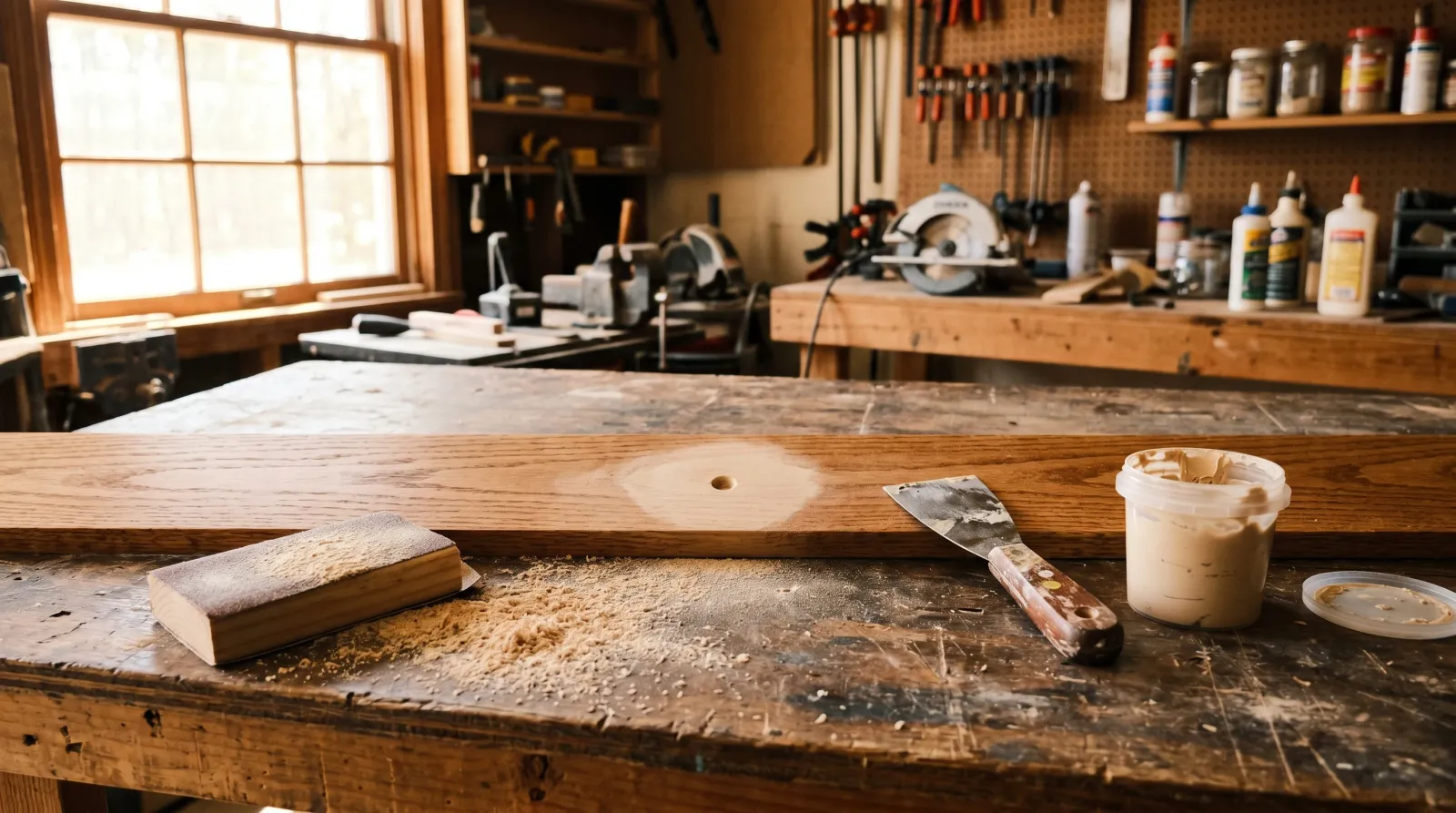
Minwax Stainable Wood Filler
TypeWater-based latex paste filler
Color out of the tubNatural pale tan, no tint range
FillsHoles and gouges up to 3/4-inch wide
Dry / sandShallow about 2 hr
Read this first
The Fast Verdict
As a cheap latex patch for nail holes and small dings headed for paint or a dark stain, buy it — about a dollar an ounce, sanded flush in roughly two hours, and a 6-ounce tub does a whole room of baseboard. As a stainable filler it disappoints: the latex binder takes stain at a different rate than wood fiber, so the patch reads lighter and often blotchier under a clear or light stain. Skip it on deck boards, sills, and anything that ponds water or flexes.
Best for
Nail and brad holes · Small gouges on interior molding · Doors, cabinets, and furniture headed for paint · Dark stain that swallows the difference · Same-day trim projects
Skip if
A light or natural stain on a focal surface · Soft or rotted wood · Deck boards, sills, and stair treads · Load-bearing repairs · Holes wider than 3/4-inch
What it's good at
- Nail and brad holes under paint — press it in, sand flush in two hours, and it vanishes
- Fast turnaround: fill in the morning, prime after lunch, no lost day
- Sanding like soft pine — 120-grit cuts it clean and feathers without gumming the paper
- Water cleanup, no fumes worth opening a window for
- Being genuinely cheap: a 6-ounce tub runs about $6 to $7 and does a room of baseboard
- Keeping for years if the lid seals tight
What it's not good at
- The stain match — the patch pulls lighter and blotchier than the wood around it
- Deep fills, which dish as the water leaves and need a second pass
- Wet or flexing wood: deck boards, sills, and treads crack and pop the patch out
- Color choice — one pale tan, no tint range at all
- Soft, rotted, or load-bearing wood, which wants the two-part filler instead
Same shelf, different cans
Which Minwax Filler Do You Actually Want?
Minwax sells four products people call wood filler, and buying the wrong one is the most common mistake here. This review covers the Stainable tub — the general-purpose middle option: cheapest, most flexible on color in theory, least predictable in practice.
Stainable Wood Filler (this review)
BaseWater-based latex paste, natural pale tan
RecoatShallow fills sand in about 2 hr; deep fills 2–6 hr per 1/4-inch layer
Buy it if
You are filling nail holes and small gouges on bare wood that is headed for paint or a dark stain.
Avoid if
The patch has to vanish under a light or natural stain, or the wood is soft, rotted, or outdoors and wet.
Minwax Wood Putty
BaseSoft, pre-colored, non-hardening dough
Buy it if
The piece is already stained and topcoated and you need a final touch-up you press in.
Avoid if
You need something that dries hard and sands, before finishing.
High Performance Wood Filler
BaseTwo-part filler and hardener
Buy it if
The wood is soft, rotted, or load-bearing — a chewed stair nose, a soft windowsill.
Avoid if
You want a long working time and a cheap tub for nail holes.
Color-Matched Wood Filler
BasePre-tinted to common stain shades
Buy it if
Your finish color is on their chart. It sidesteps the whole will-it-take-stain gamble.
Avoid if
Your stain is a custom or off-chart color.
Numbers, not adjectives
Spec Sheet
- Type
- Water-based latex paste filler
- Color out of the tub
- Natural pale tan, no tint range
- Fills
- Holes and gouges up to 3/4-inch wide; 1/4-inch layers for depth
- Dry / sand
- Shallow about 2 hr · deep 2–6 hr per layer · sand when fully dry
- Sanding
- Cuts clean with 120-grit and feathers flush
- Stain compatibility
- Accepts Minwax oil, gel, and water-based stains, but unevenly
- Surfaces
- Interior and exterior bare wood; not for wet or flexing exterior horizontals
- Cleanup
- Water, before it cures
- Sizes
- 1, 6, 16, 32, 64 oz tubs
- Price
- About $6–7 / 6 oz, $11–14 / 16 oz
Dry Times in the Real World
Shallow repairs dry in about two hours, and that is the practical win — on a Saturday trim project you fill in the morning and prime after lunch instead of losing a day to a slow epoxy. Depth changes the math. Anything deeper than about a quarter inch pulls back as the water leaves and dishes below flush, so either overfill slightly and sand it down, or build it in 1/4-inch layers at 2 to 6 hours each. One heaped pass on a deep gouge will almost always need a second. Sand only once it is fully dry: 120-grit cuts it clean and feathers to a flush edge without gumming the paper, so you are not fighting a hard ridge around the patch the way you do with some polyester fillers. Keep the lid sealed and the tub lasts years.
Mid-project panic
When It Goes Wrong, and How to Fix It
The patch reads lighter than the wood after staining
Why it happens. The latex binder absorbs stain at a different rate than wood fiber, so a filled spot almost always pulls lighter, and often blotchier, than the board around it. Under dark walnut or paint you will never see it. Under natural, golden oak, or any light clear stain on a tabletop or a stair tread, it lights up.
The fix. Run the scrap test before you commit: fill a sample hole in the same species, dry, sand flush, then wipe your exact stain across the patch and the bare wood. If it reads obviously lighter you have three moves — go to a darker stain that swallows the difference, use the pre-tinted Color-Matched tub, or fill with a tinted two-part epoxy you can color to match.
The filled hole sank below the surface
Why it happens. On anything deeper than about a quarter inch the water leaves and the surface dishes. One heaped pass on a deep gouge shrinks as it dries.
The fix. Overfill slightly and sand back flush, or build the repair in 1/4-inch layers and let each one dry before the next. Expect a second pass on any deep gouge; that is normal, not a bad tub.
The patch cracked and popped out on exterior wood
Why it happens. The tub is rated interior and exterior, but a rigid latex patch cannot track a board that swells and shrinks with the seasons. Deck boards, windowsills, and stair treads pond water and move, and the patch loses.
The fix. Use a two-part epoxy filler out there, or Bondo for the deck-and-sill workhorse job; DAP Plastic Wood-X is the easier no-mix option for medium outdoor patches. Keep the Minwax latex for protected repairs like a porch column nail hole or a railing nick, and plan to paint either way.
A spot you missed only showed up after staining
Why it happens. It sands flush easily, which makes it easy to move on before every hole is truly filled. Once the color is on, a shallow dish or a skipped brad hole is obvious and hard to blend back.
The fix. Go over every patch with a fingernail and a light held low across the surface before you stain, not after. Fill and sand anything that catches. Blending a repair into an already-stained board is a much longer afternoon than a second pass with the putty knife.
Side by side
Stainable vs Color-Matched vs High Performance
Three Minwax fillers, three different problems. Picking by the job instead of by the shelf price is what keeps the patch from showing.
| Stainable Wood Filler | Color-Matched Wood Filler | High Performance Wood Filler | |
|---|---|---|---|
| What it is | Water-based latex paste, natural pale tan. | The same idea, pre-tinted to common stain shades like golden oak and walnut. | Two-part filler and hardener that cures rock-hard. |
| Stain match | The weak link. Reads lighter and blotchier than the board around it. | Solved, as long as your color is on their chart. | Not the point — it is a structural repair filler, and the cured patch is harder than the wood. |
| Shrinkage | Dishes on fills deeper than about a quarter inch. | Same latex behavior. | Does not shrink. |
| Soft, rotted, or load-bearing wood | No. | No. | Yes. The pick for a chewed stair nose or a soft windowsill. |
| Working time | Long open time, smooth to press, water cleanup. | Same. | Short once mixed. |
| Price | About $6–7 / 6 oz, $11–14 / 16 oz. | Similar money. | Costs more. |
What it is
Stainable Wood FillerWater-based latex paste, natural pale tan.
Color-Matched Wood FillerThe same idea, pre-tinted to common stain shades like golden oak and walnut.
High Performance Wood FillerTwo-part filler and hardener that cures rock-hard.
Stain match
Stainable Wood FillerThe weak link. Reads lighter and blotchier than the board around it.
Color-Matched Wood FillerSolved, as long as your color is on their chart.
High Performance Wood FillerNot the point — it is a structural repair filler, and the cured patch is harder than the wood.
Shrinkage
Stainable Wood FillerDishes on fills deeper than about a quarter inch.
Color-Matched Wood FillerSame latex behavior.
High Performance Wood FillerDoes not shrink.
Soft, rotted, or load-bearing wood
Stainable Wood FillerNo.
Color-Matched Wood FillerNo.
High Performance Wood FillerYes. The pick for a chewed stair nose or a soft windowsill.
Working time
Stainable Wood FillerLong open time, smooth to press, water cleanup.
Color-Matched Wood FillerSame.
High Performance Wood FillerShort once mixed.
Price
Stainable Wood FillerAbout $6–7 / 6 oz, $11–14 / 16 oz.
Color-Matched Wood FillerSimilar money.
High Performance Wood FillerCosts more.
Nail holes headed for paint or a dark stain: the Stainable tub, and do not overthink it. A visible surface under a light or natural stain, with your finish color on their chart: the Color-Matched tub, which sidesteps the gamble entirely. Soft, rotted, or load-bearing wood: the two-part High Performance, every time. And for exterior horizontals that hold water, none of the three — that is epoxy or Bondo territory.
If not this one
Honest Alternatives
MC
Minwax Color-Matched Wood FillerSimilar to the Stainable tub
Same brand, similar price, and it removes the stain-match gamble by shipping pre-tinted to common stain shades like golden oak and walnut. If your finish color is on their chart, this is the smarter buy. The catch is you are locked to their color list, so an off-chart custom stain still will not match.
MH
Minwax High Performance Wood FillerMore than the latex tub
A two-part filler and hardener that cures rock-hard, does not shrink, sands sharp, and bonds to soft or partly rotted wood. The pick for a chewed stair nose, a soft windowsill, or any load-bearing patch. Short working time once mixed, and the cured patch ends up harder than the wood around it.
BW
Bondo Wood Filler or DAP Plastic Wood-XVaries by size
For exterior repairs that take weather and movement, a two-part automotive-style filler like Bondo, or DAP's solvent-based Plastic Wood-X, holds where the Minwax latex cracks. Bondo cures fast and hard and is the deck-and-sill workhorse; Plastic Wood-X is the easier no-mix option for medium outdoor patches. Neither stains better, so plan to paint.
Questions people actually ask
Stainable Wood Filler Questions, Answered
Is Minwax Stainable Wood Filler worth it?
As a cheap latex patch for nail holes and small dings that are headed for paint or a dark stain, yes — about a dollar an ounce, sands flush in roughly two hours, and a 6-ounce tub does a whole room of baseboard. As a stainable filler it disappoints: the latex binder takes stain at a different rate than wood fiber, so the patch reads lighter and often blotchier under a clear or light stain.
Does Minwax Stainable Wood Filler actually take stain?
It accepts stain, but rarely at the same rate as the surrounding wood. The patch usually pulls lighter or blotchier than the board around it, so a filled spot shows under a clear or light stain. It hides best under dark stain or paint. Always test on scrap with your exact stain before you commit it to a visible surface.
Is Minwax filler good for outdoor use?
The can is rated interior and exterior, and it holds for small protected repairs like a porch column nail hole or a railing gouge. For exposed horizontal surfaces that pond water, like deck boards and stair treads, it is not the right tool. Use a two-part epoxy filler there, which moves with the wood and shrugs off freeze-thaw.
Does it shrink, and do I need a second coat?
On shallow holes it stays put. On anything deeper than about a quarter inch it pulls back as the water leaves, leaving a small dish below the surface. Overfill slightly and expect to sand, or do deep holes in 1/4-inch layers and let each one dry. One pass on a deep gouge almost always needs a second.
How is it different from Minwax wood putty?
Wood putty is a soft, non-hardening, pre-colored dough you press into finished wood after the stain and topcoat are on. Stainable Wood Filler dries hard, sands, and goes on bare wood before you stain. Putty for the final touch-up on a finished piece; filler for the patch you make before finishing.
How big a hole can it fill?
Up to about 3/4-inch across, and in 1/4-inch layers for anything deep. Past that you are asking a latex paste to do a structural job it was not built for — that is where the two-part High Performance filler belongs, especially if the wood is soft or rotted.
What grit should I sand it with?
120-grit, once the patch is fully dry. It cuts clean and feathers to a flush edge without gumming the paper, so you are not left with a hard ridge around the repair. Sanding it before it has fully dried just smears it.
Which size tub should I buy?
Buy to the job. A 6-ounce tub is plenty for one room of trim and stores for years if the lid seals tight, and a 16-ounce outlasts most projects. Skip the 32 and 64-ounce contractor tubs unless you patch wood for a living, because the leftover skins over and dries out long before a homeowner uses it up.
Keep exploring
All the Minwax stains and finishes, reviewedBest interior wood stains, testedGel stain vs traditional stainDry time vs cure time, explained
We may earn a commission when you buy through the retailer link above. It never changes the score or the verdict.
Ask a Question