Product review · Minwax · Updated August 8, 2026
Wood Finish EbonyMinwax paint review
8.0/10The cheapest way to make open-grain wood look expensive — and the fastest way to ruin bare pine.
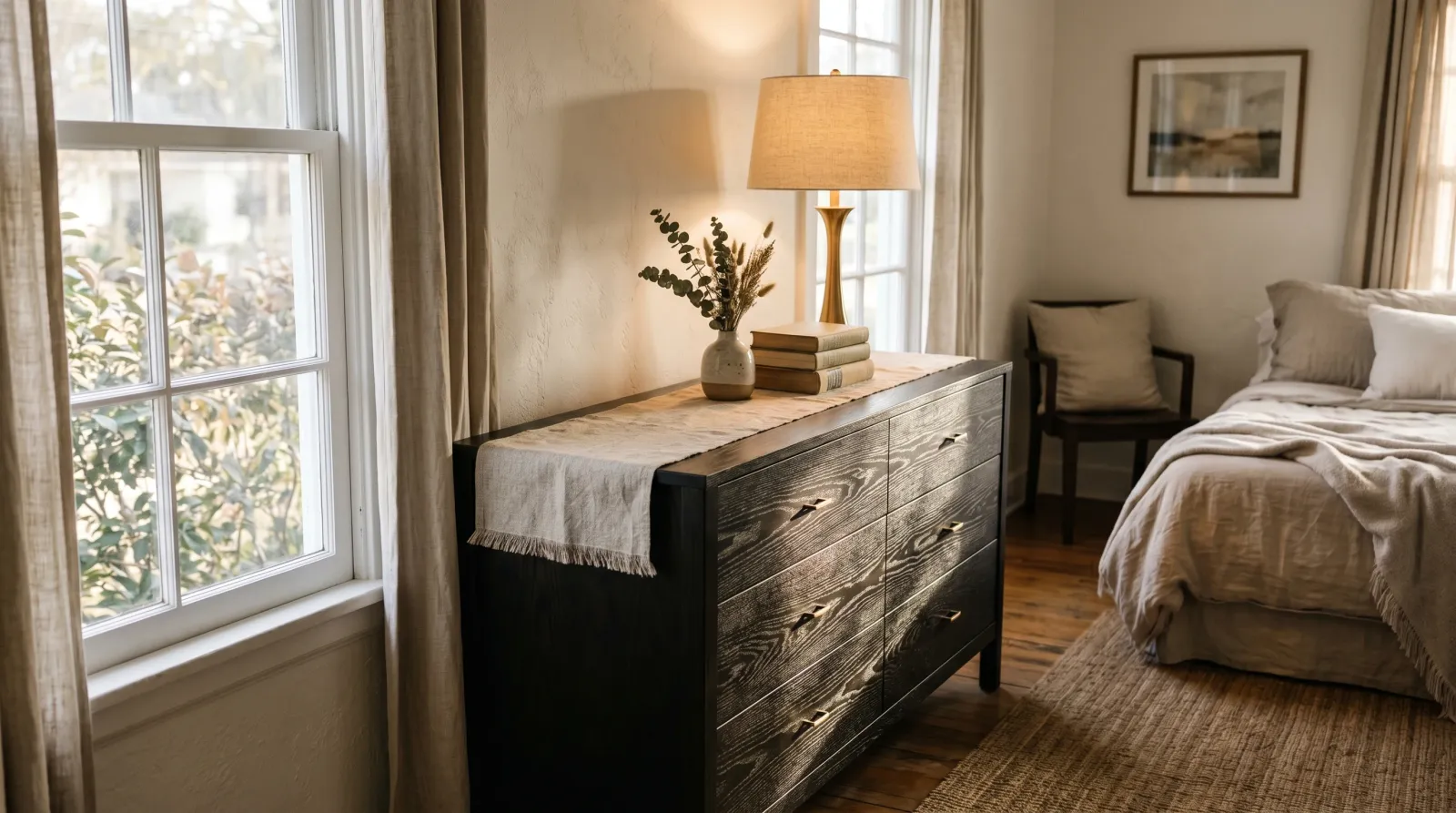
A near-black that still reads as wood on oak, and a blotchy grey-brown on bare pine. Which one you get is decided before you open the can.

Jessica Williams · Color Stylist & Interior Editor · Updated August 8, 2026
Jessica spent eight years styling residential interiors in Chicago and Charleston before moving into editorial work. She has watched the same near-black stain read charcoal on oak at breakfast and almost true black under a lamp at night, which is the only honest way to judge a color this dark. About the testing process →
Minwax Wood Finish Ebony2 sheens
Coverage500–600 sq ft / gal per coat
Dry / recoatTouch dry 2–3 hr
VOCOil-based
Sheens A — penetrating stainsemi-transparent
Read this first
The Fast Verdict
On oak, ash, or walnut, buy it. At $14 to $22 a quart it sinks into the open grain and leaves a deep charcoal that still shows the figure, and the generous open time lets you even the color out before anything sets. On pine, maple, birch, or poplar it magnifies every uneven drink of stain into dark clouds, so a pre-stain conditioner stops being optional. It colors and stops there — the polyurethane is a separate job and a separate budget.
Best for
Red and white oak · Ash and walnut · Interior furniture · Trim and doors · Hardwood floors you will seal properly · Black that still looks like wood
Skip if
Bare pine, maple, or birch with no conditioner · You want flat opaque black · You want the blackest black Minwax sells · You need color and protection in one can
What it's good at
- Deep, living charcoal-black on red and white oak, with the figure still reading
- A forgiving open time, so you can wipe, step back, and even out light spots
- Keeping the wood looking like wood — grain, knots, and figure show through
- Being cheap enough to stain three test boards before you commit
- Sitting beautifully against warm white walls, oak floors, and unlacquered brass
- Going nearly true black on dense walnut, or after a second thin coat
What it's not good at
- Bare pine, poplar, maple, and birch, where it magnifies every uneven patch
- Predictability — the same can reads charcoal on one wood and grey-brown on another
- Protecting anything; skip the poly and a tabletop marks from a water glass in a week
- Staying cool under an oil-based topcoat, which pulls it toward brown-black
- Clean work — black rags, black fingers, and a smell that lingers
- Being the blackest black Minwax sells; True Black took that job
Same shelf, different cans
Which Minwax Wood Finish Is This?
The Wood Finish name now covers more than the classic oil stain, and the boxes look similar enough on the shelf to grab the wrong one. This review is the original oil-based penetrating stain in Ebony 2718, the yellow can.
Wood Finish (oil-based), Ebony 2718 (this review)
BasePenetrating oil stain, semi-transparent
Recoat2–3 hr; topcoat after 8 hr
Buy it if
You want a near-black that keeps the grain, knots, and figure visible.
Avoid if
You want a neutral jet black, or opaque coverage with no grain.
Wood Finish (oil-based), True Black 274
BaseSame oil line, same wipe-on method
Buy it if
Black has to read black, with nobody reading brown into it.
Avoid if
You are on red oak — testers have found it blotches there — or you are masking with tape, which has been reported to lift color out of the grain lines.
Wood Finish 250 VOC
BaseSame colors, reformulated for stricter state VOC rules
Buy it if
You are in California or another restricted state and the standard can is not on the shelf.
Avoid if
You are touching up an older Ebony project — sample the new can against the old piece first, because it sets a touch faster and can read marginally different.
Wood Finish Water-Based Semi-Transparent
BaseWaterborne, fast dry, water cleanup; made in Ebony and True Black
Buy it if
You need speed and low odor and you accept raised grain.
Avoid if
You want the long working window that makes a dark oil stain easy to even out.
Wood Finish Water-Based Solid Color
BaseOpaque, paint-like
Buy it if
You want flat black coverage on a bookshelf or a painted-look table.
Avoid if
You want to see any grain at all.
PolyShades Classic Black
BaseStain and polyurethane in one, brushed on and left
Buy it if
You are recoloring an already-finished piece, or working blotch-prone poplar.
Avoid if
You want to control the color by wiping, or you want a uniform satin poly finish over the top.
Numbers, not adjectives
Spec Sheet
- Type
- Oil-based penetrating wood stain, semi-transparent
- Color
- Ebony 2718, filed by Minwax under its Brown family
- Coverage
- 500–600 sq ft / gal per coat (about 125–150 sq ft / qt)
- Dry / recoat
- Touch dry 2–3 hr · recoat 2–3 hr · topcoat after 8 hr
- VOC
- Oil-based, regional; a 250 g/L low-VOC formula exists for restricted states
- Conditioner
- No primer; pre-stain conditioner strongly advised on soft or tight-grain wood
- Topcoat
- Required — polyurethane, wipe-on poly, or spar urethane sets the final sheen
- Surfaces
- Bare sanded interior wood — furniture, cabinets, doors, trim, hardwood floors
- Sizes
- Half-pint, quart, gallon
- Price
- $14–22 / qt, about $45–60 / gal
Application Settings That Work
- Brush
- A rag or a brush, then wipe back. Work with the grain, never against it. Let the stain sit longer where you want it darker and wipe sooner where you want the grain to read — with a color this dark, the difference between a two-minute wipe and a five-minute wipe is the difference between charcoal and black. Two thin coats, two to three hours apart, beat one heavy one.
- Primer
- No primer. Sand to 150 grit and stop, because 220 and up burnishes the surface closed and you get a weak black. On anything that is not open-grained, brush on Minwax Pre-Stain Wood Conditioner, wait the window on the can, then stain while it is still slightly damp. Expect black rags, black fingers, and more cover on the floor than you think you need.
Before the Poly Goes On
Ebony is touch dry in two to three hours and takes a second coat in the same window, so two thin coats fit comfortably into one afternoon. The topcoat runs on a different clock. Give it at least eight hours, longer in a humid or cool room, and longer still if you laid it on heavy. Wipe a clean rag across the surface first: if any color lifts, it is not ready. Oil stain that goes under polyurethane too soon stays soft underneath and can cloud the finish. Two thin coats also beat one heavy one, which just stays soft and streaky. And remember what the finish actually is — the poly, not the stain. Two to three coats on anything that gets touched, more on a floor, or a tabletop will mark from a water glass in a week.
Mid-project panic
When It Goes Wrong, and How to Fix It
Dark clouds and streaks on pine, poplar, maple, or birch
Why it happens. Those woods drink stain unevenly, and Ebony has no mid-tone to hide it in. Where a Golden Oak would blur an uneven patch, Ebony magnifies it into dark clouds and streaks, and end grain goes almost solid black. Poplar is the worst of the common woods, because its green-grey heartwood fights a cool black.
The fix. Brush on Minwax Pre-Stain Wood Conditioner, wait the window on the can, then stain while the wood is still slightly damp. Even then pine never goes fully even, so stain a scrap of the actual board first. On poplar, a gel stain is the more honest answer.
It came out grey-brown and much lighter than the can suggested
Why it happens. The same quart behaves like a different product on a different species. One coat on pine lands grey-washed and clearly lighter, and oak plywood reads dark grey-brown because the thin face veneer holds very little stain.
The fix. Add a second thin coat after the two-to-three hour recoat window rather than letting the first one soak longer. Two thin coats deepen the color evenly; one long soak just stays soft and streaky.
Pale hairlines along a masked edge
Why it happens. On open-grain wood, painter's tape can pull stain back out of the pores as you lift it, leaving light lines exactly where you wanted a crisp edge. It has been reported on True Black as well.
The fix. Burnish the tape edge down hard before you stain, pull slowly at a low angle, and pull only when the stain is fully dry rather than half-set. Better still, plan the piece so you do not have to mask a stained edge at all.
A thin, weak black instead of a deep one
Why it happens. The wood was sanded too fine. At 220 grit and above the surface burnishes closed and the stain cannot penetrate, so the color has nowhere to go.
The fix. Sand to 150 grit and stop. On oak, 120 to 150 is the sweet spot. Vacuum the dust, then stain — and let it sit longer where you want it darker, wiping sooner where you want the grain to show.
The black warmed to brown after the topcoat
Why it happens. Oil-based polyurethane goes on with a honey cast and keeps warming for years. Over a golden oak stain that is lovely; over Ebony it drags the charcoal toward brown-black and cancels the grey undertone you chose the color for.
The fix. Use a water-based polyurethane like Polycrylic, which dries clear and stays clear, so the cool charcoal you wiped on is the one you live with. Choose oil poly only when you want a warmer black on purpose, and sample it over a stained offcut before you commit a whole floor or tabletop.
Side by side
Ebony vs True Black vs Varathane Ebony
Three near-blacks that get mixed up constantly. One is a charcoal, one is a neutral black, and one is the deepest of the three at the cost of the grain.
| Minwax Ebony 2718 | Minwax True Black 274 | Varathane Ebony | |
|---|---|---|---|
| How it reads | Cool charcoal with a faint brown-olive cast. | Neutral jet black, no warmth to speak of. | The closest to an actual black of the three. |
| Grain visibility | Grain, knots, and figure read clearly through the color. | Grain still shows, but the color closes in tighter. | Very little grain left showing. |
| Consistency across species | Charcoal on oak, grey-washed on pine, blotchy on poplar. | Testers have found it blotches on red oak. | The most consistent of the three across red oak, pine, and poplar. |
| Working time | Generous. You can wipe, step back, and go over light spots before anything sets. | Same oil Wood Finish line, same wipe-on method. | Sets faster, so less room to even a dark color out. |
| Minwax color family | Brown | Gray | Not a Minwax product |
| Price | $14–22 / qt | Same oil Wood Finish line | About $10–15 / qt |
| Where it wins | Oak, ash, and walnut, where the grain is half the point. | A piece where black has to read black with no brown in it. | When blackness and consistency matter more than seeing the wood. |
How it reads
Minwax Ebony 2718Cool charcoal with a faint brown-olive cast.
Minwax True Black 274Neutral jet black, no warmth to speak of.
Varathane EbonyThe closest to an actual black of the three.
Grain visibility
Minwax Ebony 2718Grain, knots, and figure read clearly through the color.
Minwax True Black 274Grain still shows, but the color closes in tighter.
Varathane EbonyVery little grain left showing.
Consistency across species
Minwax Ebony 2718Charcoal on oak, grey-washed on pine, blotchy on poplar.
Minwax True Black 274Testers have found it blotches on red oak.
Varathane EbonyThe most consistent of the three across red oak, pine, and poplar.
Working time
Minwax Ebony 2718Generous. You can wipe, step back, and go over light spots before anything sets.
Minwax True Black 274Same oil Wood Finish line, same wipe-on method.
Varathane EbonySets faster, so less room to even a dark color out.
Minwax color family
Minwax Ebony 2718Brown
Minwax True Black 274Gray
Varathane EbonyNot a Minwax product
Price
Minwax Ebony 2718$14–22 / qt
Minwax True Black 274Same oil Wood Finish line
Varathane EbonyAbout $10–15 / qt
Where it wins
Minwax Ebony 2718Oak, ash, and walnut, where the grain is half the point.
Minwax True Black 274A piece where black has to read black with no brown in it.
Varathane EbonyWhen blackness and consistency matter more than seeing the wood.
On oak, ash, and walnut furniture where the grain is half the point, Ebony — and the low price means you can sample three boards before you commit. On a piece where black means black and you do not want anyone reading brown into it, True Black, sampled on your actual wood first because it has blotched on red oak for testers. When the deepest, most even black is the whole brief and you accept losing the figure, Varathane. And if what you actually picture is flat opaque black with no grain at all, none of these is your product — that is paint or a solid-color stain.
If not this one
Honest Alternatives
VP
Varathane Premium Wood Stain, Ebony$10–15 / qt
In a four-product head-to-head across red oak, pine, and poplar it came out deepest, most consistent, and closest to an actual black. The catch is that it leaves very little grain showing, and it sets faster, so you have less room to even a dark color out. Buy it when black matters more than grain.
MP
Minwax PolyShades Classic Black$18–25 / qt
A stain-and-poly hybrid you brush on and leave, no wiping back. It performed well on all three test woods and was the darkest of the group on poplar, the wood Ebony handles worst. It wants a second coat for a true black and leaves a sheen of its own, so it is not a match for a piece you plan to satin-poly to a uniform finish.
Full review →GF
General Finishes Java Gel Stain$22–30 / pint
Gel sits on the surface instead of soaking in, which is exactly why it goes on far more evenly on pine or maple, and over an existing finish, with no conditioner. It reads as a deep near-black-brown. More money per ounce and more coats — though on gel, one coat can come out darker than two, because the second re-wets and drags off some of the first.
Full review →MW
Minwax Water-Based Wood Finish Solid Color, Black$18–25 / qt
When black means coverage rather than depth. It covers like thin paint, dries fast, and cleans up with water, and it hides the grain entirely. The right call for a kid's bookshelf or a painted-look table, and the wrong one if you chose stain to see the wood.
Questions people actually ask
Wood Finish Ebony Questions, Answered
Is Minwax Ebony worth it?
On open-grain wood — oak, ash, walnut — yes, and at $14 to $22 a quart it is one of the cheapest ways to make a piece of furniture look expensive. It sinks into the grain and leaves a deep charcoal that still reads as wood, and the long open time gives you room to even the color out before it sets. On pine, maple, birch, or poplar it is only worth it if you condition the wood first. And if you want a true jet black rather than a charcoal, True Black or Varathane Ebony gets you there more reliably.
Does Minwax Ebony look pure black?
On open-grained oak and ash it reads as a deep charcoal-black with the grain showing through — a soft black, not a flat one. On dense walnut, or after two coats, it goes nearly true black. One coat on light pine often lands at a dark grey-brown. If you want opaque jet black, you want paint or a solid stain, not a penetrating one.
Do I need a wood conditioner before Ebony?
On pine, maple, birch, alder, poplar, or any blotch-prone wood, yes. Ebony is dark enough that every blotch and end-grain drink shows three times harder than a mid-brown would. Brush on Minwax Pre-Stain Wood Conditioner, wait the window on the can, then stain. On open-grain oak you can usually skip it, though even oak can come out patchy in places, so a test board still earns its keep.
Is Minwax Ebony darker than True Black?
No — True Black 274 is the blacker color. Ebony 2718 reads as a cool charcoal with a slight brown cast, and Minwax now files it under its Brown color family, while True Black sits in the Gray family and dries to a more neutral jet black in the same oil Wood Finish line. Pick Ebony when you want a near-black that still looks like wood; pick True Black when you want the darkest semi-transparent Minwax makes.
Is ebony stain black or brown?
It sits between the two. On most woods it dries to a cool dark grey-black with faint brown or olive undertones, and Minwax itself classifies the color in its Brown family. How black it looks depends on the wood: near-black on red oak and walnut, grey-washed and much lighter on pine, and closer to a dark grey-brown on plywood.
What is the difference between ebony and espresso stain?
Undertone and depth. Ebony is cool, with grey and black undertones and almost no warmth; Espresso is a deep, rich brown with warmer hues. The darkest that Espresso gets is roughly where Ebony starts. If you want coffee-brown, use Espresso. If you want charcoal to black, use Ebony.
Does ebony stain need two coats?
On open-grain hardwoods like red oak, one coat usually lands the deep charcoal look. On woods that take it lightly — pine dries noticeably lighter and grey-washed, and oak plywood reads surprisingly light — a second thin coat after the two-to-three hour recoat window deepens the color evenly. Two thin coats beat one heavy one, which just stays soft and streaky.
How long before I can topcoat Ebony?
At least eight hours, longer in a humid or cool room, and longer still if you laid it on heavy. Wipe a clean rag across it first; if any color lifts, it is not ready. Oil stain that goes under poly too soon stays soft underneath and can cloud the finish.
Which polyurethane should I use over Ebony?
Water-based, if you want to keep the cool charcoal tone. Oil-based polyurethane ambers as it goes on and keeps warming with age, which pulls Ebony toward a brown-black. A water-based poly like Polycrylic dries clear and stays clear, so the color you wiped on is the color you keep. Use oil-based poly only when you want a slightly warmer black on purpose.
Is Minwax Ebony better than Varathane Ebony?
For pure blackness, no. In a side-by-side of four black stains on red oak, pine, and poplar with no conditioner, Varathane Ebony came out the deepest, the most consistent across all three woods, and the closest to a true black, with very little grain left showing. Minwax Ebony's advantage is the longer open time to wipe and even out, and the grain it keeps visible. Want the blackest, most even result, take Varathane. Want a charcoal that still looks like wood, take Minwax.
Keep exploring
Minwax brand guide — stains, polys, and wood careBest interior wood stains, testedGel stain vs traditional stain
We may earn a commission when you buy through the retailer link above. It never changes the score or the verdict.
Ask a Question