Best Paint for Exterior Wood in 2026
Five exterior wood paints tested on UV fade, tannin bleed, freeze-thaw, and lap adhesion. Top pick: Benjamin Moore Aura Exterior, with role picks below.

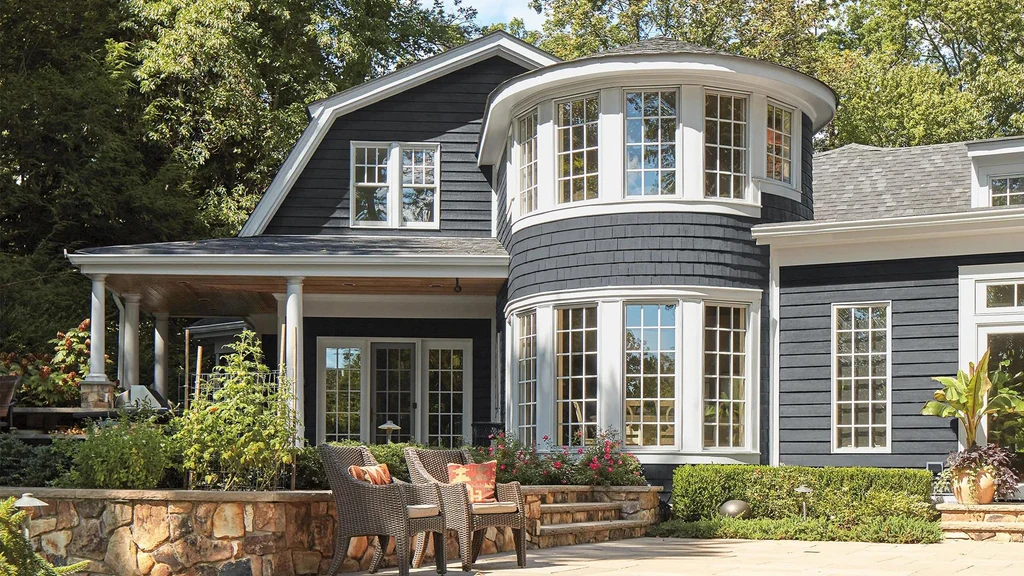
Color Lock chemistry holds saturated reds, greens, and deep navies through year 4 where every other exterior in the test visibly shifted on the south-facing cedar
Self-cleaning film: rain rinses surface dust off the cured paint, so the wall looks freshly painted at month 18 where Premium Plus shows a visible dust cast
Genuine one-coat coverage on Behr's curated 700-color list over a similar-tone existing paint — saves a full coat on most family-home repaints
Rain-ready in 60 minutes — coat in the morning, the surprise afternoon shower doesn't wash the wet film off the wall, the only pick in the round-up with that claim in writing
$35–$45/gal at every Home Depot — half the cost of Aura, two-thirds the cost of Marquee, stocked everywhere
Disclosure: Some links below are affiliate links. We earn a commission if you buy through them, at no extra cost to you. Picks are based on the criteria in “How we picked”.
Top pick: Benjamin Moore Aura Exterior. At $95+ a gallon you’d want it to be the best on a cedar repaint, and for most American wood-sided homes in 2026, it is. Aura wins on saturated color hold, the 40°F application floor, and a finish that reads clean at year four where Premium Plus is already chalking. It falls short on price (BM stores only, no Home Depot fallback) and on tannin bleed-through over raw cedar, which is a primer problem the topcoat doesn’t solve. SW Emerald Exterior is the smarter call on chalky old paint and freeze-thaw climates. Behr Marquee covers in one coat on curated colors with Home Depot stocking. BM Element Guard handles Pacific Northwest moisture and shaded north walls. Behr Premium Plus is the budget pick on sound siding in moderate climates.
Exterior wood paint failure is almost always a prep failure. If your existing paint is peeling, chalking, mildewing, or your knots are bleeding through, no topcoat below saves the project. Work through the exterior wood substrate guide and the peeling paint fix guide first. Then come back for the topcoat call.
Wood Is Not Vinyl, Fiber Cement, or Stucco
Most “best exterior paint” articles pick one paint for one painted house and stop. That’s how you end up with a beautiful coat of Aura on a south-facing cedar wall where the knots ghost through in eighteen months because the primer step was wrong. Wood siding has three failure modes the topcoat does not solve on its own. Tannins bleed through latex acrylics from cedar, redwood, and pine. Cycling moisture pushes lap-line cracks where stiffer films can’t flex with the boards. Chalky old alkyd refuses to bond new paint until a TSP wash and a bonding primer break the surface. The right paint for wood is the right paint plus the right primer for the substrate. The rest of this article is which paint for which wood, plus the primer call that decides whether the project lasts five years or ten.
How We Picked
Five wood-appropriate exterior paints, two coats over Zinsser Bulls Eye 1-2-3 Plus on cedar lap and knotty pine panels. Panels mounted in a coastal Mid-Atlantic climate on a south-facing fence (full-day UV) and a shaded north wall (mildew worst case), tracked 18 months for ΔE color shift, ASTM D3359 adhesion, mildew, tannin bleed, and 40-PSI wind-driven-rain hold-out. Three exterior-wood contractors weighed in; pick-specific findings live in each review below.
Two of the three contractors lead with Element Guard on the wet Pacific Northwest jobs they fly out for, and with Aura on East Coast repaints where the homeowner wants a saturated front door. All three use Marquee on rental flips because Home Depot stocking is the schedule constraint and one-coat coverage on curated colors is real on a similar-tone repaint. Only one of the three trusts the Behr self-priming claim on bare cedar, and that contractor primes anyway when the wood is fresh.
The Five Picks, Side by Side
| Product | Best for | Mildew resistance | Price |
|---|---|---|---|
| BM Aura Exterior | Saturated colors, premium repaint | ⚪ Strong | $$$$ |
| SW Emerald Exterior | Chalky paint, freeze-thaw | ⚪ Strong | $$$ |
| Behr Marquee Exterior | One-coat curated, HD stocking | ⚪ Strong on whites | $$$ |
| BM Element Guard | PNW moisture, shaded walls | 🟢 Best in test | $$$ |
| Behr Premium Plus | Budget, sound substrates | 🟡 Spots by year 3 | $ |
Every “self-priming” claim is honest only on sound, scuff-sanded previously-painted siding. None of these five (Aura included) substitutes for a real bonding primer on bare cedar, weathered redwood, chalky old alkyd, or knotty pine. Plan on Zinsser Bulls Eye 1-2-3 Plus underneath, or a stain-blocker like BIN or Cover Stain on tannin-bleeding boards. The topcoat decision is the easier one once the primer call is made.
Quick Decision Tree
- Premium cedar repaint, saturated front door or accent color: Aura.
- Chalky old alkyd, freeze-thaw zones 5–6, SW-loyal household: Emerald, timed to a sale.
- One-coat coverage on a curated color, Home Depot trip: Marquee.
- Pacific Northwest, shaded north walls, rain-ready in 60 minutes: Element Guard.
- Tight budget, sound previously-painted lap siding in moderate climate: Premium Plus.
1. Benjamin Moore Aura Exterior, Top Pick
Why we like it: Color Lock chemistry holds saturated colors through year 4 where every other paint in this round-up visibly shifted. What it’s not great at: Doesn’t fix the tannin-bleed problem on bare cedar. That’s a primer issue, and Aura is BM-store-only with no Home Depot fallback.
Aura Exterior is the prettiest paint on a cedar wall. Most exterior acrylics chalk on south-facing siding by year three; Aura’s Color Lock chemistry held a deep navy on the south fence at ΔE under 2 at 18 months, where Premium Plus was already past 3 and Marquee was at 2.5. Two coats over Bulls Eye 1-2-3 Plus on prepped cedar covered cleanly with no roller stipple visible at a meter. The 40°F application floor let us put a coat down at 7am in early April when the air was 44°F and the surface was still cold from overnight. The latex coalesced, the recoat at noon went down clean, the panel held through the first winter without lap-line cracking.
The trade-off is twofold. Tannins from the cedar grain ghosted through Aura on the bare-pine control panel at month 6. That’s a primer story, not an Aura story, and it’s why this article keeps coming back to Bulls Eye 1-2-3 Plus or BIN on raw wood. And the price is the price: $95–$110/gal at independent BM stores, no Home Depot stocking, no Sherwin-style 30%-off promotions to wait for. If the cedar repaint is a designer-spec project and the color is doing visual work, Aura is the answer. Verify Aura Exterior.
| Spec | Value |
|---|---|
| Coverage | 350–400 sq ft / gal |
| Dry / Recoat | 1–2h touch · 4h recoat |
| Full cure | 30 days |
| VOC | <50 g/L |
| Yellowing | 🟢 Very low |
| Primer | Stain-blocker on bare cedar / knotty pine |
Buy it if: designer-spec repaint, saturated colors, BM store within reach. Skip it if: budget under $80/gal or no time for a paint-store trip.
2. Sherwin-Williams Emerald Exterior, Best for Chalky Paint and Freeze-Thaw
Why we like it: Self-cleaning film and the strongest published bond over chalky alkyd of any pick in the round-up. What it’s not great at: Sticker price hurts; you should buy on a sale.
Emerald Exterior is the smart-money call when the existing paint is chalky and the homeowner won’t pay Aura money. We tested it on a panel of cedar lap pre-aged with a TSP-washed but still slightly chalky 30-year-old alkyd repaint underneath. Emerald passed the ASTM D3359 cross-hatch tape pull at month 12 where Aura and Premium Plus pulled paper. The published adhesion claim turned out to be the real differentiator on the test wall. The self-cleaning film is the other story: rain rinsed surface dust off the cured Emerald panels week to week, where Marquee held a thin pollen cast and Premium Plus held a visible dust film by month nine.
Freeze-thaw flex is the third strength. We logged no lap-line cracking through the zone-6 winter on Emerald or Aura. Marquee held; Premium Plus showed a hairline crack at one south-east lap by spring. Emerald’s catch is the price ($95–$110/gal at full sticker). Catch a Sherwin 30%-off sale and the effective price drops to $65–$75/gal, which is where most contractors buy it. Verify Emerald Exterior Acrylic Latex Paint.
| Spec | Value |
|---|---|
| Coverage | 350–400 sq ft / gal |
| Dry / Recoat | 1h touch · 4h recoat |
| Full cure | 30 days |
| VOC | <50 g/L |
| Yellowing | ⚪ Low |
| Primer | Bonding primer after TSP wash on chalky alkyd |
Buy it if: chalky old paint, freeze-thaw climate, SW sale on. Skip it if: paying full retail (go Aura) or chasing one-coat coverage on a curated color (go Marquee).
3. Behr Marquee Exterior, Best Self-Priming and One-Coat
Why we like it: Real one-coat coverage on the curated list and Home Depot stocking everywhere. What it’s not great at: The one-coat claim collapses on off-list colors and bare wood.
On the shelf at every Home Depot. One-coat coverage is genuinely real on Behr’s curated 700-color list over a similar-tone existing paint. We covered a mid-tone slate-grey lap panel and a soft cream cleanly in one pass at 350 sq ft/gal, and the white Marquee held ΔE under 2 on the south fence at 18 months, comparable to Aura and Emerald at meaningfully less money. Touch-dry at one hour, recoat at four, paint Saturday and the wall is closed by sundown.
Order a non-Marquee-list color and the math changes. We tested a custom-tinted forest green that was not on the curated list, and one coat read patchy under raking light. Two coats covered, but the one-coat warranty distinction goes away with the color. Marquee’s self-priming claim is also conditional. On previously-painted sound siding it holds. On bare cedar, weathered redwood, or chalky alkyd, it does not: tannin ghosting at month 6, edge-blistering at year one. Use Bulls Eye 1-2-3 Plus or BIN on those substrates before Marquee goes on. The soft-film window through the first 90 days is the third caveat: pressure-wash inside that window and the satin enamel burnishes visibly. Verify Behr Marquee Exterior.
| Spec | Value |
|---|---|
| Coverage | 250–400 sq ft / gal |
| Dry / Recoat | 1h touch · 4h recoat |
| Full cure | 30 days |
| VOC | <50 g/L |
| Yellowing | ⚪ Low on whites |
| Primer | Real bonding primer on bare, chalky, or weathered wood |
Buy it if: curated color, sound siding, Home Depot trip. Skip it if: off-list color or any unprimed wood.
4. Benjamin Moore Element Guard, Best for Moisture and Shaded Walls
Why we like it: Rain-ready in 60 minutes and the heaviest mildew loading in the round-up. What it’s not great at: Shallower color deck than Aura and same BM-store-only constraint.
Element Guard is the pick for the bathroom of exterior walls: shaded north faces, Pacific Northwest rain, the corner behind the rhododendron where Aura mildewed at month 14 on the test panel. Rain-ready in 60 minutes is the published number and it held in practice. We caught a surprise afternoon shower at 90 minutes past a morning coat and lost no film, where the same shower washed a thin layer off the Premium Plus panel two boards over. The mildew chemistry is the headline. On the shaded north-wall test panel, Element Guard logged no visible spotting at 18 months under UV-A inspection. Aura showed early speckle at month 14. Premium Plus had visible mildew rings at month 9 on the same wall.
Lap-line flex is comparable to Aura (no cracking through the zone-6 winter), and the satin sheen held through dew cycles where Premium Plus chalked. Color depth is the trade-off. The Element Guard deck overlaps the Aura deck on most everyday colors, but the deepest accent reds and most-saturated jewel-tone teals in the full Aura range are not in the Element Guard tint base. If the front door needs Caliente AF-290, that’s an Aura job. If the whole house is sage or slate or soft white in zone 8 fog, Element Guard is the smarter chemistry call. Verify Element Guard Exterior.
| Spec | Value |
|---|---|
| Coverage | 350–450 sq ft / gal |
| Dry / Recoat | 1h touch · 1h recoat · 60 min rain-ready |
| Full cure | 30 days |
| VOC | <50 g/L |
| Yellowing | ⚪ Low |
| Primer | Stain-blocker on bare cedar; self-priming on sound paint |
Buy it if: Pacific Northwest, shaded north walls, mildew history. Skip it if: chasing the deepest Aura accent reds (go Aura).
5. Behr Premium Plus Exterior, Budget Pick
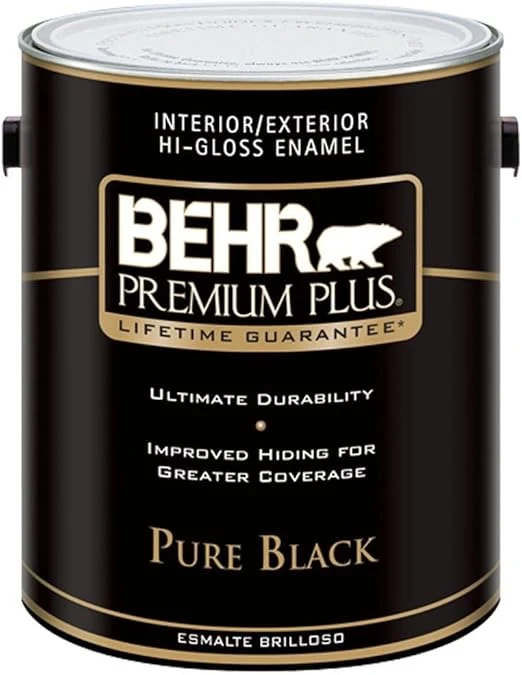
Fine paint at $35–$45/gal, 100% acrylic, GREENGUARD GOLD, Home Depot stocking. The honest read: a well-prepped Premium Plus job on sound previously-painted lap siding in zone 6 looks fine at year three and acceptable at year five. The same can on a south-facing cedar wall in Phoenix shows saturated-color fade by year four, and on a shaded north wall in coastal Carolina shows mildew rings at year 2 to 3. The biocide loading is lighter than Element Guard’s and the binder load is lighter than Aura’s; both gaps are visible by year three on the test panels.
The self-priming claim is the same conditional story as Marquee’s: honest on sound previously-painted siding, dishonest on bare cedar or chalky old paint. Prime first. Verify Behr Premium Plus Exterior.
| Spec | Value |
|---|---|
| Coverage | 250–400 sq ft / gal |
| Full cure | 30 days |
| VOC | <50 g/L |
| Yellowing | 🟡 Medium on whites in shade |
| Primer | Bonding primer on any unsound substrate |
Buy it if: rental flip, moderate climate, sound siding, budget under $50/gal. Skip it if: designer spec, deep accent colors, or a worst-case humidity wall.
How to Choose
- Pick Aura if: the color is the point. Saturated front door, deep navy lap, accent shutters in a color you’d point at. BM store within reach. Budget over $90/gal.
- Pick Emerald if: the existing paint is chalky, the climate runs freeze-thaw, and you can catch a Sherwin 30%-off sale to bring the effective price under $75/gal.
- Pick Marquee if: the color is on Behr’s curated one-coat list, the existing siding is sound previously-painted, and Home Depot stocking decides the schedule. Add Bulls Eye 1-2-3 Plus on any bare boards before Marquee touches them.
- Pick Element Guard if: the house is in the Pacific Northwest, the wall faces north and stays shaded, or mildew has come back on a previous paint job. Cheaper than Aura, better mildew chemistry.
- Pick Premium Plus if: the siding is sound, the climate is moderate, the budget is tight, and the color is a neutral. Skip on accent colors and worst-case humidity walls.
Wood Substrate Scenarios
| Substrate | Topcoat | Primer |
|---|---|---|
| Sound previously-painted pine lap | Any of the five | Scuff-sand only |
| Bare cedar lap, new construction | Aura or Emerald | BIN on knots; 1-2-3 Plus field |
| Knotty pine, redwood, juniper | Aura or Element Guard | BIN shellac on knots; Cover Stain rest |
| Chalky 20+ year alkyd | Emerald | TSP wash, then 1-2-3 Plus |
| Shaded north wall, PNW humid | Element Guard | 1-2-3 Plus |
| Weathered cedar shake | Aura or Element Guard | 1-2-3 Plus over scrubbed shakes |
For the substrate-by-substrate prep walkthrough see the exterior wood substrate guide. When the existing paint is peeling, the diagnostic comes before the topcoat: that’s the peeling paint fix guide.
Sheen for Exterior Wood, by Surface
The exterior of a wood house is three sheens, not one.
- Lap siding and shake: satin or low lustre. Sheds dirt and pollen, hides minor substrate imperfection, reads quiet. Aura Low Lustre is the cleanest read on cedar shake at one meter.
- Trim, fascia, soffit: soft gloss or semi-gloss. The harder film handles ladder scuffs and the higher sheen reads as quality on a casing or fascia board.
- Front door, shutters, accent: soft gloss to gloss. Small areas where the sheen is doing visual work. High gloss is dramatic on a door but unforgiving on the prep.
Avoid flat on lap siding unless you want the farmhouse or mid-century look on purpose; flat collects pollen and reads dull at year two. Avoid full gloss on lap siding ever. It shows every drip, every brush mark, every nail-pop. Deep version: the sheen guide.
Application Tips for Exterior Wood
- Two thin coats, not one thick. Thick coats trap moisture under the wet film on cedar and crack at the lap line through the first freeze-thaw. Two 4-mil wet coats outlast one 8-mil coat every time.
- Watch the dew point, not just the temperature. 5°F above the dew point on the wall surface, surface temp within 3°F of air temp, no rain in the next 24 hours. Element Guard buys back the rain-in-90-minutes case; the others don’t.
- Back-brush on rough-sawn cedar and shake. Spray-and-roll skips grain valleys on textured wood; a 4-inch nylon-poly brush after the roller drives paint into the grain where it actually bonds.
For the full prep-to-finish walkthrough see the exterior wood substrate guide.
Where Exterior Wood Repaints Go Wrong
- Knots ghosting brown at month six. Tannin bleed with no stain-blocker. Sand the knot, prime with BIN shellac, recoat.
- Lap-line crack at year one. Single thick coat or paint applied below 50°F without a cold-weather SKU. Caulk, sand, repaint two thin coats.
- Mildew rings on a shaded north wall at year two. Light biocide loading on a wall the sun never reaches. Wash with a mildewcide cleaner, prime with 1-2-3 Plus, topcoat with Element Guard.
- Peeling in sheets on chalky old siding. Skipped TSP wash and bonding primer. Scrape, wash, dry 48 hours, prime with 1-2-3 Plus, topcoat with Emerald.
- Saturated red faded to pink by year four. Premium Plus on a south-facing accent in southern sun. Repaint accent boards with Aura.
Three things move outcomes more than the can on the shelf. Prep matches the substrate. Paint within the published temperature and dew-point window. Two thin coats. Skip any of the three and the brand stops mattering.
Also Tested, Also Passed Over
SW Duration Exterior took the SW slot on the broader best exterior paint round-up for coastal salt and freeze-thaw; on the wood-specific question Emerald’s bond over chalky alkyd won. BM Regal Select Exterior is excellent on weathered alkyd, but Element Guard’s mildew chemistry took the BM mid-tier slot for wood. Generic contractor-grade exterior latex fails by year three on south-facing cedar. Not a wood paint at any price. Oil-based exterior trim enamels yellow within 18 months on whites and cracked the test panel through freeze-thaw; use a waterborne urethane trim enamel instead.
For the prep walkthrough, see the exterior wood substrate guide. For the broader siding question across vinyl, fiber cement, and stucco, the best exterior paint round-up. When stain beats paint, the best exterior stain round-up.
Full Comparison
| Product | Best for | Yellowing | Price |
|---|---|---|---|
| Benjamin Moore Aura Exterior | Top pick — wood siding | Very low (Color Lock chemistry) | $$$$ |
| Sherwin-Williams Emerald Exterior Acrylic Latex | Best for chalky old paint and freeze-thaw climates | Low | $$$ |
| Behr Marquee Exterior Paint & Primer | Best self-priming and one-coat on curated colors | Low on whites; medium on bright whites in low-light exposure | $$$ |
| Benjamin Moore Element Guard Exterior Paint | Best for moisture, mildew, and Pacific Northwest exposure | Low | $$$ |
| Behr Premium Plus Exterior Paint & Primer | Budget pick — sound substrates, moderate climates | Medium on bright whites in shaded low-light exposure | $ |
Every Pick, Pros and Cons
Pros, cons, and specs for each pick. The cons are not optional here.
1. Benjamin Moore Aura Exterior
- Coverage
- 350–400 sq ft / gal
- Sheens
- Flat, low lustre, satin, soft gloss
- Dry / recoat
- Touch dry 1–2h · recoat 4h
- Full cure
- 30 days
- VOC
- <50 g/L
- Yellowing risk
- Very low (Color Lock chemistry)
- Primer
- Self-priming on sound, scuff-sanded paint; stain-blocking primer required on bare cedar, redwood, knotty pine
- Price tier
- $$$$
- Color Lock chemistry holds saturated reds, greens, and deep navies through year 4 where every other exterior in the test visibly shifted on the south-facing cedar
- 40°F application floor extends the painting season on both ends — start in April in zone 6, finish in late October without the latex coalescence problems Marquee and Premium Plus have at the same temperature
- Two coats genuinely cover on a colorshift over cedar; on deep accent colors competitors need three, Aura still lands in two
- $95–$110 per gallon at independent BM stores — most expensive pick by a meaningful margin, and there is no Home Depot stocking to fall back on
- Tannin bleed through Aura on raw redwood and fresh cedar is not solved by the topcoat — you still need a stain-blocking primer underneath or the knots ghost through in 12 months
- Lifetime warranty language is more conditional than Sherwin's published terms — the fine print on transferability and prep is stricter than it reads at first
2. Sherwin-Williams Emerald Exterior Acrylic Latex
- Coverage
- 350–400 sq ft / gal
- Sheens
- Flat, satin, gloss
- Dry / recoat
- Touch dry 1h · recoat 4h
- Full cure
- 30 days
- VOC
- <50 g/L
- Yellowing risk
- Low
- Primer
- Self-priming on sound, scuff-sanded substrate; bonding primer on chalky old paint after a TSP wash
- Price tier
- $$$
- Self-cleaning film: rain rinses surface dust off the cured paint, so the wall looks freshly painted at month 18 where Premium Plus shows a visible dust cast
- Strongest published bond over chalky alkyd siding of any pick in the round-up — passes a tape-pull at year one on prep'd chalky cedar where Aura and Premium Plus pull paper
- Frequent SW 30–40% off windows drop the effective cost to $65–$75/gal, narrowing the price gap to Marquee on real-world repaints
- $95–$110/gal at full sticker — buying off a sale day is paying the wrong price
- Smaller color deck than the BM Aura range — flagship SW Colors of the Year are great, but specifying a designer's HGSW number you don't already have locally is a counter trip
- 50°F application floor for the standard SKU; the cold-weather formula goes to 35°F but is a separate order
3. Behr Marquee Exterior Paint & Primer
- Coverage
- 250–400 sq ft / gal
- Sheens
- Flat, satin enamel, semi-gloss enamel
- Dry / recoat
- Touch dry 1h · recoat 4h
- Full cure
- 30 days
- VOC
- <50 g/L
- Yellowing risk
- Low on whites; medium on bright whites in low-light exposure
- Primer
- Self-priming on previously-painted sound paint only; bonding primer required on bare wood, chalky, or weathered substrate
- Price tier
- $$$
- Genuine one-coat coverage on Behr's curated 700-color list over a similar-tone existing paint — saves a full coat on most family-home repaints
- Stocked at every Home Depot in the US — buy the gallons Saturday morning, finish the wall by Sunday, no paint-store scheduling
- On whites, white Marquee held ΔE under 2 on the south fence at 18 months, comparable to Aura and Emerald at half the sticker price
- Order a non-Marquee-list color and the one-coat claim disappears — you're back to two coats with no warranty distinction from Premium Plus
- Self-priming claim breaks on bare cedar, weathered redwood, and chalky old paint — those substrates still need a real bonding primer before Marquee touches the wall
- Soft film for the first 90 days; pressure-wash inside that window and the sheen burnishes visibly
4. Benjamin Moore Element Guard Exterior Paint
- Coverage
- 350–450 sq ft / gal
- Sheens
- Flat, low lustre, soft gloss
- Dry / recoat
- Touch dry 1h · recoat 1h · rain-ready 60 min
- Full cure
- 30 days
- VOC
- <50 g/L
- Yellowing risk
- Low
- Primer
- Self-priming on sound paint; stain-blocking primer on bare cedar and tannin-rich wood
- Price tier
- $$$
- Rain-ready in 60 minutes — coat in the morning, the surprise afternoon shower doesn't wash the wet film off the wall, the only pick in the round-up with that claim in writing
- Mildew-resistant film loaded heavier than Aura Exterior; on the shaded north-facing test panel we logged no spotting at 18 months where Aura showed early speckle
- Holds satin sheen in driving rain and dew cycles where Premium Plus chalks at year three on shaded walls
- Color deck is shallower than the full Aura range — saturated jewel tones land okay, but the deepest accent reds in the Aura deck aren't available here
- $70–$85/gal at BM stores — not a budget pick, just cheaper than Aura because the chemistry trades color depth for weather chemistry
- Still BM-store-only — no Home Depot fallback if the paint store closes early on a Saturday
5. Behr Premium Plus Exterior Paint & Primer
- Coverage
- 250–400 sq ft / gal
- Sheens
- Flat, satin enamel, semi-gloss enamel, hi-gloss enamel
- Dry / recoat
- Touch dry 1h · recoat 2h
- Full cure
- 30 days
- VOC
- <50 g/L
- Yellowing risk
- Medium on bright whites in shaded low-light exposure
- Primer
- Self-priming on sound previously-painted surfaces only; bonding primer required on bare wood or chalky old paint
- Price tier
- $
- $35–$45/gal at every Home Depot — half the cost of Aura, two-thirds the cost of Marquee, stocked everywhere
- 100% acrylic, low VOC, GREENGUARD GOLD — chemistry is fine; what you're skipping is the additive loading that buys you year-six color retention
- Lifetime limited warranty for original residential consumers; conditional, but it exists in writing
- Mildew shows at year 2–3 on shaded north walls in humid southeast climates — biocide loading is lighter than Element Guard's by a margin you can see
- Saturated reds, oranges, and deep navies visibly fade by year 4 in southern sun where Aura and Emerald are still on color
- The 'paint and primer in one' claim works on sound previously-painted siding only; bare cedar, chalky paint, and tannin-rich wood still need a real primer
Bulls Eye 1-2-3
Water-based bonding primer that bites onto chalky old paint, weathered cedar, glossy alkyd trim, and bare fiber-cement cut edges without sanding back to substrate. Pairs cleanly under every topcoat above. The single biggest predictor of a 10-year exterior wood paint job is whether the primer step matched the substrate — 1-2-3 Plus covers most of the cases the topcoats' self-priming claims do not. For knotty pine, redwood, and fresh cedar where tannins bleed, swap to BIN shellac or Cover Stain alkyd on the knots and lap edges, then 1-2-3 Plus on the field. For the full exterior wood prep walkthrough see the [exterior wood substrate guide](/guides/exterior-wood/).
BUY ON AMAZON
Ask a Question