Product review · Minwax · Updated August 7, 2026
Gel StainMinwax paint review
8.2/10The most mistake-tolerant thing in the stain aisle, as long as you remember it is wipe-on, wipe-off.
The pudding-thick stain that fixes blotchy pine and recolors orange-oak cabinets with no stripper at all. What it costs you is the grain, and most of a week.

Emily Roberts · DIY Editor & First-Timer's Guide · Updated August 7, 2026
Emily painted her first room at 24, hated every minute of it, and got better. She writes the guides she wishes she had, which means a test patch before the whole piece and a definition for every term. About the testing process →
Minwax Gel Stain2 sheens
CoverageAbout 200 sq ft per quart
Recoat6 hr
VOCOil-based
Sheens A — it's a stainnot a topcoat
Read this first
The Fast Verdict
If the wood is being difficult, yes. At $14 to $20 a quart it is the most mistake-tolerant thing in the stain aisle for blotchy pine and birch, for recoloring cabinets over an existing finish without stripping, and for vertical or non-wood surfaces like fiberglass doors that liquid stain slides off. Skip it on a nice piece of oak, walnut, or cherry where the grain is the point, because gel sits on the surface and mutes the figure. Budget for a multi-day project and a topcoat either way.
Best for
Blotchy pine, birch, maple, alder · Orange-oak cabinets you do not want to strip · Trim and stair balusters · Fiberglass and metal doors · Vertical surfaces · Beginners who want a forgiving stain
Skip if
A nice piece of oak, walnut, or cherry where the grain is the point · You cannot ventilate the room · You need it done overnight · You want a low-odor option, because there is no low-VOC gel
What it's good at
- Even color on pine, birch, maple, and alder that go blotchy with liquid stain
- Skipping the pre-stain conditioner entirely, which is one less product and one less wait
- Recoloring 1990s orange-oak cabinets dark with no stripper and no sanding to bare wood
- Staying put on vertical surfaces like a hanging cabinet door or a stair baluster
- Gripping fiberglass entry doors, metal, and molded fiberboard that liquid stain slides off
- Being forgiving for a beginner, because the one real mistake wipes back off
What it's not good at
- Showing off the grain on a nice piece of oak, walnut, or cherry
- Drying at all if you leave a thick film on instead of wiping the excess back off
- Fast projects — 6-hour recoats and a 24 to 48 hour set make it a multi-day job
- Low-odor work, since there is no low-VOC version of the gel formula
- Protecting anything on its own; the topcoat does all the durability work
- Big jobs by volume, since it only comes in half-pints and quarts
Numbers, not adjectives
Spec Sheet
- Coverage
- About 200 sq ft per quart, one coat
- Form
- Thick gel — wipe-on, wipe-off
- Recoat
- 6 hr
- Dry to handle
- 24–48 hr
- Wood conditioner
- Not needed — that is the selling point
- Topcoat
- Required. Polyurethane or wipe-on poly over the top
- VOC
- Oil-based, high VOC. No low-odor or CARB-low version of the gel
- Surfaces
- Bare or finished wood, plywood, veneer, fiberglass, metal, molded fiberboard
- Sizes
- Half-pint, quart. No gallon
- Price
- $14–20 / qt at most US stores
Application Settings That Work
- Brush
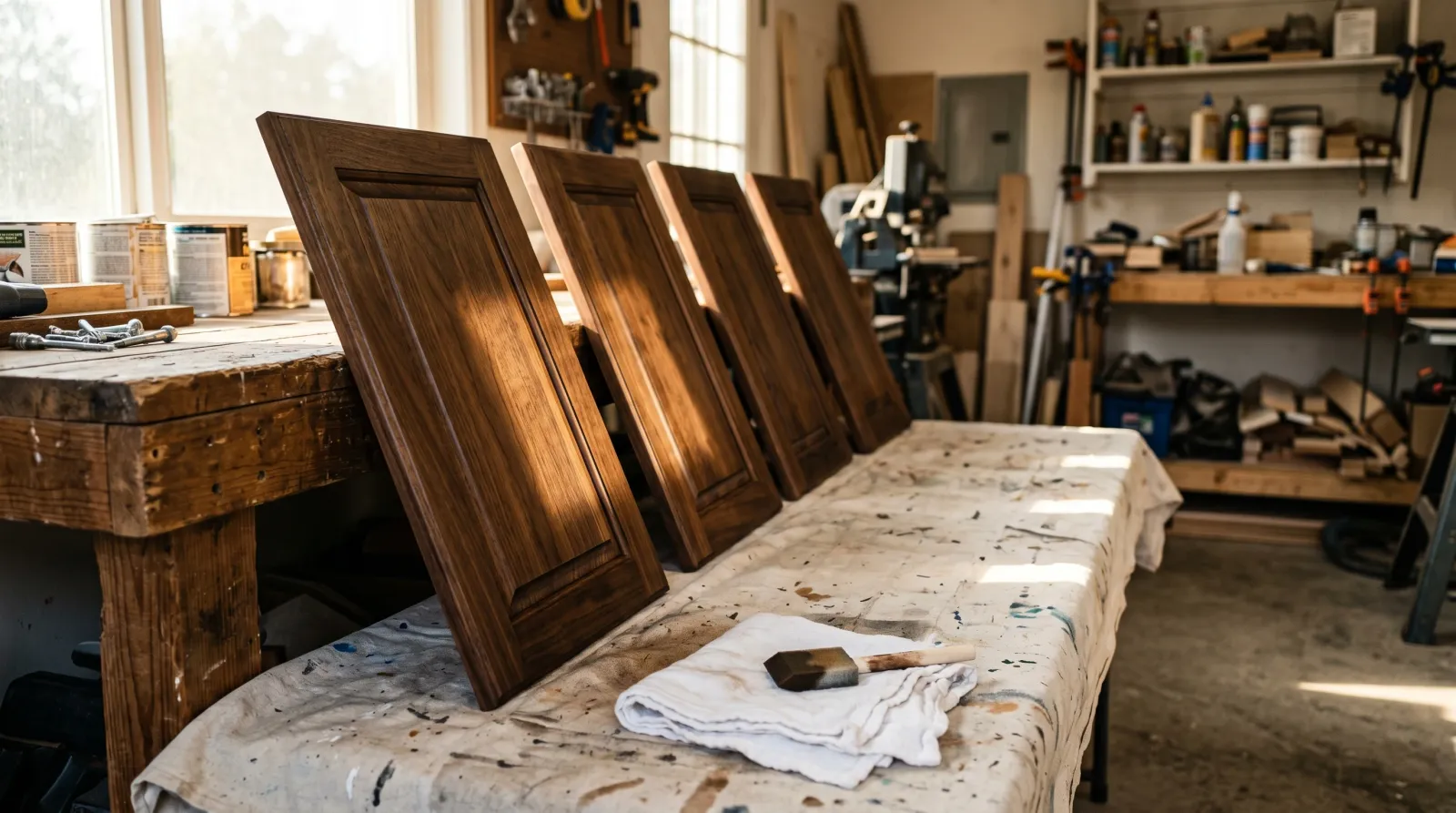
- A cheap foam applicator and a stack of clean cotton rags — those, not the can, are what make this product behave. Flood a section, then wipe the excess back off with a clean rag. Because it is thick it will not run down a hanging cabinet door or a stair baluster, so vertical work is fine. Recoat at six hours if you want it darker.
- Primer
- No primer and no pre-stain wood conditioner — skipping that step is the whole point. Over an existing finish, degrease and scuff-sand first so the gel has something to grab. Then topcoat: two or three coats of polyurethane or wipe-on poly once the stain has set 24 to 48 hours. Lay used rags flat outside to dry, because oil-soaked rags can self-heat.
How Long Before You Can Topcoat
Six hours between coats, then 24 to 48 hours to really set before any topcoat goes on. Thick spots crawl past that. This is the part people underestimate: a small table is a comfortable weekend, but a full kitchen of cabinet doors stretches across most of a week once you add the poly coats. Do not start it the night before guests arrive. And do not shorten the wait by putting poly over gel that is still soft — the topcoat seals in what has not cured and the whole thing stays gummy underneath, which means wiping it back with mineral spirits and starting the color over. If the surface still feels the least bit tacky at 48 hours, you went on too thick, and more time will not fix a film that thick.
Mid-project panic
When It Goes Wrong, and How to Fix It
Still tacky a day later
Why it happens. You almost certainly put it on too thick. Gel stain is wipe-on, wipe-off — you flood a section, then wipe the excess back off. Any film you leave behind cannot reach air to cure, so it stays gummy for days. People panic and think they got a bad can. They got a thick coat.
The fix. Wipe it down with mineral spirits and a clean rag, then recoat thin. It is completely reversible, which is why this is the one mistake worth knowing about in advance rather than fearing.
The wood looks flat and painted-on
Why it happens. Gel rides on the surface instead of soaking into the grain, and that is exactly why it fixes blotchy wood. The trade is that you lose some of the natural figure, and the richer and darker the color, the more it shows.
The fix. On a genuinely pretty piece of oak, walnut, or cherry, this is the wrong product — use a penetrating liquid stain so the figure comes through. On wood you are recoloring anyway, wipe more of it off and go a shade lighter; less film left behind means more grain reading through.
It will not grab the old cabinet finish
Why it happens. The gel needs something to hold onto. A glossy, waxy, or greasy old finish gives it nothing, and a finish that is already peeling will take your new color off with it when it lets go.
The fix. Degrease first, then scuff-sand to knock the shine off, then wipe on the gel. If the old finish is flaking, that section has to come off before you start. Test a hidden spot before you commit to the whole kitchen.
The color came out nothing like the can lid
Why it happens. The wood underneath changes it. The color on the lid is a guide, not a promise, and an existing finish or a warm wood tone shifts it further.
The fix. Test patch, every time. Wipe it on a hidden spot or a scrap of the same wood, let it set, and look at it in real daylight before you commit. If it is too light, a second coat at six hours deepens it. If it is too dark, wipe more off next time.
Side by side
Minwax Gel Stain vs Liquid Wood Finish vs General Finishes Gel
Okay, so the question is really which of these three your project wants, and it comes down to one thing: is the wood cooperating or fighting you? Here is the sort.
| Minwax Gel Stain | Minwax Wood Finish (liquid oil) | General Finishes Gel Stain | |
|---|---|---|---|
| How it sits on the wood | On the surface. That is the whole personality. | Soaks into the grain. | On the surface, thicker body still. |
| Blotchy pine and birch | Even color, no conditioner needed. | Blotches unless you condition first. | Even color, and deeper. |
| Grain showing through | Muted. Darker colors mute it more. | The grain is the point, and it shows. | Muted, same trade. |
| Over an existing finish | Yes, if you degrease and scuff-sand first. | No. It needs bare wood to soak into. | Yes, and it is the pro favorite for cabinets. |
| Vertical surfaces | Stays put on a hanging door or a baluster. | Runs and pools. | Stays put. |
| Where you buy it | Every hardware store, same day. | Every hardware store, same day. | Usually ordered online. |
| Price | $14–20 / qt | $16–22 / qt | $20–28 / qt |
How it sits on the wood
Minwax Gel StainOn the surface. That is the whole personality.
Minwax Wood Finish (liquid oil)Soaks into the grain.
General Finishes Gel StainOn the surface, thicker body still.
Blotchy pine and birch
Minwax Gel StainEven color, no conditioner needed.
Minwax Wood Finish (liquid oil)Blotches unless you condition first.
General Finishes Gel StainEven color, and deeper.
Grain showing through
Minwax Gel StainMuted. Darker colors mute it more.
Minwax Wood Finish (liquid oil)The grain is the point, and it shows.
General Finishes Gel StainMuted, same trade.
Over an existing finish
Minwax Gel StainYes, if you degrease and scuff-sand first.
Minwax Wood Finish (liquid oil)No. It needs bare wood to soak into.
General Finishes Gel StainYes, and it is the pro favorite for cabinets.
Vertical surfaces
Minwax Gel StainStays put on a hanging door or a baluster.
Minwax Wood Finish (liquid oil)Runs and pools.
General Finishes Gel StainStays put.
Where you buy it
Minwax Gel StainEvery hardware store, same day.
Minwax Wood Finish (liquid oil)Every hardware store, same day.
General Finishes Gel StainUsually ordered online.
Price
Minwax Gel Stain$14–20 / qt
Minwax Wood Finish (liquid oil)$16–22 / qt
General Finishes Gel Stain$20–28 / qt
Raw, good-looking wood you are staining for the first time and want the grain to pop: the liquid Wood Finish, and condition it first if it is pine. Blotchy wood, a fiberglass door, or cabinets you are recoloring over an old finish: Minwax Gel Stain, and it is the cheapest way to skip the stripper entirely. A whole kitchen where you want the richest, most consistent result and you can wait for shipping: General Finishes gel is worth the upgrade.
If not this one
Honest Alternatives
MW
Minwax Wood Finish (oil-based liquid)$16–22 / qt
Same brand, the thin liquid version, and it lets the grain show through beautifully on bare wood. The catch is that it goes blotchy on pine and birch unless you use a pre-stain conditioner first, and it runs on vertical surfaces. The right pick for raw, good-looking wood you are staining for the first time.
Full review →GF
General Finishes Gel Stain$20–28 / qt
The pro-favorite gel. Thicker body, deeper and more consistent color, and a reputation for a cleaner finish on cabinets. Costs more and you will usually order it online rather than grab it locally. Worth the upgrade on a whole kitchen where you want the most foolproof result.
MP
Minwax PolyShades$14–20 / qt
Stain and polyurethane mixed in one can, so it colors and seals in the same coat. Handy for a fast refresh with no second product. The downside is less control — you cannot tweak color and topcoat separately, and it is easy to get streaky. Good for darkening a handrail, not a full cabinet job.
Full review →Questions people actually ask
Gel Stain Questions, Answered
Is Minwax Gel Stain worth it?
If the wood is being difficult, yes. At $14 to $20 a quart it is the most mistake-tolerant thing in the stain aisle for blotchy pine and birch, for recoloring cabinets or trim over an existing finish without stripping, and for vertical or non-wood surfaces like fiberglass doors that a liquid stain slides off. It is not worth it on a nice piece of oak, walnut, or cherry where you want the grain to show, because gel sits on the surface and mutes the figure.
Do I need a wood conditioner with gel stain?
No, and that is the whole reason to reach for it. Wood conditioner is the extra step you would use with a regular liquid stain to stop blotchy pine from soaking up color unevenly. Gel stain sits on top of the wood instead of soaking in deep, so it spreads color evenly without the prep coat. One less product, one less wait.
Can I put gel stain over an old finish without stripping?
Yes, as long as the old finish is sound — not peeling or flaking — and you scuff-sand it first so the gel has something to grab. Wipe it down with a degreaser, knock off the shine with fine sandpaper, and the gel bonds. This is how people redo orange-oak cabinets dark without a single drop of stripper. Test a hidden spot first.
Why is my Minwax gel stain still tacky after a day?
You almost certainly put it on too thick. Gel stain is wipe-on, wipe-off — flood it, then wipe the excess back off with a clean rag. Any film left behind stays gummy for days because the air cannot reach it to cure. If it is tacky, wipe it down with mineral spirits and a rag, then recoat thin.
Does gel stain need a topcoat?
Yes. Gel stain only adds color, not protection. Bare gel-stained wood scuffs, water-spots, and wears through fast. Seal it with two or three coats of polyurethane, oil or water-based, or a wipe-on poly once the stain has set. On cabinets and tabletops that get touched daily, the topcoat is doing all the durability work.
Will gel stain hide the wood grain?
It mutes it. Because the gel rides on the surface instead of soaking in, you lose some of the natural figure, and the richer and darker the color, the flatter it can look. On wood you are recoloring anyway that is a fair trade. On a piece where the grain is the point, use a penetrating liquid stain instead.
Can I use gel stain on a fiberglass front door?
Yes, and it is one of the best reasons to buy it. A regular wood stain has nothing to soak into on fiberglass, metal, or the molded fiberboard hollow doors are made of, so it just slides off. Gel stain grips those surfaces. That faux-wood fiberglass door look all over Pinterest is usually this can.
How long does a gel stain project actually take?
Longer than you think. Recoat is six hours, and it wants 24 to 48 hours to really set before the topcoat goes on, with thick areas taking longer. A small table is a comfortable weekend. A full kitchen of cabinet doors stretches across most of a week once you add the poly coats. Do not start it the night before guests arrive.
Keep exploring
We may earn a commission when you buy through the retailer link above. It never changes the score or the verdict.
Ask a Question