Why Gel Stain Isn't Drying (the 72-Hour Rule)
Gel stain tacky days later usually means it went on too thick. Here is the chemistry behind the slow cure and how to wipe, dry, and recoat so it sets hard.

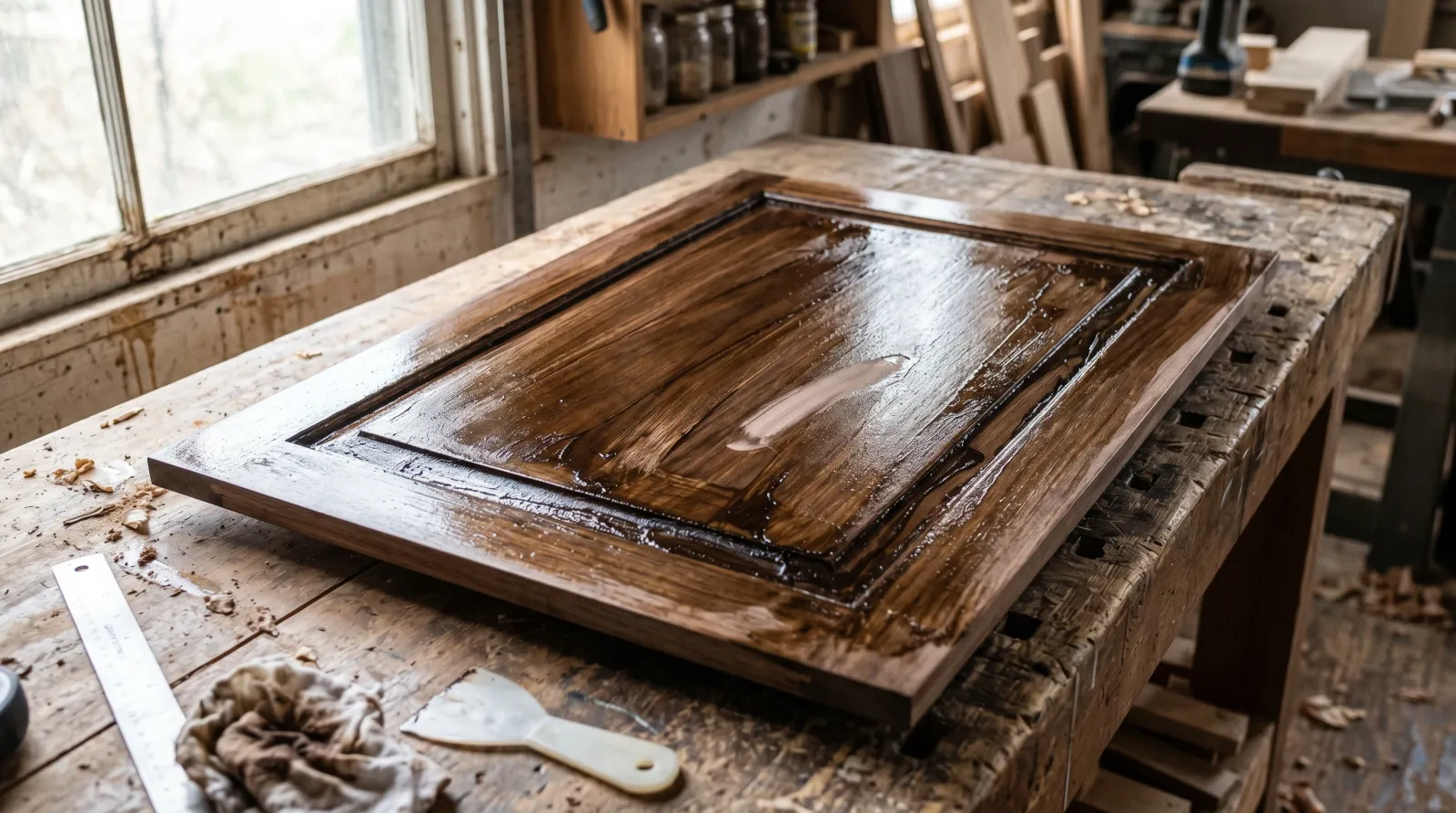
Most people meet this problem with a fingertip. You stained a cabinet door or a tabletop two or three days ago, you go to put the topcoat on, and the surface is still soft and tacky, like a half-dried sticker. The stain didn’t fail and you didn’t buy a bad can. You almost certainly put it on too thick and didn’t wipe it back, and gel stain punishes that more than any other finish. Here is why, and how to get it to set hard.
TL;DR
- Gel stain stays tacky because it went on too thick. It’s a high-build, oil-based pigmented gel that cures by oxidation from the surface down, so a heavy coat skins on top and stays liquid underneath.
- Gel stain is a wiping finish, not a flood-and-leave finish. You apply it, then wipe most of it back off. The excess is what never dries.
- The 72-hour rule: a properly wiped coat is dry to the touch in 8 to 24 hours and ready for topcoat at about 72. Past that and still tacky means thickness, cold, or humidity.
- The fix: wipe the surface back with a rag and mineral spirits to pull off the excess, then let the thin remainder cure in a warm, dry, ventilated room. Don’t topcoat until it’s hard.
Does This Match What You’re Seeing?
Gel stain has a specific failure feel. Press a clean fingertip into an inconspicuous spot before you decide.
- The surface is soft and tacky, and your finger leaves a faint print or smear: the classic too-thick coat. The core tell.
- A skin on top, liquid stain underneath: drag a fingernail and the top layer wrinkles or rolls. The surface oxidized and sealed the wet stain below from the air it needs.
- Sticky only in the recesses, raised panels, and profile grooves: stain pooled where the rag couldn’t reach. The flat field is fine; the details never got wiped.
- A uniform light tackiness on a piece that’s otherwise even: more often a cold, humid room than a thickness problem. The film is thin enough but the cure has stalled.
- Stain that beads or fish-eyes and never grabs: contamination on the wood, not a drying problem in the stain itself.
Look-alikes to rule out. Latex or chalk paint that stays gummy is a different chemistry and a different fix, covered in how to fix tacky painted furniture; that’s a water-based film that didn’t coalesce, not an oil that didn’t oxidize. Gel stain tacky days after a wiped coat is almost always thickness or temperature.
How Serious Is This?
Cosmetically annoying, structurally nothing. The wood is fine and the stain is salvageable, and this is a same-day fix on most pieces. The honest severity ladder:
- Tacky from a thick coat, caught early: wipe it back, let it cure, done that afternoon. The most common case.
- Skinned over with liquid underneath: you’ll fight the surface skin when you wipe, but it still comes off with mineral spirits and elbow grease.
- Tacky in a 55-degree, damp room: the coat may be fine and the cure has just stalled. Warm and ventilate the space before you reach for solvent.
- Beading or fish-eye over contamination: not a drying problem. Strip, clean the substrate, start over.
Gel stain repeats this on people for one reason. It’s the one stain thick enough to leave a paintable-looking coat, which tempts you to leave a paintable-looking coat. That coat is what won’t dry.
Why This Is Happening (the Chemistry)
Gel stain is not a thin penetrating stain. It’s a high-viscosity, oil-based or alkyd pigmented gel, closer in build to a thinned paint than to a traditional wood stain. The pigment sits in a drying-oil and alkyd binder, the same family of ester-linked oils that cure by reacting with oxygen in the air. That’s the key fact: it dries by oxidation, not by water or solvent evaporation alone. The film hardens as oxygen cross-links the oil into a solid.
Oxidation happens at the surface, where the air is, and works its way down. On a thin, wiped coat that’s a fast process, because there isn’t much depth for oxygen to reach. Pile the stain on thick and you create a problem the chemistry can’t solve on its own. The top skins over as it oxidizes, and that skin then blocks oxygen from reaching the soft stain underneath. The lower layer has no path to cure. It stays liquid, sometimes for weeks, sealed in by the very skin that formed first. Waiting doesn’t help, because the thing it’s waiting for can’t get through the skin.
This is why gel stain is meant to be wiped. You flood it on to color the wood evenly, then wipe nearly all of it back off, leaving a thin pigmented film the air can reach. The wiped-back coat is doing the job; the excess you remove is the part that would never have dried.
Two outside conditions stack on top of thickness. Cold slows the oxidation, so a garage at 50 degrees leaves even a thin coat tacky for days. A closed, damp room starves the surface of the dry, oxygen-rich airflow the reaction wants. Neither makes a thick coat the right thickness, but both turn a borderline coat into a tacky one. It’s the same chemistry that slows any oxidative finish in the cold, which I get into in why paint fails in cold weather.
Three things drive the slow cure: a coat that’s too thick, a room that’s too cold, and air that’s too still and damp. Thickness is the one you control with a rag, and the one usually to blame.
The Fix
Work in order. The goal is to get back to a thin coat the air can reach, then give it the conditions to oxidize.
Step 1. Confirm It’s Thickness, Not Contamination
Press a fingertip in a hidden spot. If it’s soft and leaves a print, you have uncured stain and the steps below apply. If the stain beaded up, fish-eyed, or never grabbed the wood, you have a contaminated surface (wax, silicone polish, an old finish), and drying time won’t fix it. For contamination, strip the stain, clean the bare wood with mineral spirits until it wipes clean, and start over.
Step 2. Wipe the Excess Back With Mineral Spirits
This is the step that does the work. Dampen a lint-free rag with mineral spirits and wipe the tacky surface, working with the grain. The solvent re-softens the gel stain and lets you pull the excess off. Keep turning to a clean part of the rag so you’re removing pigment, not just smearing it. You’re not stripping back to bare wood; you’re removing the thick top layer that never dried, leaving the thin color that soaked in.
On a skinned surface, wipe firmly enough to break and lift that skin so the soft stain below comes with it. In recesses and profile grooves where stain pooled, fold the rag to a point or wrap it over a small brush and work the solvent in. Change rags as they load up, and dispose of them right: oil-based stain rags can self-heat as they oxidize and have started fires, so dry them flat outdoors or submerge them in water in a sealed metal can.
Step 3. Even Out the Color and Let It Cure
Once the excess is off, you may have lightened the color. That’s fine. Wipe the whole piece with a barely-damp solvent rag to even out any streaks, then leave it. With the thick layer gone, the remaining thin coat can finally oxidize. In a warm, dry room it should be dry to the touch in 8 to 24 hours.
If the color came back too light, don’t reflood it. Once the thin coat is fully cured, apply a second light coat, wipe it back the same way, and let that cure. Two thin wiped coats build deeper color than one thick one, and both actually dry.
Step 4. Give It Air and Warmth
Set the piece in a space at 65 to 75 degrees with low humidity and light airflow. A fan moving air across the surface helps, because the cure is oxygen-hungry. Open a window if the outside air is dry. Don’t crowd a freshly wiped piece against a wall or stack parts together; the surfaces facing dead air will lag.
Skip the heat gun and the space heater held close. Forced high heat skins the surface faster than the depth can cure, which recreates the original problem on a thinner coat. Gentle warmth and moving air, not a blast.
Step 5. Wait Out the 72-Hour Rule, Then Topcoat
Even when a wiped coat feels dry in a day, give gel stain about 72 hours before a clear topcoat. Oxidation continues below the surface after the film feels dry, and a topcoat applied too soon traps that still-curing stain underneath. Confirm first: press a fingernail near an edge. It should feel hard, not dent, and the piece should have lost its oil smell. Then topcoat with a wipe-on or brush-on polyurethane. On a tabletop or cabinet that gets handled, the topcoat isn’t optional; gel stain is a color layer, not a wear surface.
Safety
Mineral spirits and oil-based gel stain are solvent products. Cross-ventilate, wear nitrile gloves, and keep them away from open flame and pilot lights. The bigger hazard is the rags: oil-soaked rags generate heat as they oxidize and can ignite on their own, so dry them flat outdoors or store them in water in a closed metal container, never wadded in the trash. Never mix solvent cleaners with bleach or ammonia. For why these solvent-heavy products carry the warnings they do, see what a VOC actually is.
Common Mistakes
- Treating gel stain like a flood-and-leave finish. It’s a wiping stain. Apply, then wipe nearly all of it back. The unwiped excess is what stays tacky.
- Waiting it out. A thick, skinned coat can’t cure underneath no matter how long you wait. Wipe it back.
- Topcoating tacky stain. You seal soft stain under a clear film and the whole stack stays soft. Confirm a hard surface first.
- Staining cold. A 50-degree garage stalls the oxidation. Move the piece somewhere warm.
- One heavy coat for deep color. Build color with two thin wiped coats. The thick single coat is the failure mode itself.
Prevention
The cure needs a thin film, oxygen, and warmth. Set all three up front and this doesn’t happen.
- Wipe back hard. After you spread gel stain for even color, wipe most of it off with a clean rag. The surface should look colored, not coated. If it looks like a coat of paint, it’s too thick.
- Two thin coats, not one thick one. Deeper color comes from a second wiped coat after the first cures, never from leaving more on.
- Stain warm and ventilated. Aim for 65 to 75 degrees, low humidity, and some airflow. Avoid cold garages and damp basements.
- Get into the recesses. Panel profiles and carvings trap stain. Wipe them out with a folded rag or a brush, or they’ll be the last spots to dry.
- Respect the 72-hour rule before topcoating. Dry-to-the-touch isn’t fully cured. Give oxidation time to finish below the surface.
Once the stain is cured and you’re choosing the clear coat, the best wood floor paint and finishes round-up covers the durable topcoats, and the best furniture paint round-up walks through finishes for handled surfaces.
When to Call a Pro
- A large run of cabinet doors or a whole built-in that’s tacky and you don’t have a warm, ventilated space to cure them in.
- Stain that beads or fish-eyes over a previous finish you can’t identify, where stripping and refinishing is involved.
- An antique or veneered piece where aggressive solvent wiping risks the original surface or the glue line.
- Any piece where a failed topcoat has bonded to soft stain and the whole finish needs stripping back to wood.