Why Painted Furniture Stays Tacky and Will Not Cure
Painted furniture tacky weeks later? It is a curing problem, not a drying one. Here is the chemistry behind soft paint and how to get a hard finish that lasts.

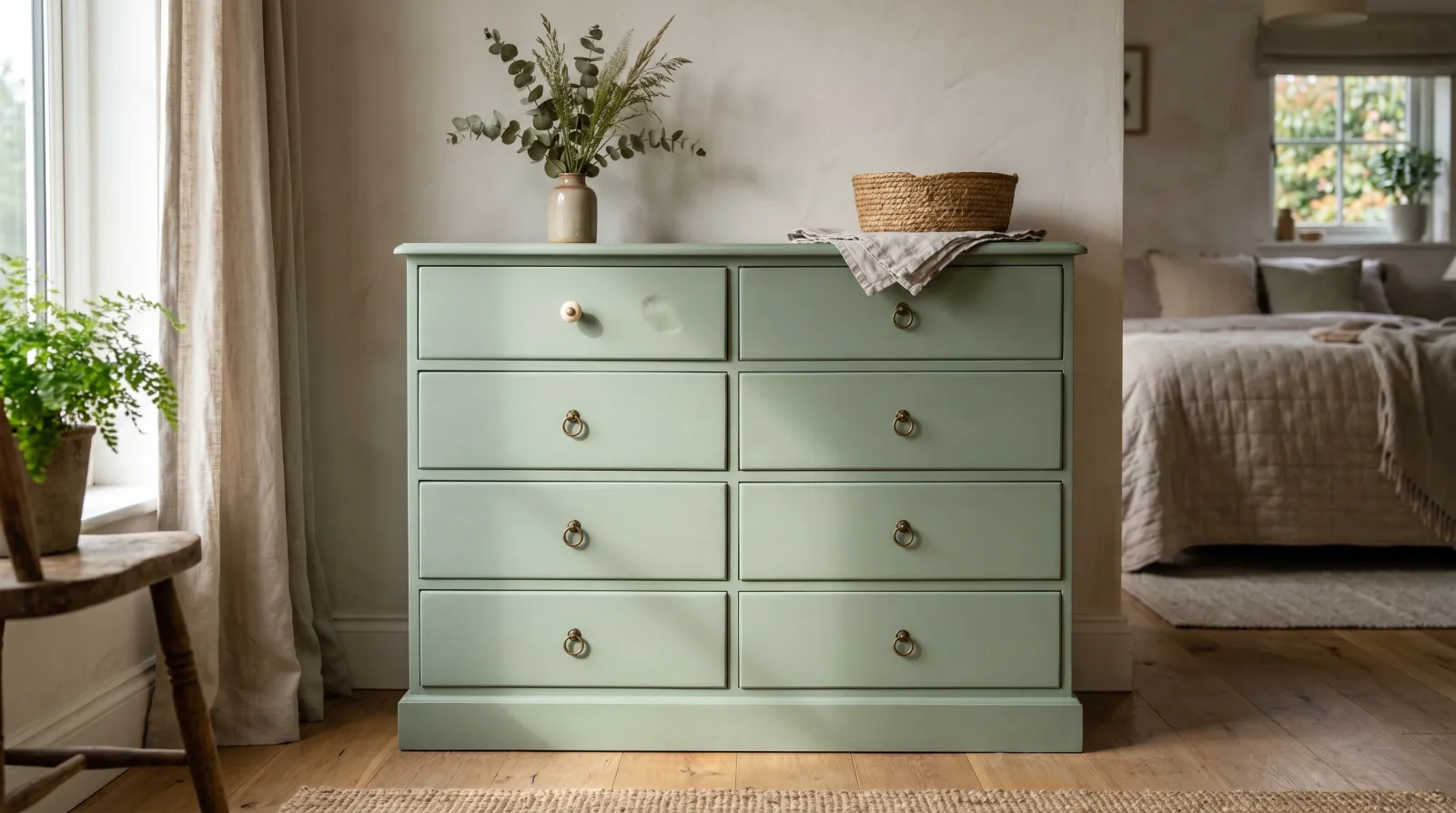
Most people learn the difference between dry and cured the hard way: you paint a dresser, it feels fine after a day, you set a lamp on it a week later, and the lamp’s felt pad fuses to the top. The paint was dry. It was not cured. That gap is where almost every tacky-furniture story lives.
TL;DR
- Dry to the touch is not cured. Most furniture paint feels dry in hours but needs 2 to 4 weeks to reach full hardness.
- Tacky after weeks is a curing failure, usually from a coat that was too thick, a recoat that went on too soon, cold or humid air, or paint over an oily or sealed surface.
- You cannot fix soft-all-the-way-through paint with another coat. That traps the uncured layer and makes it worse.
- Unsealed chalk paint stays soft on purpose. It needs wax or a polyacrylic topcoat to harden into a usable surface.
- The reliable fix: identify why it is soft, remove what will not cure, prep the substrate honestly, and recoat thin with a paint that cross-links into a hard film.
Does This Match What You’re Seeing?
Press a thumbnail into a hidden spot. What happens next tells you which problem you have.
- Surface still tacky, prints stay: the film never reached touch-dry hardness. Too thick, too soon, or too cold.
- Feels dry but felt pads and plastic stick to it: classic slow cure. The top skinned over but the film underneath is still soft.
- Gummy and rubbery, peels in soft sheets: two incompatible coats, or paint over a wax, polish, or oil-soaked wood.
- Hard everywhere except thick edges and drip runs: only the heavy spots are soft. The film is too thick there to release solvent and water.
- Chalk-paint matte surface that smears or rubs off: unsealed chalk paint. Working as designed, just unfinished.
If two of these describe your piece, you likely have two causes stacked. Cold humid air on top of a too-thick coat is the most common pairing on winter projects.
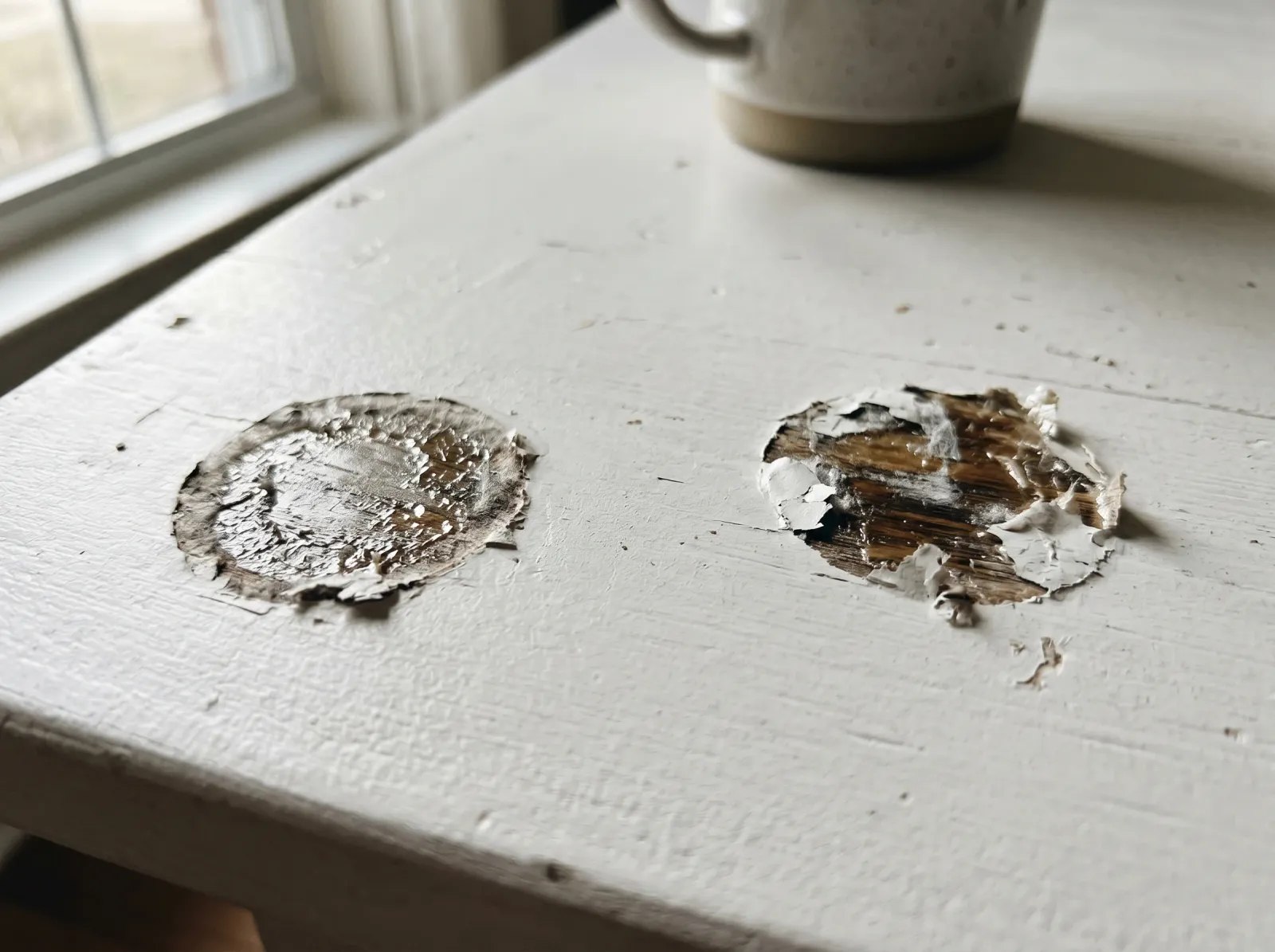 Stuck felt pads and a thumbprint that does not bounce back are the classic tacky tells.
How Serious Is This?
Cosmetically it looks alarming, but most tacky furniture is fixable without a full strip. Severity comes down to how deep the softness goes.
- Surface tack only, sound paint underneath: low. Better airflow, warmth, and patience usually finishes the cure.
- Soft through one bad coat: medium. Scuff and recoat correctly, or sand that coat off.
- Gummy all the way down, or paint sliding off in rubbery sheets: high. The bond failed. Strip to a stable layer or to bare wood.
The trap is a piece that feels almost-there for months. A coat that is genuinely failing and one that is merely slow look identical at day five. The thumbnail test cuts through it: a slow-curing film resists the nail and recovers, while a failing film stays dented and gummy no matter how long you wait.
Why This Is Happening (Root Cause)
Here is the chemistry, because the fix only makes sense once you see what curing actually is.
A waterborne furniture paint dries in two stages. First the water and co-solvents evaporate, which is what you feel as “dry to the touch” in a few hours. Then the binder particles left behind have to fuse and cross-link into one continuous film. That second stage is curing, and it is slow. Cross-linking is a chemical reaction between resin molecules, and like most reactions it needs warmth, time, and the absence of anything blocking the binder from doing its job.
Tackiness is that second stage stalling out. A few specific things stall it.
The coat was too thick. A heavy coat skins over on top before the lower portion can release its water and solvent. The trapped moisture keeps the binder from packing tight, so the film stays soft underneath a dry-feeling skin. This is why drip runs and pooled edges are the last spots to harden.
You recoated too soon. Lay a second coat over a first that has not finished evaporating and you seal the water in. Now two layers cure as one thick gummy mass. Recoat windows on the can assume 70°F and moderate humidity. In a cold garage they are optimistic.
Cold or humid air. Cross-linking slows sharply below about 60°F, and high humidity slows the evaporation that has to happen first. Paint a piece in a 50°F basement in February and the cure can take months instead of weeks, or never really complete.
The substrate fought the paint. Old furniture carries decades of wax, furniture polish, hand oils, and sometimes a silicone-based product. Paint over any of those and the binder cannot wet the surface or anchor to it, so it stays soft and slick. Bare oily woods like teak or rosewood do the same thing from their natural oils.
Wrong product for the job. Unsealed chalk paint is low on binder by design, which is why it sands and distresses so easily. Left bare it never becomes a tough film. It is meant to be sealed.
Before you do anything else, name which of these you have. The repair is different for each, and the wrong repair sets soft paint over soft paint.
The Fix
Step 1. Confirm Whether the Paint Can Be Saved
Do the thumbnail test in a hidden spot, then press a strip of painter’s tape onto the surface and pull it. If the paint feels merely soft but stays put and slowly recovers from the dent, you can likely cure it in place (Step 2). If paint lifts with the tape or stays gummy and dented, it has to come off (Step 4).
Step 2. Force the Cure (for Surface Tack Only)
Move the piece to a room at 68 to 72°F with low humidity. Point a box fan at it on low to keep air moving across the surface. A small dehumidifier helps in damp climates; aim for indoor relative humidity under 50 percent. Give it 14 to 21 days and re-test. Warmth and airflow are doing the same thing a warm dry day does outdoors: speeding evaporation and cross-linking. Do not put anything on the surface during this window, and do not add a topcoat hoping to “lock it” — you will only seal the soft layer in.
Step 3. Seal Unsealed Chalk Paint
If the cause is bare chalk paint, the paint is fine; it just needs a topcoat. Let it dry 24 hours, then apply a thin coat of water-based polyacrylic such as Minwax Polycrylic or a furniture wax buffed in with a lint-free cloth. Two thin polyacrylic coats two hours apart beat one thick coat. For the difference between film-forming topcoats, see polyurethane vs polycrylic. For how chalk paint behaves and why it needs sealing, see what chalk paint actually is.
Step 4. Remove Paint That Will Not Cure
Gummy-all-the-way paint will not harden because the chemistry already failed. Scrape the worst of it with a plastic or metal scraper, then sand back to a stable layer or to bare wood with 120 grit, finishing at 220. For a fully rubbery film, a citrus-based or methylene-chloride-free stripper lifts it faster than sanding. Wear nitrile gloves and a respirator, and work with the windows open.
Step 5. Degrease and Prep the Substrate
This is the step that prevents a repeat. Wipe the bare or scuffed surface with a degreaser or denatured alcohol to pull wax, polish, and hand oils. On previously waxed or oily wood, a mineral-spirits wipe followed by a clean-rag wipe matters more than the paint you choose. Let it flash off fully. For pieces that had a glossy varnish or lacquer, scuff-sand to a dull surface so the primer has tooth, and read up on painting over varnished wood first.
Step 6. Prime, Then Recoat Thin
On oily, glossy, or stain-prone wood, a bonding or shellac-based primer earns its place: Zinsser BIN (shellac) blocks oils and bleed-through, INSL-X STIX grips glossy surfaces. Then two or three thin coats of your finish, not one thick one. Thin coats release water and cross-link far faster than a heavy coat, and they stack into a harder final film. For paints that cure to a genuinely tough furniture finish, an acrylic-alkyd enamel like Benjamin Moore Advance levels like oil and hardens harder than straight latex. The best furniture paints round-up walks through the trade-offs, and the step-by-step on repainting furniture covers order of operations.
Safety and Chemical Interactions
Never mix bleach with vinegar, ammonia, or hydrogen peroxide if you are cleaning a piece before paint — that combination releases toxic gas. Use solvents and strippers in cross-ventilation with a respirator, not just a dust mask. Methylene-chloride strippers are banned for consumer use in several states and dangerous indoors; choose a citrus or soy-based stripper for furniture you are working on inside.
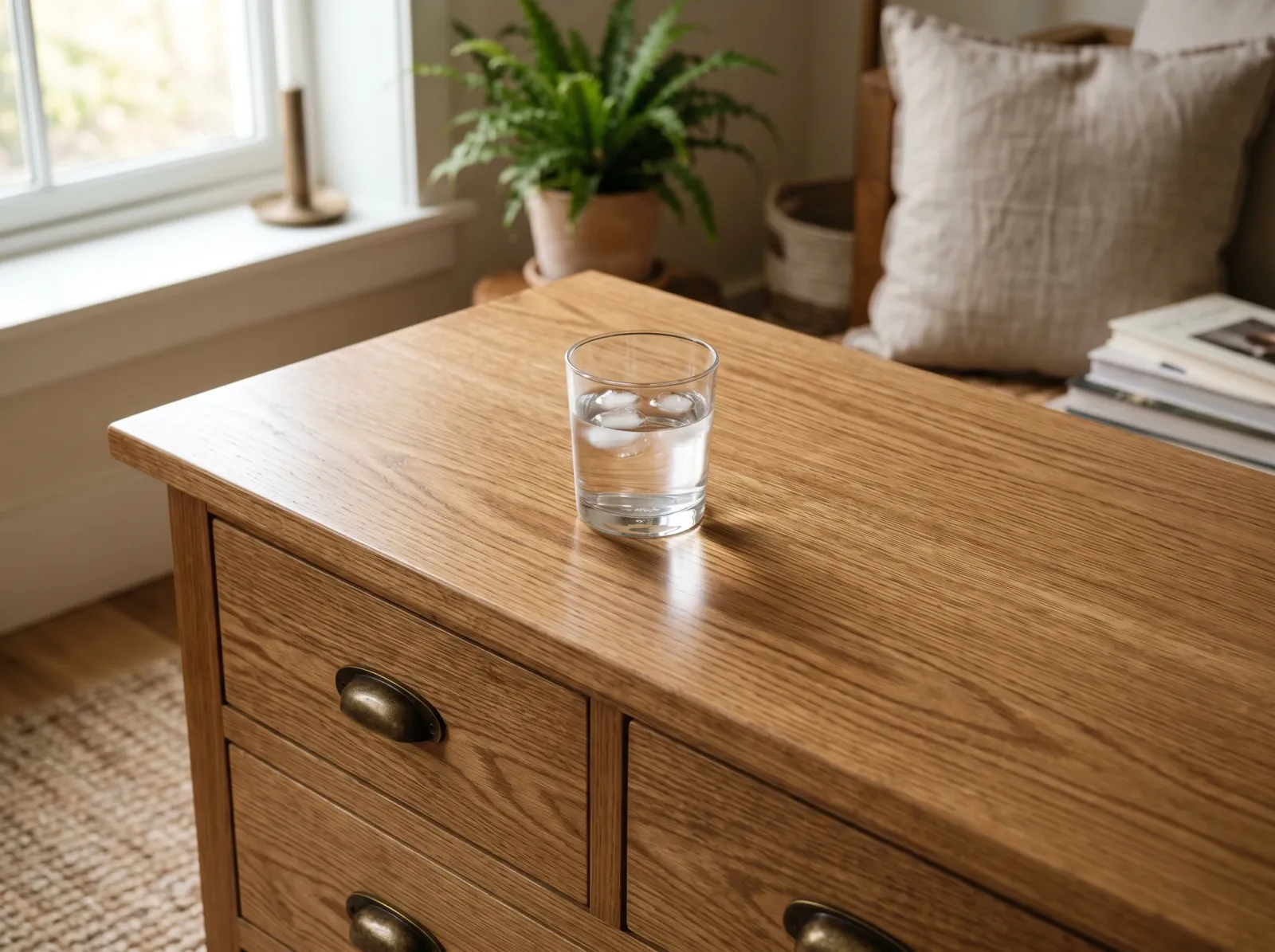 A cured film takes a glass, a hand, and a stack of books without printing or pulling.
What’s Causing It at a Glance
| What you see | Most likely cause | The fix |
|---|---|---|
| Tacky surface, sound underneath | Slow cure, cold or humid air | Warm room, fan, 2 to 3 weeks |
| Dry top, soft below | Coat went on too thick | Strip the thick coat, recoat thin |
| Gummy two layers, peels soft | Recoated too soon, or incompatible coats | Remove to a stable layer, recoat |
| Slick, never bonded | Wax, polish, or oil under the paint | Degrease, prime with shellac, recoat |
| Matte surface rubs off | Unsealed chalk paint | Topcoat with polyacrylic or wax |
Common Mistakes
- Recoating to “fix” softness. A fresh coat over a soft one traps the uncured film and extends the problem. Diagnose first.
- Trusting the dry-to-touch time on the can. That number is evaporation, not cure. Hardness is a separate, longer clock.
- Painting in a cold garage in winter. Below 60°F the cross-linking reaction barely runs. Bring the piece somewhere warm.
- One thick coat instead of two thin ones. Thick coats cure slow and soft. Thin coats cure fast and hard.
- Skipping degrease on old furniture. Decades of polish and hand oil sit on every armrest and drawer pull. Paint will not anchor to them.
When to Call a Pro
- The piece is an antique or has real value, and stripping risks the finish or the wood underneath.
- The existing finish on a pre-1978 piece may be lead-based; test before sanding, and stop if positive.
- A whole set of cabinet doors went tacky from a sprayed finish and the cause is not obvious. A finisher can diagnose product and equipment issues fast.
- The paint smells strongly of solvent weeks later, which can mean a deeper incompatibility worth a pro’s eye.
FAQ
How long does furniture paint take to fully cure? Dry to the touch and cured are two different milestones. Most latex and acrylic furniture paints feel dry in a few hours but take 21 to 30 days to reach full hardness at 70°F and moderate humidity. Chalk paint cures faster but only holds up under a topcoat. Until the film is cured, keep the piece light-duty: no heavy objects, no felt pads, no stacking.
Can I just paint over a tacky finish? No. A fresh coat over soft paint traps the uncured layer underneath and the whole stack stays soft. If the tack is from one bad coat over a sound base, scuff and recoat with a properly matched paint. If the whole film is gummy, strip it back to a stable layer or to the substrate and start over.
Why is my chalk paint still sticky after a week? Chalk paint dries fast because it is high in pigment and low in binder, but that low binder load means the bare film stays soft and porous. It is not curing into a tough coating on its own. It needs a wax or polyacrylic topcoat to seal it.
Does a topcoat fix tacky paint? Only if the tack is a surface-sealing issue, like unsealed chalk paint or oil bleeding through. A water-based polyacrylic seals and hardens those. A topcoat does not fix paint that is soft all the way through from a recoat that went on too soon or a coat that was too thick.
Will tacky paint eventually harden if I just wait? Sometimes, if the only problem was cold or humid conditions slowing the cure. Move the piece somewhere warm and dry, run a fan, and give it two to three weeks. If it is still soft after that, the cause is chemical and waiting will not solve it.