Product review · Minwax · Updated August 8, 2026
Water-Based Wood StainMinwax paint review
7.6/10The fast, low-odor interior stain — buy it for a one-day turnaround, not for the deepest color.
Forty pre-mixed wood tones that dry in an hour and rinse out of the brush in the sink. The trade is color depth, plus a conditioner step on every softwood you own.

Maya Patel · Reviews Editor & Product Tester · Updated August 8, 2026
Maya spent five years running comparative product testing at a consumer testing nonprofit before joining CompositePaint. She has put the same wood tone on the same boards in water-based and oil to see exactly what the fast dry time costs you in depth. About the testing process →
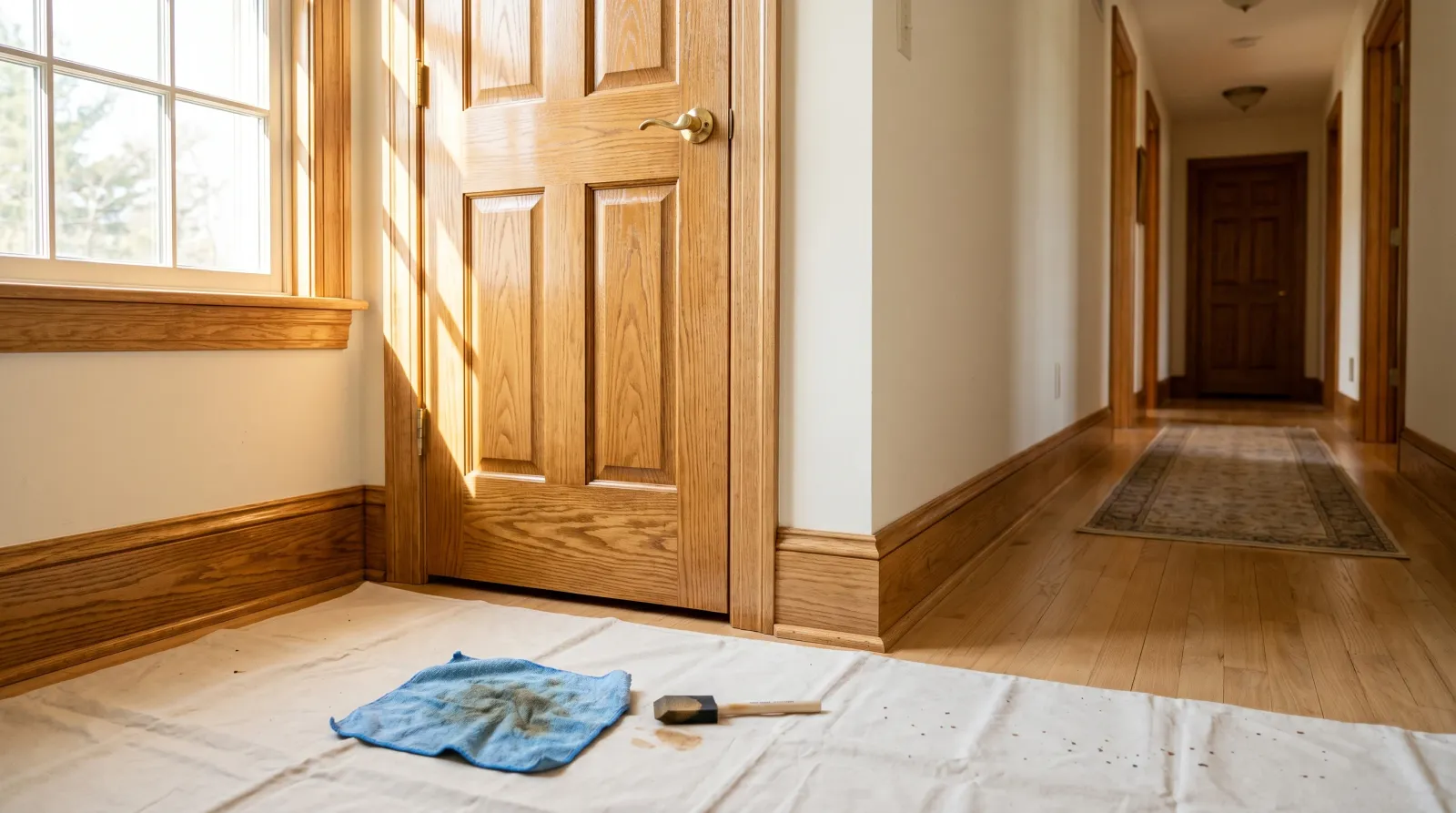
Minwax Water-Based Wood Stain
Coverage100–125 sq ft / qt, one coat
Dry / recoatTouch dry 1 hr
VOCLow-VOC water-based
Read this first
The Fast Verdict
Buy it if you are staining interior furniture, cabinets, or trim on open-grain hardwood and you want the piece colored, topcoated, and back in the room the same day. Touch dry in an hour, recoat at two, ready for Polycrylic at three, and the brushes rinse in the sink. It loses to oil-based Wood Finish on depth, and it needs a pre-stain conditioner on pine, birch, and maple. It colors wood; it does not protect wood.
Best for
Interior furniture · Cabinets · Trim and doors · Open-grain hardwood like oak and ash · One-day projects · Apartments with no ventilated garage
Skip if
You want maximum color depth · Bare pine you will not condition · Exterior wood · Floors · Big tabletops where a wet edge is hard to keep
What it's good at
- Same-day turnaround — stained before lunch, first topcoat on by mid-afternoon
- Water cleanup and low odor, so it runs indoors with the windows only cracked
- Honest, even color on open-grain hardwood like red oak and ash, true to the chip
- Raising less trouble than expected — a 320-grit scuff between coats knocks the fiber flat
- Holding its color, with no oil in it to drift warmer over the years
- A 40-tone deck of traditional colors you can buy at any big box
What it's not good at
- Color depth — it sits flatter and lighter than the oil in the same tone
- Bare pine, birch, and soft maple without the pre-stain conditioner
- Big tabletops and long door runs, where the short open time costs you the wet edge
- Protecting anything on its own; skip the topcoat and it scuffs and water-spots
- Exterior wood and floors — this line is interior only
Same shelf, different cans
Which Minwax Water-Based Stain Are You Buying?
The water-based label now spans more than one product, and they do not behave the same. This review covers the classic pre-mixed wood-tone can. If you grabbed a tintable one, you bought something else, and stock varies store to store as the line shifts toward the newer bases.
Water-Based Wood Stain (this review)
BaseThin penetrating water-based formula, 40 pre-mixed wood tones, wipe-on
Recoat2 hr; topcoat at 3 hr
Buy it if
You want a traditional wood tone straight off the deck and the piece topcoated the same day.
Avoid if
You need a custom color, or your store only has the thicker tintable cans.
Wood Finish Water-Based Semi-Transparent Color Stain
BaseTintable, 200-plus colors, about five times thicker, quart only
Buy it if
You want a custom color mixed at the counter and a one-coat product.
Avoid if
You are following instructions written for the thin 40-tone version. It is a different application.
Wood Finish Water-Based Solid Color Stain
BaseTintable, near-opaque
Buy it if
You want coverage that hides most of the grain, closer to a thin paint than a stain.
Avoid if
The grain is the point.
Minwax Gel Stain
BaseThick; sits on the surface instead of soaking in
Buy it if
The wood is blotch-prone pine, the surface is vertical, or it already has a finish on it.
Avoid if
You want color soaked into bare open-grain hardwood.
Numbers, not adjectives
Spec Sheet
- Coverage
- 100–125 sq ft / qt, one coat
- Colors
- 40 traditional wood tones (classic line)
- Dry / recoat
- Touch dry 1 hr · recoat 2 hr · topcoat at 3 hr
- VOC
- Low-VOC water-based; well under the 350 g/L federal stain cap
- Conditioner
- Not self-priming; use the Water-Based Pre-Stain Conditioner on softwoods
- Topcoat
- Required — Polycrylic or another clear finish
- Surfaces
- Interior bare or sanded wood: furniture, cabinets, trim, doors
- Not for
- Floors and exterior wood
- Cleanup
- Soap and water
- Sizes
- Half-pint, quart, gallon
- Price
- $14–18 / qt, $40–48 / gal
Application Settings That Work
- Brush
- A lint-free rag or a foam brush. Wipe or brush it on with the grain, let it sit, then wipe back. Work in sections on anything large, because the open time is short and a dried edge reads as a lap mark. Two thin coats beat one heavy one.
- Primer
- Not a primer job, a conditioner job. Sand bare wood to 180–220 grit and no further, then remove every speck of dust. On pine, birch, soft maple, and aspen, brush on Minwax Water-Based Pre-Stain Wood Conditioner, wait 15 minutes, and stain within two hours. Open-grain hardwood can usually skip it.
Dry Times in the Real World
The clock is the reason to buy this stain. Touch dry in about an hour, recoat at two, ready for Polycrylic at three, so a small dresser stained before lunch can have its first topcoat on by mid-afternoon. The oil version would still be tacky. The same speed works against you on a big surface: on a tabletop or a run of cabinet doors you have less time to keep a wet edge, so work in sections and do not overload the rag. It also raises wood fiber, the way every water-based stain does, and a light scuff with 320-grit between coats knocks it flat — the fast dry means you are not waiting around to do it. None of that is protection. The schedule is not finished until two to three coats of clear are on top.
Mid-project panic
When It Goes Wrong, and How to Fix It
Cloudy, blotchy color on pine, birch, or maple
Why it happens. Those woods have thirsty soft bands sitting next to tight ones, so they drink stain unevenly. A thin penetrating stain has no way to even that out on its own, and the cloudiness shows up as the surface dries.
The fix. Brush on Minwax Water-Based Pre-Stain Wood Conditioner, wait 15 minutes, then stain within two hours. On oak, walnut, ash, and other open-grain hardwoods you can usually skip it. When you are not sure, condition a scrap of the same board and stain it first.
Lap marks across a tabletop or a run of cabinet doors
Why it happens. The short open time that wins on turnaround is the same thing that costs you here. Go back into a section that has started to set and the overlap shows as a darker band.
The fix. Work in sections you can finish wet, keep a wet edge, and do not overload the rag. Two thinner coats give you a more even result than one slow heavy pass, and the two-hour recoat means both fit in an afternoon.
The color looks flat next to an oil-stained sample
Why it happens. There is no oil in it. Stand water-based and oil-based Early American side by side and the oil reads warmer and more dimensional, while the water-based sits flatter on the surface.
The fix. A second coat narrows the gap without closing it. If depth matters more than a clean shop, buy oil-based Wood Finish in the same tone instead — it costs less per quart. If you keep the water-based, top it with Polycrylic so nothing yellows the color you chose.
The surface feels fuzzy after the first coat
Why it happens. Water raises wood fiber. It is normal, not a bad can, and it shows up worst on a piece sanded very smooth.
The fix. Scuff lightly with 320-grit between coats and wipe every speck of dust off before the next one. Do not sand hard enough to cut through the color.
The color scuffs and water-spots within months
Why it happens. This is a stain, not a finish. It colors wood and gives no wear or moisture protection at all, and touch points wear through first.
The fix. Two coats of Minwax Polycrylic for low-touch trim, three for a tabletop or a kid's dresser. Budget for it from the start — it is not optional, and it is the single thing beginners skip.
Side by side
Water-Based Stain vs Wood Finish Oil vs Gel Stain
Three Minwax stains, three different jobs. The wood you are staining and the clock you are on decide this more than the color card does.
| Water-Based Wood Stain | Wood Finish (oil-based) | Minwax Gel Stain | |
|---|---|---|---|
| Color depth | Honest and even, but flatter and lighter in the same tone. | Richer, warmer, more dimensional. The depth winner. | Even color that sits on the surface rather than soaking in. |
| Dry and recoat | Touch dry 1 hr, recoat 2 hr, topcoat at 3 hr. | Recoat measured in 8-plus hours. | Slower to dry, and thicker to control. |
| Blotch-prone pine and maple | Needs the pre-stain conditioner or it goes cloudy. | Longer open time gives you more room to even the color out. | Sidesteps the problem entirely — it does not soak in. |
| Odor and cleanup | Low odor; brushes rinse in the sink. | Solvent smell; mineral-spirit cleanup. | Thicker to handle; plan on a slower, messier job. |
| Vertical or already-finished surfaces | No — bare interior wood only. | No — bare wood only. | Yes. This is the one that goes over an existing finish without full stripping. |
| Price | $14–18 / qt | $9–14 / qt | $16–22 / qt |
| Where it wins | Interior furniture, cabinets, and trim you want topcoated the same day. | Depth on a dim-grain hardwood, and big surfaces where slow wiping is a risk. | Pine, vertical pieces, and recoloring without stripping. |
Color depth
Water-Based Wood StainHonest and even, but flatter and lighter in the same tone.
Wood Finish (oil-based)Richer, warmer, more dimensional. The depth winner.
Minwax Gel StainEven color that sits on the surface rather than soaking in.
Dry and recoat
Water-Based Wood StainTouch dry 1 hr, recoat 2 hr, topcoat at 3 hr.
Wood Finish (oil-based)Recoat measured in 8-plus hours.
Minwax Gel StainSlower to dry, and thicker to control.
Blotch-prone pine and maple
Water-Based Wood StainNeeds the pre-stain conditioner or it goes cloudy.
Wood Finish (oil-based)Longer open time gives you more room to even the color out.
Minwax Gel StainSidesteps the problem entirely — it does not soak in.
Odor and cleanup
Water-Based Wood StainLow odor; brushes rinse in the sink.
Wood Finish (oil-based)Solvent smell; mineral-spirit cleanup.
Minwax Gel StainThicker to handle; plan on a slower, messier job.
Vertical or already-finished surfaces
Water-Based Wood StainNo — bare interior wood only.
Wood Finish (oil-based)No — bare wood only.
Minwax Gel StainYes. This is the one that goes over an existing finish without full stripping.
Where it wins
Water-Based Wood StainInterior furniture, cabinets, and trim you want topcoated the same day.
Wood Finish (oil-based)Depth on a dim-grain hardwood, and big surfaces where slow wiping is a risk.
Minwax Gel StainPine, vertical pieces, and recoloring without stripping.
Open-grain hardwood on a one-day schedule: the water-based can, and you will not miss much. Walnut or another dim-grain wood you want to look rich: oil-based Wood Finish, which also costs less per quart and gives you longer to wipe. Raw pine, a vertical piece, or wood that already has a finish on it: gel stain, which solves the blotch problem instead of prepping around it. Whichever you pick, the topcoat is still a separate purchase.
If not this one
Honest Alternatives
MW
Minwax Wood Finish (oil-based)$9–14 / qt
The original, and cheaper. Richer color and a longer open time that forgives slow wiping on big surfaces. The trade is solvent smell, an 8-hour-plus recoat, and mineral-spirit cleanup. Right when color depth matters more than a fast clock.
Full review →GF
General Finishes Water Based Wood Stain$22–30 / qt
The pro-grade water-based stain. Richer pigment load and better blotch resistance than the Minwax line, with the same fast dry and water cleanup. Roughly double the price, and you buy it online or at a Woodcraft rather than a big box. Worth it on an heirloom piece.
MG
Minwax Gel Stain$16–22 / qt
For blotch-prone pine, vertical surfaces, and coloring over an existing finish without full stripping. It sits on the surface instead of soaking in, so it covers evenly where penetrating stains fail. Thicker to control and slower to dry, but it solves problems this stain cannot.
Full review →Questions people actually ask
Water-Based Wood Stain Questions, Answered
Is Minwax water-based stain any good?
For interior furniture, cabinets, and trim where you want fast turnaround and easy water cleanup, yes. It dries in about an hour, raises far less odor than oil, and the color is honest to the chip. It loses to oil-based Wood Finish on richness and to gel stain on vertical or blotch-prone surfaces. Topcoat it with Polycrylic; the stain alone gives no protection.
Does Minwax water-based stain need a topcoat?
Yes. Like every penetrating stain, it colors the wood but offers no wear or moisture protection on its own. Seal it with two to three coats of Minwax Polycrylic for furniture, cabinets, and trim. Skip the topcoat and the surface will scuff, water-spot, and wear through at the touch points within months.
Do I need a pre-stain conditioner with it?
On pine, birch, soft maple, and aspen, yes. Those woods drink stain unevenly and go blotchy. Brush on Minwax Water-Based Pre-Stain Wood Conditioner, wait 15 minutes, then stain within two hours. On oak, walnut, ash, and other open-grain hardwoods you can usually skip it. When in doubt, condition a scrap first.
Is the water-based or oil-based Minwax stain better?
Different jobs. Water-based wins on dry time, low odor, and cleanup, so it is the easy pick for interior furniture and a one-weekend project. Oil-based Wood Finish wins on color depth, longer open time for big surfaces, and forgiveness if you are slow with the rag. For a dim-grain hardwood you want to look rich, go oil. For speed and a clean shop, go water.
What clear coat should I put over it?
Minwax Polycrylic is the natural pairing. It is water-based too, so cleanup stays simple, it dries fast, and it will not add the amber cast that oil-based polyurethane lays over a cool stain. Two coats for low-touch trim, three for a tabletop or a kid's dresser.
How fine should I sand before staining?
Get bare wood to 180 to 220 grit and stop there. Going finer burnishes the surface and the stain has less to grab. Then remove every speck of dust before the color goes on — the whole job lives or dies on that step.
How many coats do I need?
One coat lands the tone on the chip on open-grain hardwood. Add a second if you want more depth; it narrows the gap with an oil stain without closing it. Scuff lightly with 320-grit between coats to knock down raised grain, and remember the clear coat still comes after.
Why is the wood fuzzy after the stain dried?
Water raises wood fiber. Every water-based stain does it and this one is no exception. A light scuff with 320-grit flattens it, and because the stain is dry in an hour you are not waiting around to do it.
Can I use it outside?
No. This line is interior only — furniture, cabinets, trim, and doors. For anything going outside, buy an exterior wood stain built for UV and moisture. It is also not rated for floors.
Why does my store only have tintable cans?
The pre-mixed wood-tone line is being phased toward the newer tintable bases at some retailers, so stock varies store to store. The thicker tintable can applies in a similar way, but it is a one-coat, color-matched product, not the 40-tone deck reviewed here. Check the front of the can before you check out.
Keep exploring
Minwax brand guide and product line breakdownWater-based vs oil stain — which to useBest interior wood stain round-up
We may earn a commission when you buy through the retailer link above. It never changes the score or the verdict.
Ask a Question