Mesa Tan
Dunn-Edwards' mid-depth desert tan, reviewed honestly: the stucco it was mixed for, the rooms it closes, and the beige people thought they were buying.

Jessica has spec'd whites and neutrals for more than 300 rooms and keeps a sample wall of painted drawdowns in her studio. Every color review is checked against real reader rooms in the comments and re-tested when a formula changes. About the testing process →
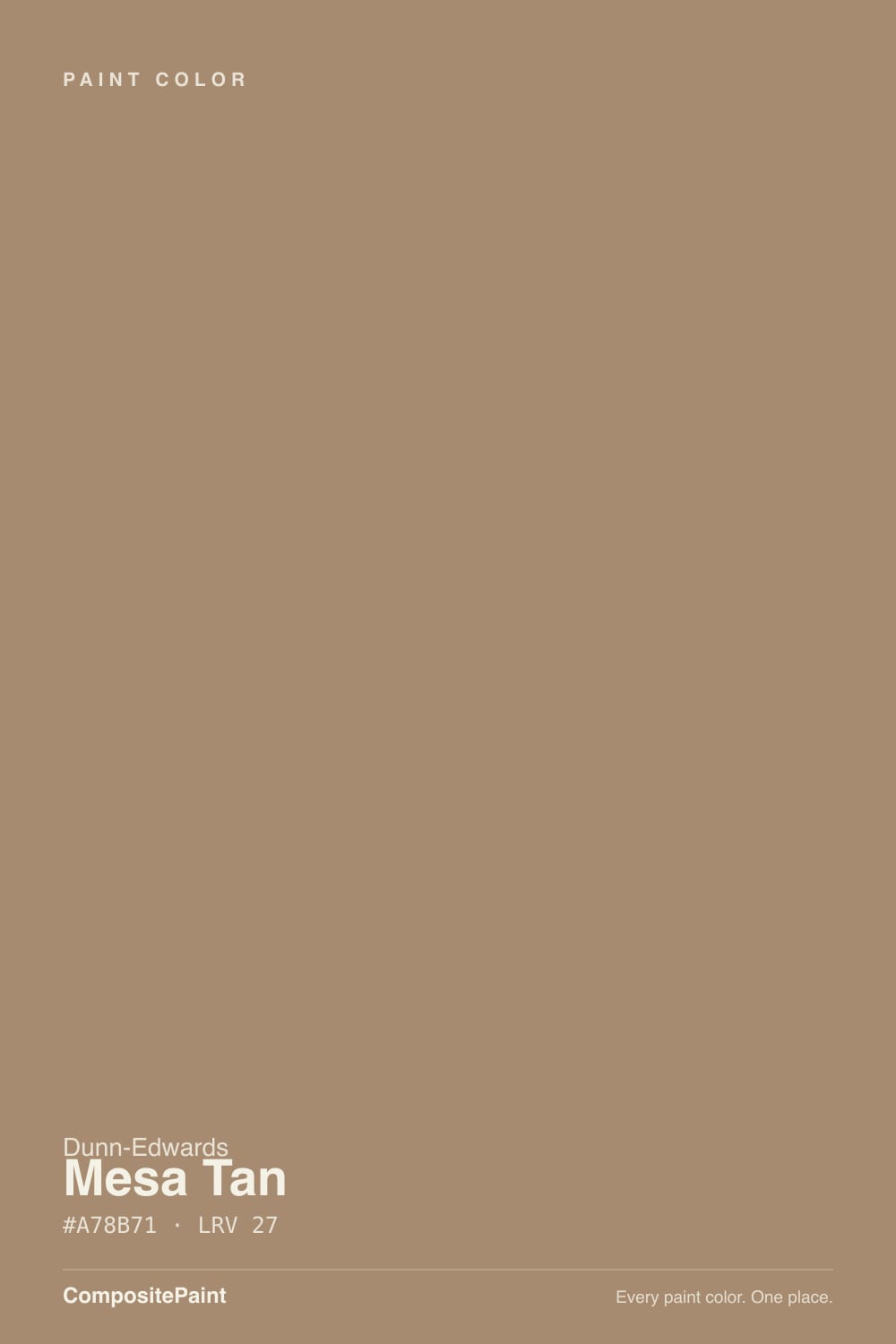
- 1Turkish Coffee5
- 2Porpoise13
- 3Mesa Tan27
The Fast Verdict
Mesa Tan is tan the way a mesa is tan: a mid-depth yellow-red brown, LRV 27, with enough chroma to look like a color from the street. Dunn-Edwards files DEC718 in the Perfect Palette as a desert-inspired Classic, and Western painters actually put it on stucco — with Whisper trim, or as the darker millwork on a Sand Dune body. It is not beige. It is not greige. It is not Sherwin-Williams' lighter Mesa Tan. Give it hard sun, cream trim, and walnut and it looks like the house grew out of the dirt. Sample it as a beige for a north living room and you have painted a brown box.
Southwest stucco exteriors · lamplit dens and dining rooms · bedrooms that should feel grounded · Mesa Tan as the darker trim on a lighter sand house
You actually wanted beige or greige · the room faces north and stays dim · trim is staying a bright true white · you need a whole-house lightener
- A real desert tan — brown enough to read as a color from the street
- Holds in hard Western sun instead of washing to cream
- Turns earthy, red-warm, and expensive under 2700K lamps
- Works as a stucco body or as the darker trim on a lighter sand house
- Decades in the Perfect Palette, not a launch color
- Not beige — buyers expecting beige get a brown room by the second wall
- Looks orange-dirty next to a bright true-white trim
- Cool north light and cool LEDs turn it muddy khaki-brown
- Too deep (LRV 27) to run hallways or a whole-house interior
What Color Is Mesa Tan, Really?
A muted yellow-red tan with a real brown body — desert earth, not builder beige and not a 2020s greige wearing a sand name. Dunn-Edwards measures DEC718 at Munsell 8.37YR, value 5.7, chroma 2.9, which is the honest label: yellow-red first, chroma high enough that the wall will never pass for taupe. Painters who use it call out the red undertone; the chip looks like a quiet tan; the wall is a mid-brown with warmth. It lives in the Perfect Palette (DEC numbers are the Classics line), has sat in the deck since at least 2007, and has never been a Color of the Year. Sherwin-Williams sells a different, lighter color under the same name. This one is the Western workhorse.
At LRV 27 it is a genuine mid-to-deep tone, one point under Sleepy Hollow (LRV 28) and a point over Dovetail (LRV 26) on the light scale — and forty-one points darker than Stucco Tan (LRV 68), the sandy beige people keep confusing it with. That gap is the whole review. It will not bounce a hallway. It will not run an open plan as the one-can beige. It will hold as a color on a sunbaked stucco wall, and on four interior walls it will read a step deeper and more clearly brown than the chip. Plan for a brown room, not a tan wash. Depth multiplies undertone on every muted YR, and this is the number-one surprise if you bought it thinking beige.
Undertone in one line: yellow-red tan first, earthy brown second, a whisper of red — never gray, never green in the can. If your sample looks orange, that is west sun or a paper-white trim next door doing it. If it looks muddy or khaki, your light is cold. Both versions are the same gallon being honest about the room.
Where It Shines
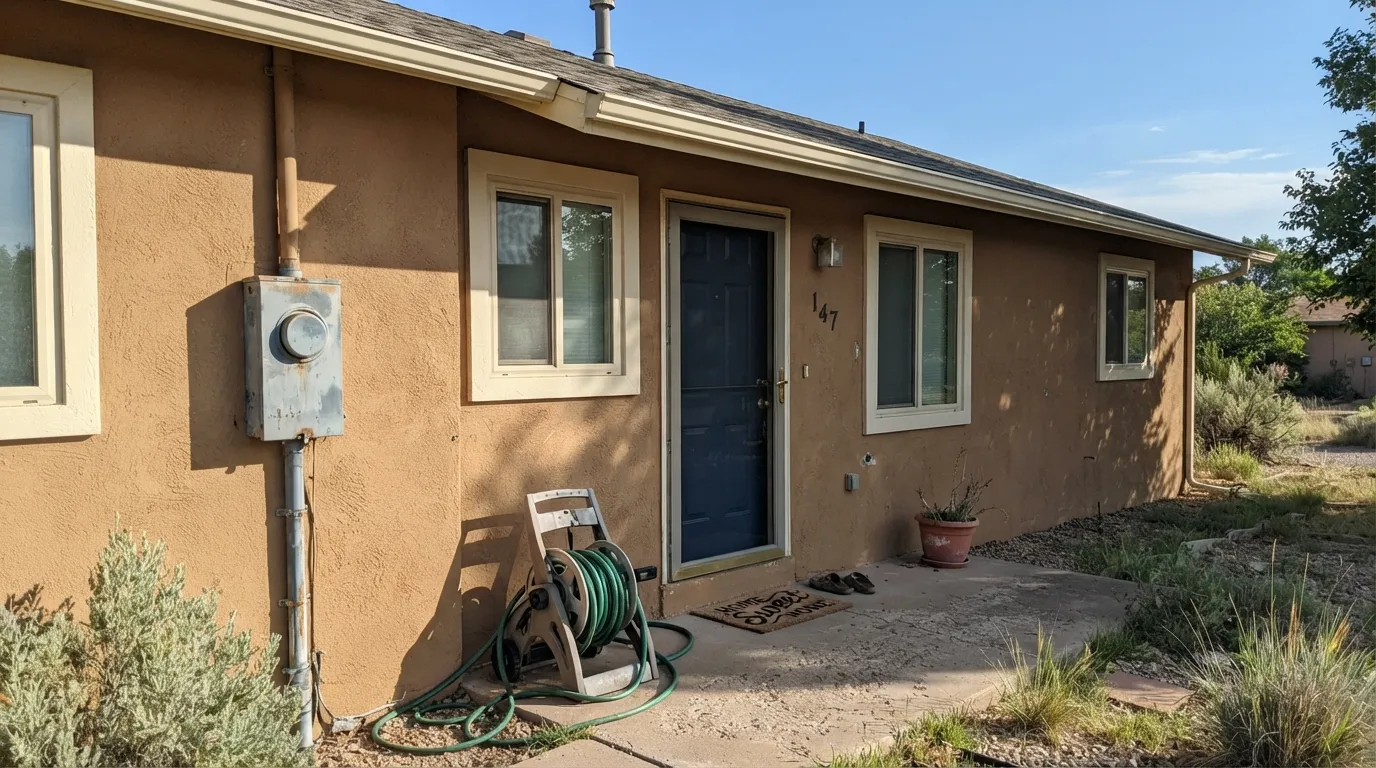
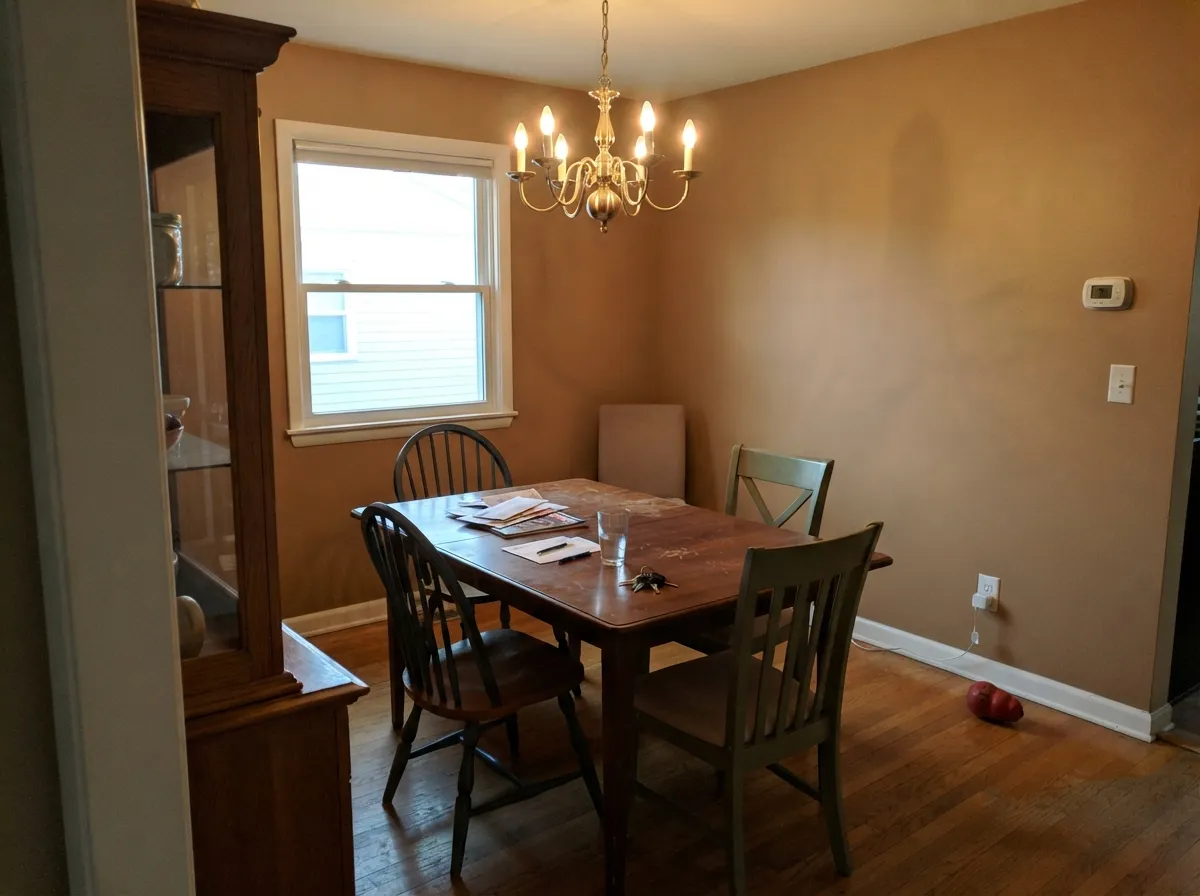
Its real job is outside, and the second job is a room you use after dark. On stucco in Western sun it reads as desert earth instead of washing to cream, which is why a Yorba Linda crew put it on siding and stucco with Whisper on the eaves, trim, and door. Inside, give it 2700K lamps, cream trim, and walnut or leather and the red-brown comes forward like late-day dirt — dens, dining rooms, bedrooms. The other honest use: Mesa Tan as the darker millwork on a Sand Dune body, trim and doors instead of four walls.
Where It Fails
Almost every regret about Mesa Tan is a depth or pairing problem, not a bad batch. The chip looks like a tan. The wall is a brown. If your room matches one of the three situations below, a second coat will not fix it.
On the chip it passes for a desert tan. On four walls, LRV 27 is a brown room — depth multiplies the yellow-red until nobody calls it beige. If your goal was Stucco Tan, Sand Dune, or Desert Suede, this is two to four times too dark and too chromatic. Sample a large board on the actual wall, not a two-inch strip on the kitchen counter, and look at it at night with the lamps you actually use.
The most common pairing mistake: Mesa Tan walls, a paper-white on the woodwork. The brighter white wins and the walls go orange-dirty, even khaki, by comparison. Dunn-Edwards Warm White (LRV 93) is a true white wearing a warm name — do not put it next to this brown. The fix is the trim, not a second coat: Swiss Coffee (LRV 83) or Whisper (LRV 87) keeps the tan reading deliberate. If the bright builder white has to stay, do not use this color.
Chroma 2.9 still is not enough color to spare in cold light. Cool gray daylight kills the red and leaves a muddy khaki-brown that readers will call dingy. Cool white LEDs do the same trick after dark. Warm 2700K bulbs are part of this paint job. If the room stays dim and you refuse lamps, pick a color that does not depend on warmth — or pick a beige light enough to bounce.
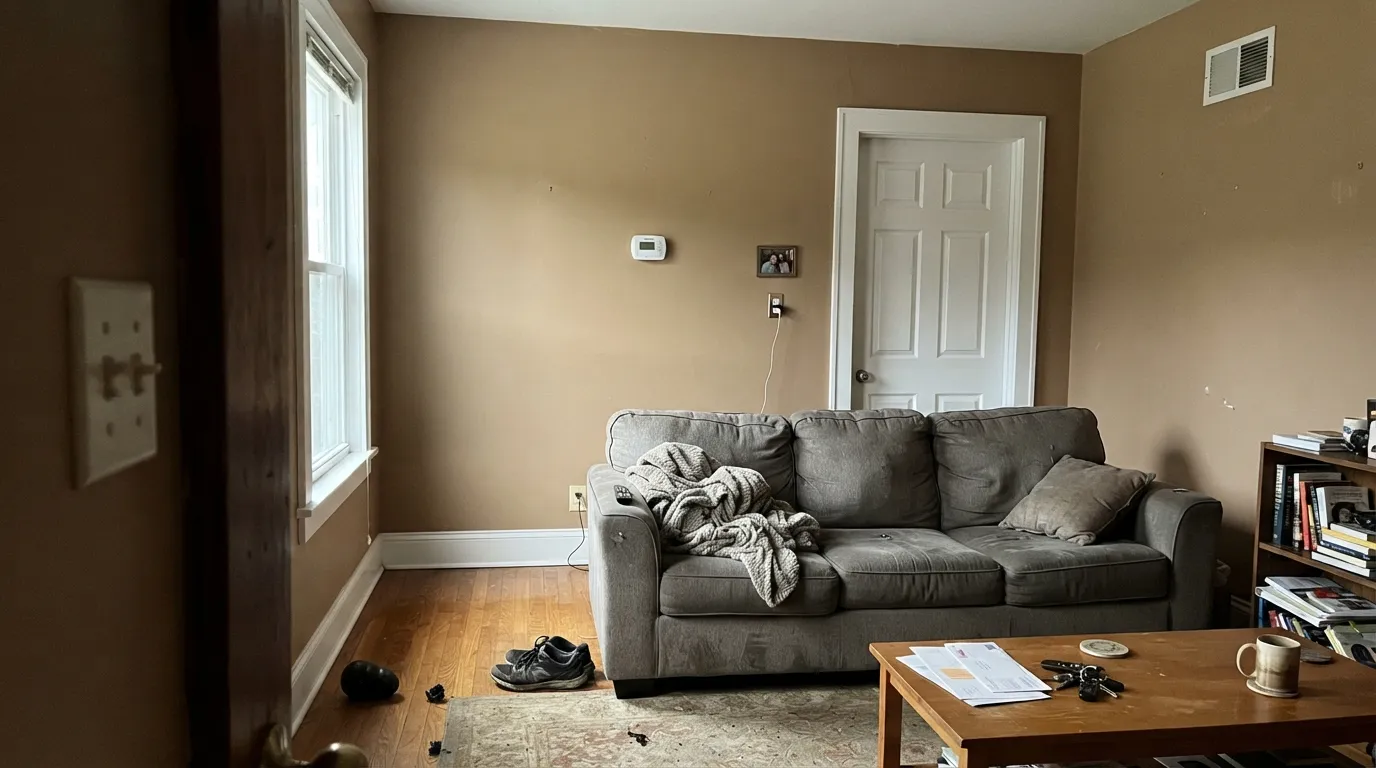
Room by Room
This is the room the color was mixed for. Full Western sun keeps it a present desert tan instead of washing to cream; a Yorba Linda painter ran it on siding and stucco with Whisper trim and door, and that pairing is the default. The shaded north elevation will read a step muddier and more brown. Pair it with Swiss Coffee or Whisper, not a paper-white, and a dark door so the body color does not float. Walk around the house with a sample. Flat on stucco; satin on the woodwork.
Low, warm light flatters it, which makes it perfect for rooms that never see noon. A walnut table, leather, brass, one 2700K chandelier — the tan stays earthy and the red comes forward after dark. Eggshell for durability where chairs scuff; Swiss Coffee on the trim. A lamp-only dining room without warm bulbs goes khaki.
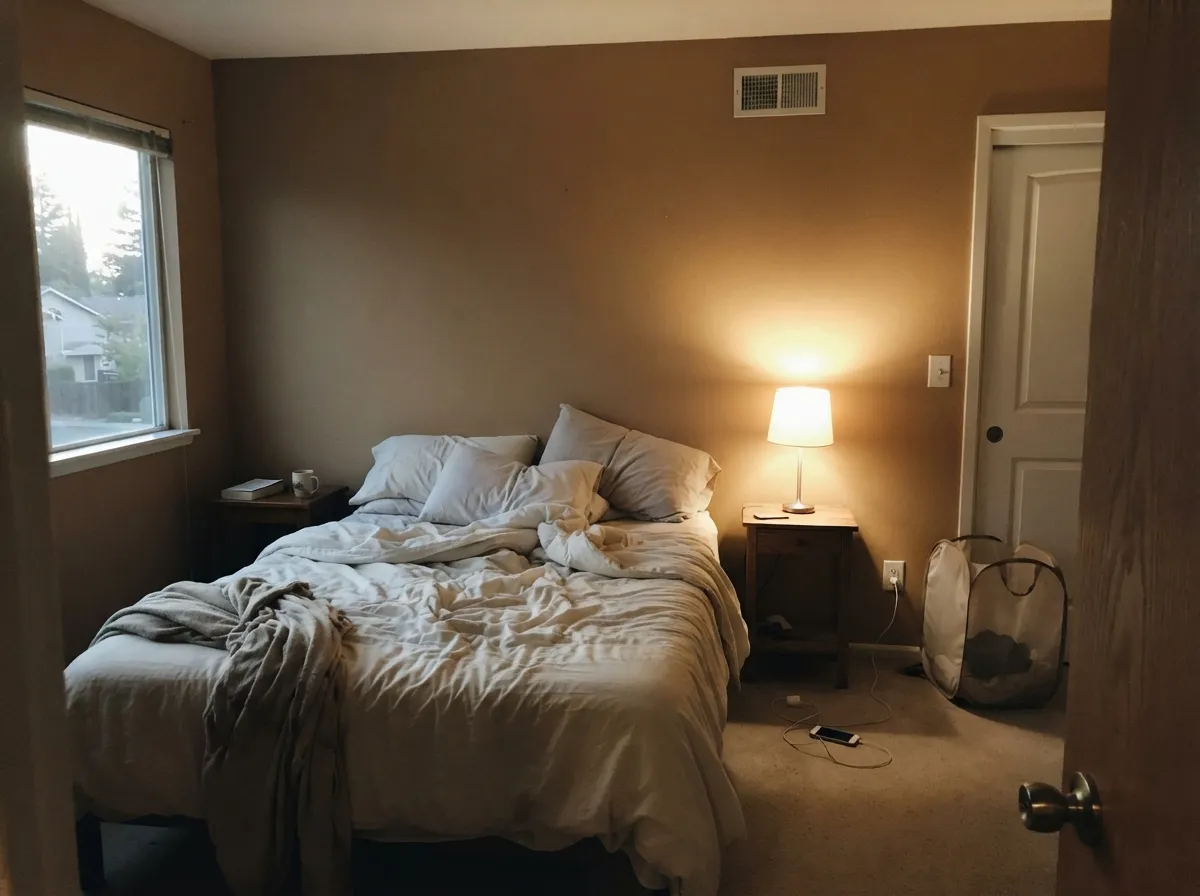
Grounded, restful, not a color you have to decorate around — if the bulbs are warm. Matte finish hides wall texture and deepens the brown; Swiss Coffee or Whisper trim keeps the edges soft. Cream bedding, not beige, which reads yellow against it. If the bedroom faces north and stays dim, this is a cave. Step up to Desert Suede (LRV 55) or Sand Dune (LRV 62) and keep the desert without the depth.
Beautiful in a closed, south-lit living room with cream, walnut, and leather. Riskier in open plans, where LRV 27 has to negotiate with kitchen wood tones and whatever the adjacent rooms wear — and it will make those rooms look brighter by comparison, which can make Mesa Tan look even browner. Sand Dune or Desert Suede next door is the safe handoff.
Small rooms take deep color well. Drenching all four powder-room walls in Mesa Tan under a cream vanity and brass is a weekend project that looks decided. Satin on the vanity if you paint the box too. A windowless powder room still needs a warm bulb or the khaki shows up at 7 a.m.
A full kitchen of Mesa Tan cabinets is a brown kitchen, and a losing one over cool quartz. An island or a hutch under cream walls can work; satin cabinet enamel either way. Hallways are the honest no: LRV 27 closes a corridor into a tunnel. If the house has to be one can, this is not the can — Sand Dune and Stucco Tan exist for that job. Mesa Tan as interior doors on a lighter sand field is the better hallway move.
Your Light Is the Risk
Hard warm sun keeps the yellow-red tan present without tipping orange. This is the light the color was mixed for — the exterior read, and the interior living-room read if you have the windows.
Cool gray daylight kills the red and leaves a muddy khaki-brown. Fine if you half-wanted a dark greige; disappointing if you wanted desert tan. Test on an overcast morning.
Morning light reads dustier and a step quieter; west afternoon and golden hour pull the red-yellow forward until it looks almost orange-tan for an hour. Sample the west wall at 4 p.m. — that is when the brown is loudest.
2700K lamps: redder, more clearly earth-brown, the den version of the color. Cool LEDs above 3500K flatten it toward dingy khaki — swap bulbs, not paint.
Most complaints about Mesa Tan are a light mismatch. Upload a photo of your actual room and see it on your walls — then ask for the same wall in north light or evening lamps before you buy a single sample.
Need It From Another Brand?
Any paint counter can custom-tint Dunn-Edwards DEC718 directly. If you would rather stay in one brand's own deck, these are the closest stock matches, measured as ΔE2000. Under 2 is a difference you will not see on the wall.
| Brand | Closest color | ΔE | LRV | |
|---|---|---|---|---|
| Sherwin-Williams | Double LatteSW 9108 · Sherwin-Williams | 0.7 | 28 | Color page → |
| Behr | Distant LandN260-5 · Behr | 0.5 | 27 | Color page → |
| Benjamin Moore | Clay1034 · Benjamin Moore | 1.9 | 28 | Color page → |
| Valspar | Café AméricaineT586 · Valspar | 2.1 | 28.2 | Color page → |
| PPG / Glidden | ConfidencePPG1078-5 · PPG / Glidden | 1.7 | 28 | Color page → |
| Glidden | ConfidencePPG1078-5 · Glidden | 1.7 | 28 | Color page → |
Similar Dunn-Edwards Colors
The nearest shades to Mesa Tan within Dunn-Edwards's own range, ranked by perceptual color distance — useful when you want the same look a touch lighter, darker, or warmer.
WCAG 2.1: AA is 4.5 : 1 for normal text, 3 : 1 for large text, AAA is 7 : 1.
Mesa Tan vs the Colors You're Also Considering
Every Mesa Tan sample board has the same rivals on it. The numbers show the real lightness gap — then it comes down to which risk you would rather live with.
Pick this when Sand Dune felt washed and you want the actual mid-depth tan, or when the job is trim and doors on a sand house.
Dunn-Edwards DE6128 · LRV 62Sand DunePick this if you want the light desert tan on the walls — thirty-five LRV points airier, still beige, the sand body Mesa Tan is used to trim.
Pick this when you actually want brown: Stucco Tan is a wash, Mesa Tan is the mesa.
Dunn-Edwards DE6205 · LRV 68Stucco TanPick this if you want the West's sandy workhorse beige — whole-house light, grayed, the color people think Mesa Tan is.
Mesa Tan Coordinating Colors
The rule for coordinating with Mesa Tan: cream trim, lighter sands, warm darks — and keep paper-white and cool gray at arm's length. It pairs with Swiss Coffee far better than with a bright true white, loves walnut and brass, and layers cleanly with the lighter desert tans in its own family. These are the partners that keep showing up in rooms that work:
Mesa Tan on Exteriors
Inside, Mesa Tan is a den brown. Outside, it is a desert body color — or the darker trim on a sand house. In 2007 the Orange County Register grouped it with other native-landscape colors for Southern California exteriors, which is the honest pedigree: this is a Western house paint, not a Pinterest launch. A Yorba Linda painter put DEC718 on siding and stucco with Whisper on the eaves, trim, and door. Another crew used it as the trim on a Sand Dune body. Both are the job. At LRV 27 it has enough depth to read as a color from the street in hard sun, and enough yellow-red to sit next to stone, clay roofs, and weathered wood without looking like a rental beige.
The pairing decides the result. Cream trim — Whisper or Swiss Coffee — keeps the body earthy instead of dirty. A navy or warm-dark door gives the elevation a shadow line so the tan does not float. What to avoid: cool blue-gray accents, which make the yellow-red look orange, and a paper-white fascia, which does the same trick from the other side. Walk around the house. The shaded north wall will read a full step muddier and more brown than the sunny south wall, and that is the sample that should decide the gallon.
Mesa Tan With Wood Tones and Floors
This decision gets made at the floor, not the paint store. Walnut, espresso, and weathered oak are the color's best friends — the dark red-brown depth makes the tan read earthy and deliberate. Pale unstained white oak is safe and gives the room a softer ranch-modern cast. Terracotta tile and Saltillo are native company; this is a desert brown.
The honest nos are cool and loud-orange. Cool gray LVP and gray-washed wood pull the yellow-red into relief, and the wall can read orange-khaki beside them. Honey-orange builder oak does the complement trick in reverse: the floor goes more orange, the wall goes more tan, and no amount of coats fixes geometry. If the orange oak is staying, put a large rug between it and this paint, or step to Sand Dune and keep the desert without the fight.
Metals are the easy part: unlacquered brass, antique bronze, and matte black all work; polished chrome is the one that leans cold against it.
Three Ready Palettes Built on Mesa Tan
A color is never alone on the wall. These are complete combinations in the 60-30-10 pattern, with the reason each one holds together. Every one opens in the visualizer.
This is close to a job already on the ground: Mesa Tan on the body, Whisper on the woodwork. Hale Navy gives one dark note so the tan does not float from the street; the cream trim keeps the brown reading deliberate instead of dirty. Walk the north wall with a sample — it will read muddier than the south.
Try this palette in your roomCream and earth-brown is the den pairing that keeps Mesa Tan from looking like a rental cave. Swiss Coffee is the Southwest's default cream — warm enough that the walls still read tan, not orange-dirty. Urbane Bronze is the warm dark that loves leather and brass; in low light it will read near-black, which is the contrast the scheme needs.
Try this palette in your roomThis pairing is already on houses: Sand Dune as the light desert field, Mesa Tan as the darker millwork. The handoff is tonal — two depths of yellow-red tan, not a color change — and Swiss Coffee keeps the ceiling from flashing bright against either. Use it on a house that wants sand, not a brown box.
Try this palette in your roomMesa Tan FAQ
Is Mesa Tan beige or brown?
Brown — a muted yellow-red tan, but at LRV 27 nobody will call it beige once it is on four walls. On the chip it can pass for a desert tan, which is how people end up disappointed. If beige is what you actually want, Sand Dune (LRV 62) and Stucco Tan (LRV 68) are the Dunn-Edwards versions. That mismatch is the color's main risk.
What trim white goes with Mesa Tan?
A warm, soft white — Swiss Coffee is the Southwest default, Whisper if you want Dunn-Edwards' White Dove analog (the Yorba Linda stucco job used Whisper). A stark bright white, including Dunn-Edwards Warm White, makes the walls read orange-dirty next to the crisp edge. Semi-gloss on the trim, matte or eggshell on the walls.
Can I use it whole-house?
Not on the interior. LRV 27 is a mid-to-deep brown, not a hallway-and-every-room lightener — that job belongs to Sand Dune or Stucco Tan. Dens, dining rooms, and south bedrooms can take it. Windowless halls cannot. Outside, a whole stucco body is exactly the job.
Does Mesa Tan work on exteriors?
Yes — that is its best job. Painters in the West put DEC718 on siding and stucco, and at LRV 27 it holds as desert tan in hard sun instead of washing to cream. Expect the north wall to read muddier than the south. Flat on stucco, satin on woodwork; cream trim, a dark door. It also works as the darker trim on a Sand Dune body.
Does it work with oak floors?
Walnut, espresso, and weathered oak are its best company — the brown depth makes the tan read earthy and deliberate. Pale unstained white oak is safe. Honey-orange builder oak doubles the yellow-red: the floor goes more orange, the wall goes more tan, and no amount of coats fixes geometry. Cool gray LVP is the honest no. Sample a large board against the actual floor at 4 p.m.
Is this the same as Sherwin-Williams Mesa Tan?
No. Dunn-Edwards DEC718 is a mid-depth yellow-red brown at LRV 27. Sherwin-Williams sells a different, lighter color under the same name. If a painter, a Pinterest pin, or a neighbor says Mesa Tan, ask for the SKU before you buy a gallon.
Have you painted with Mesa Tan?
Rate it — one tap helps the next reader decide.
Ask a Question