Black Bamboo
Behr's quiet near-black green, reviewed honestly: the light where it reads botanical, the light where it just goes black, and what to pick instead.

Jessica has spec'd whites and neutrals for more than 300 rooms and keeps a sample wall of painted drawdowns in her studio. Every color review is checked against real reader rooms in the comments and re-tested when a formula changes. About the testing process →
- 1Black Emerald1
- 2Essex Green6
- 3Black Bamboo11
- 4Sage Green22
- 5Evergreen Fog30
The Fast Verdict
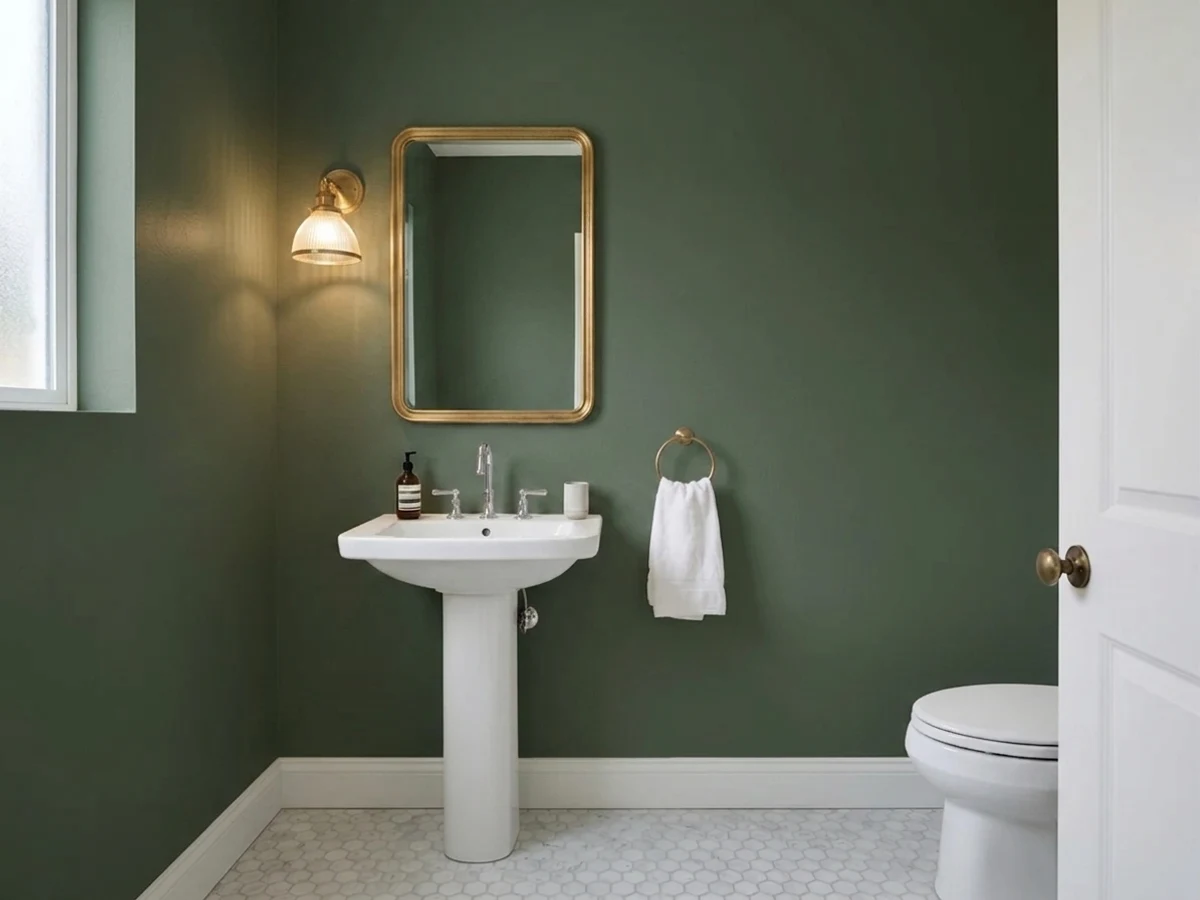
Black Bamboo is Behr's answer to the moody-cabinet-green trend, minus the marketing push: a deep, low-chroma gray-green sold at near-black depth, with an earthy warmth instead of any blue. Give it real daylight or warm lamps and it reads as a genuine botanical color on cabinets, doors and exteriors. Give it a dim, windowless room and it just goes black — no green, no story, and no obvious reason why, unless you already know LRV 11 paint behaves this way.
Kitchen cabinets and islands · exterior siding, shutters and doors · accent walls with real daylight · anyone who wants a near-black with a pulse of green instead of plain black
You actually want a true black, not a green · the room is dim with no real daylight or lamps · you're covering all four walls with no light source to give it · you want a color name people will recognize
- Genuine botanical green depth that reads as color, not just dark paint, in real light
- Reads as a sophisticated near-black on cabinets, doors and exteriors
- Loves brass, walnut, butcher block and warm terracotta
- LRV 11 hides fingerprints, scuffs and cabinet wear better than a lighter green
- No trend baggage — nobody will recognize the name, so it never dates a room by association
- Needs real daylight or warm 2700K lamps or it just reads as flat black, not green
- Windowless or north-facing rooms can swallow the color entirely
- Cool LED lighting pushes it toward a blue-black instead of botanical green
- Almost no brand recognition — it won't read as a "known" color to a future buyer the way Iron Ore or Tricorn Black would
What Color Is Black Bamboo, Really?
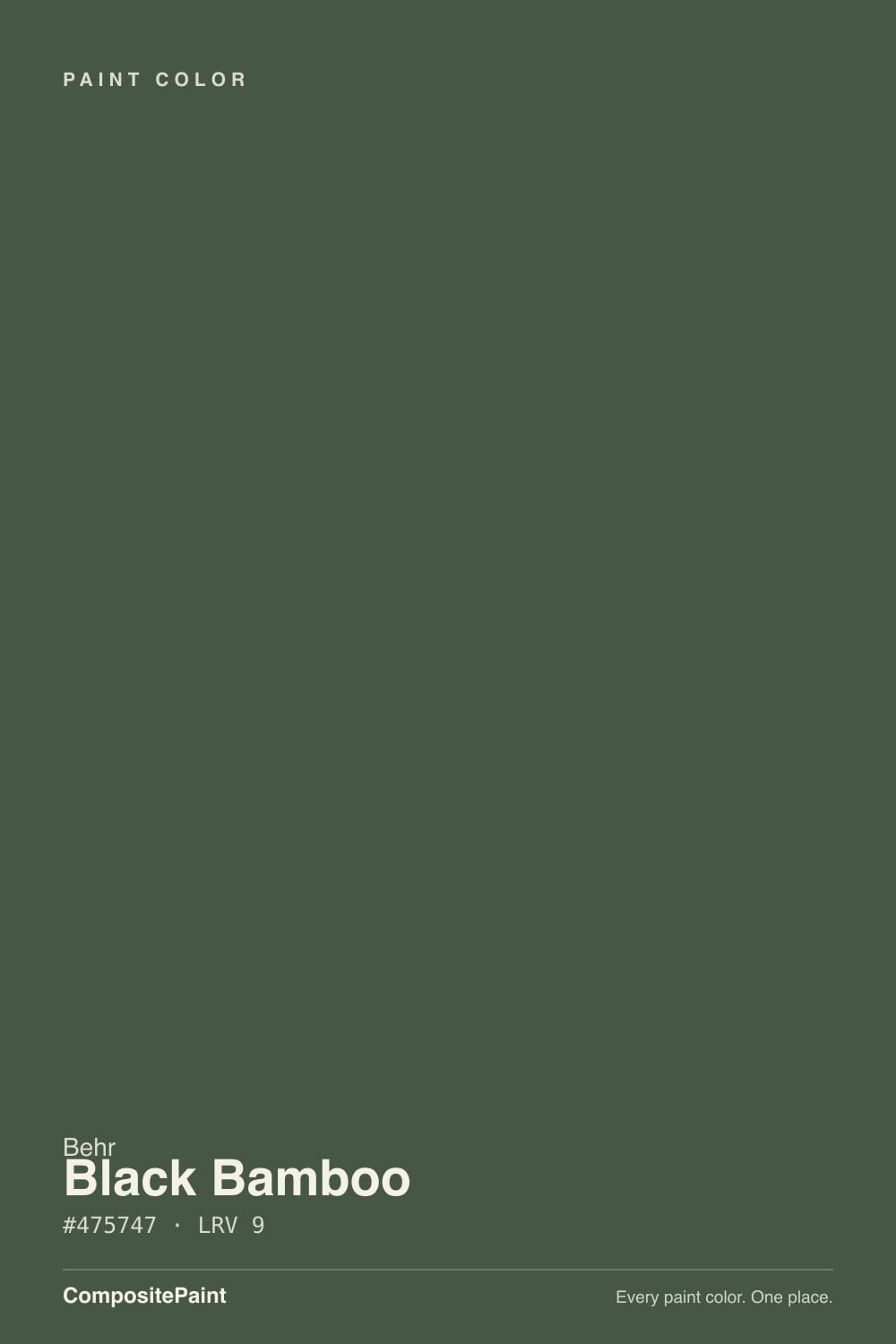
Black Bamboo is Behr's deep, low-chroma gray-green — the kind of near-black Behr names for what it looks like in a dim showroom rather than what it does on a sunlit wall. In the formula, red and blue sit equal and green carries the weight, so under real light it reads as a genuine botanical green with just enough gray mixed in to feel modern instead of mossy. It has never been a Color of the Year pick or a viral moment — it's one of several quiet Behr near-blacks (Vine Leaf and Mountain Olive are close cousins) that designers reach for on cabinets and exteriors without anyone asking the paint's name. That obscurity isn't a flaw here; it's the whole appeal for a buyer who wants depth without a trend attached to it.
At LRV 11, this is genuinely dark paint — deep enough that some manufacturer listings round it a point or two higher depending on the finish, but every number lands it in near-black territory. Expect it to absorb light rather than bounce it, which is exactly what makes cabinets and an accent wall feel rich instead of flat. The tradeoff is real: a room with weak daylight reads this color as closer to charcoal-black than green, and only strong daylight or warm lamp light coaxes the botanical tone out of hiding.
Undertone in one line: gray-green with a whisper of earthy warmth — never blue, never a true flat black. If your sample looks like plain charcoal on the wall, that's cool, dim light doing it; if it looks distinctly green, that's daylight or a warm bulb doing its job.
Where It Shines
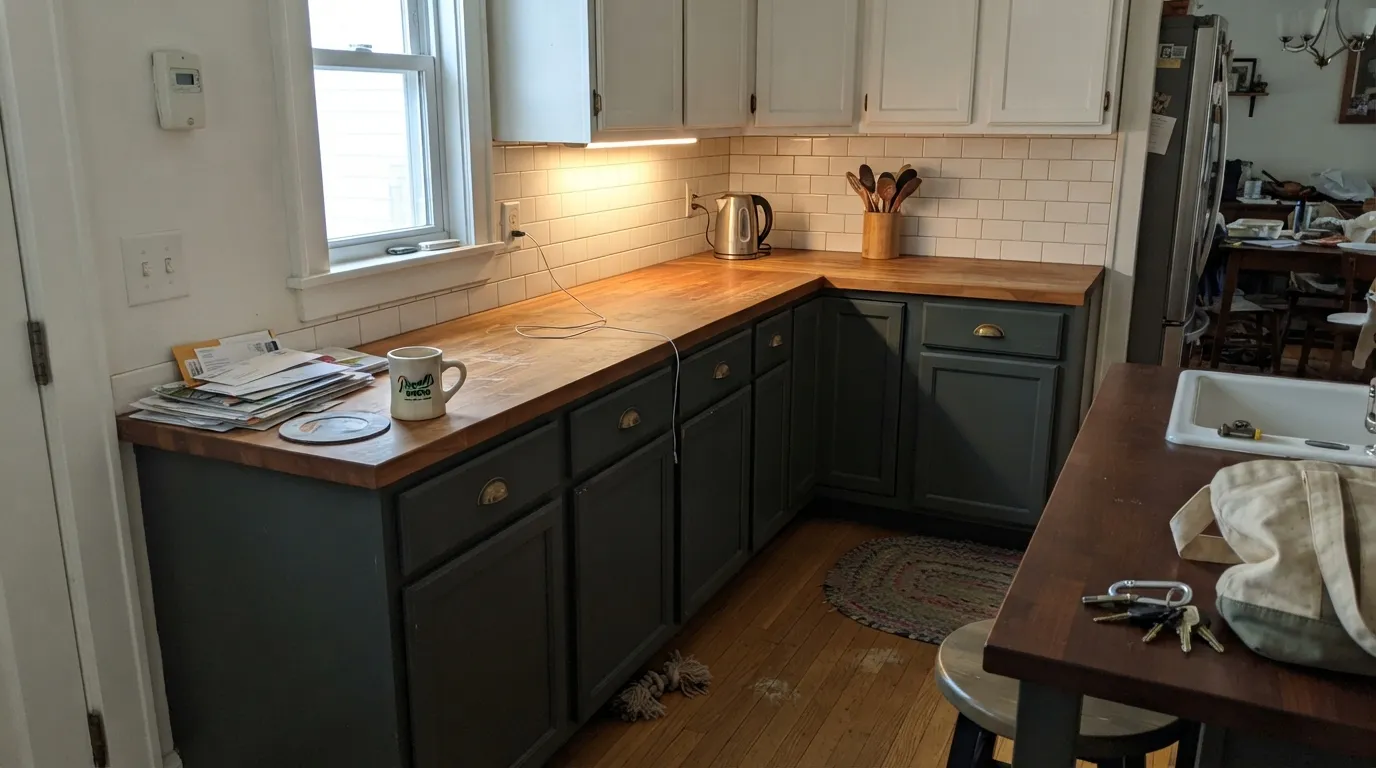
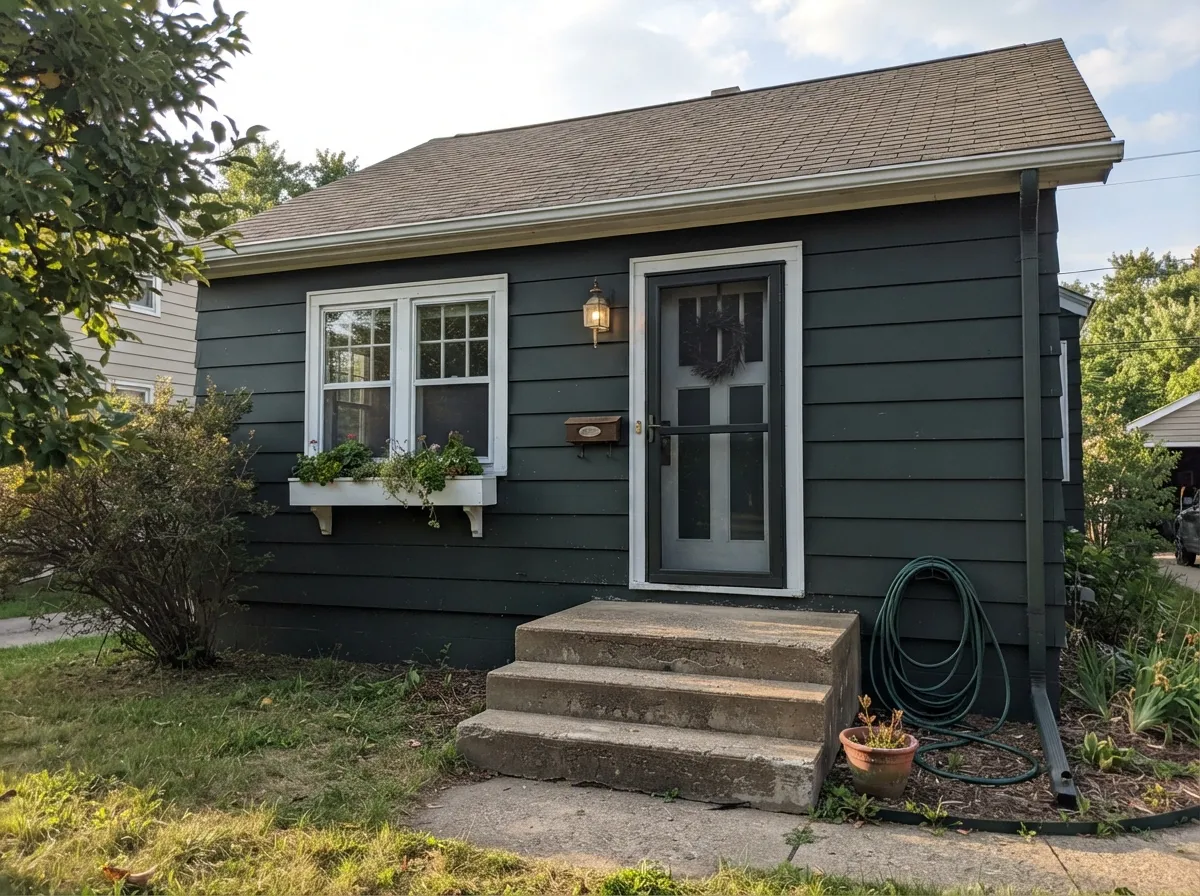
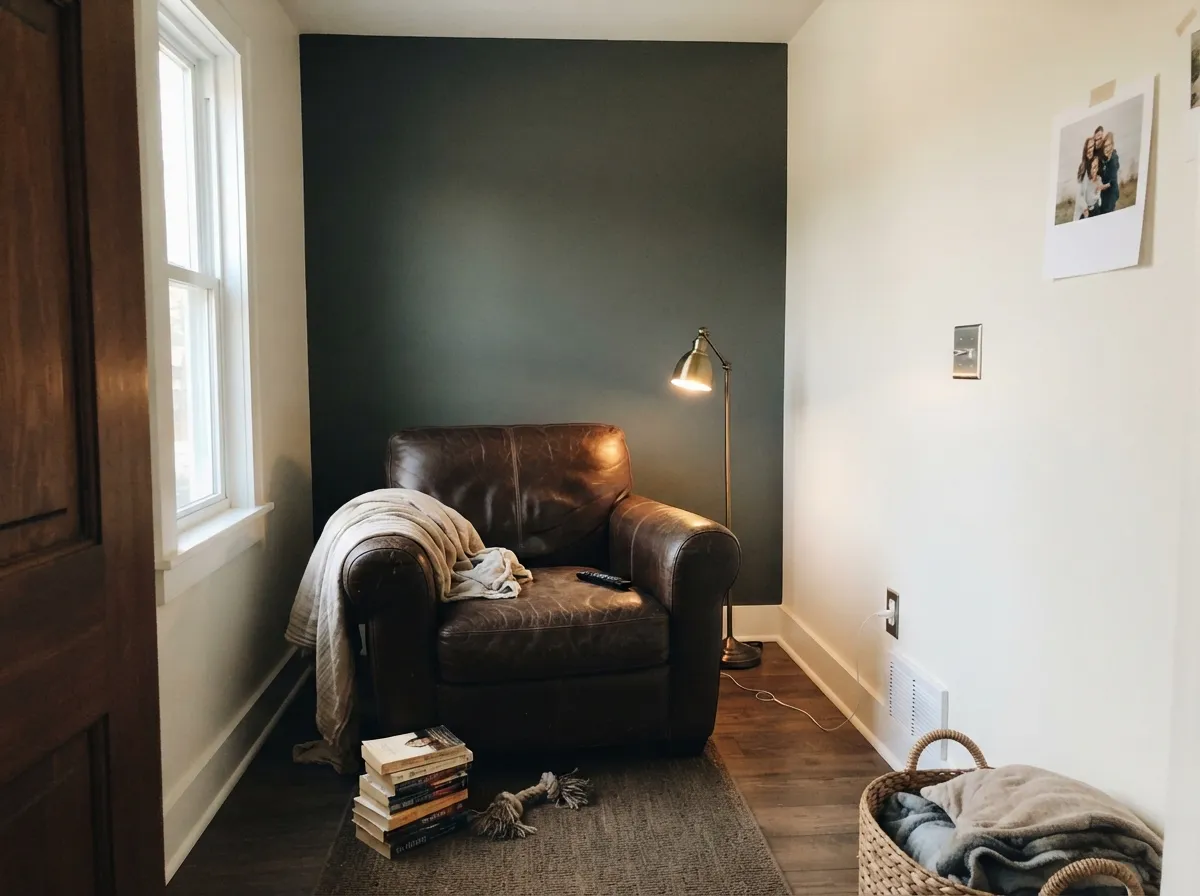
This color is built for surfaces that get real light and a job to do. On kitchen cabinets under any daylight it reads as a rich botanical green — the same lane as Pewter Green and Evergreen Fog, minus the marketing behind either one. Its other strong home is the exterior: full sun holds its green better than most interior light does, so siding, shutters and a front door all read as a sophisticated near-black rather than plain charcoal. Give it brass, walnut, butcher block and warm terracotta, and it looks expensive without shouting about it.
Where It Fails
Almost every disappointed review of Black Bamboo comes down to one of three predictable situations, and none of them are the paint's fault — but if your room matches one, sampling a bigger swatch will only confirm the problem, not fix it.
The name says black; the paint is a genuine gray-green. In any real daylight the green is unmistakable, which surprises buyers who picked it hoping for a flat, true black on a door or trim. If black is the actual goal, Behr's own Cracked Pepper is the honest choice — this color will always show its green eventually.
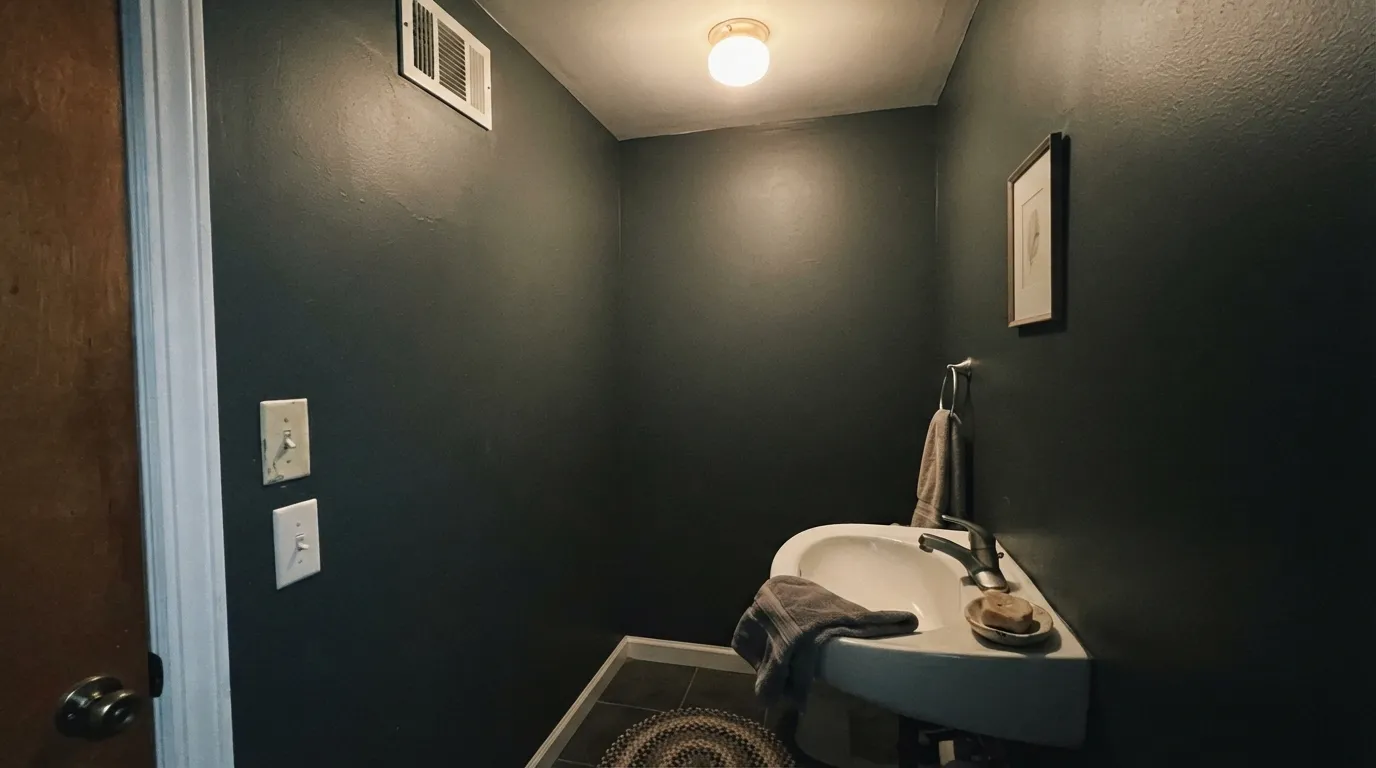
At LRV 11 this paint absorbs light instead of bouncing it. In a windowless powder room or a north bedroom with no warm lamps, it doesn't read as moody green — it just reads as a hole in the wall, with no visible color at all. Add real light before you add more coats.
Under harsh cool-white LEDs — the kind that show up in a lot of newer kitchen under-cabinet strips — the earthy warmth flattens out and the color can slip toward a blue-black instead of the botanical green it showed in the store. Warm 2700K fixtures are part of buying this color, not an optional upgrade.
Room by Room
Lower cabinets in Black Bamboo under a warm white upper (Swiss Coffee or Whisper White) is the current moody-kitchen formula, and it earns it: brass hardware, butcher block and terracotta tile all look intentional against it. Satin cabinet enamel for durability.
Full sun is kinder to this color than most indoor light, so siding and shutters read as a rich, sophisticated near-black from the curb. Pair with white trim for classic contrast, or an actual black door for a monochrome look that still shows a hint of green up close.
One wall with a window and real daylight carries the current dark-green statement look without going overboard. Four walls in the same room, especially without direct light, tips the whole space toward feeling like a cave rather than a color choice.
Evening lamplight at 2700K keeps the green alive after dark and makes the room feel cozy rather than empty. A north-facing bedroom with no lamps and weak daylight is the one situation to test hard before committing.
Small rooms take deep color well, and this one looks expensive next to brass fixtures, a wood vanity or marble. It needs either a window or real vanity lighting — without either, it just goes flat and dark with none of the green showing.
Leather, walnut shelving and a task lamp make this a believable library-green for a den or study. Keep a real task light on the desk; ambient light alone in a north room will make the space feel dim rather than intentional.
Your Light Is the Risk
Direct sun or 2700K lamp glow is where the earthy green comes forward — cabinets and doors look like a real color, not a shadow. This is the light the paint needs to make its case.
Weak, cool light and LRV 11 combine badly: the color stops reading as green and just reads as dark. If the room has no real light source, sample hard before committing to four walls.
Morning and late-afternoon sun bring the green forward; flat midday light and overcast skies neutralize it toward plain charcoal. Exteriors show this shift more clearly than interiors do.
2700K warm bulbs keep the green visible after dark; cool white LEDs — especially under-cabinet strips — flatten it toward a blue-black. Swap the bulb before you second-guess the paint.
Most complaints about Black Bamboo are a light mismatch. Upload a photo of your actual room and see it on your walls — then ask for the same wall in north light or evening lamps before you buy a single sample.
Need It From Another Brand?
Any paint counter can custom-tint Behr N380-7 directly. If you would rather stay in one brand's own deck, these are the closest stock matches, measured as ΔE2000. Under 2 is a difference you will not see on the wall.
| Brand | Closest color | ΔE | LRV | |
|---|---|---|---|---|
| Sherwin-Williams | Hidden TrailSW 9525 · Sherwin-Williams | 3.6 | 10 | Color page → |
| Benjamin Moore | Mohegan Sage2138-30 · Benjamin Moore | 2.4 | 11 | Color page → |
| Valspar | Wetlands5007-2C · Valspar | 1.7 | 10.9 | Color page → |
| PPG / Glidden | OsirisPPG1031-7 · PPG / Glidden | 1.8 | 10 | Color page → |
| Glidden | Shaded Fern30GY 10/048 · Glidden | 1.6 | 10 | Color page → |
| Dutch Boy | Espalier423-6DB · Dutch Boy | 2.7 | 11 | Color page → |
Similar Behr Colors
The nearest shades to Black Bamboo within Behr's own range, ranked by perceptual color distance — useful when you want the same look a touch lighter, darker, or warmer.
WCAG 2.1: AA is 4.5 : 1 for normal text, 3 : 1 for large text, AAA is 7 : 1.
Black Bamboo vs the Colors You're Also Considering
Every Black Bamboo sample board has the same rivals on it. The numbers show the real lightness gap — then it comes down to which risk you would rather live with.
Pick this for the quieter, more neutral near-black that still reads as color once real light hits it.
Behr N400-7 · LRV 10Vine LeafPick this if you want the green to actually show at a glance — Vine Leaf skips the gray and reads as a true forest green even in modest light.
Pick this when LRV 12 still feels too light and you want the deepest, most near-black version of the same family.
Sherwin-Williams SW 6208 · LRV 12Pewter GreenPick this for a shade lighter and more forgiving in dim rooms — the deck's go-to cabinet green-gray.
Within Behr, Deep Evergreen PMD-66 at LRV 9, hex #4C574B, is slightly lighter and a touch warmer. Conifer ECC-45-3 at LRV 9, hex #4A574E, adds a small blue lean, so it reads a shade cooler. North Woods N410-7 at LRV 8, hex #3F5645, is darker and more clearly green, and Alpine QE-40 at LRV 9, hex #43594C, pulls toward the teal side. Chard MQ6-49 at LRV 8 is the olive alternative at hex #485541.
Across brands, Valspar Treeline 5006-4C at deltaE 1.37 and Dunn-Edwards Greener Pastures DET529 at deltaE 1.41 are visually identical in normal room light, as is Farrow and Ball Beverly No. 310 at deltaE 1.87 despite its LRV of 10. Sherwin-Williams Vogue Green SW 65 at deltaE 2.08 and Dutch Boy Jolly Holly 326-7DB at deltaE 2.42 are very close, worth sampling first. Benjamin Moore Calico Blue 707 at deltaE 3.4 is close but visibly different side by side.
Black Bamboo Coordinating Colors
The rule for coordinating with Black Bamboo: warm whites, brass-friendly earth tones, and one deeper or blacker note for contrast — keep icy whites and cool grays away from it. These are the partners that keep showing up in rooms that work:
A Quiet Behr Green With No Big Moment
Black Bamboo has never had a spotlight — no Color of the Year title, no viral kitchen reveal, no design-award mention that other deep greens in Behr's own deck (Mountain Olive, for one) can point to. It sits alongside Vine Leaf, Conifer Green and Hidden Gem as one of several grayed, near-black greens Behr keeps quietly in rotation for cabinets and exteriors, and it rides the same moody-green wave that made Sherwin-Williams' Pewter Green and Evergreen Fog and Benjamin Moore's own Green popular — without anyone specifically asking for this one by name.
That is not a knock on the paint. A color with no fame attached also carries no trend expiration date attached to it; it will not look dated the way a viral color eventually can, because it was never identified with a moment in the first place. If you want depth on cabinets or an exterior and don't care whether the name means anything to a dinner guest, that is exactly the trade this color is offering.
Black Bamboo With Wood Tones and Metals
Warm materials are this color's best company: unlacquered brass, walnut, butcher block and reclaimed terracotta all pick up the earthy side of the green and make it look deliberate rather than simply dark. White oak and honey-toned wood work fine too — this green has no blue in it, so it doesn't fight orange-leaning wood the way a true teal or navy would.
The pairing to test first is cool-toned stone or gray-washed flooring. Icy white quartz and blue-gray LVP sit at the opposite temperature and can make Black Bamboo look flatter and less green by comparison, the same way any cool surface dulls a warm-leaning color. Metals are easy: brass and matte black both work; polished chrome is the one finish that reads coldest against it.
Three Ready Palettes Built on Black Bamboo
A color is never alone on the wall. These are complete combinations in the 60-30-10 pattern, with the reason each one holds together. Every one opens in the visualizer.
Warm cream keeps the kitchen bright while the lower cabinets carry the depth; a terracotta accent echoes the reclaimed-terracotta pairing Behr itself suggests for this color, and brass hardware finishes the look.
Try this palette in your roomA warm mid-tone gray keeps the room from feeling like a single dark box while the accent wall carries all the color; Whisper White trim softens the edge between them.
Try this palette in your roomCrisp white trim keeps the dark siding from reading heavy from the street, and an actual near-black door doubles down without competing — one step darker, same family.
Try this palette in your roomBlack Bamboo FAQ
Is Black Bamboo actually black, or is it green?
It's green — a deep, low-chroma gray-green. In dim light or straight off the chip it can look almost black, and that ambiguity is baked into the name, but on a wall with any real daylight the green is unmistakable. If you want an actual black, look at Behr's Cracked Pepper instead.
What LRV does Black Bamboo have?
LRV 11 — genuinely dark paint. At that depth, expect the color to absorb light rather than bounce it; that's what makes cabinets and accent walls feel rich, and what makes a windowless room feel like a cave if you use it on all four walls.
Is Black Bamboo good for kitchen cabinets?
Yes — it's one of its best jobs. Deep enough to hide fingerprints and scuffs, and it flatters brass hardware, butcher block and warm terracotta the way the current wave of moody-green kitchens wants. Use satin cabinet enamel, and keep the upper cabinets or walls in a warm white so the kitchen doesn't go dark all over.
Does Black Bamboo work as an exterior color?
Yes, and it may be an even better exterior color than an interior one — full sun holds its green better than most indoor light does, and it reads as a sophisticated near-black from the street. Pair with white trim for contrast, or a near-black door for a monochrome look.
What trim color goes with Black Bamboo?
A warm white — Swiss Coffee or Whisper White keep the pairing soft; a stark, cool white makes the green read colder and grayer than it wants to. Behr White works fine on ceilings and secondary trim if you want more brightness.
Will Black Bamboo look different in a north-facing room?
Yes, more than most colors. North light is cool and flat, and at LRV 11 that combination can push Black Bamboo close to a value-only black with no visible green at all. Test a large sample and consider warm 2700K bulbs if the room doesn't get direct sun.
Have you painted with Black Bamboo?
Rate it — one tap helps the next reader decide.
Ask a Question