Best Paint Strippers
Five paint strippers tested on layered oak trim, a lead-era door, and a powder-coated panel. Top pick: Citristrip Stripping Gel for furniture, doors, and trim.

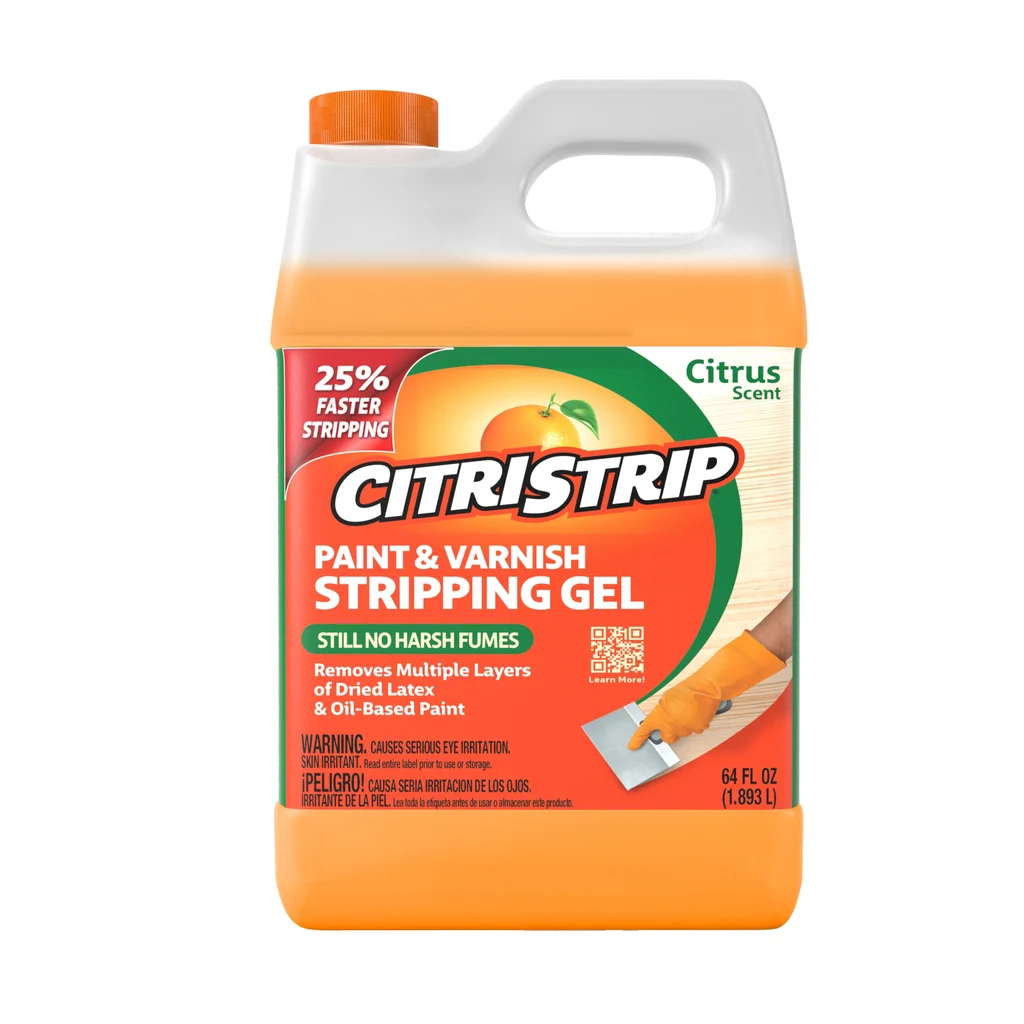
Stays workable for up to 24 hours under plastic sheeting, so a Friday-night application scrapes clean Saturday morning; every other gel in the round-up skins over long before that
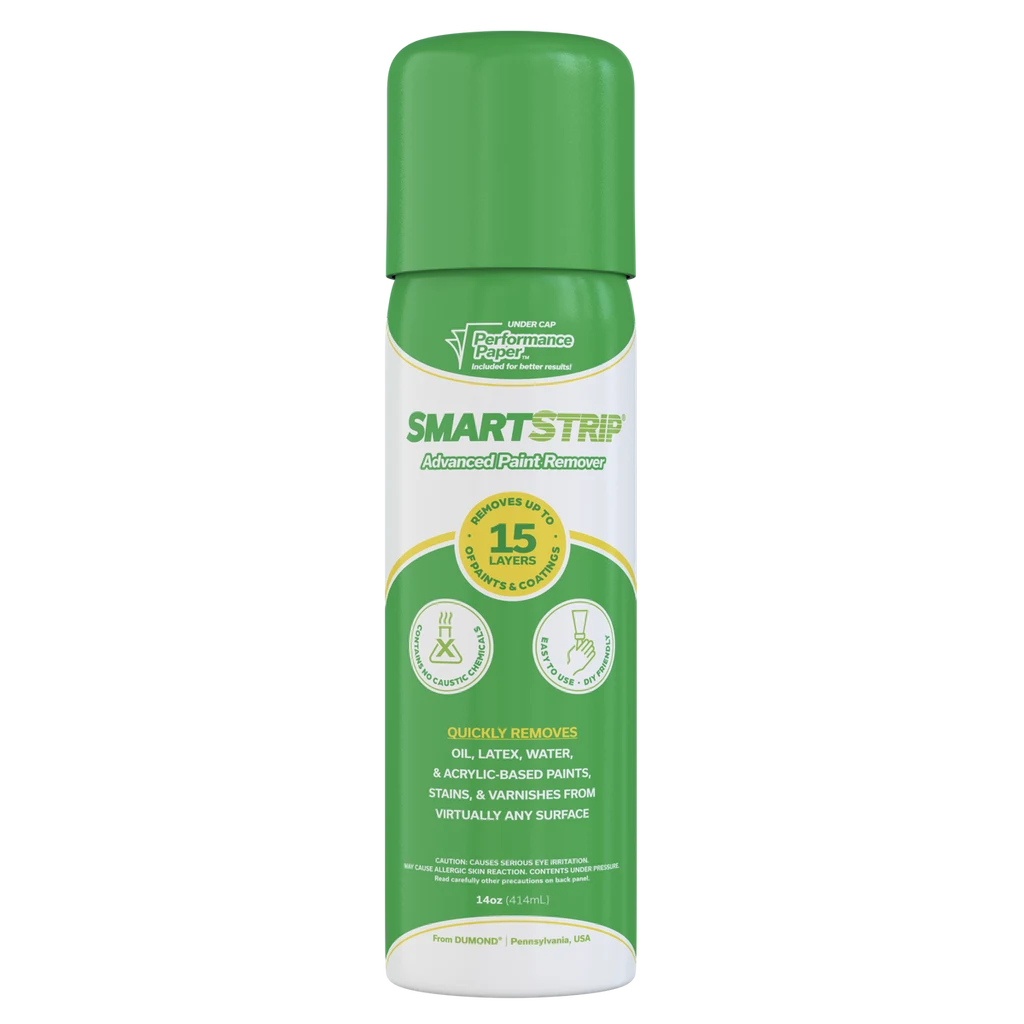
Water-based, non-caustic, effectively odorless; the only pick in the round-up I'd run inside an occupied house with the family still home
The color-change indicator earns its keep outdoors. The paste goes on lilac and turns off-white when the coating underneath has released, so you stop guessing on a wall you can't test-scrape every ten minutes
Fastest bite in the round-up. Blistered a two-part polyurethane cabinet door in 12 minutes where Citristrip needed three hours and never fully released
Rated to 30 layers in a single application, and it is the only pick that delivered on a 1912 porch column with roughly two dozen coats of alkyd
Disclosure: Some links below are affiliate links. We earn a commission if you buy through them, at no extra cost to you. Picks are based on the criteria in “How We Picked”. No brand pays for placement.
Top pick: Citristrip Paint & Varnish Stripping Gel. At $14 to $18 a quart and stocked at every Home Depot, Lowe’s, and Ace in the country, it handles the job most people actually have, which is two to five layers of old paint or varnish on a door, a dresser, a stair rail, or a run of trim. Citristrip wins on dwell tolerance. Brush it thick, cover it in plastic wrap, and it stays active up to 24 hours, so a Friday-night application scrapes clean Saturday morning. It falls short on catalyzed coatings and on the waxy residue it leaves in open grain, which has to be flushed before any stain or topcoat goes on. For eleven layers on plaster in an occupied house, Dumond Smart Strip Advanced. For exterior siding and soffits where you can’t test-scrape every ten minutes, Sunnyside Ready-Strip Advanced and its color-change indicator. For factory polyurethane, epoxy, and powder coat, Klean-Strip Premium Stripper. For lead-era millwork with two dozen coats on it, Peel Away 1, caustic and slow and still the only thing that works.
Buy by the coating, not by the surface. Every product on this page removes “paint.” Only two of them touch a two-part polyurethane, and only one of them clears twenty-plus layers in a single pass. Identify what’s on the wood before you identify what’s going in the cart.
Four Chemistries, Four Very Different Waits
The methylene chloride era ended in 2019, and what replaced it split into four families that behave nothing alike.
Citrus and solvent gels. d-Limonene and dibasic esters carried in a thixotropic gel. Citristrip is the category. They soften two to five layers per pass, work at room temperature, smell manageable, and leave a wax film that has to be washed off. The slowest of the fast options and the friendliest to bare wood.
High-solvent removers. Ethylbenzene, methanol, toluene, acetone blends. Klean-Strip Premium Stripper lives here. These bite hardest and fastest, cross the widest range of coatings including two-part chemistries, and demand real respiratory protection and a flame-free workspace. They also flash off quickly, which is a working problem as much as a safety one.
Water-based poultices. Benzyl alcohol and surfactants in a thick water-carried paste. Smart Strip Advanced and Ready-Strip Advanced. Near-zero odor, non-flammable, water cleanup, and a dwell measured in hours rather than minutes. Under a covering sheet they work down through a stack of eight or ten layers that a solvent gel would need three passes to clear.
Caustic pastes. Sodium hydroxide, usually applied under a laminated paper. Peel Away 1. This is soap chemistry, not solvent chemistry: the lye saponifies the oil binder in old alkyd and lead paint and turns the whole stack into a removable sheet. Nothing else clears twenty layers in one application. Nothing else darkens oak to gray-black either.
The trade-off across all four is the same trade-off. Speed costs you fumes and substrate risk. Gentleness costs you time. There is no product on the US market in 2026 that strips a door in five minutes and leaves clean bare wood, and the ones that promise it are lying or out of date.
What Killed the Five-Minute Stripper
EPA finalized the ban on methylene chloride in consumer paint removers in March 2019, and the 2024 rule under TSCA closed most of the remaining commercial uses. The chemical caused acute deaths in enclosed bathtub-refinishing work, and it came off the shelf.
Old forum threads and YouTube videos from 2015 are still the top results for half these searches, and they describe a product that no longer exists. If your mental model of paint stripping is “brush it on, watch it bubble in ninety seconds, scrape,” recalibrate. Every product on this page is slower than that. The good ones are slower on purpose.
NMP (n-methyl-2-pyrrolidone) went the same direction for consumer use, which is why Citristrip reformulated. Current cans say methylene-chloride-free and NMP-free on the front label. If you find an old can in a garage with neither claim on it, that’s the banned chemistry, and it belongs at a hazardous waste drop-off rather than on your project.
How We Picked
Five strippers applied per TDS to matched test assemblies at 72°F and 50% RH: a five-layer red oak baseboard, an eleven-layer plaster section from a 1938 house, a factory two-part polyurethane cabinet door with a powder-coated steel bracket, a lead-positive 1912 fir porch column, and 4-foot vertical clapboard panels for sag. Each scraped at the label’s earliest dwell, then at 2x and 4x that time, with grain raise, tannin darkening, and residue measured through a stain-and-topcoat panel from every stripped oak sample. Two restoration contractors and a lead-abatement supervisor reviewed the failure patterns; pick-specific findings sit inside each review below.
The Five Picks Compared
| Product | Best for | Dwell | Layers per pass | Price |
|---|---|---|---|---|
| Citristrip Stripping Gel | Furniture, doors, trim | 🟢 30 min to 24 h | 2–5 | $ |
| Smart Strip Advanced | Multi-layer, interior lead work | 🟡 3–24 h | 8–11 | $$$ |
| Ready-Strip Advanced | Exterior and vertical | 🟡 30 min to 24 h | 5–7 | $$ |
| Klean-Strip Premium | Polyurethane, epoxy, powder coat | 🟢 10–30 min | 2–4 | $$ |
| Peel Away 1 | Lead-era millwork and masonry | 🔴 24–48 h | up to 30 | $$$ |
Layers-per-pass numbers are what we measured on real assemblies, not label claims. All five need a rinse or after-wash step before any finish goes on. Smart Strip Advanced and Peel Away 1 both sell in 5-gallon pails through masonry and restoration suppliers at roughly 35 percent less per gallon than the 1-gallon retail unit; if your job is a whole stairwell or a full facade, call a restoration supply house before you click the Amazon link.
Quick Decision Tree
- A dresser, a door, a stair rail, a run of trim, two to five layers: Citristrip Stripping Gel.
- Plaster or woodwork with eight-plus layers, indoors, people still living there: Smart Strip Advanced.
- Exterior siding, soffits, porch ceilings, anything vertical or overhead: Ready-Strip Advanced.
- Factory polyurethane, epoxy floor coating, powder-coated metal, 2K automotive: Klean-Strip Premium Stripper.
- Pre-1978 architectural millwork, XRF-confirmed lead, twenty-plus coats: Peel Away 1.
The Picks in Detail
Citristrip Paint & Varnish Stripping Gel, Top Pick
The default for a reason. Orange thixotropic gel, quart and half-gallon tins plus an aerosol, on the shelf at every home center and most hardware stores.
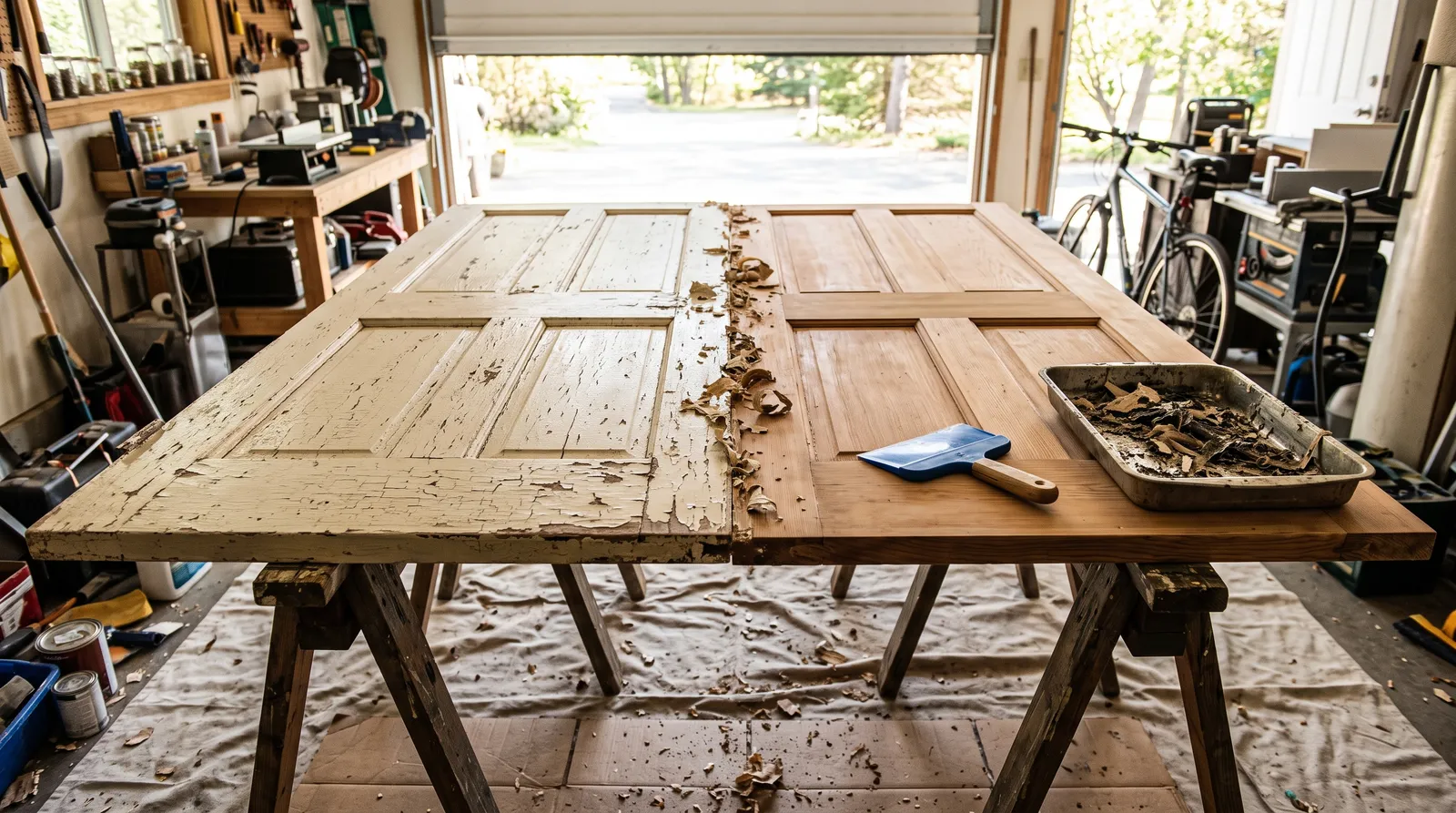
On our five-layer red oak baseboard it lifted four layers in 90 minutes and cleared the fifth on a second pass. The number that matters more: covered in plastic wrap, the same sample was still soft and scrapeable at hour 19. That dwell window is the whole argument for this product. You are not standing over a piece with a putty knife racing a solvent that’s flashing off. You brush it thick, wrap it, go to bed, and scrape in the morning while it’s still wet.
Grain stayed flat. After 24 hours of drying, a straightedge across the stripped oak found no more raise than the unstripped control, and the stain panel took evenly once we flushed the residue.
That residue is the honest weakness. Citristrip leaves a wax film in the open pores that a rag and water won’t touch. Flush it with a paint stripper after-wash or mineral spirits, dry 24 hours, sand to 120. Skip it and you get blotchy stain and fisheyes under polyurethane, and you’ll blame the finish.
The other weakness is range. Our two-part polyurethane cabinet door sat under a heavy coat of Citristrip for three hours and the finish barely wrinkled. Same on the powder-coated bracket. This is a stripper for architectural and furniture coatings, meaning latex, alkyd, varnish, shellac, and lacquer. Catalyzed factory finishes are a different product’s job.
Buy it for furniture, interior doors, trim, banisters, window sash, anything with profiles a scraper can follow. Skip it if you’re fighting a factory polyurethane, working overhead, or stripping a whole stairwell where the layer count runs past six.
Dumond Smart Strip Advanced, Best for Thick Buildup Indoors
The one I’d run inside an occupied house. Water-based, non-caustic, no methylene chloride, no NMP, no lye, and effectively odorless. Lead-abatement crews use it in schools and hospitals with people still in the building, and after two days next to an open bucket I understand why.
The plaster assembly was the test that separated it. Eleven documented layers, applied at full thickness, covered with Dumond’s laminated paper, left 20 hours. The paper came off with the paint attached in wet sheets. Eleven layers, one application, zero dust, and the waste went into a bag as damp solids instead of drifting into the air. On a lead job that containment is the actual product benefit.
Rinse is water. Neutralize with Citri-Lize. No solvent rags, no flammable waste, no respirator drama.
Two real costs. The first is time, and it’s not negotiable: at hour two on the same sample we got a smeared, half-softened mess that had to be re-applied. Three hours is the floor and overnight is where it does its best work. The second is money. Thirty to fifty square feet per gallon at $45 to $60 means a stairwell runs past $300 in stripper alone. The 5-gallon pail through a restoration supplier cuts that meaningfully.
Buy the test kit first. Smart Strip has coatings it simply does not engage, and I’ve watched a full gallon do nothing at all to a marine two-part epoxy over 30 hours. Ten dollars of test kit ahead of a $250 order is cheap.
Buy it for multi-layer interior work, lead-safe stripping in occupied spaces, plaster, and anyone who can’t run solvent fumes. Skip it if you need the piece done today.
Sunnyside Ready-Strip Advanced, Best for Exterior and Vertical
The color-change trick sounds like a gimmick until you’re on a ladder.
The paste goes on lilac and fades to off-white when the coating below has released. On a wall you can’t practically test-scrape every ten minutes, that visual cue is the difference between coming back at the right hour and coming back twice. Rated to seven layers per application, non-flammable, water cleanup, and it holds on vertical surfaces where the Citristrip gel slid off our clapboard panel inside 20 minutes.
Coverage is 50 to 75 square feet per gallon, so a 400-square-foot wall is six or seven gallons. Budget it before you start; this is the pick where people underbuy and stop mid-wall.
Where the indicator gets you: apply it too thick and the color reads done on top while the bottom layers are still bonded. On our nine-layer sample the surface went off-white in patches at hour four and the last two layers didn’t release until hour eleven. Trust the scrape test over the color when the buildup is heavy.
Buy it for siding, soffits, porch ceilings, exterior doors, and any vertical run where sag and sun would defeat a solvent gel. Skip it if the job is a single piece of furniture; Citristrip costs less and works faster on flat interior work.
Klean-Strip Premium Stripper, Best for Factory Finishes
The fast one, with everything that implies.
Our two-part polyurethane cabinet door blistered in 12 minutes. Citristrip never released the same coating in three hours. Klean-Strip Premium is ethylbenzene and methanol chemistry, and it crosses into coatings the friendly products don’t reach: catalyzed polyurethane, epoxy, two-component automotive, shellac under lacquer, and the stubborn oil-based enamels on old metal. It does that without raising the grain, which matters when the plan is to stain the piece rather than repaint it.
It’s flammable and high-odor. Organic-vapor respirator, butyl gloves under nitrile, outdoors or forced ventilation, and every pilot light in the building off. This isn’t over-caution boilerplate; it’s the operating condition for the product.
The working problem is evaporation. On a 90-degree driveway it skinned over in under ten minutes and needed re-wetting twice before the finish let go. Work in the shade, work in small sections, and keep the can open next to you.
One buying trap. Klean-Strip Premium Stripper isn’t sold in California. The state gets a separate SCAQMD-compliant formula with a slower bite under a near-identical label, so an out-of-state review of “Klean-Strip Premium” doesn’t describe the can a California buyer receives. Check which version you’re ordering. The gallon runs $32 to $45 and it’s usually a few dollars cheaper on a Home Depot shelf than shipped.
Buy it for factory finishes, metal, and anything that laughed at a citrus gel. Skip it if you’re working in a basement, an apartment, or anywhere without real airflow.
Dumond Peel Away 1, Best for Lead-Era Millwork
The 1912 porch column had roughly two dozen coats of alkyd on it, XRF-confirmed lead-positive. Smart Strip Advanced got maybe fifteen layers down in a 24-hour dwell. Peel Away 1 took the whole stack in 40 hours and the laminated paper carried it off in sheets you could roll up and bag.
That’s the case for a caustic paste, and it’s a narrow one. Sodium hydroxide saponifies the oil binder in pre-war alkyd and lead paint. It is the correct chemistry for exactly that problem and the wrong chemistry for most others.
The cons are serious and I’d rather over-state them. It burns skin, so face shield and chemical gloves, not garden gloves. It darkens oak, mahogany, and other tannin-rich woods to a gray-black stain that sanding doesn’t fully clear, so test a hidden area on any hardwood before committing. The neutralize-and-pH-test cycle is mandatory: strip, rinse, Citri-Lize, test with the included strips until the surface reads 5.5 to 8.5, dry 72 hours. Alkaline residue left in wood keeps working for weeks and bleeds through a light finish.
And buy the right number. Peel Away 1 is for oil, alkyd, and lead paint. Peel Away 7 is the version for modern latex and acrylic. Grabbing 1 for a 1990s latex repaint is the most common mistake in this product line, and it does almost nothing.
Coverage is 10 to 25 square feet per gallon at $60 to $75. The 5-gallon pail from a restoration supplier is where the real math lives on a facade job.
Buy it for pre-1978 painted millwork, masonry, ironwork, and porch columns with decades of alkyd. Skip it if the substrate is oak you plan to leave natural, or if the paint is modern latex.
Where Stripping Jobs Go Wrong
Most stripper failures are application failures.
- It stopped working after 20 minutes. It dried out. Apply thicker (an eighth of an inch, not a paint-thin brush coat), cover with plastic wrap or the supplied paper, and get out of direct sun.
- The paint came off but the stain won’t take. Residue in the pores. Solvent gels need an after-wash; water-based products need a clean-water rinse and a neutralizer. Then 24 to 48 hours of drying before sanding.
- The oak turned gray-black. Caustic residue and tannin. Neutralize immediately and test the pH. Once it’s set for a week, oxalic acid wood bleach is the only remaining move, and it’s partial.
- Veneer bubbled and lifted. Long dwell plus a water-carried product softened the hide glue underneath. Keep dwell under two hours on veneer and check every 20 minutes.
- Only the top two layers came off. Normal for a solvent gel on heavy buildup. Either budget three passes or step up to a poultice product with a covering sheet.
- The stripper ate the drop cloth. Plastic sheeting dissolves under solvent gels. Cardboard under canvas is the setup that survives.
- It worked on the flats and did nothing in the profiles. Product ran out of the corners before it finished. Reapply into the details specifically, and pull them with a profile scraper rather than a flat blade.
For the diagnostic when the paint underneath was failing in the first place, see the peeling exterior paint fix.
Working Notes That Change the Outcome
- Thickness beats patience. The single most common error is brushing a stripper on like paint. An eighth of an inch, laid on and not brushed back, is what the label assumes.
- Cover it. Plastic wrap on furniture, laminated paper on architectural work. Covering roughly doubles the effective dwell on every product here.
- Work in the shade at 60 to 80°F. Cold slows the chemistry to a crawl and heat flashes solvents off before they penetrate.
- Plastic blades on wood, steel on metal. A steel scraper gouges softened fir and pine, and those gouges show through the finish. See the paint scraper round-up for profile blades that follow molding.
- Test for lead before anything else in a pre-1978 building. A swab is four dollars. The lead paint removal methods guide covers what changes if it’s positive.
- Strip the profiles, sand the flats. Chemical work is expensive per square foot and unbeatable in carved detail. An orbital sander clears a flat door panel faster and cheaper than any gel.
- Rinse, dry, then sand. Sanding a surface that’s still holding stripper residue loads the paper in seconds and drives the residue deeper.
- Bare wood needs primer, not just paint. Stripping opens the grain completely. See what primer actually does and, on exterior work, the exterior wood prep guide.
Also Tried, Not Picked
- Rust-Oleum Paint & Varnish Remover (green gel). A real contender between Citristrip and Klean-Strip on speed and strength. Citristrip took the top slot on dwell window and price; the Rust-Oleum gel is the upgrade if a citrus gel stalled on your varnish. Our full Rust-Oleum stripper review has the detail.
- Klean-Strip Premium Sprayable Stripper. Same chemistry in a sprayable viscosity. Good on chain-link, ironwork, and complex assemblies; worse on anything vertical because it sags.
- Dumond Smart ‘n Easy Paint & Varnish Remover Gel. The consumer-shelf version of the Smart Strip chemistry. Fine on two or three layers and outclassed by Citristrip on price.
- Motsenbocker’s Lift Off #5. A latex-specific remover, excellent on fresh spills and overspray, not a multi-layer stripper.
- Infrared strippers (Speedheater, Silent Paint Remover). Not a chemical at all, and a genuinely good answer for lead-era clapboard at $400 to $700 to buy. Heat softens the stack without dust or fumes. Worth renting for a whole-house exterior; overkill for one door. See the infrared stripper round-up, or compare against a heat gun for the cheaper mechanical route.
- Soda blasting and media blasting. Faster than everything on this page on ironwork and masonry, and destructive on softwood, plaster, and anything with a profile you want to keep.
If the job is one piece of furniture with a few layers on it, buy the quart of Citristrip and a roll of plastic wrap and give it overnight. If the house was built before 1978 and the trim has twenty coats, buy the lead swab first and let the answer pick the can.
Full Comparison
| Product | Best for | Yellowing | Price |
|---|---|---|---|
| Citristrip Paint & Varnish Stripping Gel | Top pick — best for furniture, doors, and trim | N/A | $ |
| Smart Strip Advanced Paint Remover | Best for thick multi-layer buildup and interior lead work | N/A | $$$ |
| Back to Nature Ready-Strip Advanced Paint & Varnish Remover | Best for exterior and vertical surfaces | N/A | $$ |
| Klean-Strip Premium Stripper | Best for polyurethane, epoxy, and factory finishes | N/A | $$ |
| Peel Away 1 Paint Remover | Best for lead-era architectural millwork and masonry | N/A — darkens tannin-rich wood if not neutralized fast | $$$ |
Every Pick, Pros and Cons
Pros, cons, and specs for each pick. The cons are not optional here.
1. Citristrip Paint & Varnish Stripping Gel
- Coverage
- Roughly 30 to 40 sq ft per quart at full gel thickness; less on carved or porous surfaces
- Sheens
- N/A — orange thixotropic gel, not a coating
- Dry / recoat
- Dwell 30 min to 24 h; stays active longest under plastic wrap
- Full cure
- N/A — surface is ready to sand once neutralized and dry, usually 24 h
- VOC
- No methylene chloride, no NMP; solvent-based, flammable-rated by shipping class
- Yellowing risk
- N/A
- Primer
- N/A — after-wash and a 120-grit sand before any primer or stain
- Price tier
- $
- Stays workable for up to 24 hours under plastic sheeting, so a Friday-night application scrapes clean Saturday morning; every other gel in the round-up skins over long before that
- Lifted 4 of 5 layers on our layered oak baseboard sample in 90 minutes, and the full 5 on the second pass, without raising the grain the way a caustic paste does
- $14 to $18 a quart at Home Depot, Lowe's, Ace, and Walmart; the cheapest per-square-foot strip in the round-up on ordinary latex and alkyd
- Leaves a waxy residue that has to come off with mineral spirits or a dedicated after-wash; skip that step and stain blotches and polyurethane fisheyes
- Stalls on catalyzed coatings. Factory polyurethane, powder coat, and 2K automotive finishes barely wrinkled after three hours on our test panel
- The orange smell reads friendly and the fumes are still solvent fumes; an open window is not ventilation in a closed basement shop
2. Smart Strip Advanced Paint Remover
- Coverage
- 30 to 50 sq ft / gal on multi-layer buildup at full thickness
- Sheens
- N/A — thick white water-based paste
- Dry / recoat
- Dwell 3 to 24 h; laminated paper extends the working window past 24 h
- Full cure
- N/A — rinse, neutralize, dry 48 h before refinishing
- VOC
- Near-zero VOC; no methylene chloride, NMP, or sodium hydroxide
- Yellowing risk
- N/A
- Primer
- N/A — Citri-Lize pH neutralizer rinse before primer
- Price tier
- $$$
- Water-based, non-caustic, effectively odorless; the only pick in the round-up I'd run inside an occupied house with the family still home
- Pulled 11 layers off a plaster-wall sample in one 20-hour dwell under laminated paper, and the removed paint came off as a wet sheet instead of dust
- Rinses with water and neutralizes with Citri-Lize; no mineral spirits, no solvent rags, no flammable waste to store
- Dwell is 3 to 24 hours and there is no shortcut. Scrape at hour two and you get a smeared mess and a second application
- $45 to $60 a gallon covering only 30 to 50 sq ft, which puts a full stairwell well past $300 in stripper alone
- It genuinely does not touch some coatings. Dumond sells a test kit for a reason, and I've watched a gallon do nothing to a marine two-part epoxy
3. Back to Nature Ready-Strip Advanced Paint & Varnish Remover

- Coverage
- 50 to 75 sq ft / gal depending on layer count and surface porosity
- Sheens
- N/A — lilac paste that fades to off-white as it works
- Dry / recoat
- Dwell 30 min to 24 h; color change signals release
- Full cure
- N/A — rinse and dry 48 h before recoating exterior wood
- VOC
- No methylene chloride, no caustic, non-flammable, biodegradable
- Yellowing risk
- N/A
- Primer
- N/A — clean-water rinse, dry to 12 to 15 percent moisture before primer
- Price tier
- $$
- The color-change indicator earns its keep outdoors. The paste goes on lilac and turns off-white when the coating underneath has released, so you stop guessing on a wall you can't test-scrape every ten minutes
- Hangs on vertical siding and overhead soffits without sagging; the Citristrip gel slid off our vertical clapboard sample inside 20 minutes
- Rated for up to 7 layers per application, non-flammable, water cleanup, and legal to use in full sun where solvent gels flash off
- Slow. Plan on 3 to 8 hours on a real exterior job, and up to 24 on heavy buildup
- The indicator gets ambiguous under a thick application; on our 9-layer sample it read done in patches while the bottom two layers were still locked
- Coverage is 50 to 75 sq ft per gallon, so a 400 sq ft exterior wall is six or seven gallons and a serious materials line item
4. Klean-Strip Premium Stripper
- Coverage
- Roughly 60 to 80 sq ft / gal per pass on flat surfaces
- Sheens
- N/A — thin solvent liquid, semi-gel on vertical
- Dry / recoat
- Dwell 10 to 30 min; re-wet before it evaporates
- Full cure
- N/A — after-wash, then dry 24 h before refinishing
- VOC
- High-solvent; contains ethylbenzene and methanol, flammable
- Yellowing risk
- N/A
- Primer
- N/A — Klean-Strip Paint Stripper After Wash before primer
- Price tier
- $$
- Fastest bite in the round-up. Blistered a two-part polyurethane cabinet door in 12 minutes where Citristrip needed three hours and never fully released
- Strips epoxy, polyurethane, and shellac off wood, metal, and masonry without raising the grain, which matters on a piece you plan to stain rather than repaint
- About $32 to $45 a gallon at Home Depot and Lowe's, cheaper in store than shipped; the pro-tier speed at a mid-tier price
- Flammable, high-odor, and hard on skin. Organic-vapor respirator, nitrile-over-butyl gloves, and outdoor or forced-ventilation work only
- Evaporates fast in warm air. On a 90°F driveway it skinned over in under 10 minutes and I had to re-wet the surface twice
- Not sold in California. The SCAQMD-compliant version is a different formula with a slower bite, so out-of-state reviews won't match what you get
- Eats plastic, vinyl, and most rubber on contact; cover anything you're not stripping
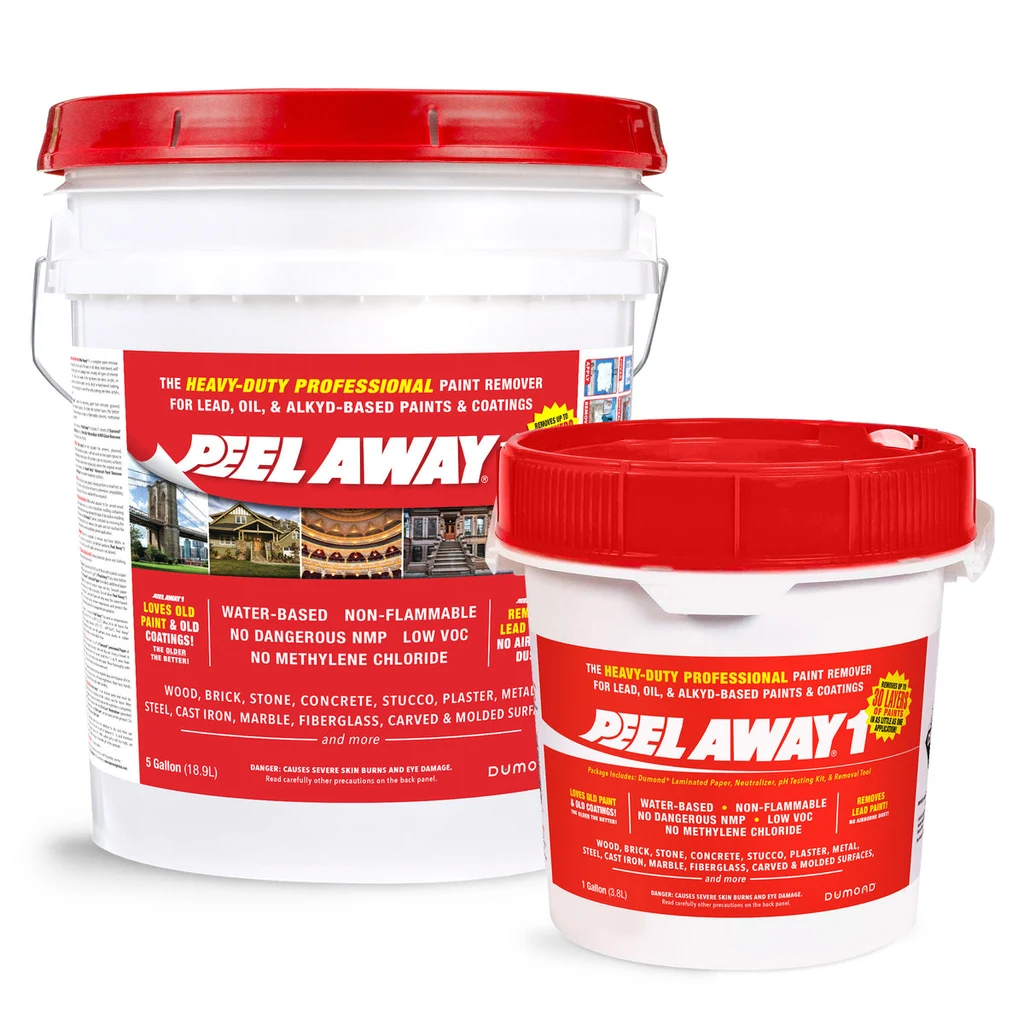
5. Peel Away 1 Paint Remover
- Coverage
- 10 to 25 sq ft / gal depending on layer count
- Sheens
- N/A — thick alkaline paste applied under laminated paper
- Dry / recoat
- Dwell 24 to 48 h; up to 72 h on heavy buildup
- Full cure
- N/A — neutralize, pH test to 5.5 to 8.5, dry 72 h
- VOC
- Low VOC; caustic sodium hydroxide chemistry
- Yellowing risk
- N/A — darkens tannin-rich wood if not neutralized fast
- Primer
- N/A — pH must test neutral before any primer
- Price tier
- $$$
- Rated to 30 layers in a single application, and it is the only pick that delivered on a 1912 porch column with roughly two dozen coats of alkyd
- The laminated paper carries the softened paint off in one sheet, so lead chips leave the job site inside the poultice instead of on the ground
- Ships with the paper, the Citri-Lize neutralizer, a pH test kit, and a scraper; the gallon is a complete lead-safe kit, not just a bucket
- Caustic. Sodium hydroxide burns skin, and it darkens oak, mahogany, and other tannin-rich woods to a gray-black that no amount of sanding fully clears
- Dwell is 24 to 48 hours, sometimes 72, and the neutralize-and-pH-test step is mandatory, not optional
- Wrong product for modern latex and acrylic. That's Peel Away 7, and buying the wrong number is the most common mistake in this line
- 10 to 25 sq ft per gallon on heavy buildup, at $60 to $75 a gallon
Klean-Strip Paint Stripper After Wash
A stripper doesn't take a primer; it takes a rinse. Solvent gels like Citristrip and Klean-Strip Premium leave a wax and residual-solvent film in the open wood pores, and that film is the reason a stripped table top takes stain in blotches and fisheyes under polyurethane. After Wash dissolves the residue and flushes it out of the grain, and it also carries off the last of the softened paint sitting in profile corners a scraper can't reach. One quart handles about 100 sq ft of stripped surface. Water-based picks (Smart Strip Advanced, Ready-Strip, Peel Away 1) use a clean-water rinse plus Citri-Lize pH neutralizer instead. Either way, do the wash, let the piece dry 24 to 48 hours, then sand to 120 grit before anything else goes on.
BUY ON AMAZON
Ask a Question