Lead Paint Removal Methods: Chemical, Scrape, IR, and Encapsulate
Lead paint removal compared four ways: chemical strippers, wet hand-scraping, infrared at 500 to 750 degrees Fahrenheit, and encapsulation. What each costs and where it fits.

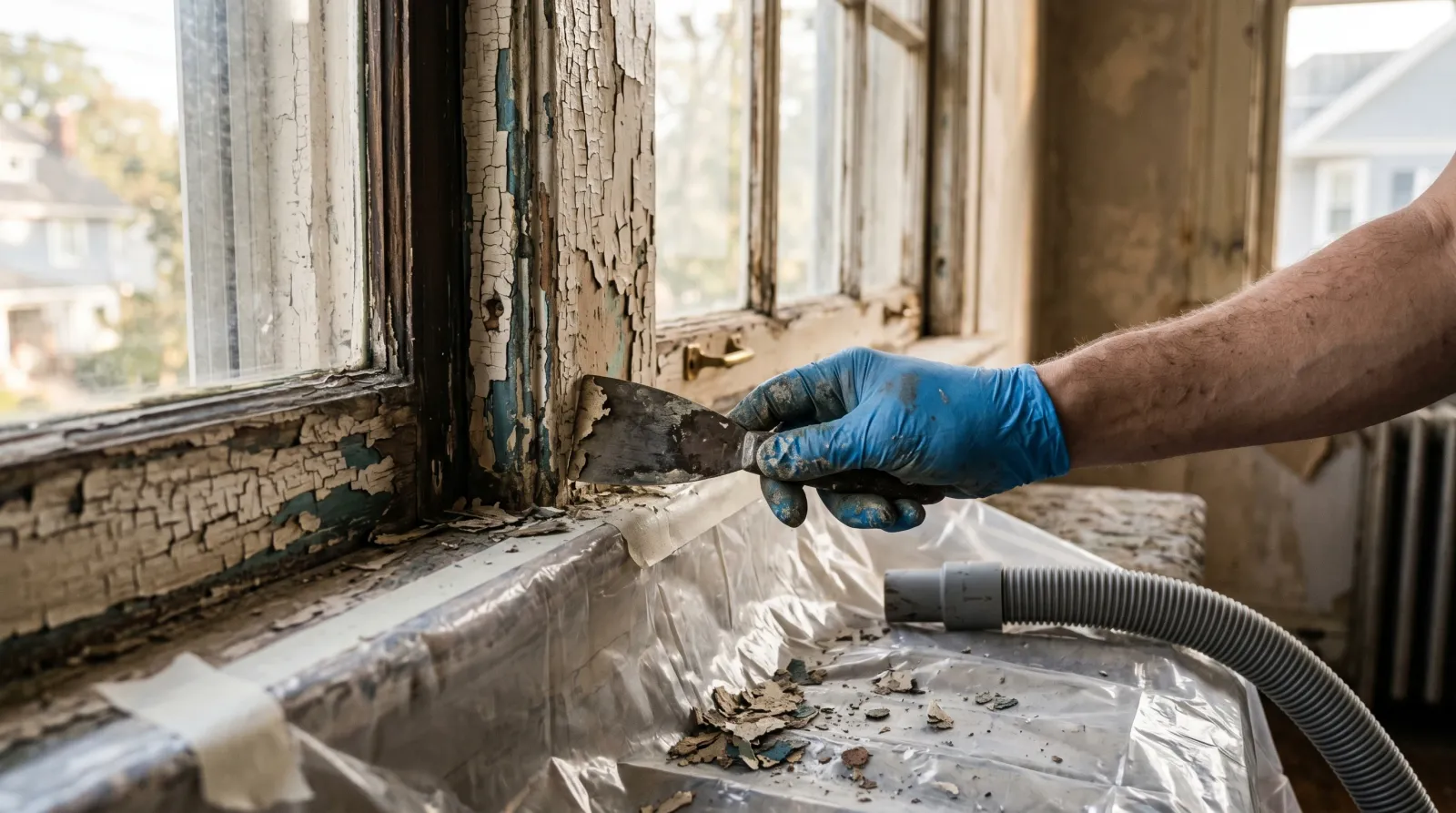
Lead paint removal is the process of stripping, abrading, heating off, or sealing over paint that contains lead, which was sold for U.S. homes until the federal ban took effect in 1978. There are four practical methods: chemical strippers, wet hand-scraping, infrared heat at 500 to 750 degrees Fahrenheit, and encapsulation with a sealing coat. The first three remove the paint; the fourth locks it in place. The real hazard is not the intact film on the wall. It’s the lead dust and chips a bad method throws into the air, which is why every legitimate approach is built around keeping the work wet and contained.
The reason that distinction matters comes down to how lead enters the body. Cured lead paint sitting under three later coats does almost nothing on its own. Grind it, sand it dry, or torch it, and you aerosolize lead into particles small enough to inhale and settle into carpet and soil for years. So the method you pick is less about getting paint off a board and more about controlling what happens to the lead while you do it. Before any of this, confirm what you’re dealing with. A swab test or lab analysis tells you whether the paint is lead-based at all, and the steps for that live in the pre-1978 lead testing guide.
When to Use Each Method
Chemical strippers. Best for detailed millwork, balusters, carved trim, and multi-layer buildup where you want to preserve the wood profile. A caustic (sodium hydroxide) or solvent paste eats through several coats at once with no dust.
Wet hand-scraping. Best for small failing areas: a peeling windowsill, a flaking baseboard, chipping on a porch column. Keep the surface misted so the chips fall wet, not airborne.
Infrared (IR) stripping. Best for large flat runs of siding, doors, and wide casings. An IR plate softens the paint film in 20 to 60 seconds so it lifts off in sheets with a scraper, no dust and no chemicals.
Encapsulation. Best for sound, well-bonded lead paint on walls and ceilings that nobody touches. A thick elastomeric or epoxy encapsulant bridges over the film and seals it. This is the cheapest and lowest-risk option when the existing paint isn’t already failing.
When NOT to Use These Methods
- Don’t dry-sand or power-sand lead paint, ever — even with a respirator. Orbital sanders and grinders without HEPA shrouds are the single most common way homeowners poison themselves and their kids. Power tools are allowed only with a HEPA-filtered dust-shroud attachment.
- Don’t use an open-flame torch or a heat gun over 1,100 degrees Fahrenheit — these are banned under the EPA RRP rule because they volatilize lead. Stick to infrared at 500 to 750 degrees Fahrenheit.
- Don’t encapsulate a friction or impact surface — window jambs, door edges, stair treads, and floors flex and rub. The encapsulant cracks and the lead reappears. Strip those; encapsulate only static surfaces.
- Don’t encapsulate paint that’s already peeling or chalking — the coating is only as good as what it sticks to. If the underlying paint is failing, the encapsulant peels off with it.
How the Four Methods Compare
| Chemical strip | Wet scrape | Infrared | Encapsulate | |
|---|---|---|---|---|
| Removes lead? | Yes | Yes | Yes | No, seals it |
| Dust risk | Low | Low if kept wet | Very low | None |
| Best surface | Detailed millwork | Small failing spots | Flat siding, doors | Sound walls, ceilings |
| Speed | Slow (dwell time) | Slow | Fast | Fast |
| Rough cost / sq ft | $4–$10 | DIY labor | $3–$8 | $0.50–$1.50 |
| Wood damage risk | Caustic can darken | Gouging | Scorch if held too long | None |
For most homes the answer isn’t one method. You scrape the failing edges, infrared the big siding runs, and encapsulate the stable plaster. If the failing paint is what brought you here, the broader repair sequence is in the peeling paint fix guide.
Common Mistakes
- Sanding dry to “feather the edge.” This is the reflex from normal repainting, and it’s the worst thing you can do with lead. Mist the area and scrape wet, or use a HEPA-shrouded sander. Never expose dry lead to abrasion.
- Skipping containment. Plastic sheeting on the floor, taped at the seams, with the room sealed off. Chips and dust travel on shoes and air currents. A clean-looking job that spread dust through the HVAC return is a failed job.
- Vacuuming with a shop vac. A standard vacuum blows the finest, most dangerous lead particles straight through the filter and back into the room. Only a true HEPA vacuum captures them.
- Holding the infrared plate too long. Past about 60 seconds the film scorches and the wood underneath can char. Move the plate steadily; the paint should bubble and release, not smoke.
- Encapsulating with regular paint. Wall paint is not an encapsulant. A certified lead encapsulant is a specific thick-film product (Fiberlock LBC, ECOBOND, INSL-X Lead Block) tested to seal lead. Ordinary paint over lead is just another coat that will eventually peel.
What the Work Actually Looks Like
A controlled lead job is quiet and wet. The floor is covered in taped 6-mil plastic, the worker wears a P100 respirator, and a HEPA vacuum runs at the work area. Chemical stripper goes on thick like cake frosting and sits under plastic wrap for its full dwell time, sometimes an hour, before a wet scrape lifts the softened sludge into a lined bucket. Infrared work shows the paint puckering and browning slightly, then peeling off in long curls under a sharp scraper. There is no cloud of dust anywhere. If you see a dust cloud, the method is wrong.
Where to Buy and What to Look For
For strippers, look for the words “lead-safe” or “multiple coat” on a caustic or solvent paste (Peel Away 1 and Smart Strip are the two most common). For encapsulants, buy only a product carrying an ASTM E1795 or E3219 test reference and a 15-to-20-year lead-encapsulation rating; an ordinary elastomeric coat doesn’t qualify. Infrared strippers (the Speedheater and Silent Paint Remover are the home-scale units) run $400 to $700 to buy or rent. Pair any method with a true HEPA vacuum and 6-mil plastic sheeting.
Whatever you put back on top needs to bond. A clean, stripped, sometimes-caustic-residue surface usually needs a bonding primer before topcoat, and the primer basics guide covers which one. If you’re choosing low-odor products for an occupied home during the repaint, the VOC explainer has the numbers.
One legal note that decides everything: if the home was built before 1978 and you don’t own and live in it yourself, federal law requires an EPA-certified firm and lead-safe work practices. The full scope of that requirement is in the RRP rule explainer. Test first, contain always, keep it wet, and HEPA everything.
Ask a Question