Best Putty Knives and Taping Knives
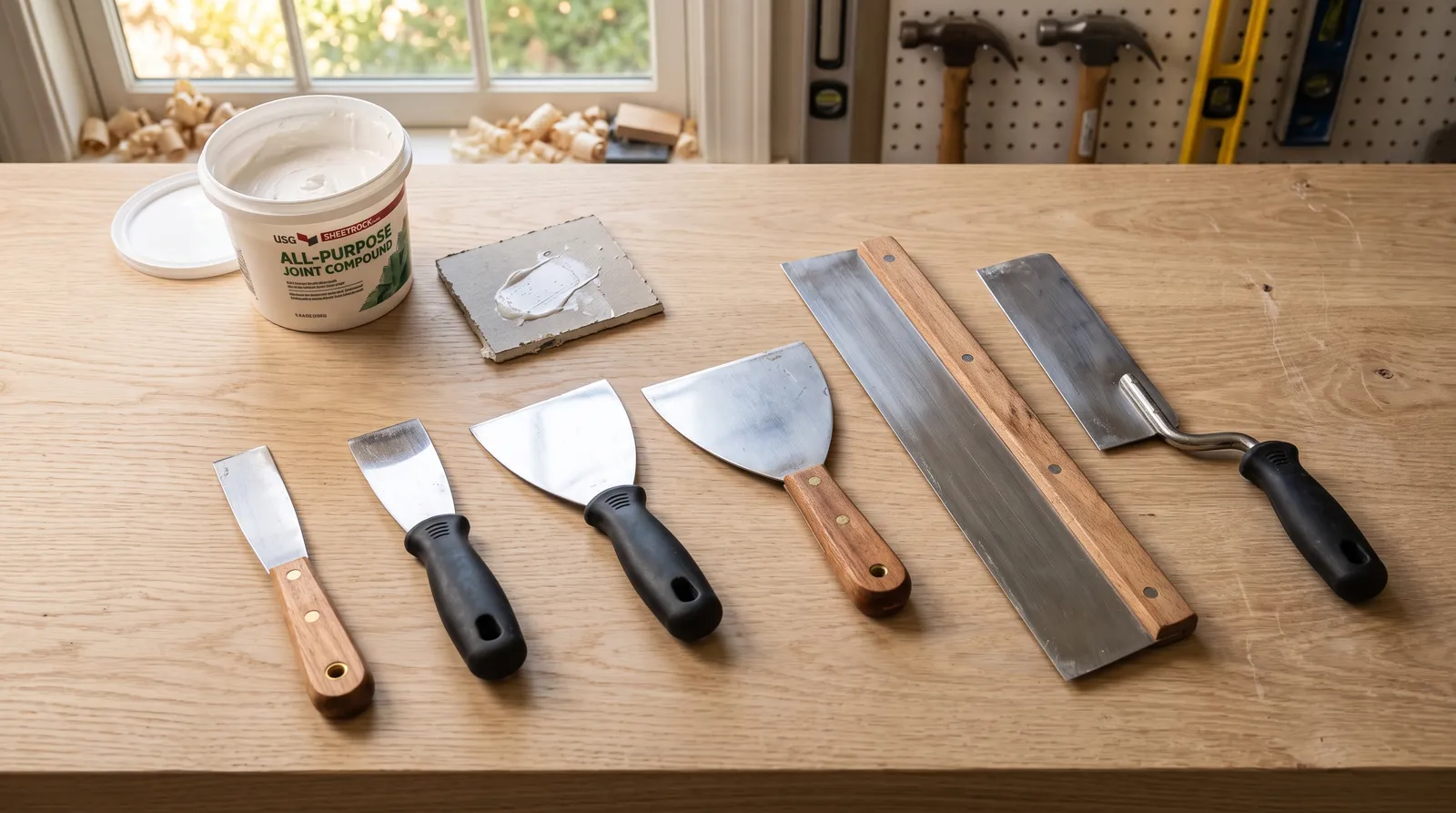
Six putty knives and taping knives tested on spackle, drywall mud, glazing, and paint scraping. Top pick: Hyde Black & Silver 2-inch stainless, plus where each blade falls short.

Disclosure: Some links below are affiliate links. We earn a commission if you buy through them, at no extra cost to you.
Top pick: the Hyde Black & Silver Stainless Steel Putty Knife in 2-inch flexible, about $16. It wins on the two specs that decide a putty knife, blade flex and the stiffness of the blade-to-handle joint, and it was the only knife in this test that came off 40 feet of 1962 window glazing with a straight, burr-free edge. It falls short on price, since you can buy six throwaway knives for the same money, and on width, because a 2-inch blade stops being useful the moment the patch is larger than a switch plate. For scraping and chipping glazing, the Warner ProGrip 1-1/2-inch stiff wins. For drywall patches, the Warner ProGrip 6-inch flex broad knife. For finish coats over tape, the Hyde Pro Stainless 12-inch.
Most people need two knives, not six.
A 2-inch flexible for filler and a 6-inch flex broad knife for patches will handle every repair in a typical house. Everything below that pair is a specialty purchase.
The Six I Bought and Why
I bought all six at retail through the same channels a homeowner would use, then ran them through five jobs over five weeks: a bedroom’s worth of nail holes, three drywall patches, 40 feet of failed glazing on a pair of 1962 double-hung sashes, a hallway skim coat, and a wallpaper strip.
The selection covers the four widths that matter and the two flex profiles, because “best putty knife” is a question with four correct answers depending on what is in your hand. A knife that feathers spackle beautifully will bow the first time you lean on it. A knife that chips glazing without flexing will leave hard tracks in every patch you try to fill.
Nobody makes one blade that does both. Anyone who tells you they do is selling a knife that does neither.
Putty Knife, Joint Knife, Taping Knife
The names get used interchangeably at the store, which is how people end up trying to finish a drywall butt joint with a 2-inch blade.
Putty knife. 1 to 3 inches. Fills nail holes, chips glazing, scrapes, opens cans, mixes small batches of filler. This is the knife in everyone’s junk drawer.
Joint knife or broad knife. 4 to 6 inches. Beds paper tape, spreads the first coat on a patch, skims small areas. If you own exactly one drywall tool, this is it.
Taping knife. 8 to 14 inches. Pulls the second and third coats flat and feathers the edges into the wall. The blade has a slight crown built into it at the factory, meaning it bows a few thousandths toward the wall so the compound lays flat instead of leaving a ridge at each edge. A perfectly flat blade is a defect on this tool, not a feature.
Offset knife. Any width, with a cranked neck that lifts your knuckles off the surface. Made for ceiling lines, wallpaper stripping, and getting behind a radiator.
Buy by job, not by set. Six-piece knife sets at the register are usually five knives you’ll never use plus the one you needed.
How to Choose
Flex
Flex is the first question and most people get it backward. A flexible blade lets you press the middle of the edge slightly into the wall so the filler tapers off at the sides instead of stopping at a step you then have to sand out. That is the whole trick of a clean patch.
A stiff blade does the opposite. Held flat, its two corners ride high and dig two parallel tracks. Held on edge, it scrapes, chips, and pries without deflecting.
If you buy one knife, buy flexible. The stiff blade is a second purchase for glazing, scraping, and adhesive work.
Blade Width
Match the width to the repair, and then go one size wider on each coat. A 7-inch patch gets bedded with a 6-inch knife, coated with a 10-inch, and finished with a 12-inch. Each pass reaches farther out than the one before it so the buildup fades instead of standing proud. Skipping widths is why home drywall repairs show up as a soft hump under raking light two years later.
Steel
Stainless resists rust and shrugs off a lazy cleanup. Carbon steel costs less and holds an edge slightly better, and it will be orange along the edge the morning after you leave it wet. Rust also stains light compound, so a rusty blade shows up in your work, not just on your bench.
I left every knife in this test wet overnight after the glazing job. Both Hyde stainless blades and both Warner stainless blades were clean the next day. The carbon Value Series was not.
The Handle Joint
This is where cheap knives fail, and it never shows up on the packaging. A riveted blade works loose after a few dozen hours and starts to rock, which means the blade angle changes mid-pass and your finish coats wander. Full-tang construction (blade steel running the length of the handle) and rivet-free welded construction both solve it. Hyde’s Pro Stainless line is rivet-free by design. The Black & Silver is full-tang.
Handle Shape
Soft-grip handles win when your hands are wet, which is always. Hardwood handles are prettier, take a hammer better if the knife has a steel cap, and get slick with compound. For a chisel-duty knife you plan to strike, get a hardwood handle with a steel end cap. For everything else, soft grip.
How I Tested
Same five jobs, same order, every knife.
Nail holes. 46 nail holes and 9 anchor holes across a 13 x 15 ft bedroom, filled with DAP DryDex lightweight spackle. Every fill inspected under a raking LED work light before sanding, scored on whether the blade left corner tracks or a clean flush fill.
Drywall patches. Three patches at 4, 7, and 11 inches, paper tape, three coats of USG all-purpose compound. Scored on tape bedding, first coat-out, and feather quality at the perimeter. The 11-inch patch is where narrow knives fall apart.
Glazing. 40 linear feet of failed putty on two 1962 double-hung wood sashes, chipped cold with no heat gun. Scored on blade deflection under load, edge damage afterward, and how much of the sash rabbet the blade tore up. This job destroyed two of the six knives’ edges.
Skim coat. A 9 x 11 ft hallway, two coats. Scored on ridge lines left at the blade edges and on wrist fatigue at the ninety-minute mark.
Wallpaper. 62 square feet of vinyl-face paper over unprimed drywall, soaked and stripped. Scored on how often the blade tore the paper face off the board underneath. This is the job that justifies an offset knife.
After every job, each blade went on a machinist straightedge and got held up to a light. Any gap got logged. Then all six spent a night wet on the bench to see what rusted.
Comparison at a Glance
| Brand / Model | Width | Flex | Steel | Best for | Price tier |
|---|---|---|---|---|---|
| Hyde Black & Silver Stainless | 2-inch | Flexible | Stainless, full tang | Nail holes, filler, light scraping | $$ |
| Warner ProGrip 90661 | 1-1/2-inch | Stiff | Stainless | Glazing, scraping, adhesive | $ |
| Warner ProGrip 90666 | 6-inch | Flexible | Stainless | Patches, tape bedding, small skim | $ |
| Hyde Pro Stainless Taping Knife | 12-inch | Semi-flex, crowned | Stainless, rivet-free | Finish coats, butt joints | $$ |
| Hyde Offset Taping and Wallpaper Knife | 10-inch | Springy | Steel | Wallpaper strip, ceiling lines | $ |
| Hyde Value Series | 1-1/2-inch | Flexible | Carbon spring steel | One-time filler jobs, mixing | $ |
1. Hyde Black & Silver Stainless, 2-inch, Top Pick
The Black & Silver is the knife I keep in the top of the bag, and it earned that spot on the glazing job rather than the patching job.
Forty feet of 60-year-old putty is a brutal test. It goes hard as ceramic and it comes off in chips, and every chip is a small shock through the blade into the handle joint. Two knives in this test came out of that job with a visible gap on the straightedge. The Black & Silver came out straight, with no burr on the edge, no rock in the handle, and no rust after a night on a wet bench.
On filler work it does the thing a good flexible blade does. Press the middle of the edge lightly into the wall and the spackle tapers off at both sides instead of stopping at a ridge. Under raking light, all 46 nail holes filled with this knife needed one pass of 220-grit and nothing else. The stiff Warner needed sanding on every hole to knock down the corner tracks.
Full-tang construction is the spec doing the work here. The stainless runs the length of the nylon handle rather than stopping at a pair of rivets, so nothing loosens. Hyde warranties it against defects for life, which is easy to promise on a design with no joint to fail.
On paper it’s an expensive putty knife. In practice, $16 across a decade of use is not a real number.
Two knocks. The 2-inch width is a filler-and-scrape width; the moment you’re skimming anything wider than a light switch you want the 6-inch. And the nylon handle has no steel cap, so it is not a chisel. Strike the butt of it with a hammer and you’ll crack it.
| Spec | Value |
|---|---|
| Blade | 2-inch flexible stainless, full tang |
| Handle | Nylon, soft feel, no strike cap |
| Also available | 1-1/2-inch |
| Best for | Spackle, wood filler, glazing, light scraping |
| Approx. price | $15–$16 |
Buy it if: you want one knife that fills cleanly and survives abuse it wasn’t designed for. Skip it if: your only job is four nail holes before a repaint. Buy the Value Series and throw it away.
2. Warner ProGrip Stainless 1-1/2-inch Stiff, Best for Scraping
Different tool, different rules. The 90661 has no flex at all, and that is the entire point.
Chipping glazing is a shoulder-load job. You set the edge against the joint between putty and wood, then drive. A flexible blade bends, absorbs the force, and does nothing. The stiff Warner transmits the whole push into the putty, which comes off in the plate-sized chips you actually want instead of crumbs. It cleared the second sash in under half the time of the Black & Silver.
The narrow 1-1/2-inch blade earns its keep in muntin bars and window rabbets a 2-inch blade won’t enter. The ProGrip handle stays in your palm with wet hands, and it is priced like a hardware-store knife because it is one. Made in the USA, which is not nothing at this price.
It’s a bad filler knife. Held flat against wet spackle it leaves two hard tracks from the blade corners on every pass, and you sand them out afterward. The factory corners are sharp enough to gouge soft pine and tear drywall paper. Knock them off on a stone before the first use and the knife gets noticeably better.
Buy it if: you’re stripping paint, chipping glazing, or lifting adhesive. Around $8.
3. Warner ProGrip 6-inch Flex Broad Knife, Best for Patches
If I could only own one drywall tool, this is the width.
Six inches beds paper tape in one pass, pulls a first coat across a patch up to about 8 inches without lifting, and feathers the perimeter clean. The flex profile on the 90666 is graduated, soft at the tip and stiffer toward the heel, which is why the blade tracks the wall instead of chattering. On the 7-inch test patch it laid a coat that needed one light sanding. On the 11-inch patch it bedded and first-coated fine, then handed off to the 12-inch for the finish, which is exactly the workflow you want.
Cleanup is fast because there is no rivet line for compound to pack into. Fifteen seconds under warm water and a rag on both faces.
Then the limits. It is too flexible to scrape with, and one scraping job will put a permanent bow in the blade that shows up as an uneven coat forever after. The soft handle texture holds dried compound and never looks clean again after the first job, which is cosmetic but annoying. And 6 inches is not a finish width over a butt joint. You need 10 or 12 for that.
| Spec | Value |
|---|---|
| Blade | 6-inch flexible stainless |
| Handle | ProGrip soft grip |
| Also available | 4-inch, 5-inch flex; 4-inch chisel |
| Best for | Tape bedding, patch coats, small skim |
| Approx. price | $10–$14 |
Buy it if: you patch drywall more than once a year. Pair it with the 12-inch and you’re done buying knives.
4. Hyde Pro Stainless 12-inch Taping Knife, Best for Finish Coats
Wide knives live or die on two things: the crown of the blade and whether the handle joint stays tight. The Pro Stainless gets both right.
The crown is the spec nobody explains at the store. A taping blade is not flat. It bows a few thousandths of an inch toward the wall, so when you pull a coat the center lays compound down and the edges release cleanly instead of dragging a ridge. Cheap wide knives ship flat, and a flat blade leaves two long lines you’ll be sanding at ten o’clock at night. This one came out of the box with a real crown and held it through the hallway skim.
Rivet-free construction is the other half. Nothing to work loose, nothing to rust out of the joint. The HammerHead end sets a popped nail without making you set the knife down, which sounds like a gimmick until you’re on a ladder.
Twelve inches is a lot of knife for someone who patches a hole twice a year. Holding a consistent blade angle across a full 12-inch pull takes practice, and the first few passes will show it. The other risk is physical. Drop this on a concrete floor and the dent in the edge draws a line down every coat you pull afterward. Store it in a sleeve or hang it.
Buy it if: you’re finishing drywall seams or skimming a wall, not just filling holes. $18–$22 for the 12-inch. Skip it if: your repairs are all under 6 inches. The broad knife covers you.
5. Hyde 10-inch Offset Taping and Wallpaper Knife, Best for Stripping Paper
The cranked neck is the whole product. It lifts your knuckles off the surface, which matters in exactly two situations and matters enormously in both.
Wallpaper is the first. Stripping 62 square feet of soaked vinyl-face paper with a flat knife means your hand is scraping the wall alongside the blade, and the angle you can hold is dictated by your knuckles rather than by the paper. The offset lets you come in almost parallel to the wall. The blade slides under the wet paper and lifts it instead of digging into the drywall face beneath. Across the test wall it tore the paper face twice. A flat 6-inch knife on the same wall tore it seven times, and every tear is a spot you have to seal and skim before painting. If you’re doing this job, read the wallpaper removal guide before you soak anything.
The ceiling line is the second. Working compound into the corner where wall meets ceiling with a flat knife drags your hand across fresh paint. The crank buys you an inch of clearance.
Outside those two jobs it’s a bad knife. The offset makes the blade angle hard to read on a flat wall, so finish coats come out uneven until you’ve spent an hour with it. The thin blade takes a permanent set if you lever with it.
Verdict: a $16 specialty tool. Buy it the week you’re stripping wallpaper, not before.
6. Hyde Value Series, Best Budget
$2.31. That is the pitch and it’s a good one.
The Value Series has a spring steel blade with real flex and a polypropylene handle, and for filling a dozen nail holes before a repaint it does the job. It is also the right knife to bury in two-part auto filler, epoxy, or construction adhesive, since you’re going to throw it away rather than clean it.
Carbon steel means rust. Left wet overnight after the glazing job, this blade had visible orange along the edge by morning, and rust on a blade transfers brown streaks into white spackle. The blade also started rocking in the handle after a few hours of patching, which is the riveted-joint failure that separates a $2 knife from a $16 one.
Verdict: buy three, dedicate them to filler jobs, don’t expect them back.
Knives I Bought and Didn’t Pick
- Hyde Full-Metal Stainless Flexible Joint Knife, 6-inch. Genuinely excellent. Hollow-ground, all-metal, hammer-rated at the end, lifetime warranty. It lost to the Warner 90666 on price alone at roughly twice the money, and on comfort during the ninety-minute skim, where an all-metal handle gets cold and hard. If you tape for a living, buy this one instead.
- Hardwood-handle carbon steel putty knives. Nice tools that photograph well. The handles get slick with compound and the carbon blades rust. Buy them for chisel-duty scraping where a steel cap matters, not for filler.
- Plastic putty knives. They flex where you don’t want them to and the edge rounds over in an afternoon. The one honest use is spreading filler on a soft or already-finished surface you can’t risk scratching.
- Six-piece knife sets under $15. You get one width you’ll use and five you won’t, all with riveted joints. Buy two good knives instead.
- 14-inch taping knives. Real pros use them on new board. For home repair they’re unwieldy and they magnify every angle error.
Cleanup, Rust, and How Long a Knife Lasts
Clean joint compound off the blade while it is wet. Wipe against the pan rim on every reload, rinse in warm water at the end, dry both faces with a rag before the knife goes back in the bag. Dried compound on an edge is the number one cause of streaked finish coats, because one hardened crumb cuts a line down the middle of every pass.
If it hardens anyway, soak the blade in warm water for ten minutes and scrape it clean with another knife. Never take a wire brush to a taping blade. It scars the edge and the scars print into every coat afterward.
Latex paint wipes off with water. Oil-based paint and glazing compound need mineral spirits, and mineral spirits on a soft-grip handle will degrade the rubber over time, so wipe the handle down with water afterward. For solvent-heavy work, see the paint stripper round-up on which chemicals are safe against tool handles.
Storage matters more than people think. A 12-inch blade rattling loose in a bucket gets nicked, and a nicked wide blade is finished as a finish tool. Keep wide knives in the cardboard sleeve they shipped in, or hang them.
Realistic life: a full-tang stainless putty knife is a twenty-year tool if you don’t pry with it. A stainless broad knife lasts a decade until you bow it. A wide taping knife lasts until the first drop on concrete. A carbon Value Series knife lasts one project, and that is the deal you signed up for.
Mistakes I Still See
- Using one width for everything. A 2-inch knife on a 10-inch patch leaves a rope of compound that sanding turns into a crater. Match the width to the repair and go wider with each coat.
- Loading the blade in the middle only. Compound goes on the last inch of the blade edge, not the center. Center-loading is what makes the first pass drop a lump.
- Scraping with a flexible knife. One glazing job with a 6-inch flex broad knife and the bow is permanent. Keep a stiff 1-1/2-inch for scrape duty.
- Sanding instead of feathering. If you feather correctly with a flexible blade, sanding is one light pass. People who skip the feather spend an hour with 120-grit and a dust mask, and they still get a hump. The drywall repair guide walks the coat sequence.
- Skipping primer over the patch. Bare compound sucks up paint and flashes dull against the wall around it. Every patch gets spot-primed. See what primer actually does for which type.
- Leaving carbon steel wet. Orange edge by morning, brown streaks in your next fill.
- Buying the six-piece set. One useful width, five drawer occupants, every one of them riveted.
A Two-Knife Kit That Covers a House
For a homeowner: the Hyde Black & Silver 2-inch flexible ($16) and the Warner ProGrip 6-inch flex broad knife ($12). About $28, and that pair fills every nail hole, patches every anchor hole, and finishes any repair up to about 8 inches. Add a tub of lightweight spackle and see the wall filler comparison for which compound to pair with which repair.
If you’re patching real holes, add the Hyde Pro Stainless 12-inch ($20) so the finish coat can reach past the buildup.
If you’re stripping wallpaper this month, add the offset ($16) and skip it otherwise.
If you’re chipping glazing or stripping paint, add the Warner 90661 stiff ($8) and stop using your good flexible knife as a chisel.
Don’t buy the set.
Ask a Question