How to Remove Wallpaper Before Painting
Remove wallpaper before painting the right way. Test the type, soak or steam it off, strip the glue, prime, and recoat so the new paint actually holds.

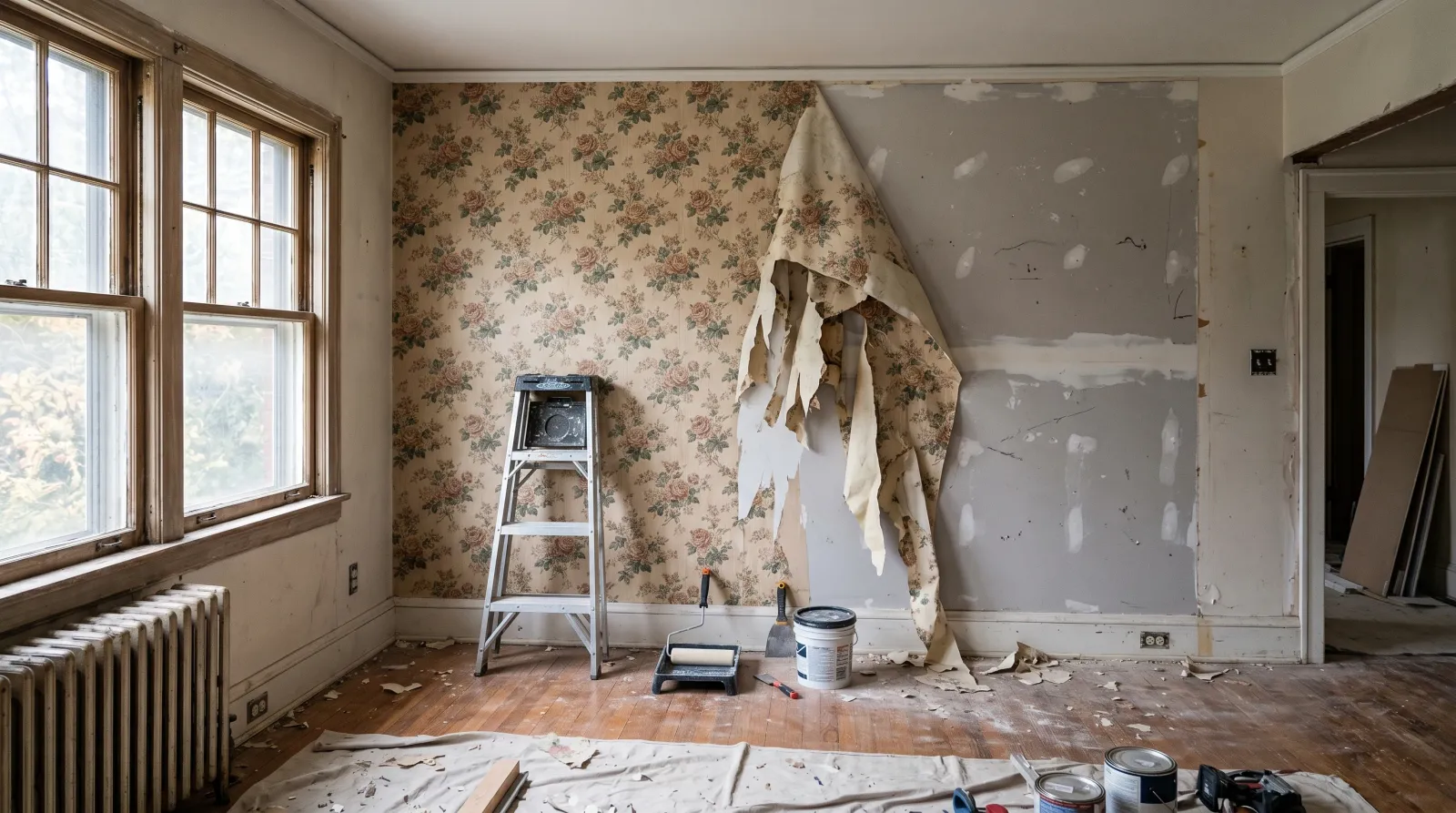
Wallpaper doesn’t come off because you’re impatient. It comes off because you soaked the glue and let the water do the work. Skip that and you’ll be chiseling paper backing off a wall for two days, gouging the drywall as you go. Test the paper first, match the method to the type, and most rooms strip in an afternoon.
TL;DR
- Test a corner before you commit. Strippable vinyl peels dry. Old paper needs soaking or steam.
- Score, soak, scrape. Hot water plus a stripping additive or 1:1 vinegar, 15-minute soak, wide putty knife at a low angle.
- The paste is the part everyone skips. Dried wallpaper paste is slick and water-soluble. Paint won’t grab it. Wash every trace off or the new paint peels.
- Prime before you paint. Oil or shellac primer over a stripped wall seals torn drywall face and locks down any paste haze you missed.
- Painting over wallpaper is a gamble. Only do it if the paper is fully bonded and the seams are flat, and prime first.
Does This Match What You’re Seeing?
Figure out what you’re dealing with before you wet anything. The paper type decides the whole job.
- Top layer peels off dry in big sheets, leaves a thin paper backing behind: strippable vinyl. The face comes off without water; the backing soaks off after.
- A whole sheet, vinyl and backing, pulls off dry in one piece: peelable wallpaper. Best case. You may need to soak off residual paste and that’s it.
- Paper that tears into small wet chips and won’t release in strips: traditional non-coated paper. Needs a full soak, sometimes two.
- Shiny, plasticky surface that beads water and won’t absorb: non-porous vinyl or foil. You have to score it first or the water never reaches the glue.
- Multiple layers, paper over paper: common in older homes. Each layer soaks and strips separately. Plan on more than one pass.
- Bubbles, loose seams, or paper lifting at the edges already: the bond is failing. This strips easy but tells you painting over it would have failed too.
If you can’t tell, peel a top corner with a putty knife. How it releases tells you the type in ten seconds.
How Serious Is This?
Most wallpaper removal is a same-weekend job. One average bedroom strips in an afternoon if the paper cooperates. Two things push it harder.
Layered paper in an old house. Three layers of paper over plaster means three soak-and-strip cycles. Budget a full weekend, not an afternoon.
Wallpaper hung directly on unprimed drywall. This is the nightmare. When paper goes onto bare, unprimed drywall, the paste bonds to the drywall’s paper face and the two won’t separate. Soak too hard and you tear the drywall face along with the wallpaper. If a test corner brings drywall paper with it, you’re looking at skim-coating or, in bad cases, replacing the board. Pre-1978 homes add a lead question to any sanding (more on that below).
Why This Is Happening (root Cause)
You’re removing wallpaper because painting over it usually fails, and here’s the mechanism.
Wallpaper paste is water-activated starch or clay. It dries hard and glossy, and it stays water-soluble for the life of the wall. That’s the whole problem. When you brush latex paint over old paper, the water in the paint soaks through the seams and re-wets the paste underneath. The bond softens, the paper lets go, and your fresh coat bubbles and peels off carrying the wallpaper with it.
Seams are the other half. Even tightly bonded paper has overlapping edges and a slight ridge at every seam. Paint doesn’t hide that ridge. It highlights it. Raking light across the wall throws a shadow off every seam, so a painted-over papered wall reads as a grid of lines from across the room.
Then there’s the surface itself. Vinyl and foil wallpapers are non-porous. Paint beads and crawls on them, and what does stick has nothing to grip. You’d have to scuff-sand and bonding-prime the entire wall just to get a topcoat to hold, which is more work than stripping the paper in the first place.
Strip the paper, kill the paste, prime the wall. That’s the only sequence that holds for a decade instead of a year.
The Fix
Step 1. Prep the Room and Test the Paper
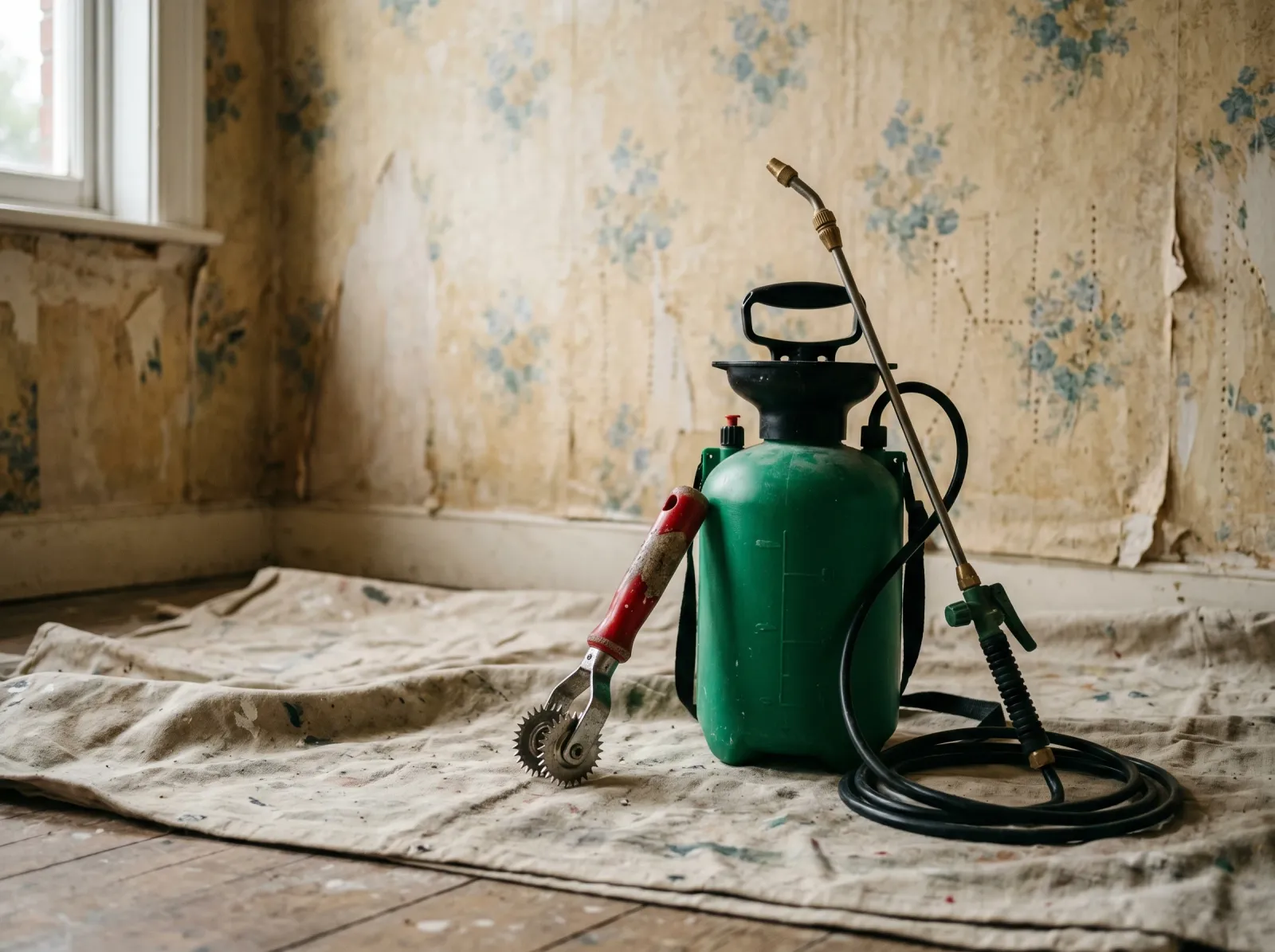 Score, soak, scrape. The right tools out before you wet a single seam.
Pull furniture to the center and cover it. Drop cloths on the floor, and tape plastic over outlets and switch plates after you cut the power to the room. Wet paper plus live electricity is how people get hurt.
Peel a top corner with a 4-inch putty knife. If a dry sheet lifts away clean, you have strippable or peelable paper and you may skip most of the soaking. If it tears into chips, it needs water or steam.
Step 2. Score the Surface
For anything non-porous (vinyl, foil, or painted-over paper), run a scoring tool over the wall in overlapping circles. The little wheels perforate the surface so water can reach the paste. Light pressure. Press hard and you’ll punch holes in the drywall underneath, and every gouge is a patch later.
Porous paper that already absorbs water doesn’t need scoring. Test by misting a patch. If the water soaks in within a minute, skip the scoring tool.
Step 3. Soak It
Mix hot water with a wallpaper stripping additive (DIF gel or Piranha concentrate) or a 1:1 hot-water-and-white-vinegar solution. Both break down the paste. Apply with a pump garden sprayer or a sponge, working a 3-to-4-foot section at a time so it doesn’t dry before you scrape.
Wait 15 minutes. The paper should darken and feel saturated. Re-wet if it dries before you get to it.
For thick, layered, or stubborn paper, a wallpaper steamer beats hand-soaking. Hold the plate against the wall 10 to 15 seconds per spot. Don’t park it on old plaster too long. Steam can soften and blow plaster off the lath.
Safety
Never mix bleach with vinegar, ammonia, or any other cleaner you use on the wall. It produces toxic chlorine gas. Vinegar and water is fine on its own; bleach and water is fine on its own; the two together are not. Wear gloves and eye protection, and cross-ventilate the room while you work. If your house was built before 1978, do not sand any painted wallpaper or old paint until you’ve tested for lead.
Step 4. Scrape
Wide putty knife or a dedicated wallpaper scraper, held at a low angle, pushed under the wet edge. The paper should release in sheets. If it fights you, it isn’t soaked enough. Re-wet and wait, don’t force it. Forcing a dry edge is how you gouge the wall.
Keep a trash bag at your feet and drop wet strips straight in. Wet wallpaper on a drop cloth turns the whole floor into a paste skating rink.
Step 5. Strip Every Trace of Paste
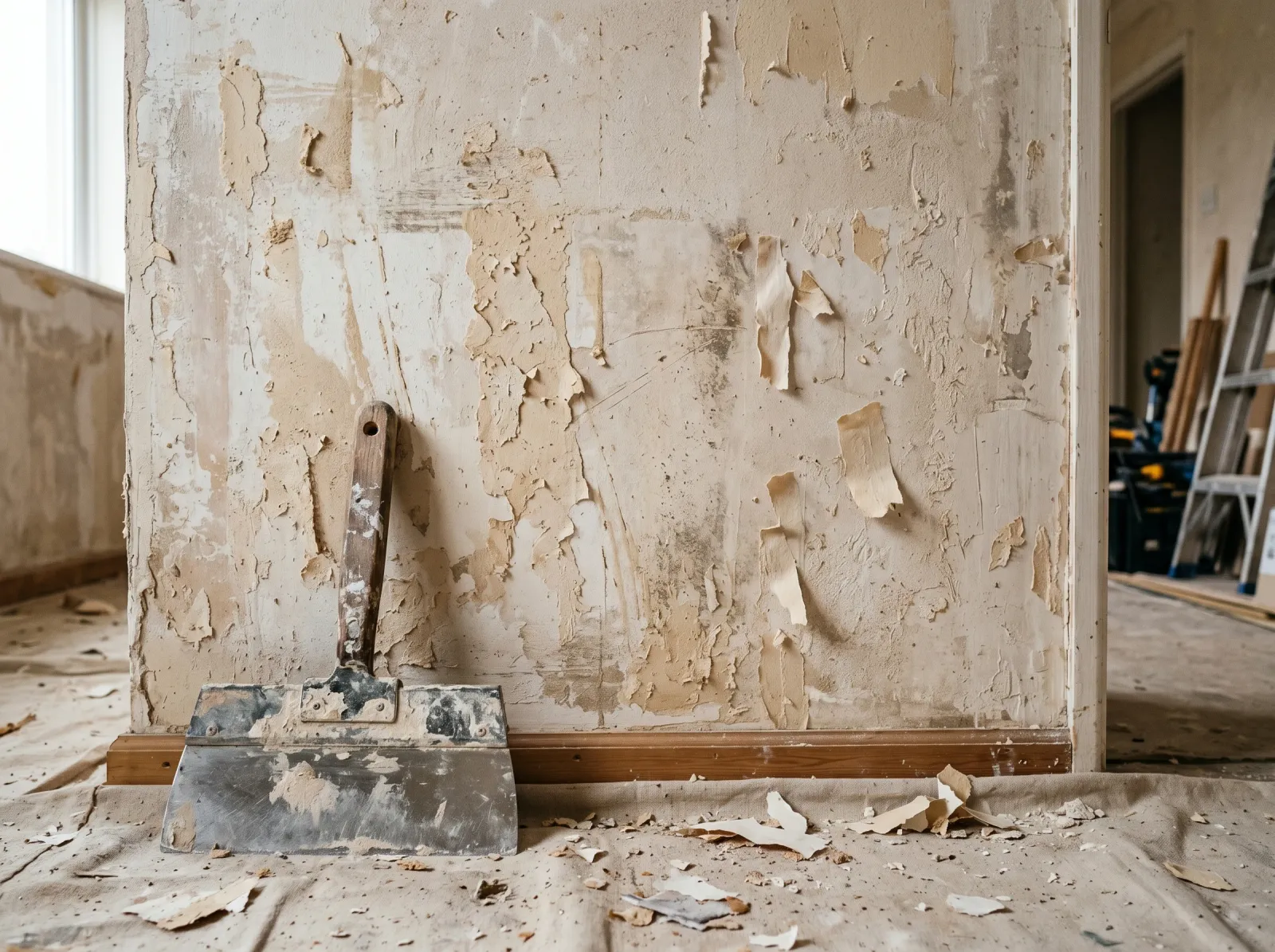 Paper’s off, paste isn’t. That hazy residue has to come off before any primer touches the wall.
This is the step that separates a job that holds from one that fails in a year. The paper is off but the paste isn’t. Wash the whole wall with hot water and a paste remover, a TSP substitute, or more of the vinegar solution. Scrub with a sponge or a stiff brush, then rinse with clean water.
Let it dry, then run your bare hand across it. Slick or tacky anywhere means paste is still there. Wash that spot again. A wall that’s truly clean feels chalky and dull, never slippery.
Step 6. Repair and Sand
Soaking and scraping leave dings, torn drywall face, and the occasional gouge. Skim those with lightweight spackle or, for torn drywall paper, a thin coat of joint compound. Sand flush at 120 then 220 grit once it’s dry. Wipe the dust with a damp microfiber.
If the drywall face tore over a wide area, skim-coat the whole wall thin and sand it flat. A patchy wall reads through flat paint as much as seams do.
Step 7. Prime, Then Paint
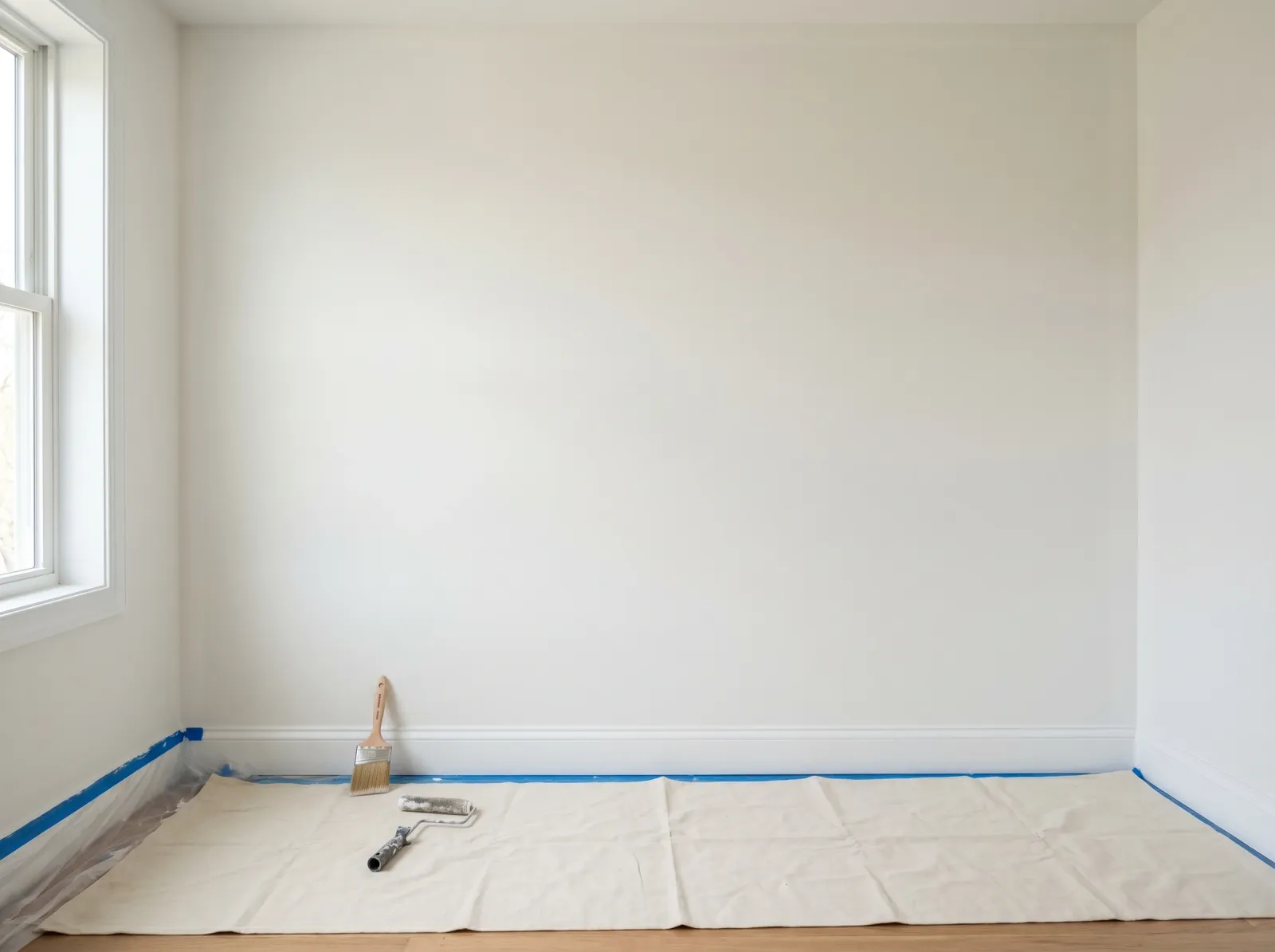 Primed and even. This is what the wall should look like before the first topcoat.
Prime before color goes on. An oil-based or shellac primer (Zinsser Cover Stain or Zinsser BIN) seals torn drywall face, locks down any paste haze you missed, and gives the topcoat a uniform surface to bond to. A water-based primer can re-wet leftover paste, so on a wall that held wallpaper, oil or shellac is the safer call. One coat, cut in your edges.
Then two coats of wall paint. Always two. One-coat coverage is a marketing claim, and a freshly stripped wall absorbs unevenly enough that one coat flashes. For a full walkthrough of rolling the room out, see how to paint a whole room. New to priming and not sure why it matters here, read what primer actually does.
Common Mistakes
- Scraping before the paste is soaked. Dry-scraping gouges the wall and leaves backing stuck on. Wet it, wait, then scrape.
- Leaving the paste on the wall. It looks clean when it’s dry. It isn’t. Slick paste kills the paint bond.
- Scoring too hard. Every deep score is a hole to patch. Light, overlapping passes.
- Skipping primer. Bare stripped drywall and leftover paste both need sealing. Topcoat alone fails.
- Using a water-based primer over a wall that held wallpaper. It re-wets the paste. Use oil or shellac.
- Steaming old plaster too long. It softens the plaster and you trade a paper problem for a structural one.
Prevention
- Don’t hang new wallpaper on unprimed drywall. Prime the wall first with a sizing primer so the next person can actually remove it. The paste bonds to the primer, not the drywall face.
- If you’re papering again, use a wallpaper primer/sizing. It makes the eventual removal a soak-and-peel instead of a demolition.
- Pick peelable or strippable paper. Modern strippable vinyls come off dry. They cost more and save a weekend later.
- Fix the moisture first. Wallpaper bubbles and lifts in bathrooms and behind exterior walls because of condensation, not bad glue. If yours failed from damp, see how to fix peeling paint for the moisture diagnosis. The cause is the same.
When to Call a Pro
- Wallpaper hung on unprimed drywall where test scraping pulls the drywall face off with the paper. That’s a skim-coat or board-replacement job.
- Pre-1978 home where the paper or underlying paint may be lead-based. Test with 3M LeadCheck swabs first; positive means follow EPA RRP rules or hire a certified contractor.
- Plaster walls that are already cracking or sound hollow against the lath. Steaming and scraping can bring sections down.
- Three or more layers of paper over a large area, or whole-house removal on a deadline. Pros have commercial steamers and it’s worth the rate.
- Any wall where stripping reveals widespread mold behind the paper over more than 10 square feet (the EPA threshold).
FAQ
Can I just paint over wallpaper instead of removing it? Sometimes, but it’s a gamble. It only holds if the paper is fully bonded everywhere, the seams are flat, and the wall is dry. Prime with an oil or shellac primer first and accept that seams may still telegraph. Any loose edge lifts within a year. When in doubt, strip it.
What’s the fastest way to remove wallpaper? Score, soak, scrape. Strippable vinyl peels dry in sheets with no water, so test a corner first. For everything else, hot water plus a stripping additive or 1:1 vinegar, a 15-minute soak, then a wide putty knife at a low angle.
Do I have to remove all the wallpaper paste before painting? Yes. Dried paste is slick and stays water-soluble, so latex paint re-wets it and peels. Wash the wall, rinse, and feel it dry. Slick anywhere means paste is still there.
Why is my new paint bubbling after I painted over old wallpaper? The paint re-wet the old paste and the bond let go. Strip the bubbled section to a sound edge, wash off all the paste, dry 24 hours, prime with oil or shellac, then repaint.
Ask a Question