What color should I paint my home office?
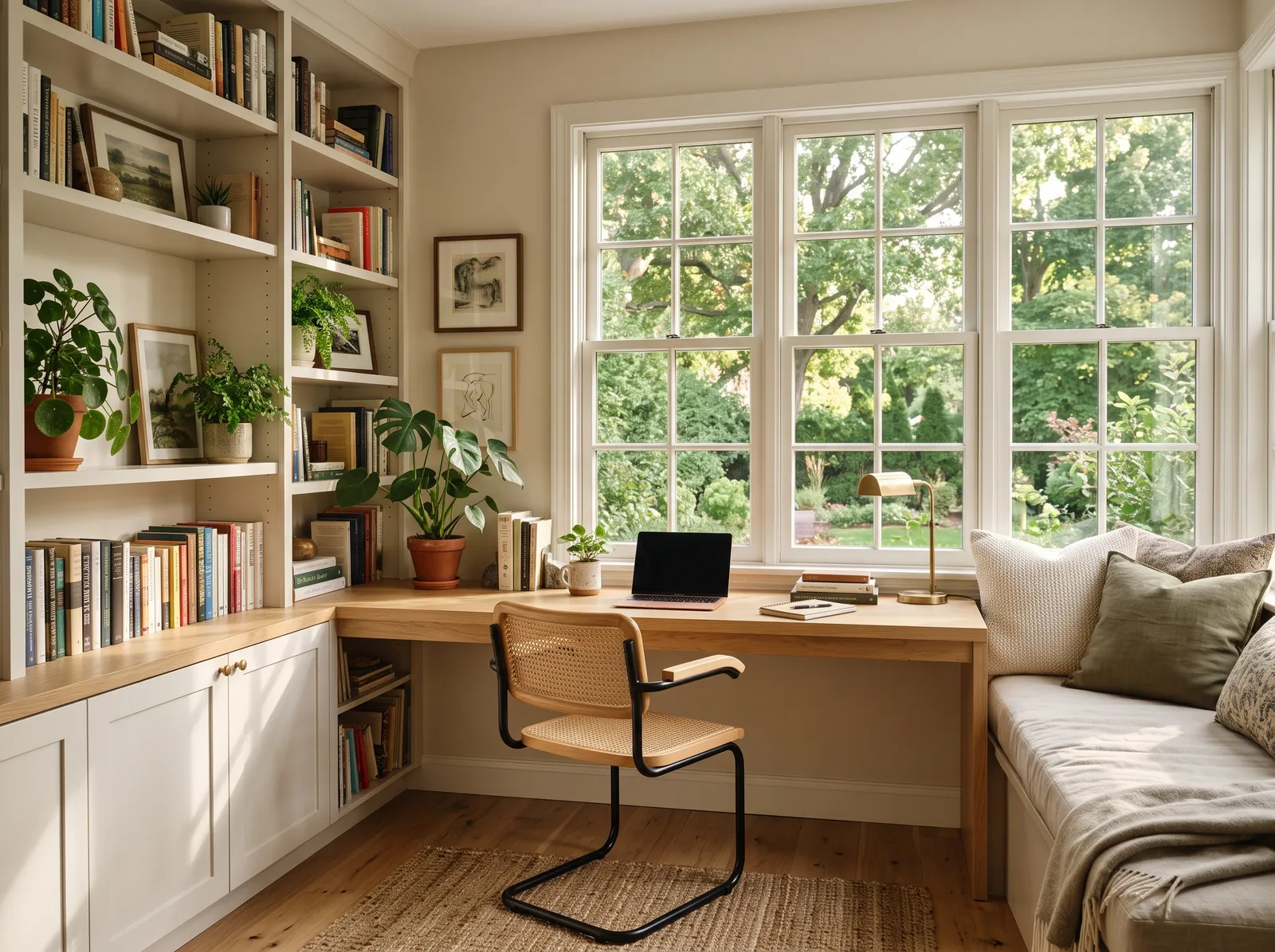
If you want one answer, start with the safe picks above — Repose Gray, Revere Pewter, Hale Navy, Aegean Teal. They read well in any light and survive furniture changes. Then check the light: strong afternoon sun wants a step cooler, a north-facing room wants a step warmer.
What is the best paint color for a home office?
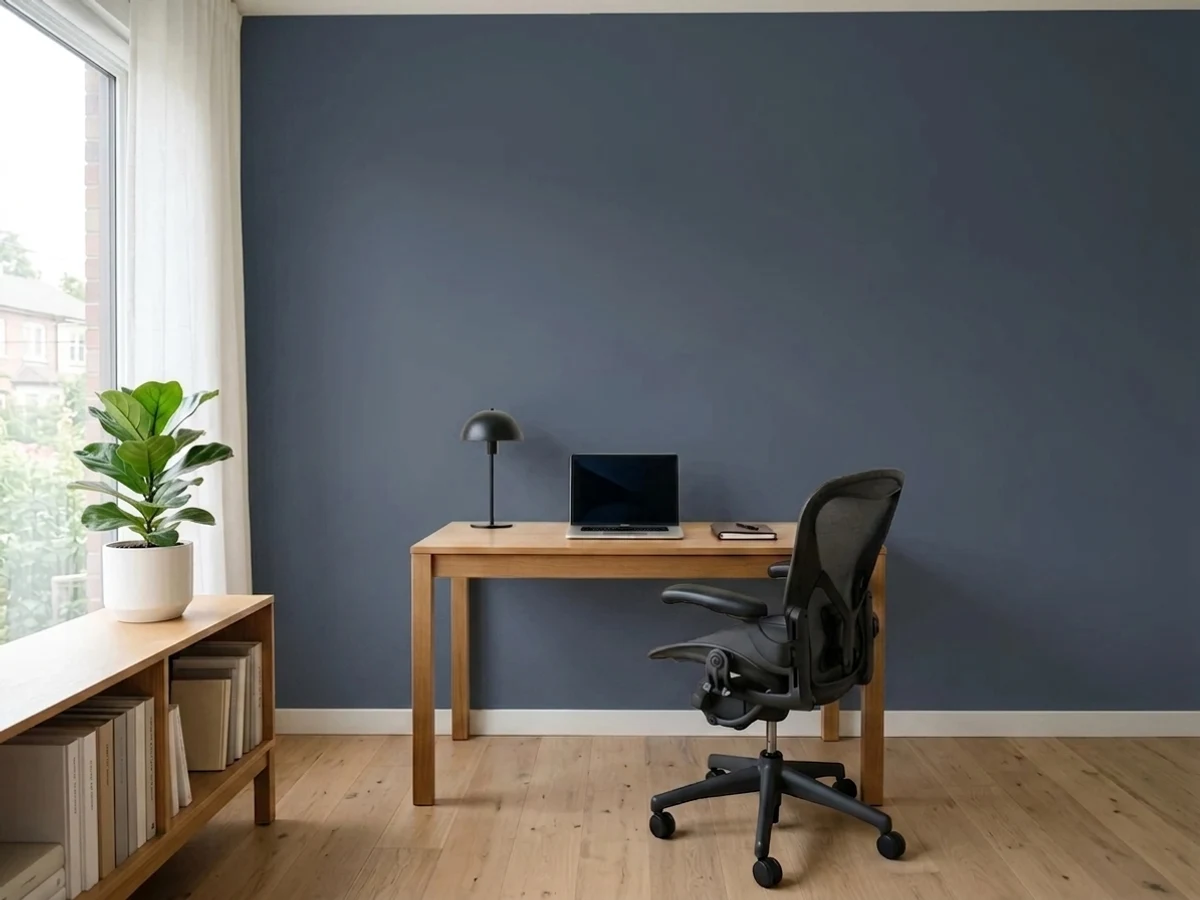
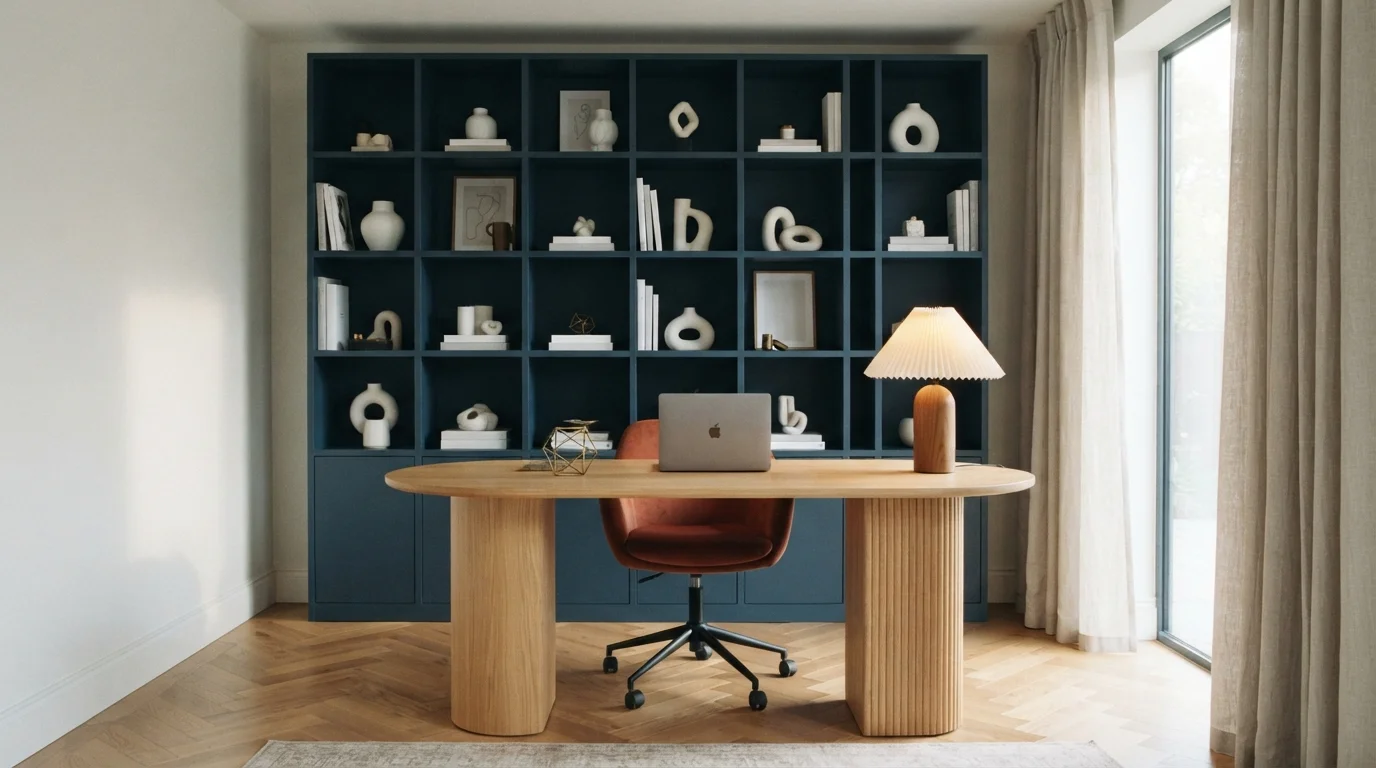
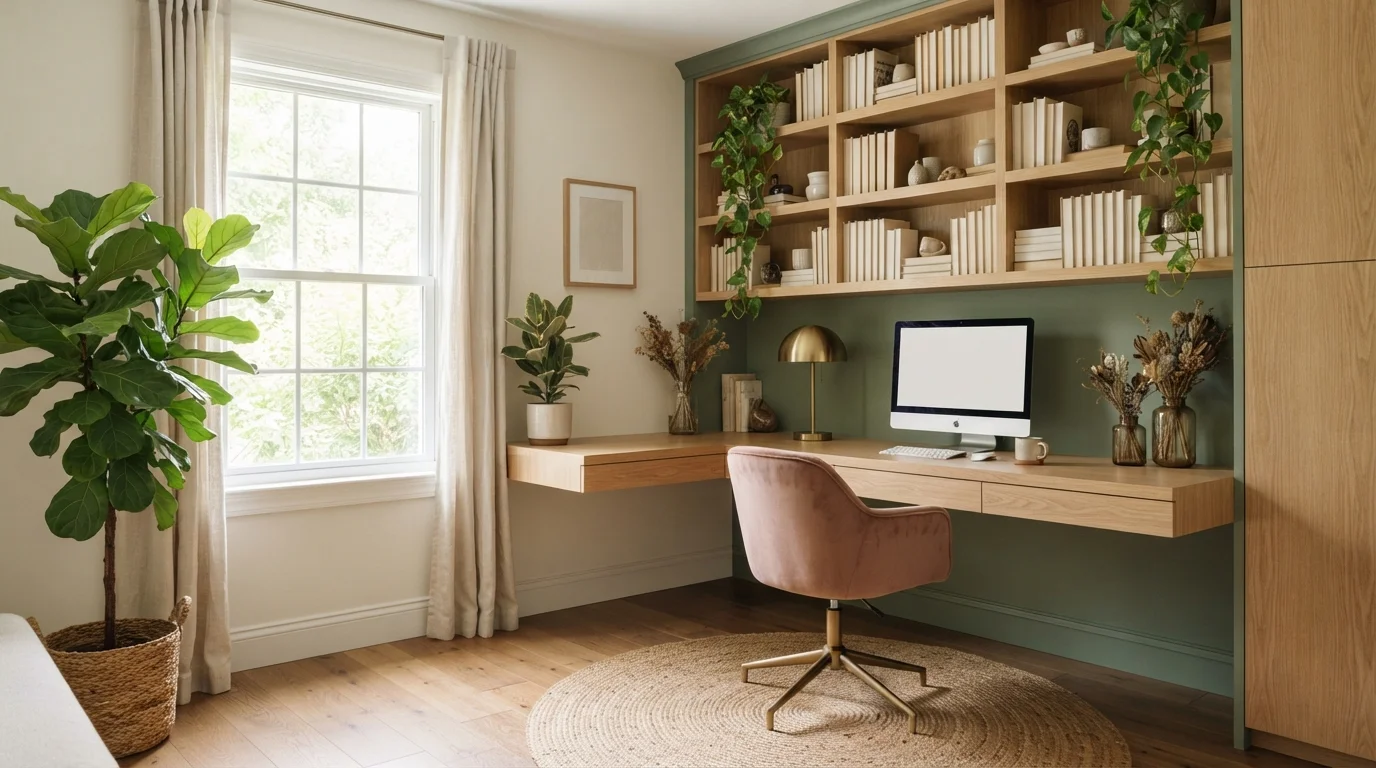
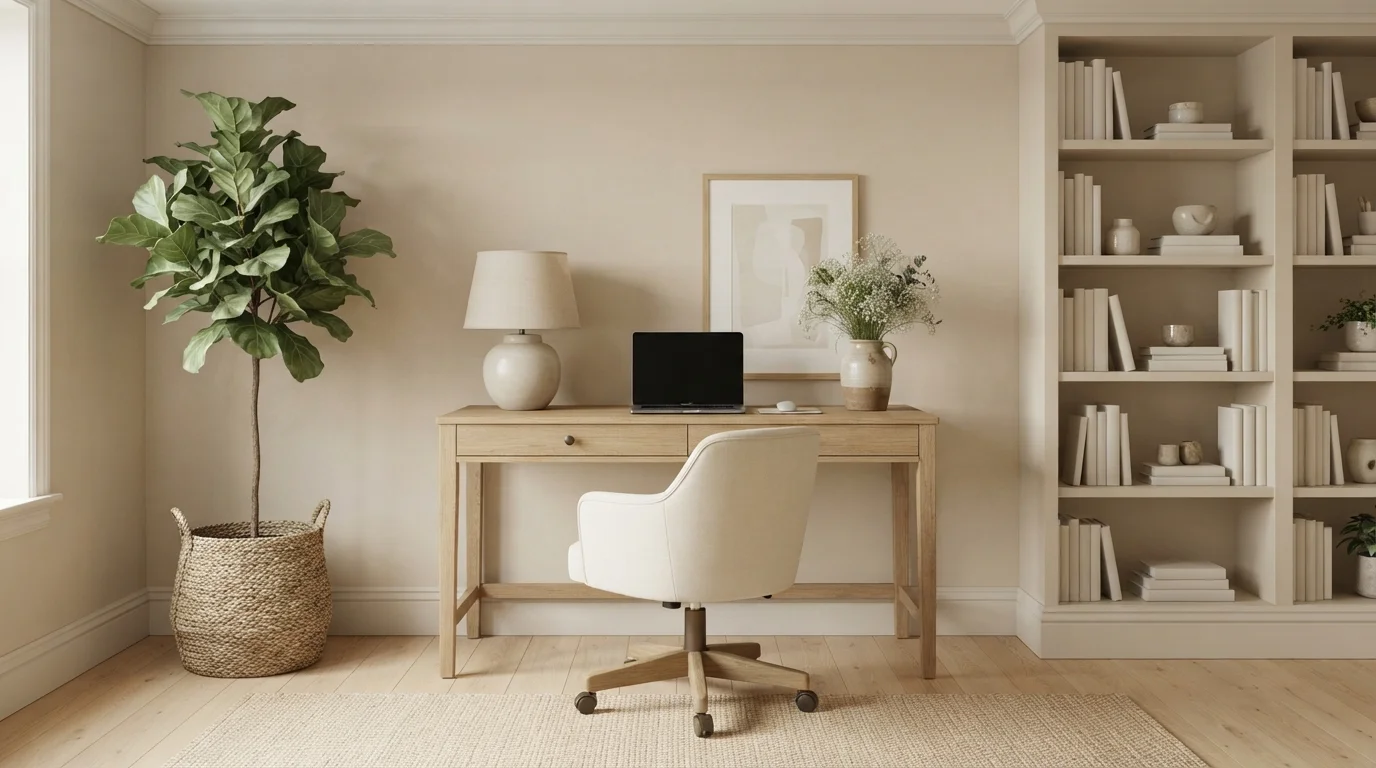
There is no single best, but calm blues and greens like Aegean Teal, Sage, or Eucalyptus are the most reliable for focus. If you want the walls to stay quiet behind your work, a balanced gray like Repose Gray or a warm neutral like Cashmere is a safe pick. For a richer, more serious feel, a deep navy like Hale Navy works well, especially on one accent wall.
Do dark colors like Hale Navy make a small office feel cramped?
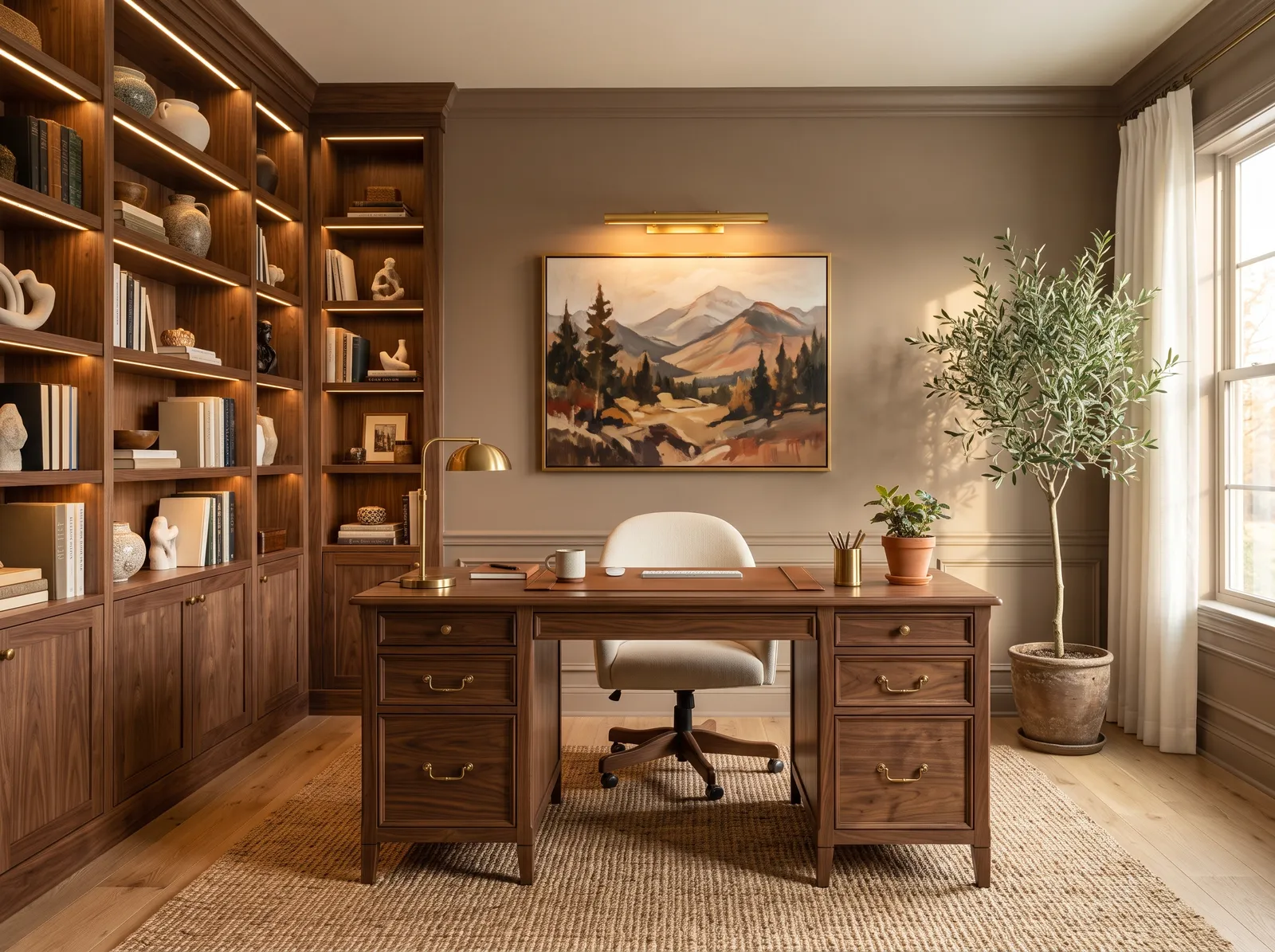
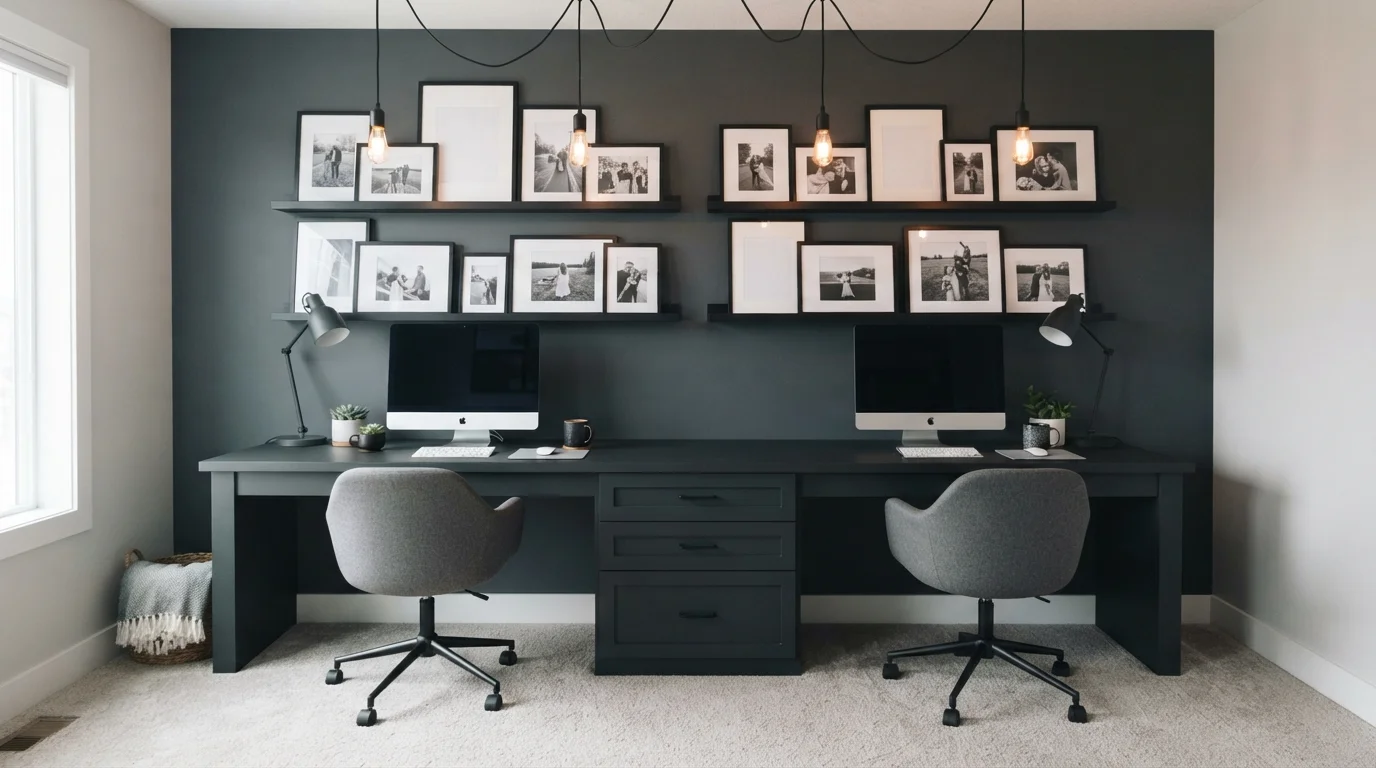
They can if you use them on every wall in a small or dim room, because dark colors absorb light and pull the walls in. In a bright or larger office, a deep navy feels cozy and grounded rather than tight. If your office is small but you love the color, paint just the wall behind your desk in Hale Navy and keep the other walls light.
What sheen should I use on home office walls?
Eggshell or matte is the best choice for the walls. It hides small wall flaws and cuts the glare that shiny finishes bounce onto your screen and into your eyes during long work sessions. Save the tougher satin or semi-gloss for trim, doors, and shelving where you need easy cleanup.
How does my window direction change which color I should pick?
North-facing rooms get cool, flat light, so warm colors like Cashmere or a soft green keep them from feeling cold. South-facing rooms get strong warm light and can handle cooler or deeper colors like Aegean Teal or Hale Navy without looking dim. Always tape a sample up and check it morning, afternoon, and night before buying.
What is LRV and why does it matter for an office?
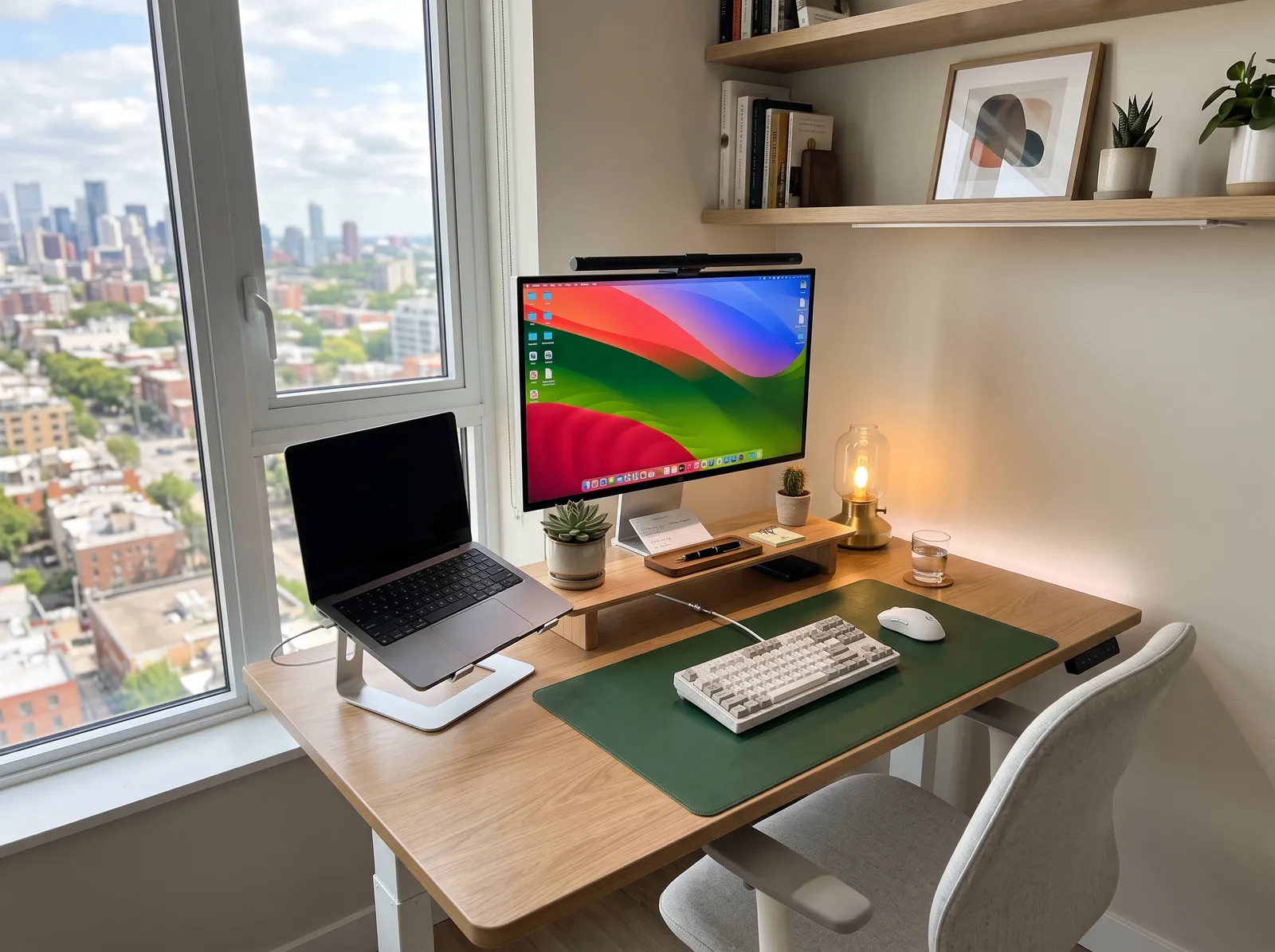
LRV is a number from 0 to 100 that tells you how much light a color reflects back into the room. Higher LRV colors like a light Repose Gray or Cashmere keep a small or dark office feeling bright and open. Lower LRV colors like Hale Navy make a room feel cozy and serious but can darken a tight space, so match the number to how much light you actually have.
Can I get these colors in any paint brand?
Yes. Every color shown here is mixed to order at the paint counter, and colors can be cross-matched between brands. Pick the shade you love, like Sage or Aegean Teal, then have it mixed in whatever brand and finish you trust most.
What color is best for a home office with video calls?
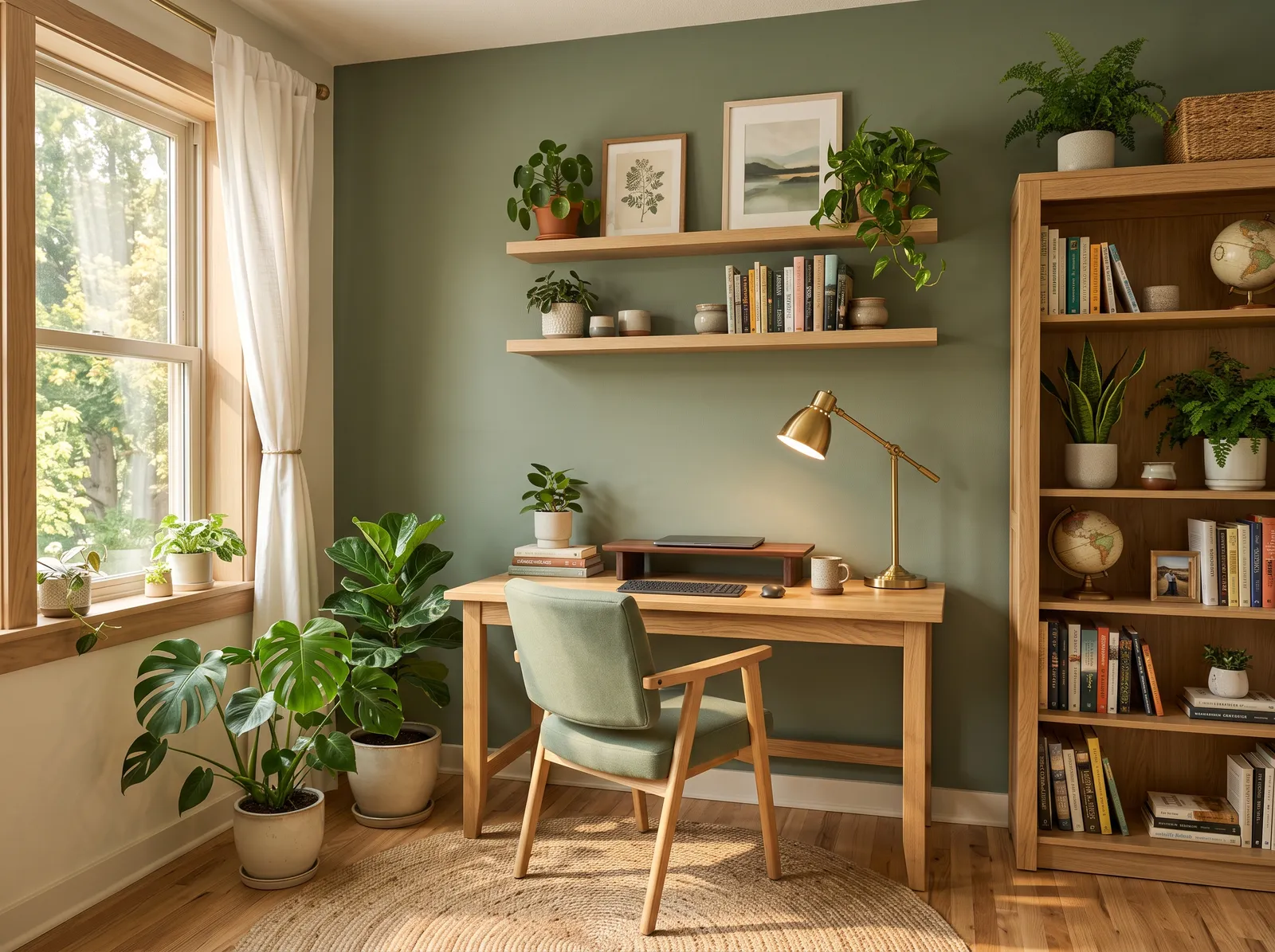
A soft, muted green like Sage or Eucalyptus tends to look flattering and calm on camera. Avoid very bright or very saturated walls directly behind your face, since strong color can cast an odd tint on your skin. Test the wall from your camera's point of view before you commit, not just from where you sit.
What two-color combination works best in a home office?
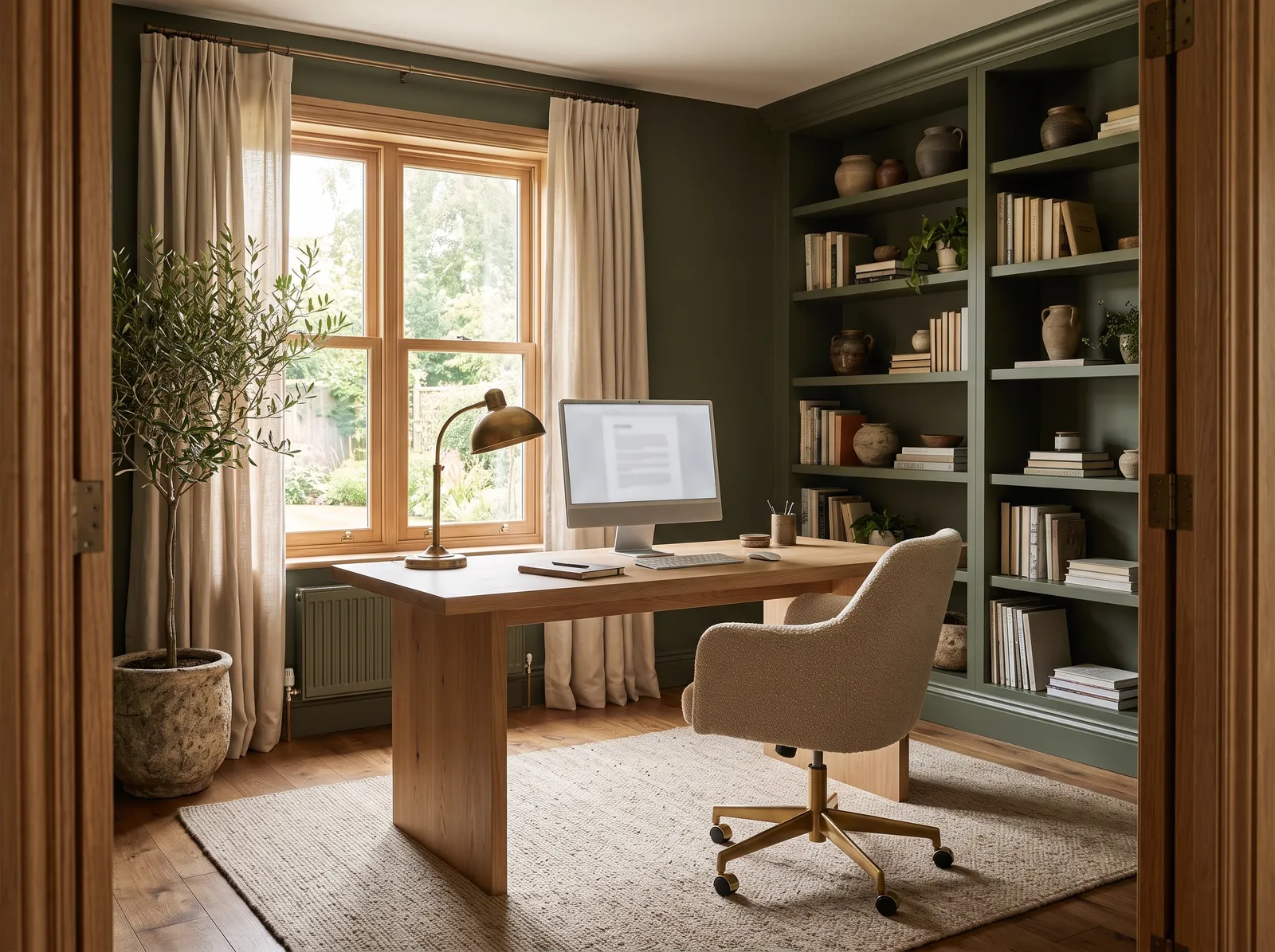
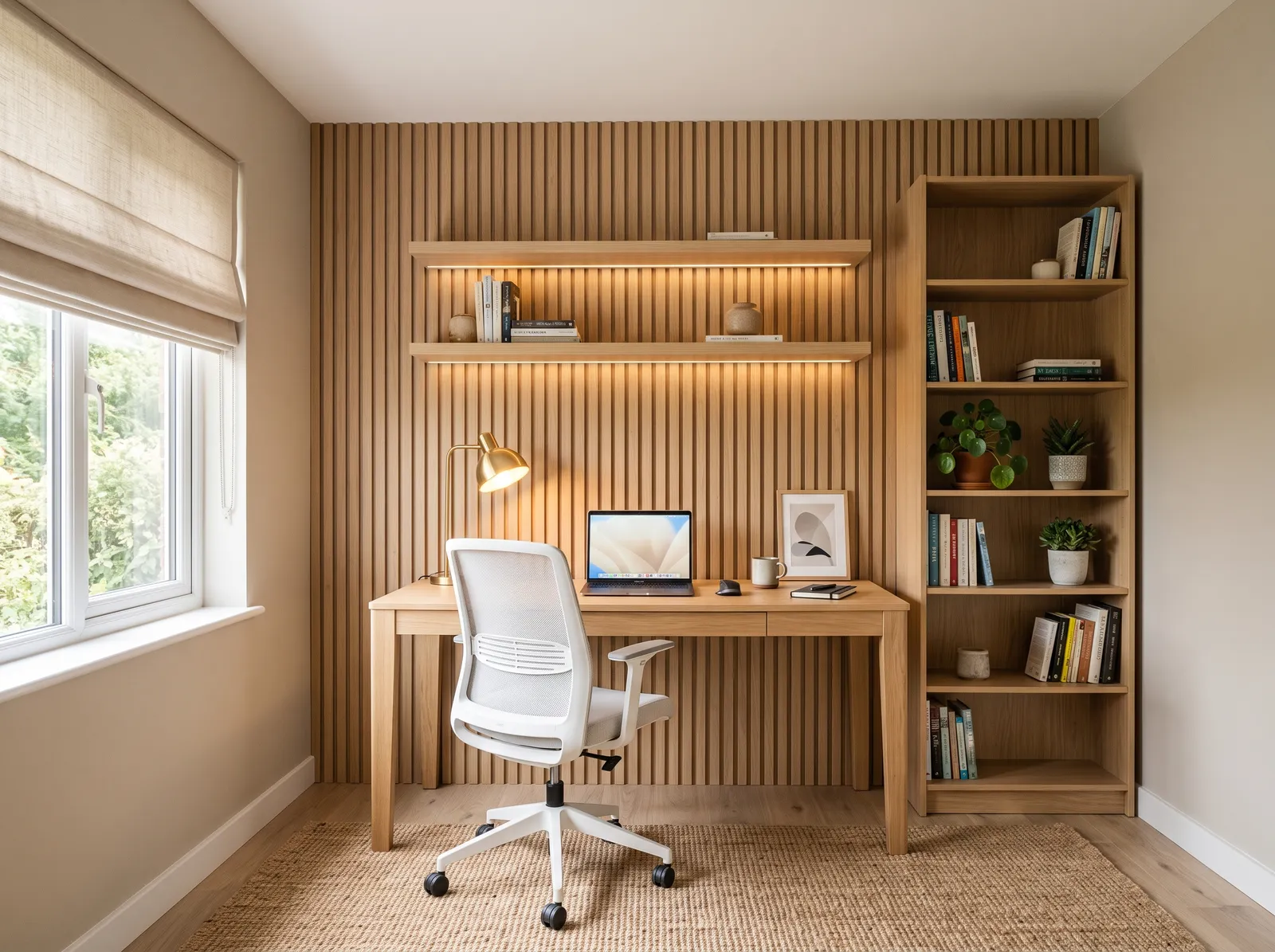
The reliable pattern is a quiet main color plus one deep accent on a single wall. Keep trim and ceiling in one warm white so the two colors are the only event in the room — the combination cards above show complete schemes from real rooms.
What colors make a home office look bigger?
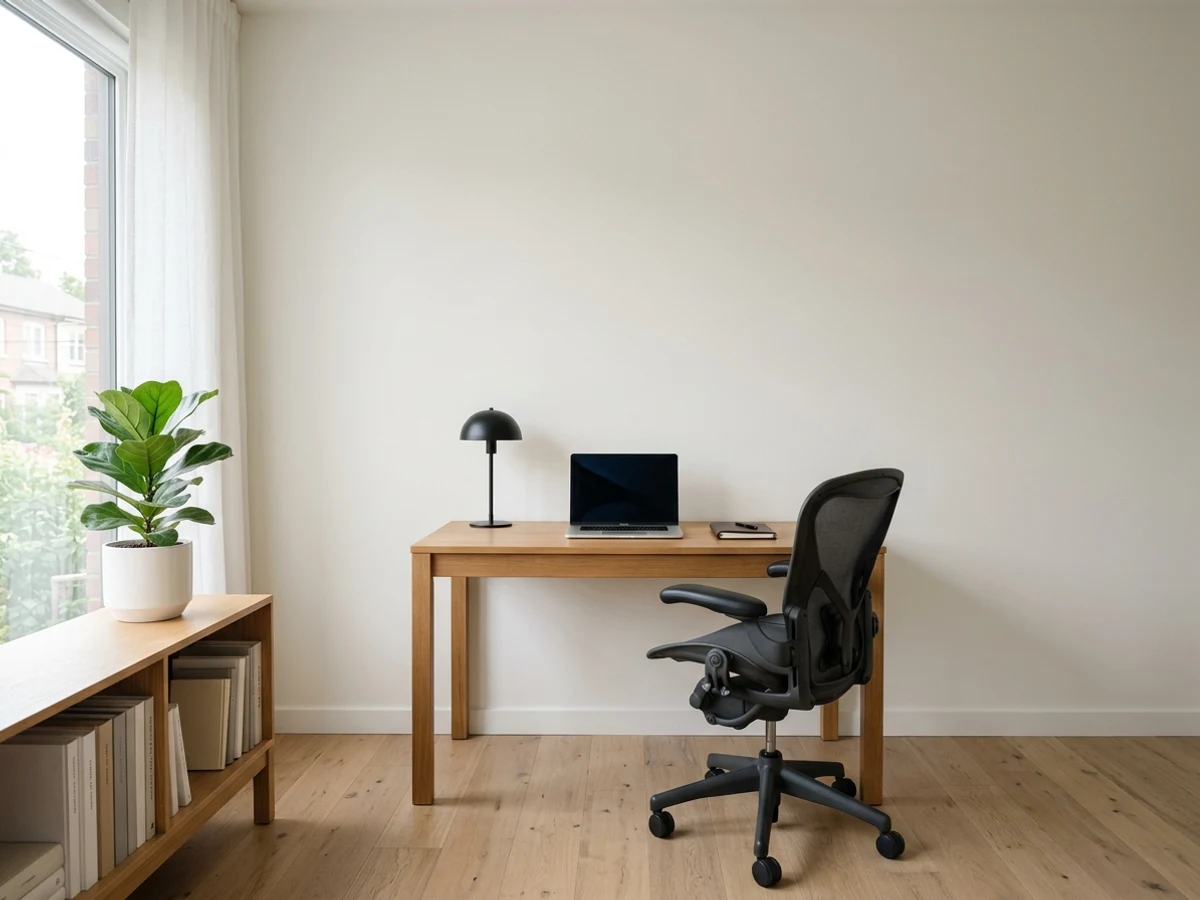
High-LRV, slightly warm colors — LRV 60–75 is the sweet spot. Paint the walls and trim close to the same light color so the corners blur, and keep the ceiling white. Stark cool white actually works against you; it creates hard shadows that show the room's edges.

 1
1
Ask a Question