Room Colors · Green Playroom
8 Best Green Playroom Paint Colors for 2026
ideas, combinations, and real rooms
8 curated picks from real green playrooms — with the exact colors, honest reasons why, and the combinations that hold the room together.

Former interior stylist who can spot a green undertone from across a room. Jessica writes the color and mood pieces — what to choose, what pairs, and why your "white" looks pink.
The Fast Answer
Don't want to read 8 picks? These four are the safe answers.

Top Picks for the Green Playroom
Tap a shade to see the green playroom in it, then try it on your own room.
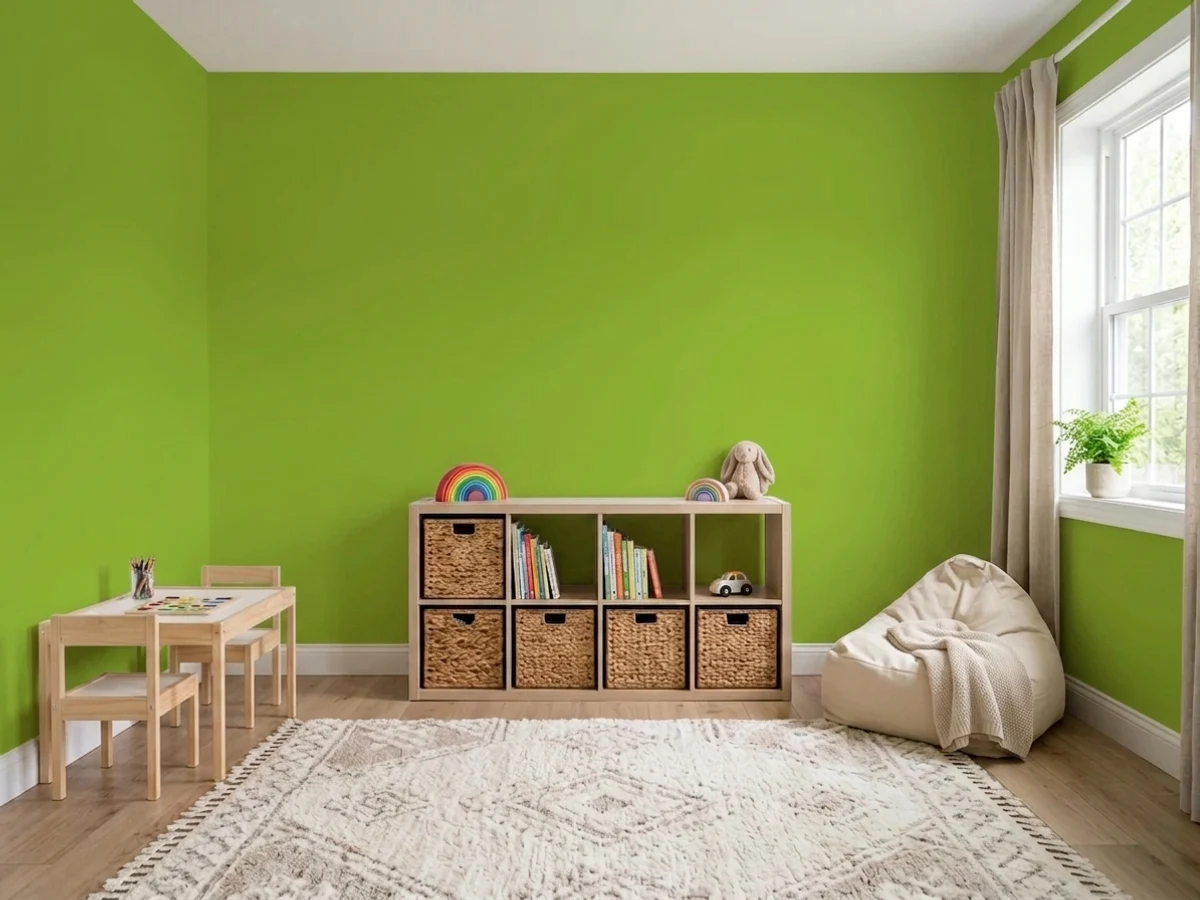
High-energy accent wall — the classic fun-playroom pop without painting the whole room.
Green Playroom Color Trends 2026 — What's In, What's Out


- Minty Pastel Everything — Washed-out mint green on every surface feels dated next to 2026's warmer, more saturated green palette.
- Primary-Color Rainbow Walls — Rainbow accent walls in saturated primaries are giving way to a single confident green tied to the rest of the house.
- White Trim As The Only Option — Stark white trim against green walls is losing ground to trim painted to match or deepen the wall color.
The 8 Best Green Playroom Paint Colors
Every pick below is a real rendered green playroom, not a chip. The lead color first; the swatches are the full scheme in the photo — walls, furniture, textiles, accent.

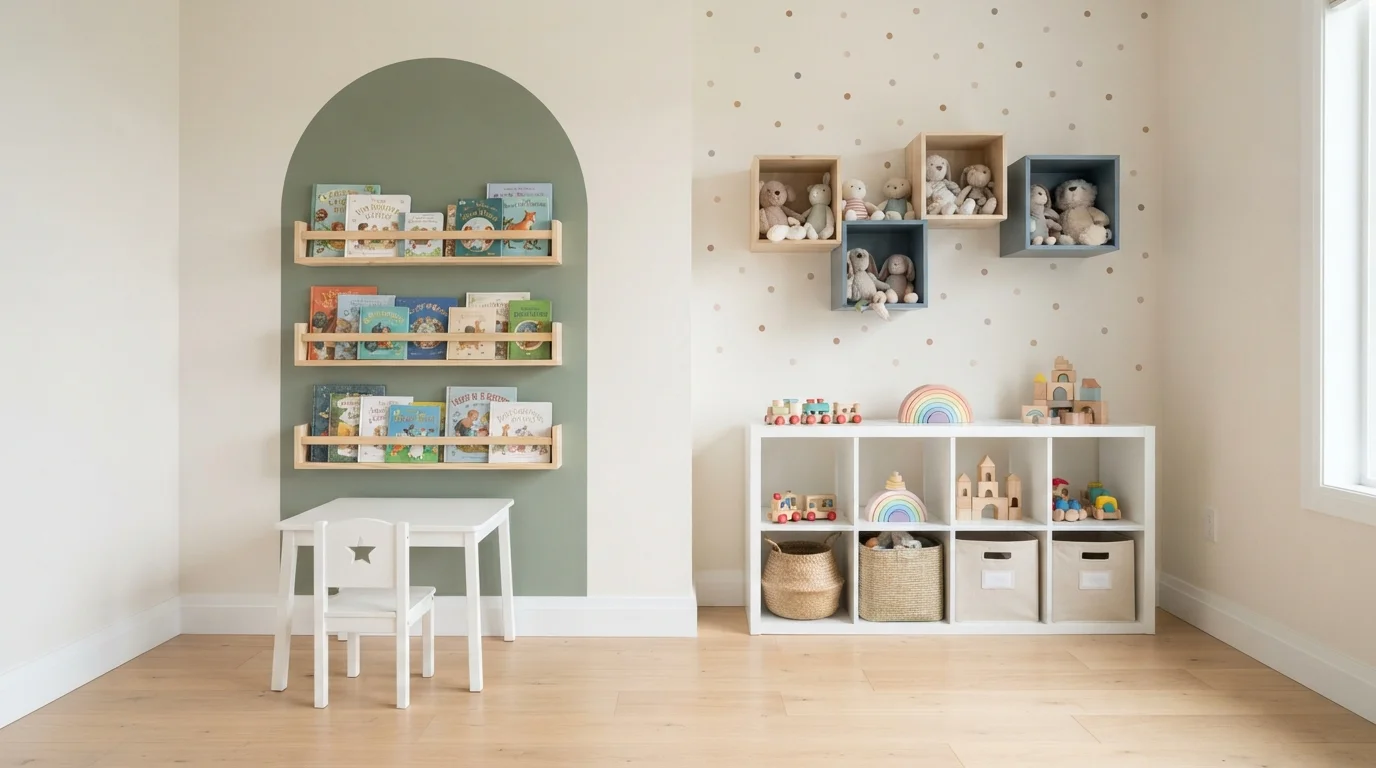
Soft sage green and warm natural woods create an inviting, serene reading nook built for little explorers.
Sage green is a calm, muted earth tone with gentle grey depth. In this room, a painted sage arch frames the reading zone against creamy polka-dot walls, clean white storage cubbies, and natural pine shelves. The entire space feels organized, peaceful, and delightfully cheerful. The look works because the organic green tone balances vibrant children's books and toys without overwhelming the senses. It is perfect for parents who want a tidy, cozy toddler space that encourages quiet imagination and calm playtime.
SEE SHALLOT BULB ON YOUR WALLS →
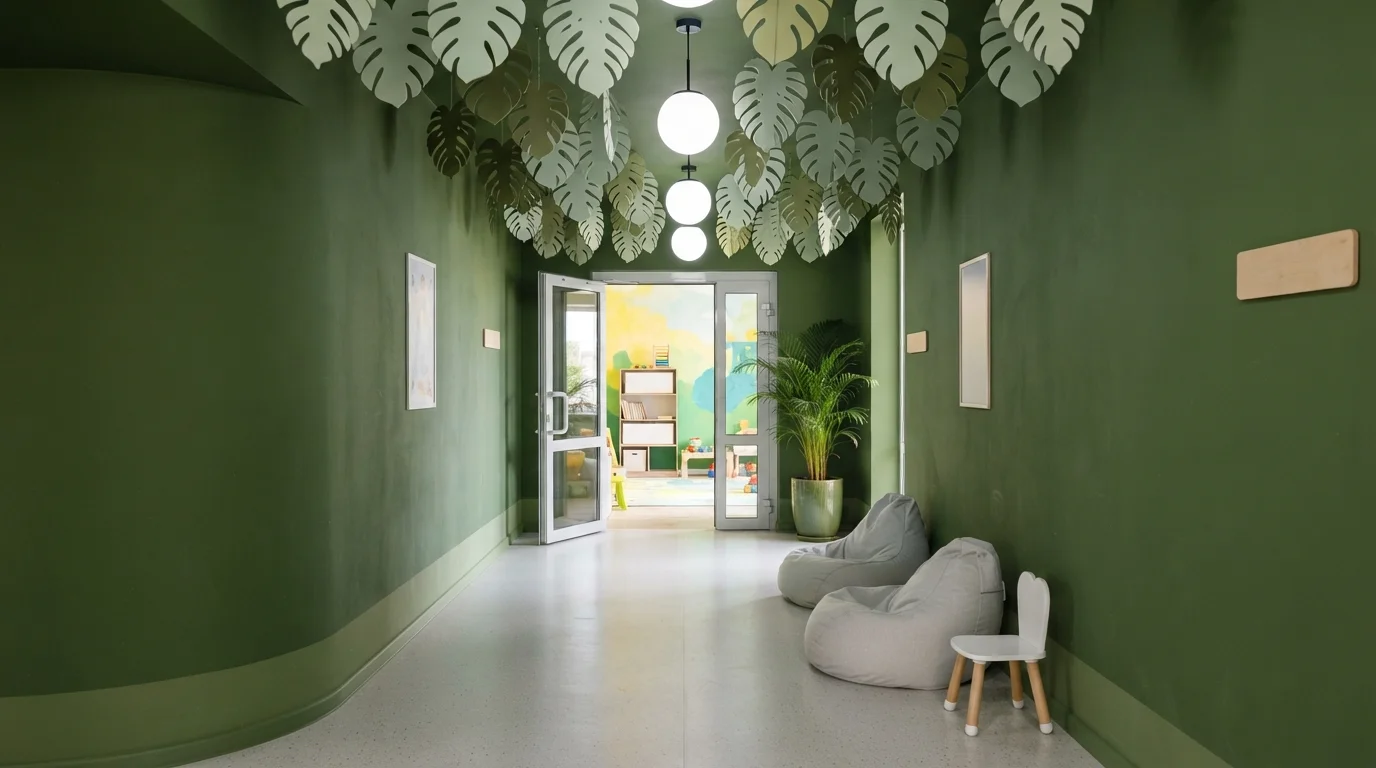
Lush forest green walls and playful hanging leaf canopies turn this corridor into a whimsical nature retreat.
Olive green is a lush, earthy shade of foliage green. In this space, deep green envelops the walls and ceiling, while softer sage leaf shapes dangle overhead alongside glowing white globe lights. Comfortable gray beanbag chairs and a tiny white play chair rest quietly against the speckled gray floor. The room feels cozy, magical, and full of adventure. Layering deep leafy tones with lighter sage accents creates fantastic visual depth without cluttering the floor. It is perfect for anyone designing a cheerful learning space or creative studio.
SEE INLAND ON YOUR WALLS →
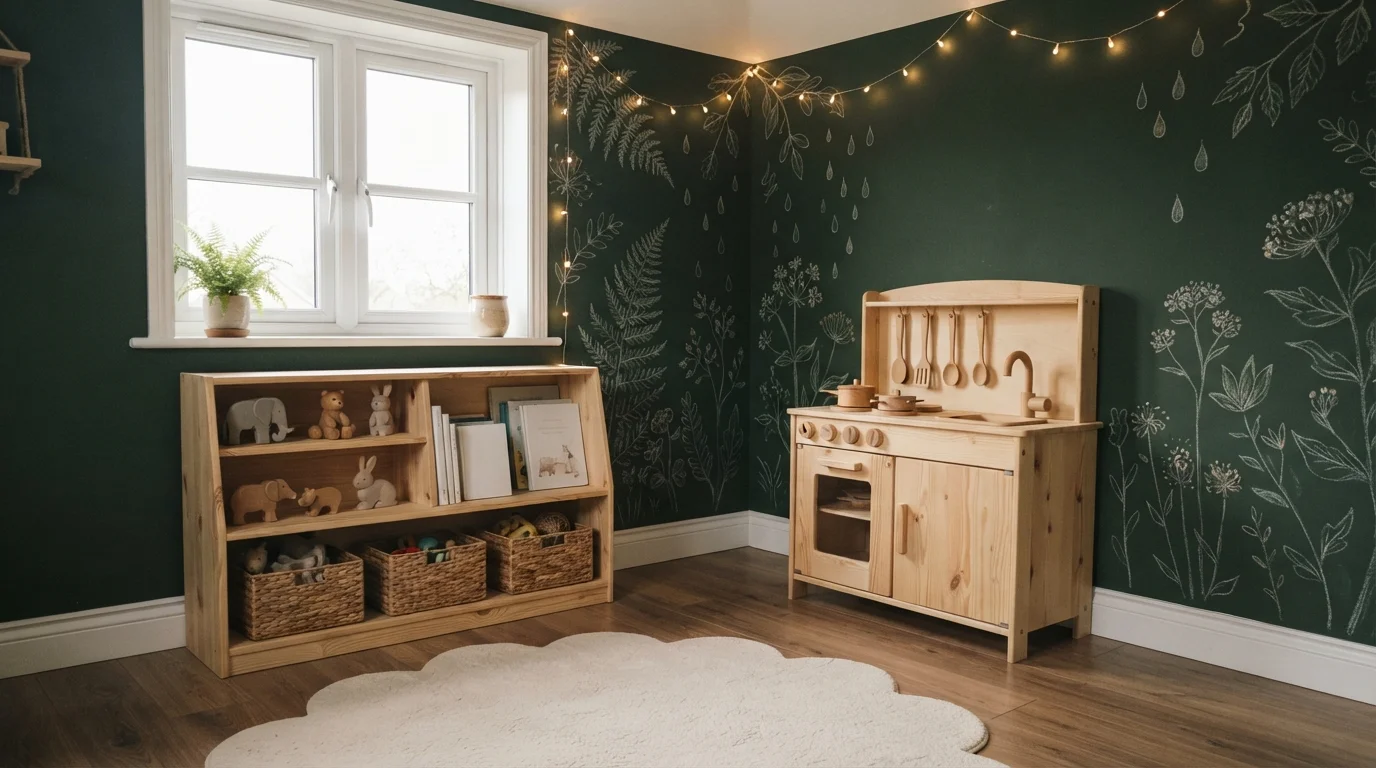
Rich woodland green walls and natural pine create an imaginative, cozy nook perfect for quiet play and storytelling.
Forest green is a deep, nature-inspired shade. In this room, that rich green wraps the walls, serving as a chalkboard backdrop for whimsical white drawings alongside a light pine play kitchen, matching shelves, and a soft cream cloud rug. The space feels snug, grounded, and magical. This combination works because earthy greens always pair effortlessly with light, natural wood tones and cozy cream textures. It is a wonderful look for anyone creating a creative, gender-neutral playroom that encourages quiet imagination.
SEE SYCAMORE TREE ON YOUR WALLS →
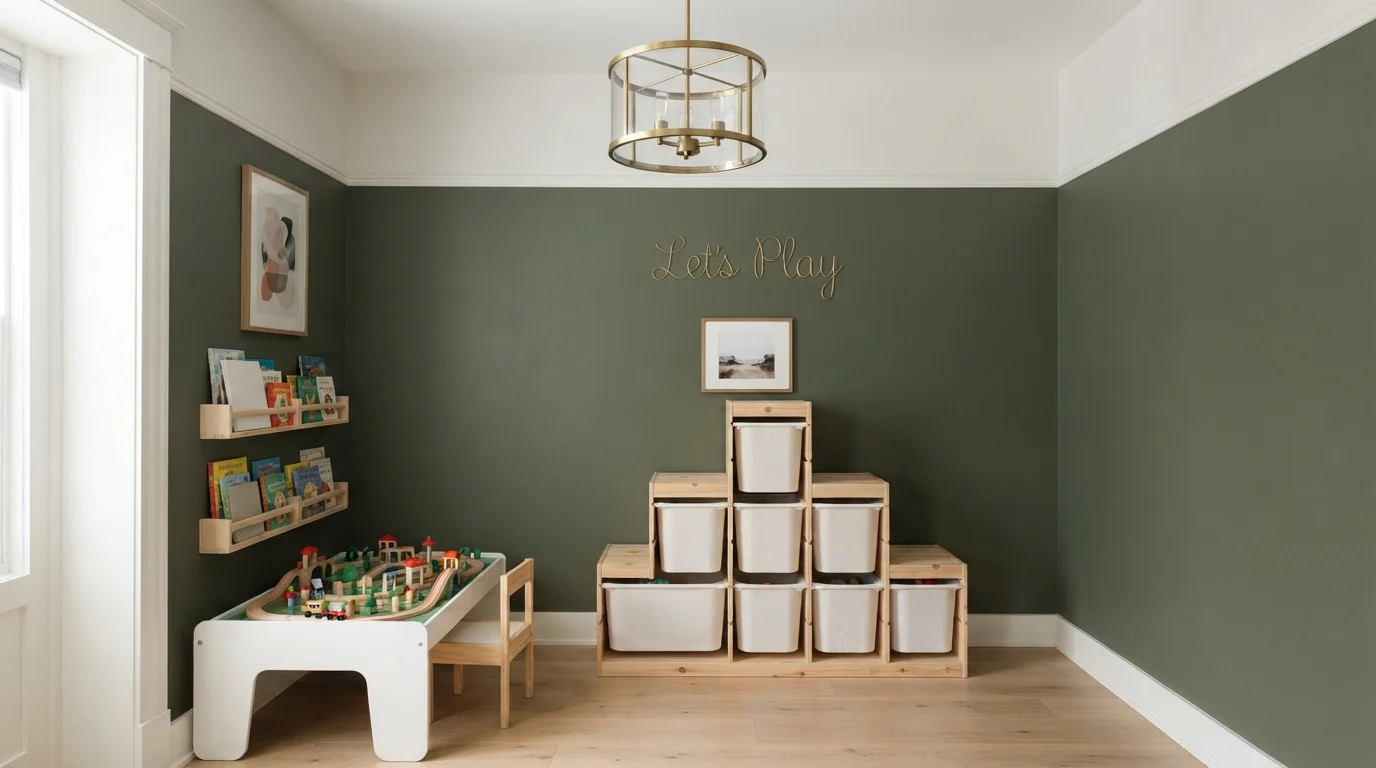
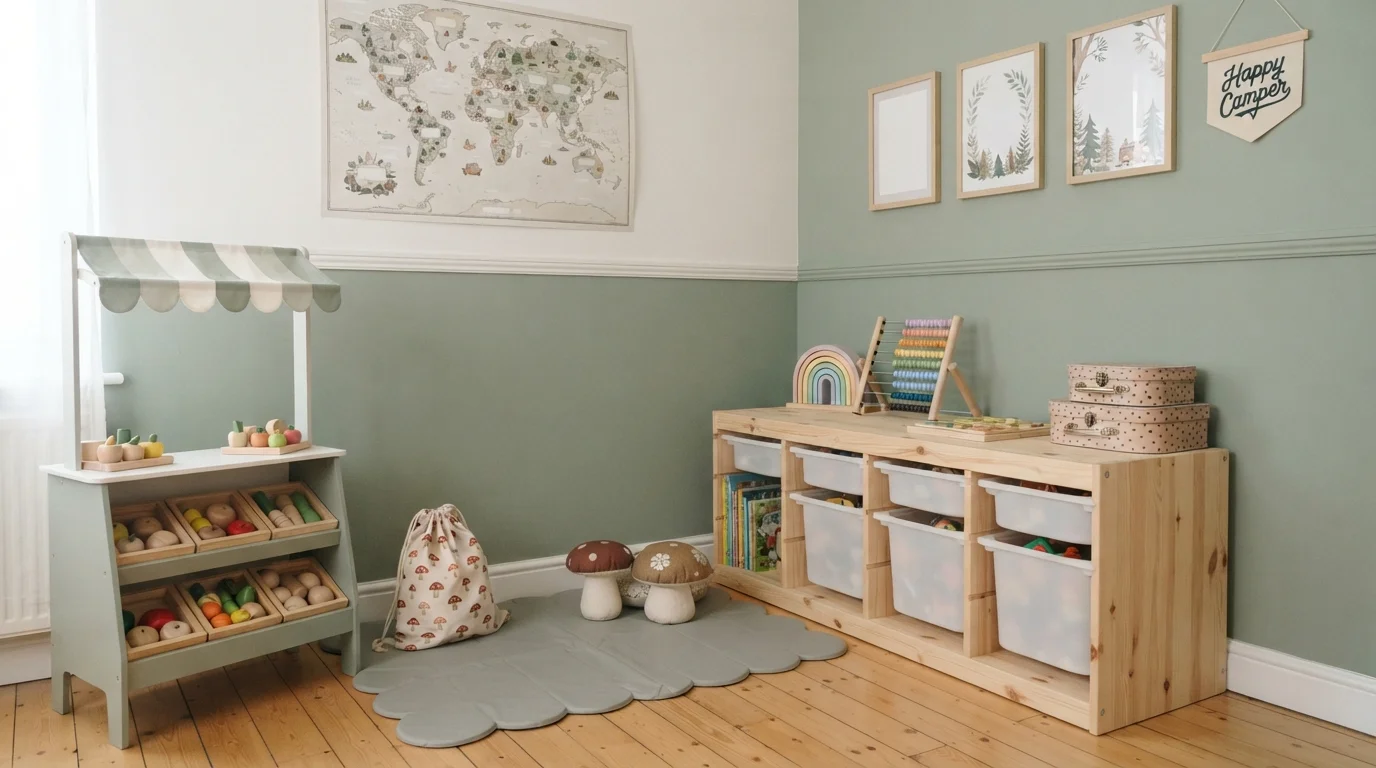
Rich olive green pairs with natural pine storage to create a cozy, grounded corner made for imaginative play.
Olive green is a deep, comforting leafy shade. In this photo, the rich green covers the lower walls up to the picture rail, balanced by crisp white above, natural pine storage cubbies, and a small white activity table. The room feels grounded, tidy, and delightfully snug. The combo works because warm wood tones naturally soften bold botanical greens. It is great for parents who want a playful children's space that blends seamlessly with modern home style.
SEE JURASSIC GREEN ON YOUR WALLS →
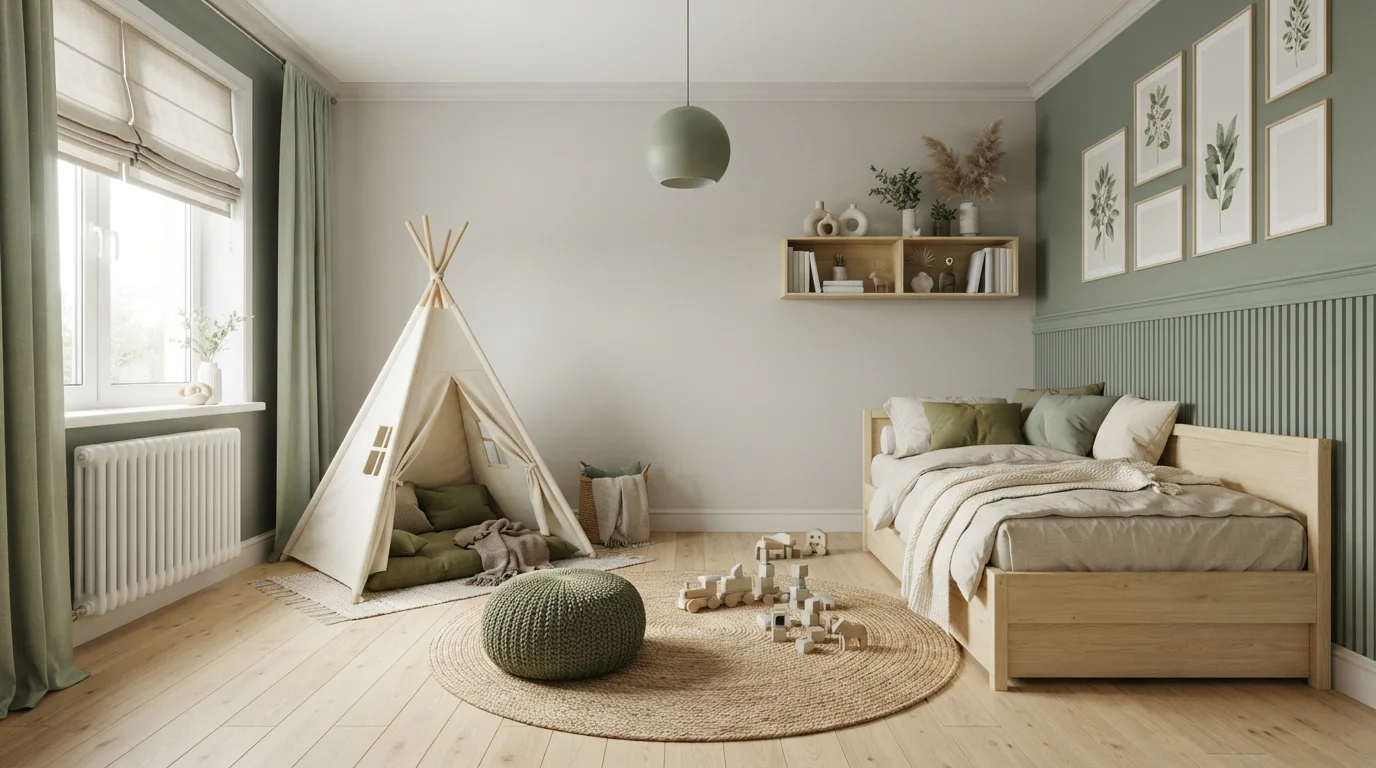
Soft sage walls pair with blonde wood and canvas teepee accents to create an earthy, calming retreat for play and rest.
Sage is a soft, muted leafy green. In this room, the main accent wall wears a gentle sage tone with matching ribbed wainscoting, balanced by warm greige side walls, creamy linens, and blonde wood furniture. The whole space feels peaceful, grounded, and cozy. It works because earthy greens blend effortlessly with natural wood and pale neutrals without overwhelming the room. It is a fantastic choice for anyone wanting a soothing, gender-neutral nursery or playroom that can easily grow with a child.
SEE KALE ON YOUR WALLS →
Soft muted sage green and warm pine create a gentle, nature-inspired play haven full of quiet woodland charm.
Sage green is a soft, earthy green that brings the calm of nature indoors. In this space, the lower half of the walls wears gentle sage while the top stays creamy white, pairing effortlessly with light pine toy bins and honey wood floors. The room feels cozy, grounded, and peacefully cheerful. The combo works because pairing botanical greens with natural wood tones creates an organic, restful look that never feels chaotic. It is ideal for anyone designing a soothing, gender-neutral nursery or toddler playroom.
SEE SUMMER'S DAY ON YOUR WALLS →
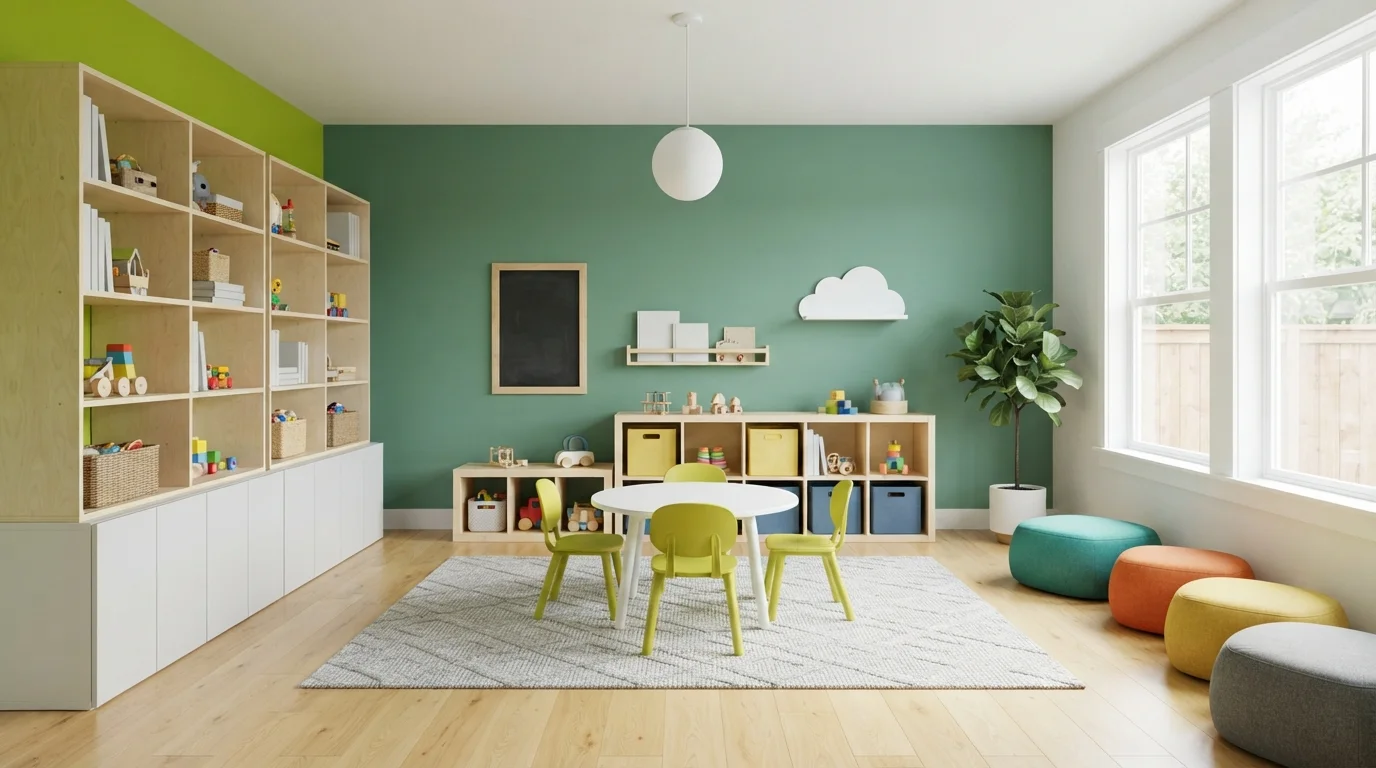
Sunlight streams across soft greens, sunny yellows, and natural wood to make an uplifting, joyful space for creative play.
Meadow green is a soft, refreshing nature green. In this cheerful playroom, cool leaf green coats the main back wall, paired with a zippy lime accent wall on the left. Light birch wood shelving and sunny yellow play chairs surround a crisp white round table over a soft grey rug. The room feels vibrant, tidy, and full of welcoming energy. Mixing botanical greens with warm blonde wood and primary accents keeps the space playful without feeling messy. It is perfect for anyone designing a happy family craft room or kids' zone.
SEE SYCAMORE GROVE ON YOUR WALLS →
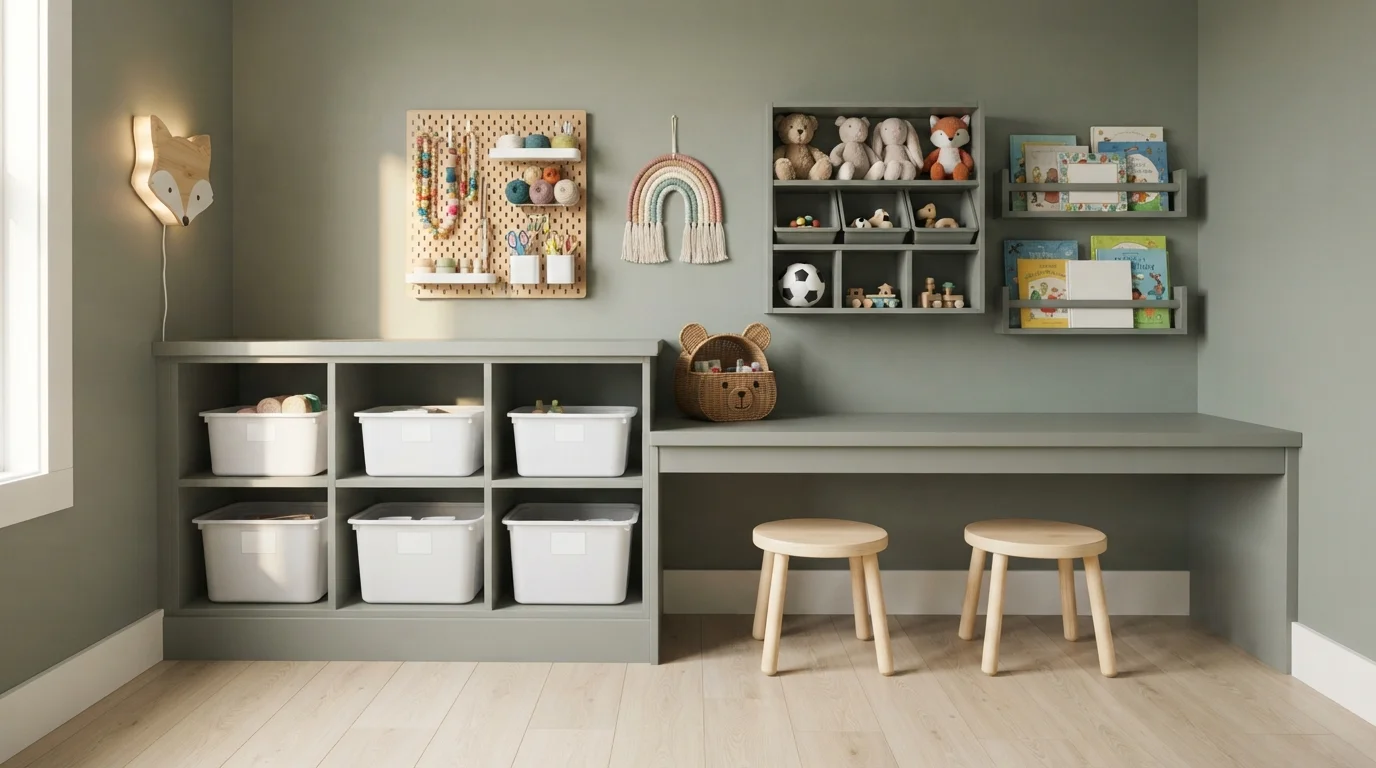
Soft sage green wraps this tidy play nook, pairing calming nature-inspired color with light blonde wood accents.
Sage green is a soft, earthy grey-green with a tranquil feel. In this corner, the walls, floating book rails, pegboard, and low storage desk are drenched in the same gentle green, framed by crisp white baseboards and pale wood stools. The space feels calm, tidy, and snug. This pairing works because soft forest tones and pale natural woods effortlessly mimic the outdoors. It is perfect for anyone wanting a serene, clutter-free study corner where kids can focus and play without feeling overwhelmed.
SEE EXPLORER GREEN ON YOUR WALLS →Green Playroom Wall Color Combinations
A wall color never works alone. These are the full schemes from the rooms above — the lead color first, then the supporting colors that make the photo work.
Soft sage green and warm natural woods create an inviting, serene reading nook built for little explorers.
TRY THIS PALETTE →Soft sage tongue-and-groove paneling pairs with warm cream walls and natural wood toys to create a soothing, imaginative nook.
TRY THIS PALETTE →Lush forest green walls and playful hanging leaf canopies turn this corridor into a whimsical nature retreat.
TRY THIS PALETTE →Rich woodland green walls and natural pine create an imaginative, cozy nook perfect for quiet play and storytelling.
TRY THIS PALETTE →For a straightforward, grows-with-them playroom, pair Fresh Apple walls with plain white or off-white trim and let the natural wood tone of shelving or a play kitchen do the rest of the work — the room stays bright without needing a third color. If the room has a jungle or nature theme, Scotch Lassie walls read best against warm wood tones (a wood toy chest, a rattan storage bin) with black or dark bronze hardware picking up its teal-leaning depth; white trim keeps it from getting heavy.
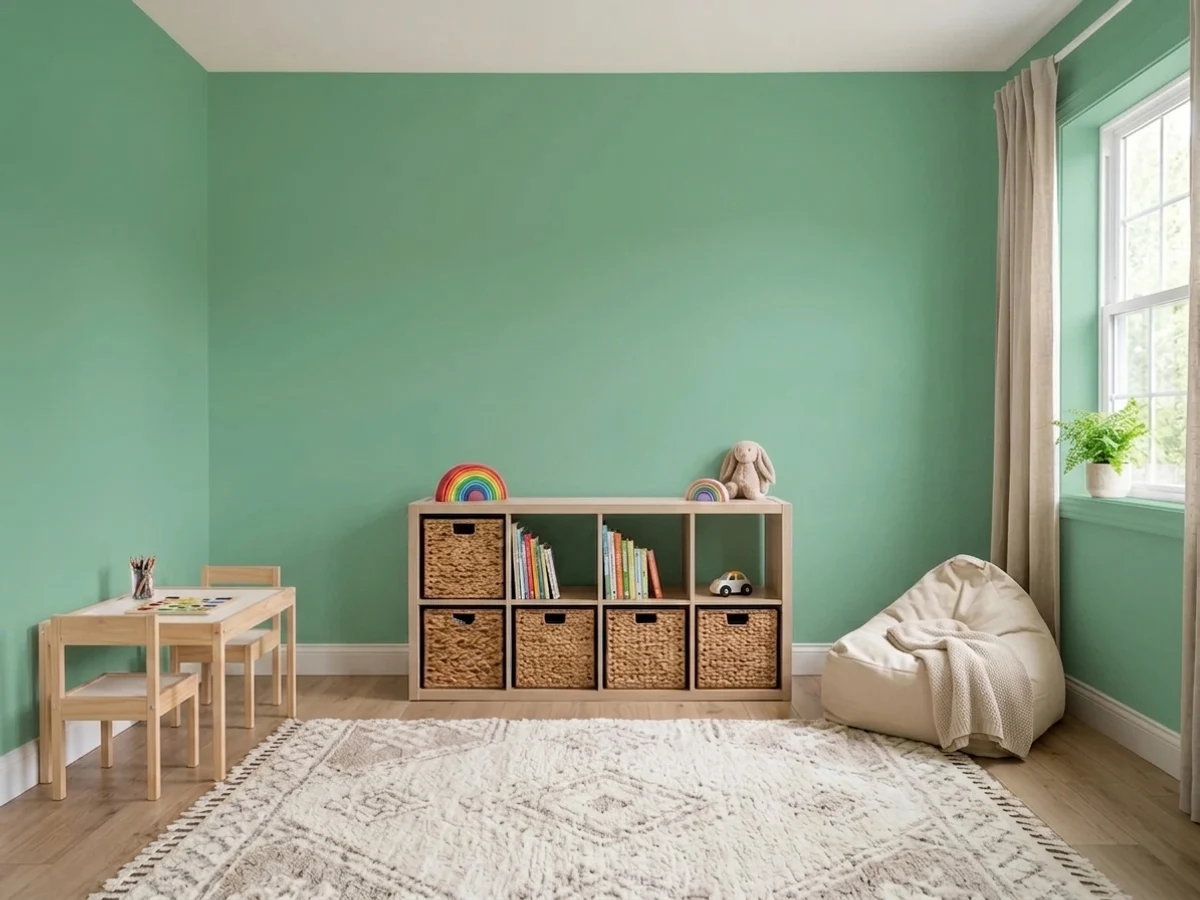
Julep works well as the wall color in a room where you want one saturated accent and everything else quiet — keep furniture and storage neutral (white, natural wood, light gray) so the mint green stays the statement. Avocado Toast is built to disappear a little: pair it with warm neutrals and let a rug or toy bins carry the bright color instead. Black Emerald pairs best with warm wood and brass or matte black hardware on the one wall or nook it covers, with the rest of the room kept in white or a lighter green like Fresh Apple so the dark accent has something to contrast against.
More Playroom Color Ideas
Set on a color family already? Each page has its own real rooms and picks.
Light or Dark Green Playroom Colors?
Go Light (LRV 60+) If…
The room is small, faces north, or has to work at every hour. Light warm colors make it feel bigger and stay calm in evening light — the light you actually live in.
Go Dark (LRV Under 20) If…
You want the cocoon effect and the room has real daylight. Dark works best on one feature wall — or fully color-drenched in a large room with good windows.
In a playroom, LRV decides how much the color reads as background for toys versus the main event. Fresh Apple's LRV 42 is the safest bet for a room with one window or northern light — it's saturated enough to feel like a real color choice but still bounces enough daylight that the room doesn't need extra lamps switched on by mid-afternoon. Julep's LRV 32 asks for more natural light to stay lively; in a dim basement playroom it can go slightly flat by late afternoon, so pair it with bright white trim and good overhead lighting rather than relying on windows alone.
Black Emerald is the one pick on this page built for a small dose, not a whole room. At that low an LRV, four full walls in a playroom with limited daylight will read more like a closet than a fort. Used on one wall, a built-in nook, or trim around a play tent corner, it does the opposite — it makes that one spot feel enclosed and cozy on purpose, which is exactly what kids want from a hideout.
See It. Love It.
Paint It.
Upload one photo of your green playroom and try every color on this page on your own walls — in your own light, before you buy a drop of paint.

Fresh AppleBeforeWhere To Use Each Green In A Playroom
Whole-room greens and accent greens do different jobs, and mixing them up is the most common mistake on this page. Fresh Apple, Julep, and Avocado Toast are all light enough in LRV to cover every wall without the room feeling closed in — pick between them based on how bright you want the room to feel, not on theme.
Scotch Lassie can go either way: full room for a committed jungle theme, or one wall if you want the saturation without the commitment. Black Emerald should almost always be an accent — a reading nook, a fort corner, or trim and built-ins rather than four full walls, since a playroom needs enough reflected light for kids to actually see what they're building or drawing.
Sheen And Finish For Playroom Walls
Playroom walls take crayon, marker, food, and the occasional thrown toy, so the finish matters as much as the color. A washable satin is the standard choice — it wipes clean without the glare of semi-gloss, which shows every roller mark and wall dent under playroom lighting.
This is part of why Black Emerald earns a spot on this page: a dark, saturated color already hides scuffs and marker ghosting that a light color like Fresh Apple will show even after wiping. If the room gets heavy crayon use, painting the lower few feet of a light-green wall in a washable finish (or adding a chalkboard or whiteboard panel) saves more repainting than any single color choice.
Common Mistakes With Green Playrooms
The biggest mistake is picking two bright, saturated greens for the same room — Julep and Scotch Lassie together, for example, fight each other instead of layering. Choose one saturated green as the lead and keep everything else (trim, furniture, a second wall) neutral or in a much lighter shade of the same family.
The second mistake is painting Black Emerald across a whole small playroom with limited windows — it reads as a closet rather than a cozy fort without enough ambient light to balance it. The third is skipping a washable finish altogether; even a color chosen specifically to hide marks, like Black Emerald, still needs a wipeable sheen so spills and glue don't leave a permanent stain.
About Green Playroom Paint Colors
Green is one of the few colors that works at every age and stage of a playroom, and this page's picks show why. Fresh Apple (Behr P360-6, LRV 42) is the anchor: a true, mid-tone green with enough LRV to keep the room from feeling flat, and it reads as green without tipping into a specific theme, so it doesn't age out when the kids move from blocks to board games.
The rest of the picks stretch in both directions from there. Julep (Sherwin-Williams SW 6746, LRV 32) is a minty, slightly cooler green that keeps the room feeling bright and energetic without the sugar-rush intensity of a true grass green. Scotch Lassie (Behr 480D-5) is more saturated and leans toward teal, which is the pick to reach for if the room has a jungle or nature theme going and needs a green that can hold its own against leaf wallpaper or animal decals. Avocado Toast (Clare) sits at the calm end — a warm, muted green built for playrooms that open onto a living room or kitchen, where the goal is a wall that doesn't compete with the toys.
Black Emerald (Sherwin-Williams) is the outlier and it's meant to be: a near-black, deeply saturated green for a fort corner or reading nook rather than the whole room. It's the pick for parents who are tired of repainting scuffed white or pastel walls, since a color this dark simply doesn't show crayon and shoe marks the way a light green does.
The Questions Everyone Asks
What color should I paint my green playroom?
If you want one answer, start with the safe picks above — Shallot Bulb, Inland, Sycamore Tree, Jurassic Green. They read well in any light and survive furniture changes. Then check the light: strong afternoon sun wants a step cooler, a north-facing room wants a step warmer.
is green a good color for a playroom?
Yes — green is one of the few colors that works across ages and doesn't read as strongly gendered as pink or blue, which is why it shows up so often in playroom advice. A mid-tone pick like Fresh Apple (Behr P360-6) works as a true green that isn't tied to a specific theme, so it doesn't need repainting as kids get older.
should a playroom be painted a bright or dark color?
Most playrooms do better with a brighter green as the main wall color — Fresh Apple or Julep both keep enough daylight bouncing around the room for kids to see what they're doing. Save a dark green like Black Emerald for one wall or a fort nook; four dark walls in a room with limited windows can feel closed-in rather than cozy.
what green paint hides scuffs and marker best in a playroom?
Black Emerald (Sherwin-Williams) is the pick for that job on this page — its near-black depth already hides crayon ghosting and shoe scuffs that show up fast on a lighter wall. Pair any color with a washable satin finish, since even a dark, forgiving color like this one still needs a wipeable sheen to handle glue and marker.
will kids outgrow a green playroom?
Less than most colors — green doesn't carry the same age cutoff that bright primary colors or licensed-character palettes do. A neutral-leaning green like Fresh Apple or Avocado Toast (Clare) reads as calm and grown-up enough to relabel as a study or hobby room later, without repainting.
should I paint the whole playroom green or just an accent wall?
It depends on the shade. Fresh Apple, Julep, and Avocado Toast are all light enough to cover every wall without the room feeling small. Scotch Lassie (Behr 480D-5) works either way depending on how committed the jungle theme is, and Black Emerald is best kept to one wall, a nook, or trim rather than the whole room.
What two-color combination works best in a green playroom?
The reliable pattern is a quiet main color plus one deep accent on a single wall. Keep trim and ceiling in one warm white so the two colors are the only event in the room — the combination cards above show complete schemes from real rooms.
What colors make a green playroom look bigger?
High-LRV, slightly warm colors — LRV 60–75 is the sweet spot. Paint the walls and trim close to the same light color so the corners blur, and keep the ceiling white. Stark cool white actually works against you; it creates hard shadows that show the room's edges.

Ask a Question