Room colors · Green Dining Room

8 Best Green Dining Room Paint Colors for 2026 Ideas, combinations, and real rooms.

8 curated picks from real green dining rooms, with the exact colors, honest reasons why, and the combinations that hold the room together.

Jessica Williams · Color Stylist & Interior EditorFormer interior stylist who can spot a green undertone from across a room. Jessica writes the color and mood pieces — what to choose, what pairs, and why your "white" looks pink.
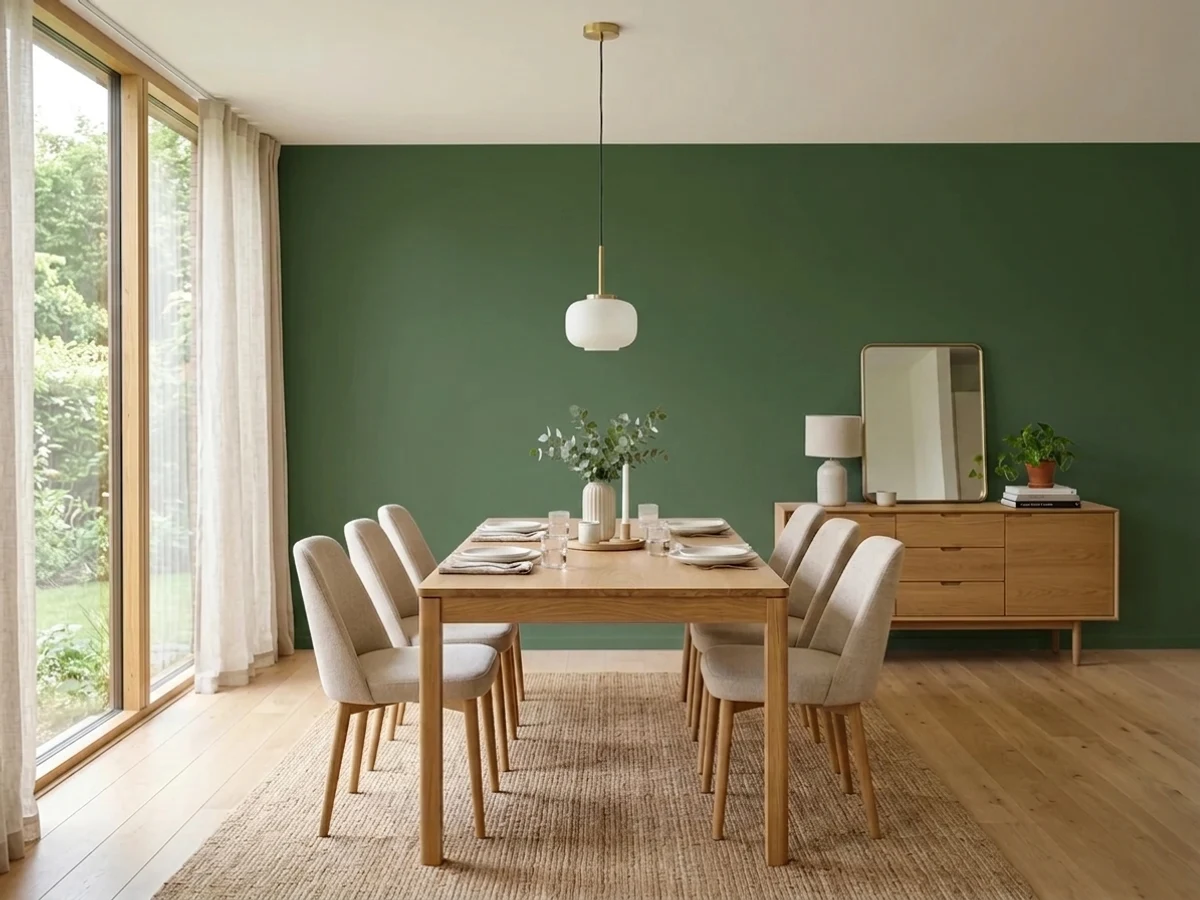
Room painted in Royal OrchardRoyal OrchardTry it in your room →
Top picks · see them in a room

Top Picks for the Green Dining Room

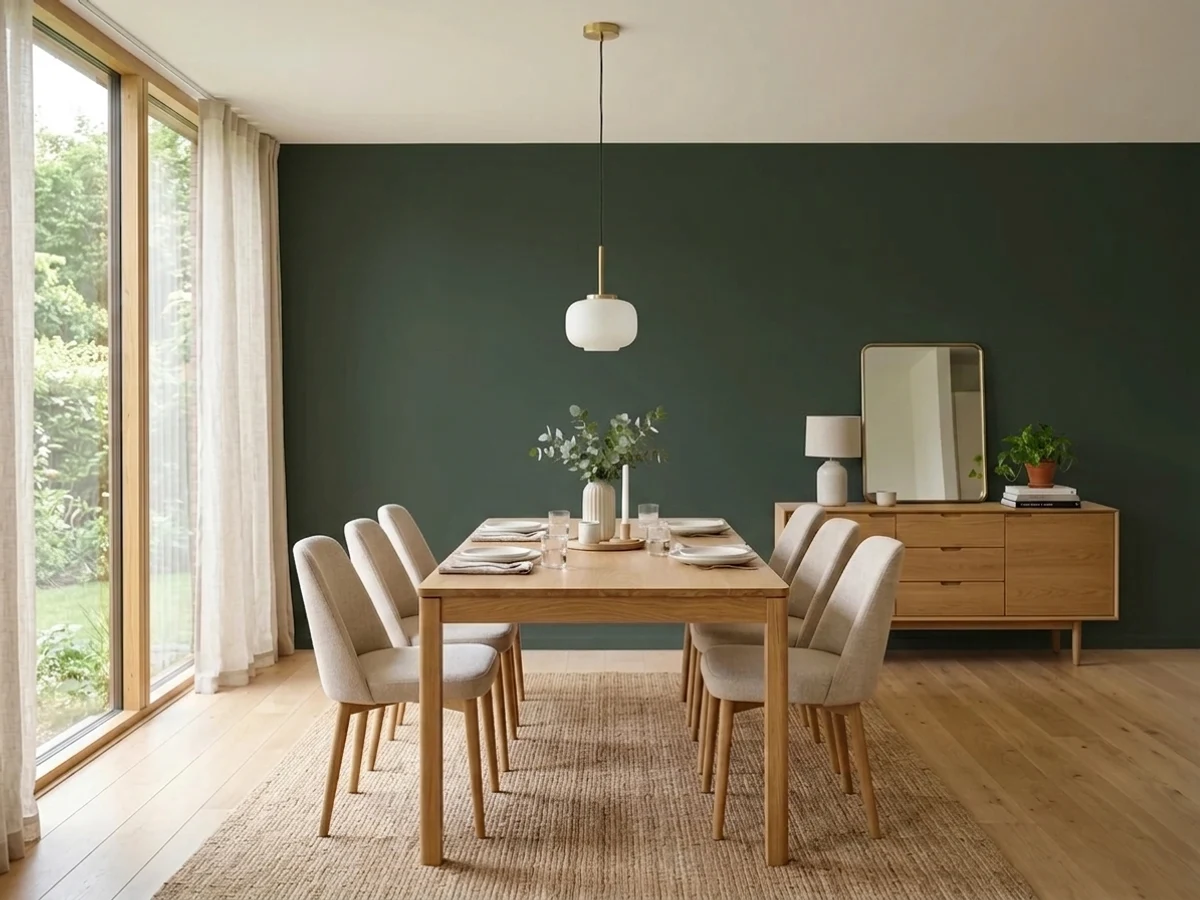
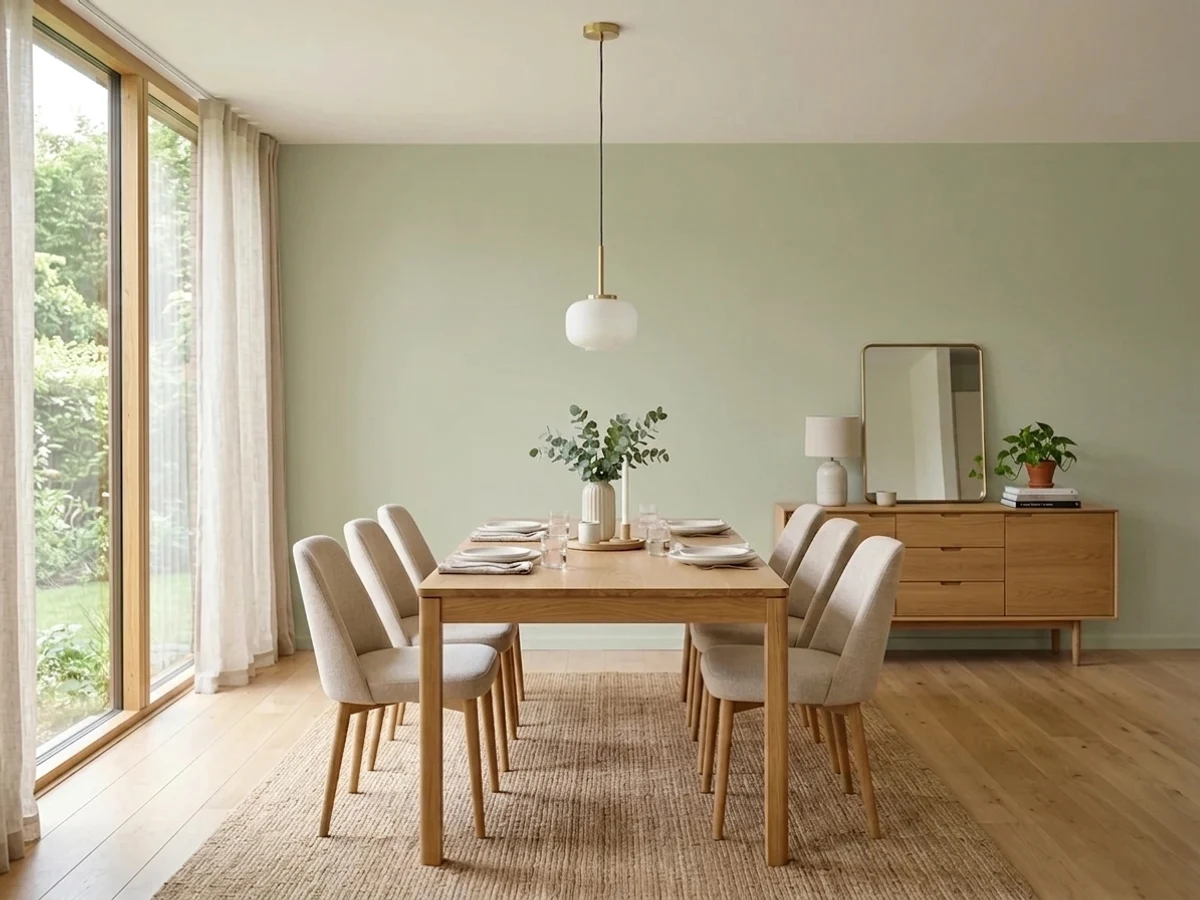
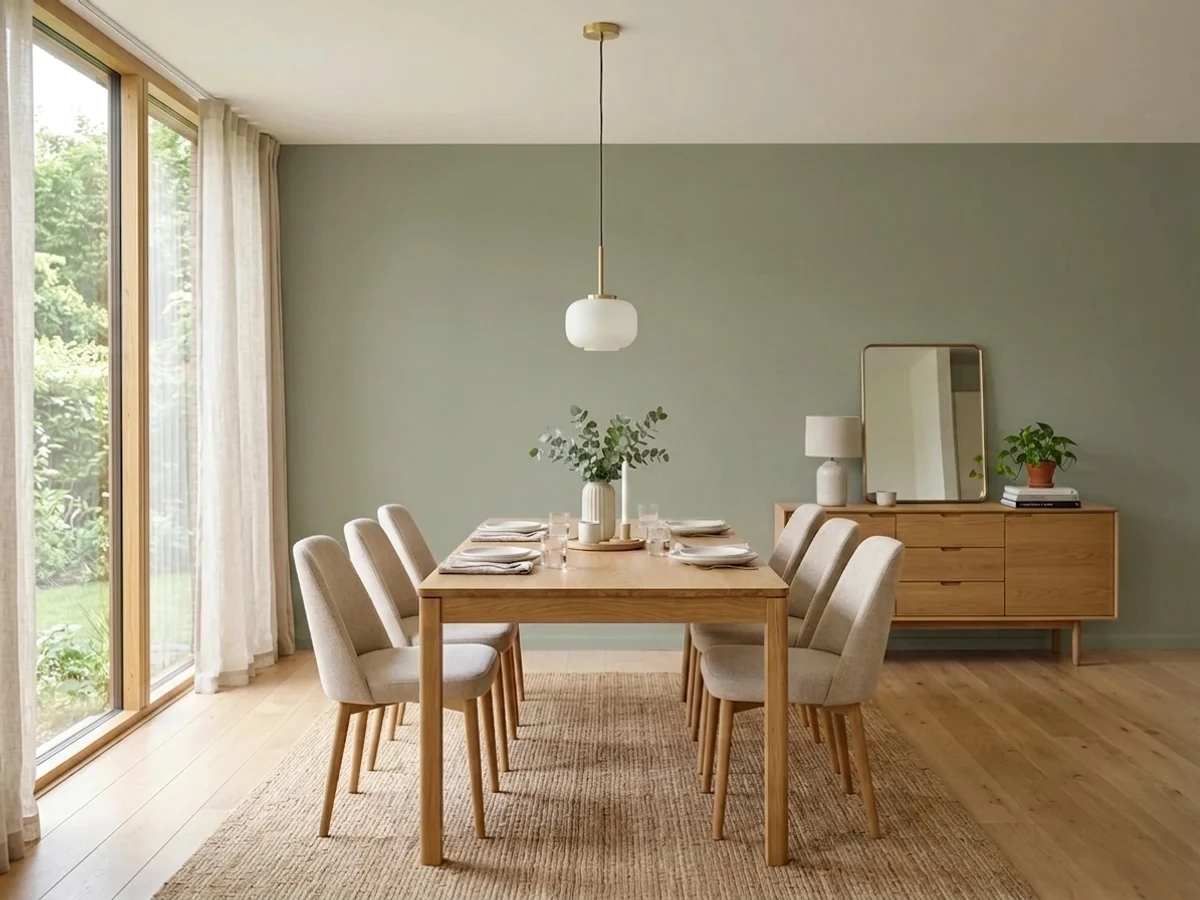
Tap a shade to see the green dining room in it, then try it on your own room.

Royal Orchard
#3F5938

Editorial dining-room green; reads moody under candlelight.

See it in your room
Curated, in order

The 8 Best Green Dining Room Paint Colors

Every pick below is a real rendered green dining room, not a chip. The lead color first; the swatches are the full scheme in the photo: walls, furniture, textiles, accent.

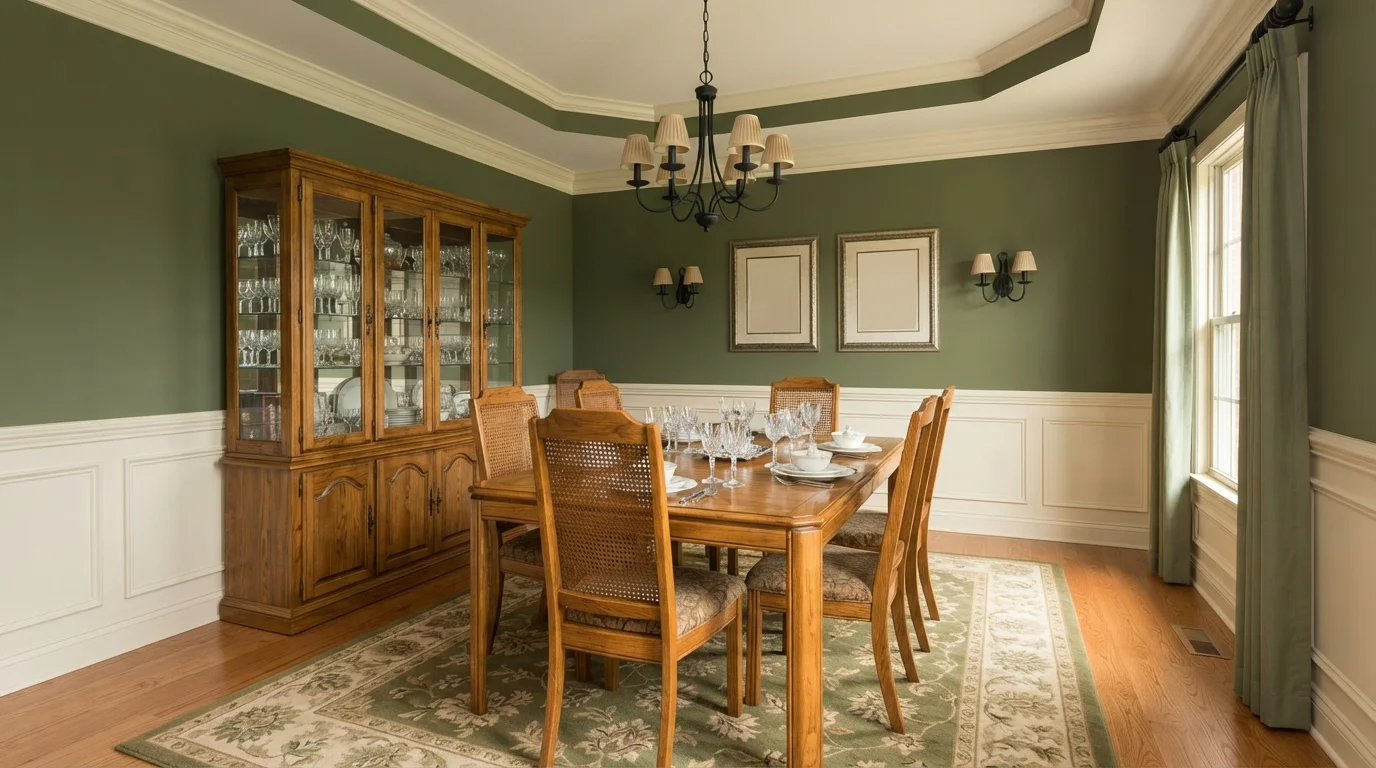
Moss Green Gathering, green dining room painted in Dill Pickle1
Dill PickleDunn-Edwards · Moss Green Gathering

Rich mossy green walls paired with classic warm wood and soft cream wainscoting create an inviting, timeless dinner setting.

Moss green is a rich, earthy green with cozy warmth. In this dining room, deep olive green coats the upper walls above crisp cream wainscoting, joined by honey-toned wood furniture and a botanical green area rug. The whole room feels grounded, stately, and welcoming for long evening meals. This look works because organic greens effortlessly highlight the natural glow of warm wood tones. It is a fantastic choice for anyone wanting a traditional, heritage dining room that feels comfortable rather than stiff.

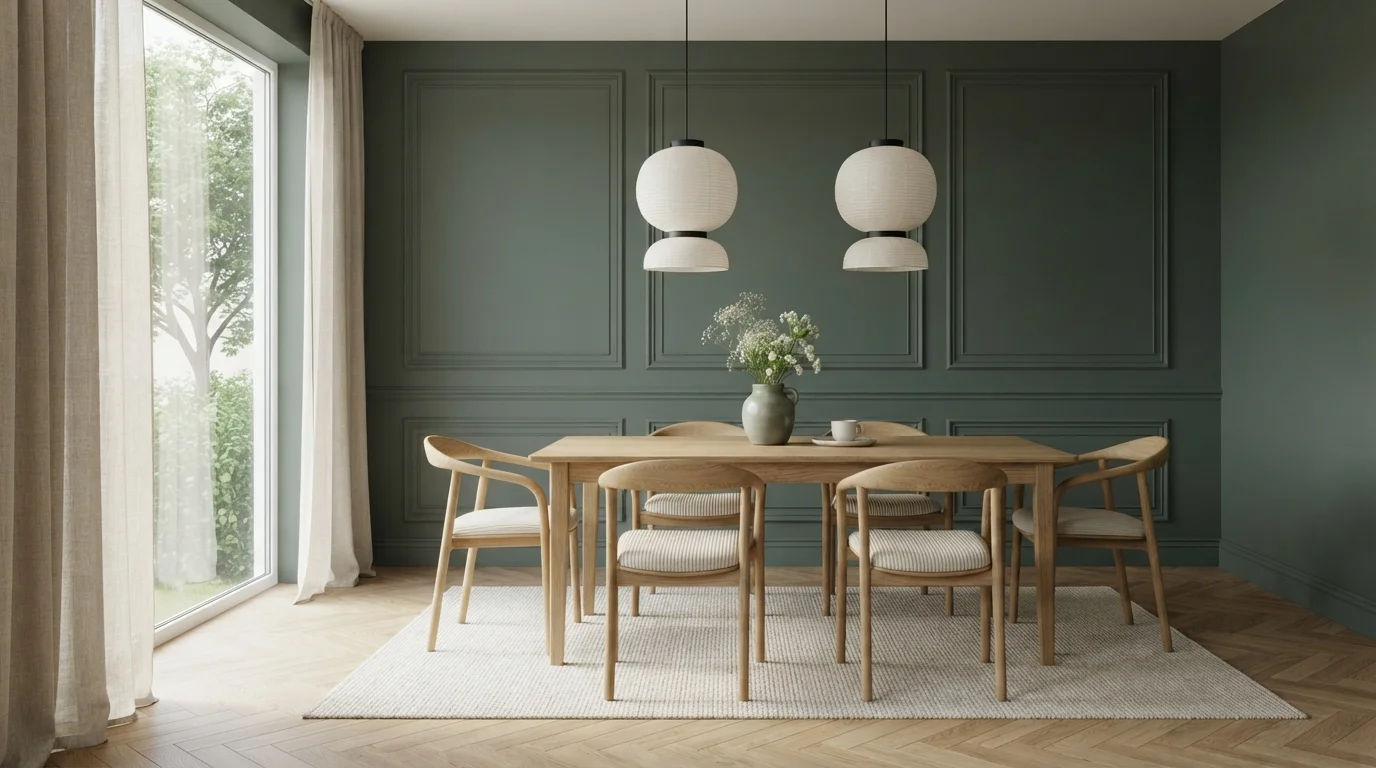
Forest Green Serenity, green dining room painted in Billiard Room2
Billiard RoomValspar · Forest Green Serenity

Rich forest green paneled walls wrap this dining space in calm, perfectly balanced by sunlit oak and gentle linen textures.

Forest green is a deep, grounding botanical shade that brings the outdoors in. In this space, that lush green washes over the elegant paneled walls, setting an earthy backdrop for a light oak dining table, matching curved chairs, and a soft cream rug. The room feels grounded, cozy, and deeply relaxing. Pairing rich foliage tones with warm blonde wood works because organic textures naturally soften deep colors. It is the perfect design for anyone looking to create a calm, nature-inspired space for slow meals and conversation.

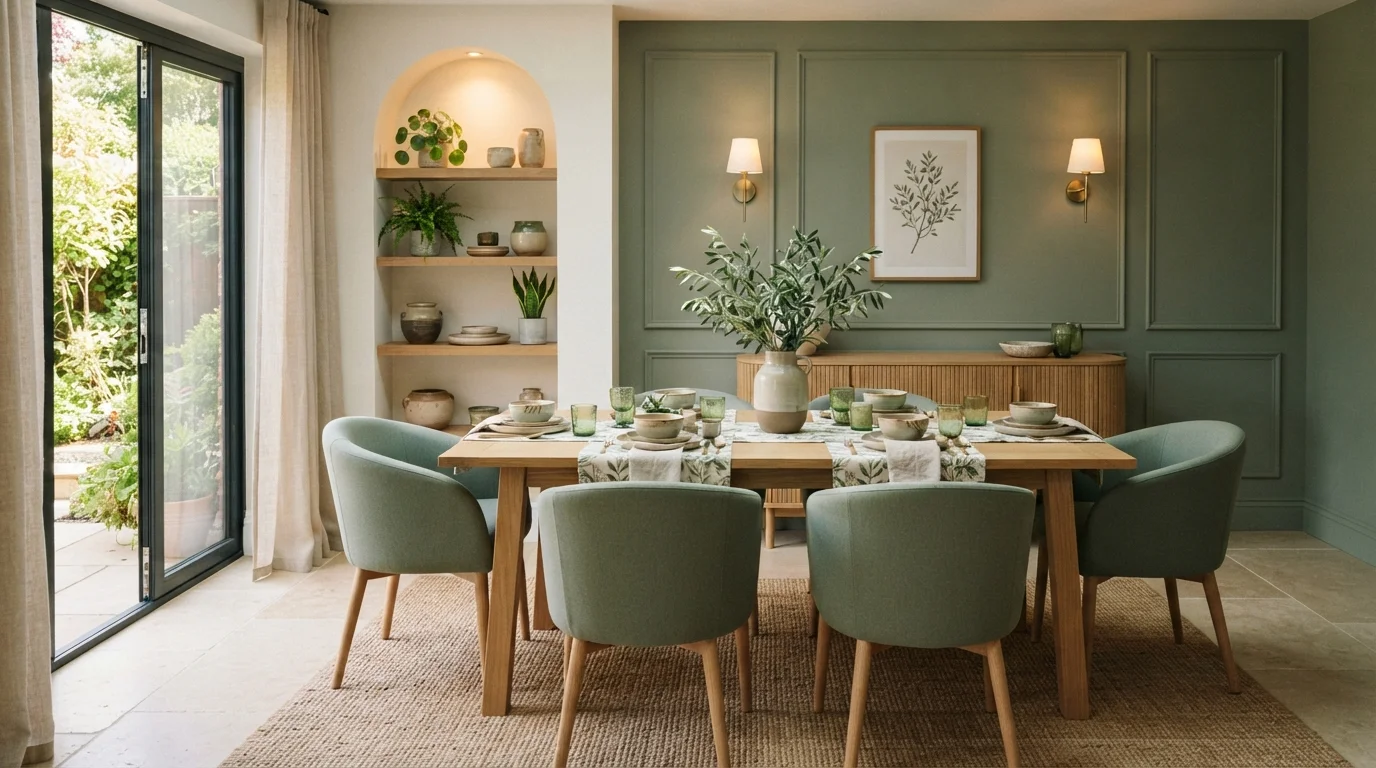
Botanical Sage Haven, green dining room painted in Shallot Bulb3
Shallot BulbBehr · Botanical Sage Haven

Soft sage walls blend with warm natural oak and woven textures to create a grounded, light-filled sanctuary for shared meals.

Sage green is a gentle, soothing gray-green inspired by garden herbs. In this dining room, muted sage flows across the paneled walls and arched display niche, echoed by matching fabric dining chairs around a light oak table and woven jute rug. The room feels incredibly calm, airy, and grounded. Pairing nature-inspired greens with blonde wood and wicker brings the outdoors in seamlessly. It is ideal for anyone who loves an organic, relaxed style that feels elegant yet deeply comfortable.

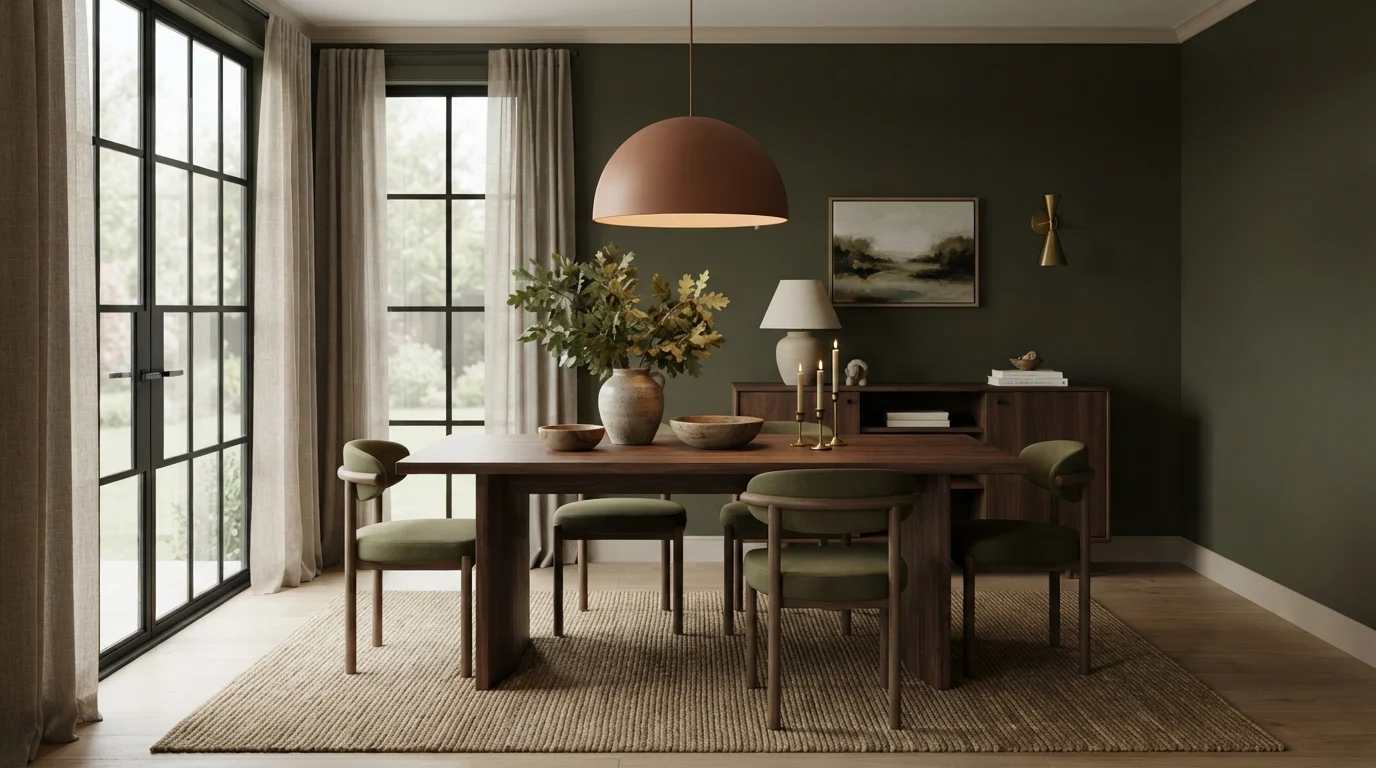
Olive and Walnut Dining, green dining room painted in Classic Bronze4
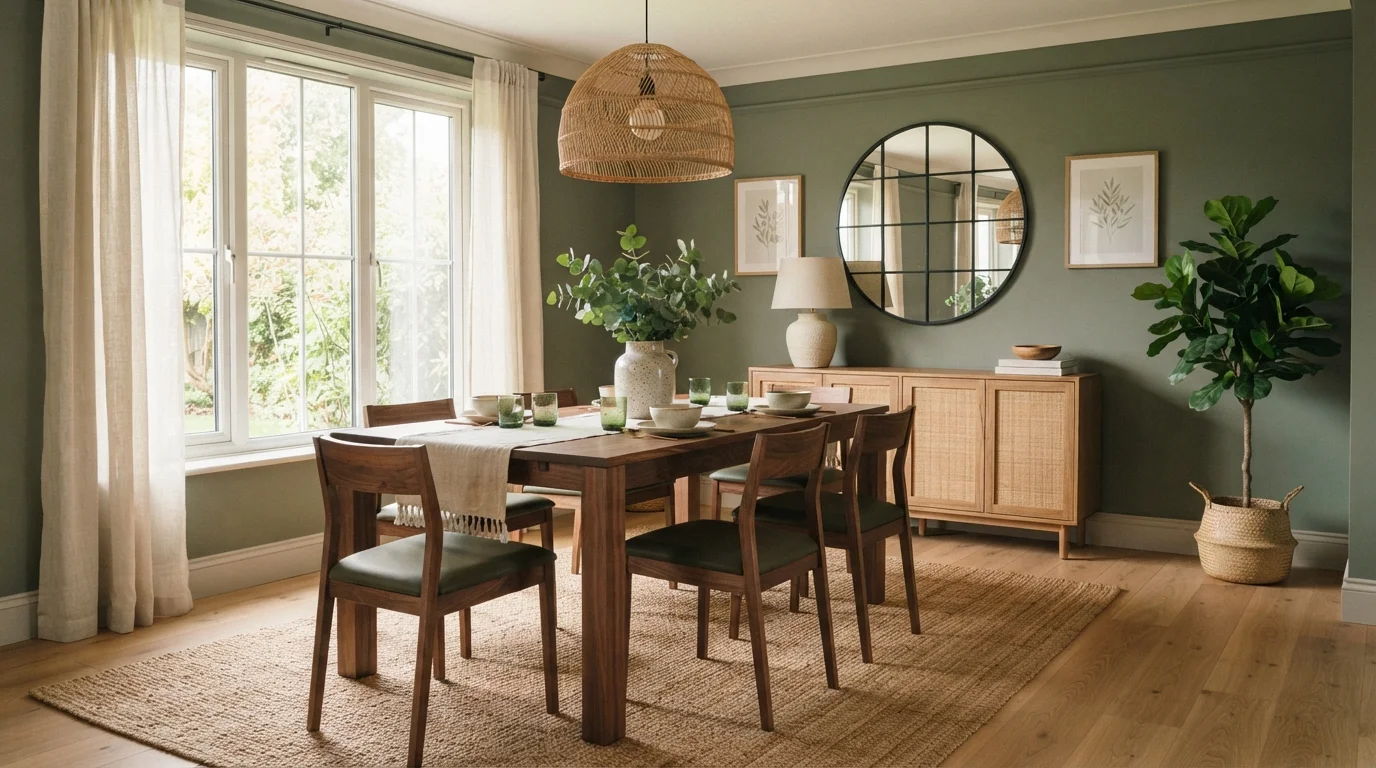
Classic BronzeBehr · Olive and Walnut Dining

Deep moss green walls and rich walnut wood create an intimate, candlelit dining space wrapped in organic warmth.

Olive green is a deep, earthy moss tone that brings the outdoors inside. In this space, rich green walls frame a dark walnut table, soft olive dining chairs, and a thick woven jute rug. The room feels snug, grounded, and deeply relaxing. The combination works because earthy greens and rich natural woods inherently complement each other without clashing. It is a fantastic look for anyone who loves calm, organic spaces designed for relaxed dinner parties.

Sage Organic Dining, green dining room painted in Cambridge Green5
Cambridge GreenBenjamin Moore · Sage Organic Dining

Dappled sunlight filters across muted green walls and warm timber furniture, creating a calm, nature-inspired gathering space.

Sage green is a soft, earthy grey-green that feels grounded and tranquil. Here, muted sage coats the accent wall, pairing naturally with rich walnut dining furniture, olive-cushioned chairs, and a textured jute rug underfoot. The space feels gentle, peaceful, and wonderfully connected to the outdoors. Naturals always go together, so earthy greens and warm wood grain create an effortless balance without ever feeling overwhelming. It is perfect for anyone who wants a relaxed, modern farmhouse or boho look for everyday meals.

Olive and Wainscoting Nook, green dining room painted in Tuscan Olive6
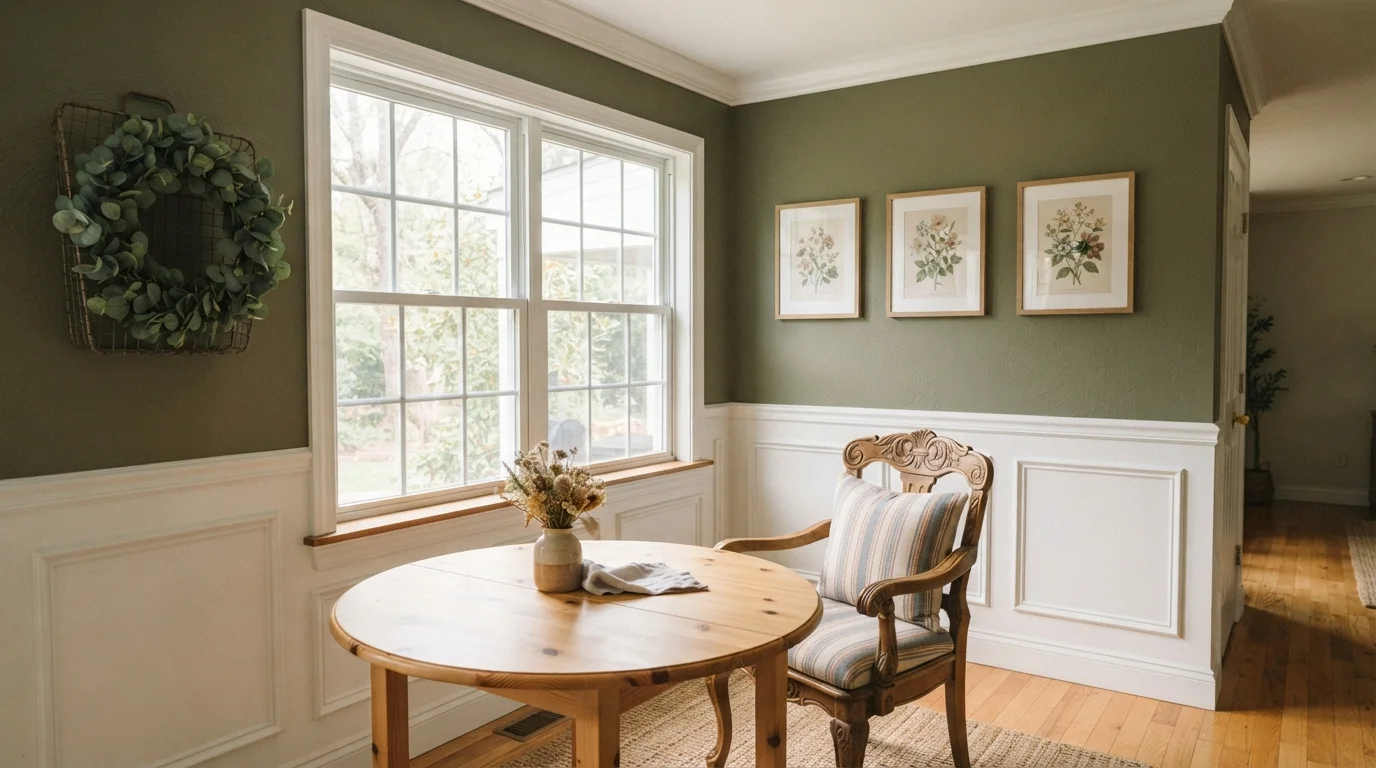
Tuscan OliveDutch Boy · Olive and Wainscoting Nook

Deep olive walls paired with classic white wainscoting create an earthy, peaceful corner filled with garden-inspired charm.

Olive green is a rich, earthy moss green. In this space, the upper walls wear a soothing coat of olive, anchored below by bright white picture-frame wainscoting. A simple pine dining table and a carved wooden armchair rest on warm hardwood floors, complemented by framed botanical prints. The room feels grounded, peaceful, and snug. The crisp white molding gives the deep green breathing room, keeping the whole corner feeling fresh and bright. It is great for anyone who loves cozy, nature-inspired cottage style.

Sage & Warm Wood, green dining room painted in Wright Quiet Green7
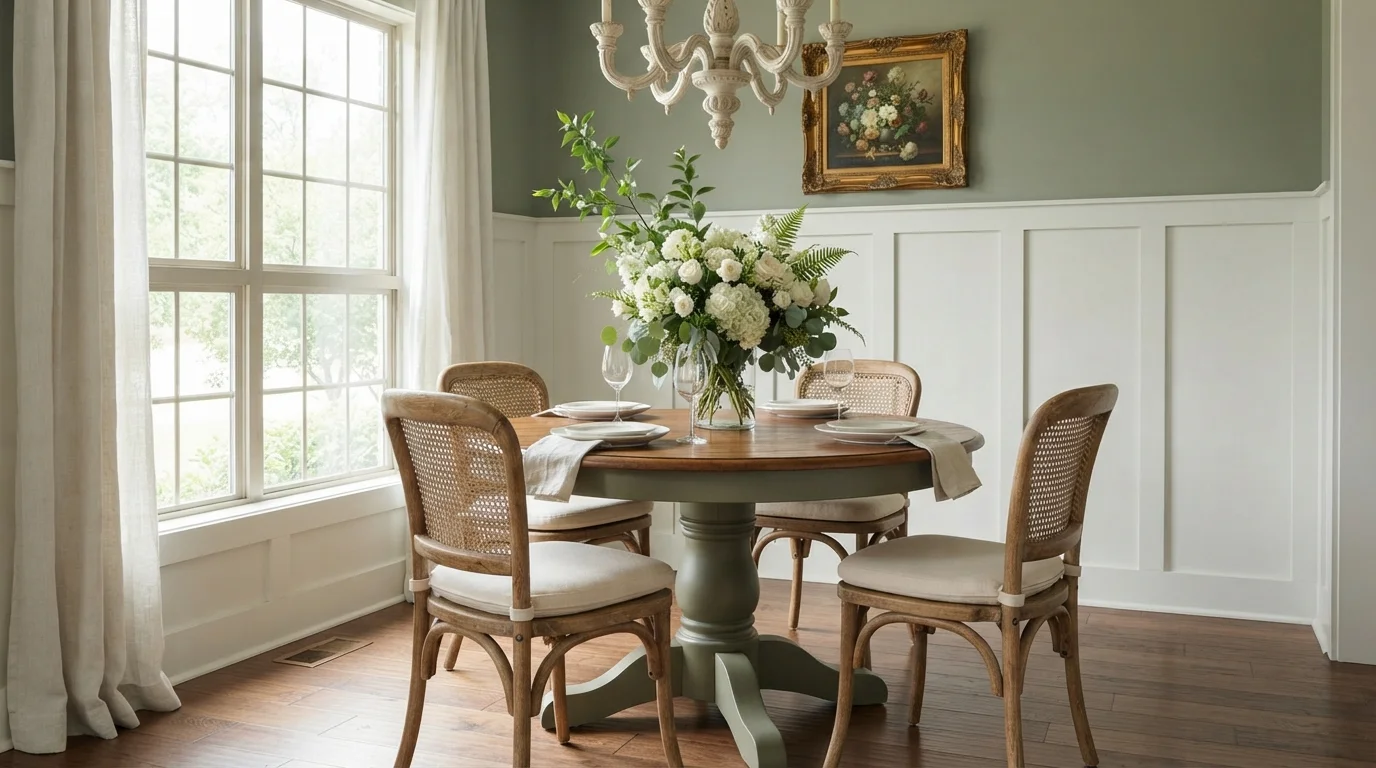
Wright Quiet GreenPPG / Glidden · Sage & Warm Wood

Soft earthy greens and rich wood tones create a calm, vintage-inspired dining space bathed in gentle natural light.

Sage is a soft, muted earthy green with relaxing gray qualities. In this dining nook, gentle sage covers the upper walls while crisp white wainscoting runs below, framing a round wood-topped table and curved wooden chairs. The space feels deeply peaceful, cozy, and timeless. This combination works because earthy greens naturally complement warm mid-tone woods and creamy white fabrics. It is a perfect look for anyone who loves relaxed cottage charm mixed with traditional elegance.

Earthy Sage Dining Room, green dining room painted in Fern Gully8
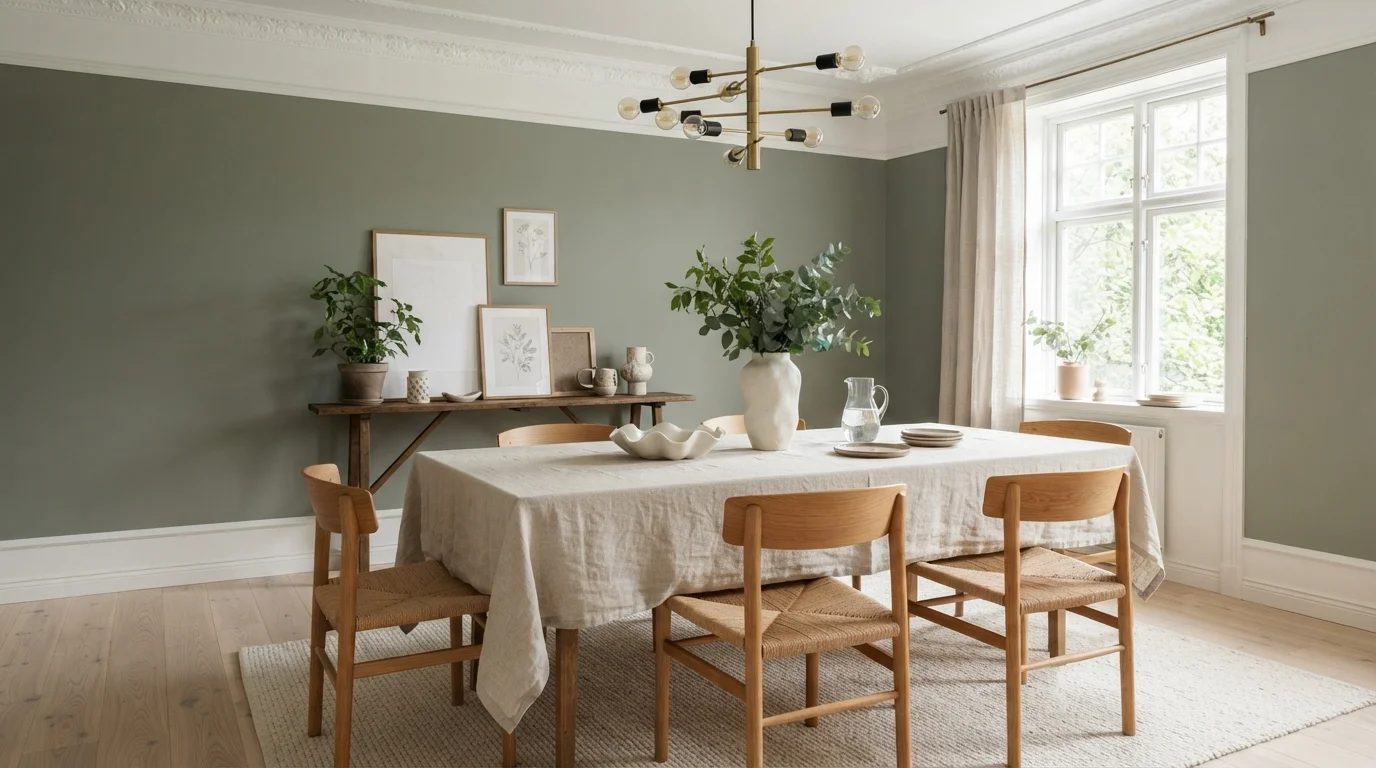
Fern GullyKompozit · Earthy Sage Dining Room

Soft sage walls paired with warm oak chairs and natural linen create an airy, grounded gathering space.

Sage green is a soft, earthy grey-green that brings a peaceful outdoor vibe inside. In this dining space, muted sage covers the walls, balanced by warm oak chairs, a relaxed linen tablecloth, and a pale woven rug. The entire room feels calm, airy, and grounded. This combination works because the golden wood tones and crisp white ceiling keep the herbal green looking fresh and bright. If you want a nature-inspired dining area that feels casual yet refined, this look is perfect for you.

Combinations

Green Dining Room Wall Color Combinations

A wall color never works alone. These are the full schemes from the green dining rooms above: the lead color first, then the supporting colors that make the photo work.

All dining room palettes
Moss Green Gathering
WallsDill Pickle
TrimWhite Rock
TableHearth Gold
WallsDill Pickle · · LRV 16
TrimWhite Rock · · LRV 81
TableHearth Gold · · LRV 20

Rich mossy green walls paired with classic warm wood and soft cream wainscoting create an inviting, timeless dinner setting.

Try this palette in your room
Forest Green Serenity
WallsBilliard Room
CeilingAnonymous
TableEarthy Ocher
WallsBilliard Room · · LRV 9
CeilingAnonymous · · LRV 70
TableEarthy Ocher · · LRV 36

Rich forest green paneled walls wrap this dining space in calm, perfectly balanced by sunlit oak and gentle linen textures.

Try this palette in your room
Botanical Sage Haven
WallsShallot Bulb
AccentDark Sage
ChairNorthern Green Woods
WallsShallot Bulb · · LRV 24
AccentDark Sage · · LRV 17
ChairNorthern Green Woods · · LRV 25

Soft sage walls blend with warm natural oak and woven textures to create a grounded, light-filled sanctuary for shared meals.

Try this palette in your room
Olive and Walnut Dining
WallsClassic Bronze
TrimWheat Sheaf
TableDeeply Deanna
WallsClassic Bronze · · LRV 10
TrimWheat Sheaf · · LRV 67
TableDeeply Deanna · · LRV 7

Deep moss green walls and rich walnut wood create an intimate, candlelit dining space wrapped in organic warmth.

Try this palette in your room

Salamander pairs two ways depending on how formal the room should feel. With bright white trim and a painted wainscoting cap, it turns into a jewel-box dining room — classic, a little dramatic, works with a dark walnut or mahogany table. Skip the white trim and run Salamander wall-to-ceiling with only the wood table and a brass or black chandelier breaking it up, and the room reads more like a modern moody dining room than a traditional one.

For the lighter picks, keep trim simple: Saybrook Sage or Clary Sage with plain white or off-white trim and a light or mid-tone wood floor is the safest, most resale-friendly combination on this page — it reads fresh without needing an accent wall. Dried Thyme was picked specifically for how it sits next to warm wood — a honey oak or walnut table reads calmer against it than against a brighter green. Jadite works best with white trim and warm metal hardware (brass, unlacquered brass, or aged bronze) to lean into its vintage glassware feel rather than a modern one. Thai Curry is the one pick here better used as a single accent wall behind a buffet or in a butler's pantry than as the wall color surrounding the whole table — its warmth competes with green when it wraps a full room.

By color

More Dining Room Color Ideas

Set on a color family already? Each page has its own real rooms and picks.

Depth

Light or Dark Green Dining Room Colors?

Go Light (LRV 60+) If…

The room is small, faces north, or has to work at every hour. Light warm colors make it feel bigger and stay calm in evening light, the light you actually live in.

Go Dark (LRV Under 20) If…

You want the cocoon effect and the room has real daylight. Dark works best on one feature wall, or fully color-drenched in a large room with good windows.

Go lighter — Saybrook Sage (LRV 56), Clary Sage (LRV 41), or Bitter Sage (LRV 40) — if the dining room has one window, sits off a darker kitchen, or does double duty as a home office or homework table during the day. All three bounce enough light to keep the room from feeling boxed in, and they still shift to something cozier once the sun goes down and the room is lit by a fixture instead of daylight. Louisburg Green (LRV 33) is the pivot point: light enough to read as fresh green in daylight, saturated enough to hold its own under lamp light at dinner.

Go darker — Salamander (LRV 5), Dried Thyme (LRV 21), or Jadite (LRV 20) — if the room is used mainly for dinner and already has a light source that isn't just the window: a chandelier, picture lights over art, sconces flanking a buffet. Dark green dining rooms are one of the few places in a house where low LRV is an asset instead of a liability, because the room's job (an evening meal) matches the light it will actually be seen in. The trade-off is daytime use: a home office crammed into a dark green dining room, or a kids' breakfast table in there every morning, will feel dim without adding light fixtures.

Sheen And Finish For Dining Room Walls

Eggshell or satin is the standard for dining room walls in any of these greens — it gives enough sheen to catch chandelier or candlelight without turning into a mirror, and it wipes clean when a glass of red wine or a gravy boat misses the table. Flat paint looks a little more sophisticated in a dark shade like Salamander, since flat swallows light instead of bouncing it, but flat also shows fingerprints and chair-back marks faster near a table people pull chairs in and out of daily.

Trim and any wainscoting or paneling should go semi-gloss regardless of which green is on the walls — it's the durability difference that matters, not the look, since trim near a dining table takes more scuffs from chairs, kids, and moved furniture than trim almost anywhere else in the house.

Paneling And Wainscoting With Green

Dining rooms are one of the few rooms where painting a full wainscoting or paneled wall is common, and it's a good move with darker greens on this list. Salamander above a white or Simply White-style painted panel keeps the drama in the upper wall while the panel grounds the room and protects the lower wall from chair scuffs. Louisburg Green or Dried Thyme also work paneled, but they don't need it the way Salamander does — they read fine as a flat, unpaneled wall in a smaller or more casual dining room.

If there's no budget or time for millwork, a chair rail with the green above and white below does almost the same visual job at a fraction of the cost, and it's the move worth suggesting for a starter green dining room rather than jumping straight to full paneling.

Common Mistakes In A Green Dining Room

The biggest one is picking the color under daytime light and never checking it at night, even though most dining rooms do their real work after dark. A green that looks crisp and fresh at 2pm can go murky or gray under a warm-toned bulb at 7pm — tape a sample of Clary Sage or Bitter Sage on the wall and look at it with the dinner lights on before committing, not just in daylight.

The second is the old "green kills appetite" advice. It's outdated — designers now treat leafy, botanical greens like these picks as some of the most appetizing wall colors there are, closer to fresh herbs and produce than to anything that reads as unappealing. The real risk with green in a dining room isn't the color family, it's picking one too cool and blue-leaning (not on this list) that clashes with warm wood furniture instead of one of these grounded, slightly warm greens.

Before you sample

About Green Dining Room Paint Colors

Green works harder in a dining room than almost anywhere else in the house, because a dining room usually only earns full attention twice a day — at breakfast and at dinner — and green can dress for both. Saybrook Sage from Benjamin Moore (HC-114, LRV 56) and Clary Sage from Sherwin-Williams (SW 6178, LRV 41) read fresh and a little citrusy with morning light pouring across a breakfast table, then settle into a calmer, more grounded feeling once the sun drops and the overhead fixture takes over. That range — bright at 9am, quiet at 7pm — is exactly why sage-family greens dominate dining room searches over grassier, more saturated greens.

At the other end, Salamander from Benjamin Moore (2050-10, LRV 5) is doing something completely different. It's nearly black-green, and it only makes sense in a room people sit in for an hour at a stretch under real light — a chandelier, sconces, candles — which is exactly what a formal dining room is. Walls this dark disappear at dusk and let the table, the china, and the food become the visual event, which is why dark green dining rooms photograph so well for dinner parties but can feel like a cave at noon without supplemental light.

The middle of the lineup is where most dining rooms actually land: Bitter Sage from Behr (N390-4, LRV 40), Louisburg Green from Benjamin Moore (HC-113, LRV 33), and Dried Thyme from Sherwin-Williams (SW 6186, LRV 21) all sit in a botanical, slightly grayed-down range that reads as green without fighting stained wood furniture — a real concern in a room built around a wood table. Jadite (SW 6459, LRV 20) leans toward the milk-glass green of vintage kitchenware and stays light-feeling despite its lower LRV number, while Thai Curry from Behr (M320-7, LRV 20) is the outlier — a warm, spiced olive-gold that behaves more like an accent wall than an all-over wrap.

Questions people actually ask

Green Dining Room Paint Color FAQ

What color should I paint my green dining room?

If you want one answer, start with the safe picks above — Dill Pickle, Billiard Room, Shallot Bulb, Classic Bronze. They read well in any light and survive furniture changes. Then check the light: strong afternoon sun wants a step cooler, a north-facing room wants a step warmer.

is green a good color for a dining room?

Yes. The old idea that green suppresses appetite is outdated — botanical, herb-toned greens like Clary Sage (Sherwin-Williams SW 6178) or Bitter Sage (Behr N390-4) read as fresh and appetizing, closer to fresh produce than anything off-putting. Green is also one of the most flexible dining room colors because it works in daylight for breakfast and warms up under lamp or candlelight for dinner.

what color trim goes with green dining room walls?

Plain white or off-white trim is the safest match for every pick on this page and won't fight the wood tones already in most dining rooms. For a more dramatic look, pair a dark green like Salamander (Benjamin Moore 2050-10) with a painted white wainscoting panel below a chair rail — the white grounds the drama and protects the lower wall from chair scuffs.

should a dining room be painted a dark or light color?

Either works, but let how the room gets used decide. If it's used mainly for evening meals under a chandelier or sconces, a dark green like Salamander (LRV 5) suits that lighting and feels intimate. If the room also serves as a breakfast spot, home office, or homework table during the day, a lighter green like Saybrook Sage (LRV 56) keeps the room from feeling dim when daylight is the only light source.

what green pairs well with a wood dining table?

Grayed-down, botanical greens pair best with wood because they don't compete with the warmth already in the table. Dried Thyme (Sherwin-Williams SW 6186) was picked specifically for how well it sits next to a wood dining table — its muted, balanced tone lets the wood grain stay the focal point instead of clashing with a brighter or cooler green.

what is the best sheen for dining room walls?

Eggshell or satin on the walls is standard — enough sheen to catch chandelier light without glare, and easy to wipe if food or wine splashes near the table. Trim, chair rails, and any wainscoting should go semi-gloss, since trim near a dining table takes more scuffs from chairs and foot traffic than trim in most other rooms.

What two-color combination works best in a green dining room?

The reliable pattern is a quiet main color plus one deep accent on a single wall. Keep trim and ceiling in one warm white so the two colors are the only event in the room — the combination cards above show complete schemes from real rooms.

What colors make a green dining room look bigger?

High-LRV, slightly warm colors — LRV 60–75 is the sweet spot. Paint the walls and trim close to the same light color so the corners blur, and keep the ceiling white. Stark cool white actually works against you; it creates hard shadows that show the room's edges.

Ask a Question

Jessica Williams

Not sure what's right for your green dining room?

Ask Jessica below — every question gets a real reply, usually within a day.