Primer Drying and Recoat Times by Type
How long primer takes to dry and when you can recoat, by type: latex 30-60 min, oil 1-3 hours, shellac 45 min, with the temperature and humidity rules that move those numbers.

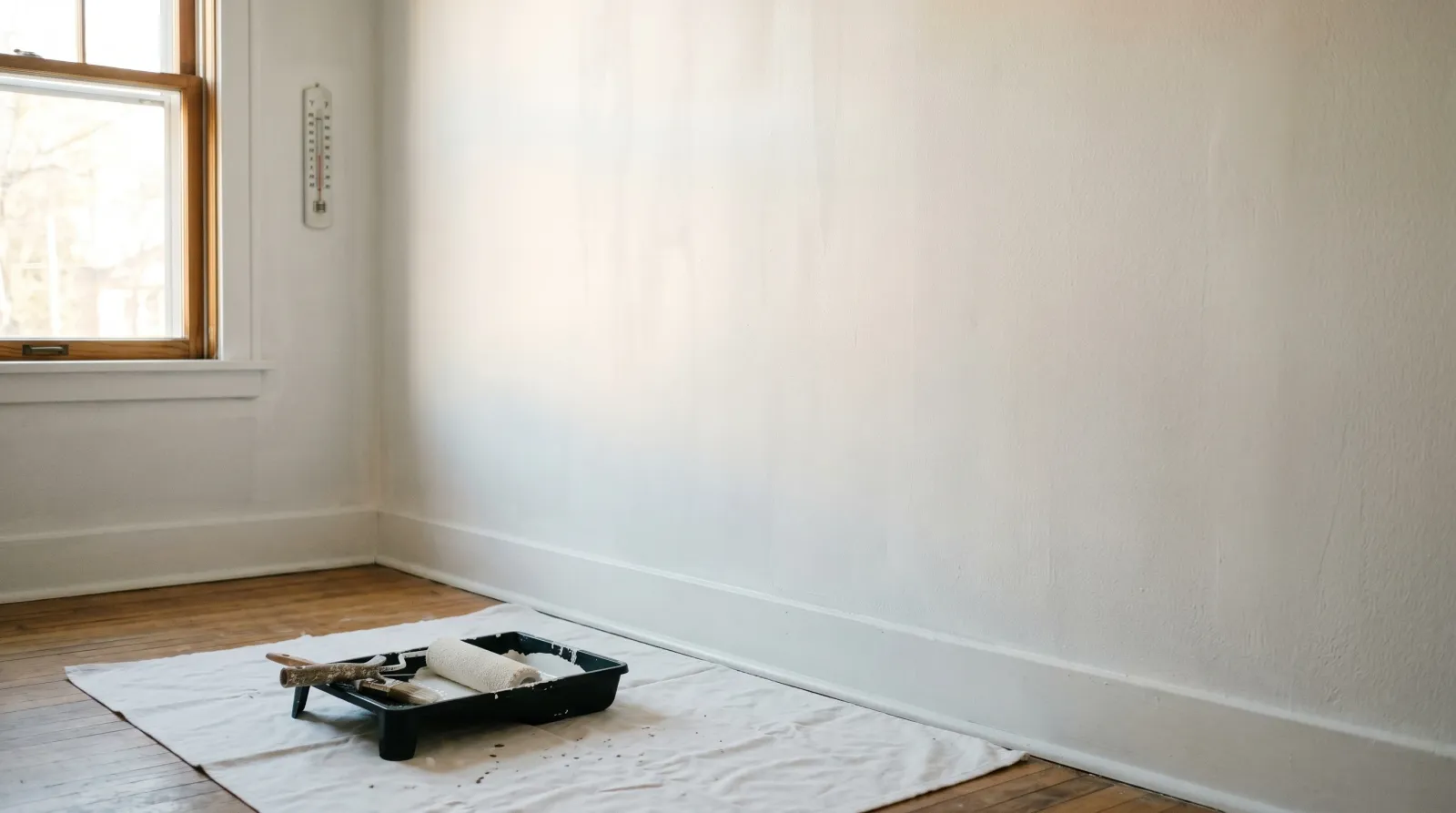
How long primer takes to dry depends on its binder. A latex (water-based) primer is dry to the touch in 30 to 60 minutes and ready to topcoat in 1 to 4 hours. An oil-based primer feels dry in 1 to 3 hours but wants a full 24 hours before paint. A shellac primer like Zinsser BIN flashes off fast, dry to recoat in about 45 minutes. Those numbers assume 70 °F and 50% relative humidity. Drop the temperature or raise the humidity and every figure stretches, sometimes doubling. The number that matters is the recoat window, not dry-to-touch.
Here’s the distinction people miss. “Dry to the touch” means the surface no longer feels wet under a finger. “Ready to recoat” means enough water or solvent has left the film that a second coat won’t trap anything underneath. Those are two different moments, and the gap between them is where most primer failures start. Topcoat a primer that’s touch-dry but not recoat-ready, and you seal solvent under the new film. The result is a soft, poorly bonded layer that can blister, wrinkle, or peel.
Recoat Times by Primer Type
The binder decides everything, the same way it does in finish paint. Each family dries by a different mechanism, so each has its own clock.
| Primer type | Dry to touch | Recoat (topcoat) | How it dries |
|---|---|---|---|
| Latex / water-based | 30-60 min | 1-4 hours | Water evaporates, binder coalesces |
| Oil-based / alkyd | 1-3 hours | 24 hours | Oxidation (binder reacts with air) |
| Shellac (BIN) | 15-30 min | 45 min | Alcohol solvent flashes off |
| Bonding primer | 30-60 min | 1-2 hours | Coalescence, like latex |
Latex primer dries in two stages. Water evaporates first, then the acrylic binder particles fuse into a continuous film. The water leaving is what makes it touch-dry. The binder finishing its coalescence is what makes it ready to topcoat, and that second stage is slower and humidity-sensitive.
Oil-based primer doesn’t dry by evaporation alone. The alkyd binder cures by reacting with oxygen, a slow chemical process that keeps going long after the surface feels hard. The reason for that 24-hour wait is that oxidation needs time, and a topcoat applied at hour three sits on a film that’s still chemically green underneath.
Shellac primer is the sprinter. It’s dissolved in alcohol, and alcohol evaporates fast and completely. That’s why BIN recoats in 45 minutes and why it’s the go-to for sealing knots, water stains, and odor. The deeper version of what each primer is built to do lives in the what is primer explainer.
When the Numbers Stretch
Label times are lab times. Two conditions move them most.
Temperature. Coalescence and oxidation both slow down as it gets colder. Below 50 °F, a latex primer that recoats in two hours at 70 °F can need four or five, and below 35 °F it may never form a proper film at all. If you’re priming a cold garage or an exterior wall in spring, the cold-weather painting guide covers the floor temperatures where the chemistry stalls.
Humidity. Water can’t evaporate into air that’s already saturated. At 80% relative humidity, a latex primer’s recoat window can double. Bathrooms, basements, and humid summer days are the usual culprits. Move air across the surface with a fan and you pull the moisture boundary layer off the film, which speeds drying more than heat alone.
A third factor: how thick you laid it on. A heavy primer coat traps solvent in its lower layers and dries from the top down, so a thick coat can feel dry on the surface while staying soft beneath. Two thin coats beat one heavy one, and they recoat faster.
When You Can’t Just Wait Longer
Waiting is almost always safe, with one exception worth knowing. Latex and especially oil-based primers develop a hard, slick surface as they age. Leave a primer more than about 30 days before topcoating and the paint can struggle to grip it. The fix is a quick scuff sand with 220-grit before you paint.
The other limit is the opposite of patience. Don’t rush an oil-based primer to meet a same-day finish schedule. It will not be ready in three hours no matter how dry it feels.
How Primer Recoat Compares to Paint
Primer and finish paint dry on similar clocks, but primer is usually faster to recoat because it’s formulated to be sanded and covered, not to look good or last on its own.
| Latex primer | Latex paint | Oil primer | |
|---|---|---|---|
| Recoat window | 1-4 hours | 2-4 hours | 24 hours |
| Full cure | 24 hours | 14-30 days | 7 days |
| Sand between coats | Optional | Rarely | Often |
Recoat-ready and fully cured are not the same milestone either. A primer can take a topcoat in an hour while still hardening underneath for a day. For the full breakdown of why touch-dry, recoat-ready, and cured are three separate points on the curve, see dry time vs cure time.
Common Mistakes
- Topcoating a tacky primer. If a knuckle pressed into a hidden spot leaves a mark, the film still holds solvent. Paint over it and you trap that solvent, which keeps the layer soft and weakens the bond. Wait.
- Trusting touch-dry over the recoat time. A surface goes touch-dry long before the binder finishes coalescing. Follow the recoat window on the label, not your fingertip.
- Ignoring the room. A primer at 55 °F and 75% humidity behaves nothing like the label’s 70 °F lab number. Read the conditions, then add time.
- One thick coat instead of two thin ones. A heavy coat skins over on top and stays soft below, so it both dries slower and bonds worse. Thin and even wins.
- Letting primer sit for weeks, then painting straight over it. Aged primer goes slick. Scuff-sand with 220-grit before topcoat if more than a few weeks have passed.
What a Properly Dried Primer Looks Like
A primer that’s ready to topcoat reads dead flat and uniform, with no wet sheen and no soft spots. Rub a fingertip across it and nothing transfers; press a knuckle in and it leaves no print. On bare wood the coat should look even, not blotchy, with no shiny patches where the primer pooled or stayed wet in a low spot. Those shiny patches are the slow-drying zones. They tell you to wait, or to give the whole wall another hour before you commit the topcoat.
What to Look For When You Buy
Match the primer to the surface and the schedule, then read the recoat time on the can before you start, since it varies by brand. For raw drywall and most repaints, a fast water-based primer (Zinsser Bulls Eye 1-2-3, KILZ 2) recoats in an hour. For sealing stains, knots, and odor on a tight timeline, a shellac primer (Zinsser BIN) is back in 45 minutes. For glossy, slick, or hard-to-stick surfaces like laminate, tile, or trim, a bonding primer needs its 1-2 hour window and that full grab time matters more than speed. The bonding primer explainer covers when slick surfaces demand one. To compare specific products by job, see the best primer round-up.
If you’ve ever pulled a topcoat that stayed soft and gummy for weeks, the cause was almost always a primer or paint coated before its solvent left. The tacky-finish fix walks through recovering from exactly that. Give the primer its recoat window, watch the temperature and the humidity, and the topcoat has something solid to bond to.