Does Paint-and-Primer-in-One Actually Work?
Paint-and-primer-in-one is a thicker self-priming topcoat, not two products in one can. When it works, when bare drywall or glossy trim still needs a real primer first.

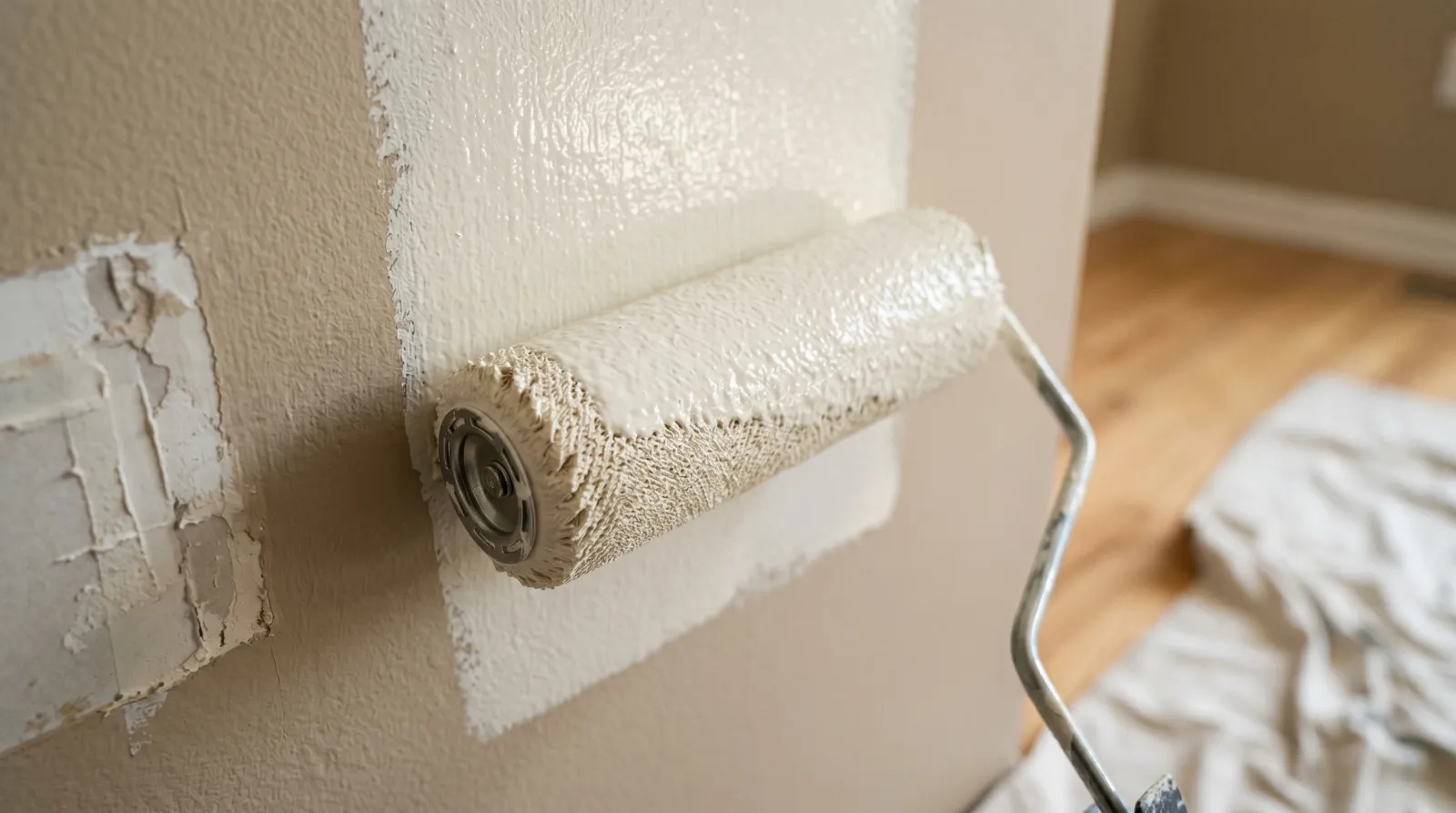
Paint-and-primer-in-one is a single high-build interior or exterior topcoat formulated with extra binder and a higher solids content, so it can seal a sound surface and lay down color in the same product. It is not two separate products combined in one can. Over a previously painted wall in good condition, it self-primes well and covers in two coats at roughly 350 to 400 square feet per gallon. Over bare drywall, raw wood, glossy trim, water stains, or a drastic color change, a dedicated primer still seals, blocks, and bonds better than any self-priming paint sold today.
Here is what is actually in the can. A standard wall paint is pigment, binder, and water tuned to a target sheen and price. A paint-and-primer formula is the same chemistry with the binder fraction pushed up and the solids loaded heavier, so the wet film is thicker and the dried film has more resin to grab the substrate. That extra binder is the whole trick. More binder means better adhesion and better sealing of a minor-porosity surface. It does not add stain-blocking molecules, it does not add the aggressive bonding resins in a true bonding primer, and it does not turn into a sandable wood sealer. You are buying a better topcoat, not a primer.
When Self-Priming Paint Actually Works
Self-priming paint earns its name on surfaces that are already sealed and sound. The binder load is enough to bond and equalize a wall that just needs fresh color.
Use it for:
- Repainting a previously painted wall in good condition, same or similar color
- Walls with a uniform, low-sheen existing finish (flat to eggshell)
- Light color shifts where the old and new colors are close in value
- Lightly scuffed or cleaned drywall that holds a sound paint film
- Rooms where you want fewer trips up the ladder and the surface is forgiving
On a clean, dull, previously painted wall, the high binder content does the sealing job a separate primer would have done. Two coats and you are finished. This is the case the marketing is built around, and on this case the marketing is honest.
When NOT to Use Paint-and-Primer-in-One
The failures all trace to the same gap. A self-priming paint has more binder, but it lacks the specialized resins and pigments that a real primer carries. On a hard substrate that gap shows up as bleed-through, poor adhesion, or flashing.
Don’t rely on it alone for:
- New drywall. Raw paper and joint compound absorb at wildly different rates. The result is flashing, where the mud joints read duller than the paper. A dedicated drywall primer (PVA) equalizes the porosity so the topcoat forms an even film. The chemistry of why is the same story as why a primer prevents flashing.
- Bare wood. Grain raise, uneven absorption, and tannin bleed on cedar and redwood. A wood primer seals and blocks first.
- Glossy or slick trim. Self-priming paint slides off a cured alkyd or laminate surface. You need a bonding primer that grips where standard resins cannot.
- Stains, smoke, water marks, marker. These bleed straight through waterborne paint. Only a shellac or oil stain-blocker stops them.
- Drastic color changes. Covering a deep red or navy with white in one self-priming coat is a fantasy. Use a gray-tinted primer.
- Bare or chalking masonry. Use a masonry sealer first. See the masonry painting guide.
How Paint-and-Primer-in-One Compares
| Paint-and-primer-in-one | Regular wall paint | Dedicated primer | |
|---|---|---|---|
| What it is | High-build self-priming topcoat | Standard pigmented topcoat | Sealing/bonding/blocking undercoat |
| Binder load | Higher than standard paint | Standard | Tuned for adhesion, not color |
| Seals bare drywall | Poorly | No | Yes |
| Blocks stains | No | No | Yes (shellac/oil types) |
| Bonds to gloss | No | No | Yes (bonding type) |
| Best use | Repaint over sound paint | Topcoat over primer | First coat on a problem surface |
For the head-to-head, see primer vs paint-and-primer-in-one.
Common Mistakes
- Treating it as a true primer on bare surfaces. The extra binder seals minor porosity, not raw drywall or wood. Flashing and grain raise follow. Prime the bare substrate, then use the paint-and-primer as your topcoat.
- Expecting one coat. At 350 to 400 square feet per gallon, one coat rarely hides a color change or an uneven wall. Two coats is the real number. The film also needs that second pass to even out sheen.
- Skipping a bonding primer on slick trim. Self-priming paint does not grip cured gloss. It peels at the first knock. A bonding primer is non-negotiable on laminate, melamine, and old oil trim.
- Ignoring stains. Water rings and smoke bleed through any waterborne paint, primer-loaded or not. Spot-prime with shellac first.
- Painting over a dirty or chalky wall. No binder load fixes a contaminated surface. Wash, dull the gloss, and let it dry. Adhesion is a substrate problem before it is a paint problem.
What It Looks Like
The difference is easiest to see at a drywall patch. Roll one coat of paint-and-primer over a wall with a fresh, unprimed mud repair, then step back in raking light. The patch reads as a duller, slightly flat island inside the surrounding sheen. That is the substrate stealing water from the wet film faster than the rest of the wall, so the binder cannot coalesce evenly. A spot-prime of the patch erases it. The same physics drives film formation across every paint you will ever roll, and it is exactly what a primer exists to prevent.
What to Look For at the Store
Read the technical data sheet, not the front label. A genuine self-priming paint will state a higher solids-by-volume and a recommendation to prime bare or problem surfaces in the fine print. That fine print is the manufacturer telling you the truth the front label soft-pedals. Behr Marquee and Premium Plus, Benjamin Moore Regal Select, and Sherwin-Williams SuperPaint all carry strong self-priming claims and all still list the surfaces that need a separate primer first.
If you are buying for a real problem surface, buy the primer separately. The best primers round-up sorts them by job: PVA for new drywall, bonding for gloss, shellac for stains. The right primer plus a good topcoat beats any all-in-one on a difficult wall, every time.
Ask a Question