What Is Liquid Deglosser (and Is It Better Than Sanding)?
Liquid deglosser is a wipe-on solvent that dulls glossy paint so primer can grip. How it works, when it beats sanding, and the 10-minute window that decides the result.

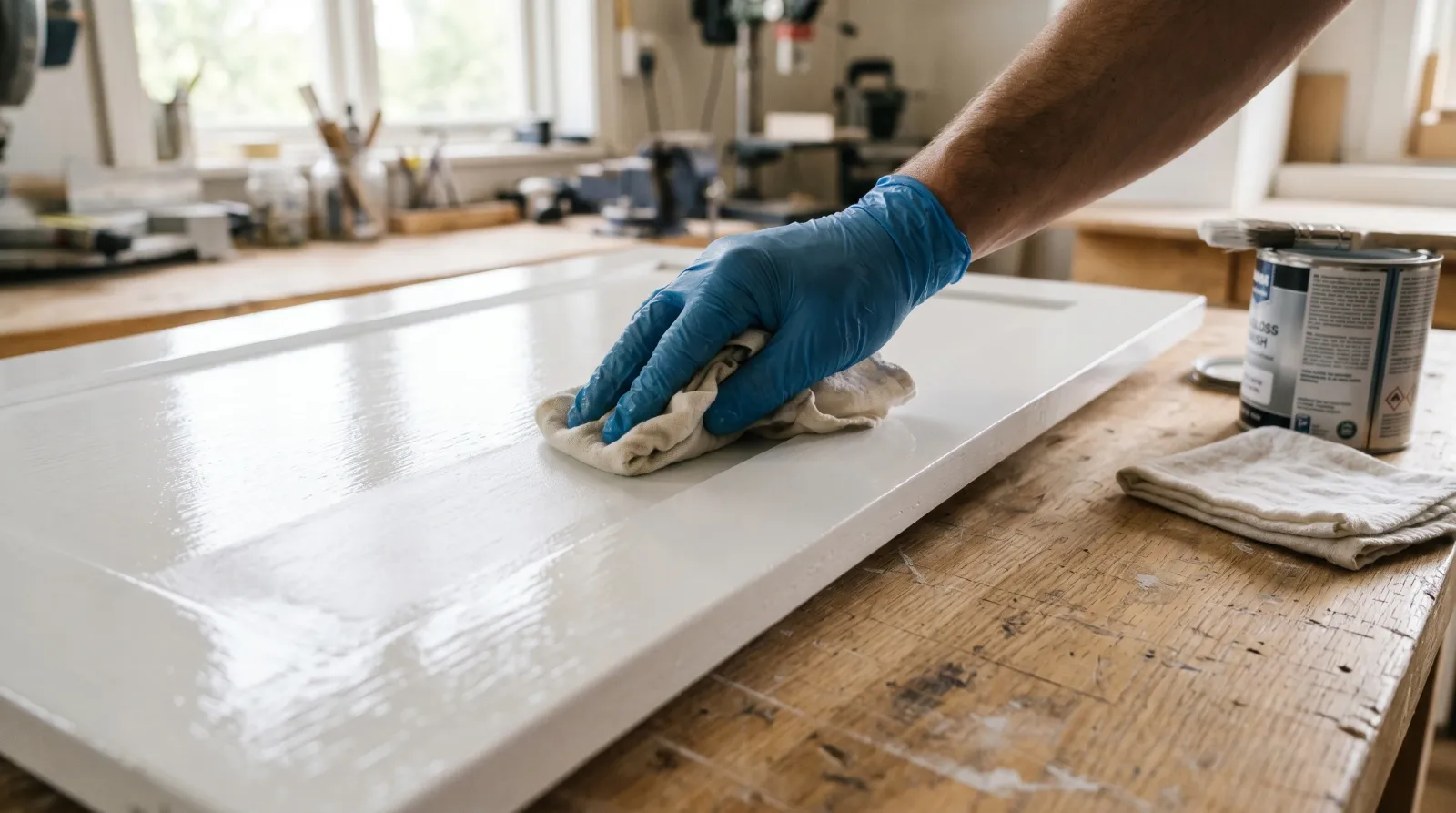
Liquid deglosser is a wipe-on solvent that dulls a glossy paint or varnish so the next coat can stick to it. You apply it with a rag, give it about 10 minutes of contact time, and it softens and etches the top few microns of the cured film. No sandpaper, no dust. It does chemically what sanding does mechanically: it kills the slick, sealed surface that primer and paint slide off of. The common solvent versions (Klean-Strip Easy Liquid Sander, Jasco Prep & Prime) flash off and need no rinse. It does not strip paint, fill defects, or save a finish that’s already peeling.
Here’s the chemistry, because it explains every situation where deglosser works and every one where it doesn’t. A cured gloss finish is a continuous, tightly cross-linked film with very low surface energy. That low surface energy is what makes it shiny, and it’s also what makes the next coat bead up and refuse to bond. Adhesion needs two things: mechanical tooth (microscopic valleys for the new film to key into) and a clean, receptive surface. Sanding creates tooth by abrading scratches into the gloss. Deglosser creates tooth a different way. Its solvents partially dissolve and swell the top layer of the old film, opening it up so the primer’s resin can interpenetrate and lock in as it dries. Same goal, two routes to it.
When to Use Liquid Deglosser
Use it for:
- Sound factory-finished cabinets, doors, and trim where the existing gloss is intact and well-bonded.
- Detailed or carved surfaces — spindles, raised cabinet panels, crown profiles — where sandpaper can’t reach the recesses but a rag can.
- Jobs where dust is the problem: occupied kitchens, finished rooms, anywhere you don’t want abraded lead-paint particles airborne (test first; see the pre-1978 lead-test guide).
- Glossy oil-based or alkyd surfaces you’re recoating with a waterborne paint, where adhesion is the whole ballgame.
- Pre-prep before a bonding primer, as a belt-and-suspenders step on a very slick substrate.
When NOT to Use Liquid Deglosser
The solvent only dulls a surface. It can’t repair one, and on the wrong substrate it makes things worse.
Don’t use it for:
- Peeling, flaking, or chalking finishes. Deglosser doesn’t strip; if the old film is failing, you need to scrape and sand to sound material first. See why paint peels.
- Brush marks, runs, dents, or orange peel you want gone. Those are leveling problems. Only abrasive sanding flattens a surface; a wipe-on solvent follows the existing contour.
- Bare wood, raw drywall, or fresh primer. There’s no gloss to cut, so deglosser does nothing useful and just wets the substrate.
- Heat-fused laminate and melamine with a true plastic surface. Some deglossers barely touch a non-porous thermofused film. A dedicated bonding primer is the more reliable path here; the laminate furniture guide walks through it.
- Old, under-cured, or shellac-based finishes that the solvent might soften past “etched” into “gummy.”
How Deglosser Compares
| Liquid deglosser | Sanding (150–220 grit) | TSP / heavy cleaner | |
|---|---|---|---|
| How it works | Solvent etch, chemical | Abrasive tooth, mechanical | Degrease + light etch |
| Dust | None | Significant | None |
| Levels defects | No | Yes | No |
| Reaches detail/recesses | Yes | Poorly | Yes |
| Contact / work time | ~10 min, no rinse (solvent type) | Immediate | Rinse required |
| Best on | Intact glossy finishes | Anything needing leveling | Greasy kitchen surfaces |
Deglosser and sanding aren’t really rivals. They solve different parts of the same problem. On a smooth, sound, glossy cabinet door, the only thing your sandpaper was accomplishing was dulling the sheen — and deglosser does that without dust. The moment the job includes leveling a brush mark or knocking down a drip, sanding wins because no solvent moves material the way an abrasive does.
Common Mistakes
- Skipping the degrease. Deglosser is not a degreaser. Kitchen cabinets carry a film of cooking oil that the solvent smears around instead of removing. Clean with a TSP substitute and let it dry first, then deglosser, then prime. Skip this and your primer fails over an invisible grease layer.
- Missing the recoat window. The etched surface stays receptive for roughly 10 to 60 minutes. Wait until the next day and the swollen film has resealed, undoing most of the bite. Prime the same working session.
- Under-wetting the rag. A dry-ish wipe just polishes the gloss. The surface should go visibly dull and uniform. If it still flashes shiny in raking light, it isn’t deglossed — go back over it wetter.
- Not rinsing a caustic type. TSP-based liquid sanders leave an alkaline residue that sabotages adhesion if you don’t rinse. Solvent types don’t. Match your last step to the can you actually bought.
- Trusting it on melamine. People assume deglosser equals adhesion on any slick surface. On true plastic laminate it often does almost nothing, and the coat peels off in sheets weeks later. That’s a bonding-primer job.
What It Looks Like
Watch the surface as you wipe. A correctly deglossed area goes flat and even, with the same dull sheen edge to edge. Hold it to a window at a low angle: if you see bright reflective patches surrounded by matte ones, those shiny spots are still sealed and will reject the primer. The hero image above shows the tell — a dull band where the rag passed, sitting right next to the original gloss. That contrast is your quality check. Keep wiping until the whole panel reads matte.
Where to Buy / What to Look For
Liquid deglosser sells at any paint counter and big-box store for $10 to $18 a quart, which covers a full kitchen of cabinet fronts. Read the back label for one word: rinse. “No rinse needed” means a solvent type (easiest, what most people want). A product calling for a water rinse is TSP-based (a degreaser-deglosser combo, useful on greasy kitchens but an extra step). For maximum adhesion on the slickest oil-based gloss, pair the deglosser with a bonding primer rather than asking either one to do the whole job alone. The primer round-up sorts the bonding options.
Ask a Question