How to Fix Paint Flaking Off a Metal Frame
Paint flaking off a metal frame almost always means rust or skipped prep, not bad paint. Diagnose the cause, strip to sound metal, prime right, and recoat so it holds.

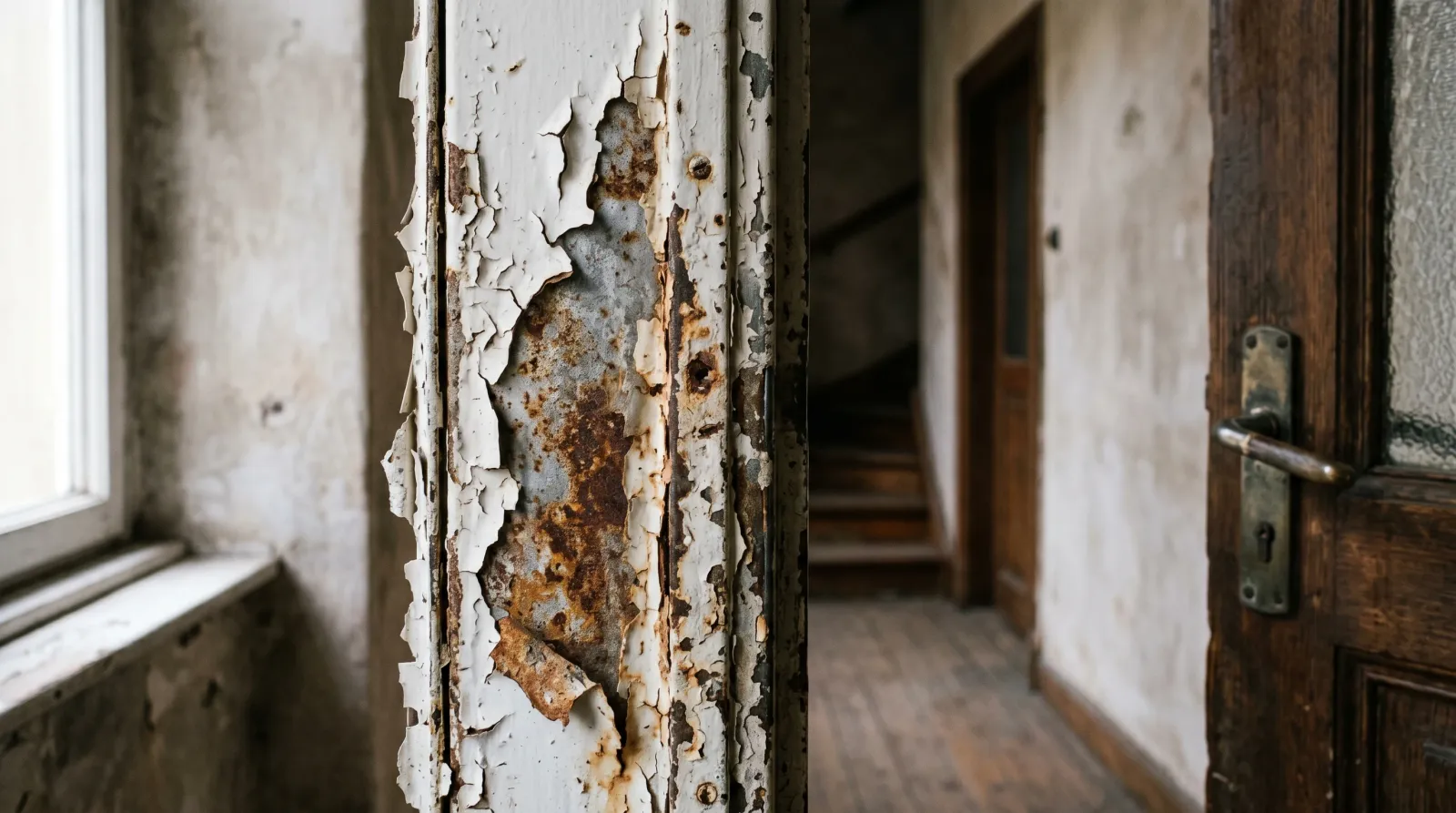
Paint flakes off a metal frame for one of two reasons: rust is working underneath it, or the primer never bonded to a slick surface in the first place. It’s almost never the topcoat’s fault. Find which one you’ve got, deal with it, and the next coat holds for years instead of months.
Does This Match What You’re Seeing?
How the paint comes off tells you the cause. Look before you scrape.
- Chips lifting with orange-brown rust underneath. Rust is the driver. It expands as it forms and pops the paint off from below. Most common cause on door frames, railings, and patio furniture.
- Sheets peeling clean off shiny gray or silvery metal, no rust. Galvanized or aluminum. Nothing etched into it. The paint had no grip from day one.
- Paint flaking off in flat chips with chalky residue, no rust. Old enamel that went brittle and lost adhesion. Common on decades-old steel windows and bed frames.
- Bubbles or blisters that pop into flaking patches. Moisture trapped under the film, or paint that went on over a damp or greasy surface.
- Flaking only along edges, welds, and bolt heads. Prep skipped the hard-to-reach spots. Rust starts where the brush didn’t reach.
If the metal is silvery-gray and the paint peels in clean sheets with no rust at all, you’re dealing with a bonding problem, not a rust problem. The fix is different. See how to handle slick metal in the galvanized steel guide.
How Serious Is This?
Most flaking metal frames are a same-weekend fix. The film failed, not the steel. Three things push it up the ladder:
- Rust you can push a screwdriver through. That’s not surface rust, that’s section loss. The metal is structurally compromised. Paint won’t save a rusted-through railing or window frame.
- A frame that holds weight or keeps you from falling. Exterior stair railings, balcony rails. If the steel is pitted deep, get it looked at before you make it pretty.
- Flaking that returns within a year of a proper repaint. Water is still getting to bare metal somewhere. Find the leak, the bad caulk joint, or the spot you missed before you paint again.
For a door or window frame inside a dry house, none of that applies. Scrape, prime, paint, done.
Why This Is Happening (root Cause)
Two mechanisms cause almost every flaking metal job I’ve seen.
Rust creep. Steel rusts wherever bare metal meets oxygen and moisture. Once rust starts under a coat of paint, it spreads sideways and grows in volume. Rust takes up more space than the steel it came from. That expansion pushes the paint film up and off from underneath. You see a chip lift, knock it off, and there’s orange powder under it. That’s the engine. Paint over it without killing the rust and the rust keeps eating sideways under your fresh coat. You bought yourself maybe a season.
No bond on slick metal. Galvanized steel, aluminum, and most factory-finished metal are smooth and chemically unfriendly to ordinary primer. Regular latex or oil primer sits on top like wax on a car hood. It dries, looks fine, then sheets off the first time something flexes or gets bumped. Galvanized is the worst offender. The zinc coating actively rejects standard primer until it’s either weathered for months or hit with a self-etching or bonding primer that bites into it chemically.
A third cause shows up on older frames. Brittle old enamel. Decades of oil-based enamel goes hard and loses flexibility. Metal expands and contracts with temperature more than wood does. The old film can’t move with it anymore, so it cracks and flakes. This one flakes in flat dry chips with no rust under it.
Want to confirm rust versus bond failure? Scrape a chip and look at the back of it and the metal under it. Orange or brown means rust. Clean shiny gray metal with the paint releasing in a sheet means the primer never bonded. That one test sets your whole approach.
The Fix
Step 1. Scrape and Wire-Brush to Sound Metal
Get every loose chip off. A stiff putty knife or a carbide scraper for the flaking paint, then a wire brush for the rust. Hand wire brush for small frames, a wire wheel on a drill or angle grinder for railings and bigger jobs. Work until you’re down to either sound paint that won’t budge or bare gray metal. Anything orange has to go.
For rust that’s pitted into the surface and won’t fully brush out, that’s fine. You’ll handle the remainder chemically in Step 3. Just get the loose flaky rust off.
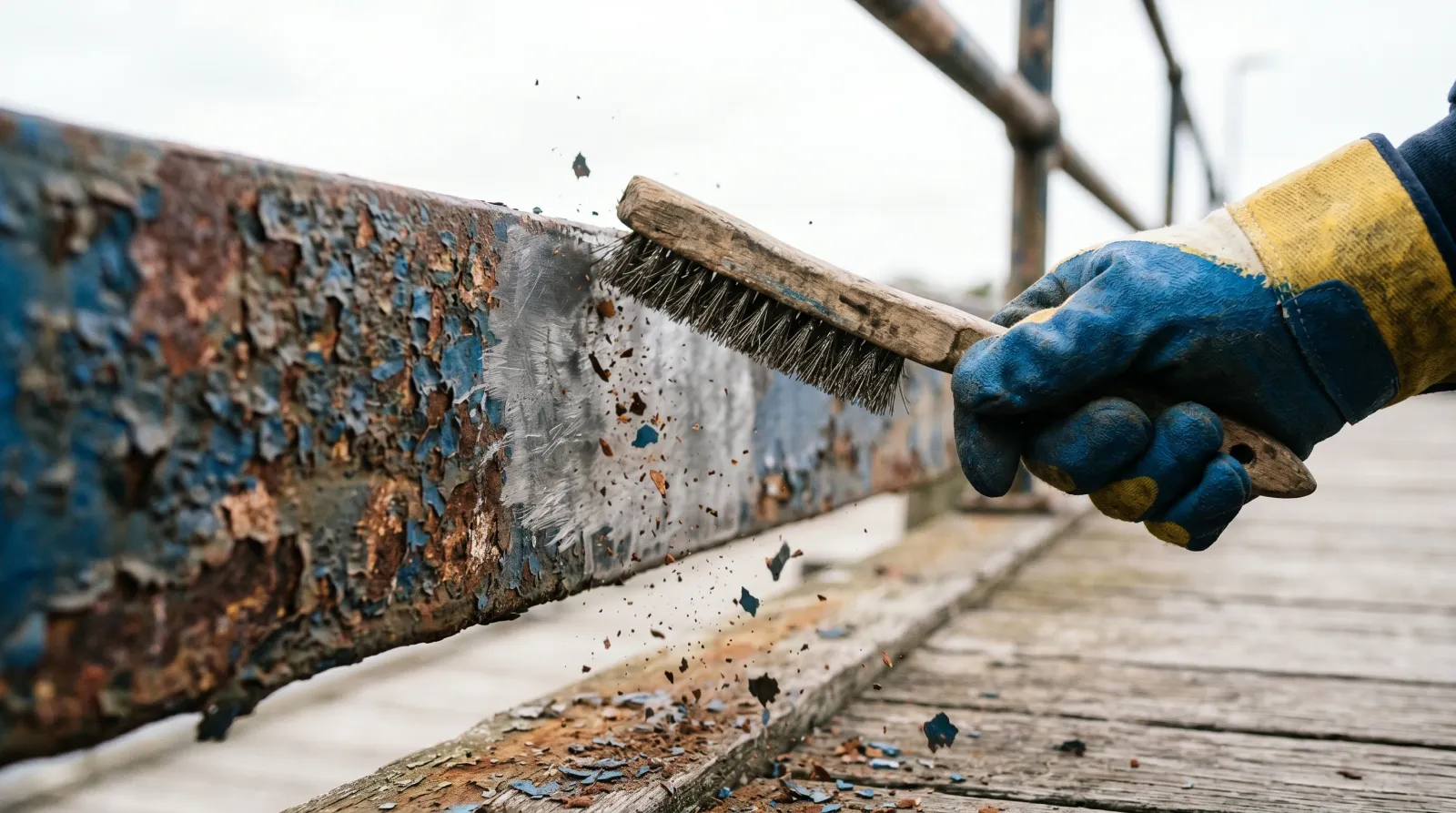 Brush every flaking chip and loose rust down to sound metal. Anything orange that stays becomes next year’s flake.
Step 2. Feather the Edges and Degrease
You’ve now got cliffs where bare metal meets the edge of remaining sound paint. Sand those transitions with 120 then 220 grit until your fingertip can’t feel the step. A topcoat over a hard paint edge telegraphs that ridge through forever.
Then degrease the whole frame. Metal carries oil from hands, factory coatings, and the air. Wipe down with mineral spirits or a wax-and-grease remover, then let it flash off dry. Skip this and your primer beads up over the grease and fails right where you can’t see it. Don’t use water on bare steel. You’ll start fresh rust before the primer’s even open.
Safety First
Wear a P100 respirator, gloves, and eye protection for all grinding and wire-brushing. Rust dust and old paint chips are not something you want in your lungs. If the frame is in a pre-1978 building, the old paint may be lead. Test with 3M LeadCheck swabs before you sand or grind anything, and follow EPA RRP wet methods if it’s positive. Never mix a bleach cleaner with vinegar, ammonia, or any acid rust remover. That combination makes toxic gas. Use one product, rinse, dry, then the next.
Step 3. Treat Remaining Rust
For any rust pitted into the surface that you couldn’t fully remove, brush on a rust converter like Rust-Oleum Rust Reformer or Corroseal. It chemically turns the remaining iron oxide into a stable black coating you can paint over. One coat, let it cure per the can, usually 24 hours.
If you got down to clean bare steel everywhere, you can skip the converter and go straight to a rust-inhibitive primer in the next step. The converter is for the rust you can’t beat out by hand.
Step 4. Prime With the Right Metal Primer
This is the whole job. Match the primer to the metal.
- Bare or treated steel: Rust-Oleum Rusty Metal Primer over any residual rust, or Rust-Oleum Clean Metal Primer over clean bare steel. Both are rust-inhibitive. One full coat, 1 hour to recoat.
- Galvanized steel or aluminum: a self-etching primer like Rust-Oleum Self Etching Primer or SEM Self-Etching Primer. It bites into the slick surface chemically so the topcoat has something to hold. Nothing else reliably sticks to galvanized.
- Mystery slick metal you can’t bump off: a bonding primer such as INSL-X STIX grabs surfaces ordinary primer slides off of.
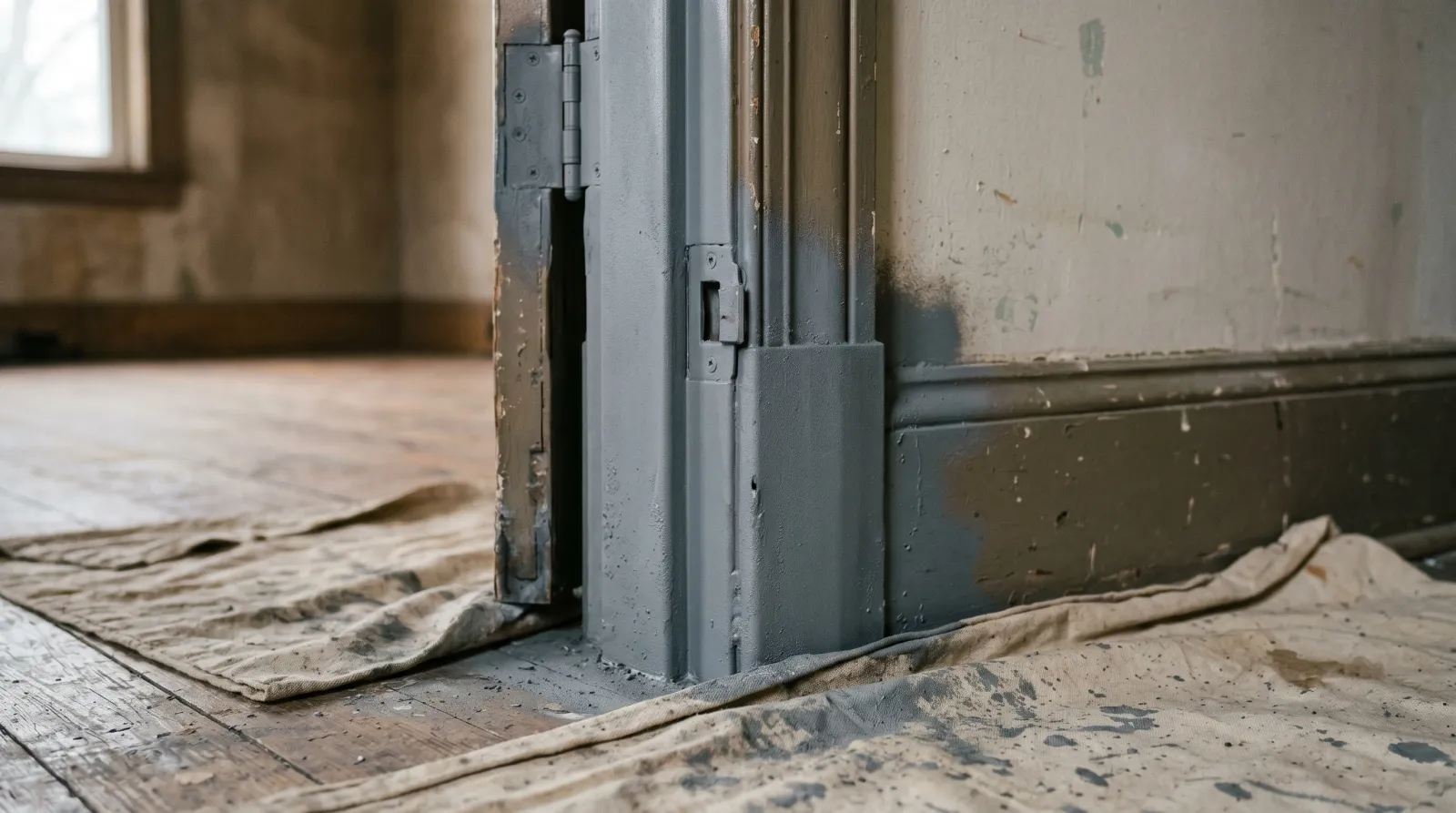 The right metal primer is the difference between a coat that holds for years and one that flakes by next winter.
Don’t reach for paint-and-primer-in-one here. That’s a thick topcoat, not a rust-inhibitive primer. It won’t stop rust on bare steel. If you’re unsure why a real primer matters on metal, the bonding primer explainer walks through what these primers actually do.
Step 5. Topcoat
Once the primer’s fully dry, two coats of topcoat. Always two.
- Interior frames: an acrylic-alkyd hybrid enamel like Benjamin Moore Advance or a direct-to-metal enamel. Levels smooth, hard finish, holds up to door-frame knocks.
- Exterior railings, gates, furniture: a direct-to-metal (DTM) acrylic or an oil-based enamel like Rust-Oleum Protective Enamel. Built to flex with metal in the weather.
- Spray application on ornate railings or furniture: a metal-rated spray enamel in light passes beats a brush in tight scrollwork.
Thin coats, let each dry per the can. Heavy coats sag on vertical metal and skin over before the underneath cures, which is its own flaking problem down the road.
Prevention
Flaking metal comes back when bare steel meets water again. Stop that and the coat lasts.
- Don’t leave bare metal exposed overnight before priming. Steel flash-rusts in hours in humid air. Prime the same day you grind.
- Hit edges, welds, and bolt heads first. Rust always starts where the film is thinnest. Those spots are where coverage breaks down.
- Keep exterior metal off the ground and out of standing water. Patio furniture legs and the bottom of railings rust first because they sit in puddles and wet leaves.
- Re-caulk where a metal frame meets masonry or wood. Water wicks into that joint and rusts the frame from the back where you’ll never see it until the face flakes.
- Touch up chips the week you notice them. A dime-sized chip on bare steel becomes a flaking patch in one rainy season. Spot-prime and dab it before the rust spreads.
The same rust-creep problem behind a wall shows up as rust stains bleeding through interior paint. If that’s what you’re chasing instead, see how to block rust stains coming through paint.
When to Call a Pro
- Structural metal with rust-through: stair railings, balcony rails, anything you lean or fall against. Get it assessed before you coat it.
- Lead-positive old paint on a frame you can’t contain. Pre-1978 buildings, especially with kids around.
- Large galvanized or aluminum installations: storefronts, fencing runs, garage doors where a brush job won’t hold and you need a sprayed industrial coating.
- Rust you can push a screwdriver through. That’s a welding or replacement job, not a paint job.
What’ll Bite You in Two Years
The spot you can’t reach is the spot that flakes first. Welds, the back side of a frame, the channel where the door seals. Skip those because they’re a pain to brush, and the rust starts there, then creeps out under the paint you did do. By the time you see it on the face, the back’s been rusting for a year. Get the wire wheel into every corner, or you’ll be scraping the same frame again. For a bare-metal job from scratch, the full rusted metal guide covers the deeper strip.
Ask a Question