How to Paint Galvanized Steel: A Complete Guide
Painting galvanized steel without peeling — passivate the zinc, weather or vinegar-etch the surface, bond with Stix or Pro-Cryl, then topcoat with a DTM acrylic that lasts.

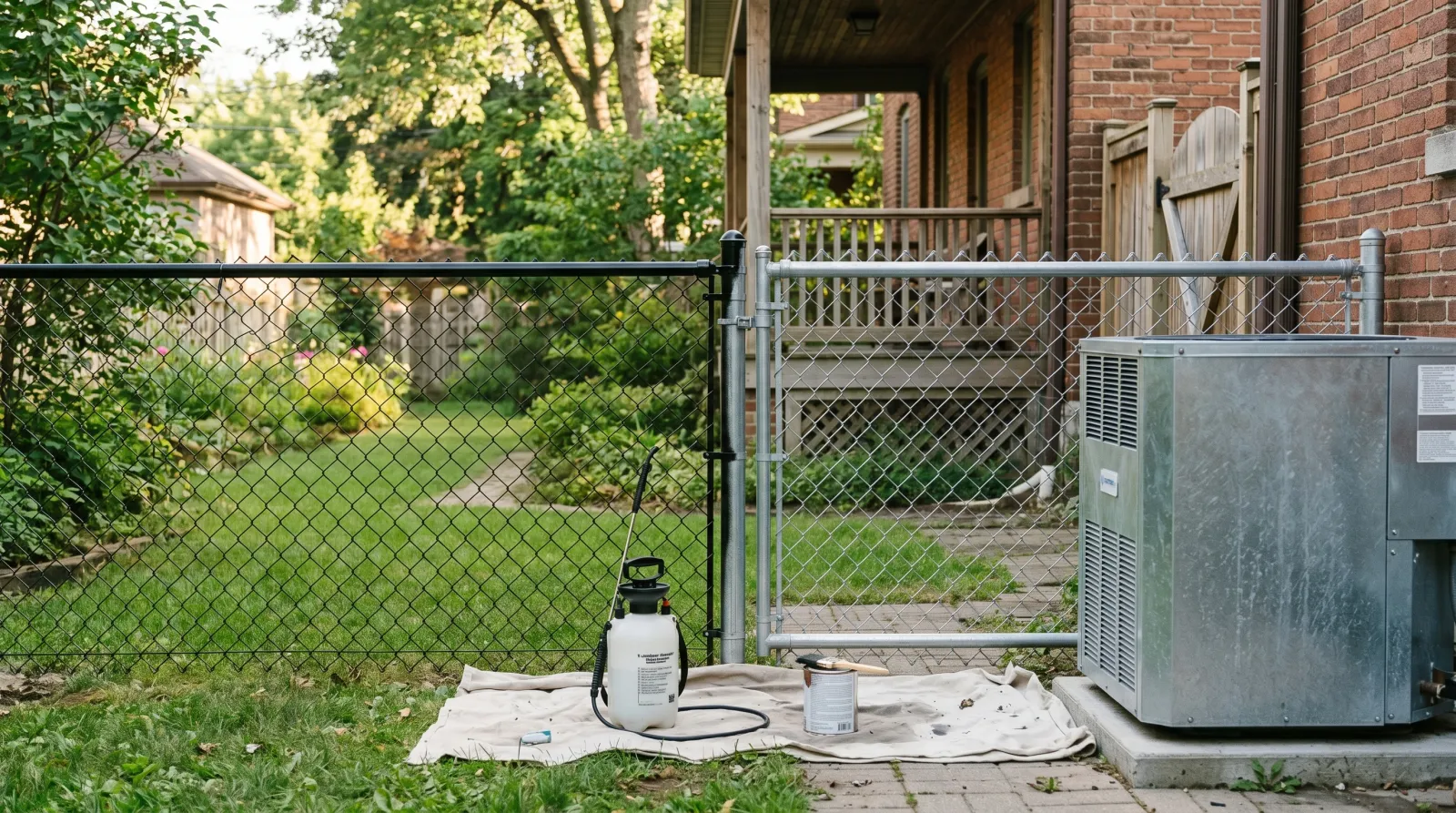
Galvanized steel is the substrate that humbles people. Looks like ordinary metal. Acts like Teflon. Homeowner buys a quart of exterior paint, slaps it on a brand-new chain-link gate, calls me eight months later when the whole coat is peeling like sunburn. The zinc surface is the problem, and you have to deal with it before any can of paint touches it.
TL;DR
- The real issue: fresh galvanized ships with a passivation layer of oil or chromate. Standard primer can’t bond through it.
- Wash: dish soap and a Scotch-Brite pad. Knock off the factory oil and the white storage stain.
- Etch: white vinegar (5% acetic acid) wet on the zinc, 3–5 minutes, rinse. Or weather it outside for six months. Pick one.
- Primer: INSL-X Stix, Sherwin-Williams Pro Industrial Pro-Cryl, or Rust-Oleum Galvanized Metal Primer. Not regular latex primer.
- Topcoat: 100% acrylic DTM in semi-gloss. SW DTM Acrylic, Behr Direct to Metal, or Benjamin Moore Aura Exterior.
- Cure: 4 hours to recoat, 48 hours before hardware goes back on, 7 days for full hardness.
- Skill: medium. The prep is the whole game.
What Is Galvanized Steel?
Galvanized steel is plain mild steel that has been dipped in a bath of molten zinc. The zinc layer is what you see and what you’re painting. It is also what stops the steel underneath from rusting. Hot-dip galvanizing is the common type — full immersion, thick coating, slightly crystalline surface called “spangle.” Electrogalvanized is thinner, smoother, and shows up on factory-painted appliance panels and automotive parts. On a residential job, you’ll see hot-dip on chain-link fence frames, gate posts, HVAC condenser housings, garage door tracks, exterior conduit, mailbox posts, sheet-metal flashing, and gutter brackets.
The zinc is the corrosion protection. The zinc is also the reason paint fails on it. Both true at the same time.
Why Galvanized Is Tricky
Three problems stack on top of each other.
Passivation. Hot-dip galvanizing factories spray the finished pieces with a thin oil, wax, or chromate film before shipping. It keeps the zinc from white-rusting in the warehouse. It also keeps your primer from sticking. The film is invisible, and the new homeowner has no idea it’s there.
Zinc reactivity. Fresh zinc is mildly alkaline. A normal latex primer that bonds fine to wood or drywall will saponify against zinc — the binder breaks down at the contact layer and the primer slides off as a soft film. You can scrape a failed galvanized coating off in continuous sheets, the way you’d peel a sticker.
Smooth surface. Zinc spangle looks textured but it isn’t. The actual surface tension is almost glass-smooth. Mechanical bond is zero. Primer has to do all the work chemically, and most house primers don’t have the right chemistry.
I see this every summer on chain-link replacements and new condenser cages. Eight months in, the coating starts to ghost, then peel at every horizontal rail. The homeowner blames the paint. The paint did exactly what it was sold to do — bond to a properly prepped substrate. The substrate wasn’t.
Step 1: Wash off the Passivation
Every galvanized job starts here. No exception.
Dish soap (Dawn is fine), warm water, a maroon Scotch-Brite pad. Scrub the whole surface in a circular motion. The white storage stain that hot-dip pieces pick up from being stacked on pallets — that’s actually zinc carbonate forming where the pieces touched — comes off with the same wash. Rinse clean with a hose. Let it air-dry an hour.
Don’t use mineral spirits here. Mineral spirits redistribute the passivation oil instead of removing it. Soap is what works.
If the piece is years old and chalky instead of shiny, use TSP substitute (Krud Kutter Original at label dilution) and a stiff brush. Old weathered galvanized is the easy case — the chalk is loose zinc oxide and once it’s gone the surface is ready for primer.
Step 2: Etch or Weather
Pick one. You can’t shortcut both.
Path A — vinegar etch. Household white vinegar, the cheap gallon at the grocery store. 5% acetic acid. Apply wet to the clean galvanized with a wide brush or a pump-up garden sprayer. Let it dwell 3–5 minutes. The wet surface will dull from bright spangle to a flat matte gray as the acid reacts with the zinc. Rinse with clean water from a hose. Let it dry completely — at least two hours, four if it’s humid. The etched surface will look uniformly flat-gray and feel slightly toothy if you run a fingernail across it.
Stronger acids (phosphoric, muriatic) work faster but they eat through the zinc and expose the steel. Then you’ve got a galvanized job and a rust job. Don’t.
Path B — weather it. Stand the piece outside, uncovered, through six months of real weather. Sun, rain, freeze-thaw. The zinc surface oxidizes naturally and develops a paintable tooth without chemistry. Works fine if the substrate is going to live outside anyway. Doesn’t work if you’re trying to paint a new chain-link gate next weekend.
Old galvanized that’s already been outside two-plus years has already done this on its own. Skip step 2 entirely; go straight to primer.
Step 3: Prime with a Zinc-Bonding Primer
This is the step where most homeowners blow it. Standard primer won’t work. Here’s what does.
INSL-X Stix Acrylic Bonding Primer. The residential workhorse. Waterborne urethane-acrylic blend that grabs slick non-porous substrates — glossy trim, tile, glass, zinc, aluminum. Brushes and rolls easy, recoats in four hours, low odor. This is my default on galvanized fence frames, HVAC cages, and residential gates.
Sherwin-Williams Pro Industrial Pro-Cryl Universal Primer. The pro-store spec. Engineered for fresh hot-dip galvanized without etching, but the etch still helps. Tougher film than Stix, slightly more finicky to apply (needs steady film thickness — mil thickness matters here, around 2–3 mils wet). Use this on commercial galvanized, exterior conduit, and anything that takes physical abuse.
Rust-Oleum Galvanized Metal Primer. The Home Depot option. Decent. Bonds well on fresh zinc when the surface has been etched first. Cheaper than Pro-Cryl, available at every box store, fine for residential. Slightly thinner film than Stix.
One coat is enough on properly etched galvanized. Welds and corners get a spot second coat in those areas only. Recoat per the can, four hours waterborne, overnight if you went oil-based for some reason.
Watch for holidays. The bonding primers go on thin and translucent and it’s easy to miss a strip — especially on the underside of horizontal rails. Hold a work light at a shallow angle and look for shiny zinc showing through. Hit those spots before the topcoat goes on.
Step 4: Topcoat with DTM Acrylic
Two coats. Always two coats. First coat is the bond reinforcement; second coat is the weather film.
Sherwin-Williams DTM Acrylic Coating. Pro spec, direct-to-metal 100% acrylic, semi-gloss or gloss. Holds up 8–12 years on residential galvanized over a Pro-Cryl or Stix primer. The standard for commercial fence frames, exterior conduit, and HVAC housings.
Behr Direct to Metal. Home Depot’s DTM acrylic. Less film build than SW DTM, comparable durability on residential applications. Cheaper, available everywhere. Fine for a fence frame or a mailbox post.
Benjamin Moore Aura Exterior. Not technically a DTM, but over a Stix primer it bonds and lasts as well as anything on the market. Use this when you want the substrate to match adjacent exterior trim color exactly and you already have Aura in the rotation. For SKU comparisons across exterior topcoats, see the best exterior paint round-up.
Sheen matters. Semi-gloss or gloss on outdoor galvanized. Flat chalks fast in UV and the chalking is what eventually undermines the bond. Eggshell is borderline. Semi-gloss sheds rain and reads as the right finish on chain-link and fence rails anyway.
Apply method depends on the shape. Brush a 2-inch angled sash on flat rails and frame members. Roll flat sheet (mailbox sides, HVAC housing panels) with a 3/8-inch microfiber nap. Spray HVLP or aerosol on chain-link mesh, pickets, and anything with pierced or perforated geometry. Pickets and mesh have too many faces for a brush to reach without lap marks; you’ll see them the second the morning sun hits the gate.
Step 5: Dry and Cure
Touch-dry in one hour. Recoat at four hours. Hardware comes back on at 48 hours minimum — don’t re-mount a chain-link latch into wet film or the gasket prints into the topcoat permanently and the hinge swings off the print line forever. Full cure runs seven days. A garage door that gets rained on at day three is fine. One that gets a stiff brush and a hose is not.
Don’t pressure-wash for 30 days. The DTM film needs to hit full hardness before it can take a 1,500-PSI hit.
Common Mistakes
- Painting fresh galvanized straight off the truck. The passivation oil is still on it. Wash with soap and a Scotch-Brite pad before anything else. Always.
- Skipping the etch on fresh zinc. Stix and Pro-Cryl both forgive a little, but you’ll still get longer life if you vinegar-etch first. The etch costs a gallon of vinegar and an afternoon.
- Using standard latex primer. Kilz Original, Zinsser Bulls Eye 1-2-3 on its own, contractor white — none of them bond to zinc. Use a bonding primer designed for non-porous substrates.
- Flat sheen outdoors. Chalks fast, sheds water poorly, undermines the bond from the topside. Semi-gloss minimum on exterior galvanized.
- Brush-only on chain-link mesh. Lap marks at every wire crossing. Spray it. Aerosols are fine for residential mesh; HVLP is faster on a long run.
- Wire-wheeling or sandblasting the zinc. Don’t. You’ll cut through the zinc layer and expose bare steel. Now you have a galvanized job and a rust job at the same time. 220-grit scuff is the most aggressive prep galvanized should ever see.
Maintenance and Longevity
A properly etched, primed, and topcoated residential galvanized fence frame or HVAC housing lasts 8–12 years exterior. Wash annually with soft brush and dish soap. Touch up any chip the season it shows — a chip exposes bare zinc, the zinc starts oxidizing, and the oxidation lifts the surrounding film within two winters if you let it sit.
Galvanized that was etched and topcoated holds up about as long as the topcoat’s own UV rating. Galvanized that was painted without etching peels in 9–18 months no matter what’s on top. The difference is the bond, not the paint.
If the substrate is interior — a garage chain-link cage, basement HVAC housing, anything out of the weather — life doubles. Indoor galvanized that’s etched and primed correctly can hold a topcoat 20 years.
Keep a labeled bottle of the topcoat color in the garage for spot repair. A chip the size of a dime, addressed the week it appears, takes ten minutes and a clean sash brush. The same chip ignored for two winters takes a full strip-and-recoat. Skip the touch-ups and it’ll bite you in two years.