How to Fix Dark Wax That Went Too Dark
A dark wax mistake usually means you skipped the clear-wax base. Lift the excess with clear wax or mineral spirits, then reseal so the piece reads warm.

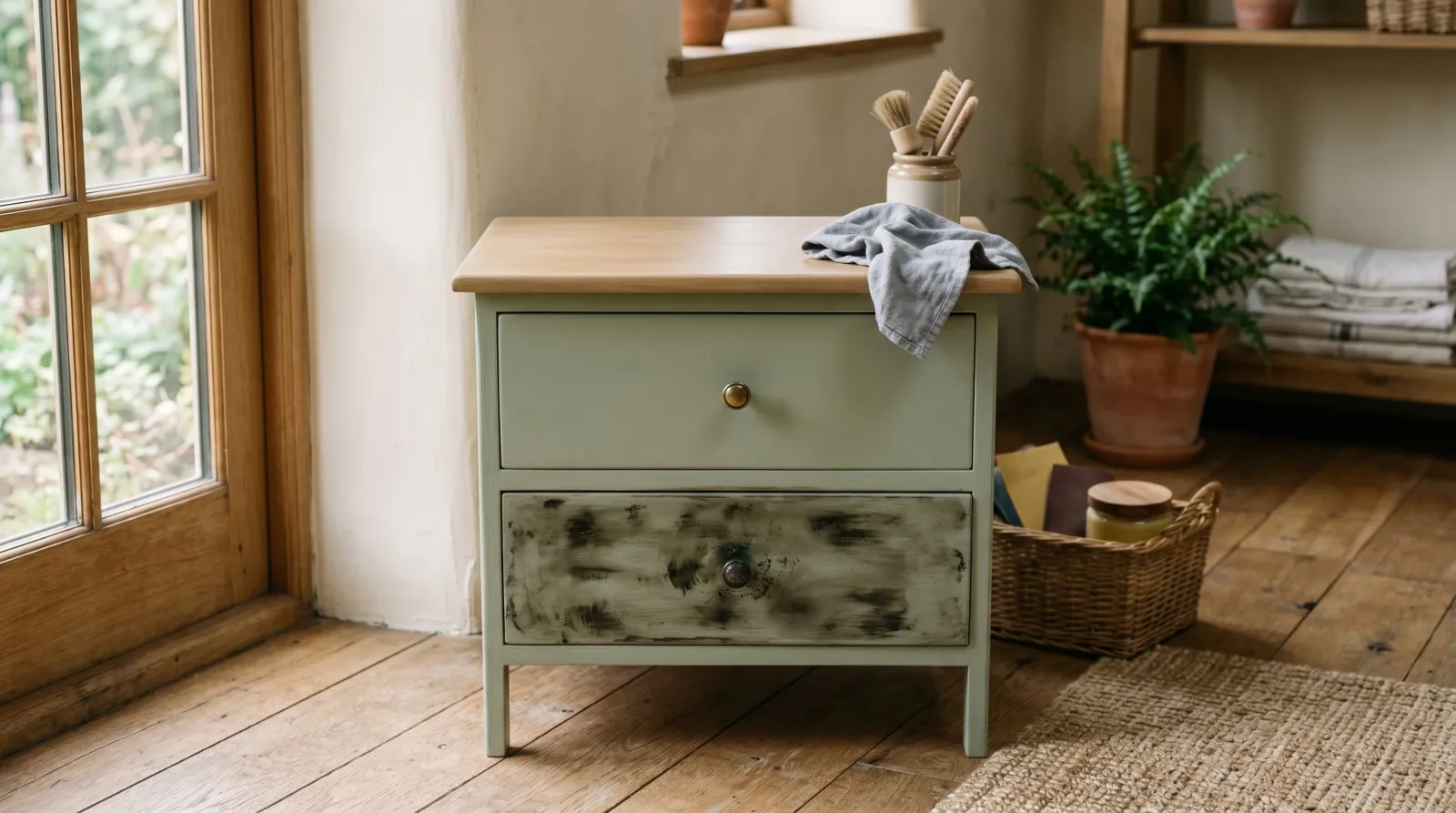
You waxed a piece you loved, reached for the dark wax to give it some age, and now it looks like it spent thirty years in a smoker’s kitchen. Muddy, heavy, blotchy in the brush marks. The most common reason is the one nobody mentions on the tin: you put dark wax straight onto bare chalk paint with no clear wax underneath it. Bare chalk paint is thirsty, it drinks the pigment unevenly, and it grabs hardest where the film is thinnest. The fix below lifts that excess back out while the wax is still soft.
TL;DR
- Dark wax goes too dark when there’s no clear-wax base coat to control how deep it sinks.
- Bare chalk paint is porous and drinks dark wax unevenly, so brush marks and edges go darkest.
- Lift the excess while the wax is fresh: work clear wax over the dark, then wipe it back with a lint-free cloth.
- If it has already cured, switch to a light mineral-spirits strip instead.
- Prevent it next time by sealing with one coat of clear wax first, then applying dark wax in thin passes.
Does This Match What You’re Seeing?
Look at the piece in honest daylight, not under a warm lamp that flatters everything. The way it went wrong tells you how to fix it.
- The whole piece reads too dark and dirty, evenly: you left too much dark wax on and didn’t wipe enough back. The most forgiving version.
- Dark, muddy streaks in the brush marks and grain: the dark wax sank into the texture of an unsealed film. Classic no-clear-wax-first.
- Blotchy, dark in some spots and fine in others: the chalk paint was uneven in porosity, often from over-sanding or a thin coat. The thirsty spots grabbed more.
- Dark only in the carved detail, light on the flats: this one might be right. Dark wax is supposed to settle into recesses. If the flats are clean and only the crevices read deep, you may have the look you wanted.
- A grey or greenish cast over a pale color: dark wax over white or a cool pastel reads cold rather than warm. That’s the pigment fighting your base color, not a mistake in how you applied it.
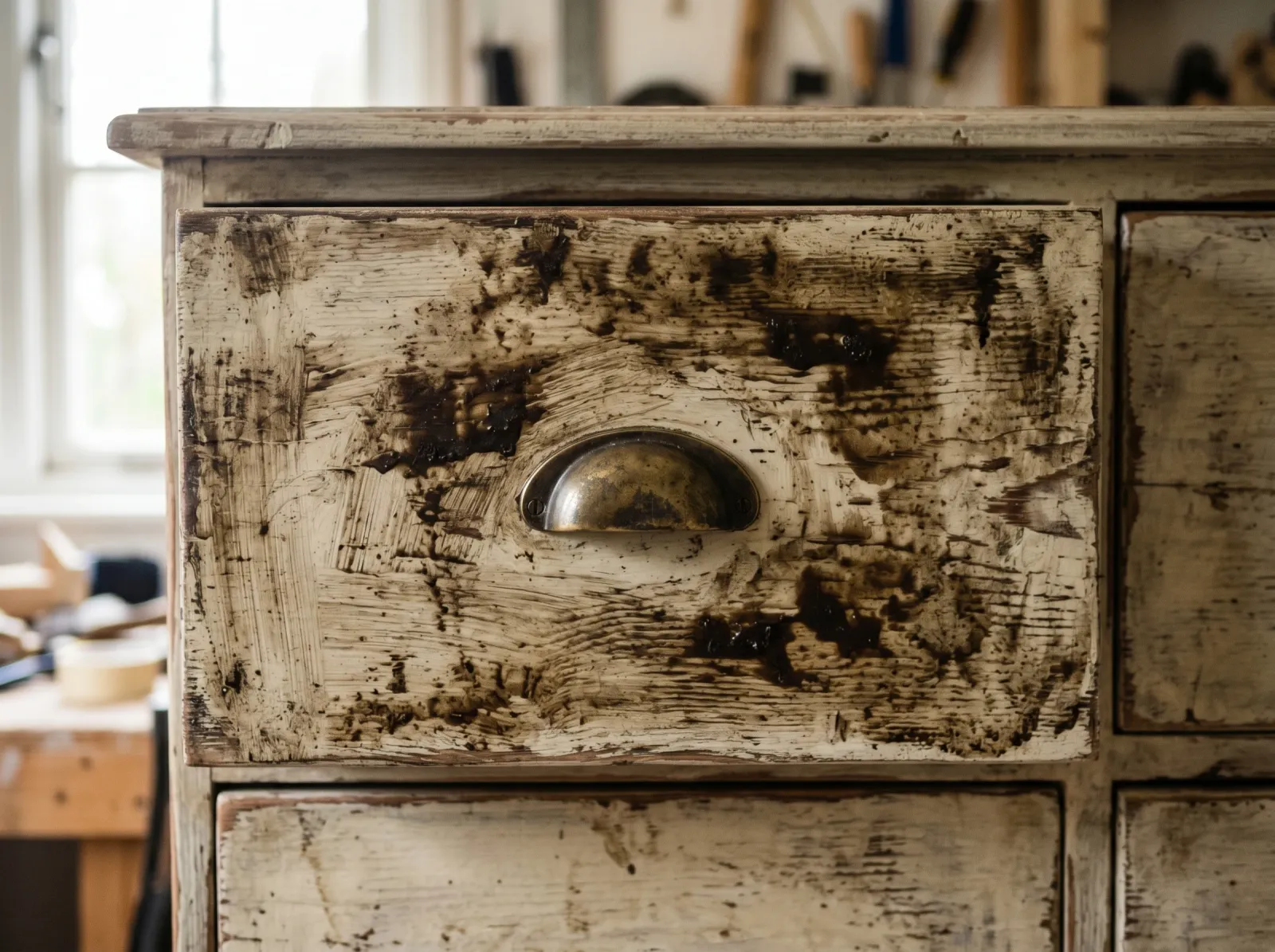 Dark wax sinks fastest into brush marks and bare, thirsty chalk paint. That’s the blotchy look.
If only the recesses are dark and the flats are clean, step back before you fix anything. That’s often the aged look you were after, and you might be about to undo it.
How Serious Is This?
Cosmetic, and very fixable. Nothing has failed. The wax is protecting the paint, the paint is bonded to the wood, and a too-dark finish doesn’t get worse on its own. This is the gentlest kind of furniture problem.
The thing that matters is timing. Soft wax stays workable for hours and can be coaxed back for a day or two, but the window narrows as it cures. Catch it in the first afternoon and the fix is a cloth and more clear wax. Catch it a week later and you’re stripping with solvent, which is more work and a little harder on the paint. So if the piece looks wrong, don’t sleep on it.
Why This Is Happening (root Cause)
Dark wax isn’t a stain or a glaze. It’s clear soft wax with dark pigment ground into it, and it behaves like wax: it sits where you put it and sinks where the surface lets it. Two things decide how dark a piece goes, and both are about the surface underneath, not the wax.
The chalk film is porous, and porous surfaces drink pigment. Chalk paint cures to a soft, matte film full of tiny open pores. (That’s the whole personality of the stuff, covered in the chalk paint explainer.) Those pores pull the dark wax in and hold it. Where the film is thin, over-sanded, or raked with brush marks, they pull harder and go darker. That uneven thirst is what makes a piece blotchy instead of softly aged.
Without a clear-wax base, you can’t move the dark wax back. Clear soft wax, applied first, fills those pores and gives the dark wax a slick surface to sit on, so the pigment rides on top instead of sinking in. Then you can wipe it, blend it, and pull it back to the depth you want. Skip the clear coat and the dark wax bonds straight into the paint. Once it’s in, it’s in. You wipe and wipe and the color barely moves.
There’s a color factor too. Over a cream or soft white, the brown pigment can go grey rather than warm, especially in cool north-facing light, because there’s no warmth in the base color to meet it. The wax didn’t fail. It landed on a color that pulls it cold.
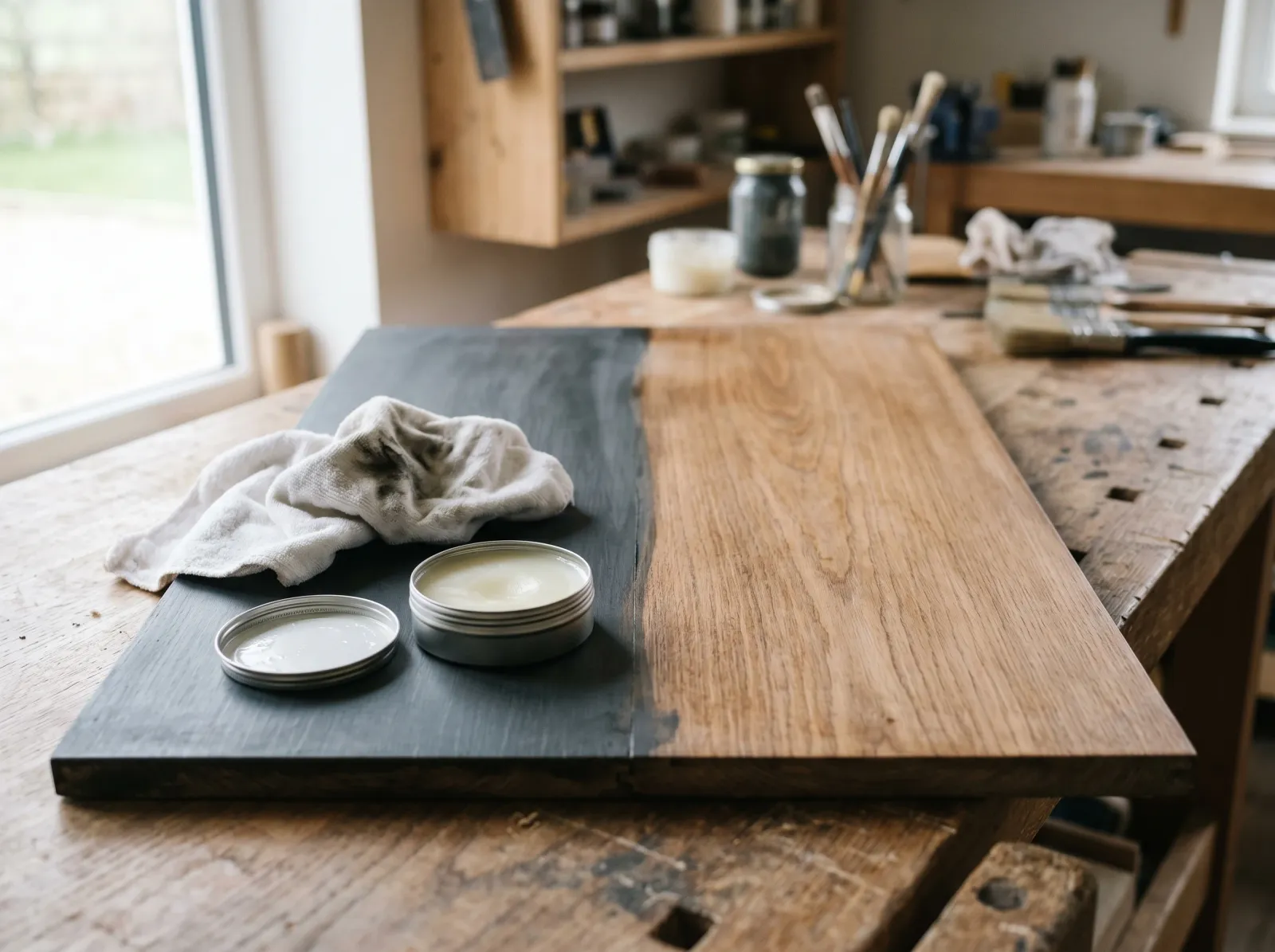 Clear wax over the dark wax loosens it so a cloth can pull it back to an even tone.
The Fix
You have two routes. If the wax is still fresh and soft, lift it with more clear wax, which keeps the finish intact. If it has cured hard, strip it with mineral spirits. Start with the gentle one.
Safety First
Wax and mineral spirits are flammable. Work in a ventilated room, away from any open flame or pilot light, and don’t smoke. Wear nitrile gloves. Mineral-spirits-soaked rags can self-heat as they dry, so never ball them up in a trash can. Lay them flat outdoors to dry fully, then dispose of them. This is a small-piece, open-window job, not a sealed-room one.
Step 1. Lift Fresh Wax With More Clear Wax
While the dark wax is still soft (within the first several hours, and workable up to a day or two), load a clean cloth with clear soft wax and work it over the too-dark area. The fresh clear wax loosens the dark wax already there. Work a small section at a time, then immediately wipe back with a clean lint-free cloth. You’ll see dark pigment transfer onto the cloth and the color lift toward where you want it. Keep flipping to a clean part of the cloth so you’re removing wax, not smearing it around. Stop when the tone reads warm and even rather than muddy.
Step 2. For Cured Wax, Strip With Mineral Spirits
If the wax has hazed over and set, clear wax won’t move it anymore. Dampen a lint-free cloth with mineral spirits, barely wet, and wipe the dark area in light passes. The solvent dissolves the wax and the dried chalk paint stays put, because cured chalk paint isn’t reactivated by solvent. Work in small sections, switch to clean cloth often, and let the solvent flash off for 15 to 30 minutes between passes so you can judge the true color. Go gently around edges where the film is thinnest.
Step 3. Let It Dry, Then Judge in Real Light
Once you’ve lifted the excess, let the surface dry for an hour or two if you used clear wax, or overnight if you used mineral spirits. Then look at it in the light the piece will actually live in. A finish that reads fine under a warm workshop bulb can still look grey by a north-facing window. Carry the piece to where it’ll sit before you decide you’re done.
Step 4. Reseal and Even It Out
Stripping back can leave the finish patchy or under-protected. Go over the whole piece with a thin, even coat of clear soft wax to reseal it and unify the sheen. Apply it sparingly, wipe off the excess, and let it haze. If you still want a touch of age, add a whisper of dark wax the right way now: clear base already down, a tiny amount of dark on the brush, worked only into the recesses and wiped back hard on the flats.
Step 5. Buff Once It Has Cured
After 24 hours the wax is firm enough to buff. Take a clean, dry lint-free cloth and buff in circles to bring up a soft, low sheen. Buffing blends any remaining unevenness and warms the whole finish. Full cure takes two to three weeks, so treat the piece gently until then.
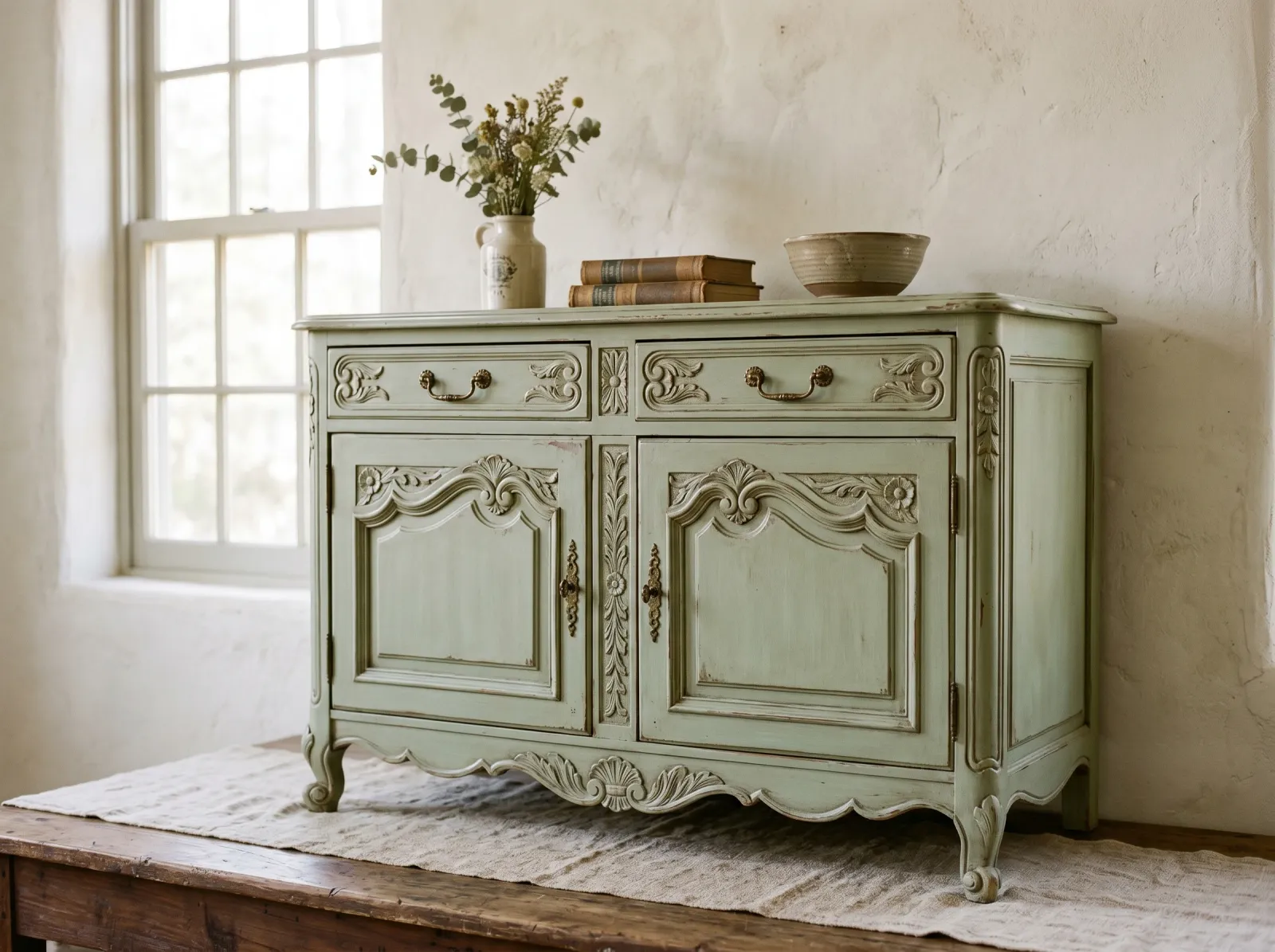 Resealed and buffed, the dark wax reads as warmth in the detail instead of mud on the flats.
Recommended Approach
There isn’t one magic product here. The fix is technique, and the products are ordinary: a tin of clear soft wax (Annie Sloan, Rust-Oleum, or any furniture-grade soft wax), odorless mineral spirits, nitrile gloves, and a stack of lint-free cloths. Old cotton T-shirts beat paper towels, which shed lint into the wax. The one thing that separates a good result from a muddy one is keeping a clean section of cloth under your hand at all times, so you carry pigment off the piece instead of dragging it back.
Prevention
Getting dark wax right is mostly about what you do before the dark wax ever touches the piece.
- Seal with clear wax first, always. One thin even coat of clear soft wax over the whole piece, wiped back, before any dark wax. This is the step that makes dark wax controllable instead of permanent. Skip nothing else, but never skip this.
- Apply dark wax thin and work small. Load only a corner of the brush, work a section the size of a dinner plate, then wipe back immediately while it’s soft.
- Wipe back more than feels right. Dark wax always looks too heavy when it’s wet. Pull most of it off and let it settle into the recesses, which is where it belongs.
- Test on the back or an underside first. Every color takes dark wax differently. A cream goes grey, an espresso goes rich. See what your base does before you commit the show face.
- Mind your light. Dark wax over a pale color reads cold in north-facing rooms, where cool daylight drains the warmth out of the brown pigment. If the piece lives in cool light, go lighter than you think.
If you want age without the risk of dark wax at all, sanding back the edges and high points gives the same worn look with no pigment to manage. The chalk-paint distressing guide walks through that approach.
When to Repaint Instead
Sometimes the dark wax is so deep, or so blotchy, that stripping it back isn’t worth the fight. Repaint, but do it correctly, because chalk paint will not bond over wax.
- Strip the wax off completely with mineral spirits and let the piece dry overnight.
- Prime with a bonding or shellac-based primer, which grips the waxy residue that fresh chalk paint can’t.
- Repaint with two coats, then seal again, clear wax under any dark.
Skip the primer and the new paint stays tacky or peels, the way painting over wax always fails. If the piece is already going tacky and won’t cure, the cause is usually wax or oil under the paint, and tacky furniture that won’t cure covers that diagnosis.
FAQ
Can I just paint over dark wax that went too dark? Not directly. Chalk paint won’t bond over a waxed surface. Strip the wax with mineral spirits, dry overnight, then prime with a bonding or shellac-based primer before repainting. Skip that and the new color peels within weeks.
Does dark wax get lighter as it cures? Only a little, in the first few hours while it hazes and you buff. After it sets it stays where it is. If a piece reads muddy once it has hazed, it’ll stay muddy, so correct it early while the wax is soft.
Why did my dark wax go blotchy instead of even? The chalk film underneath wasn’t sealed evenly. Bare chalk paint drinks dark wax fastest where the paint is thinnest, so brush marks and edges go darker. A clear-wax base coat fills that thirst and lets the dark wax sit on top where you can wipe it back even.
Will mineral spirits ruin the chalk paint underneath? Used lightly, no. A barely-damp cloth dissolves wax while the cured chalk paint stays put, since dried chalk paint isn’t reactivated by solvent the way it is by water. Keep the cloth light and stop the moment the color comes back.
Ask a Question