How to Block Marker and Crayon Stains
Marker and crayon bleed through latex paint because they are dye and wax, not dirt. Here is how to block marker stains for good with the right primer and topcoat.

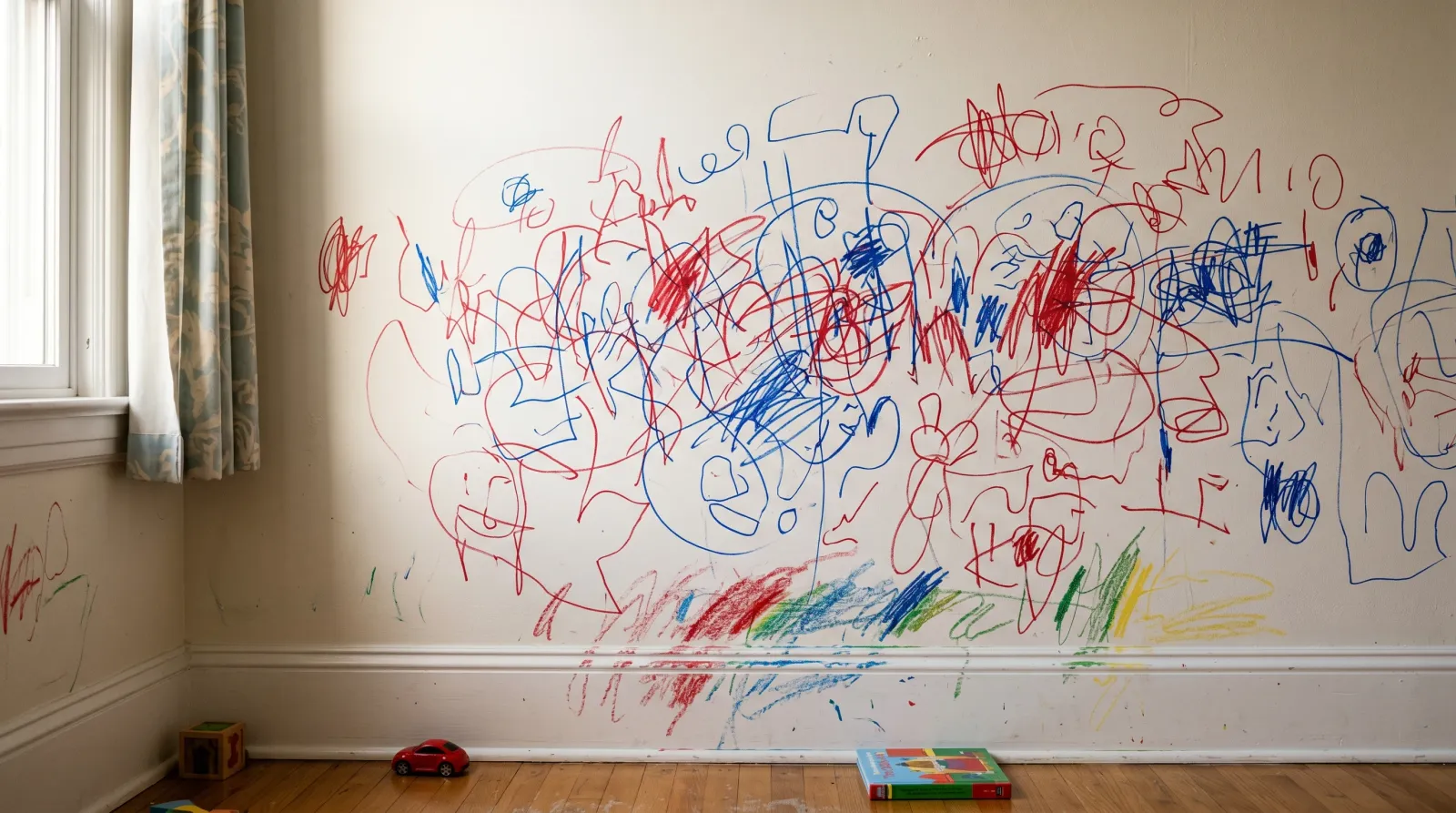
Marker and crayon don’t wipe off and they don’t paint over. They bleed. Roll regular wall paint across a Sharpie scribble and the dye rides right back up through the wet film. Block it first, then paint. That’s the whole job.
Does This Match What You’re Seeing?
Confirm what you’ve got before you open a can. The fix depends on it.
- Pink, blue, or red ghost lines through fresh white paint: permanent marker or Sharpie dye bleeding through a water-based topcoat. The classic.
- Greasy, waxy streaks that paint beads off of: crayon. Two problems in one: wax repels paint, pigment bleeds.
- Faint gray scribble that scrubs partly away: pencil. The easiest of the bunch, but still bleeds a little under flat paint.
- A clean spot that reappears days after painting: ballpoint or gel ink. Water-based and dye-heavy, behaves like marker.
- Yellow-brown halo, not a line: that’s a water stain, not ink. Different page. See how to fix water stains on a ceiling.
If a kid got to a wall, you’re usually dealing with marker and crayon together. Treat for both.
How Serious Is This?
Cosmetic. Nothing structural, nothing toxic in the wall. The film underneath is fine; you’ve got a dye sitting on top of it. This is a same-afternoon fix on a small area, an evening on a whole kid’s room.
The one thing that makes it drag out is trying to paint over it without a stain blocker. People do three and four coats, watch the stain come back every time, and decide the paint is bad. The paint is fine. The dye just laughs at water-based paint.
Why This Is Happening (root Cause)
Marker, ink, and crayon aren’t dirt. They’re colorant, and colorant moves.
Permanent marker is dye dissolved in a solvent. When the solvent flashes off, the dye stays bonded to the wall. Roll a water-based wall paint over it and the wet paint acts like a fresh solvent. It re-wets the dye, the dye dissolves into your topcoat, and it migrates up to the surface as the film dries. The coat looks clean while it’s wet. Then it dries and the stain is back. Add another coat and you re-wet it again. You can chase this forever.
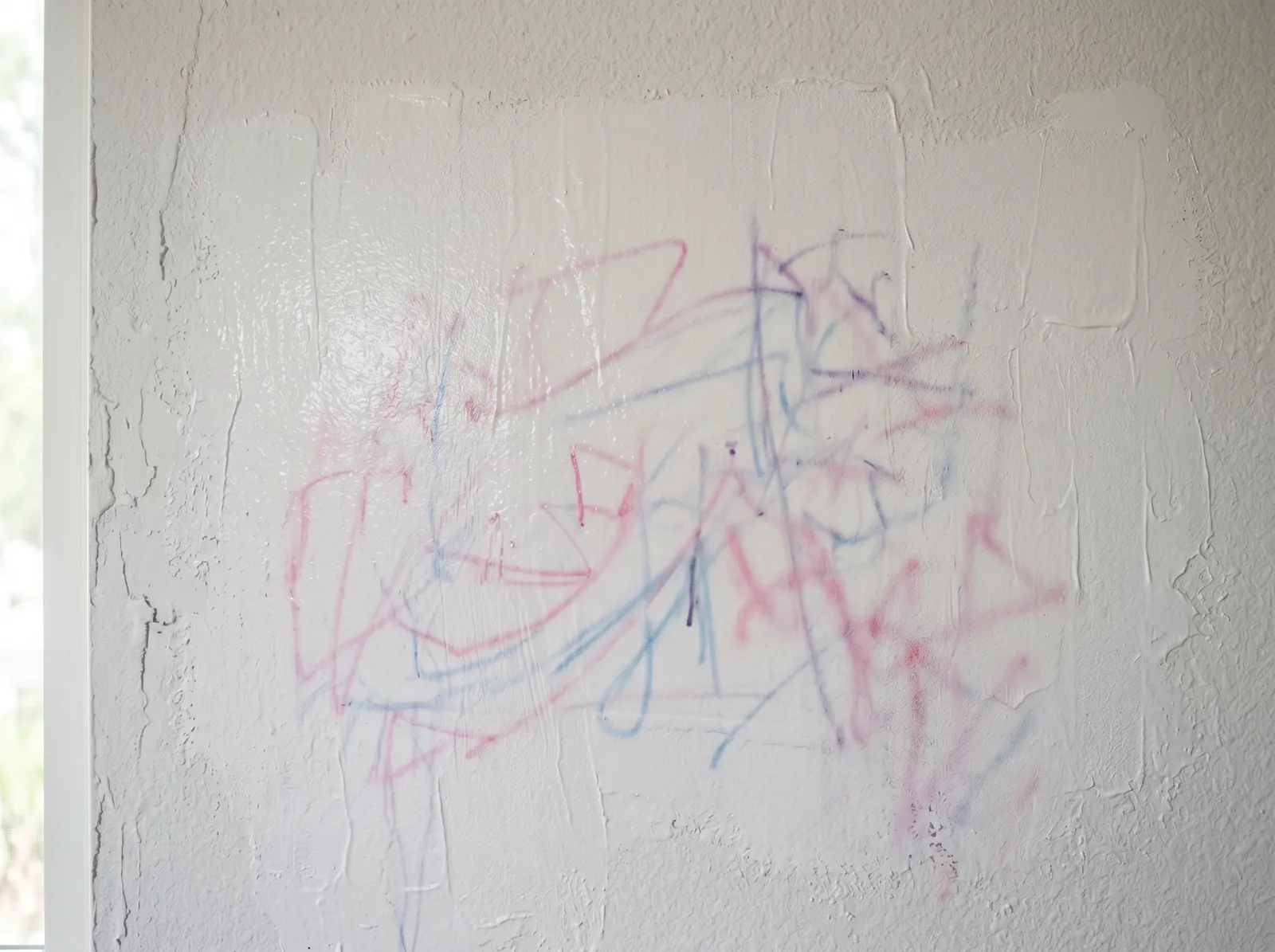 One coat of wall paint went on clean and dried with the old marker bleeding straight back through.
Crayon brings a second problem. It’s wax plus pigment. The wax is greasy, so paint won’t bond to it; it beads up or fish-eyes. The pigment still bleeds the same way the dye does. So crayon needs the grease gone and the color blocked.
The fix for all of it is a primer the dye can’t dissolve into. Shellac-based and oil-based primers cure with a solvent the water-based dye won’t re-wet. Seal the stain under one of those and it’s done. The topcoat never touches the dye again.
The Fix
Step 1. Clean the Surface First
Wash the area with warm water and a little dish soap. For crayon, this is where you get the wax off. A soft cloth, light pressure. Stubborn crayon comes off with a rag dampened in mineral spirits; work small and wipe dry after.
Don’t scrub marker hard hoping it’ll lift. It won’t, and you’ll polish the wall sheen unevenly. Just get the dust and grease off so the primer bonds. Let the wall dry an hour.
Safety First
Never mix bleach with vinegar, ammonia, or any other cleaner. That combination makes toxic gas. If you’re tempted to hit a stain with a household cleaner before priming, pick one product, rinse with clean water, and let it dry before anything else goes on.
Shellac and oil-based primers are strong-smelling and high in solvents. Open windows, run a fan, wear a respirator rated for organic vapors if you’re doing a whole room. Gloves too; shellac is a pain to get off skin.
Step 2. Spot-Prime With a Stain Blocker
This is the step that does the work. Match the primer to the stain.
- Permanent marker, Sharpie, ink, red or blue dye: Zinsser BIN (shellac-based). The strongest household stain blocker sold. Dries to recoat in about 45 minutes.
- Crayon, after the wax is off: BIN or an oil-based blocker like Zinsser Cover Stain. Oil tolerates a trace of residual grease better.
- Light pencil or a faint mark: Zinsser Bulls Eye 1-2-3 (water-based) can hold. Save the shellac for the stubborn stuff.
Brush or roll a thin, even coat over the stain and a couple inches past it. One coat covers most marker. Let it dry the full recoat time on the can before you judge it. If a faint line still shows, hit it with a second coat. Shellac dries fast, so a second coat costs you 45 minutes, not a day.
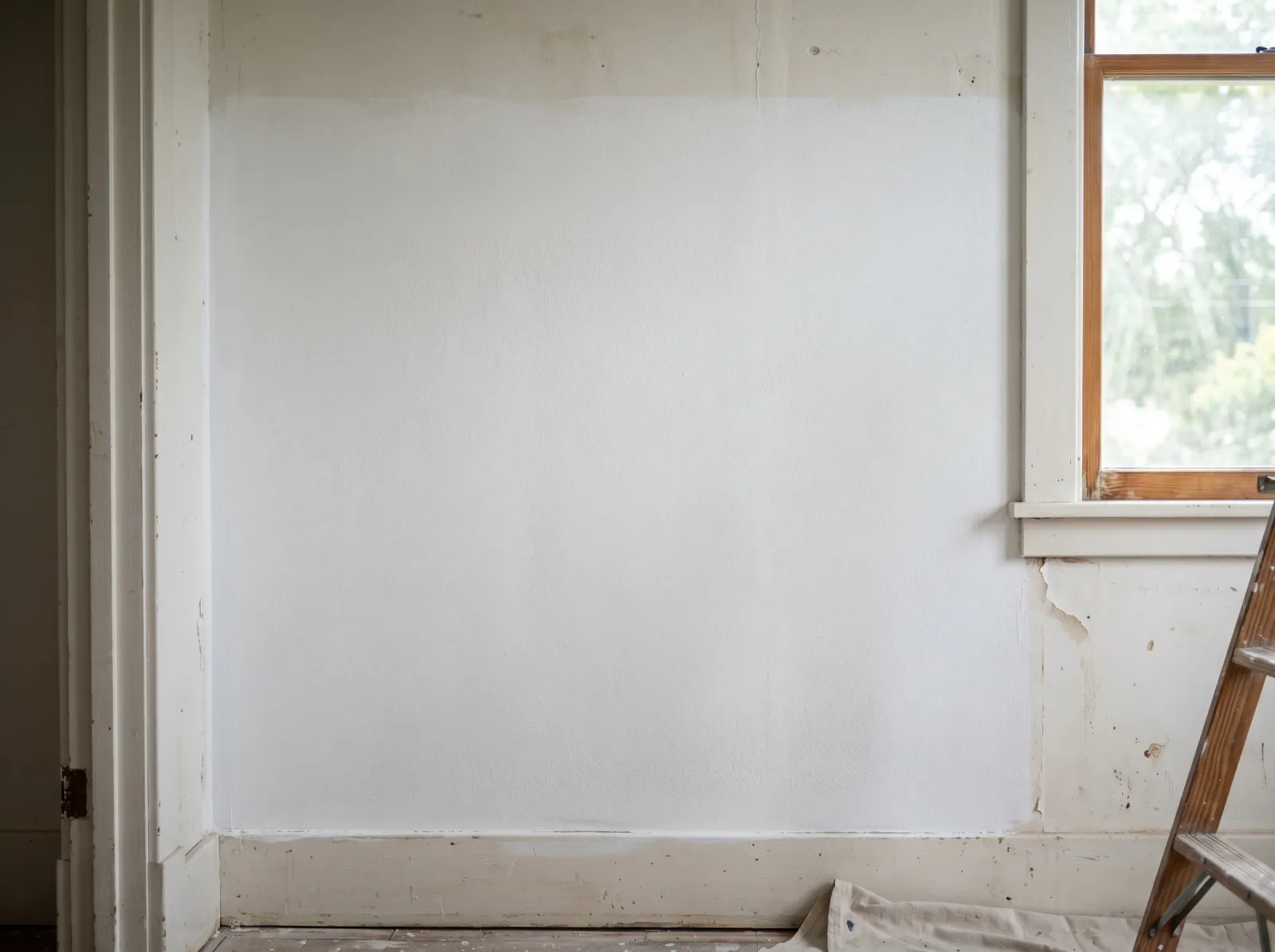 A coat of shellac primer over the scribbles. The dye is sealed under it and won’t re-wet.
Step 3. Topcoat With Your Wall Paint
Once the primer is dry and the stain is gone under it, paint like normal. Two coats of your wall paint, color of your choice. The primer is the seal; the topcoat is just color and sheen.
Feather your primer edge so it doesn’t telegraph. If you spot-primed a small patch in the middle of a wall, sometimes the flashing reads through a single topcoat. Two coats over the whole wall hides it. On a kid’s room I’d repaint the full wall anyway, since there’s rarely just one mark.
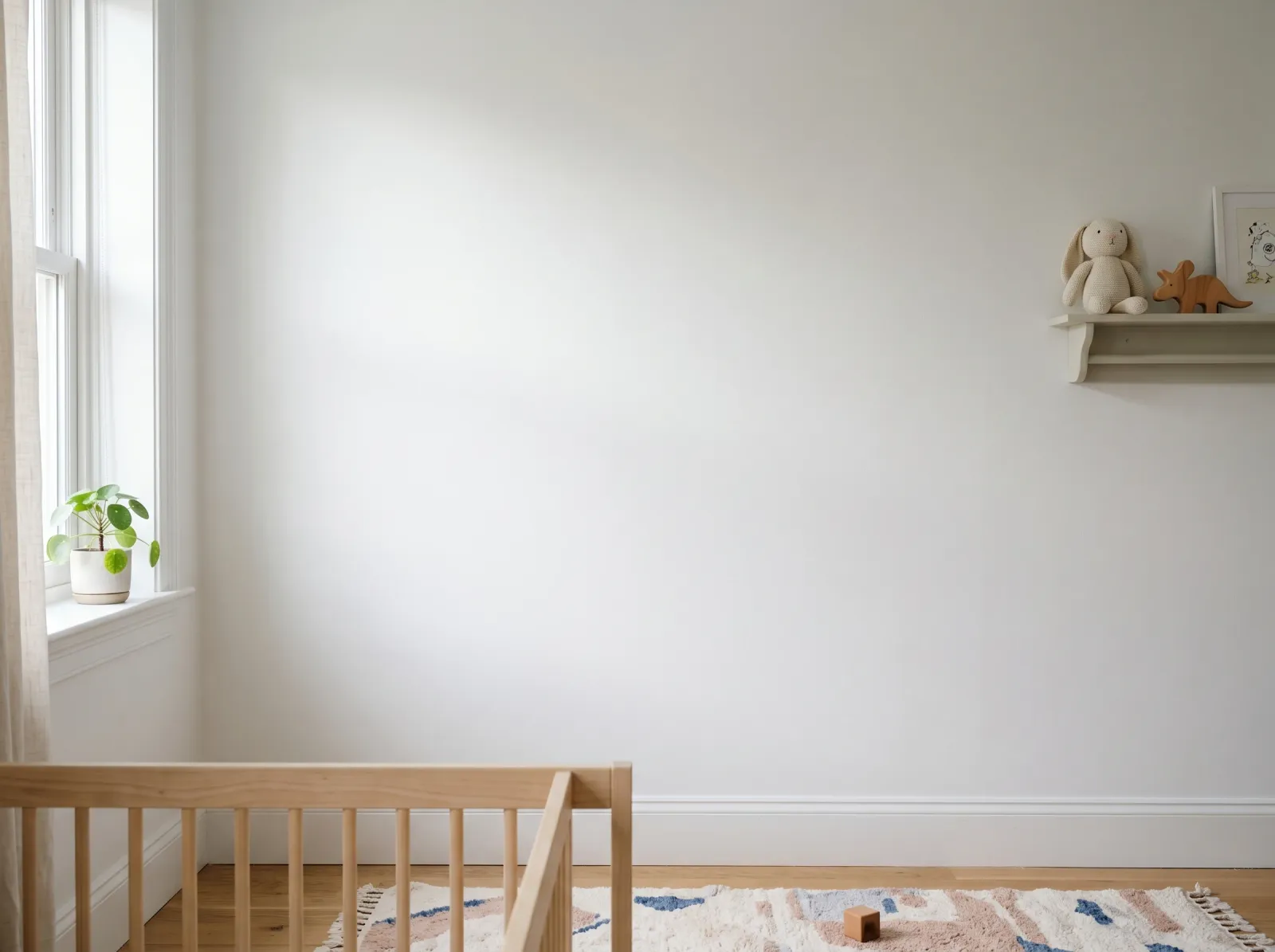 Two coats of wall paint over the sealed primer. No ghost lines, no bleed-back.
Which Primer for Which Stain
| Stain | Cleaning first | Primer to use | Coats |
|---|---|---|---|
| Permanent marker / Sharpie | Soap and water | Zinsser BIN (shellac) | 1–2 |
| Ballpoint / gel ink | Soap and water | Zinsser BIN (shellac) | 1–2 |
| Crayon | Soap, then mineral spirits on wax | BIN or Cover Stain (oil) | 1–2 |
| Pencil | Soap and water | Bulls Eye 1-2-3 (water) | 1 |
| Highlighter / dye marker | Soap and water | Zinsser BIN (shellac) | 2 |
Shellac is the workhorse here. When in doubt on a colored dye, reach for BIN. Read more on what shellac primer does and why it blocks what water-based primers can’t.
Recommended Product
Zinsser BIN seals dye and ink that nothing water-based will hold. Shellac-based, white, dries to recoat in about 45 minutes, sands smooth. One quart covers more kid art than you’d think. It’s the same can painters reach for on smoke, pet, and water damage, so it earns its shelf space beyond marker.
For crayon with a lot of wax, Zinsser Cover Stain (oil-based) is more forgiving of residual grease. Either one blocks the color. The shellac just dries faster.
If you want the full picture on which primer goes where, see the best primer round-up.
Prevention
You can’t stop a toddler with a marker. You can make the next round easier.
- Use a scrubbable paint on kid-zone walls. Satin or semi-gloss wipes clean where flat won’t. Marker still won’t fully wipe off, but spills and smudges will. See the sheen guide for what cleans up.
- Keep a half-pint of BIN and the leftover wall color on a shelf. Touch-ups take ten minutes when the supplies are already in the house.
- Buy washable markers for the under-five crowd. They still stain a flat wall, but they come off a satin one with a damp cloth.
- Prime new kid-room walls right the first time. If you’re painting a nursery anyway, a scrubbable finish pays off the first time someone gets creative.
When to Call a Pro
Most marker and crayon is a DIY afternoon. Call someone if:
- The wall is in a pre-1978 home and you need to sand a glossy or damaged spot before priming. Old paint may be lead. Test first; don’t dry-sand it. See the lead rules under how to fix peeling paint.
- The stain is spray paint or industrial ink over a large area. That’s a strip-or-replace conversation, not a spot-prime.
- You’re staring at a whole room of permanent marker on textured or delicate plaster and the prep is more than you want to take on.
Common Mistakes
- Painting over marker with wall paint and hoping. It re-wets the dye every coat. Block it first or chase it forever.
- Using a water-based primer on permanent marker. Same problem as the topcoat. It lets the dye creep through. Use shellac.
- Skipping the wax removal on crayon. Primer fish-eyes over the grease and you get a blotchy patch.
- Judging the primer while it’s wet. Shellac looks streaky going on. Let it dry the full recoat time before you decide it needs a second coat.
- Spot-priming a tiny patch and one-coating the wall. The flash spot reads through. Two coats over the whole wall, or repaint the wall.
What’ll Bite You in Two Years
You’ll see the stain again only if you cheated the primer. Roll wall paint straight over marker now and it’ll ghost back within the week, but the slow version is worse. A thin or water-based blocker holds for a few months, then humidity and time let the dye creep up, and you’re repainting a wall you thought was done. Block it once with shellac and it stays blocked for the life of the wall. Half-block it and you’re back here.