Paint vs Stain for Refinishing Furniture
Paint vs stain for furniture, settled. Five dimensions, a winner each, and which one to pick for your dresser, table, or beat-up thrift find.

The 30-Second Answer
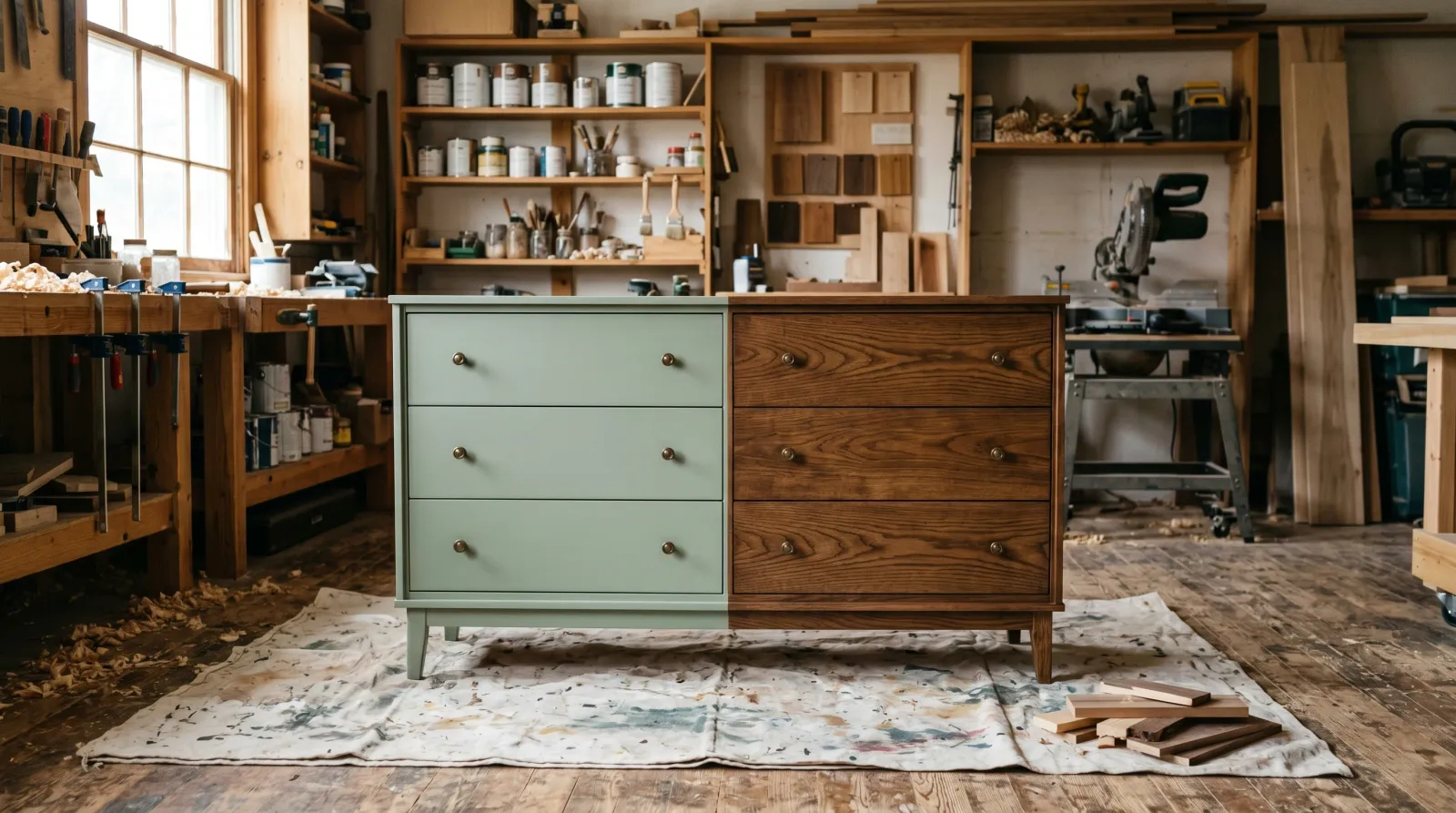
Stain when the wood is solid and the grain is worth looking at. Oak, walnut, cherry, a real maple dresser. Paint when the wood is plain, damaged, mismatched, or made of MDF or plywood that has no grain to show. Paint hides. Stain reveals. That’s the whole decision in one line, and 90% of the time the piece itself tells you which way to go.
At a Glance
| Paint | Stain | |
|---|---|---|
| Durability (with topcoat) | ✓✓ | ✓✓ |
| Prep & application | ✓✓ (forgiving) | ✗ (unforgiving) |
| Hides flaws | ✓✓ | ✗ |
| Shows wood grain | ✗ | ✓✓ |
| Repairability | ✓✓ (spot touch-up) | ✗ (often whole piece) |
| Cost on one piece | $ | $$ |
How to Tell Which Your Piece Can Take
Find a hidden spot, the back of a leg or under the lip of a drawer. Sand a quarter-sized patch down to bare wood. Look at what shows up.
Real grain with figure and depth means it’s solid wood and a candidate for stain. Flat, fuzzy, paper-edged layers mean plywood or veneer over a core, and the veneer is thin enough that one aggressive sanding goes through it. A smooth tan board with no grain at all is MDF, which can’t be stained at all. Wet the bare patch with a little mineral spirits. If the grain pops and looks rich, stain it. If it looks like nothing, paint it.
Durability
Color isn’t what protects furniture. The topcoat is. Bare stain offers almost no protection on its own, so a stained piece gets two or three coats of polyurethane or a wipe-on finish over the color. Paint, if it’s a cabinet-grade enamel, builds its own film but still wears better with a clear coat on a tabletop.
Done right, both last. A stained-and-poly oak table and a painted-and-clear-coated dresser will both go a decade without trouble. Done wrong is where they split. Skip the topcoat over stain and it’ll water-ring the first time someone sets down a sweating glass. Use wall paint instead of furniture enamel and it’ll chip at every drawer edge inside a year.
Winner: Tie when both get a proper topcoat. Without one, neither lasts.
Prep & Application
Paint forgives. Scuff-sand the old finish with 150-grit, knock the sheen down, wipe clean, hit it with a bonding or stain-blocking primer, then two coats of enamel. You don’t have to strip anything. Small dings disappear under primer and a little wood filler.
Stain punishes every shortcut. It soaks into bare wood, so the old finish has to come off completely, by stripper or by sanding through to raw fiber. Miss a patch of old sealer and the stain skips it, leaving a blotch you can see across the room. Softwoods like pine make it worse. Pine drinks stain unevenly and goes splotchy unless you seal it first with a pre-stain conditioner.
I see the same job every spring: someone sanded the top of a dresser but not the corners, stained it, and now there are pale ghost rings where the old finish hid from the sander. There’s no fixing that without starting over.
Winner: Paint. It’s the difference between a forgiving job and one that bites you for one missed inch.
Hides Flaws vs Shows Grain
This is the real fork in the road. Stain is transparent. Every gouge, every filled screw hole, every water stain in the wood telegraphs straight through it. Filler under stain almost never matches, so it reads as a dark or light smudge forever.
Paint is opaque. It buries dings, color mismatches, repaired joints, and the seam where someone glued on a new board. A thrift-store dresser with three kinds of wood and a cracked corner becomes one clean color. For a damaged or Frankenstein piece, paint is the only honest answer.
So the question isn’t which looks better. It’s what you’re starting with. Beautiful grain wants stain. A rough or mismatched piece wants paint.
Winner: Depends on the piece. Stain for grain worth showing, paint for everything else.
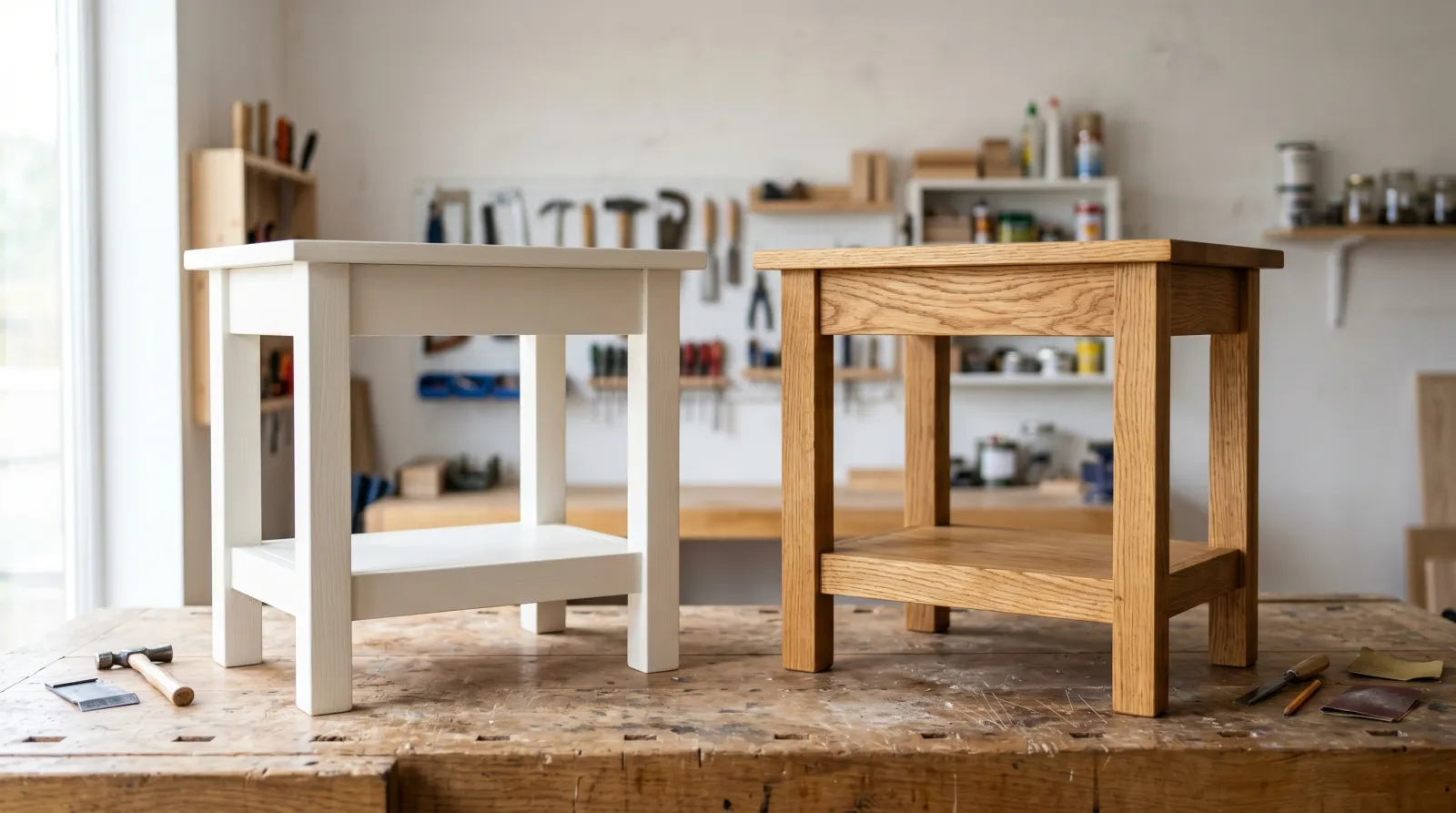 Same table, two finishes. The stain on the right shows the grain; the paint on the left hides whatever’s underneath.
Repairability
Furniture gets banged up. How easy it is to fix later is a fair part of the decision.
Painted furniture spot-fixes well. Chip a corner, sand it smooth, dab on a little matching enamel, feather the edge, and it disappears. Keep the leftover quart labeled and you’re set for years.
Stain is harder to touch up cleanly. A scratch through a stained-and-poly surface shows bare wood, and matching the original stain color plus the sheen of the old poly rarely lands right. Most stained pieces that get damaged enough to notice end up getting the whole surface sanded and recoated. A gel stain blended into the scratch can hide minor damage, but it’s fussy work.
Winner: Paint. Spot touch-up beats refinishing a whole top every time.
Cost & Time
On one dresser the dollars run close. A quart of furniture enamel and a small can of primer cover most pieces for $30 to $50. Stain is cheap by the can, but you’re also buying a topcoat and burning more hours on stripping and sanding, so it lands around $40 to $60 by the time you’re done.
Time is the bigger gap. A painted dresser is a weekend: scuff, prime, two coats, dry. A stained piece adds a full strip-or-sand-to-bare day on the front and three thin poly coats with sanding between on the back. Plan on a stained refinish taking roughly half again as long as a painted one.
Winner: Paint on speed. Cost is close enough to call a tie.
Verdict by Use Case
- Pick paint if: the wood is plain, damaged, or mismatched; it’s MDF, plywood, or laminate; you want a color, not wood tone; or you want easy touch-ups later. Most thrift and big-box furniture lands here.
- Pick stain if: the piece is solid hardwood with grain you’d be sad to cover, you want warmth over color, and you’re willing to strip to bare wood and topcoat properly.
- It’s basically a tie when: you’ve got a clean solid-wood piece and genuinely like both looks. Then pick on effort. Paint is the faster, more forgiving road.
One in-between option worth knowing: gel stain. It’s thick enough to sit on existing finishes and reads like a darker wood tone without full stripping. It’s a middle path when the wood is okay but the prep budget is zero.
Common Mistakes
Staining over a sealed finish. Stain needs bare wood. Over old sealer or poly it just wipes off muddy. Strip first.
Painting with wall paint. Flat or eggshell wall paint chips off drawer edges fast. Use a cabinet-grade enamel made for high-touch surfaces. The best furniture paint round-up covers the ones that actually hold.
Skipping the topcoat on stain. Stain colors, it doesn’t protect. No poly means the first wet glass leaves a permanent ring.
Skipping primer when painting over old stain. Old stain and wood tannins bleed up through fresh paint as yellow or pink ghosts. A stain-blocking primer like BIN or Cover Stain stops it. The walkthrough for painting over stained wood has the full sequence.
Sanding through veneer. Veneer over a core is paper-thin. One heavy pass with coarse paper and you’re into the substrate, which can’t be stained. On veneer, paint is almost always the safer call.
Top Picks by Side
Going with paint? See the best furniture paint for enamels that survive daily handling, and the step-by-step on repainting furniture.
Going with stain? Choose by wood and use. The best deck stain round-up covers exterior-grade options if the piece lives outside; for indoor furniture, an oil-based interior wood stain plus polyurethane is the standard kit.