How to Paint Over Stained Wood
How to paint over stained wood without bleed-through or peeling: the deglosser-and-bonding-primer system that sticks to old varnish, plus the one primer that blocks tannin.

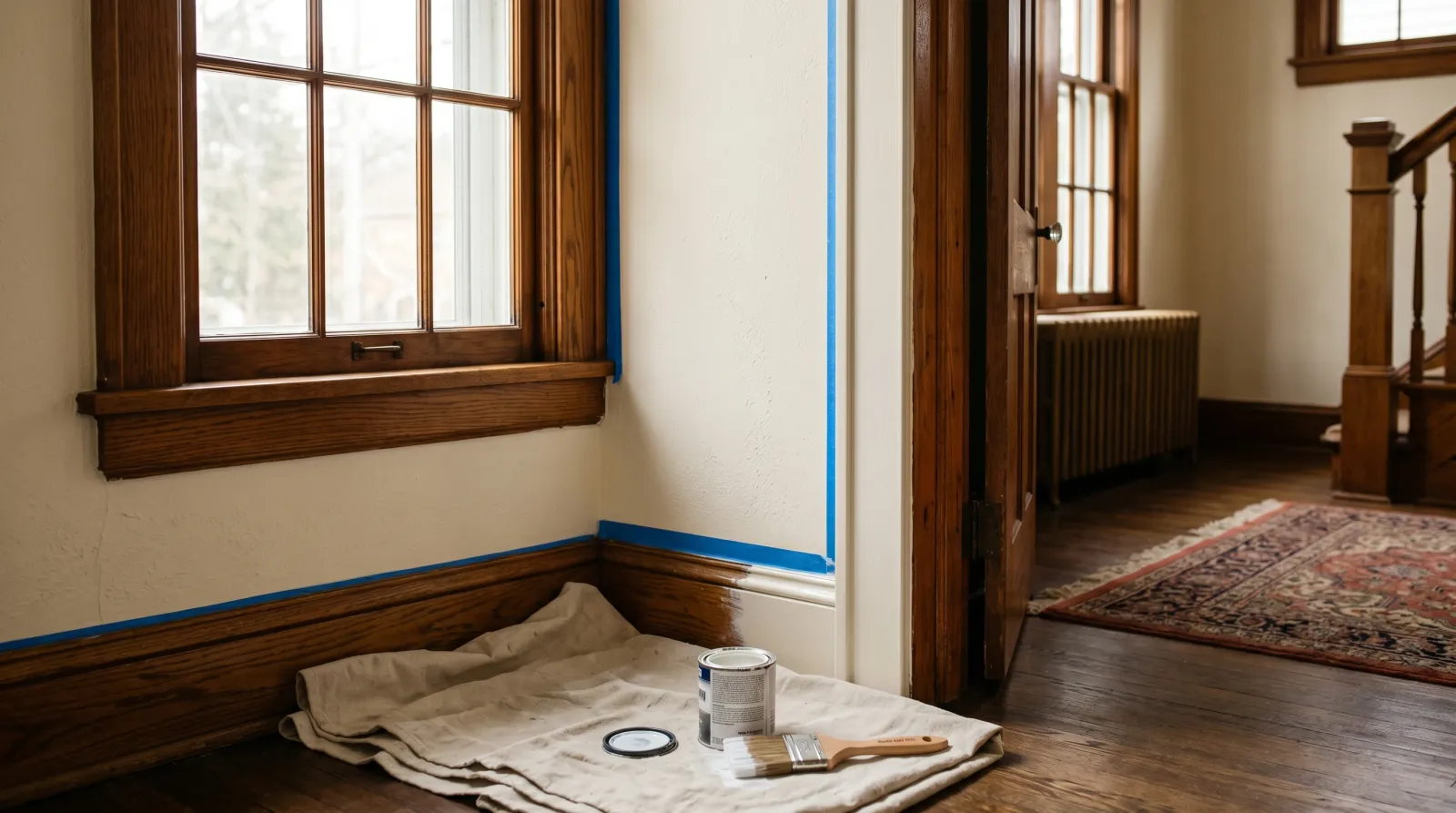
Painting over stained wood fails for two reasons, and both happen under the paint. The old varnish is too slick for the paint to grip, and the stain underneath bleeds up through it. Get the primer call right and neither one bites you. Get it wrong and you’re scraping the whole thing off next spring.
TL;DR
- Clean first: TSP or degreaser, especially on kitchen and bathroom wood
- Degloss: scuff-sand to 220-grit or use a liquid deglosser on the slick varnish
- Prime for grip: Insl-X Stix or Bulls Eye 1-2-3 bonding primer
- Prime for bleed: Zinsser BIN shellac on oak, knotty pine, or water-stained wood
- Paint: waterborne alkyd or 100% acrylic enamel, two coats
- Cure: 14-30 days before scrubbing or stacking objects on it
- Skill: medium. The prep is the whole job
What “Stained Wood” Usually Means Here
When people say they want to paint over stained wood, they almost never mean raw wood with a stain soaked in and nothing else. They mean wood that was stained and then sealed: a coat of color, then polyurethane, varnish, lacquer, or shellac on top. That clear topcoat is glossy and hard, and it’s the first thing your paint has to deal with.
So you’re solving two surfaces at once. The slick clear coat on top, which fights adhesion. And the stain and natural tannin underneath, which fights from below by bleeding through.
Why Stained Wood Fights Paint
Latex and acrylic paints bond by mechanical grip and a little chemical bite. They need a surface with some tooth. A cured polyurethane or varnish has almost none. Brush paint straight onto it and the film sits on top like water on a waxed car. It dries, looks fine for a few weeks, then peels off in sheets the first time a chair back rubs the baseboard.
The second problem is the stain itself. Wood stain is pigment and dye suspended in a carrier. Oak and pine also carry natural tannin. All of it is happy to dissolve into a fresh waterborne primer or paint film as it cures, then migrate to the surface as an amber or brown halo. You paint a white door, and three days later it’s blooming tan along the grain lines.
Old varnish is slick. Stain bleeds. That’s the whole fight.
Step 1: Clean the Wood
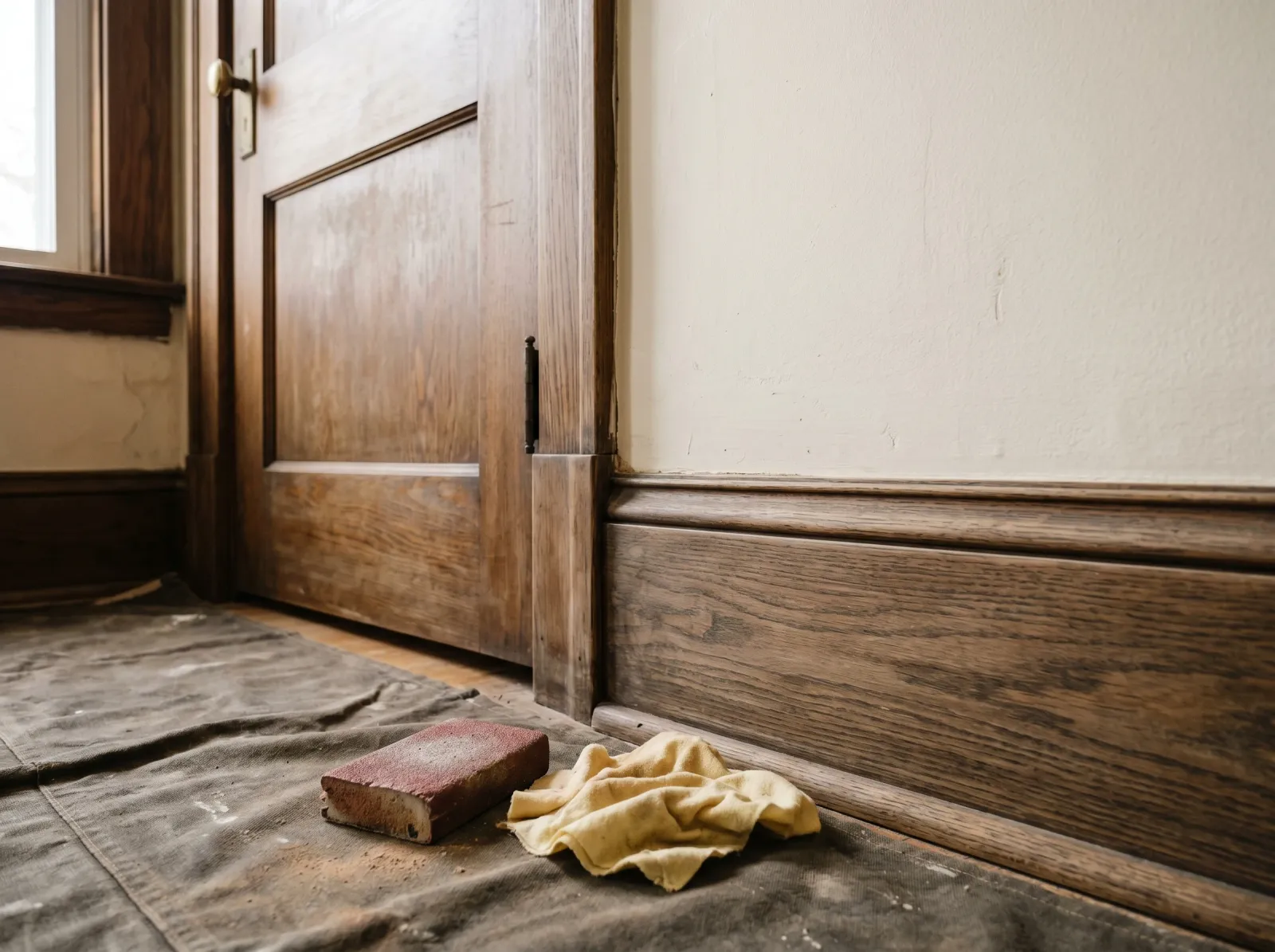
TSP wipe to cut the kitchen grease, then 220-grit to break the sheen off the old varnish. Tack-cloth before anything else.
Stained wood that’s been living in a house for years is dirty in a way you can’t see. Furniture polish, hand oil on a stair rail, airborne kitchen grease on cabinet doors and the trim near the stove. Primer won’t bond through any of it.
Wipe everything down with a TSP solution (half a cup per gallon of warm water) or a TSP substitute on a damp rag. For kitchen cabinets and the trim around a range, use a real degreaser. Krud Kutter or a strong dish-soap solution both cut cooking film that TSP alone leaves behind. Rinse with clean water, let it dry a full hour.
Skip this on a stair rail or a kitchen door and your primer bonds to the grease instead of the wood. Then the grease lets go, and the primer goes with it.
Step 2: Degloss the Old Finish
You have two ways to kill the gloss, and you pick based on the shape of the wood.
Flat and simple surfaces (doors, flat trim, paneling): scuff-sand with 220-grit. You’re not stripping anything. You’re scratching the shine off the clear coat so the primer has tooth to grab. The whole surface should go from glossy to a uniform dull haze. Any spot that’s still shiny is a spot the paint will peel off later. Sand it again.
Carved profiles, spindles, raised-panel doors, fluted casings: sandpaper can’t reach into the detail, and you’ll burn through hours trying. Use a liquid deglosser instead. Klean-Strip Easy Deglosser or Krud Kutter Gloss-Off, wiped on with a rag, dulls the gloss chemically. It softens the top of the varnish enough for the primer to bite. Work in a ventilated room, wear gloves, follow the can on dwell and recoat time.
A lot of people want to do neither. A bonding primer plus a deglosser is the real “no-sand” path, and it works on intact, sound varnish. It does not work over greasy or flaking finish. If the old clear coat is already lifting, you’re past deglossing. Scrape the loose stuff and spot-prime the bare wood.
Step 3: Fill, Caulk, Repair
Dents, gouges, and old nail holes get paintable wood filler pressed in with a flexible putty knife, slightly overfilled, sanded flush once it’s dry. On trim, the gap between the wood and the wall reads as a dark shadow line under paint. Run a bead of paintable acrylic caulk down that joint and tool it flat with a wet finger.
Open-grain oak has a decision point here. The grain texture shows through paint. If you want it gone, skim the surface with a thin coat of spackle or a dedicated grain filler, sand it flat, and you’ll get a smooth painted finish like MDF trim. Most people leave the grain. The texture under paint is the normal look on painted oak, and grain-filling a whole room of trim is a weekend by itself.
Step 4: Prime
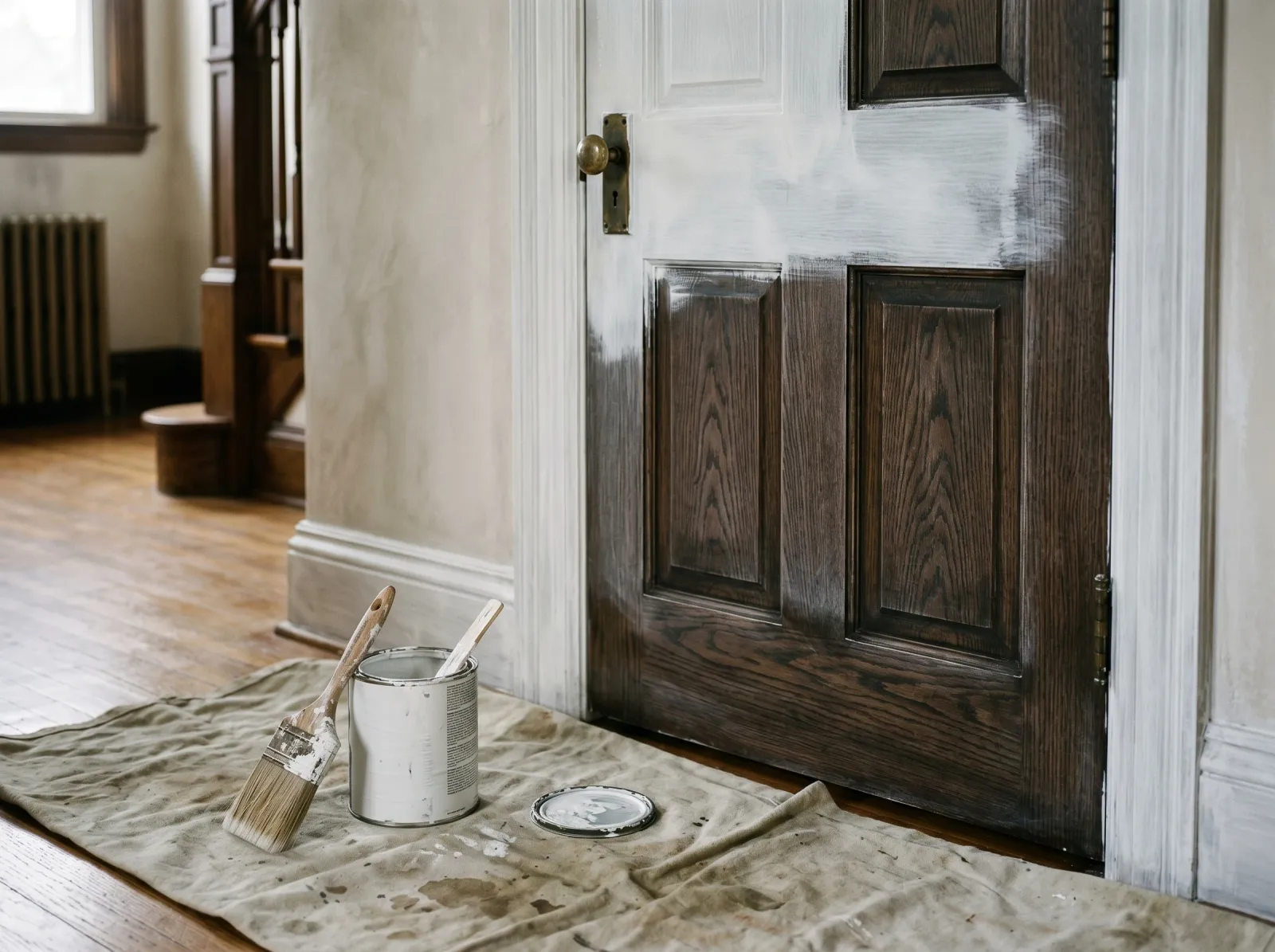
One full coat of bonding primer over the whole piece. The stain still ghosts through at this stage. That’s normal.
This is the call that decides whether the job lasts. Pick the primer by the wood and the bleed risk.
Most varnished trim, doors, and furniture (maple, birch, poplar, fir): Insl-X Stix or Zinsser Bulls Eye 1-2-3. Both are waterborne bonding primers built to grip slick surfaces. Stix bonds harder and is my default for anything that gets touched (handrails, cabinet doors, chair frames). Bulls Eye 1-2-3 levels a touch better on flat trim and costs less. One full coat is enough on a well-deglossed surface.
Oak, knotty pine, or anything with water stains or smoke damage: Zinsser BIN shellac primer. BIN does two jobs at once. It bonds to gloss, and it’s the best stain blocker there is. Oak tannin and pine knot resin walk straight through a waterborne primer, and you’ll see the halos within days of topcoating. BIN’s alcohol carrier gives the tannin nothing to ride on. The downside is the smell and a fast flash time. It dries in 45 minutes and recoats in an hour. Work fast, ventilate, clean the brush with ammonia or denatured alcohol.
The deeper version of the bleed problem lives in the knots-and-stains bleed-through fix if you want the full chemistry. For what primer does and why it isn’t optional here, see what primer actually does.
Don’t panic when the stain ghosts through the first primer coat. A thin bonding primer isn’t meant to hide color in one pass. If it still shows after the primer fully dries, a second primer coat or the topcoat itself takes it the rest of the way. With BIN over oak, one coat usually buries it.
Step 5: First Finish Coat
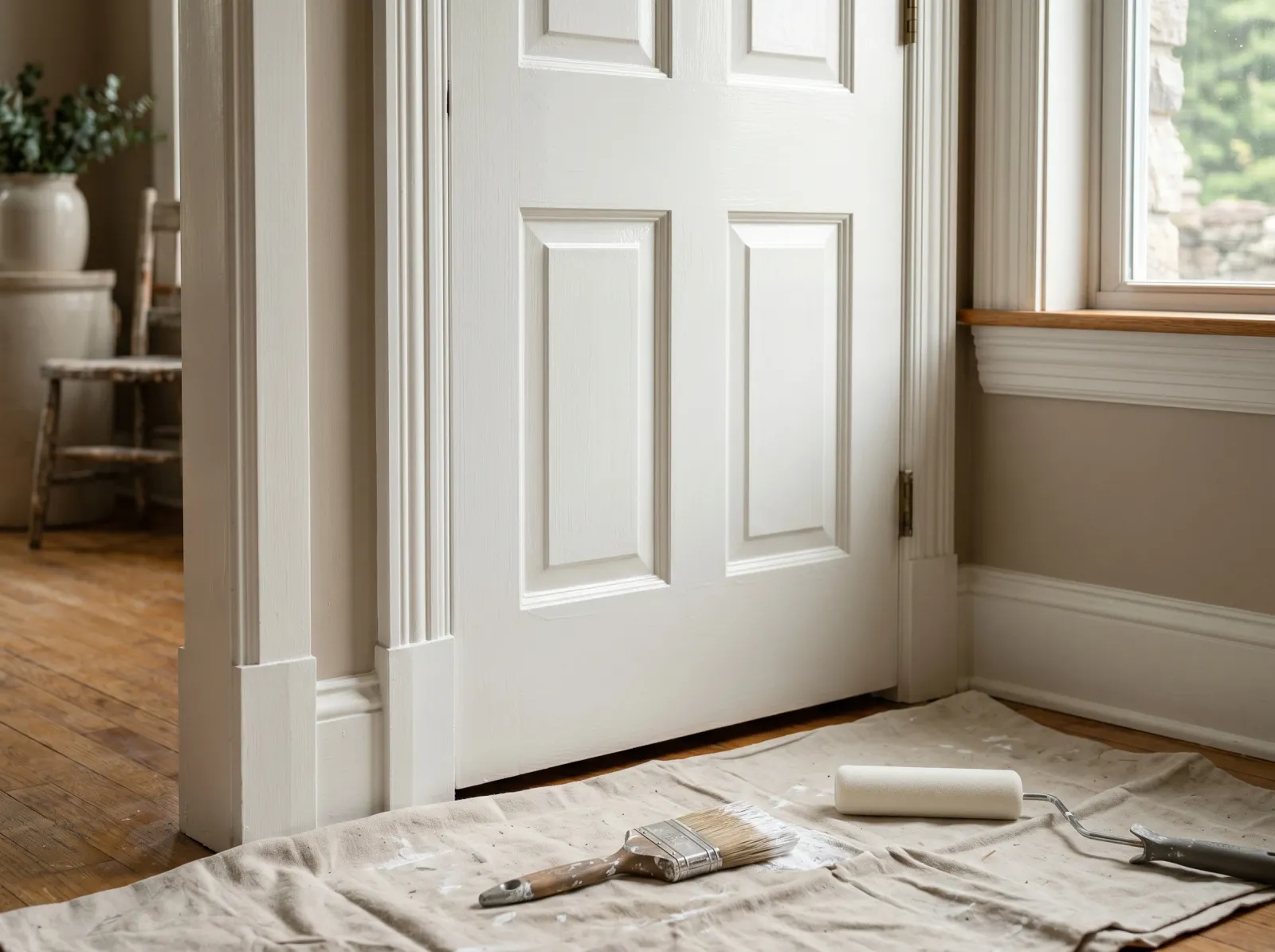
Brush the profiles, roll or brush the flats. Keep a wet edge along the length of the board.
For trim, doors, and cabinets, you want an enamel that levels out and cures hard enough to take knocks and washing. A waterborne alkyd (Benjamin Moore Advance, Sherwin-Williams Emerald Urethane Trim Enamel) gives you the smooth, brush-mark-free flow of old oil paint without the yellowing or the cleanup. Straight 100% acrylic enamel (BM Regal Select, SW ProClassic) is a step easier to work with and cures faster, with a hair less hardness.
Sheen on painted wood trim runs satin or semi-gloss. Semi-gloss wipes cleanest and shows the most, which is the traditional trim look. Satin hides surface imperfection better, which matters on grainy oak. The sheen guide covers where each one lands. For specific topcoat picks on trim and doors, see the best interior trim paint round-up; a paint-store-tinted Kompozit interior enamel works on this substrate too.
Brush the profiles and edges with a 2.5-inch angled sash. Roll or brush the flat panels with a foam roller for the smoothest film. Keep a wet edge and work the length of each board in one pass. Stopping in the middle of a rail is how you get lap marks that show the second a lamp hits them at an angle.
Step 6: Second Coat and Cure
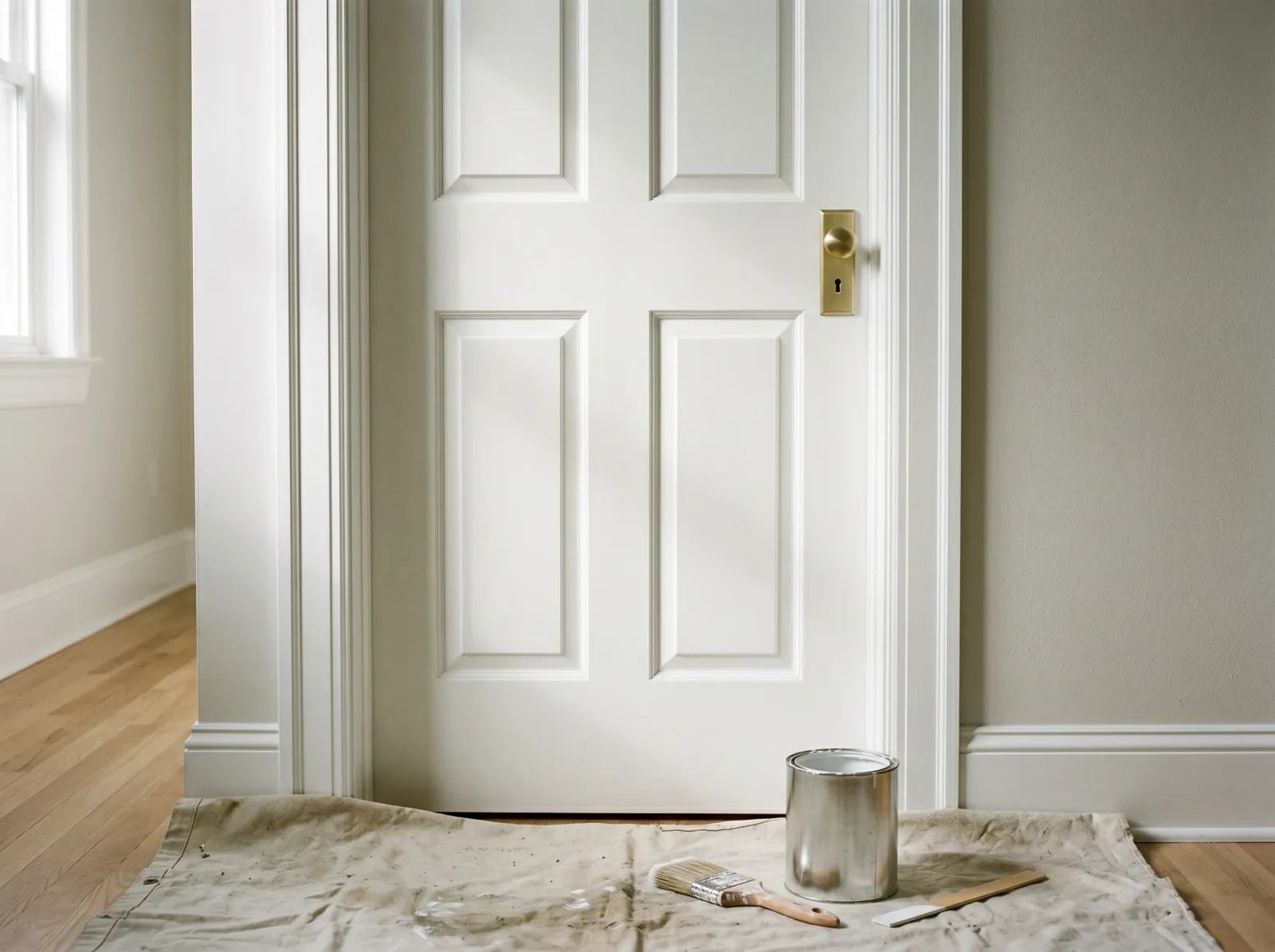
Two coats. The grain texture stays, the stain color is gone. Lightly sand between coats if you want it glass-smooth.
Two coats. Always two. One coat over primed stained wood looks thin and patchy in raking light, and it won’t take a decade of door slams. Lightly sand with 320-grit between coats if you want a glass-smooth finish, then tack the dust.
Recoat times are not vibes, they’re on the can. Advance wants 16 hours between coats. Emerald Urethane recoats in 4. Read it and respect it, because waterborne alkyds that get recoated too early wrinkle and stay soft.
Touch-dry comes in a couple of hours. Full cure is the number people ignore and then regret. Waterborne alkyd enamels take 14 to 30 days to reach full hardness. During that window the film is soft. Don’t scrub it, don’t stack books on a freshly painted shelf, don’t slap painter’s tape onto cured-looking trim and yank it. The paint feels dry. The film underneath isn’t done. Stacking objects on a 5-day-old painted shelf is how you peel a perfect prep job.
How Do You Paint Over Stained Wood Without It Peeling?
The peel comes from one of two skipped steps, every time. Either the surface was too glossy for the paint to grip, or it was greasy under the primer. The fix is the order in this guide: clean off the grease, degloss the shine, then a bonding primer before any topcoat. Adhesion is mechanical. Give the primer something to bite into and it holds. Skip the degloss and the whole stack lets go as one sheet the first time something rubs it.
Common Mistakes
- Wall paint straight onto varnish. No bonding primer, no degloss. Result: peels off in sheets within a year. Fix is to scrape it all, degloss, bonding-prime, repaint. There’s no patch.
- Waterborne primer on oak or knotty pine. Result: amber and brown halos bleeding up through the white topcoat within days. Use BIN shellac primer on tannin-heavy wood, not a bonding primer alone.
- Skipping the grease cut on kitchen wood. Result: primer bonds to cooking film, film releases, paint flakes off cabinet doors near the stove. Degrease before you prime, always.
- Recoating the topcoat too soon. Waterborne alkyds wrinkle and stay tacky if the second coat goes on before the first is ready. Read the recoat window on the can and wait it out.
- Using the trim the day it looks dry. Touch-dry is not cured. Stacking objects or scrubbing inside the first two weeks dents and peels a film that hasn’t hardened. Give it the full cure.
- Grain-fill expectations on oak. People expect a smooth finish over open-grain oak and get visible grain. That’s normal unless you grain-fill first. Decide before you prime, not after the topcoat dries.
Maintenance and Longevity
Painted trim and doors over properly primed stained wood hold 10 to 15 years before they need more than a wipe-down. Clean with a damp cloth and mild soap; a semi-gloss enamel takes that without dulling. The spots that wear first are the high-touch ones: door edges, the rail your hand hits on the stairs, the bottom of a cabinet door. Touch those up with a small brush from the same can before the wear reaches bare primer.
If paint ever does fail on stained wood, it almost always traces back to the prep, not the paint. See the peeling paint fix for diagnosing why a coat let go before you repaint over it.
FAQ
Can you paint over stained wood without sanding? You can skip the heavy sanding, not the prep. A liquid deglosser plus a bonding primer like Insl-X Stix grips slick old varnish without bare-wood sanding, which is the move for carved profiles and spindles. You still have to clean the grease off and dull the gloss. No-sand means degloss-with-a-liquid, not skip-everything.
Do I need to prime over stained wood before painting? Yes, for two reasons. Old varnish is slick and paint won’t bond to it without a bonding primer. And the stain plus tannin in oak and pine bleeds up through latex paint as a halo. A bonding primer handles grip; BIN shellac handles grip and bleed together. Skip the primer and the paint peels or yellows inside a year.
What primer should I use over stained wood? Insl-X Stix or Bulls Eye 1-2-3 for adhesion on most varnished trim and doors. Step up to Zinsser BIN shellac on oak, knotty pine, or water-stained wood, because those bleed tannin a waterborne primer won’t hold back. BIN bonds to gloss and blocks stain in one product. The trade-off is the alcohol smell and a fast flash time.
Will the wood grain still show through the paint? The texture will, the color won’t. Open-grain oak keeps its visible grain under paint unless you grain-fill first. For a glass-smooth painted finish on oak, skim the grain with filler or spackle, sand flat, then prime. Most people leave the grain texture and just lose the stain color.