Chalk Paint vs Latex Paint for Furniture
Chalk vs latex for furniture: how each one reads in a room, holds up on a tabletop, and which finish to pick for your piece. A winner per category.

The 30-Second Answer
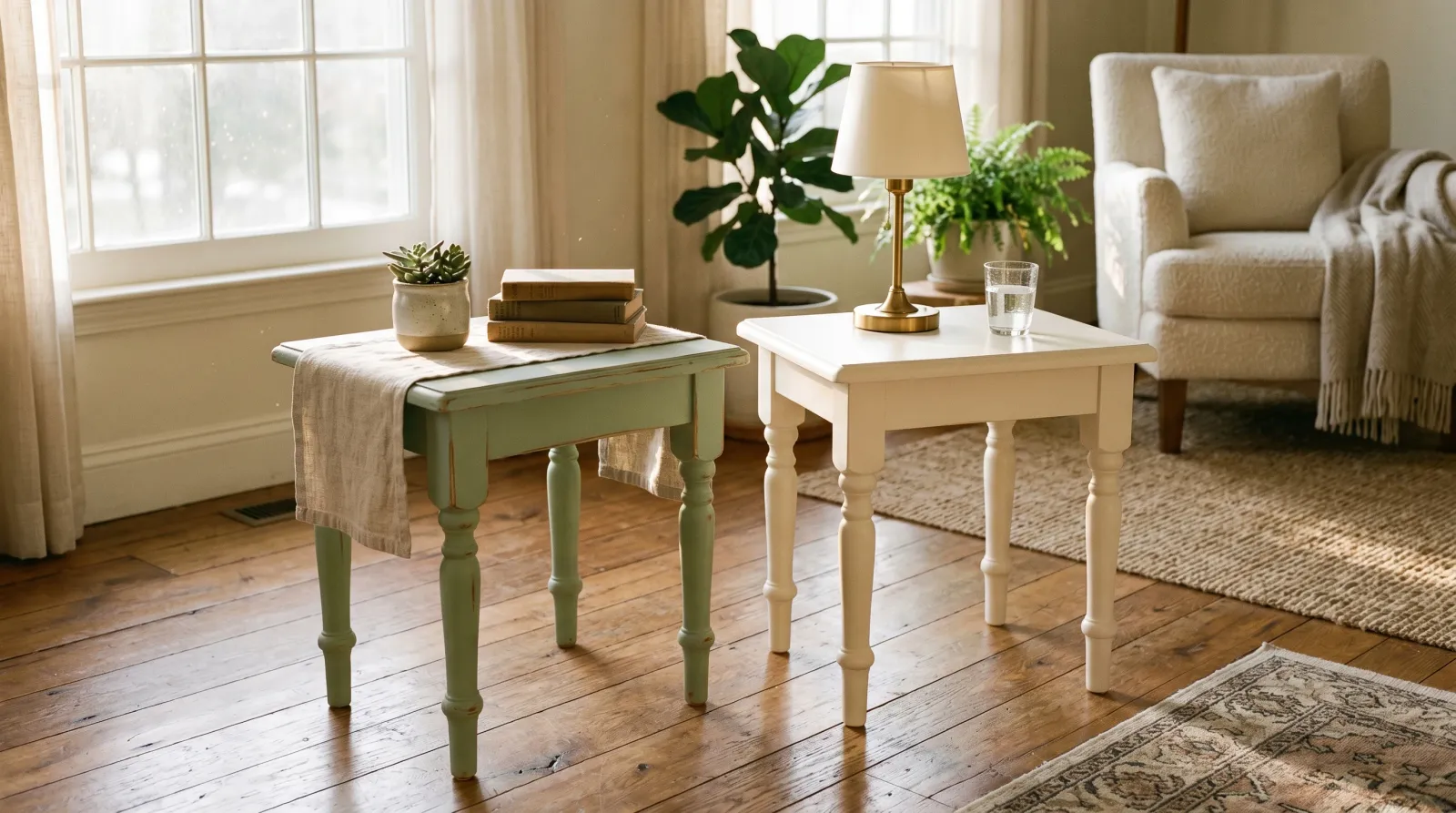
Stand the two finishes next to a window and you can see the choice before you read a word about it. Chalk paint drinks the light and goes soft, matte, quietly old. Latex sits up a little, catches a faint sheen, and reads crisp and new. Pick chalk paint for decorative pieces, distressed edges, and that cottage softness you can’t fake. Pick latex for tables, dressers, and anything hands touch every day, where a hard washable film matters more than a velvety surface.
At a Glance
| Chalk Paint | Latex Paint | |
|---|---|---|
| Finish | Dead-matte, velvety, visible brush texture | Flat to satin, smoother, can read nearly sprayed |
| Prep and adhesion | 🟢 Grips most surfaces with little prep | 🟡 Wants scuff-sanding and often a primer |
| Durability (unsealed) | 🔴 Marks, rings, burnishes | 🟢 Washable, holds up |
| Topcoat required | 🔴 Wax or poly for any real use | ⚪ Optional with a satin or enamel |
| Color depth | 🟡 Soft, chalky, slightly muted | 🟢 True, saturated, holds its read |
| Cost (quart) | 🔴 $35–45 | 🟢 $15–30 |
How to Tell Which One’s Already on a Piece
Run a damp cloth over an out-of-the-way spot and watch the surface. Unsealed chalk paint goes slightly darker and feels powdery, and a fingernail will mark it. A latex finish stays put, wipes clean, and doesn’t chalk off on the cloth. Then tilt the piece toward a window. Chalk paint absorbs the light evenly with no directional bounce; latex picks up at least a faint sheen along the plane. If the surface has an obvious soft glow and shrugs off the damp cloth, you’re looking at latex, probably a satin or semi-gloss enamel.
Finish and How It Reads
This is the part people feel before they can name it. Chalk paint dries to a chalky, dead-matte surface that holds the brush texture instead of hiding it. In a room it reads as old, hand-touched, a little romantic. Set a chalk-painted dresser against linen and aged brass and it sits right in. The matte surface also forgives a less-than-perfect piece, because there’s no sheen to track every dip and dent in the wood.
Latex reads the opposite way. It dries tighter and flatter, and a self-leveling enamel can look nearly sprayed. In satin it picks up a soft directional glow that says new, clean, intentional. That sheen is honest about the surface underneath, so it wants the wood prepped smooth, but it gives you a finish that looks finished rather than weathered.
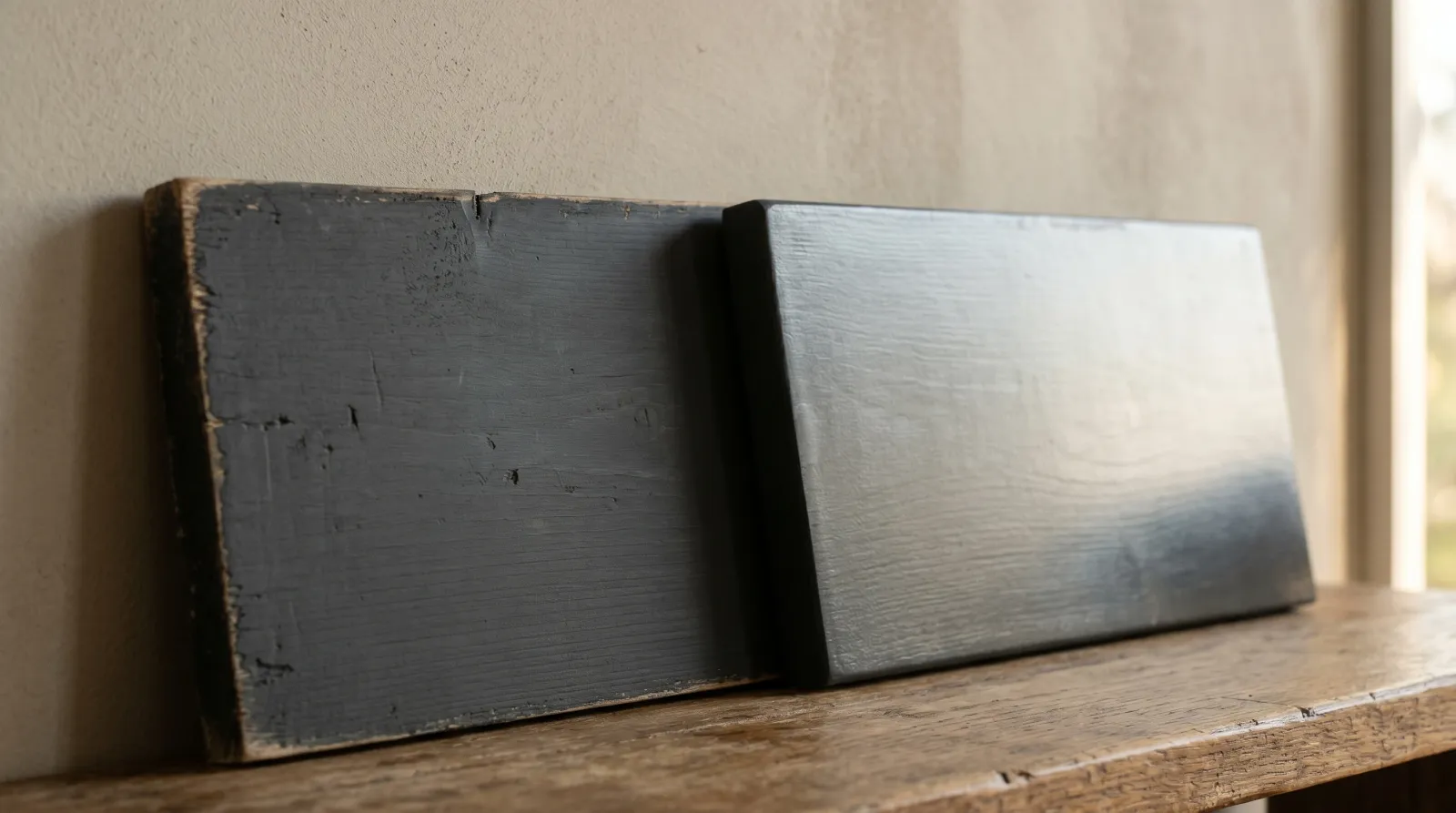 The same light, two surfaces: chalk paint absorbs it, latex catches it.
Neither is better here. They’re aiming at different rooms.
Winner: Tie — chalk for soft cottage warmth, latex for a crisp modern read.
Prep and Adhesion
Chalk paint built its whole reputation on this. It grips laminate, factory-finished IKEA pieces, varnished antiques, and old latex with almost no prep. Clean the piece, scuff it lightly for insurance, brush on the chalk paint. That “no priming, no sanding” promise mostly holds on indoor furniture that won’t take hard use. It’s why a beginner can flip a thrift-store dresser in a weekend and have it actually stick.
Latex is fussier going on. On a slick or glossy piece it wants real prep: a scuff-sand to break the sheen, a clean wipe-down, and usually a bonding primer so the film has something to bite. Skip that on a factory-finished surface and latex peels at the edges and handles, the spots that get touched most. The reward for the extra work is a tougher finish, but the work is real.
Winner: Chalk paint for grip-and-go on tricky surfaces.
Durability
Bare chalk paint is fragile, and this is where a lot of pretty pieces fall apart. The cured film stays a little soft and porous, so it marks with water rings, soaks up finger oil, and burnishes shiny anywhere it gets rubbed. A chalk-painted nightstand that holds a sweating glass will ring within a week. The fix is a topcoat, and on a tabletop that means water-based poly, not wax. Wax on a working surface wears off in patches and lets water sink into the chalk underneath.
A good latex enamel, especially in satin or semi-gloss, cures into a hard washable film that takes daily wear without a separate topcoat. Wipe it down, set a glass on it, open and close it every morning. For a piece that lives a real life, that hardness matters more than how soft the surface feels. If the piece sees heavy use, a waterborne alkyd enamel like Benjamin Moore Advance cures harder still and is the surface I’d reach for on a kitchen table.
Winner: Latex for anything that gets handled.
Color and Depth
Color is where I spend most of my time, and the two finishes treat it differently. Chalk paint mutes a color slightly. The matte, chalky surface scatters light in every direction, so a sage reads a touch dustier and a navy goes a little soft and grayed. That muting is part of the charm on a cottage piece. It also reads warmer in afternoon light because there’s no sheen to bounce the cool of a north-facing window back at you.
Latex holds the color truer. A tighter film with even a little sheen reflects light more directionally, so the pigment reads saturated and crisp, closer to the chip you chose. If you’ve matched a furniture piece to a wall color or a fabric, latex will sit against those the way you planned. Chalk paint can drift a shade softer than the swatch, which is lovely when you want it and a small surprise when you don’t.
Winner: Latex for true, predictable color. Chalk wins if you want the color quietly aged.
Cost and Effort
A quart of premium chalk paint runs $35 to $45, with the Home Depot tier of Rust-Oleum Chalked closer to $20. A quart of quality latex furniture enamel runs $15 to $30. Chalk paint also usually needs a topcoat on top of the paint cost, so wax or poly adds another $15 to $25 to the project.
The effort trades the other way. Chalk paint saves you prep up front and spends it on the back end with waxing and refreshing. Latex spends the effort on prep and priming, then mostly leaves you alone for years. For a quick decorative flip, chalk paint is less total work. For a piece you want to paint once and forget, latex pays off.
Winner: Latex on price. Effort depends on whether you’d rather work up front or keep up later.
Common Mistakes
Putting bare chalk paint on a tabletop. It looks beautiful for a week, then the first cold glass leaves a ring you can’t wipe away. Seal working surfaces with water-based poly, not wax, before anything touches them.
Treating latex like chalk paint and skipping prep. Latex needs the scuff-and-prime on slick furniture. Brush it straight onto glossy laminate and it sheets off at the corners by month three. For the no-prep route on cabinets and furniture, see the no-sand cabinet paint round-up.
Choosing the color off a chip without testing the finish. A color reads differently muted in chalk than it does crisp in satin latex. Paint a sample board in the actual finish and look at it in the room’s real light before you commit the whole piece.
Verdict by Use Case
- Pick chalk paint if: the piece is decorative, you want a soft matte cottage look or a distressed edge, you’re flipping laminate or already-finished furniture, and you don’t mind sealing and refreshing it.
- Pick latex if: the piece gets daily use — a table, a dresser, a desk — you want true saturated color and a washable film, and you’re willing to prep and prime up front.
- It’s basically a tie when: the piece is low-touch and decorative, you’ve got time for either workflow, and you mainly care about the look. Sealed chalk paint and a satin latex both land somewhere lovely; pick by the finish you want to live with.
Top Picks by Side
Going with chalk? See the best chalk paint brands tested for Annie Sloan, Country Chic, and the Rust-Oleum budget pick side by side.
Going with latex? The best paint for furniture covers durable latex and waterborne alkyd enamels for pieces that take real wear.
Refinishing a specific piece? Walk through the steps in how to repaint furniture.
FAQ
Can I use chalk paint on kitchen cabinets? You can, but seal it like you mean it. Cabinet doors get grease, splashes, and constant hands, and bare chalk paint can’t take that. If you go chalk on cabinets, topcoat with water-based polyurethane, not wax. Honestly, for kitchen cabinets I’d reach for a satin latex or a waterborne alkyd enamel instead. The harder film holds up far better in a working kitchen.
Why does my chalk paint look blotchy after waxing? Usually uneven wax. Soft wax soaks into the porous chalk film at different rates depending on how thick you laid it on, so heavy spots read darker and shinier. Work the wax in thin with a cloth or brush, wipe back the excess before it sets, and buff once it’s hauled off. If it’s already blotchy, a second thin even coat of wax usually evens the read.
Do I need to prime before latex on furniture? On most furniture, yes. Raw or stained wood and any glossy factory finish both want a primer so the latex bonds and so old stain or tannin doesn’t bleed through. A bonding primer handles slick surfaces; a stain-blocking primer handles knotty or previously stained wood. Bare, freshly sanded softwood is about the only case where a quality self-priming enamel can skip it.