Chalk Paint vs Milk Paint: Which Is Right for Furniture?
Calcium-carbonate chalk vs casein milk, head-to-head. Opacity, bonding, distressing, and topcoats — with a winner per category and a pick by use case.

The 30-Second Answer
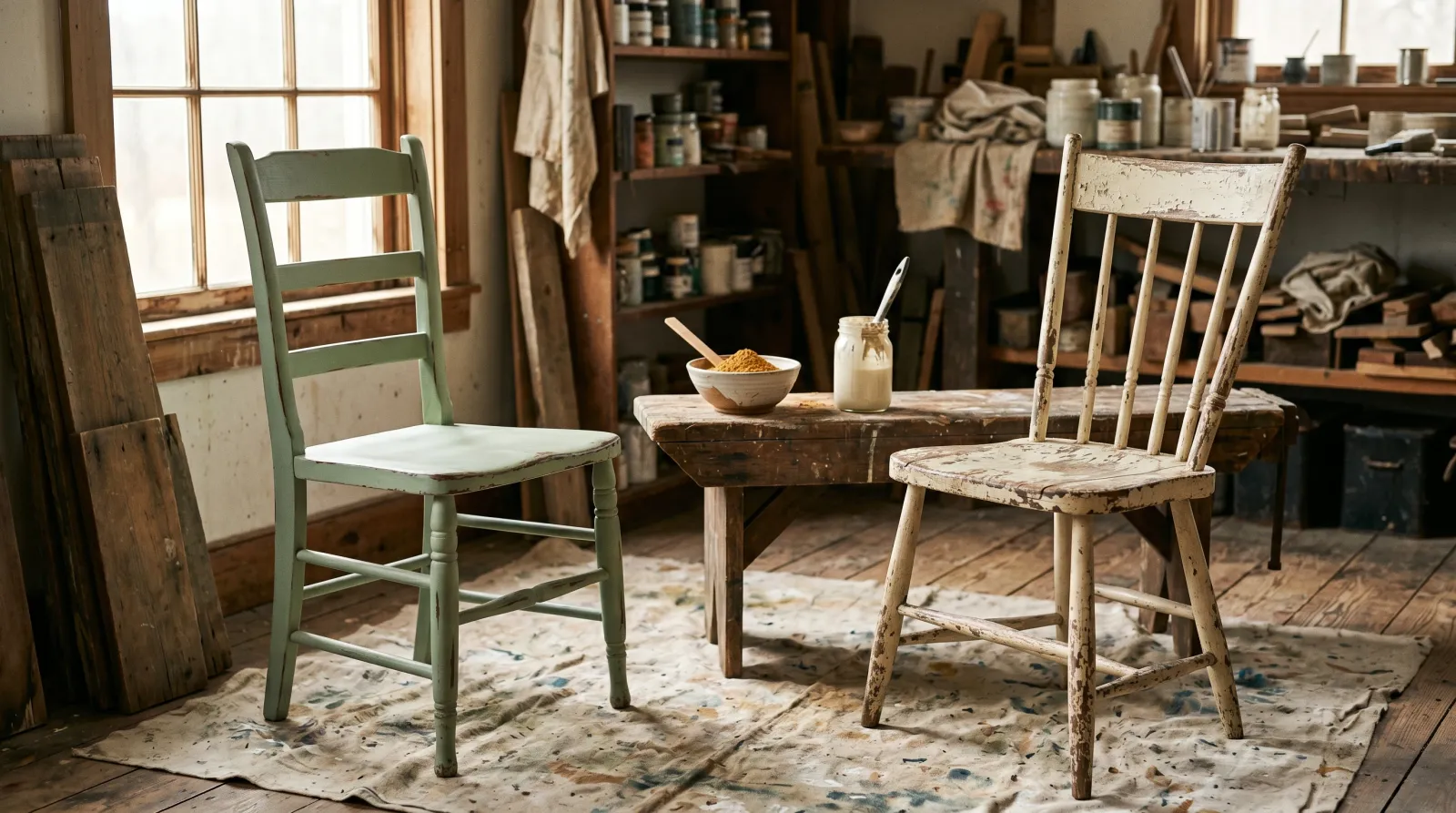
Different paints, different jobs. Chalk paint is calcium carbonate in a latex binder — thick, opaque, sticks to almost anything without a primer, needs wax or poly on top. Milk paint is casein protein with raw pigment — thin, translucent, bonds to bare wood like a dye, and chips on its own as it ages. Pick chalk for laminate, painted-over-painted furniture, and a one-weekend flip. Pick milk for bare wood antiques and that authentic chippy farmhouse look you can’t fake with chalk.
At a Glance
| Chalk Paint | Milk Paint | |
|---|---|---|
| Opacity | 🟢 Full hide in two coats | 🟡 Translucent first coat, builds slowly |
| Substrate flexibility | 🟢 Laminate, oil, latex, raw wood | 🔴 Bare wood or sand-to-bare only |
| Distressing | ⚪ Sand to wood — controlled | 🟢 Chips on its own — authentic |
| Topcoat required | 🔴 Wax or poly mandatory | ⚪ Optional — chips look intentional |
| Shelf life mixed | 🟢 1–2 years in can | 🔴 24–48 hours after mixing |
| Price (quart) | 🟡 $35–45 | 🟢 $18–25 per 6-oz bag |
How to Tell What You’re Looking At
Chalk paint comes pre-mixed in a can or jar, looks like thick yogurt, dries to a matte powdery finish you can scratch with a fingernail before topcoat. Milk paint ships as a powder in a paper bag — you mix it with water yourself, shake hard, and use it within two days before the casein starts to sour. If your “milk paint” came pre-mixed in a can, it’s a milk-paint-style acrylic, not real casein. Real Milk Paint Co., Old Fashioned Milk Paint, and Miss Mustard Seed’s Milk Paint all ship as powder. Annie Sloan, Country Chic, and Rust-Oleum Chalked all ship pre-mixed liquid.
Coverage and Opacity
Chalk paint hides in two coats over almost anything, including dark stained wood, glossy laminate, and previous latex. The calcium carbonate loading is high enough that you’re basically painting a soft mineral film. Coverage runs 150 sq ft per quart, which is a small dresser front and side panels.
Milk paint is dye-thin on the first coat. You’ll see grain, stain, and any prior color right through it. Two coats get you to opaque on raw wood; three on darker stained wood. The translucent build is the point on antique pieces — it reads as old paint, not as new paint pretending to be old. Coverage per mixed quart runs similar to chalk, but you’re often doing three coats instead of two.
Winner: Chalk paint for raw coverage. Milk paint wins if you want grain to show.
Adhesion and Prep
This is where the two diverge hard.
Chalk paint sticks to anything you put it on. Laminate kitchen cabinets, factory-finished IKEA dressers, varnished antiques, previously-painted latex — clean it, scuff it lightly if you want insurance, brush on the chalk paint. Annie Sloan built the whole brand around “no priming, no sanding.” That claim mostly holds up on indoor furniture that won’t see hard use.
Milk paint bonds chemically to raw wood porosity. Casein protein wants to soak into open grain. On a sealed surface — poly, wax, oil finish, laminate — it has nothing to grab, beads up during application, and crawls off in sheets once it dries. Bare wood: gorgeous. Anything sealed: disaster, unless you add the brand’s bonding agent (Real Milk Paint Ultra Bond, Old Fashioned Milk Paint Extra-Bond) at 1:1 with the powder.
Skip the bonder on sealed wood and you’ll watch a $90 dresser refinish flake off in three weeks.
Winner: Chalk paint for substrate flexibility, by a mile.
Distressing
Chalk paint distresses by sanding. You paint two coats, wait until it’s cured (24 hours minimum), then hit edges and corners with 220-grit sandpaper to expose the layer underneath. It’s controlled and deliberate. You decide where the wear goes. Cottage style, French-country, modern farmhouse — all of those looks are chalk paint distressing.
Milk paint distresses itself. As the casein cures and the binder shrinks, it cracks and flakes off on its own where the wood was harder, where you handled the piece, or where the surface wasn’t perfectly bonded. You don’t sand it — you wait, see what chips, and seal what’s left. The look is authentic crackle and chippy farmhouse that no amount of sanded chalk paint can fake.
If you want predictable distress, chalk. If you want real chippy character with a hundred-year look, milk.
Winner: Tie — different aesthetic targets. Pick the look first, then the paint.
Topcoat Needs
Chalk paint without a topcoat is fragile. The cured film is matte and slightly powdery, marks with water rings, picks up finger oil, and burnishes shiny under any rubbing. You have to seal it. Classic chalk-paint topcoats:
- Soft wax (Annie Sloan, Country Chic). Looks like real period furniture. Reapply every 18–24 months on touched surfaces. Don’t use on tabletops or anything wet.
- Water-based polyurethane (General Finishes High Performance, Minwax Polycrylic). Tougher, dishwasher-safe-adjacent. Slight sheen shift from dead-matte to satin.
- Hemp oil or tung oil (Real Milk Paint Co. sells both for chalk and milk users). Penetrates rather than films, hand-rubbed look.
Milk paint can be left raw on display pieces — the matte chalky surface is part of the look. For anything functional, seal it the same as chalk: wax for low-touch decorative work, water-based poly for tabletops and chairs, oil for a soft hand-rubbed antique finish. Hemp oil is especially common on milk-painted furniture because it deepens the color and feeds the porous casein film.
Winner: Milk paint — optional topcoat versus mandatory.
Cost and Shelf Life
A quart of premium chalk paint runs $35–45 (Annie Sloan Chalk Paint, Rust-Oleum Chalked at the Home Depot tier closer to $20). A 6-oz bag of milk paint powder runs $18–25 and mixes to roughly a pint of paint, so per-quart-equivalent you’re around $35–50. Cost is close.
Shelf life is where milk paint hurts. Mixed milk paint starts to sour in 24–48 hours — actual sour, like spoiled dairy, because casein is a protein. You mix what you need for one session and toss leftovers. Powder in the bag keeps for 6–12 months if you keep it dry. Chalk paint in a sealed can holds for a year or two on the shelf, gets thick toward the end of that window but rehydrates with a splash of water.
Winner: Chalk paint for can-to-brush convenience. If you only need a quart for one job, neither wins on cost.
What’ll Bite You in Two Years
Chalk paint with wax on a tabletop. The wax wears off in patches around plates and elbows, water sinks into the unsealed chalk underneath, you get permanent ring stains and a piece that needs to be redone. Either start with poly on tops, or accept that the dining table needs a wax refresh every twelve months.
Milk paint without bonder on something you assumed was bare wood but had a wipe-on poly under the stain. Looks great for three weeks, then chips off in sheets the size of a quarter. The fix is to strip everything and start over. Test for finish first — denatured alcohol won’t move stain or oil finishes; mineral spirits will pull a wipe-on poly into the rag if it’s there.
Verdict by Use Case
- Pick chalk paint if: the piece is laminate, previously painted, or factory-finished, you want a controlled distressed look, you’re flipping a piece in one weekend, or you don’t want to mix paint from powder.
- Pick milk paint if: the piece is bare wood or a stripped antique, you want translucent grain to show, you want authentic chippy aging, or you’re matching the look of original 18th–19th century furniture.
- It’s basically a tie when: you’re painting a sealed bare-wood piece with the bonder added, you want a fully sealed dead-matte finish, and you have time for either workflow. Either paint, sealed under General Finishes High Performance, lands in the same place.
Top Picks by Side
Going with chalk? See the best chalk paint round-up — Annie Sloan, Country Chic, and the Rust-Oleum budget pick all tested side by side.
Going with milk? See the best milk paint round-up for Real Milk Paint Co., Old Fashioned Milk Paint, and Miss Mustard Seed.
Refinishing a specific piece? Best furniture paint covers chalk, milk, and modern alternatives like Benjamin Moore Advance for cabinet-grade pieces.