Best Water-Based Paint in 2026
Five water-based paints tested against each other — waterborne acrylic vs waterborne alkyd, walls vs trim. Top pick: Benjamin Moore Aura Interior.


True 100% acrylic waterborne — not a vinyl-acrylic blend hiding behind a 'latex' label, so adhesion and scrub specs hold under abuse the budget tier can't survive
Stain-blocking built into the topcoat — coffee, marker, and toner drips don't ghost through after cleanup the way they do on cheaper acrylics
Waterborne alkyd resin — open time is closer to traditional oil than to acrylic, so brush marks settle into a near-spray finish at one foot
4-hour recoat — door, jamb, and baseboard get two coats in a single Saturday where Advance forces you into a Sunday
One-coat hide on a same-color repaint is a real outcome — covers a beige-on-beige wall with one careful pass when Premium Plus needs two
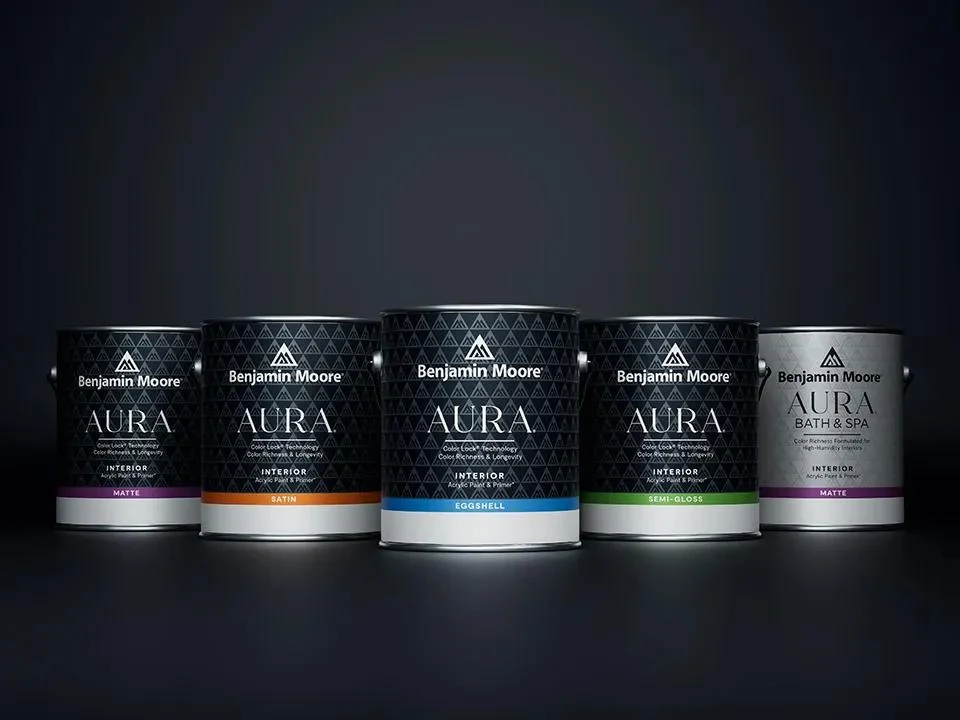
Top pick: Benjamin Moore Aura Interior. At $95+ a gallon you’d want it to be the best water-based paint for interior walls in 2026, and on the merits, it is. Aura wins on color depth, yellowing-resistance, and scrub durability. It falls short on price — no Sherwin-style 30%-off windows — and on trim leveling, which is an alkyd job, not an acrylic one. Sherwin-Williams Emerald Interior is the smarter mid-range answer on a sale. For trim and cabinets, Benjamin Moore Advance — a waterborne alkyd — beats every acrylic in the lineup; SW ProClassic Waterborne is the faster-recoat alternative when you need a one-Saturday project. Behr Marquee rounds out the field as the budget pick.
A heads-up. This article is about choosing water-based paint by resin chemistry, not by the word “latex” on the can. If you came here wanting to know whether “latex” and “water-based” mean the same thing, the short answer is yes in 2026 US usage — and the longer answer lives in what is latex paint.
What Is Water-Based Paint?
Water-based paint is pigment plus a polymer binder carried in water instead of mineral spirits. The pigment is usually titanium dioxide for hide and color; the binder is acrylic, vinyl-acrylic, or an alkyd emulsified into water. That’s the whole product. Swap the water for solvent and you have oil-based paint — same three jobs, different carrier, and the carrier is what decides smell, cleanup, VOC, and how the film hardens.
It dries in two stages, which is the part almost nobody explains. Stage one is evaporation: the water leaves the film and the paint feels dry to the touch, usually in 30 minutes to an hour. Stage two is coalescence: the polymer particles left behind squeeze together and fuse into one continuous film, and that takes weeks. This is why a can can honestly say “dry to touch in 1 hour” and “full cure in 30 days” on the same label. The paint is dry long before it’s hard. Scrub a two-week-old wall and you’re scrubbing a film that hasn’t finished becoming a film.
The practical wins come straight out of the water carrier: low odor, soap-and-water cleanup, and low VOC. Two thresholds are worth memorizing because the shelf labels use them loosely — low-VOC means under 50 g/L, zero-VOC means under 5 g/L. Four of the five picks below sit in one of those two bands.
None of this is new technology. The first water-based paint patent went to D.P. Flinn in 1865. What changed everything was synthetic latex binders arriving in the 1940s, which turned water-based paint from a distemper-grade wash into the default American wall paint it is today.
“Latex” Is Just Water-Based With a Misleading Name
Every paint can in the US hardware aisle is sorted into two bins: “latex” or “oil.” That sort is forty years out of date. Real latex (the milky tree sap) hasn’t been in interior house paint for decades. What the can label calls “latex” is a water-borne emulsion of synthetic resin, and which synthetic resin sits inside that emulsion is the question the label refuses to answer. The picks below are sorted by the answer the label hides.
Two resin families matter on the wall and the trim. 100% acrylic is the wall answer: flexible, fast, washable, color-stable. Waterborne alkyd is the trim answer: longer open time, harder cure, brush marks flatten. Both ship in cans labeled “latex” or “water-based.” Both clean with soap and water. Reading the resin off the TDS is how you avoid putting a wall paint on cabinets or a cabinet paint on a wall.
The Types of Water-Based Paint, Softest Film to Hardest
Every can below is water-based. They are not interchangeable. Read this as a ladder — film gets harder and recoat gets slower as you go down, and each rung wins a different job.
- Vinyl-acrylic — builder-grade latex. Softest cured film, cheapest gallon, recoats in about two hours. Wins on dry bedroom and ceiling walls with a five-year repaint horizon. Loses everywhere there’s steam, scrubbing, or a south-facing window.
- 100% acrylic — the wall answer. Flexible film that moves with drywall, color-stable under UV, recoat in one to four hours. Aura, Emerald Interior, and Marquee all live here.
- Acrylic-alkyd hybrid — trim chemistry with acrylic manners. Harder than a wall acrylic, levels most of the way to an alkyd, recoats in four hours. SW ProClassic Waterborne is the example.
- Waterborne alkyd — trim and cabinets. Hardest cure in normal residential work, longest open time, and the price is a 16-hour recoat. Benjamin Moore Advance is the example.
- Urethane-modified acrylic enamel — the hardest trim film you can brush from a water-based can. SW Emerald Urethane Trim Enamel sits here; it’s covered in “also tested” below and tops our interior trim round-up.
- Water-based epoxy — a two-part waterborne coating for garage and basement slabs, not for walls or trim. Different product class entirely; see the garage floor paint round-up and the concrete floor paint round-up.
The mistake that costs money is buying one rung down from the job. Vinyl-acrylic in a bathroom, or a wall acrylic on cabinet doors, fails on schedule.
How to Tell if Your Existing Paint Is Water-Based or Oil-Based
Do this before you buy anything, because the answer decides whether a bonding primer is optional or mandatory.
The rub test. Soak a cotton ball or a rag corner in rubbing alcohol — acetone works too — and rub a hidden spot for ten seconds. Inside a closet, behind a door, low on a baseboard. Water-based paint softens and leaves color on the rag. Oil-based paint shrugs it off and the rag stays clean.
The fingernail test. Press a nail hard into the film. Water-based dents slightly, because the cured acrylic film stays a little flexible. Cured oil is glassy — it chips before it dents.
Going Water-Based Over Oil-Based
Yes, you can, and no, not directly. Scuff-sand the oil finish with 220-grit until the shine is gone, wipe the dust and degrease it, prime with a bonding primer — Insl-X Stix, Zinsser BIN, or Kilz Adhesion — and then run the waterborne topcoat. Skipping either the sand or the primer is the single most common failure we see: the acrylic film has nothing to key into on a slick oil surface, and it comes off in sheets somewhere between week three and month six. The primer round-up opens with that decision tree.
How We Picked
Five water-based paints, applied to identical primed drywall and primed MDF panels in a 70°F, 50% RH garage workshop. Two coats per label, recoat per the can. Sixty days of scrub, raking-light, UV-box, and pencil-hardness tracking, plus cross-referenced manufacturer TDS for the spec block. The pick-specific finding lives inside each review below — what this paint did on its panel.
The Picks at a Glance
| Product | Resin | Best for | Yellowing | Price |
|---|---|---|---|---|
| BM Aura Interior | 100% acrylic | Top pick, walls | 🟢 Very low | $$$$ |
| SW Emerald Interior | 100% acrylic | Mid-range walls | ⚪ Low | $$$ |
| BM Advance | Waterborne alkyd | Trim & cabinets, leveling | 🟢 Very low | $$$$ |
| SW ProClassic Waterborne | Acrylic-alkyd hybrid | Trim, fast recoat | ⚪ Low | $$$ |
| Behr Marquee Interior | 100% acrylic | Budget, one-coat hide | ⚪ Low | $$ |
Read the table by job plus resin. Aura and Emerald compete on walls and share a chemistry family; the chemistry call is the same, the brand and price are the differentiator. Advance and ProClassic Waterborne compete on trim, where the alkyd chemistry is the answer the acrylic picks structurally can’t give. Marquee is the budget call where the wall finish needs to be acceptable, not designer-spec. Pricing assumes April 2026 retail; SW frequently runs 30–40% off windows that bring Emerald and ProClassic Waterborne to mid-tier money.
Benjamin Moore Aura Interior — Top Pick (Walls)
Aura is the prettiest water-based wall paint sold in the US. The chemistry is a true 100% acrylic emulsion with Gennex colorant loaded heavy enough to deliver saturated colors that competing waterborne paints visibly chalk on by month eighteen. We rolled a Hale Navy panel with a 3/8” microfiber and watched the cured film hold its depth under a 14-day UV-A box where Regal Select drifted measurably and a Behr Dynasty panel drifted a touch more. Coverage at one coat is dense; two coats give a flat presentation with no roller stipple from a foot away.
The trade-offs are honest. Price is $95+ per gallon at BM stores, no 30%-off promotions. Acrylic doesn’t level like alkyd, so this is the wall pick, not the trim pick — brush a doorframe with Aura and the cured film shows stroke at six inches under raking light. Full cure is the standard 30 days; the wall is rentable at week two but the film hardens through month one. Aura Interior Paint.
Buy it if: the design move is a deep-tinted wall and you want it to hold. Skip it if: the colors are off-white and you’ll catch a Sherwin sale on Emerald — the durability gap doesn’t show on whites.
Sherwin-Williams Emerald Interior — Best Mid-Range Wall Pick
The smarter-money pick most contractors deploy on interior walls. Headline: stain-blocking is built into the topcoat, so coffee, marker, and toner drips wipe off without ghosting through after cleanup. Emerald was the only mid-tier paint where the damp-microfiber test left no track in raking light at week two. Coverage and viscosity feel close to Aura; the difference shows in deep colors, where Emerald chalks first on saturated navy and oxblood.
Smaller color deck than Aura — you can match an SW Color of the Year, not a designer’s specific HGSW number. Satin and semi-gloss are the workhorses; the matte burnishes faster than Aura’s matte under regular wipe-down. The brand name says “Acrylic Latex” but the resin is 100% acrylic — the label terminology is itself part of the confusion this article is built to fix. Retail is $80–$95; frequent 30–40% off windows bring it to $50–$60/gal effective. Emerald Interior Acrylic Latex Paint.
Buy it if: typical family room or bedroom and you’ll catch an SW sale. Skip it if: the color is a saturated deep tint where Aura’s Color Lock earns its delta.
Benjamin Moore Advance — Best Water-Based Enamel for Trim & Cabinets
Advance is what every “best paint for cabinets” round-up settles on for a reason. It’s a true waterborne alkyd — the alkyd resin floats in a water emulsion, so cleanup is soap-and-water but the cured film behaves like an oil-based enamel. Open time is closer to traditional oil than to acrylic. Brush a primed MDF panel with a Wooster Silver Tip, leave it alone, and the marks settle into a finish that reads as spray at one foot under raking light. None of the acrylic picks above can do that.
The catch is the recoat window. 16 hours per label, which means a 2-coat door takes two days. That’s the trade-off for the long open time that gives Advance its leveling — there’s no shortcut. We tried recoating at four hours on a test panel and lifted the first coat into ropes. Cured film is the hardest in the test on the pencil-hardness ladder at 30 days; whites stay white through a year of low-UV hallway light where every old solvent-borne alkyd I’ve watched goes cream by month eighteen. Mild glycol note on application — not zero-VOC the way Aura is. Benjamin Moore Advance.
Buy it if: cabinets, doors, baseboards, vanities — any trim job where leveling and cured-film hardness are the spec. Skip it if: you need to finish in a Saturday; ProClassic Waterborne recoats in four hours.
Sherwin-Williams ProClassic Waterborne — Faster-Recoat Trim Alternative
ProClassic Waterborne is the acrylic-alkyd hybrid pick — most of the leveling of Advance, the recoat speed of an acrylic. The resin is engineered to crosslink faster than a pure alkyd, so the recoat window is four hours instead of sixteen. A bedroom door gets coat A in the morning, coat B after lunch, and back on its hinges by dinner. Brush marks settle cleanly at arm’s length; you see them at six inches under raking light where Advance is invisible.
Where it loses is cured-film hardness at month two. Pencil-hardness drops one rung below Advance on the 30-day check; on a baseboard behind a high-traffic toilet or a kitchen kick rail, that delta shows up as scuffs at six months. Slight ammonia note on application — open the window. Color deck is SW-only; for a designer trim color outside the SW system, Advance has the wider tint base. Retail is $80–$95, SW 30% off brings it to $55–$65 effective. ProClassic Waterborne Interior Acrylic Enamel.
Buy it if: the trim job has to finish in one day. Skip it if: the baseboard takes daily abuse — go Advance.
What “Water-Based Enamel” Actually Means
Enamel isn’t a chemistry, it’s a promise about the cured film: hard, smooth, furniture-grade, the job old oil enamels used to own. A water-based enamel is a waterborne paint engineered to land there, and in 2026 three chemistries do it — waterborne alkyd (Advance), acrylic-alkyd hybrid (ProClassic Waterborne), and urethane-modified acrylic (Emerald Urethane Trim Enamel). All three clean up with soap and water.
On our 30-day pencil-hardness ladder the order came out Advance ≥ Emerald Urethane > ProClassic Waterborne. Advance and Emerald Urethane trade places depending on the substrate; ProClassic sits a rung below both and buys back the difference in recoat speed. If the job is cabinet doors that get opened forty times a day, take a hardness rung. If the job is a hallway baseboard due back on the wall tonight, take the four-hour recoat.
Behr Marquee Interior — Budget Pick
Marquee is the best Behr interior, full stop. The current formulation is 100% acrylic with antimicrobial loading and a lifetime warranty against fading and stains in writing — the only Home Depot waterborne with that warranty number on the can. The one-coat-hide claim holds on same-color same-sheen repaints; we covered a beige-on-beige test panel with a single careful pass. Color change still wants two coats — that’s paint physics, not a marketing failure.
The film is softer than Aura or Emerald the first 30 days, so high-traffic walls need the full cure before any scrub-down. Behr-only, which means tied to Home Depot for restocks. Six sheens including a ceiling flat and a hi-gloss for trim if you stay in-line. At $50–$60/gal it sits between Premium Plus and the premium tier on price and clearly above Premium Plus on cured durability. BEHR MARQUEE Interior Paint.
Verdict: acceptable wall paint for the cost-sensitive whole-house repaint where the design bar is “clean and durable, not designer.”
How to Choose
- Pick Aura Interior if: walls, deep saturated colors, design-driven repaint, you want the Color Lock chemistry to hold for a decade.
- Pick Emerald Interior if: walls, off-whites or mid-tones, family room or bedroom, and you’ll catch a Sherwin 30% off window.
- Pick Advance if: trim, cabinets, doors, vanities — any job where brush-mark leveling and cured-film hardness are the spec and you have two days, not one.
- Pick ProClassic Waterborne if: trim with a one-Saturday deadline, sound substrate, moderate-traffic location.
- Pick Marquee Interior if: cost-sensitive whole-house repaint where “acceptable durable wall” is the bar; same-color refresh is the easy case.
Dry Time, Recoat, and Cure — The Reference Block
The numbers scattered through the spec blocks above, in one place. Room conditions assumed: 70°F, 50% relative humidity.
| Chemistry | Touch dry | Recoat | Full cure |
|---|---|---|---|
| Waterborne acrylic (Aura, Emerald, Marquee) | 30 min – 1 h | 1–4 h | 14–30 days |
| Acrylic-alkyd hybrid (ProClassic Waterborne) | 1 h | 4 h | 30 days |
| Waterborne alkyd (Advance) | ~4 h | 16 h | 30 days |
Two rules govern all three rows. Don’t paint below 50°F, and don’t paint above roughly 70% relative humidity. Both stall stage two — the coalescence step where the polymer particles fuse — and a stalled film stays soft and tacky for weeks no matter how long you wait. Cold garages in November and steamy bathrooms in August are where this bites. Warm the room, run a dehumidifier, or wait for the day to change.
Recoat times also stretch in cold or damp air. If the room is at 55°F, treat the label recoat as a minimum, not a schedule, and test an inconspicuous edge with a thumbnail before the second coat goes on.
Application Tips for Water-Based Paint
Three things move outcomes more than the can you bought. Two thin coats, not one thick — water-based films cure by water leaving the film, and a thick wet coat traps water under the surface and cures soft. Roll wet edges, brush cuts last — water-based dries faster than oil, so a dry edge at the top of a wall shows as a lap mark at the bottom; work top to bottom and don’t let an edge skin. Add Floetrol if you’re brushing acrylic in dry heat — 5–10% extends open time enough that brush marks settle. For the full prep sequence on a wall repaint see the interior wall paint round-up; for trim prep, interior trim paint.
Where Water-Based Paint Goes Wrong
- Wall paint on cabinets. Acrylic film stays flexible, doesn’t level like alkyd, and shows brush marks at six inches. Use Advance or ProClassic Waterborne on trim and cabinets; reserve Aura and Emerald for walls.
- Recoating Advance at four hours. Lifts the first coat into ropes. Wait the 16-hour window or switch to ProClassic Waterborne.
- Waterborne over glossy oil with no primer. Peels in sheets within months. Prime with Insl-X Stix or Zinsser BIN first.
- One thick coat instead of two thin. Cures soft, vulnerable to scratches for the first 60 days. Two thin coats every time.
- Painting in cold or humid weather. Below 50°F or above 70% RH and the cure stalls; the film stays sticky for weeks. Watch the forecast on exterior jobs and the HVAC setting on interior jobs.
Also Tested, Also Passed Over
- Benjamin Moore Regal Select. Half-step down from Aura on saturated colors, $20/gal less. Stays on the acrylic paint round-up as the “Aura deck access at a friendlier price” pick.
- Sherwin-Williams Duration Home. Engineered for kitchens and baths where the wipe-down is constant. Loses to Emerald Interior on streak-resistance in a normal room.
- Sherwin-Williams Emerald Urethane Trim Enamel. A urethane-acrylic trim enamel, harder cured film than ProClassic Waterborne, but the resin chemistry is its own category. Tops the interior trim round-up for the highest-traffic trim jobs.
- Behr Dynasty. 100% acrylic on Behr’s premium tier, better than Marquee on cured hardness, narrower color deck. The acrylic paint round-up covers it as the Behr top-tier pick.
- Generic interior latex. Vinyl-acrylic chassis, soft cured film, burnishes under wipe-down within months. Wrong product class.
- Old solvent-borne alkyd enamels. Yellow heavily on whites within 18 months and carry the full VOC penalty. Waterborne alkyd (Advance, ProClassic Waterborne) is the modern answer.
Water-Based Paint Brands, Mapped to Their Lines
Start with the fact that resets the whole question: essentially every mainstream US interior wall paint sold in 2026 is water-based. Asking “which brands make water-based paint” gets you the whole aisle. The question that actually decides the outcome is which resin tier you buy within a brand — the ladder above, applied to whatever store is closest to you.
Here’s the map, in no particular order, because none of these brands is a default:
- Benjamin Moore — Aura, Regal Select, and Ultra Spec on walls; Advance for waterborne alkyd trim. Sold at BM dealers and Ace.
- Sherwin-Williams — Emerald and Duration on walls, SuperPaint a tier down, ProClassic Waterborne and Emerald Urethane on trim. SW stores, frequent 30–40% off windows.
- Behr — Marquee and Dynasty on the premium end, Premium Plus as the value tier. Home Depot.
- PPG and Glidden — PPG’s waterborne interior lines through PPG dealers; Glidden Premium and Diamond at Home Depot.
- Valspar — waterborne interior and trim lines at Lowe’s.
- KILZ — best known for waterborne primers, plus Complete Coat as a paint-and-primer.
- DTC waterborne-only brands — Clare, Backdrop, and Farrow & Ball’s water-based lineup ship direct with curated decks instead of a store wall of chips.
Every one of these sells a soft vinyl-acrylic tier and a hard premium tier. Buying the right brand and the wrong tier is a worse outcome than buying the “wrong” brand at the right tier.
Companion Guides
For the resin-chemistry deep dive, see alkyd vs acrylic and oil-based vs water-based paint. For the label-terminology fix, what is latex paint. For the trim-only round-up, best interior trim paint; for the 100%-acrylic-only round-up, best 100% acrylic paint. When the substrate is the question and the can isn’t, the primer round-up opens with the bonding-primer decision tree.
Full Comparison
| Product | Best for | Yellowing | Price |
|---|---|---|---|
| Aura Interior Paint | Top pick — best water-based wall paint | Very low | $$$$ |
| Emerald Interior Acrylic Latex Paint | Best mid-range water-based wall paint | Low | $$$ |
| Benjamin Moore Advance | Best water-based trim & cabinet paint (waterborne alkyd) | Very low | $$$$ |
| ProClassic Waterborne Interior Acrylic Enamel | Best fast-recoat waterborne trim enamel | Low | $$$ |
| MARQUEE One-Coat Interior Paint Collection | Best one-coat hide / budget water-based pick | Low | $$ |
Every Pick, Pros and Cons
Pros, cons, and specs for each pick. The cons are not optional here.
1. Aura Interior Paint
- Coverage
- 350–400 sq ft / gal
- Sheens
- Matte, eggshell, satin, semi-gloss
- Dry / recoat
- Touch dry 1h · recoat 1h
- Full cure
- 30 days
- VOC
- Zero VOC
- Yellowing risk
- Very low
- Primer
- Self-priming on sound, scuff-sanded surfaces
- Price tier
- $$$$
- True 100% acrylic waterborne — not a vinyl-acrylic blend hiding behind a 'latex' label, so adhesion and scrub specs hold under abuse the budget tier can't survive
- Color Lock Technology holds saturated tones (Hale Navy, oxblood, deep charcoal) that fade or chalk on cheaper waterborne paints inside 18 months
- Full Benjamin Moore color deck (3,400+ tints); zero VOC, Green Wise Gold, mild smell — safe for occupied rooms
- $95+ per gallon at BM stores — most expensive wall pick by a wide margin, no Sherwin-style 30%-off windows
- Acrylic film, not alkyd — won't self-level to glass on a vanity door the way Advance does; this is the wall pick, not the trim pick
- Recoat is generous at 1 hour but full cure is the standard 30 days; treat the wall gently for the first month
2. Emerald Interior Acrylic Latex Paint

- Coverage
- 350–400 sq ft / gal
- Sheens
- Matte, satin, semi-gloss
- Dry / recoat
- Touch dry 1h · recoat 4h
- Full cure
- 30 days
- VOC
- <50 g/L
- Yellowing risk
- Low
- Primer
- Self-priming on scuff-sanded sound surfaces
- Price tier
- $$$
- Stain-blocking built into the topcoat — coffee, marker, and toner drips don't ghost through after cleanup the way they do on cheaper acrylics
- Resists water streaking off the can — the only mid-tier waterborne where the damp-microfiber test left no visible track at week two
- Frequent SW 30–40% off windows bring the effective price to $50–$60/gal, closing the gap to the budget tier
- Smaller color deck than Aura; you can match an SW Color of the Year, not a designer's specific HGSW number outside the SW system
- Satin and semi-gloss are the workhorses here; the matte version burnishes faster than Aura's matte under regular wipe-down
- Brand name says 'Acrylic Latex' but the resin chemistry is 100% acrylic — the label terminology is itself part of the confusion this round-up is built to fix
3. Benjamin Moore Advance

- Coverage
- 350–400 sq ft / gal
- Sheens
- Satin, semi-gloss, gloss
- Dry / recoat
- Touch dry 4h · recoat 16h
- Full cure
- 30 days
- VOC
- <50 g/L
- Yellowing risk
- Very low
- Primer
- Bonding primer recommended on glossy oil or factory finishes (Stix or BIN)
- Price tier
- $$$$
- Waterborne alkyd resin — open time is closer to traditional oil than to acrylic, so brush marks settle into a near-spray finish at one foot
- Hardest cured film of any water-based trim paint we've tested; survives a Krud Kutter scrub at week eight without burnishing
- Whites stay white on cabinets and trim a year out; the alkyd carrier doesn't yellow the way solvent-borne alkyd does because it's emulsified in water
- 16-hour recoat means a 2-coat door takes two days — the trade-off for the longer open time that gives Advance its leveling
- Soft for the first 30–60 days post-cure; trim that lives next to a knee or a vacuum needs the full 30-day cure before normal use
- Mild glycol/ammonia note on application — ventilate the room; not zero-VOC the way Aura is
4. ProClassic Waterborne Interior Acrylic Enamel

- Coverage
- 300–400 sq ft / gal
- Sheens
- Satin, semi-gloss, gloss
- Dry / recoat
- Touch dry 1h · recoat 4h
- Full cure
- 30 days
- VOC
- <50 g/L
- Yellowing risk
- Low
- Primer
- Bonding primer recommended on glossy oil or factory finishes (Stix or BIN)
- Price tier
- $$$
- 4-hour recoat — door, jamb, and baseboard get two coats in a single Saturday where Advance forces you into a Sunday
- Acrylic-alkyd hybrid resin: most of the leveling of Advance with the recoat speed of an acrylic; brush-mark settling reads cleanly at arm's length
- Frequent SW 30% off windows bring it to $55–$65/gal; one quart finishes a typical interior door
- Cured film not quite as hard as Advance or Emerald Urethane — vulnerable on baseboards behind a high-traffic toilet or a kitchen kick rail
- Slight ammonia note on application; ventilate the room
- Color deck is SW-only; for designer trim colors outside SW, Advance has the wider tint base
5. MARQUEE One-Coat Interior Paint Collection

- Coverage
- 250–400 sq ft / gal
- Sheens
- Flat, eggshell, satin, semi-gloss, hi-gloss, ceiling flat
- Dry / recoat
- Touch dry 1h · recoat 2h
- Full cure
- 30 days
- VOC
- Zero VOC
- Yellowing risk
- Low
- Primer
- Self-priming on scuff-sanded sound surfaces
- Price tier
- $$
- One-coat hide on a same-color repaint is a real outcome — covers a beige-on-beige wall with one careful pass when Premium Plus needs two
- 100% acrylic on the current formulation; antimicrobial film, lifetime warranty against fading and stains in writing
- Six sheens including ceiling flat and hi-gloss for trim; $50–$60/gal at Home Depot, stocked everywhere
- Color change still wants two coats — the one-coat claim is for same-color, same-sheen refresh, not for going from cream to navy
- Soft film the first 30 days; high-traffic walls need the full cure before any scrub-down
- Behr-only — tied to Home Depot for restocks, no paint-store will-call option
Ask a Question