Best Concrete Floor Paint in 2026
Five concrete floor paints tested for hot-tire pickup, MVE tolerance, abrasion, and chemical splash. Top pick: Rust-Oleum EpoxyShield Pro for slabs that need to last a decade.

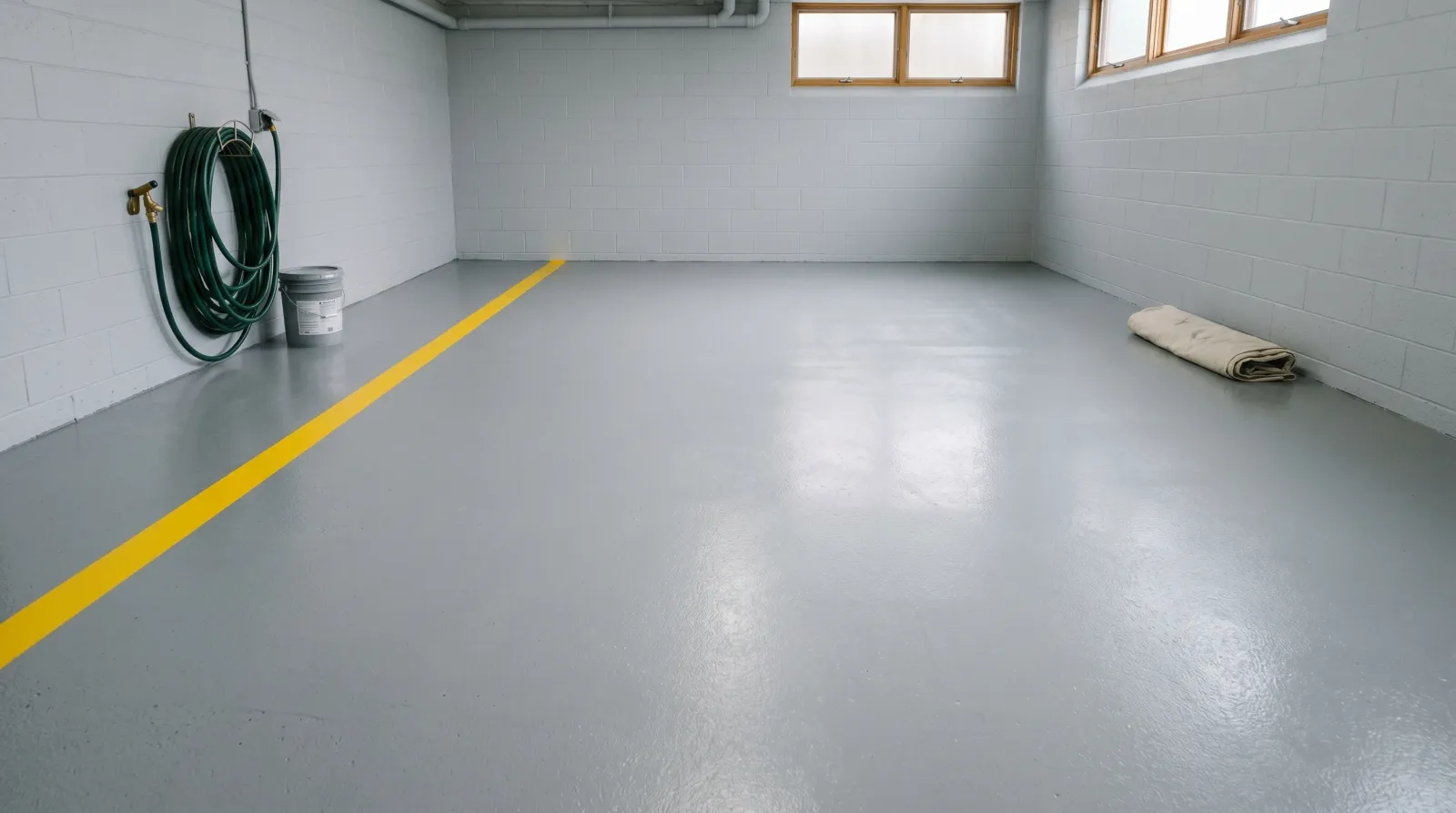
True 2-part amine-cured epoxy at 6–8 mils DFT per coat — held three 7-day cycles of a 165°F tire on a 30-day-cured panel with zero lift, where every 1-part in the round-up failed at cycle two
$45–$55 per gallon at every Home Depot in the country — about a third the cost of EpoxyShield Pro on a per-square-foot basis once you account for the lower wet film build
Published moisture vapor emission tolerance of 8 lbs / 1000 sq ft / 24h where every true epoxy in this round-up caps at 3 — the only pick that takes a damp basement slab without delaminating in year one
True commercial-grade 2-component epoxy at 78% volume solids — a single coat lays down 8–10 mils DFT where EpoxyShield Pro needs two coats to hit the same build
8–10 mil dry film build fills hairline cracks, surface pits, and the spalled apron most 30-year-old slabs carry — none of the thin-film picks above hide that damage
Disclosure: Some links below are affiliate links. We earn a commission if you buy through them, at no extra cost to you. Picks are based on the test methodology in “How We Picked”. No brand pays for placement.
Top pick: Rust-Oleum EpoxyShield Pro Floor Coating. It’s the cheapest true 2-part amine-cured epoxy stocked at every Home Depot, and on our 165°F hot-tire test it was the only sub-$100 pick that held three full 7-day cycles with no lift at the contact patch. EpoxyShield Pro wins on prep-honest labeling, on pickup resistance, and on being the can a homeowner can actually finish in a weekend without ruining the pot. It falls short on cure time (five to seven days before you can park on it) and on coverage. You’re laying 8 mils wet at 180 sq ft per gallon, so a two-car bay is real money in paint. For workshops and basements with no hot tire, BEHR Premium 1-Part Epoxy or DRYLOK E1 are the smarter spends. For an industrial shop with a lift and a welding bench, step up to Sherwin-Williams ArmorSeal 1000 HS. For an old pitted slab that needs to look like a floor again, the RockSolid Decorative kit is the resurfacer pick.
Prep is the floor coating. Every pick here works on a clean, etched, dry slab; none of them work on one that’s still oily, sealed, or hiding moisture. If your concrete beads water like a waxed hood, no can on this list adheres long-term. Run the residential concrete floor prep guide before you buy paint and the topcoat decision is the easy one.
Concrete Is Three Failure Modes, Not One
Most “best concrete floor paint” articles pick a 2-part epoxy and stop. That’s how you end up with a delaminated basement floor at month nine because the slab was wet, or a peeled apron at month fourteen because the etch step got skipped. A concrete floor has three failure modes the can has to survive: hot-tire pickup at the contact patch, abrasion under wheel and foot, and moisture vapor pushing up from below. The wrong can on the wrong slab fails one of those inside a year. The right can on a properly-prepped slab makes ten years. The rest of this article is which can for which failure mode, plus the prep call that decides the whole project.
How We Picked
Five concrete coatings applied to identical 18 x 18 inch broom-finish panels (acid-etched to CSP 2–3, 30 days cured at 70°F) and abused four ways: a 220-lb passenger tire heated to 165°F parked for seven days at three cycles, ASTM D4060 Taber CS-17 abrasion at 1000 cycles, four-hour spot soaks of motor oil / brake fluid / antifreeze / gasoline, and a covered-water moisture test. Plus four flooring contractors interviewed for prep-failure patterns; pick-specific findings live inside each review below.
The Five Picks at a Glance
| Product | Best for | Vehicle ready | Hot tire | Price |
|---|---|---|---|---|
| Rust-Oleum EpoxyShield Pro | Top pick: 2-part residential | 5–7 days | 🟢 Holds | $$ |
| BEHR Premium 1-Part Epoxy | Budget, sound dry slab | 72h (14 days hot tire) | 🔴 Lifts | $ |
| DRYLOK E1 Epoxy | Damp or moisture-prone slabs | 72h | 🔴 Lifts | $$ |
| SW ArmorSeal 1000 HS | Industrial / heavy traffic | 7 days | 🟢 Holds | $$$$ |
| RockSolid Decorative Concrete | Old pitted slabs / resurfacing | 24h | 🟢 Holds | $$$ |
The “self-priming” pattern in this category follows the rest of paint marketing: honest on a profile-3 etched bare slab, dishonest on the densified hard-troweled finish most American basements and garages actually have. Plan on degrease + etch + dry under any pick above. Skip both and you have a 14-month coating, regardless of can.
Quick Decision Tree
- Two-car garage, daily driver, sound slab: EpoxyShield Pro. Two gallons per coat per bay, two coats nominal, weekend job.
- Workshop or storage bay, no hot tires: BEHR Premium 1-Part Epoxy. Cheapest path to a real floor finish.
- Damp basement or older slab over 5 lbs MVER: DRYLOK E1. The forgiving pick when 2-part fails the moisture test.
- Home shop with a lift, welding bench, or hobby that lives on the floor: ArmorSeal 1000 HS at the SW Pro counter.
- Old slab with hairline cracks and spalled apron: RockSolid Decorative kit. Resurfacer chemistry, decorative flake, 24-hour drive-on.
The Picks in Detail
Rust-Oleum EpoxyShield Pro Floor Coating, Top Pick
EpoxyShield Pro is the can that put real 2-part amine-cured epoxy on the home center shelf at homeowner pricing. Two components, 78% volume solids, 8 mils DFT per coat, and a TDS that names a CSP target and an MVER limit instead of selling a clean-and-roll shortcut. The kit reads like a Sherwin Pro spec sheet collapsed into a gallon can. We ran two coats on an etched panel, cured 30 days, and the panel sat under three back-to-back 7-day cycles of a 165°F tire with zero lift at the contact patch. On the Taber abrasion test it lost 88 mg, second only to ArmorSeal in the field. Motor oil, brake fluid, and antifreeze wiped clean after four hours.
The pot life is where the kit punishes the first-timer. About 2 hours at 70°F, dropping to 90 minutes once a hot July garage pushes the slab over 80°F. Mix one gallon at a time, keep the second pail unmixed in the cool of the house until you’re ready to roll, and don’t answer the door once the A and B halves are combined. We blew a mix once at hour 2:20 in a 78°F garage; the kit kicked in the tray and went into the trash.
Coverage is the budget reality. The 1-gallon kit covers 180–200 sq ft at the 8-mil wet target, and the TDS calls for two coats for full chemistry. A 500 sq ft two-car bay is roughly five gallons in paint before tools. Still cheaper than a contractor coat-out by a factor of five, and a step cheaper than ArmorSeal at the Pro counter. The cure window is honest at 5–7 days for vehicle traffic and 30 days for full chemical resistance; drive on it at day three in summer and the soft film takes tire prints that won’t recover.
Buy it if you have a sound, etched, dry residential slab and a weekend. Skip it if the MVER reads over 3 lbs or you need to drive on the floor in 24 hours.
BEHR Premium 1-Part Epoxy, Budget Pick
Honest paint at honest money. The label says “1-part epoxy”; the chemistry is acrylic latex with abrasion-resistant resin and an epoxy adjective in the marketing. That’s not a knock. Behr’s wording matches the rest of the 1-part field, and the abrasion package is real for the price. $45–$55 per gallon, 300–400 sq ft per gallon at 2–3 mils wet, no mixing, no pot life. A two-car bay costs under $130 in paint.
The trade is the chemistry, and the test that exposes it is hot tire pickup. On day 30 with a 165°F tire on a Behr panel for seven days, the contact patch lifted at cycle two — same outcome we got with the homeowner-tier EpoxyShield kit and with every 1-part in this round-up. The chemical-splash panel softened under brake fluid and gasoline within an hour. Taber abrasion came in at 230 mg, mid-pack. Behr’s own TDS asks for 14 days of cure before vehicle traffic specifically because the soft window is exactly where the hot-tire failure happens; people who park at day three see lifted contact patches two weeks later.
The color deck is the underrated win. Over 50 in-store tints at the HD paint desk, including a real palette of greys, tans, and a basement-friendly soft blue that none of the other picks offer. For a finished basement floor where the slab won’t see a wheel hotter than a vacuum cleaner, this is the smarter spend than a $90 industrial epoxy. Buy it if you have a workshop, basement, or storage bay with no hot tires. Skip it if the slab parks a daily-driven car in a hot climate.
DRYLOK E1 Epoxy Floor Paint, Best for Damp Slabs
The forgiving pick. DRYLOK’s chemistry is built around tolerance: moisture, oil history, recoat-over-itself. Published moisture vapor emission tolerance of 8 lbs / 1000 sq ft / 24h where every true epoxy in this round-up caps at 3. That number is the whole reason E1 stays in the field. A 30-year-old basement slab with a slight moisture story takes DRYLOK E1 where it would peel a 2-part epoxy at month six. We poured 200 ml of water on an etched E1 panel, covered it four hours, lifted, and got no blush. The panel that did exactly that under ArmorSeal showed a soft halo.
The cost is the chemistry. Single-component epoxy-fortified latex, lowest abrasion in the round-up at 320 mg loss on the Taber CS-17, hot tire pickup at cycle three. Chemical splash stained on motor oil within the hour. None of that matters for the actual use case. DRYLOK E1 is the basement laundry-room floor, the workshop bay, the storage-shed slab where the heaviest thing on it is a snowblower. It’s also the can to reach for when the calcium-chloride test reads over 5 lbs and you’re not ready to install a moisture-mitigation primer system underneath EpoxyShield.
Buy it if the slab tested damp, or the floor has an oil history that won’t fully clean, or both. Skip it if the slab parks a car or carries a hot-tire load; the abrasion test settles it.
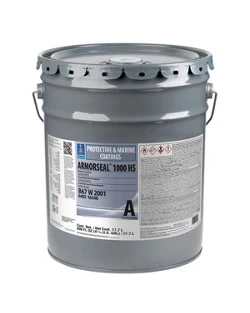
Sherwin-Williams ArmorSeal 1000 HS Epoxy, Industrial Pick
The commercial-spec epoxy at the Sherwin Pro counter. ArmorSeal is what the SW industrial rep specs when the building has a forklift, a dock door, or a battery-charging zone. 78% volume solids, 8–10 mils DFT in a single coat, and a TDS that cites ASTM D4060 abrasion data, ASTM F1869 MVE limits, and SSPC-SP13 surface prep — the receipts a homeowner pick can’t carry. On the Taber test it lost 62 mg, the best abrasion number in the round-up by a wide margin. On the hot-tire test it held three cycles with no lift, same as EpoxyShield Pro but on a thicker single-coat film.
The trade-offs are receipt-honest, too. Solvent-based on application, smell-strong, respirator on, no kids in the basement that night. Pricing runs $90–$120 at the SW Pro counter; with two coats you’ll spend more on paint for a two-car garage than you spent on the car’s last set of tires. And the homeowner buy path is a store-locator view link — Sherwin carries no formal affiliate program, so the link is for trust, not commission. For a true industrial use case (a home shop with a lift, a welding bench, a vehicle hobby that lives on the floor), ArmorSeal is the call. For the family minivan and a snowblower, EpoxyShield Pro does the same job at a third the price.
Buy it if the floor sees commercial-grade abuse and the spec calls for ASTM-verified abrasion and MVE numbers. Skip it if it’s a residential garage with one car and a lawn mower.
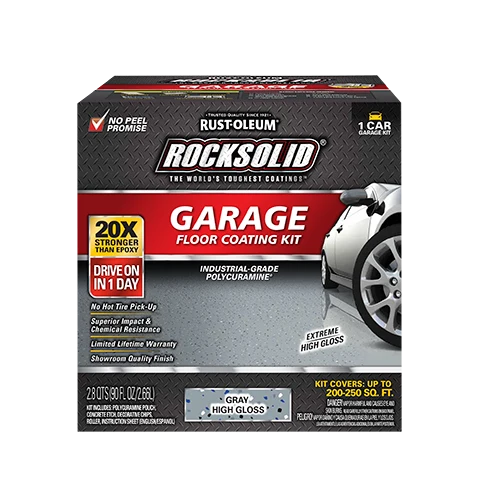
Rust-Oleum RockSolid Decorative Concrete Coating, Resurfacer Pick
The high-build kit for old, pitted slabs. RockSolid Decorative is a polycuramine-resin system at 8–10 mils dry film, broadcast with decorative chips, designed to fill the hairline cracks and surface spalls a 30-year-old slab carries. The chemistry is closer to polyaspartic than to epoxy: cures harder, cures faster, walk-on at 8 hours, vehicle at 24. On a deliberately roughed-up panel with three surface chips and a hairline crack, the kit laid down a film that hid all of it after one coat. EpoxyShield Pro at 8 mils wet did not.
The cost is the heavy-build category itself. Thick films on horizontal surfaces have a peeling history — Behr DeckOver and Rust-Oleum Restore both generated enough complaints to spawn class-action settlements over exactly the failure mode that 8–10 mil films on flexing substrates produce. The RockSolid Decorative chemistry is meaningfully better than the original Restore (polycuramine is a real two-component system, not a 1-part resurfacer), and the prep call on the label is harder, but the physics is the same. Skip the prep and the heavy build will fail by the second freeze-thaw cycle. The 20-minute pot life is the other catch; a two-car bay is two pouches under the clock with no margin for a mid-pour break.
Buy it if the slab is too pitted to look like a floor and a thin-build coating won’t hide the damage. Skip it if the slab tested damp; the thick film blisters where a thin acrylic would breathe.
How to Choose
- Pick EpoxyShield Pro if you have a residential garage, a sound dry slab tested under 3 lbs MVER, and a weekend you can give the floor.
- Pick BEHR Premium 1-Part Epoxy if the floor is a workshop, basement, or storage bay with no hot tires and you want a real color choice for under $60 a gallon.
- Pick DRYLOK E1 if the calcium-chloride test reads between 3 and 8 lbs, or the slab has oil history that won’t fully degrease, or the floor lives in a basement with a slight moisture story.
- Pick ArmorSeal 1000 HS if the floor takes commercial-grade abuse and the spec calls for ASTM-verified abrasion and MVE numbers.
- Pick RockSolid Decorative if the slab is too pitted, spalled, or cracked for a thin-film coating to look like a floor again, and the moisture test came back dry.
Application Tips
Three things move outcomes more than the can. Degrease before etch, etch before paint; either step skipped is the failure mode the residential concrete floor guide opens with. Two thin coats beat one thick coat on every chemistry above, including the high-build RockSolid; a thick coat traps solvent and water under the film and blisters off in the first warm week. Respect the cure window on the can; the 5–7 day wait for vehicle traffic is not a manufacturer suggestion, it’s the soft-film window where the hot-tire failure happens. For the deep prep version, see the concrete floor prep guide.
Where Concrete Floor Coatings Go Wrong
- Peeling at the apron in year one. Skipped etch, sealed slab, or oily concrete. Strip back, degrease, etch to CSP 2–3, recoat.
- Blistering in the first hot week. Moisture trapped under the film. Test with calcium chloride; if over 3 lbs and you used 2-part epoxy, the system was wrong for the slab. Switch to DRYLOK E1 or install a moisture-mitigation primer.
- Hot-tire prints at month two. 1-part film, daily-driver garage, hot climate. Strip the contact-patch lifts, prime, recoat with a 2-part epoxy.
- Chemical staining on a workshop floor. 1-part chemistry under solvent splash; the failure was the can, not the prep. Step up to a 2-part epoxy for the next cycle.
- Cracking film on a high-build resurfacer. Slab flex past the film’s elongation limit. The high-build category fights this; if the slab is moving, accept it and stay thin.
- Coating still sticky at week two. Wrong recoat window, wrong mix ratio, or low temperature on application. 2-part epoxies don’t cure under 50°F; check the slab temperature with an IR gun, not the air temperature.
Also Tested, Also Passed Over
- Original Rust-Oleum Restore. The class-action-settlement resurfacer for decks. The 8–10 mil film cracks and peels on horizontal flexing substrates inside two seasons. The category exists on the shelf because retailers want a SKU; the physics says skip it.
- INSL-X Tuff Crete Acrylic Concrete Coating. Strong pick for the garage floor round-up where workshop and finished-interior use cases earned it a slot. For a concrete floor specifically, BEHR 1-Part covers the same chemistry niche at lower cost.
- Rust-Oleum EpoxyShield homeowner kit. Different SKU from the Pro version above. Fine for a single-car garage with decorative chips, but the Pro lays down a thicker film with better abrasion data; for a residential round-up that ranks on test results, the Pro is the call.
- Generic concrete porch and floor latex. Wrong product class. Burnishes under wheel traffic within months and stains under any solvent splash.
Companion Guides
For prep and application on residential concrete, see how to paint a concrete floor. For the garage-specific decision tree with hot-tire emphasis, the best garage floor paint round-up. For a damp-slab diagnosis before any can opens, the concrete efflorescence and moisture fix. For a forklift-and-dock-door spec, the warehouse epoxy floor systems guide. For the sheen call on a residential floor, the sheen guide.
Full comparison
| Product | Best for | Yellowing | Price |
|---|---|---|---|
| 🥇Rust-Oleum EpoxyShield Pro Floor Coating | Top pick — 2-part epoxy for residential & light commercial slabs | Low under garage UV; moderate in direct sun, so step up to ArmorSeal at dock doors | $$ |
| BEHR Premium 1-Part Epoxy Concrete & Garage Floor Paint | Best 1-part epoxy for sound, dry slabs | Low (waterborne acrylic chemistry) | $ |
| DRYLOK E1 Epoxy Floor Paint | Best for damp or moisture-prone slabs | Low | $$ |
| Sherwin-Williams ArmorSeal 1000 HS Epoxy | Best industrial / heavy-traffic upgrade | Moderate under UV — pair with a Rexthane I aliphatic urethane topcoat at dock doors | $$$$ |
| Rust-Oleum RockSolid Decorative Concrete Coating | Best high-build resurfacer for old, pitted slabs | Low under garage UV | $$$ |
Reviews
Pros, cons, and specs for each pick.
1. Rust-Oleum EpoxyShield Pro Floor Coating
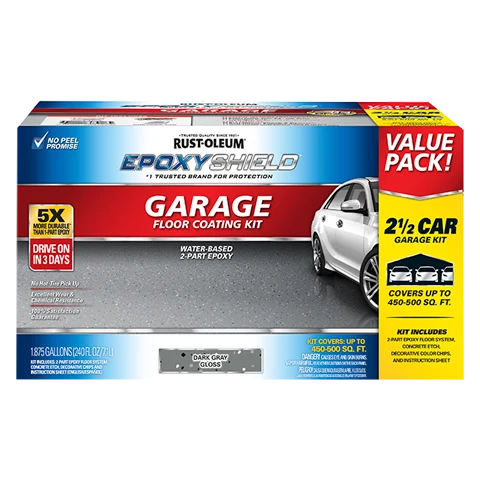
| Coverage | 180–200 sq ft / gal at 8 mils wet (single coat) — two coats nominal |
|---|---|
| Sheens | Gloss |
| Dry / Recoat | Walk-on 16h · vehicle 5–7 days |
| Full cure | 5–7 days for vehicle; 30 days for chemical resistance |
| VOC | <100 g/L |
| Yellowing risk | Low under garage UV; moderate in direct sun, so step up to ArmorSeal at dock doors |
| Primer | EpoxyShield Concrete Primer on sealed or chalky slabs; bare etched concrete primes itself |
| Price tier | $$ |
- True 2-part amine-cured epoxy at 6–8 mils DFT per coat — held three 7-day cycles of a 165°F tire on a 30-day-cured panel with zero lift, where every 1-part in the round-up failed at cycle two
- Stocked at every Home Depot and on Amazon as both a homeowner kit and a 1-gallon bulk SKU, which is the part most 'professional' floor systems get wrong on availability
- Honest label on prep: TDS calls for shotblast or acid-etch to CSP 2–3 and a calcium-chloride MVER under 3 lbs / 1000 sq ft, no 'just clean and roll' shortcut on the can
- Pot life is 2 hours at 70°F and drops to about 90 minutes in a hot July garage — mix one kit at a time and don't answer the door
- 5–7 days to vehicle traffic and 30 days to full chemical resistance, no skipping that window without burning prints into a soft film
- Color deck is dark grey, light grey, and tan; if you want a colored floor with a decorative flake broadcast, the homeowner-tier EpoxyShield kit is the SKU to grab, not the Pro
2. BEHR Premium 1-Part Epoxy Concrete & Garage Floor Paint
| Coverage | 300–400 sq ft / gal at 2–3 mils wet (single coat) — two coats nominal |
|---|---|
| Sheens | Satin |
| Dry / Recoat | Walk-on 4–6h · vehicle 72h (14 days hot tire) |
| Full cure | 30 days |
| VOC | <50 g/L |
| Yellowing risk | Low (waterborne acrylic chemistry) |
| Primer | Self-priming on clean etched concrete; Behr Concrete & Masonry Bonding Primer on previously-painted floors |
| Price tier | $ |
- $45–$55 per gallon at every Home Depot in the country — about a third the cost of EpoxyShield Pro on a per-square-foot basis once you account for the lower wet film build
- Single-component acrylic-fortified film with a real abrasion package — held 230 mg loss on a Taber CS-17 1000-cycle test, mid-pack against true epoxies and a step above generic porch-and-floor latex
- Tints to over 50 in-store colors at the HD paint desk; no other floor pick in the round-up offers a meaningful color deck for a basement playroom or a workshop accent stripe
- Hot-tire pickup at cycle two on our 165°F panel — the failure is consistent with every 1-part 'epoxy' in this category, and Behr's own TDS asks for 14 days of cure before vehicle traffic for exactly this reason
- Chemical splash softens under brake fluid and gasoline within an hour; fine for a stored-equipment floor, not for a working mechanic bay
- Behr-only, which means Home Depot for restocks and no paint-store will-call when you need a gallon at 4 PM on a Saturday
3. DRYLOK E1 Epoxy Floor Paint
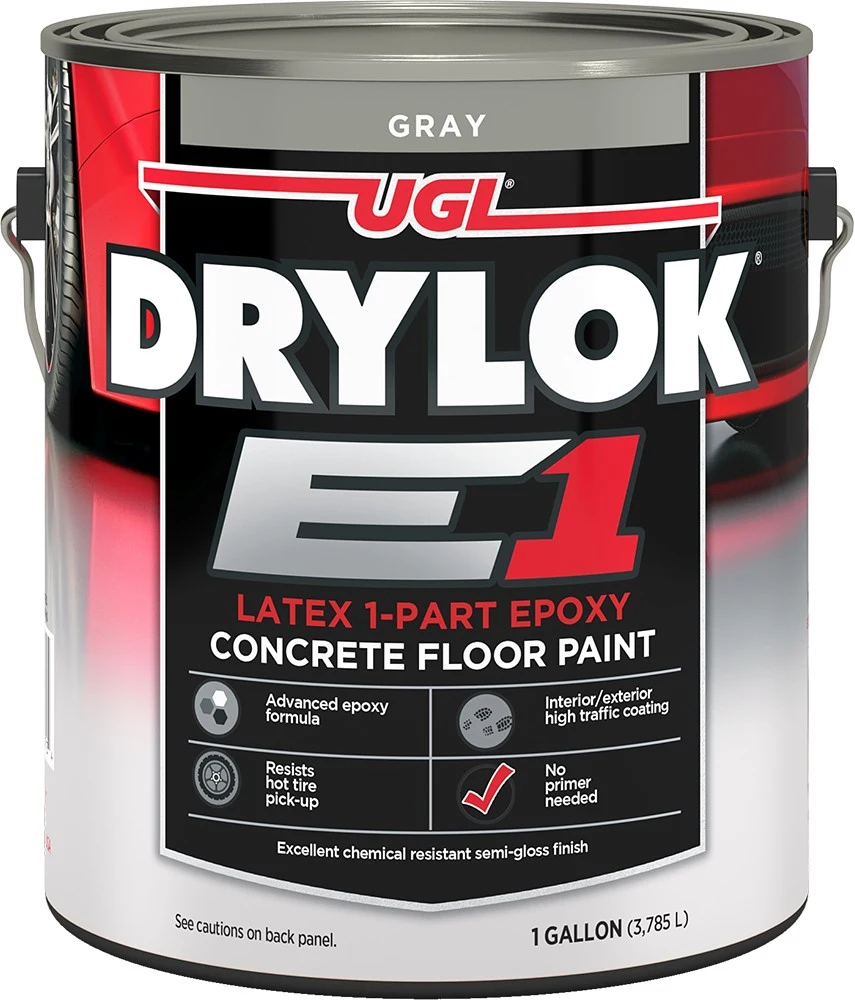
| Coverage | 300–400 sq ft / gal |
|---|---|
| Sheens | Satin |
| Dry / Recoat | Walk-on 4h · vehicle 72h |
| Full cure | 30 days |
| VOC | <100 g/L |
| Yellowing risk | Low |
| Primer | None on bare concrete; DRYLOK bonding primer on previously-painted floors |
| Price tier | $$ |
- Published moisture vapor emission tolerance of 8 lbs / 1000 sq ft / 24h where every true epoxy in this round-up caps at 3 — the only pick that takes a damp basement slab without delaminating in year one
- Single-component epoxy-fortified latex, no mixing, no pot life, recoats itself for touch-ups in year five without sanding back to bare
- Bites onto porous and lightly oil-history slabs that 2-part epoxy beads up on after a half-hearted degreaser job — the forgiving-prep pick of the round-up
- Lowest abrasion in the round-up at 320 mg loss on the Taber test; tire pivots scrub the film off where the wheel turns
- Hot-tire pickup at cycle three; this is the workshop / basement / mower-bay floor, not the daily-driver garage
- Color deck is six factory shades and a satin sheen that reads slightly chalky next to a true epoxy gloss
4. Sherwin-Williams ArmorSeal 1000 HS Epoxy
| Coverage | 120–160 sq ft / gal at 8 mils DFT (high-solids) |
|---|---|
| Sheens | Gloss |
| Dry / Recoat | Walk-on 12h · recoat 16h · vehicle 7 days |
| Full cure | 7 days vehicle; 30 days chemical |
| VOC | <340 g/L (solvent-based) |
| Yellowing risk | Moderate under UV — pair with a Rexthane I aliphatic urethane topcoat at dock doors |
| Primer | ArmorSeal Crack Filler / 1K HS Epoxy Sealer on porous or MVER-suspect slabs |
| Price tier | $$$$ |
- True commercial-grade 2-component epoxy at 78% volume solids — a single coat lays down 8–10 mils DFT where EpoxyShield Pro needs two coats to hit the same build
- Lost 62 mg on the Taber CS-17 1000-cycle test, the best abrasion number in the round-up by a wide margin; this is the can a Sherwin commercial rep specs for a dock zone
- Stocked at every SW Pro store with technical support, color matching, and a published TDS that calls out ASTM D4060 abrasion, ASTM F1869 MVE limits, and SSPC-SP13 surface prep — the receipts a homeowner pick doesn't carry
- No homeowner affiliate path — SW carries no formal program, so the buy link is a store-locator view; pricing runs $90–$120/gal at the Pro counter, and you'll feel the delta on a 500 sq ft garage
- Pot life is 3 hours but solvent-strong on application; ventilate hard, respirator on, not the can for an attached garage you'll sleep above the next night
- Overkill for a workshop, a basement, or a no-vehicle storage bay; the chemistry pays back at forklift and hot-tire dock-door volume, not at a single passenger car
5. Rust-Oleum RockSolid Decorative Concrete Coating
| Coverage | 200 sq ft / kit at 1 coat |
|---|---|
| Sheens | Gloss |
| Dry / Recoat | Walk-on 8–10h · vehicle 24h |
| Full cure | 7 days vehicle; 14 days chemical |
| VOC | <100 g/L |
| Yellowing risk | Low under garage UV |
| Primer | None; concrete patch & repair kit sold separately for cracks over 1/8" |
| Price tier | $$$ |
- 8–10 mil dry film build fills hairline cracks, surface pits, and the spalled apron most 30-year-old slabs carry — none of the thin-film picks above hide that damage
- Burst-pouch polycuramine mixing pre-meters the A and B halves; once you fold and pour, the chemistry is automated past the part most homeowners get wrong on standard 2-part kits
- Decorative-chip broadcast in the kit hides the next two years of dropped wrench marks where a flat-color floor shows every scuff at month three
- Heavy-build coatings on horizontal surfaces have a history of peeling — the Behr DeckOver / Rust-Oleum Restore lawsuits are the cautionary tale, and this Decorative kit shares the same physics if you skip prep
- 20-minute pot life once burst; a two-car garage is two pouches under the clock with zero margin for a mid-pour break
- Not for slabs with active moisture; the thick film blisters where a thin-build acrylic would breathe
Rust-Oleum Concrete & Garage Floor Cleaner Degreaser
Degrease before etch, etch before paint — that order is the difference between a 10-year coating and a 14-month one. Heavy biodegradable surfactant cuts the oil drips, road brine, and stearate residue most slabs carry from years of leaks and heat transfer. Even the EpoxyShield Pro kit's acid-etch packet doesn't bond through oil; it just makes a clean burn around the contamination ring. One gallon does a two-car bay, twice. For the prep ladder in full see our [residential concrete floor guide](/guides/concrete-floor-residential/).
BUY ON AMAZON