What Is Latex Paint? The Chemistry Behind the Misnomer
Latex paint contains zero latex. Here's the polymer chemistry behind the name, how the film actually forms, and what acrylic vs vinyl means on the can.

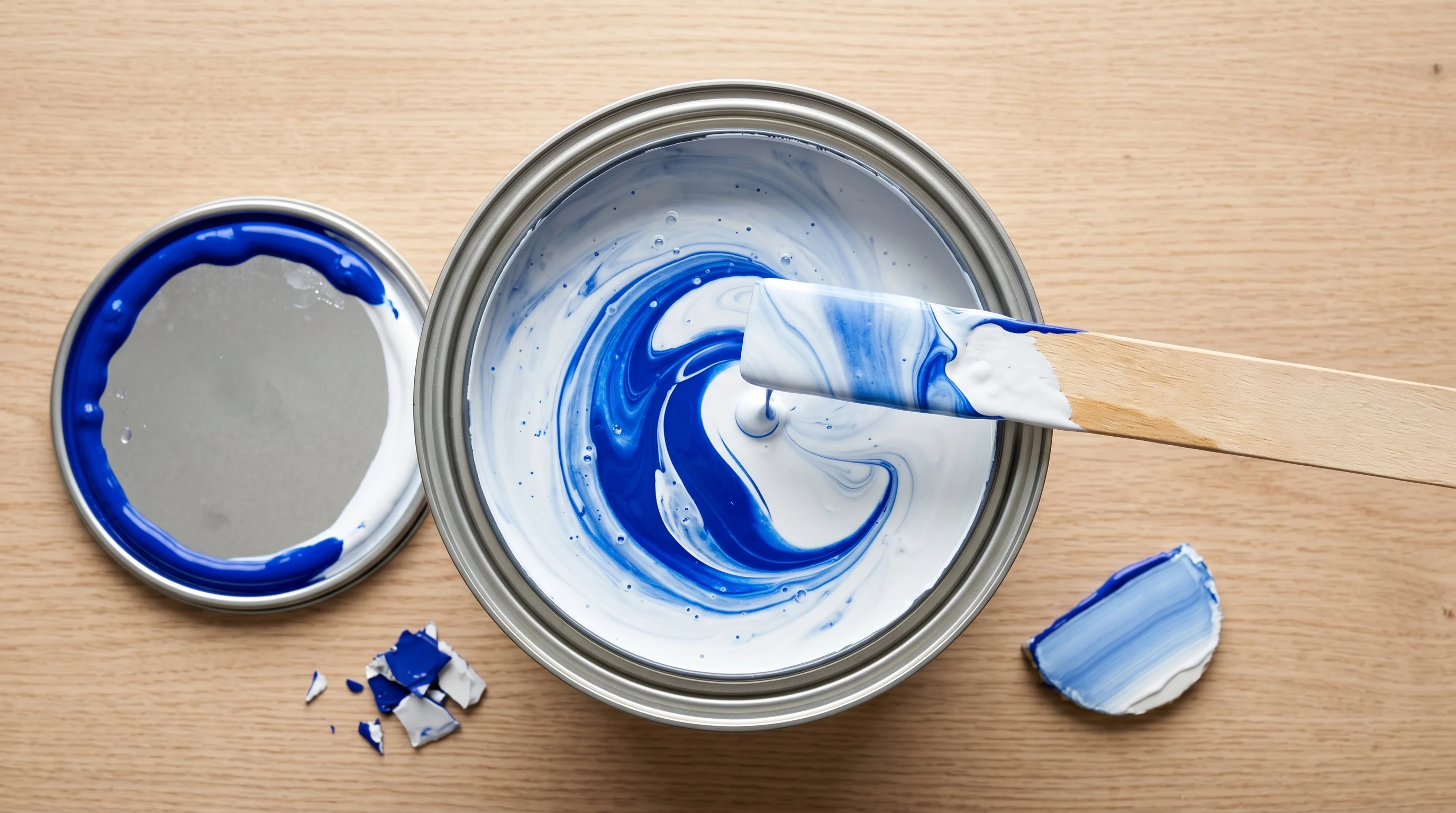
Walk into a paint store and ninety percent of what’s on the shelf is labeled “latex.” Pick up a can and read the back: acrylic resin, vinyl-acetate copolymer, sometimes a styrene blend. No latex anywhere. The label survives because the industry hasn’t found a cleaner one-word handle, not because there’s rubber in the can.
The misnomer goes back to the 1940s. The first water-based wall paints used a styrene-butadiene emulsion that looked milky white, the way natural rubber latex does when it’s tapped from the tree. Marketers called it “latex paint” and the name stuck. Within a decade the styrene-butadiene was replaced with vinyl acetate, then with acrylic, and now with hybrid blends — but the word on the front of the can never changed. So “latex paint” today means a water-borne polymer emulsion that dries by water evaporation and forms a continuous plastic film. Coverage runs 350–400 square feet per gallon, VOCs sit at 50 g/L or lower in most modern formulas, and the binder is almost certainly an acrylic.
Where the Name Actually Came From
Natural rubber latex is the milky sap of Hevea brasiliensis. It’s a colloidal suspension of polyisoprene particles in water. When the water evaporates, the particles coalesce into a flexible rubber film. That’s the mechanism the early paint chemists were copying when they emulsified styrene-butadiene polymer particles in water and let them dry into a wall coating. Same physics, different polymer.
The first commercial latex wall paint was Glidden’s Spred Satin, launched in 1948. It used a styrene-butadiene rubber emulsion, and yes, technically the SBR is a synthetic latex in the chemistry sense. Within ten years SBR was being displaced by polyvinyl acetate, which had better color retention and didn’t yellow under sunlight. By the 1970s, acrylic resins took over the premium tier. Each replacement was an improvement; none of them was latex. The word stayed because the industry didn’t want to teach customers a new term every fifteen years.
How the Film Actually Forms
A latex paint film forms in two stages, and understanding both is what separates people who paint well from people who paint twice.
Stage one is water evaporation. You roll the paint on, the water starts leaving — partly into the air, partly absorbed by the substrate. As the water content drops, the binder particles (which were floating freely in the suspension) get pushed closer together. By the time the surface feels dry to the touch, the water is mostly gone and the particles are packed tight against each other but still distinct, like ball bearings in a tray.
Stage two is coalescence. This is where the binder particles deform under their own surface tension and fuse into a continuous, transparent film. Coalescence needs three things: the right temperature (most latex paints specify above 50°F for a reason), time, and a small amount of coalescing solvent in the formula that softens the particle surfaces just enough to let them merge. If any of those three is off — you painted in 40°F weather, you washed the wall at day three, the formula was a cheap one with insufficient coalescing aid — the film stays grainy and porous at the microscopic level. It looks fine. It fails early.
That’s why a freshly painted wall feels dry but isn’t cured. Touch-dry is stage one finishing. Cure is stage two completing. The window between them is when most damage happens — fingerprints that won’t wipe off, tape that pulls paint with it, scrubbed patches that go duller than the rest of the wall.
Acrylic Latex vs Vinyl Latex
The two terms describe the binder polymer, and the binder is where the money goes. A premium gallon and a contractor gallon look identical in the can, but the binder accounts for most of the price difference and almost all of the performance difference.
100% acrylic latex uses an acrylic resin — polymerized acrylic and methacrylic esters. Hard film, excellent UV resistance, sticks to chalky surfaces, flexes without cracking through temperature swings. This is what you want for exteriors, kitchens, bathrooms, and any surface that will see scrubbing. Benjamin Moore Aura, Sherwin-Williams Emerald, and Behr Marquee are all 100% acrylic.
Vinyl-acrylic is a blend of polyvinyl acetate with some acrylic mixed in. Cheaper to make, softer film, less weather-resistant. It’s the dominant binder in mid-tier interior wall paint — Behr Premium Plus, BM Ben, Sherwin-Williams SuperPaint at the lower end of the tier. Fine for bedrooms and living rooms where the wall won’t get scrubbed often.
Vinyl (PVA) is straight polyvinyl acetate. The cheapest binder, the softest film, the worst scrubbability. This is contractor flat ceiling paint and builder-grade wall paint. It exists because PVA is cheap and a flat ceiling doesn’t need to survive a scrub brush.
You can read the binder off the data sheet if the can label is vague. “Acrylic resin” or “acrylic copolymer” means acrylic. “Vinyl acrylic” means the blend. “PVA” or “polyvinyl acetate” means the cheap stuff. The reason for the price spread isn’t just marketing; it’s the cost-per-pound of the polymer in the can.
Why Latex Took Over
By 1980 latex paint had displaced oil-based interior paint in almost every category. Five reasons drove the shift, and none of them was the misleading name.
Cleanup with water instead of mineral spirits. Brushes rinse out under a faucet. Spills wipe up with a damp rag. For a category sold heavily to homeowners, that alone would have done it.
Faster dry and recoat. Oil-based paint needs 6–8 hours minimum between coats; latex is recoatable in 4 hours at room temperature. A job that took two days with oil takes one with latex.
No yellowing. Alkyd resins amber as they age, especially in low-light interior corners. Acrylic latex stays color-stable for decades. Trim painted white in 1970 with oil-based enamel is yellow today. Trim painted white in 1990 with acrylic latex still reads white.
Flexibility. Latex film stretches and contracts with the substrate. Oil-based film hardens and embrittles with age, then cracks at every seasonal expansion cycle. On wood siding through ten New England winters, this matters.
Lower VOCs and a tolerable smell. Mineral-spirits solvents in oil-based paint off-gas for weeks and the smell is aggressive. Modern latex sits at 50 g/L VOC or below, and most of that off-gases in the first 72 hours. For occupied spaces — which is most spaces — this stopped being optional once people started caring.
Oil-based paint still has a few defenders for specific jobs (tannin-blocking primers on bare cedar, high-traffic floors and stair treads, certain industrial topcoats), and there’s a real comparison in the oil vs water-based head-to-head if you’re standing in the aisle deciding. But for ninety-five percent of residential work, the question got answered four decades ago and the answer was latex.
What This Means When You’re Standing in the Aisle
Don’t pick a can based on the word “latex” on the front; pick it based on the binder on the back. For a kitchen, a bathroom, anything exterior, or any surface you’ll wash — 100% acrylic. For a bedroom ceiling or a closet where nothing will touch the wall again — vinyl-acrylic is fine and saves you twenty dollars a gallon. For a contractor-grade flat ceiling on a flip — PVA does the job for nine dollars a gallon and nobody will know.
And give the film time to cure before you test it. Touch-dry at hour two doesn’t mean cured at day two. The binder needs the full 14–30 days the can mentions in fine print. Wash the wall at day five and you’ll burnish a spot you can see from across the room. Wait three weeks and you can scrub the same spot with a sponge and not leave a mark. The chemistry doesn’t care about your schedule.
Frequently asked questions
Does latex paint actually contain latex?+
What's the difference between acrylic latex and vinyl latex?+
How long does latex paint take to cure?+
Is latex paint the same as water-based paint?+
- Oil-based vs water-based paint
- Sheen guide
- Best interior paint