Best Brush and Roller Cleaners
Six brush and roller cleaners tested on latex, oil enamel, shellac, and stain. Top pick: the Purdy Brush and Roller Spinner, plus the solutions that actually rescue a stiff brush.

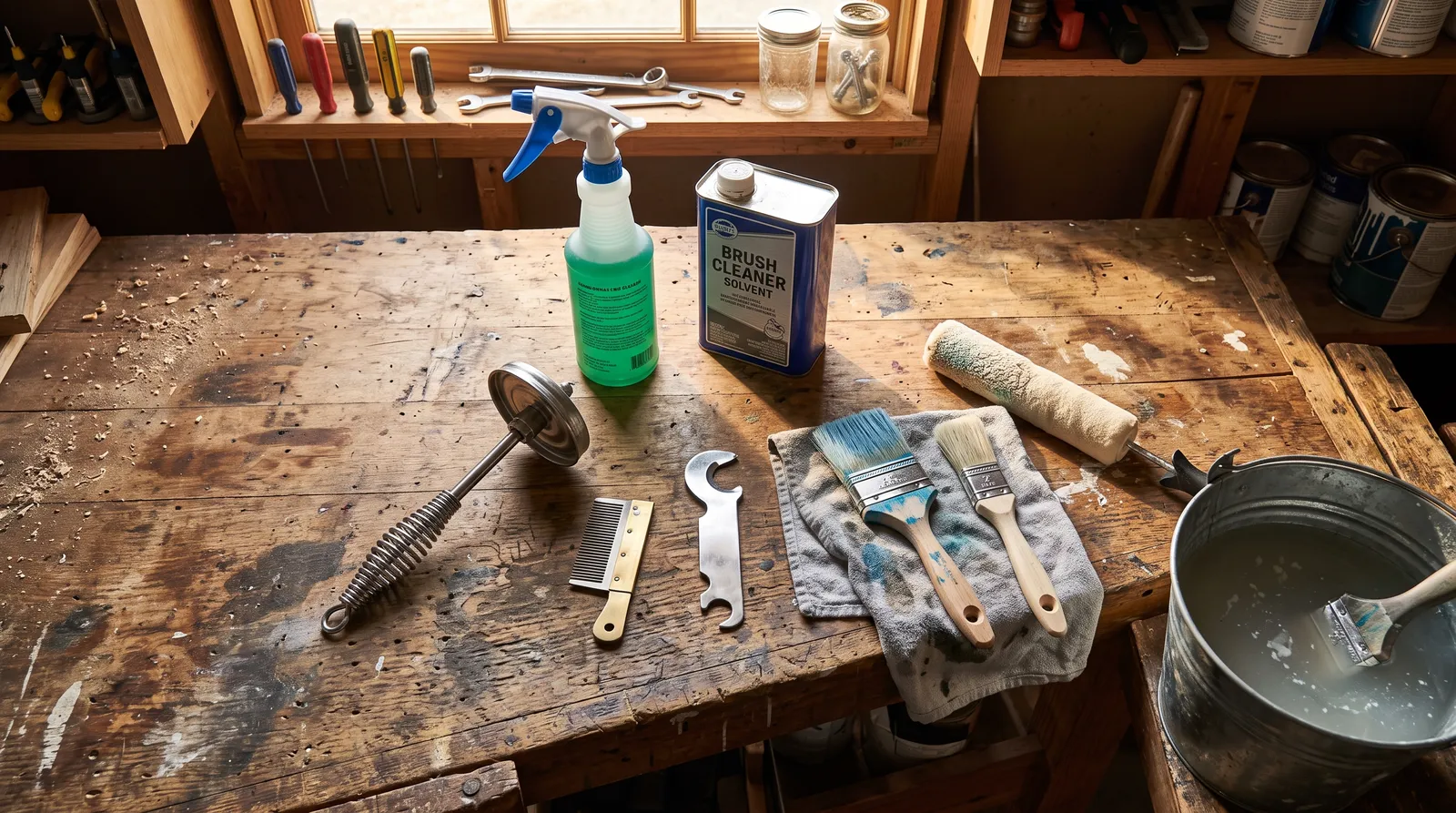
Disclosure: Some links below are affiliate links. We earn a commission if you buy through them, at no extra cost to you.
Top pick: the Purdy Brush and Roller Spinner, about $18. It wins on the one thing no bottle of cleaner can do, which is throwing water and paint out of the ferrule, the metal band at the base of the bristles where brushes actually die. Four seconds of spinning beat twenty minutes of hand-rinsing in our weight test. It falls short on mess, badly, and it does nothing for dried film. For the wash itself, Simple Green All-Purpose diluted about 1:10 is the water-based pick, and Klean-Strip Brush Cleaner is the one can that handles oil enamel, varnish, and shellac.
Buy the spinner first. Everything else on this page is a supporting cast.
Six Cleaners, Four Weeks, and a Ruined Laundry Sink
The category is confusing because “brush cleaner” describes three unrelated products. A soap. A solvent. A tool. People search for one and buy another, then wonder why a gallon of degreaser did nothing to a varnish brush.
So we split the field on purpose. Two chemical cleaners, one water-based and one solvent. Two mechanical tools, a spinner and a multi-tool with a roller notch. One comb. One paste soap for the rescue jobs and the good brushes. Six products, four weeks, five different coatings, and a laundry sink my husband has asked me not to discuss.
The headline number came out of the scale. We weighed every test brush new and dry, painted with it, washed it, air-dried it 48 hours, and weighed it again. Whatever it gained is paint that never left. Hand-washed brushes came back 3 to 5 grams heavy. Spun brushes came back within a gram of where they started.
Three to five grams sounds like nothing. It is a hardening ring inside the ferrule that splays the bristle in about six jobs.
Where Brushes Actually Die
Not the tips. Everybody watches the tips.
The failure happens at the heel, where the filament disappears into the metal. Every stroke pushes a little paint up in there, and a normal rinse under a tap moves water across the outside of the bristle without ever flushing the inside of the ferrule. The paint that stays sets up into a hard wedge. That wedge pushes the bundle apart from the middle, and a splayed brush cannot hold a chisel edge. You notice it as a cut line that wanders and a brush that suddenly wants to leave tracks. If your trim is showing them, the brush marks fix guide covers the repaint side of the problem, but the cause usually started at a sink.
Roller covers fail differently. Nap mats down when paint dries in the base of the fiber, near the core, and a matted cover stipples instead of laying flat. The fix is mechanical: get the bulk of the paint out before water ever touches it.
Both failures are cleanup failures. Neither is a manufacturing defect, which is what most people assume when a two-month-old brush starts misbehaving.
Water-Based or Solvent: Pick the Right Side First
Half the bad reviews on brush cleaners are people using the wrong category.
Latex, acrylic, waterborne enamel, water-based primer. Warm water and a degreaser. Simple Green cut 1:10, or dish soap if that is what is under the sink. No solvent. Adding mineral spirits to a latex brush does less than warm water and costs more.
Oil enamel, alkyd primer, spar varnish, oil stain. Solvent. Klean-Strip Brush Cleaner, or mineral spirits if you want slower and less smelly. Water does nothing here except make a mess.
Shellac. Denatured alcohol or ammonia in water. Mineral spirits will not touch shellac, which surprises people every year. The blended brush cleaner handles it because it is a solvent cocktail, not straight naphtha.
Two-part epoxy and cured polyurethane. Nothing. Clean it inside the pot life or accept the loss. If you are choosing between finishes for a project, the polyurethane vs polycrylic comparison lays out how much cleanup pain each one costs you.
That is the whole decision tree. Everything past this section is about doing it faster and doing it better.
Inside the Test Rig
Same protocol on every brush.
The coatings. Benjamin Moore Regal Select eggshell for walls. Sherwin-Williams Emerald Urethane Trim Enamel, which is waterborne and sets up in a ferrule faster than anything else we own. A Rust-Oleum oil-based alkyd trim enamel. Zinsser Bulls Eye shellac. Minwax oil-based stain.
The brushes. Matched pairs, bought new: Purdy Clearcut Elite Glide 2.5-inch angled sash, Wooster Alpha 3-inch flat. Roller side used 9-inch Wooster Pro/Doo-Z half-inch covers.
Four timing conditions. Immediate wash within ten minutes. Lunch-break wash at 90 minutes with a skin formed. Next-day wash at 24 hours. And a rescue attempt on a brush deliberately left loaded for 14 days in an unheated garage, which is the condition every homeowner eventually creates.
The scoring. Weight gain after 48 hours of drying was the primary number. Then bristle flex by hand against a fresh control, chisel-edge recovery after combing, water used per wash from a marked 5-gallon bucket, and minutes per brush.
The results sorted cleanly. The spinner won on weight, by a lot. Simple Green won the 90-minute latex condition, where dish soap started to struggle. Klean-Strip won everything oil and shellac, including the 14-day rescue on the varnish brush. The Masters paste won the 14-day rescue on a waterborne brush, which solvent handled worse than expected. The comb and the multi-tool are not really competitors, they are the accessories that make the other four work.
Comparison at a Glance
| Product | Type | Works on | Rescues dried paint | Roller-capable | Price tier |
|---|---|---|---|---|---|
| Purdy Brush and Roller Spinner | Tool | Any coating | No | Yes | $ |
| Simple Green All-Purpose | Water-based cleaner | Latex, acrylic, waterborne enamel | Same-day only | Yes, with a bucket | $ |
| Klean-Strip Brush Cleaner | Solvent cleaner | Oil, varnish, shellac, lacquer | Yes, overnight soak | Not practical | $$ |
| Wooster Painter’s Comb 1832 | Tool | Any coating, during the wash | No | No | $ |
| Purdy Premium 10-in-1 | Tool | Any coating, before the wash | No | Yes | $$ |
| The Masters Brush Cleaner | Paste soap | Acrylic, latex, watercolor | Yes, slowly | No | $ |
1. Purdy Brush and Roller Spinner, Top Pick
Cheapest item on this page and the only one that changed how long our brushes last.
The mechanic is a pump shaft on ball bearings with a spring chuck at the bottom. Clip the brush handle, drop it into a 5-gallon bucket, pump the knob four or five times, and the brush comes out damp instead of soaked. What just left the tool is not only water. It is the paint suspended in the water that was sitting inside the ferrule, and centrifugal force is the only thing that reaches it.
Our numbers: a Purdy Clearcut washed by hand under a tap and dried 48 hours came back 4 grams heavier than new. The same brush and the same wash, finished with ten seconds of spinning, came back within a gram. Do that math across twenty jobs and the difference is a brush that still cuts a line versus one you replace.
It works on roller covers 1-1/2 and 1-3/4 inches in diameter, which is every standard 9-inch sleeve and most mini-rollers. Wash the cover, clip it, spin it, and the nap fluffs back instead of matting flat.
Now the mess. The spinner throws a two-foot halo of dirty water at high speed. In practice this means you use it inside a bucket, outdoors, or in a laundry sink with a curtain. We did one careless spin in an open garage and repainted a section of drywall we had not planned on repainting. The spring chuck also bites hard on thin handles and left a mark on a lacquered Wooster after a few weeks. And it removes liquid, not film; a hardened brush is a job for one of the soaks below.
| Spec | Value |
|---|---|
| Type | Hand-pump centrifugal spinner, steel and ball bearing |
| Fits | Roller covers 1-1/2 and 1-3/4 inches, most brush handles |
| Item number | 140755200 |
| Best for | Any painter who owns more than one brush |
| Approx. price | $15–$20 |
Buy it if: you own a brush worth more than $15 and you would rather not buy it again next year. Skip this if: you have nowhere to spin, which means no bucket, no yard, and no utility sink.
2. Simple Green All-Purpose Cleaner, Best for Latex and Waterborne Enamel
The workhorse. A gallon of concentrate runs about $12 and makes roughly ten gallons of brush wash at 1:10, which is a season of weekend jobs for most people.
Against dish soap, the gap shows up at the 90-minute condition. Both handled a fresh brush fine. At 90 minutes, with a skin already formed on the filament, the diluted Simple Green pulled a Wooster Alpha back to clean in about four minutes of working and combing. Dish soap took closer to nine and left the heel gummy. On Emerald Urethane, which is the hardest waterborne to clean off anything, the difference was bigger.
It also rescued the 24-hour brush. Hot water, 1:5 this time, twenty minutes of soaking to the ferrule only, then comb and spin. The brush came back at maybe 90 percent flex, good enough for primer and cabinet frames.
Where it stops: cured latex. A brush left three days in a garage is not coming back with a degreaser, no matter how long you soak it. And it is not a solvent, so oil enamel and shellac laugh at it. One more caution from our own carelessness. We left a brush standing in full-strength concentrate overnight and the aluminum ferrule came out dull and faintly etched. Dilute it, and never let a brush stand on its bristles.
Buy it if: you paint walls, trim, or cabinets with water-based coatings, which is most of us now.
3. Klean-Strip Brush Cleaner, Best for Oil, Varnish, and Shellac
One can, four solvents’ worth of work.
The reason to keep it around is range. Oil enamel, alkyd primer, spar varnish, shellac, lacquer, all from the same quart. Mineral spirits handles the first two and fails on shellac. Denatured alcohol handles shellac and is mediocre on varnish. This is a blend, and blends cover ground.
The rescue test is where it earned the slot. We loaded a natural-bristle brush with oil-based spar varnish, left it 14 days in an unheated garage until it was a paddle, then suspended it in a jar of the cleaner overnight with the bristles off the bottom. The next morning it flexed. Combed it out, washed it with soap and water, spun it, dried it flat. It came back at roughly 90 percent, which for a brush I had already written off is a real result. Anyone doing exterior trim or a stained wood repaint with an oil primer should have a jar of this in the garage.
The trade-off is chemistry you have to respect. The label carries California warnings for ethylbenzene, and the formula includes methanol and toluene. Garage door open, nitrile gloves, no eating, no smoking, no exceptions. It strips lacquer off a wood handle if you dunk past the ferrule, and it hazes plastic buckets, so use glass or metal. And it will not save cured polyurethane. That brush is a rag now, and the sooner you accept it the less solvent you waste.
| Spec | Value |
|---|---|
| Type | Blended solvent brush cleaner |
| Sizes | Quart and gallon (GKBC120) |
| Cleans | Oil enamel, alkyd primer, varnish, shellac, lacquer |
| Reusable | Yes; settle a week, strain through a coffee filter |
| Approx. price | $12–$28 |
Skip this if: every coating in your garage is water-based. You would be buying a hazard you never use.
4. Wooster Painter’s Comb 1832, Best Brush Comb
Five dollars, and it is the difference between a washed brush and a clean one.
Two working faces. Brass tufts on one side, which are soft enough to pull softened paint out of the heel without shredding filament the way a brass wire brush does. A stainless comb on the other, which you draw through the damp bristle before drying to reset the chisel edge. That second job is the one people skip, and it is why their brushes dry into a fan.
Our routine, on every brush in the test: wash, comb the heel with the brass side, rinse, spin, then comb the tips straight with the steel side and lay the brush flat. Brushes that got the comb held their edge visibly longer than brushes that only got washed and spun.
It has real limits. It only works on paint that is already soft, so combing a stiff brush pulls bristles out by the root. It is small enough to disappear into a tool bag inside two jobs, and I have bought three. And the brass side is too soft to do anything for roller covers, so despite the title of this article, it solves exactly half the problem.
5. Purdy Premium 10-in-1 Multi-Tool, Best for Roller Covers
The roller half of the answer.
A loaded 9-inch cover holds a surprising amount of paint, and rinsing that down a drain is both wasteful and, in a lot of municipalities, against the rules. The half-moon notch in the blade of this multi-tool scrapes the cover from end to end and drops the paint back into the tray. We measured about 4 ounces recovered off a single wall cover, which is a quarter of a pint of Regal Select going back in the can instead of into a bucket.
The blade is full-length stainless, so the notch does not flex and skate off a wet nap the way the stamped notch on a cheap 5-in-1 does. Nine other functions come along: scraper, can opener, nail set, spreader, screwdriver ends, crack opener. You were carrying most of those anyway.
Two gripes. The rubberized grip gets slippery once it has paint on it, which is precisely when you need it. And it is sized for standard covers, so if your whole kit is mini-rollers for cabinet work, the notch is oversized and a plain 5-in-1 is lighter in a pocket.
Buy it if: you use 9-inch covers and you scrape before you rinse. About $12–$16.
6. The Masters Brush Cleaner and Preserver, Best for Fine Brushes
The sink-side product, not the jobsite one.
It is a paste soap in a tin. You wet the brush, swirl it into the paste, then work the lather into the heel with your thumb until the foam runs colored. Rinse, repeat until the foam runs white. On a good angled sash brush the third round usually pulls out pigment you did not know was in there.
Its best trick is the slow rescue. Our 14-day waterborne test brush, the one Emerald Urethane had turned into a spatula, did not come back with solvent and came back only partly with a hot degreaser soak. Three rounds of paste soap with a fingernail working the ferrule brought it to flexible. Not new. Flexible, and back in the trim rotation.
It also leaves a light conditioning film, so if you shape the chisel and lay the brush flat, it dries in that shape and stays there in storage.
Slow is the honest complaint. Every round is a few minutes at a sink, and nobody is doing this to three wall brushes at the end of a long day. The 2.5 oz tin also runs out fast if you try. And on oil enamel or varnish it does very little by itself, so treat it as the step after a solvent soak rather than an alternative to one.
Verdict: the product for your two best brushes, not your six working ones.
Cleaners We Tried and Left Out
- Straight mineral spirits. Fine and cheap for oil enamel, useless on shellac, and slower than the blended cleaner on varnish. Keep a can, but it is not the pick.
- Lacquer thinner as a general brush cleaner. Aggressive enough to melt synthetic filament. We ruined a nylon-poly brush proving it so you do not have to.
- Fabric softener soaks. A popular internet trick for latex. It does soften a brush, and it also leaves a waxy residue that causes fisheye in the next coat of enamel. Skip.
- Vinegar boils. Works on lightly hardened latex, smells like a pickle factory for two days, and cooks the glue that holds the bristle bundle. The heat is what does the damage.
- Brush cleaning stations with suspension lids. Genuinely good for artists storing brushes in solvent between sessions. Not built for a 3-inch wall brush.
The Ten-Year Brush Routine
A good brush should last a decade of homeowner use. Here is the whole routine.
Between coats, same day. Do not wash at all. Wrap the brush tight in plastic wrap or drop it in a zip bag, push the air out, and put it in the fridge if the gap is longer than overnight. Washing a brush four times in a day does more damage than the paint does. Drying schedules for the gap between coats are in the paint drying times chart.
End of a water-based job. Scrape the brush out on the can rim. Wash in warm water with a splash of degreaser, working the heel with your fingers. Comb the brass side through the ferrule. Rinse until the water runs clear. Spin. Comb the tips straight, slide the brush back into its keeper, and hang or lay it flat. Total time, about three minutes.
End of an oil job. Scrape. Solvent jar first, working the brush against the bottom for a minute. Second solvent jar to rinse. Then soap and warm water, because solvent alone leaves a film that turns gummy in storage. Comb, spin, shape, store.
Roller covers. Scrape with the half-moon notch until nothing more comes off. Then rinse, spin, and stand the cover on end to dry so water does not pool in the core. Covers dried lying flat come out oval.
Storage. Brush keepers, the cardboard sleeves brushes ship in, are not packaging. They are the shaping tool. Keep them. A brush stored loose in a bucket with the bristles bent against the bottom is ruined by geometry, not by paint.
Disposal. Let latex rinse water settle overnight in the bucket, pour off the clear water, let the sludge dry, and throw the solids away. Solvent goes into a labeled jar, settles for a week, gets strained through a coffee filter for reuse, and the sludge goes to household hazardous waste. Never pour solvent down a drain, and never put latex rinse water into a septic system.
Mistakes That Cost People Brushes
- Rinsing under a running tap and calling it done. The tap moves water past the outside of the bristle. It does not flush the ferrule. This is the single most common way a good brush dies.
- Leaving a brush standing on its bristles in a bucket. Twelve hours is enough to set a permanent bend. Hang it, clip it, or lay it flat.
- Using solvent on latex. Mineral spirits does not clean latex any better than water and it makes the residue harder to rinse. Match the chemistry.
- Combing a stiff brush. Soften first, always. Dragging brass through hardened filament pulls bristles out by the root, and a thinned brush never cuts straight again.
- Washing a roller cover before scraping it. You send a quarter pint of paint down a drain and you take five times as long. Scrape first.
- Buying a cheap brush because cleanup is annoying. A $4 brush leaves tracks on day one. A $22 Purdy plus an $18 spinner is cheaper across five years and paints better every single day of it, which is the argument we make at length in the paint brush round-up.
- Storing a brush damp in a sealed bag. Mildew smells terrible and the odor transfers into the next coat of paint.
The Kit I Would Actually Buy
For a homeowner with a decent brush and a couple of projects a year: the Purdy spinner ($18), a gallon of Simple Green concentrate ($12), and a Wooster Painter’s Comb ($5). About $35, and it will keep a $22 brush alive longer than the paint job it was bought for.
Add the Purdy 10-in-1 ($14) if you roll walls, which you do.
Add the Klean-Strip Brush Cleaner ($12 a quart) only when an oil primer, a spar varnish, or a shellac shows up on your project list. It is a hazard sitting in a garage the rest of the year, and there is no reason to own it before you need it.
The Masters tin is for the two brushes you actually care about. Everything else gets the three-minute routine and dies of old age instead of neglect.
Ask a Question