How to Paint Garage Walls
Painting garage walls? Whether they're bare drywall or concrete block, here's how to prep, prime, and roll two coats that won't peel or chalk off.

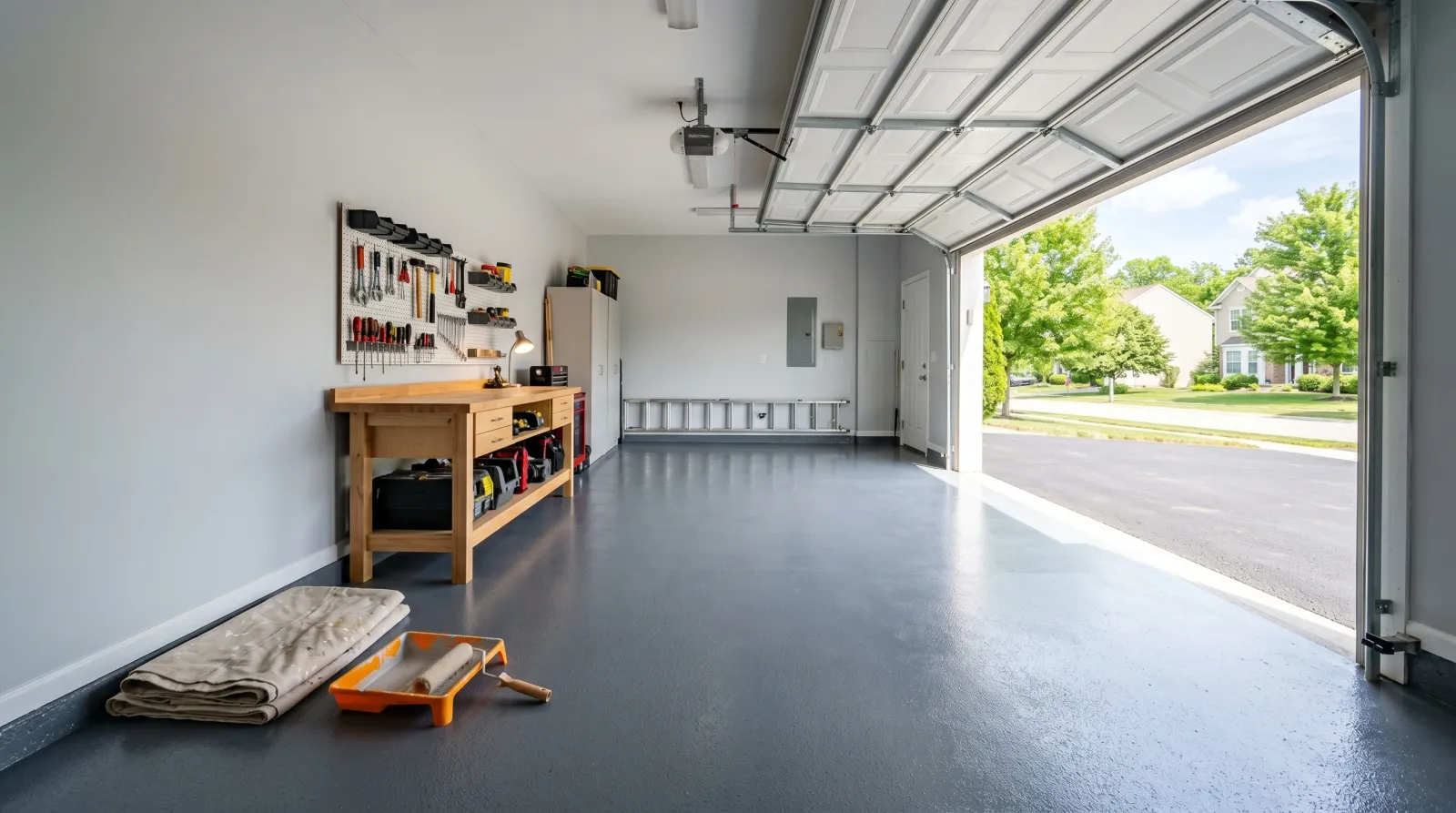
Okay, so the garage has looked like a cave for years, and you’ve finally decided to paint the walls so you can actually find your tools. Good call. Here’s the thing about garage walls: they’re not bedroom walls. They’re usually bare drywall that was never finished, or raw concrete block, and both want a little more prep before paint sticks. Don’t worry. The painting part is the same as any room. It’s the dust, the grease near the bench, and figuring out what’s behind the layer of grime that takes the extra time.
The plan is simple. Clean, patch, prime the bare stuff, then roll two coats. By Sunday night you’ve got walls you can wipe down and a garage that feels twice as big.
What You’ll Get
Clean, light-colored walls that bounce daylight around so you can see what you’re doing, and a surface you can wipe a greasy handprint off without the paint coming with it.
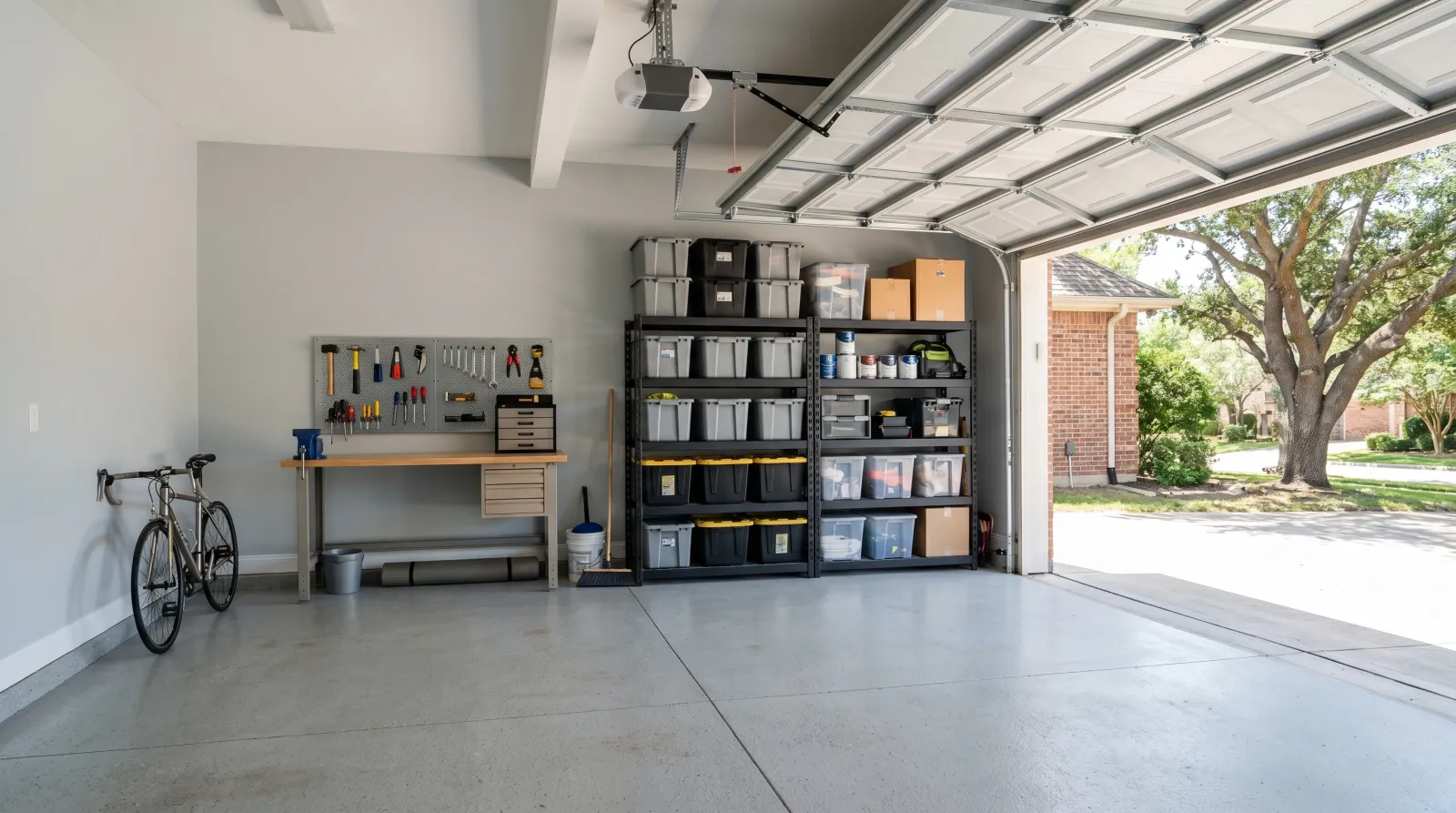
Drop cloths off, shelving and the workbench back against the wall, garage finished.
Honest Take on Difficulty and Time
This is an easy project that gets long because garages are big and dusty. A single-car garage is a Saturday. A two-car garage is a full weekend once you count the prep and dry time between coats.
| Garage size | Active time | Total elapsed |
|---|---|---|
| Single-car | 4–5 hrs | One Saturday |
| Two-car | 7–9 hrs | One weekend |
| Two-car with concrete block | 9–11 hrs | One weekend plus a prime day |
The prep is most of the work. Garages collect more dust, cobwebs, and grease than any room in the house, and paint won’t grab a dusty or greasy wall. If you skip the cleaning to save an hour, you’ll spend a lot more than an hour fixing peeling paint later.
What You’ll Need
Paint and Primer
Two gallons of interior latex in eggshell or satin (a low-shine finish that wipes clean). A two-car garage has 600 to 700 square feet of wall, and two coats eats about 2 gallons. Light grey, off-white, or pale blue are the popular picks because they reflect light and don’t show dust as fast as bright white.
Primer depends on what you’ve got. Bare or patched drywall needs a drywall primer like Zinsser Bulls Eye 1-2-3 so the first coat doesn’t soak in blotchy. Bare concrete block needs a masonry primer (Zinsser Watertite or KILZ Masonry) to fill the pores and block chalkiness. If the walls were already painted and the old paint isn’t peeling, you can skip primer and clean instead.
For the deep version on drywall, see how to paint drywall, and for block walls the best masonry paint round-up covers the sealing question. The sheen guide explains why eggshell beats flat in a space that gets dirty.
Tools and Supplies
A 9-inch roller with 1/2-inch nap sleeves. Thicker nap than you’d use in a bedroom, because garage drywall is often left with a rougher texture and concrete block is rough on purpose. A 2.5-inch angled brush for cutting in (painting the band along edges where the roller won’t reach). An extension pole, since garage walls usually run taller than a room. A 6-foot ladder, a tray with liners, painter’s tape, sanding sponges, and a canvas drop cloth.
You’ll also want a shop vacuum or a stiff brush to knock the dust off first, plus rubber gloves and safety glasses for the degreaser. Roller picks live in the best paint rollers round-up.
Step 1 — Clear the Walls and Knock Down the Dust
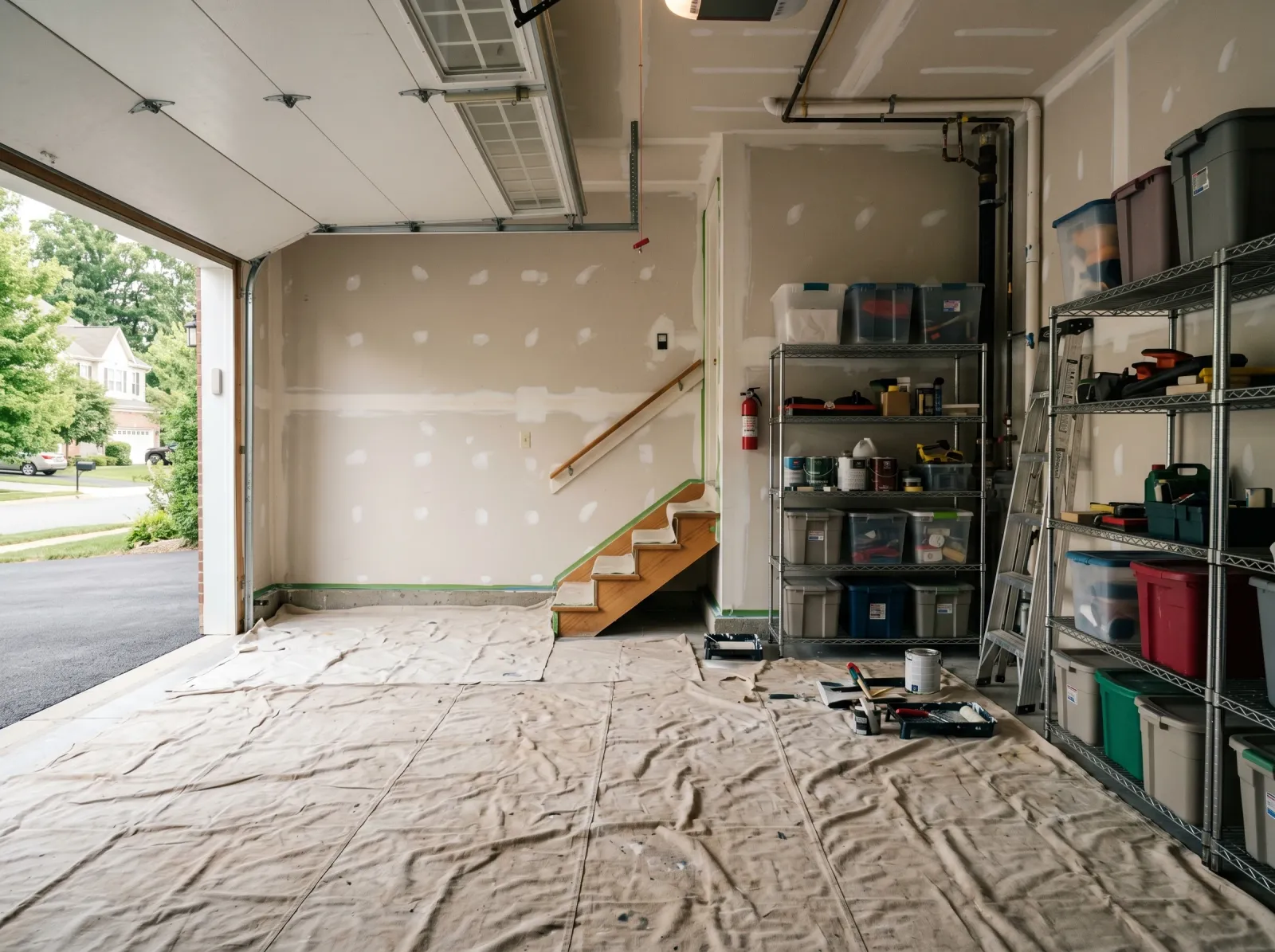
Everything pulled away from the walls, cobwebs and dust knocked down, screw holes and dings filled.
Pull shelving, bins, and the workbench at least four feet off the walls. Take down anything hung on hooks or nails. Then go after the dust. Run the shop vacuum brush head along the walls, top to bottom, and get the cobwebs out of the upper corners. Garage drywall holds a surprising amount of fine dust, and paint laid over dust peels off in sheets.
Find the screw holes, drywall dings, and old anchor holes. Press joint compound or spackle into each one, scrape flush, let it dry, and sand smooth with the 220-grit sponge.
Watch out for the greasy band near the workbench and the car bay. Engine fumes and hand grease build up at chest height. Wipe that band with TSP substitute or Krud Kutter, gloves and glasses on, then rinse with clean water. Paint won’t stick to grease.
Step 2 — Tape Off and Cover the Floor
Lay the drop cloth along the wall you’re starting on, and flatten a few cardboard boxes over the rest of the floor to catch roller spatter. Garage floors are concrete, so a drip won’t ruin anything, but dried paint flecks on the floor look messy for years.
Tape the ceiling line, the edge of any window or door trim, the electrical panel, and around outlets and light switches. Press the tape edge down hard with your thumbnail so paint doesn’t bleed under it. If you’ve got exposed studs or a half-finished wall, tape the edge where finished drywall meets bare framing.
Watch out for the gap behind the workbench if you can’t move it all the way out. Tape a sheet of plastic to its back edge so you don’t have to paint blind.
Step 3 — Prime the Bare Walls
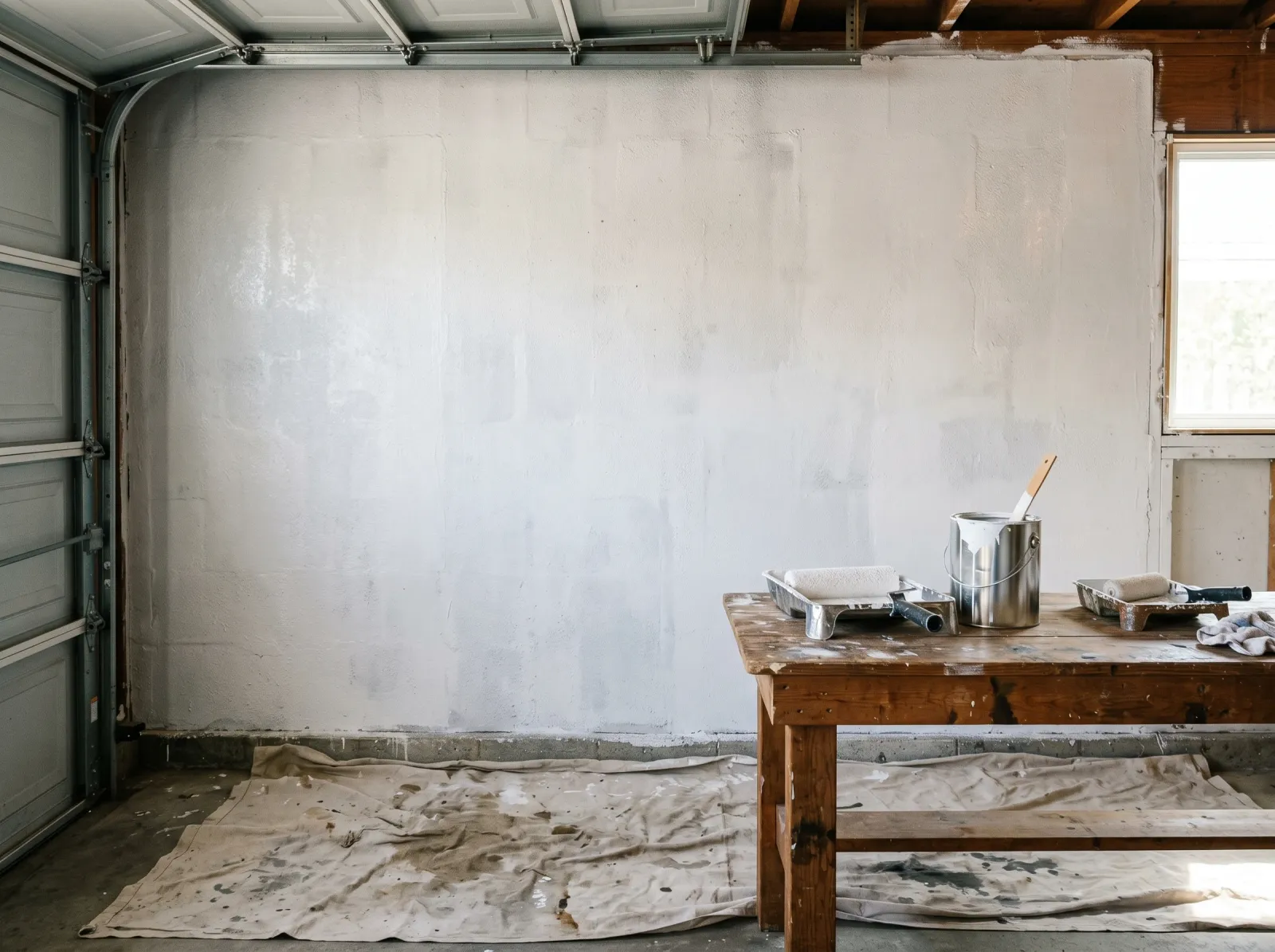
One coat of primer over bare drywall or concrete block, rolled on with a thick nap.
Skip this step only if the existing paint is sound. Bare drywall, fresh patches, and raw concrete block all need a primer coat.
Cut in the edges with the brush first, then roll the rest. On concrete block, push the roller in both directions to work primer into the pores; the rough surface drinks it up and you’ll see thin spots if you only roll one way. One coat of primer is enough. Let it dry the time on the can, usually 2 to 4 hours, before the color goes on.
Watch out for white powdery patches on concrete or block walls. That’s efflorescence (mineral salt pushed out by moisture coming through the masonry). Brush it off dry and figure out the moisture source before you paint, or it’ll push right back through your new paint. The fix for efflorescence on masonry walks through it.
Step 4 — Cut In, Then Roll the First Coat
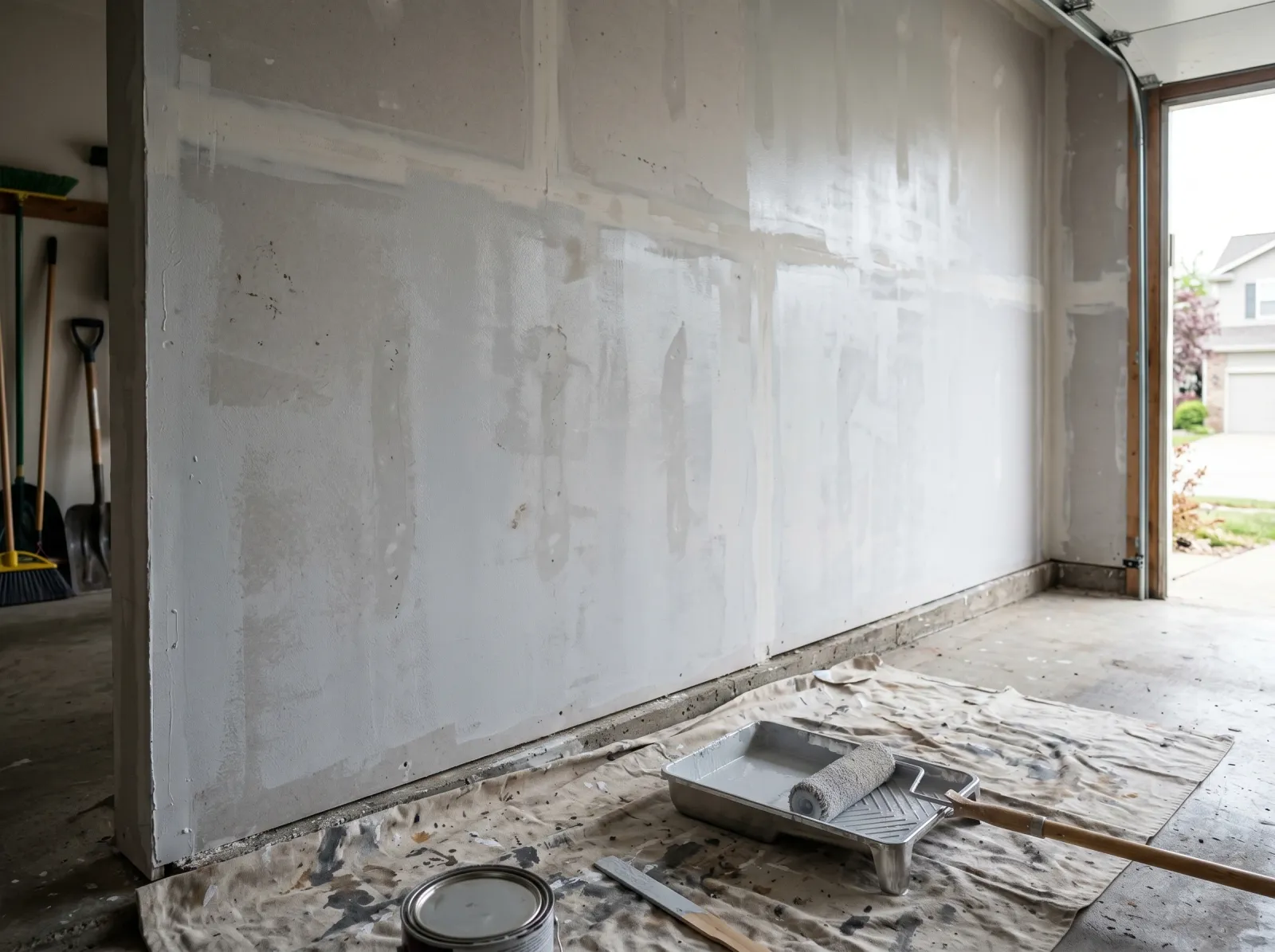
First finish coat going on in light grey, still a little patchy and thin in spots.
Cutting in means brushing a 2-inch band of color along every taped edge before the roller touches the wall. Load the brush a third of the way, tap once on the inside of the can, and brush the band along the ceiling, trim, and corners.
Pour paint into the tray, load the roller, roll off the excess on the ramp, and roll the wall in big W-shapes. Fill the W in with up-and-down strokes. Keep the roller about an inch off the cut-in band; the wet edges blend as you cross them. Work one wall at a time so the cut-in is still wet when the roller reaches it.
The first coat will look patchy and thin. That’s normal on garage walls, especially over primer. Don’t keep going over wet spots trying to fix it. You’ll leave roller marks. The second coat fixes it.
Watch out for the wet edge. Don’t stop in the middle of a wall for a break. If the edge dries before you come back, you’ll see a seam in raking light. Finish a whole wall before you set the roller down.
Step 5 — Wait, Then Roll the Second Coat
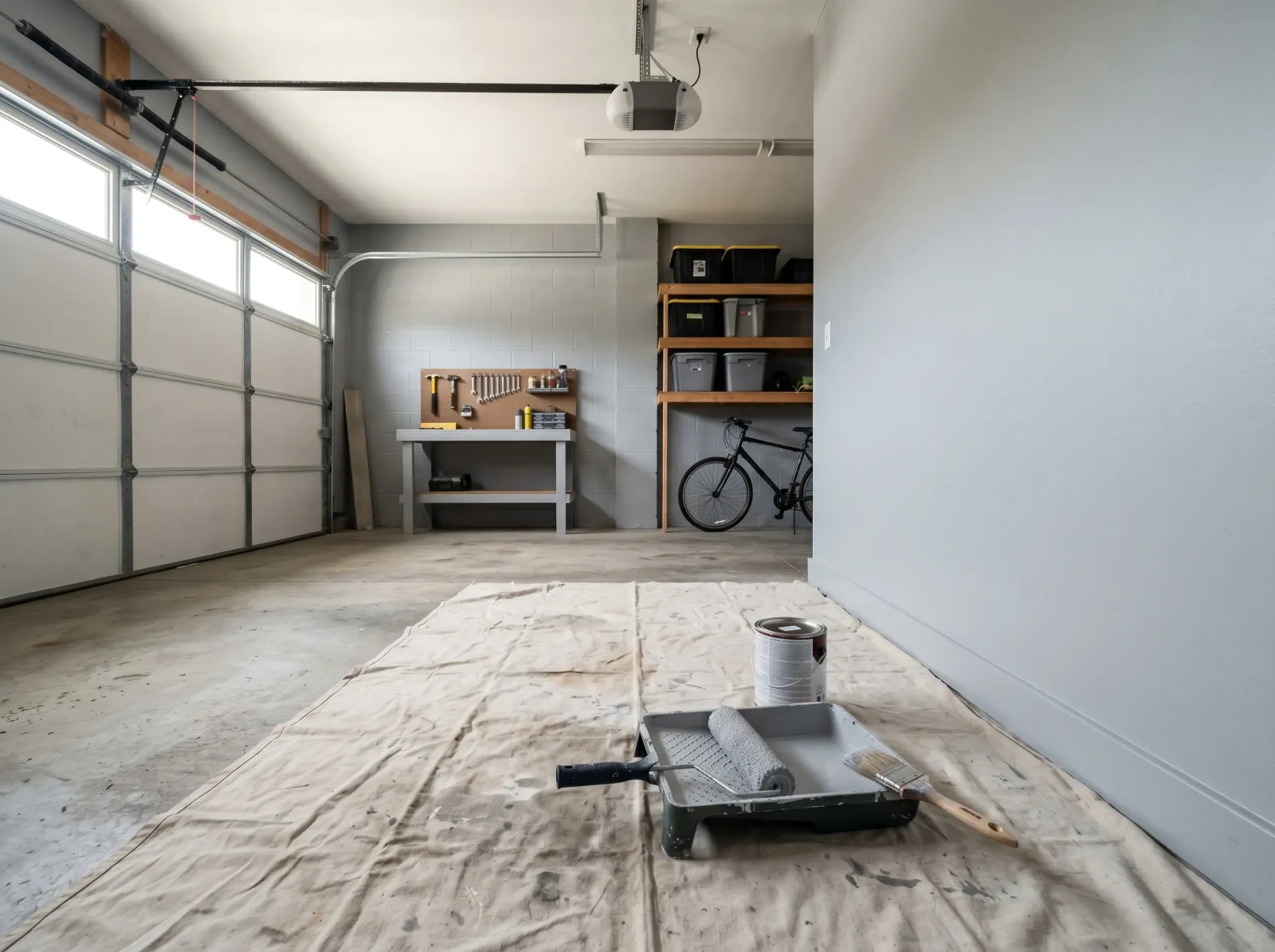
Second coat rolled while the cut-in is still wet. The patchy first coat disappears.
Wait the recoat window on the can, usually 2 to 4 hours. Touch the wall with a knuckle. If it’s dry and not tacky, you’re good. Cut in again, then roll the same way as the first coat. The patchiness fills in and the color evens out.
Two coats is the rule. One coat over primer reads thin and you’ll see roller streaks every time the garage door is open and the light rakes across the wall.
Step 6 — Pull the Tape and Reset
Pull the tape while the second coat is still slightly tacky, about 30 to 60 minutes after you finish. Pull slow, at a 45-degree angle, in one continuous strip. If you wait until the paint is bone dry, the film bonds across the tape edge and peels a ragged strip off with it.
Take the drop cloths and cardboard outside and shake them off. Wash the brush and roller sleeve under warm water until the water runs clear. Wait 24 hours before pushing shelving and the workbench back against the wall.
Common Mistakes
- Painting over dust. Garage drywall is covered in fine dust you can’t always see. Roll paint over it and the whole coat peels off in sheets within a year. Vacuum or brush the walls down first. It takes twenty minutes and saves the whole job.
- Skipping primer on bare drywall or block. Bare drywall and concrete block soak up the first coat unevenly, so the finish dries blotchy and you end up doing three finish coats to hide it. One coat of the right primer is cheaper and faster than a third coat of color.
- Using flat paint. Flat looks fine for a month, then a tire mark or a greasy handprint goes on and won’t wipe off. Eggshell or satin minimum. You will be touching these walls with dirty hands.
- Ignoring efflorescence on block walls. Painting over the white powdery salt traps moisture, and within months the new paint bubbles and flakes where the salt pushes back through. Brush it off and fix the moisture first.
- Leaning shelving on day one. The paint is touch-dry in 2 hours but soft for days. A shelf bracket pressed against it at hour six leaves a dent and a shiny mark. Wait a full day.
Cure Schedule
| Time after the second coat | What’s safe |
|---|---|
| 30–60 min | Pull the painter’s tape |
| 2 hours | Touch dry, don’t bump it |
| 24 hours | Shelving and workbench back against the wall |
| 7 days | Hang tools on hooks, lean heavy items |
| 30 days | Full cure, scrub with a sponge if needed |
Maintenance
Eggshell or satin garage walls hold up for 7 to 10 years before they need a refresh, longer than that if the garage stays dry. The walls near the workbench and car bay get dirty fastest. Wipe them down with a damp microfiber cloth and a drop of dish soap a couple of times a year and the paint lasts a lot longer.
Save a quart of the wall color with the room name on the lid. For a scuff, dab leftover paint on with a small piece of roller, not a brush, so the texture matches the wall around it. For a wall ding, spackle, sand, then dab paint over the patch.
If you get condensation or musty smells in a closed-up garage, that’s a moisture issue worth fixing before it gets behind the paint. The guide on condensation on walls covers why it happens and how to stop it.
Cost Breakdown
| Item | Cost |
|---|---|
| Finish paint, 2 gallons eggshell | $60–$90 |
| Primer, 1 gallon (drywall or masonry) | $20–$35 |
| Roller frame, sleeves, tray, liners | $25 |
| Brush, tape, sanding sponges | $20 |
| Degreaser, drop cloth | $20 |
| Total | ~$145–$190 |
Numbers are mid-tier paint (Behr Premium Plus or BM Regal Select). Already painted walls in good shape skip the primer and run closer to $110. While you’re at it, a fresh garage floor pulls the whole space together. See the best garage floor paint round-up if that’s next on the list.
FAQ
What kind of paint should I use on garage walls? Interior latex in eggshell or satin. Both wipe clean and handle the temperature swings a garage sees. Skip flat; it grabs dirt and won’t come off. Bare concrete block also needs a masonry primer first.
Do I need to prime garage drywall before painting? Yes if it’s bare or freshly patched. New drywall drinks the first coat unevenly. If the old paint is sound, clean it and skip straight to two finish coats.
Can you paint concrete block garage walls? Yes. Dust it off, roll one coat of masonry primer to fill the pores, then two finish coats with a thick 1/2-inch nap roller. Knock off any white efflorescence first.
How much paint do I need for a two-car garage? About 2 gallons of finish paint for two coats, plus a gallon of primer. Figure 350 square feet per gallon per coat on drywall, less on block.
How long should I wait before leaning things against the walls? Touch dry in 2 hours, but wait 24 hours before pushing shelving back and 7 days before hanging heavy tools. Soft paint dents and marks easily in the first day.
Ask a Question