What Is a Rust Encapsulator?
What a rust encapsulator is, the moisture-cured barrier chemistry that seals rust in place, and how it differs from a rust converter on steel you cannot grind clean.

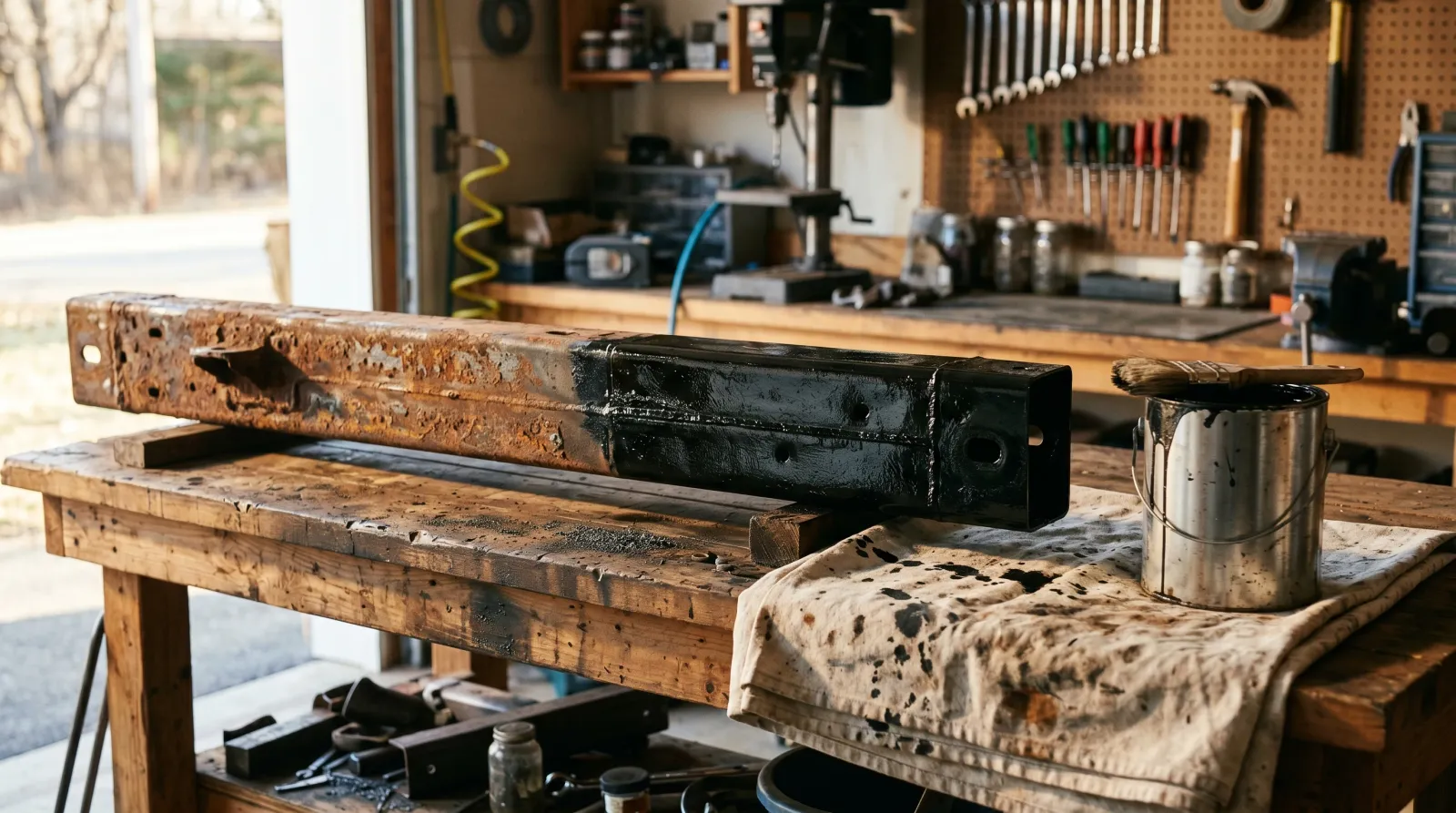
You wire-brush the loose scale off a rusty trailer frame, and what’s left is a tight, dark-orange surface you can’t fully grind clean without spending a weekend at it. A rust encapsulator is built for exactly that surface. It’s a high-build, moisture-cured coating — usually a urethane resin — that seals existing rust in place by locking out the two things rust needs to keep growing: oxygen and water. It doesn’t react with the rust the way a converter does. It entombs it. One or two coats build a tough, often glossy film at 4 to 8 mils dry, and the rust underneath, cut off from moisture, stops advancing.
TL;DR
- A rust encapsulator is a barrier coating that seals existing rust in by blocking oxygen and moisture, rather than chemically changing it.
- The common chemistry is a moisture-cured urethane that actually uses ambient humidity to cure into a hard, flexible film.
- It needs the loose scale brushed off and the surface degreased, but it bonds to tight, adhered rust — that’s the whole point.
- It builds thick (4 to 8 mils a coat) and is far more abrasion- and chip-resistant than ordinary primer.
- It seals rust; it does not rebuild steel. Perforated or structurally pitted metal needs welding, not a coating.
How a Rust Encapsulator Works
Rust is hydrated iron oxide, and the trouble with it is that it’s porous and self-feeding. The oxide layer lets water and oxygen pass straight through to the sound steel below, so corrosion keeps eating inward under whatever you paint on top. Ordinary paint fails here because it bonds to the crumbly oxide instead of the metal, and the oxide lifts away with the film.
An encapsulator solves a different half of that problem than a converter does. A converter changes the rust chemically. An encapsulator changes its environment. The film is engineered to be a near-impermeable barrier with very low moisture-vapor transmission, so once it cures over tight rust, the corrosion reaction runs out of the water and oxygen it needs and effectively stalls. The rust is still there. It just can’t go anywhere.
The dominant chemistry is moisture-cured urethane, and the cure mechanism is worth understanding because it drives how you apply it. The resin carries reactive isocyanate groups that pull humidity out of the surrounding air and cross-link into a dense polyurethane film. Higher humidity cures it faster. That’s backwards from most coatings, where damp air is the enemy, and it’s the reason these products handle a slightly rusty, slightly humid surface better than a standard alkyd primer would. Some encapsulators use an epoxy or an acrylic latex resin instead, trading a little of that humidity tolerance for easier cleanup, but the urethane builds the toughest, most chip-resistant barrier.
When to Use a Rust Encapsulator
Use it for:
- Tight surface rust on structural or load-bearing steel you can’t grind to bare metal: frame rails, undercarriage members, trailer beds, equipment chassis.
- Large rusty areas where mechanical removal is impractical, and you want one durable barrier coat instead of converter-plus-primer-plus-paint.
- Steel that takes abrasion, gravel, or impact, where a thin converter film would wear through. The high-build urethane shrugs off chips that strip ordinary primer.
- Outdoor and harsh-service steel you intend to topcoat: fencing, railings, gates, marine hardware above the waterline.
When Not to Use a Rust Encapsulator
Don’t use it for:
- Rust that has eaten through the metal. An encapsulator is a coating, not a filler. Sealing over a perforated panel traps moisture in the void and hides a failure you’ll meet again. Perforated steel gets cut out and welded.
- Galvanized or aluminum surfaces with no real iron-oxide problem. There’s nothing for the barrier logic to protect against, and some urethanes adhere poorly to bare zinc. For zinc-coated steel, work through the galvanized steel painting guide.
- Surfaces that stay actively wet from behind — a leaking seam, trapped condensation, ground contact. Seal the front and the back face keeps corroding. Fix the water source first.
- A clean, freshly ground panel where a standard rust-inhibitive primer is cheaper and does the job. Encapsulators earn their cost when you can’t get the rust off.
How a Rust Encapsulator Compares
| Rust encapsulator | Rust converter | Rust-inhibitive primer | |
|---|---|---|---|
| What it does to rust | Seals it in, blocks moisture and oxygen | Chemically converts it to inert film | Coats over it, may inhibit further rust |
| Mechanism | Physical barrier (high-build film) | Tannic or phosphoric acid reaction | Barrier plus inhibitive pigments |
| Surface prep | Brush off loose scale, degrease | Brush off loose scale, degrease | Remove most rust first |
| Film build per coat | 4–8 mils | 1–2 mils | 1.5–3 mils |
| Best on | Tight rust you can’t remove | Tight surface rust | Light rust or bare steel |
| Limit | Won’t fix rust-through | Won’t rebuild metal | Won’t convert existing rust |
The honest answer is that converters and encapsulators aren’t rivals. A converter neutralizes the reactive rust at the chemical level; an encapsulator buries everything under a thick, moisture-proof shell. On a badly corroded panel, the most durable result is to convert the worst rust, let it cure, then encapsulate the whole surface. For the chemistry side of that pairing, see what a rust converter does. For the full prep-and-coat sequence on corroded steel, the rusted metal painting guide walks the order.
Common Mistakes
- Coating over loose, flaking rust. The encapsulator bonds to whatever it touches. If that’s crumbling scale, the barrier lifts off with the scale and water gets back in. Wire-wheel or sand the loose material off; keep the tight rust for the film to grip and seal.
- Skipping the degrease. Oil, grease, wax, and old silicone block adhesion, and a urethane that doesn’t stick is just an expensive surface skin. Wipe with a wax-and-grease remover or mineral spirits and let it flash off before the first coat.
- Blowing past the recoat window. Moisture-cured urethane wants the second coat inside a tack window so the layers chemically link. Wait too long and the cured first coat needs a scuff-sand for the next one to bond — otherwise you get intercoat peel.
- Leaving the film bare in sun. Many encapsulator resins aren’t UV-stable and chalk within a season outdoors. Topcoat exposed work with a UV-rated enamel or a direct-to-metal acrylic. Hidden steel can stay bare per the label.
- Encapsulating a wet substrate. Trapped moisture under the film keeps the corrosion alive and eventually pushes the coating off as a blister. Make sure the steel is dry, and that water isn’t feeding it from the back, before you seal it.
What to Look For
Well-known encapsulators include POR-15, Rust Bullet, KBS RustSeal, and Eastwood Rust Encapsulator. They’re the products restorers reach for on chassis and frame work because the moisture-cured urethane film is genuinely tough. On the label, check three things: the resin type (urethane builds the hardest barrier), whether it needs a UV topcoat for exposed use, and the recoat window, since the tack-coat timing on these is tighter than ordinary paint. For deciding what enamel goes on top of the cured film, the oil-based vs water-based paint comparison covers how each topcoat behaves over a urethane base.