What Is a Rust Converter?
What a rust converter is, the tannic-acid chemistry that turns rust into a paintable black film, and when it works versus when you still need to grind down to bare steel.

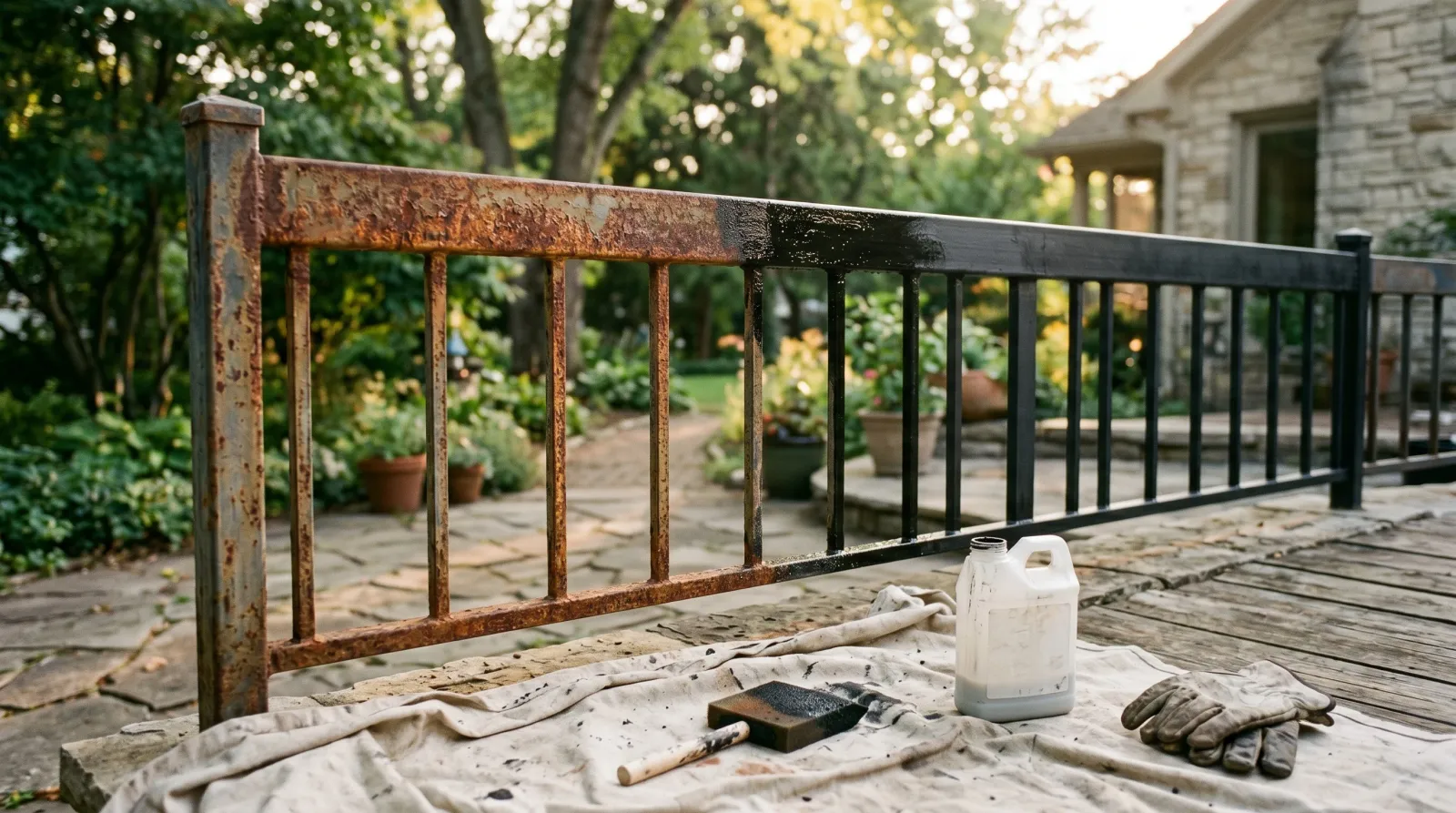
You brush a milky liquid onto an orange, flaking steel railing, and within half an hour the surface turns matte black. That color change is the whole product working in front of you. A rust converter is a water-thin coating, usually built around tannic acid and an acrylic latex, that chemically reacts with iron oxide (rust) and converts it into a stable, inert, paintable film. It does two jobs at once: it neutralizes the rust you can see, and it lays down a primer-like base you can topcoat. On sound surface rust, one or two coats applied at around 50 to 90°F will turn black in 20 to 40 minutes and be ready for paint in 24 to 48 hours.
TL;DR
- A rust converter turns existing rust into a stable black film instead of requiring you to grind it all off.
- The active chemistry is usually tannic acid, which reacts with iron oxide to form iron tannate, a dark, inert, water-resistant compound.
- It needs rust to work. Brush off the loose flakes, but leave the tight surface rust for the acid to react with.
- The black film is not a finish. Topcoat it within the label window or it slowly fails outdoors.
- It works on light-to-moderate surface rust. It does not save steel that is rusted through, structurally pitted, or still getting fed water from behind.
How a Rust Converter Works
Rust is iron oxide, mostly hydrated Fe₂O₃. It is the brown, crumbly product of iron, oxygen, and water finding each other over months or years. The problem with rust is that it keeps going. The oxide layer is porous, so moisture passes right through it and corrodes the sound metal underneath. Paint applied straight over rust fails because the paint bonds to the loose oxide, not to the steel, and the oxide flakes away and takes the paint with it.
A converter interrupts that cycle with acid chemistry. The reason for that is the tannic acid in the formula reacts with the iron oxide to form iron tannate, a bluish-black organometallic compound that is chemically stable and barely soluble in water. The loose, reactive rust becomes a tight, inert film bonded to the surface. Most formulas pair the tannic acid with an acrylic latex resin, so as the water flashes off you also get a thin polymer film sitting over the converted layer. That polymer is what gives you a surface a topcoat can grip.
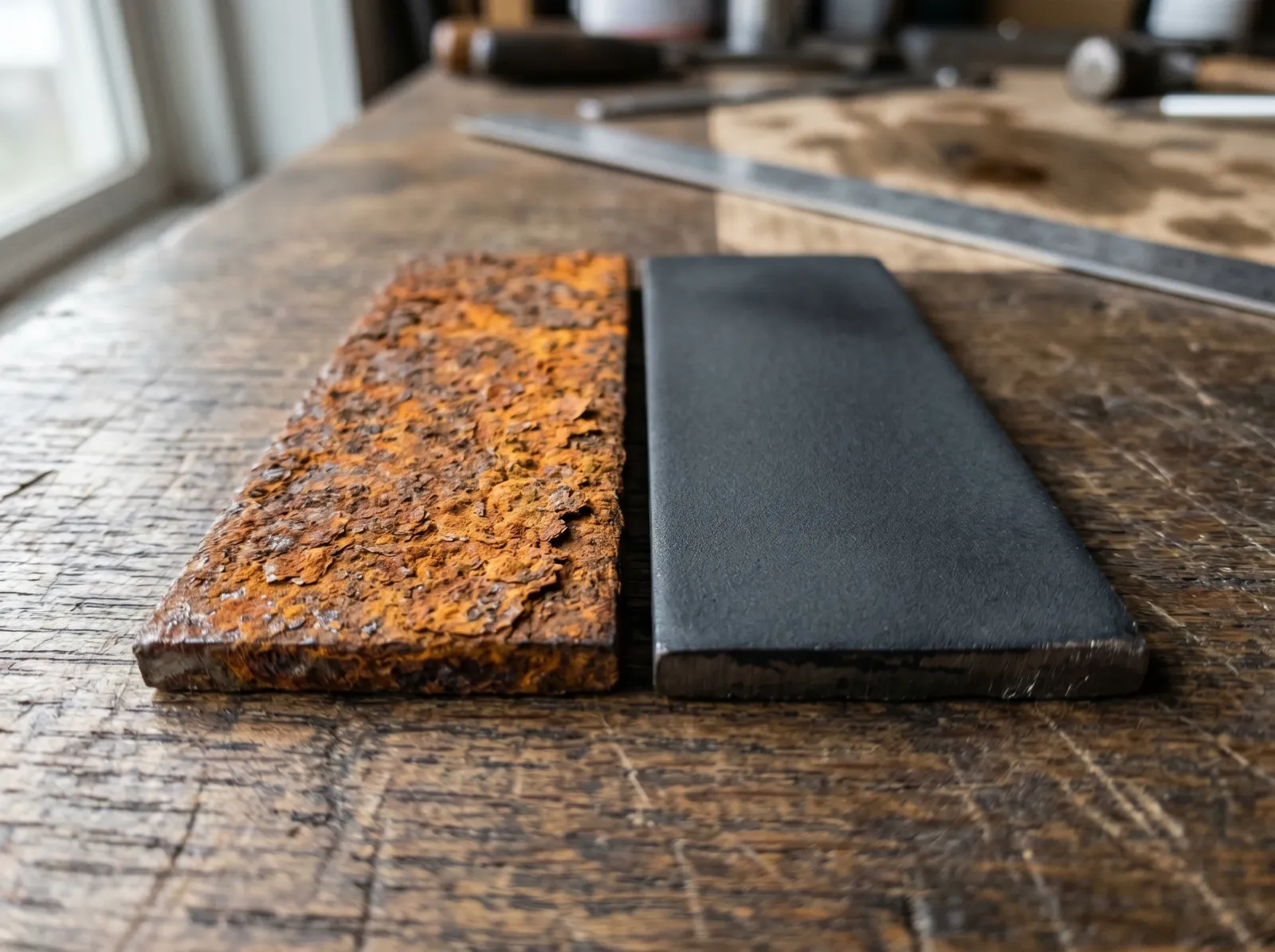 Left: loose surface rust the converter can react with. Right: the same steel after conversion, now a tight iron-tannate film ready to topcoat.
A few products use phosphoric acid instead of tannic acid. Phosphoric acid converts iron oxide into iron phosphate, the same gray conversion coating you get from a “naval jelly” or a metal-prep wash. The principle is identical: take the reactive oxide and turn it into something stable. Tannic-acid converters tend to leave a more flexible, more paint-friendly film, which is why most consumer products lean that way.
When to Use a Rust Converter
Use it for:
- Light to moderate surface rust on otherwise sound steel: railings, fences, gates, trailer frames, patio furniture, mailboxes, tool bodies.
- Spots where grinding to bare metal is impractical because of detail, weld seams, or sheer area.
- Rusted automotive panels and undercarriage areas that are surface-rusted but not perforated.
- Outdoor steel you intend to topcoat, where you want a bonded base rather than paint sitting on oxide.
Don’t use it for:
- Galvanized or aluminum surfaces. There is no iron oxide for the acid to react with, so the converter does nothing useful. For zinc-coated steel, see the galvanized steel painting guide.
- Rust that has eaten through the metal. A converter is a coating, not a filler or a structural repair. Perforated steel needs cutting and welding, not chemistry.
- Surfaces that stay wet. If a leaking seam, trapped condensation, or ground contact keeps feeding water to the steel, rust will resume under the film.
- Food-contact or potable-water surfaces, unless the specific product is rated for it. Most are not.
How a Rust Converter Compares
| Rust converter | Rust-inhibitive primer | Mechanical removal (grind/sand) | |
|---|---|---|---|
| What it does to rust | Chemically converts it to inert film | Coats over it, may inhibit further rust | Physically removes it |
| Surface prep needed | Brush off loose scale only | Remove most rust first | Remove all rust |
| Leaves a paintable base | Yes | Yes | Yes (bare steel needs primer) |
| Best on | Tight surface rust | Light rust or bare steel | Heavy or flaking rust |
| Limit | Won’t fix rust-through | Won’t convert existing rust | Labor-intensive on detail |
The cleaner the steel, the less a converter has to do. On bare or freshly ground metal, skip the converter and reach for a rust-inhibitive primer instead. The two are not interchangeable. A converter reacts with rust; a primer builds a barrier.
Common Mistakes
- Applying it over loose, flaking rust. The converter bonds to whatever it touches. If that is a layer of crumbling scale, the whole works peels off later. Wire-brush or sand the loose material off first; keep the tight rust.
- Leaving the black film bare. The converted layer is not UV-stable and not fully waterproof. Outdoors, unprotected iron-tannate chalks and breaks down in a season or two. Topcoat it within the label window with an oil-based enamel or a direct-to-metal acrylic.
- Skipping the degrease step. Tannic acid will not penetrate oil, grease, wax, or old silicone. Wipe the surface with mineral spirits or a degreaser and let it dry before the converter goes on.
- Putting it on a greasy-cold metal in winter. Below about 50°F the reaction slows to a crawl and may never fully convert. Work in mild, dry conditions.
- Treating it as a structural fix. A black film over a rusted-through trailer crossmember looks reassuring and holds nothing. If you can push a screwdriver through it, the steel needs replacing, not coating. The same logic applies when you see paint peeling off metal: chasing the symptom with a coating won’t fix a substrate that’s failing underneath.
Where to Buy and What to Look For
Common consumer converters include Rust-Oleum Rust Reformer, Permatex Rust Treatment, Corroseal (a water-based tannic system that converts and primes in one), and FDC Rust Converter Ultra. Look for three things on the label: the active acid (tannic versus phosphoric), whether it is topcoat-ready or a standalone primer, and the minimum application temperature.
For the full surface-prep and painting sequence on corroded steel, work through the rusted metal painting guide. If you are deciding between an oil-based enamel and a water-based DTM topcoat over the converted film, the oil vs water-based paint comparison covers the trade-offs.