Pickling vs Whitewash vs Limewash on Wood
Pickling vs whitewash on wood, explained simply. How the three white finishes differ, how much they thin down, and which to use on oak, pine, or brick.

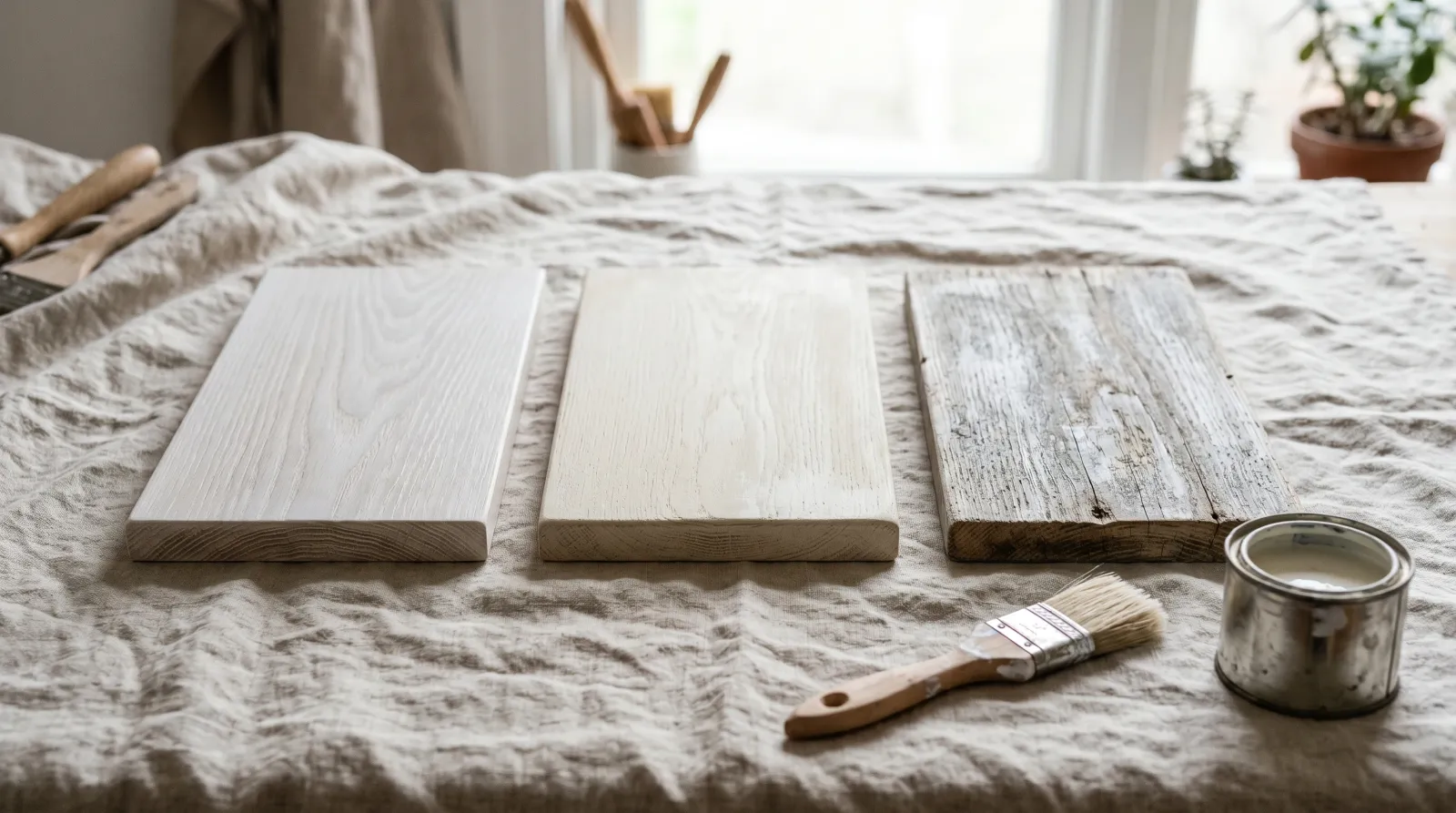
Pickling, whitewashing, and limewashing all leave wood pale and chalky with the grain still showing, but they use three different products and behave three different ways. Pickling is a white wood stain that soaks into the grain and stays. Whitewash is regular white paint thinned with water, usually around 1 part paint to 1 or 2 parts water, wiped on and partly wiped off. Limewash is a slaked-lime finish that bonds to masonry and looks cloudy and weathered. On bare wood you almost always want pickling or whitewash. Limewash belongs on brick and stone, where it grips and lasts.
The look they share is the appeal: white that softens the wood without burying it. You still see the oak. It just goes quiet and pale, the way driftwood does after a season on the beach.
What Each One Actually Is
A pickling stain is a thin white pigment in a stain base. You brush it on raw wood, let it sit a minute, and wipe the excess back along the grain. The pigment that stays lodges in the open pores, so the grain reads as fine white lines against a soft, even body. It’s the most controlled and most refined of the three, and it’s why pickled oak floors look milky rather than painted.
Whitewash is the budget cousin. Thin any white latex paint with water, wipe it on, wipe most of it off. Because it’s paint, more of it sits on the surface, so the finish looks streakier, chalkier, and more rustic. You can build it heavy for a near-solid white or wipe it almost bare for a faint veil. Two coats wiped thin reads softer than one coat left heavy.
Limewash is a different animal. It’s lime and water, sometimes tinted, and it cures by reacting with the air and the surface. On brick and bare plaster it bonds and develops that cloudy, mottled, centuries-old patina people love. It’s covered in full in the guide to what limewash is. On wood it has nothing to grip chemically, so it can chalk off or flake, which is why wood projects usually skip it.
When to Use Each Finish
Reach for pickling stain when:
- You want a clean, even, milky finish on an oak or ash floor, table, or cabinet.
- The wood is open-grain and you want the grain to show as crisp white lines.
- You want the most furniture-grade, least streaky result of the three.
Reach for whitewash when:
- You want a rustic, farmhouse, or coastal look with visible brush streaks.
- You’re working on pine paneling, a plank wall, or reclaimed barn wood.
- You want to control opacity yourself, from a faint veil to near-solid.
Reach for limewash when:
- The surface is brick, stone, or raw plaster, not wood.
- You want a soft, cloudy, weathered patina that ages in place.
- You’re after the old-world exterior look that fades and refreshes over years.
When NOT to Use These Finishes
Pale wood finishes are lovely until they land on the wrong surface. Skip them when:
- The wood is tight-grained. Maple, cherry, birch, and poplar have closed pores, so pickling has nowhere to settle and barely shows. Whitewash sits on top and looks like spilled paint rather than a finish.
- The wood is already sealed or factory-finished. Pickling stain needs bare wood to soak into. A polyurethane or factory coat blocks it cold, so you’d have to sand back to raw first, which is the same prep as any bare interior wood project.
- You want long exterior life on wood. Whitewash on a fence weathers in a year or two. For lasting outdoor color, an exterior solid or semi-transparent stain holds up far longer, and the paint vs stain breakdown walks through why.
- The piece takes hard daily use without a topcoat. White shows every smudge. Unsealed pickled or whitewashed wood in a busy kitchen will gray and grime fast.
How Pickling, Whitewash, and Limewash Compare
| Pickling | Whitewash | Limewash | |
|---|---|---|---|
| What it is | White wood stain | Thinned white paint | Slaked-lime finish |
| Best surface | Open-grain wood | Wood, plank, siding | Brick, stone, plaster |
| Look | Even, milky, refined | Streaky, chalky, rustic | Cloudy, weathered, mottled |
| Grain shows | Yes, crisply | Yes, softer | N/A (masonry) |
| Needs sealing on wood | Yes | Yes | Rarely used on wood |
For a true masonry finish, the best limewash paint round-up covers the brands that hold up on brick. For the two stain styles that read closest to pickling, the gel stain vs traditional stain comparison is the next stop, since gel sits more on the surface the way whitewash does.
Common Mistakes
- Picking the wrong wood. People whitewash a maple table, get a patchy mess, and blame the product. Tight-grained wood has nowhere for the white to catch. Test on a hidden spot or an offcut first, always.
- Wiping with the grain on the return stroke, then across it. Wipe back along the grain in long, even passes. Cross-wiping drags pigment into smears that dry as visible streaks you can’t sand out without starting over.
- Skipping the topcoat on anything used. A floor or table left bare grays within months. Seal with a water-based matte or satin polyurethane. Oil-based poly ambers and yellows the white you worked to get.
- Going too heavy on coat one. Pale finishes build. Start thin, let it dry, and add a second pass if you want more white. You can always add. You can’t easily pull white back out once the grain is loaded.
- Using limewash on bare wood and expecting it to stick. It bonds to masonry, not lumber. On wood it chalks off. Use whitewash or pickling instead, or refinish an old piece the way a furniture redo handles bare wood.
What It Looks Like
Side by side, the three read like a family with different personalities. Pickled oak is calm and milky, the grain drawn in fine white lines, the kind of floor that holds steady in north light without going cold. Whitewashed pine is looser and warmer, brush streaks giving it that hand-done, coastal-cottage feel. Limewashed brick is cloudiest of all, pale in some spots, deeper in others, a finish that looks like it has been there a hundred years on the day you brush it on.
The grain is the through-line. All three let the wood (or the brick) speak. That’s the whole point. If you wanted to bury the surface, you’d just paint it solid.
Where to Buy and What to Look For
Pickling stain is sold as “white pickling stain” or “white wash stain” at most paint counters and home centers; Minwax and Varathane both make a water-based one. Whitewash needs no special product, just any white latex and water, though pre-mixed “whitewash” and limewash-look paints exist if you’d rather not mix. For real limewash on masonry, buy an actual lime-based product rather than a tinted paint that borrows the name. The best limewash paint guide sorts the genuine lime finishes from the look-alikes.
Whichever you choose, buy a water-based clear matte topcoat at the same time if the piece gets touched or walked on. The finish is only half the job. The seal is what keeps the white looking like a choice instead of an accident.
If you’re picking between the three for a wood project, start with the grain. Open-grain oak or ash, and you want pickling. Pine planks or reclaimed boards where you love a little streak, reach for whitewash. Brick or stone, that’s limewash, and only limewash.
Ask a Question