What Is Limewash?
What is limewash? A mineral finish of slaked lime and water that soaks into porous walls and shifts with the light. Where it works, where it fails, and how to use it.

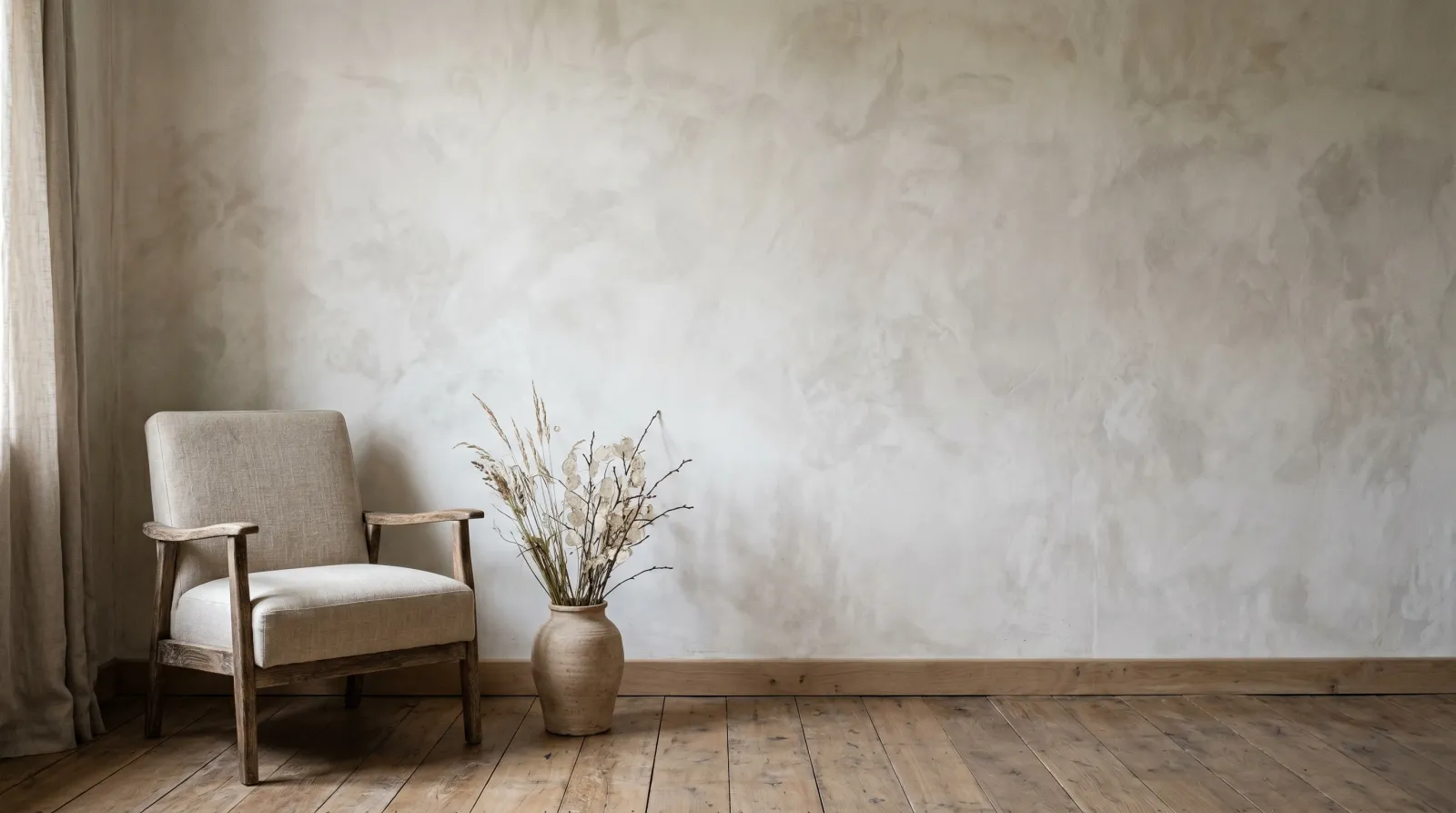
Limewash is paint stripped back to almost nothing: slaked lime (calcium hydroxide), water, and earth or mineral pigment. You brush it on thin and milky, and as the water leaves and the lime reacts with carbon dioxide in the air, it cures back into a soft, chalky mineral surface that has bonded into the wall rather than sitting on top of it. The look is matte, cloudy, and full of subtle tonal movement — a wall that reads almost like aged plaster. Coverage runs about 150 to 250 square feet per gallon per coat, and you almost always want two coats.
What sets it apart from a flat latex is that limewash is translucent and alive in a way ordinary wall paint isn’t. The color sits in the surface, shifting from cool and pale in morning light to warm and deep at the end of the day. It doesn’t lie flat. That movement is the reason people fall for it.
TL;DR
- What it is: a mineral coating of slaked lime, water, and natural pigment that carbonates into the wall surface.
- The look: chalky matte, cloudy, with soft tonal variation that shifts with the light. Closer to old plaster than to a painted wall.
- Where it shines: porous mineral surfaces — bare brick, stone, lime plaster — and rooms where you want depth and mood over a flat, even color.
- Where it struggles: kitchens, bathrooms, busy hallways, and any slick or sealed surface without the right primer.
- Coats: two, almost always. The second coat builds the depth.
- Washability: low. It dusts and wipes gently; it does not scrub.
When to Use Limewash
Use it for:
- Bare interior brick, stone, and raw lime plaster. Limewash was made for these. It soaks into the mineral surface and becomes part of it, which is why it lasts for decades on old European walls. See how to paint interior brick for the prep that lets a porous wall take a finish well.
- A bedroom or living room where you want depth, not flatness. The cloudy movement reads quiet and lived-in. It sits beautifully against linen, raw wood, and aged brass.
- North-facing rooms. Soft, even north light flatters the tonal shift instead of flattening it. Limewash gives a cool-leaning room something to hold.
- Exterior masonry, fences, and garden walls. Lime breathes, so trapped moisture escapes instead of blistering the finish the way film-forming paint does.
- A breathable wall system. On old houses with lime plaster and no vapor barrier, a breathable mineral finish lets the wall dry out. This is where limewash earns its keep beyond looks.
When Not to Use Limewash
- Kitchens and bathrooms. The chalky surface marks where it gets touched and can’t take a real scrub. Splashes and steam are not its friends. For those rooms, a washable satin or eggshell wall paint does the job and cleans up.
- High-traffic hallways and kids’ rooms. Hands leave shine, and the wall develops a worn look fast. Some people love that patina; most don’t want it appearing in month two.
- Slick, sealed, or freshly latex-painted walls without the right base. Standard limewash needs something porous to grip. On a sealed surface it chalks off as it dries.
- A wall you want perfectly even and uniform. Limewash is supposed to move and cloud. If you want flat, single-tone color with no variation, you want flat latex, not lime.
How Limewash Compares
Limewash sits in a small family of matte mineral and chalk finishes that get confused for one another constantly.
| Limewash | Mineral paint | Chalk paint | Flat latex | |
|---|---|---|---|---|
| Base | Slaked lime + water | Potassium silicate | Acrylic + chalk filler | Acrylic latex |
| Look | Cloudy, mottled, alive | Flat, even, matte | Velvety, opaque matte | Flat, even |
| Bonds by | Carbonating into the wall | Fusing to mineral surface | Adhering on top | Film on top |
| Best on | Brick, stone, lime plaster | Masonry, plaster, render | Furniture, cabinets | Drywall |
| Washable | Low | Good | Fair (needs wax/seal) | Good |
| Breathable | Yes | Yes | No | No |
For the silicate cousin that gives a flatter, tougher mineral wall, see what mineral paint is. For the furniture finish people most often mix it up with, see what chalk paint is.
What It Looks Like
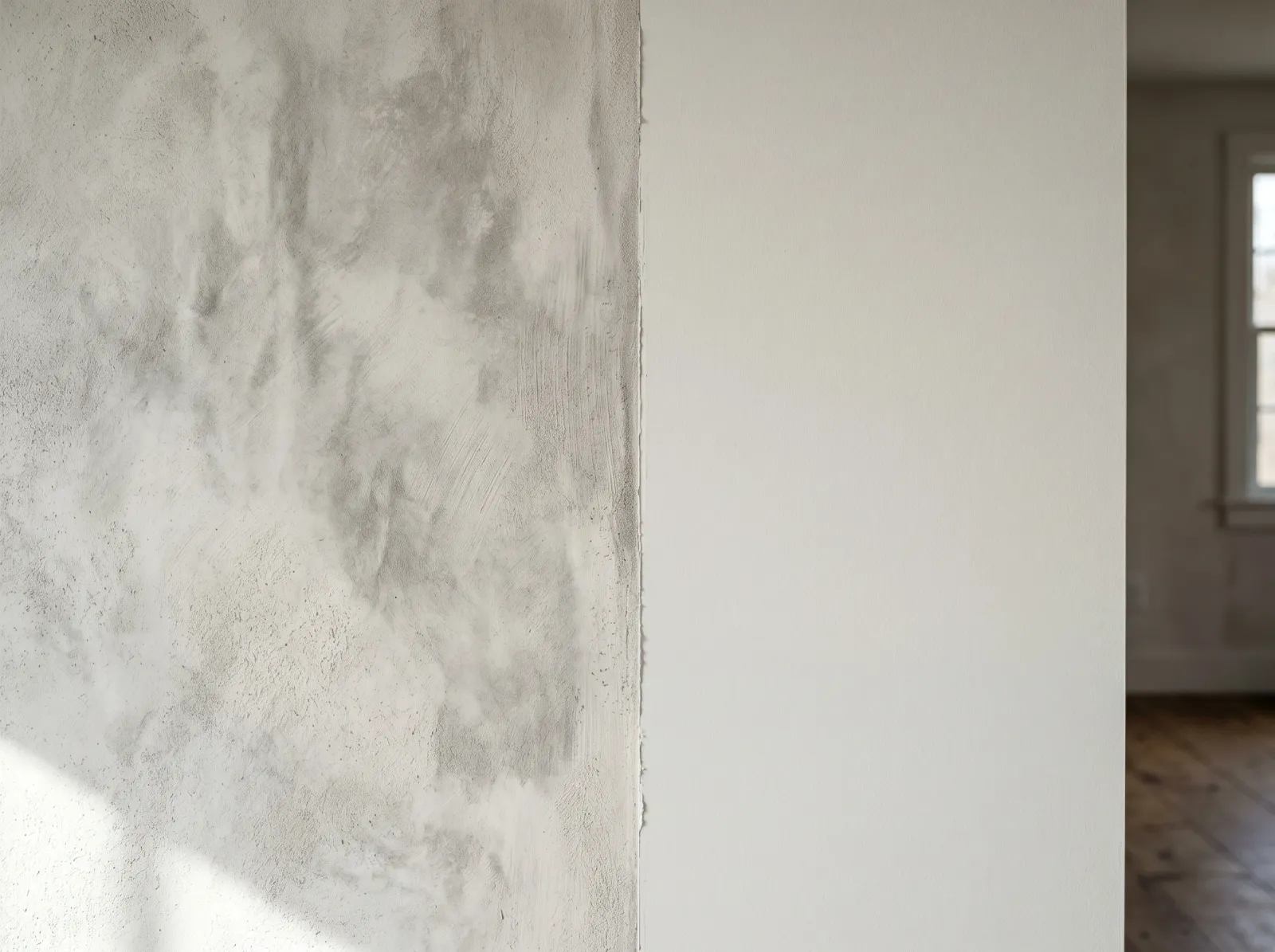 Left, limewash: cloudy tonal movement that shifts with the light. Right, flat latex: even and still. The difference is the whole reason to choose lime.
The thing a swatch can’t show you is the movement. A limewashed wall isn’t one color, it’s a soft range of one color, lighter where the brush laid it thin and deeper where it pooled. In raking light along a wall the texture reads almost like suede. Under flat overhead light it calms down and reads as a single chalky tone. Sample it on the actual wall, in the room, at the hour you live there. Lime sets its real color over a day or two as it carbonates, so what you brush on is never quite what you end up with.
Common Mistakes
- Judging the color while it’s wet. Limewash goes on milky and translucent and looks alarmingly pale and patchy for the first day. It darkens and evens out as the lime cures. Wait 48 hours before you panic or add a coat.
- One coat and stopping. A single pass reads thin and streaky. The second coat is where the depth and the even tone arrive. Plan for two.
- Skipping the primer on drywall or painted walls. Lime needs a porous, mineral surface to grip. On sealed drywall it chalks off onto your hand. Use a mineral primer or a bonding limewash base first.
- Letting the wall dry unevenly. A thirsty bare patch next to old paint drinks the lime at different rates and sets blotchy. Prime the whole plane to one absorbency, and dampen very porous spots before you brush.
- Expecting it to wipe like latex. Scrubbing a stain lifts the finish and leaves a light clean spot. For a curb on this, seal a high-touch wall or keep lime to rooms that get looked at, not handled.
Where to Buy
Limewash comes from specialty makers more than the big-box paint aisle. Bauwerk, Pure & Original, and Romabio (sold through some Home Depot stores as the Classico line) all make true lime finishes, and Portola Paints carries a popular limewash range on the West Coast. Behr and a few others sell faux “limewash effect” latex glazes that mimic the cloudy look without the lime chemistry — those wipe better and breathe worse, which is the trade you’re making.
If you’re choosing between lime and its mineral relatives for a masonry wall, the best masonry paint round-up covers the durable, breathable options side by side. For raw brick prep before any finish, start with the interior brick guide.
Ask a Question