Insulating and Thermal Paint: What It Is and Whether It Works
An insulating paint guide in plain physics. What ceramic-bead and reflective coatings actually do, the real R-value, and where the heat goes instead.

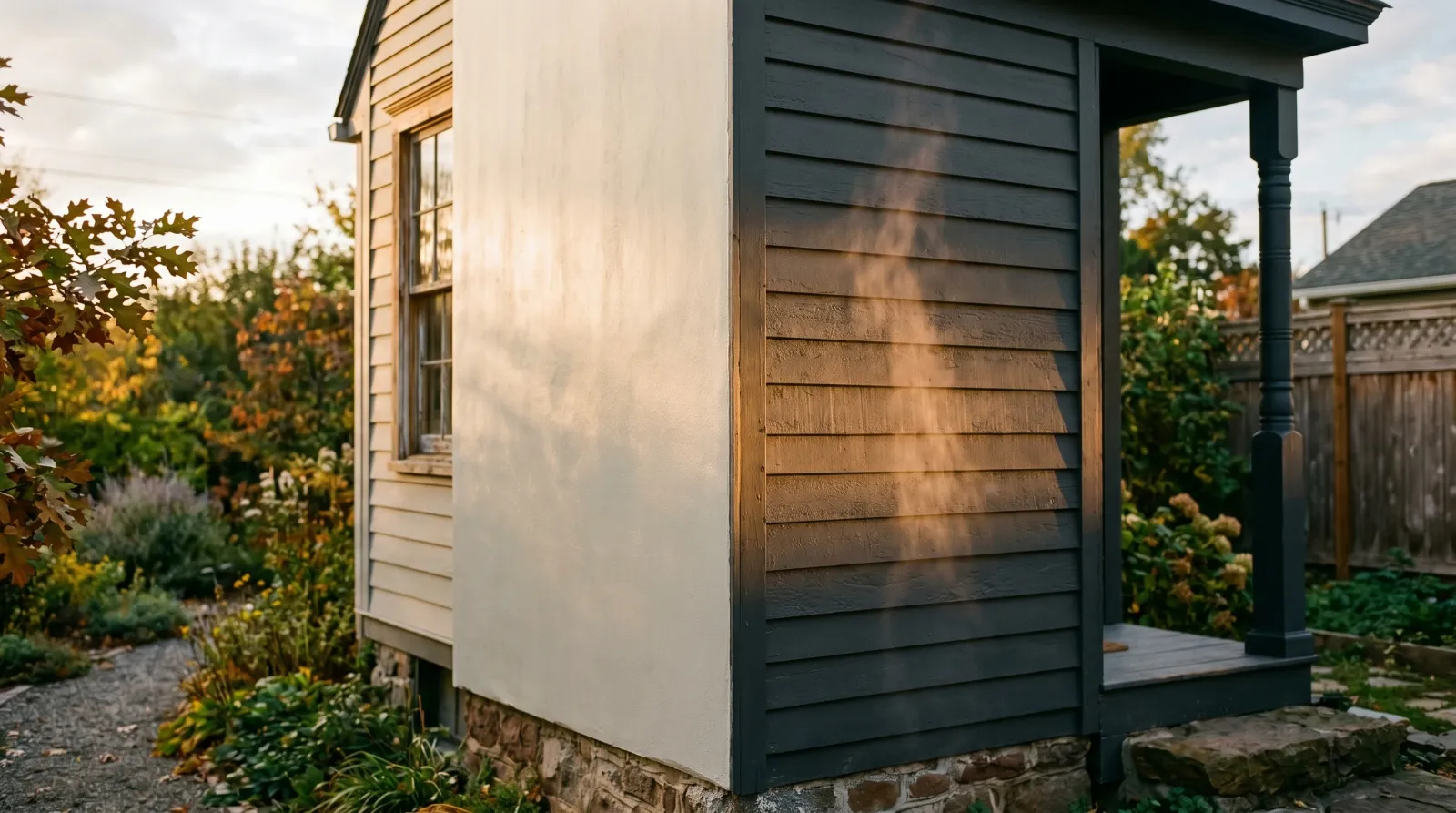
Insulating paint, also sold as thermal or ceramic paint, is a coating loaded with hollow ceramic or glass microspheres that reflects radiant heat off a surface rather than insulating it the way a batt or foam does. At a normal 10 to 12 mil dry film, independent ASTM C518 heat-flow testing puts its R-value near 0.5 per coat. A 3.5-inch fiberglass batt is R-13. So the honest version of the claim is narrow: on a sunlit exterior wall or roof, a reflective coating can drop the surface temperature 5 to 20 °F and shave some cooling load. It does not replace insulation, and it does little for winter heat loss.
Here is the physics, because the marketing skips it. Heat moves three ways: conduction (through solid material), convection (through moving air), and radiation (infrared energy crossing a gap). Bulk insulation, the pink batt in your wall, fights conduction and convection by trapping still air in millions of tiny pockets. A paint film is too thin to trap any air. What it can do is change how a surface handles radiation, by reflecting infrared instead of absorbing it. That is a real effect. It is also a small slice of the total heat budget in most homes.
When to Use It
Reflective ceramic coatings earn their keep where radiant solar gain is the dominant problem.
- A flat or low-slope roof in a hot climate (Phoenix, Houston, central Florida), where a white reflective coating can cut peak roof temperature by 50 to 80 °F versus dark asphalt.
- A west- or south-facing masonry or stucco wall that bakes all afternoon and dumps that heat indoors at night.
- A metal building, shipping container, or RV roof, where there is little mass and the radiant load drives the indoor temperature directly.
- Cold ceilings and corners that grow mold, where a thin insulating-filler coat keeps the surface above the dew point. This is the anti-condensation use, and it is the one that most reliably does what the label says.
When NOT to Use It
This is where most of the wasted money goes. Skip it for these.
- Warming a cold room in winter. The heat you lose in January is mostly conduction through wall studs and air leakage around outlets and trim. A reflective film does nothing for conduction and nothing for a draft.
- Replacing attic or wall insulation. A 0.5 R coating against an R-13 to R-21 code wall is a rounding error. You will not feel it on the bill.
- Interior walls between conditioned rooms, where there is no radiant load and no temperature difference to work against.
- Any wall where the real failure is air sealing. Caulk and weatherstrip first. Paint cannot close a gap it bridges over.
If your goal is comfort and lower bills in a cold climate, the money goes further on attic insulation and air sealing. Reflective paint is a hot-climate, radiant-load tool.
How Insulating Paint Compares
| Insulating/ceramic paint | Fiberglass batt | Reflective foil barrier | Anti-condensation paint | |
|---|---|---|---|---|
| Fights | Radiation | Conduction + convection | Radiation | Surface condensation |
| Effective R-value | ~0.5 per coat | R-13 (3.5 in) | ~0 alone; needs air gap | negligible |
| Best location | Sunlit roof/wall | Inside wall cavity | Attic under rafters | Cold interior surfaces |
| Replaces insulation? | No | Yes (it is the insulation) | No | No |
The pattern is consistent: the thin-film products move radiation, the bulk products move conduction, and they are not interchangeable. For the elastomeric coatings that often get confused with these, see the elastomeric paint explainer, which solves a waterproofing and crack-bridging problem, not a thermal one.
Common Mistakes
- Treating R-value claims at face value. The FTC has acted against sellers advertising inflated whole-wall R-values for paint. A coating that tests at R-0.5 per coat cannot honestly claim R-19. Ask for ASTM C518 or C177 data on the film itself, not a testimonial.
- Expecting a winter heating benefit. People paint a cold north room and wait to feel warmth that never comes. The loss there is conductive, and a radiant tool was the wrong fix.
- Applying it too thin. The microspheres only work at full build. Spread a one-coat ceramic product like ordinary wall paint and you lose the only effect it had. Follow the wet-mil spec and check it with a gauge, the same discipline covered in the mil thickness guide.
- Painting over a dirty or chalky exterior. Reflective coatings need a sound, clean surface to bond. On a chalking wall they fail early. Clean and prime first; see how to fix chalking exterior paint.
- Buying it to stop mold without fixing the cause. Anti-condensation paint raises a surface above the dew point at the margin. If the room has a moisture source and no ventilation, the mold comes back.
What It Looks Like in the Real World
Point an infrared thermometer at two adjacent exterior walls in full afternoon sun, one coated reflective-white and one in standard dark paint. The reading tells the whole story. The dark wall might read 140 °F, the coated wall 115 to 120 °F. That 20-degree gap is the product working, and it is genuinely useful on a roof in July. Now point the same thermometer at an interior wall in winter and the two readings converge, because there is no radiant load to reflect. The tool only shows up when the sun is doing the heating.
Where to Buy and What to Look For
This is a specialty category. The credible products are reflective elastomeric roof coatings (think the white acrylic roof coatings sold for flat roofs) and ceramic-additive exterior paints. Read the technical data sheet, not the front of the can. Look for a published solar reflectance index (SRI) or a measured reflectance and emittance number, ASTM C518 film R-value if they claim one, and a real dry-film mil spec. If the seller leads with R-value claims and testimonials instead of lab data, walk away.
For the exterior surfaces these coatings usually go on, start with the best masonry paint round-up and the paint sprayers guide, since most reflective coatings spray and back-roll rather than brush.
Insulating paint is a real product solving a real but small problem. Use it where the sun is the enemy. Do not buy it to do the job of a batt.
Ask a Question