What Is a Hot Coat? Fiberglass and Epoxy Coats Explained
A hot coat is the second sanding-grade resin coat over a cured fiberglass lamination. What it does, when to use it, and the 1/16-inch film you need.

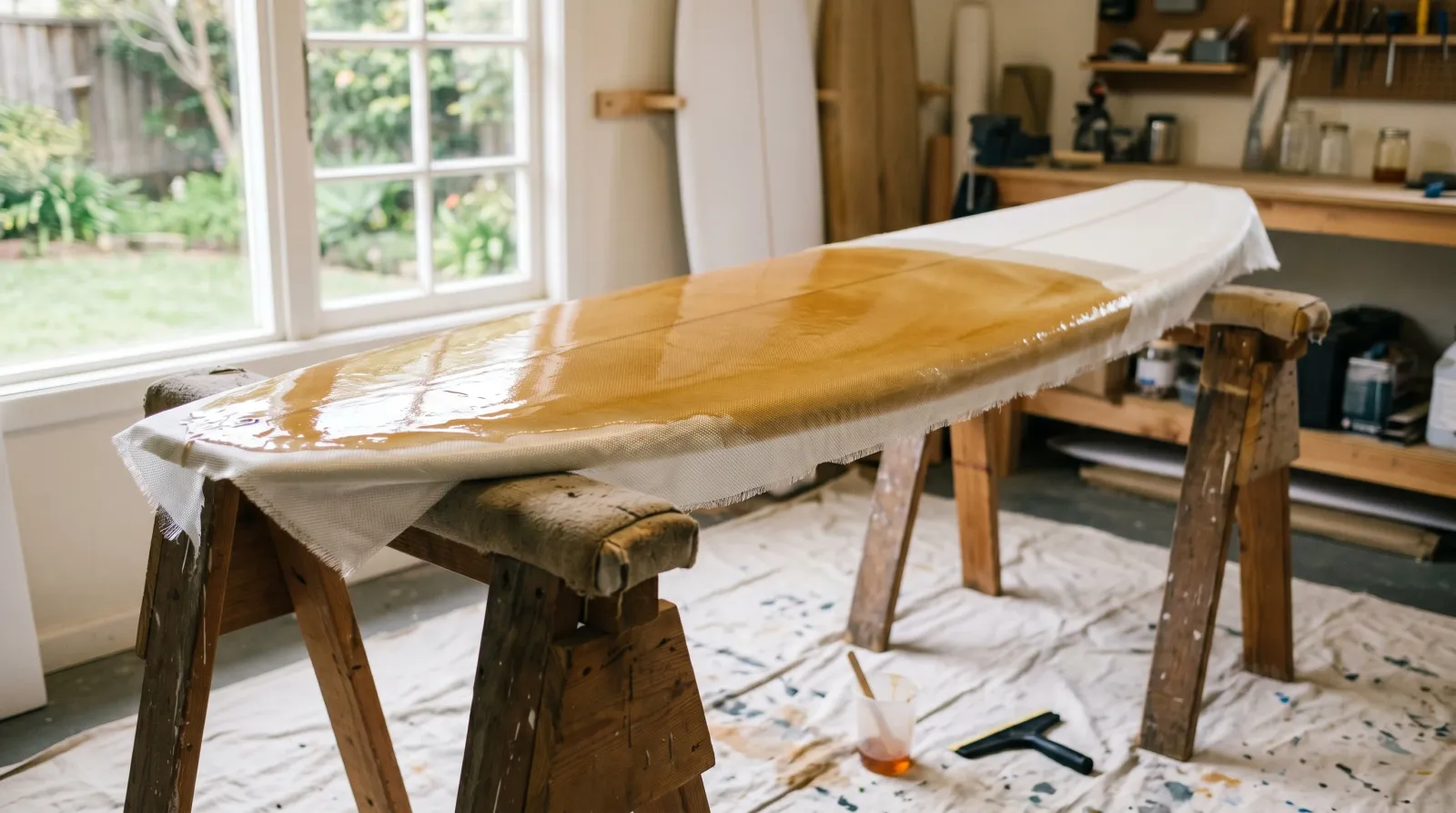
A hot coat is the second resin coat applied over a cured fiberglass lamination, and its job is to fill the cloth weave and give you a surface you can actually sand. On a surfboard or any fiberglass part, you laminate first (the resin that wets out the cloth), then pour a hot coat roughly 1/16 inch (about 60 mils) thick on top. The lamination coat is left rough and tacky on purpose. The hot coat is the smooth, tack-free film that levels itself, hides the weave, and protects the structural glass underneath. Sand the hot coat, not the lamination, or you cut into the cloth.
The name is a chemistry artifact. In polyester resin work, the hot coat gets a higher catalyst (MEKP) ratio than the lam coat, so it kicks faster, cures harder, and the exothermic reaction runs hotter. The extra catalyst also drives the surface to a tack-free state, where the lam coat stays sticky so the next layer can bond to it. Epoxy hot coats don’t generate the same heat, but builders kept the word.
Why the Two Coats Are Different on Purpose
A single thick coat of resin can’t do both jobs. The reason for that is what each coat is asking the resin to do.
The lamination coat has to soak through the fiberglass cloth and bond it to the foam blank. You squeegee it thin and tight, pushing resin into the weave and pulling the excess off. You want it starved, not flooded, so the glass-to-resin ratio stays strong. A starved lam coat is rough and the weave pattern stays visible. That’s correct. It’s structural, not cosmetic.
The hot coat is cosmetic and protective. It floods the surface with enough resin to bury the weave and self-level into a smooth film. Because it’s thicker and carries more catalyst, it cures to a hard, sandable surface. You’re building the 60-mil sacrificial layer you’ll grind back down to flat. Without it, any sanding goes straight into the cloth, frays the fibers, and weakens the part.
When to Use a Hot Coat
Use it for:
- Any fiberglass-cloth lamination that needs a sandable, finishable surface (surfboards, paddleboards, fiberglass repairs, composite panels).
- Filling the weave so the cured part can be polished, painted, or glossed.
- Adding a sacrificial layer over structural glass so sanding never reaches the cloth.
- Polyester or epoxy builds where you want a tack-free surface ready for finish work.
When you reach for it: right after the lam coat gels but before it fully hardens, so the two layers chemically bond instead of just stacking.
When NOT to Use It
A hot coat is a specific step in a layered resin build. Skip it when the build doesn’t call for one.
Don’t use it for:
- A gloss coat. The gloss (or “finish”) coat goes on after you’ve sanded the hot coat. It uses surfacing agent or a different additive and is meant to stay glassy, not get sanded. Hot coat then sand then gloss, in that order.
- Bare foam or wood with no lamination under it. A hot coat over unglassed foam has nothing structural to protect and will crack with flex.
- House paint or wall coatings. This is composite resin terminology, not architectural paint. If you landed here looking at wall paint, you want how a paint film forms instead.
- A structural repair that still needs more cloth. Add the glass layers first; the hot coat is always last before sanding.
How a Hot Coat Compares to the Other Coats
| Lam coat | Hot coat | Gloss coat | |
|---|---|---|---|
| Order | First | Second | Last |
| Job | Wet out cloth, bond to blank | Fill weave, build sandable film | Final shine |
| Catalyst (polyester) | Standard | Higher (runs hot) | With surfacing agent |
| Surface | Tacky, weave visible | Tack-free, smooth | Glassy |
| Thickness | Thin, starved | ~1/16 in (60 mils) | Thin |
| Do you sand it? | No | Yes | Light polish only |
For the difference between the resin chemistries themselves, see oil-based vs water-based paint for the broader cure-by-oxidation versus cure-by-cross-linking picture.
Common Mistakes
- Hot coating over a lam coat that’s still wet. If the lam coat hasn’t gelled, the two layers intermix and wrinkle. Wait for a firm gel (2–4 hours polyester, 8–24 hours epoxy), then pour.
- Hot coating after the lam coat fully cured without sanding. Once the resin passes its cure window, the surface goes inert and the hot coat has nothing to grip. Scuff with 80-grit to give it a mechanical key, or you’ll get delamination.
- Mixing the catalyst wrong on a polyester hot coat. Too little MEKP and the surface stays tacky and never sands clean. Too much and it kicks before it levels, trapping ripples. Follow the resin data sheet for the hot-coat ratio, which is higher than the lam ratio.
- Sanding through the hot coat into the weave. The moment the woven texture reappears under your block, stop. You’ve cut through the 60-mil film and into structural glass. Feather out and add resin if you’ve gone too far.
- Skipping surface prep on a cold day. Resin cure is temperature-dependent. Below about 65 °F, polyester drags and epoxy can blush. A waxy amine blush on epoxy will reject the next coat. Wipe it with water before sanding. Cold-cure problems show up the same way cold-weather paint failures do.
What It Looks Like
A finished hot coat looks like a smooth amber or clear film with no weave texture showing, slightly glossy before you sand it and uniformly matte after. Hold it to a raking light: a good hot coat shows a continuous, even sheen with no pinholes or dry patches. The weave pattern should be completely buried. If you can still see the cloth grid through the resin, the coat is too thin and you’ll sand into the glass before you reach flat.
Where to Buy / What to Look For
Hot-coat resin is the same base resin as your lamination resin. The difference is what you add to it, not a separate product. For polyester, buy a laminating resin plus MEKP catalyst and a small amount of surfacing agent (or styrene wax) for the final gloss coat only, not the hot coat. For epoxy, buy a low-viscosity laminating epoxy and the matched hardener; the hot coat uses the same kit, just poured thicker.
Look for resin sold specifically for board or composite work (Silmar and Reichhold on the polyester side, Resin Research and Entropy on the epoxy side are the names builders trust). Match the catalyst to the resin brand. To squeegee and level it, you want a clean rubber or plastic spreader, and good sanding gear matters as much as the resin. The paint sprayer and finishing tool guides cover the abrasives and blocks that keep a hot coat flat.
One spec to respect: film build. A hot coat needs to land around that 1/16-inch range to leave room for sanding. If you’re new to reading film thickness, mil thickness explained covers why 60 mils wet is the number to aim for.
Ask a Question