Deck Stain Opacity Explained: Transparent to Solid
Stain opacity explained from clear to solid, by pigment load. What transparent, semi-transparent, semi-solid, and solid stains do to grain, wear, and reapplication.

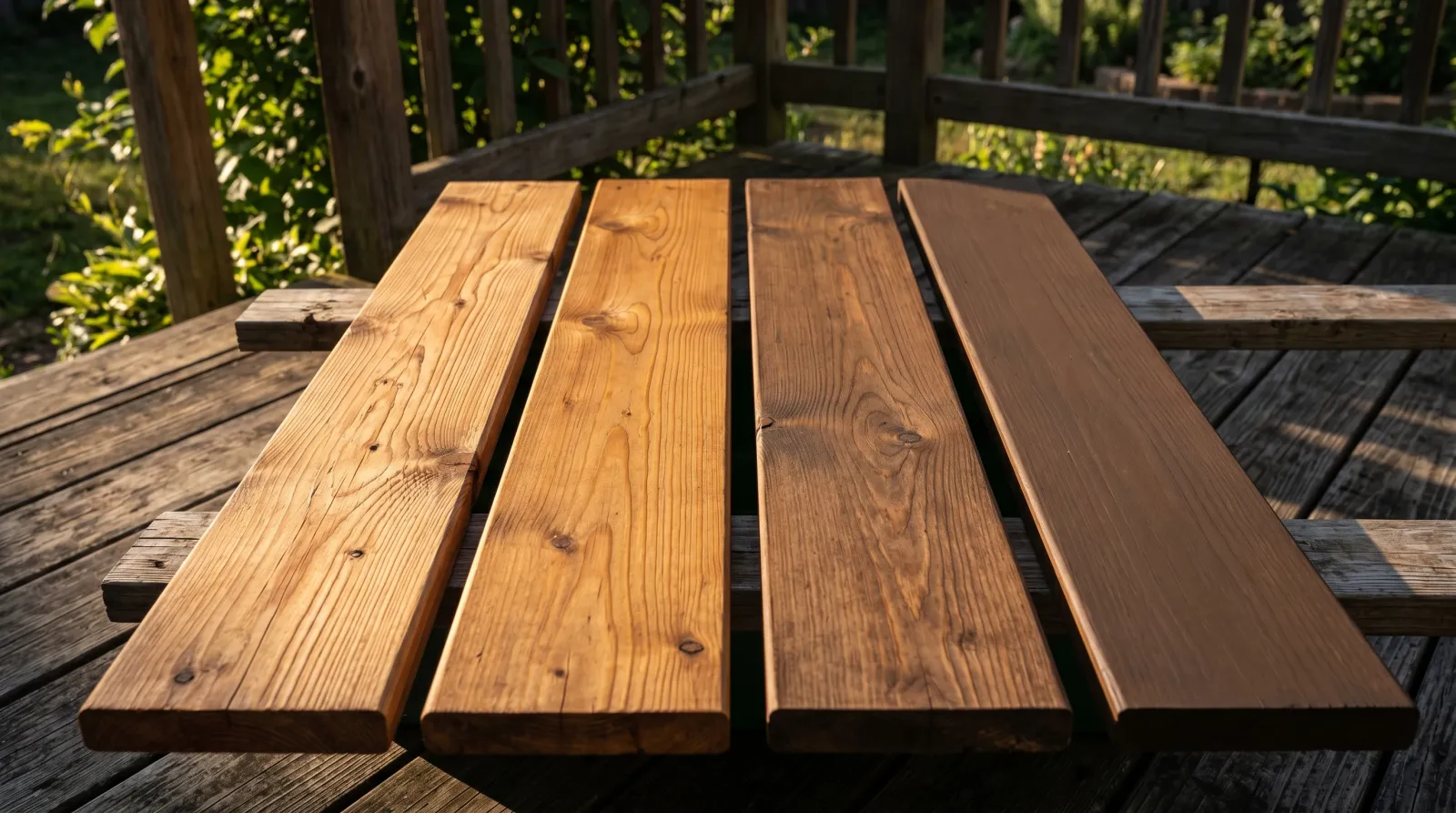
Stand back from a freshly stained deck and the first thing you notice is how much wood you can still see. On one board the grain reads sharp through an amber tint; on another it’s gone, swallowed by flat brown. Same product line, same brand, different opacity. Opacity is just the pigment load — how much solid colorant rides in the can per gallon — and it runs along a spectrum from clear (under 5% pigment by volume) to solid (often 35–45%). Pick the wrong point on that spectrum and you either lose the grain you wanted or lose the protection you needed.
TL;DR
- Opacity = pigment load. More pigment hides more grain and blocks more UV. Less pigment shows more wood and protects less.
- Four common grades: transparent, semi-transparent, semi-solid, solid. They run lightest to heaviest.
- Penetrating vs film: the light end soaks into the wood and wears thin. The heavy end (solid) sits on top as a film and can peel.
- Longevity tracks pigment. Transparent lasts 1–2 years on a deck, solid lasts 3–5.
- Going darker is easy. Going lighter means stripping. Pigment and film build up; you can’t un-cover wood without removing the old coat.
Why Opacity Changes Everything
Pigment does two jobs in a stain. It gives color, and it physically blocks ultraviolet light from reaching the wood. UV breaks down lignin, the natural polymer that glues wood fibers together, and lignin breakdown is what turns an untreated deck silver-gray and fuzzy. So the more pigment you put on, the more of that breakdown you stop.
That’s the whole trade-off in one sentence: pigment protects, and pigment hides. You can’t add UV protection without subtracting visible grain. Every opacity grade is a different point of compromise between those two facts.
The binder matters too. Light stains carry little binder and rely on the oil or resin soaking into the wood, so there’s no continuous film on the surface. Solid stains carry enough acrylic or alkyd resin to form a film that bridges across the board, closer to a thin paint. That film difference is why the light grades wear away by erosion and the heavy grades can fail by peeling.
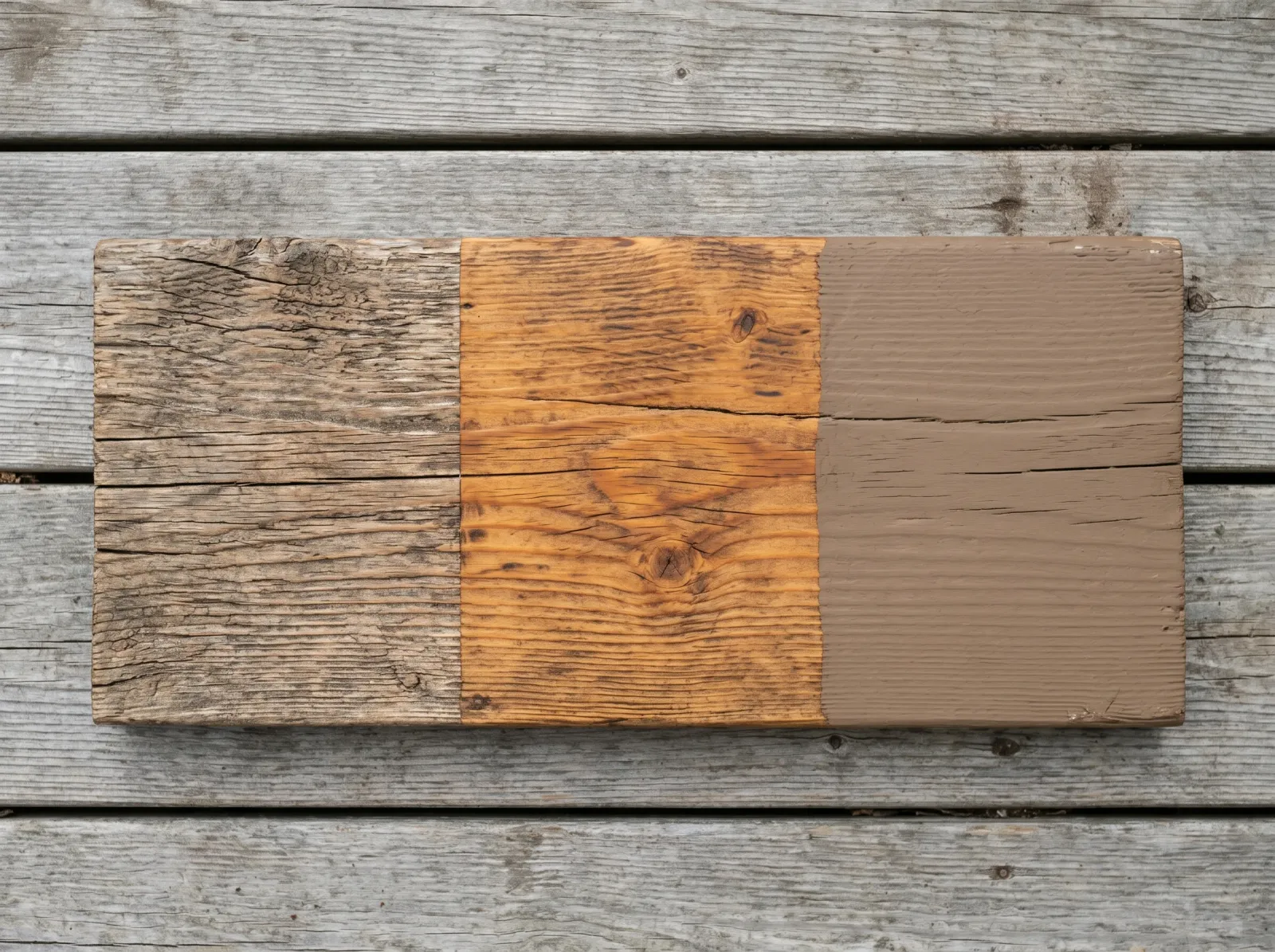 The same board, three opacities. Grain stays sharp under transparent, dims under semi-transparent, and disappears under solid.
The Four Opacity Grades
Transparent (clear to lightly tinted). Under about 5% pigment. You see the full grain and the natural wood color, slightly warmed. Almost no UV protection, so it’s the shortest-lived. Use it on new, premium wood where the figure is the point and you accept frequent recoating.
Semi-transparent. Roughly 5–15% pigment. The grain still reads clearly, but the color is unmistakable and there’s real UV blocking. This is the most popular deck grade because it keeps the wood looking like wood while lasting a season or two longer than clear.
Semi-solid (semi-opaque). Around 15–30% pigment. The grain shows as texture more than figure — you feel it more than you see it. A good middle ground for wood that’s starting to weather but isn’t ruined.
Solid (opaque). 30–45% pigment. The grain disappears into flat color. It looks like a thin paint and protects like one. Best for older, mismatched, or previously coated decks where there’s no grain worth saving.
When to Use Each
Use transparent when: the wood is new, expensive (clear-grade cedar, redwood, ipe), and you want maximum grain. You’re willing to recoat every year or so.
Use semi-transparent when: you want the wood to read as wood but last longer. This covers most pressure-treated and cedar decks in good shape. See the pressure-treated wood guide for why those boards need to dry out before any stain goes on.
Use semi-solid when: the deck is a few years old, the color is drifting, and you want to even it out without erasing the grain entirely.
Use solid when: the boards are gray, checked, or a patchwork of repairs and you care about uniform color and long life more than visible grain. For badly weathered wood, the weathered-wood refinishing guide walks through the cleaning and brightening that has to happen first.
When NOT to Use Each
- Don’t use transparent on already-weathered wood. Clear stain shows you the weathering instead of hiding it. The gray fuzz just gets a glossy coat.
- Don’t use solid on a deck floor you walk on barefoot in summer. Film-forming solids hold more heat and, more importantly, peel on horizontal surfaces where water sits. Solid stain lives longest on fences, siding, and railings that shed water fast.
- Don’t use semi-transparent over an old solid coat. The penetrating grade can’t soak through a film. It beads and stays tacky.
- Don’t put any penetrating stain over a glossy, sound paint. It has nowhere to go. That’s a job for solid stain or paint, not a penetrating one.
How the Grades Compare
| Transparent | Semi-transparent | Semi-solid | Solid | |
|---|---|---|---|---|
| Pigment load | <5% | 5–15% | 15–30% | 30–45% |
| Grain visible | Full | Clear | Texture only | Hidden |
| UV protection | Low | Moderate | High | Highest |
| Film on surface | None | None | Slight | Yes |
| Failure mode | Erodes | Erodes | Erodes/light flaking | Peels |
| Deck lifespan | 1–2 yr | 1–2 yr | 2–3 yr | 3–5 yr |
If you’re still deciding between staining and painting the boards at all, the paint vs stain explainer covers that fork before you get to opacity.
Common Mistakes
- Buying for grain, choosing for longevity. People want the wood to show, then pick solid because a sales sheet says it lasts longest. You can’t have both. Decide which matters more before you stand at the counter.
- Over-applying penetrating stain. A transparent or semi-transparent stain takes only what the wood can absorb. Flood it on and the excess dries sticky on top instead of soaking in. Wipe back any stain still glossy after 15 minutes.
- Staining wood that’s too wet or too new. Fresh pressure-treated lumber is saturated with treatment chemicals and water. Stain it too soon and nothing penetrates. Most PT decks need 3–12 weeks of drying first; test with a few water drops, and if they bead instead of soaking in, wait.
- Assuming you can lighten later. Pigment and film build up. Going from semi-transparent to solid next time is a free upgrade. Going back down means stripping or sanding to raw wood.
- Skipping the cleaner. Mill glaze, dirt, and old finish all block penetration. A deck cleaner (and a brightener on graying wood) is the difference between a stain that soaks in and one that sits on top and flakes.
What to Look For at the Store
Read the front label for the opacity word, not the color name. “Cedar” might be sold in transparent, semi-transparent, and solid versions of the exact same hue, and they behave nothing alike. Then check whether it’s oil-based or water-based: oil penetrates deeper and is forgiving to apply, water-based holds color longer against UV and cleans up without solvent. For specific products by use case, the deck stain round-up names picks at each opacity, and if you’ve decided the boards are too far gone to stain, the deck painting project guide covers the film route.
The practical rule: choose opacity by how much wood you want to keep seeing, not by how long it lasts. Longevity always rises with pigment, so once you’ve decided how much grain you’re willing to give up, the longest-lasting option inside that limit is the one you want. New cedar you love, go semi-transparent and plan to recoat. Tired gray boards, go solid and stop fighting them.