How to Paint a Wood Deck (Honest Answer: Use Solid Stain)
Painting a wood deck looks great in year one and peels by year three. Here's how to refinish a deck the way that actually lasts — solid stain on the floor, paint on the railings.

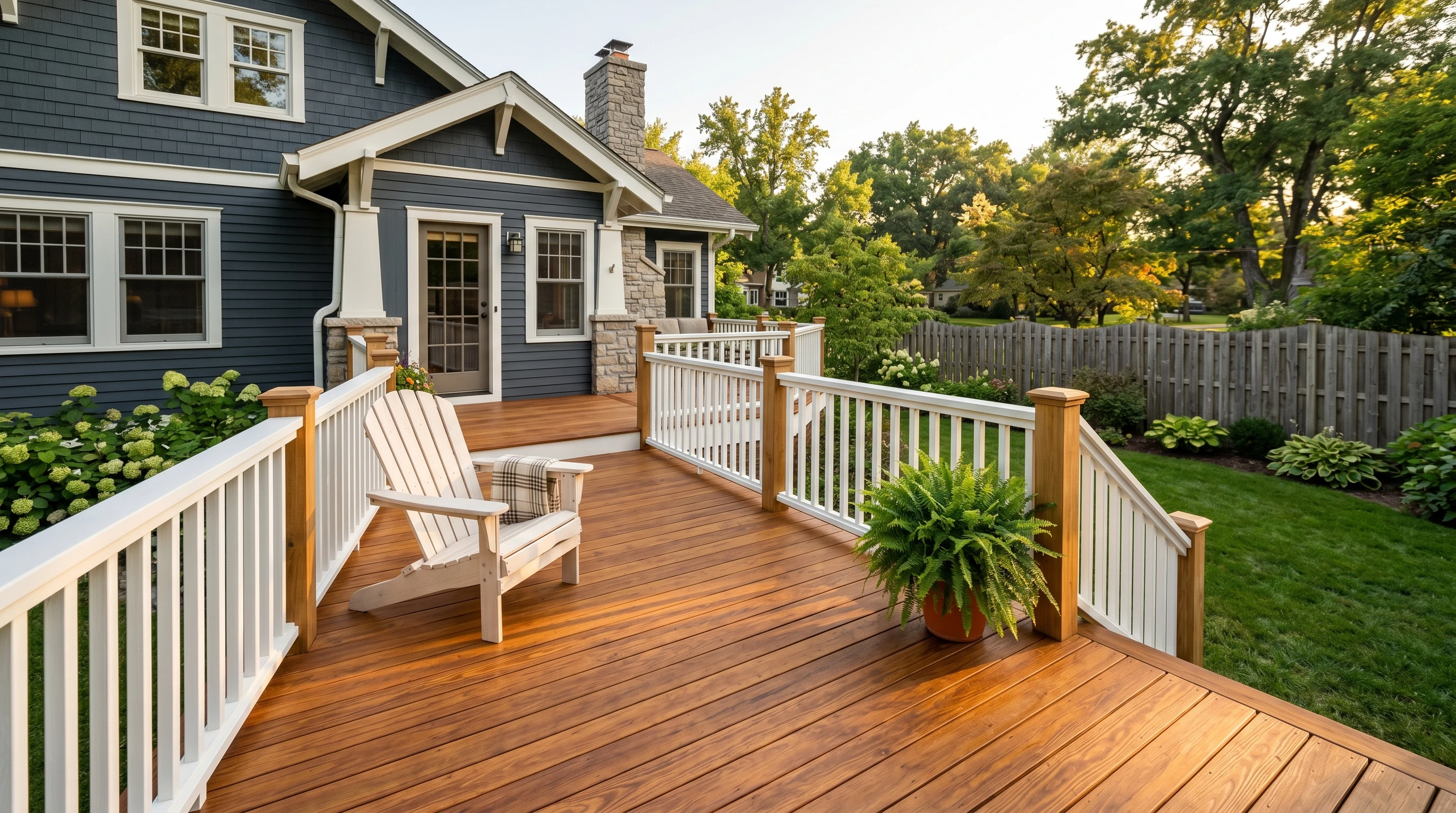
Okay, so you want to paint your deck.
Here’s the thing nobody at the paint counter is going to tell you, because they’re trying to sell you a can of paint: don’t. Not the floor, anyway. Painting a deck is the answer that sounds right. Stain is the answer that lasts.
I’ll explain. A deck floor is horizontal, you walk on it, and it holds water every time it rains. A coat of paint is a continuous skin sitting on top of the wood. The skin gets flexed by foot traffic, soaked by puddles, and baked by direct sun. Within two seasons the film loses adhesion and starts coming off in sheets. I’ve seen it on every painted deck I’ve ever inspected. The same paint on vertical siding will hold up for ten years. The deck floor kills it because the deck floor is the worst possible surface for a film coating.
Solid-color deck stain looks like paint and behaves like stain. It hides the grain, comes in any color you’d pick paint in, and sits in the top layer of wood fiber instead of forming a skin on top. When it weathers, it weathers by fading and erosion, not by peeling. That’s the finish you want on the floor.
Paint still has a place on a deck. Railings, balusters, posts, and any lattice work you’ve got (anything you don’t walk on) are vertical, they shed water, and a premium exterior acrylic will hold up for a decade. Most “painted decks” you actually like the look of are exactly that: stained floor, painted railings, color-matched so they read like one finish.
What You’ll Get
A refinished deck that survives more than two summers. Floor in solid-color stain, railings in matched satin paint, total cost around $180–$350 for a 200–300 sq ft deck and one full weekend (with a dry-down day in the middle).
Honest Take on Time and Difficulty
This is a 2-day weekend project, but you have to spread it across a calendar week because the deck has to dry for 48 hours after pressure washing before you can sand and stain.
A realistic schedule:
| Day | Activity | Hours |
|---|---|---|
| Sat | Clean, brighten, pressure wash | 3–4 |
| Sun–Mon | Dry down (no work) | 0 |
| Tue | Sand, replace bad boards, vacuum | 4–6 |
| Wed | First coat of stain on floor | 2–3 |
| Thu | Second coat of stain, first coat on railings | 3–4 |
| Fri | Second coat on railings | 2 |
Working only on weekends doubles the calendar time but it still adds up to about 15 hours of actual work.
Difficulty is medium. The hard parts are the prep (which is the hard part of every refinishing job) and remembering to wait for the wood to dry before you keep going. The application itself is the easy part.
Step 1: Clean and Strip
Mix the deck cleaner per the bottle. Most are sodium-percarbonate-based (“oxygen bleach”) and lift dirt, mildew, and pollen. They don’t strip old stain. If you’ve got old solid stain on the boards, you also need a stripper or a stiff sand later.
Wet the deck first with a hose. Apply the cleaner with a pump-up garden sprayer. Work it into the grain with a stiff-bristle deck brush on a pole. Wait 15 minutes (don’t let it dry on the wood). Pressure-rinse with a 25-degree fan tip at 1,500 PSI. Higher than that and you’ll fuzz the wood (or worse, splinter the soft summerwood between the grain lines, leaving permanent ridges).
Watch for: chlorine bleach in cheap “deck cleaners.” Bleach yellows wood and damages the lignin so the next coat won’t bond as well. Read the label for “sodium percarbonate” or “sodium hypochlorite-free.”
Step 2: Brighten
This is the step almost everyone skips, and it’s the one that decides whether your finish lasts.
After cleaning, the wood is darker than it should be. The cleaner raised tannins and old stain residue to the surface. Wood brightener is dilute oxalic acid. It neutralizes the alkaline cleaner, restores the natural color of cedar and redwood (and lightens any wood), and most importantly, opens the pores so the stain can penetrate.
Apply with the same pump sprayer, brush in, wait 10 minutes, rinse. The deck should look noticeably lighter and more uniform.
Watch for: skipping brightener on a recoat (re-staining a deck three or four years in). Old stain glazes the surface. A fresh coat over an unbrightened glaze sits on top instead of bonding. That’s how a deck that lasted six years the first time peels at year four the second time.
Step 3: Sand and Inspect
Wait 48–72 hours after the rinse. Wood that looks dry on the surface is often still wet inside.
Sand with a random-orbit sander. 60–80 grit on weathered boards that are gray or fuzzy; 100–120 on sound boards that just need smoothing. Never go above 120. Finer grits burnish the wood and close the pores so stain can’t penetrate.
While you’re sanding, walk the deck and look for: rotten boards (probe with a screwdriver, soft is rotten), splintered boards, splits running more than half the board’s length. Replace them now. Pre-stain new boards on all sides before you screw them in, including the underside. Bare-wood undersides hold moisture and rot the new board out within five years.
Step 4: Apply Solid Stain to the Floor
Pick a calm, overcast day, or work in the deck’s afternoon shade. Stain on hot sun-baked boards flashes dry before you can keep a wet edge, and you get lap marks.
Cut in around the railings and the perimeter with a 4” stain brush. Then pour stain into a shallow tray and use a stain pad applicator on a pole for the field. Work two or three boards at a time, end to end, never breaking in the middle of a board. Lap marks at mid-board are visible forever; lap marks at a board joint disappear.
One coat is rarely enough on bare wood. Solid stain wants two thin coats over one heavy one. Wait the recoat window on the can (usually 4 hours), then go again.
Watch for: applying stain to wet boards. Even slight surface moisture causes the film to blister within the first month. The water-drop test (water sits = dry, water soaks = wait) is your gate.
Step 5: Paint the Railings
Once the floor is done and tacky-dry (about 4 hours after the second coat), tape off the top of the floor where it meets the bottom of the balusters and paint the railings, balusters, post tops, and any lattice.
Use a premium exterior acrylic in satin or semi-gloss. BM Aura Exterior, SW Emerald, or Behr Marquee for a budget pick. Two coats. The 2.5” Wooster Silver Tip angled brush handles balusters cleanly without drips into the corners.
If you want the railing color to match the floor stain, take a stained scrap to the paint counter and have them color-match. The pigments and binders are different, but the visible color matches close enough that the deck reads as one finish from any reasonable viewing distance.
Common Mistakes That Ruin the Job
- Painting the floor instead of staining it. It looks great in October. It’s peeling by August two years later. Solid stain on the floor, every time.
- Using a chlorine-bleach cleaner. Yellows the wood and weakens the lignin so the next coat doesn’t bond. Sodium percarbonate is the right chemistry.
- Skipping the brightener. Especially on a recoat. The old finish glazes the surface and the new coat sits on a film instead of bonding into the wood.
- Staining wet boards. Surface dry isn’t dry. Wait 48–72 hours after the rinse and use the water-drop test before you open a can.
- Sanding to 220 grit. Stain needs open pores to penetrate. Stop at 120 max, 80 on weathered boards.
- Recoating without re-brightening every 3–4 years. The fastest way to turn a 10-year deck into a 6-year deck. Wash, brighten, light scuff, recoat. Never skip the middle two.
Cure Schedule
| Time after final stain coat | What’s safe |
|---|---|
| 4 hours | Touch dry, foot traffic in socks only |
| 24 hours | Light foot traffic, no furniture |
| 7 days | Furniture back, normal use |
| 30 days | Full cure, scrub with cleaner if needed |
Maintenance
A solid-color stained floor lasts 4–6 years before the next refresh. Painted railings last 8–12. Walk the deck every spring with a cup of coffee. Look for: faded or worn spots on the floor (highest-traffic lane to the door fades first), peeling on the railings (bottom edge of balusters where rain runs), and any board that feels softer than it should.
When the floor needs a refresh, it’s a one-day job: wash with percarbonate, brighten, light scuff with 100-grit, one coat of stain. Two years of that maintenance buys you another four years of life on the original prep.
Cost Breakdown: 250 Sq Ft Deck
| Item | Cost |
|---|---|
| Deck cleaner (1 gal) | $20 |
| Wood brightener (1 gal) | $25 |
| Solid-color stain (2 gal, 2 coats) | $80–$140 |
| Exterior paint for railings (1 gal) | $50–$80 |
| Replacement boards (2–3 typical) | $25 |
| Sandpaper, brushes, applicator, tape | $50 |
| Pressure washer rental (1 day) | $40 |
| Total | $290–$380 |
A pro will quote you $1,800–$3,500 for the same job. The savings are real if you’ve got the weekend and a free Tuesday.
Ask a Question