How to Fix Yellowing Trim Paint
Yellowing trim paint is usually an oil or alkyd binder oxidizing in low UV light. Diagnose it with a wipe test, then repaint in a non-yellowing waterborne alkyd.

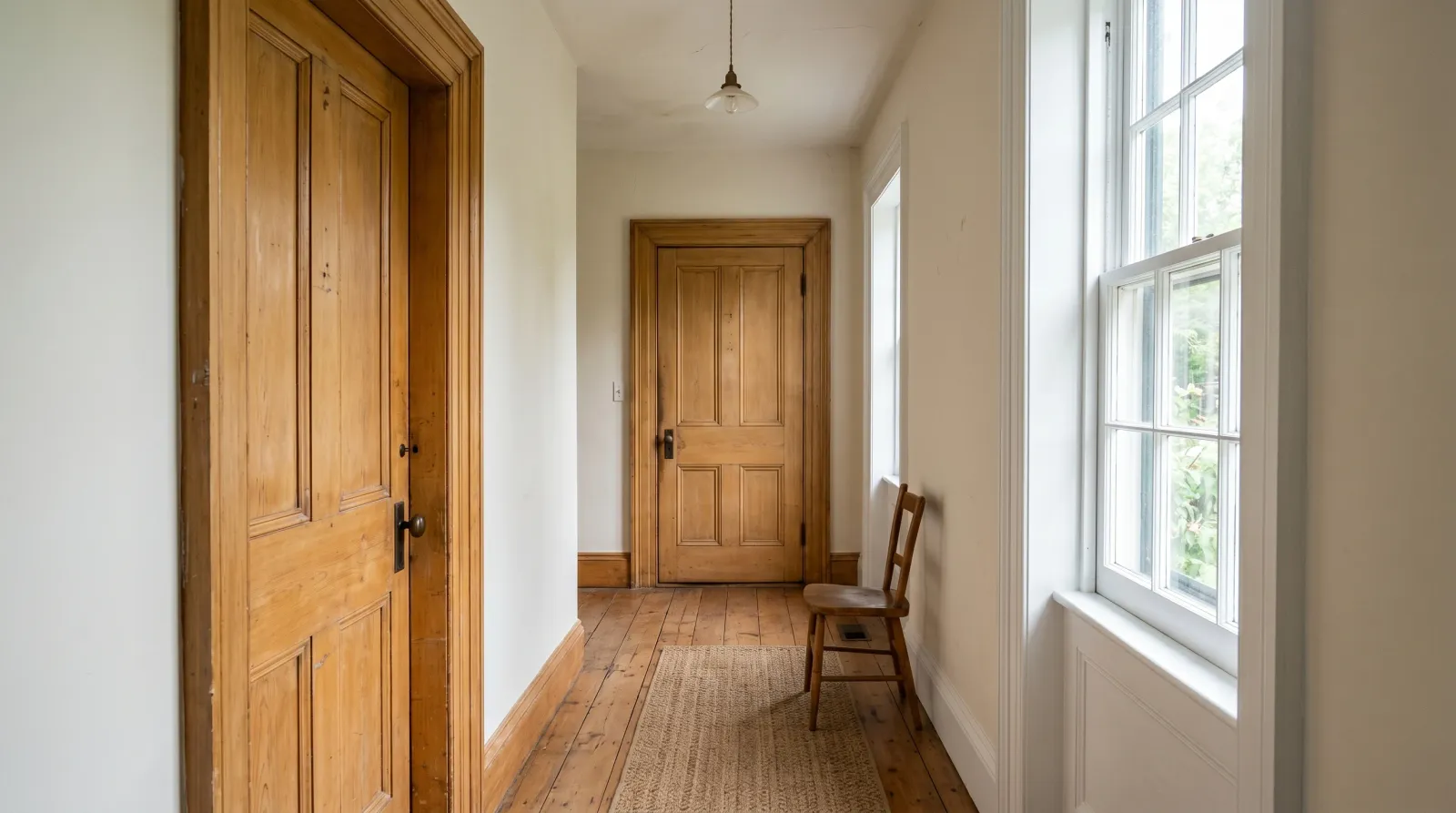
Most people don’t catch yellowing trim until something cool and white lands next to it. You roll a fresh wall, step back, and the baseboard that read white last week now reads honey against it. The paint didn’t fail and the trim didn’t get dirty overnight. An oil or alkyd binder oxidized, the way those binders always do, and the only reason you’re seeing it now is that you finally gave your eye a true white to compare against.
Does This Match What You’re Seeing?
Yellowing wears three faces. They look alike from the doorway and want different fixes, so check the location and run a finger over the surface before you decide.
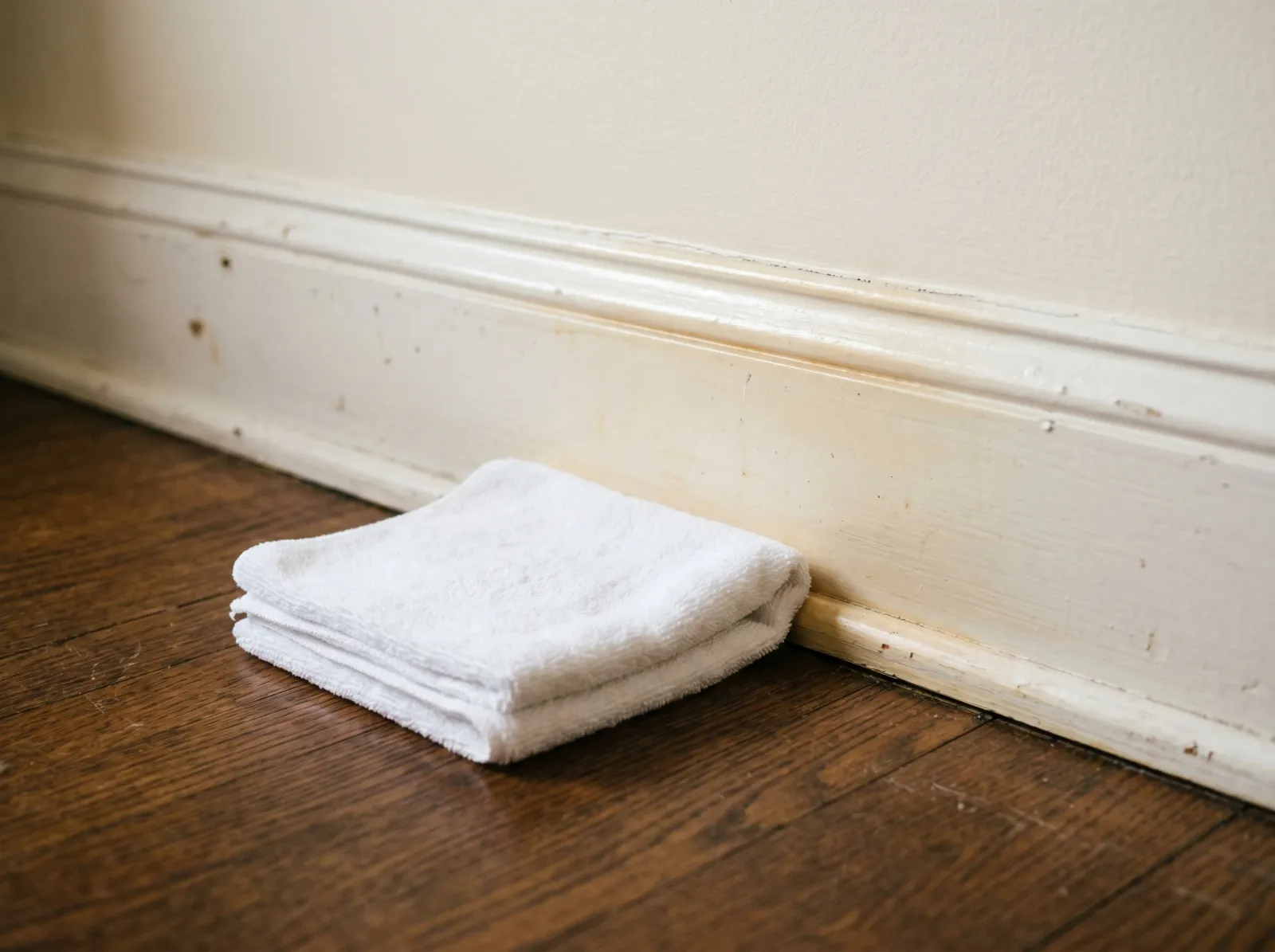 A clean white cloth held against the trim is the fastest way to see how far an oil binder has drifted.
- Even amber across a whole run, worst in low-light rooms. The door that faces away from the window, the baseboard behind the sofa, the crown molding in a room with the curtains usually drawn. This is binder oxidation, and it concentrates wherever UV light can’t reach.
- Patchy yellow-brown near a stove, fireplace, candles, or a smoker. The wall beside the range reads warmer than the hallway. That’s surface contamination sitting on top of the film, not the film itself going off.
- Trim that looks fine alone, then goes yellow the day fresh white walls appear. No recent color shift, only a contrast shift. The binder has been drifting for years and a cool new wall just exposed it.
The wipe test sorts the first two. The closet sorts the third. Both are below.
How Serious Is This?
Cosmetic, almost always. Yellowed trim is a sound film that lost its color. It isn’t peeling, isn’t releasing from the substrate, isn’t pulling moisture. You can live with it for years and many people do, right up until a repaint somewhere else in the room forces the comparison.
The honest severity ladder:
- Even amber on old oil trim, no recent change: a low-stakes repaint whenever you’re ready. The film underneath is fine.
- Recent, fast, patchy yellowing near a heat source: look at the appliance first. A new gas range that vents poorly, a fireplace with a weak draw, or a kerosene heater throws combustion byproducts onto every surface in line of sight. Repainting won’t outrun a bad burner.
- Yellowing on trim you painted in the last year: something contaminated the film or the wrong product went down. Worth diagnosing before you recoat, because the same cause will repeat.
Why White Trim Turns Amber (the Chemistry)
White is a hard color to hold because it has nowhere to hide. Any color the binder develops shows immediately, and oil and alkyd binders develop a color the moment they start curing.
Here’s the reason for that. Oil-based and alkyd paints cure by oxidation: oxygen from the air cross-links the drying-oil molecules in the binder into a hard film. That same oxidation reaction keeps running long after the paint feels dry, slowly building chromophores in the film, the conjugated double-bond structures that absorb blue light and reflect the rest back as yellow. The binder is, in a quiet chemical sense, never finished curing. It oxidizes for years, and every increment of oxidation adds a little more amber.
UV light works the other direction. Daylight breaks those chromophores back down and bleaches the film toward neutral. That’s the whole explanation for the pattern you keep seeing. Trim in a sunny window stays white because the UV is undoing the yellowing as fast as the oxidation builds it. Trim in a closet, a north room, or behind a drape gets the oxidation with none of the bleaching, so it shows the binder’s true aged color. The two surfaces are the same paint on the same day. The light is the variable.
Sheen plays in here too. A glossier trim film holds more resin per square foot than a satin one, and resin is the part that ambers, so a high-gloss oil door yellows faster and harder than a satin baseboard six feet away. Pigment volume concentration sets the sheen, and the lower it is, the more binder sits at the surface to oxidize.
Surface contamination is a separate mechanism that lands on the same trim. Cooking grease, candle soot, cigarette smoke, and woodstove film all deposit a thin yellow-brown layer over the paint. That one isn’t the binder at all. It’s dirt, and it wipes off, which is exactly why the diagnostic below matters before you commit to a repaint.
The Fix
Confirm the cause first, then match the repair to it. Painting over the wrong diagnosis is the most common way this comes back.
Step 1. Run the Wipe Test
Pick a hidden spot, mix a drop of dish soap into warm water, and wipe the trim with a clean white microfiber cloth. Look at the cloth and look at the patch.
- Cloth comes away yellow-brown, trim looks fresher: surface contamination. A wash may be most of your fix. Go to Step 2.
- Cloth stays clean, trim still reads amber: the binder oxidized. Cleaning won’t change it. Skip to Step 3.
For the contrast-driven third face, where the trim only looks yellow next to a new wall, use the closet as a reference panel. Closet-side trim shows the worst-case aged color with no UV bleaching. If your visible trim is close to that, the binder has drifted and a repaint is the only honest fix.
Step 2. Clean Off Contamination
If the wipe test pulled color, wash the whole run with a TSP substitute or a degreasing cleaner, roughly a quarter cup per gallon of warm water, then rinse with clean water and let it dry. On a kitchen or a smoker’s room this alone can recover most of the white. Where film has built up heavily, a clean still won’t get it all, and you move to priming and recoating with a stain-blocking step.
Never mix bleach with vinegar, ammonia, or hydrogen peroxide. The combination produces toxic chlorine or chloramine gas. If you used one cleaner, rinse fully and let the surface dry before introducing another. Gloves and eye protection for any degreaser, and cross-ventilate the room.
Step 3. Seal Smoke or Nicotine Stains First
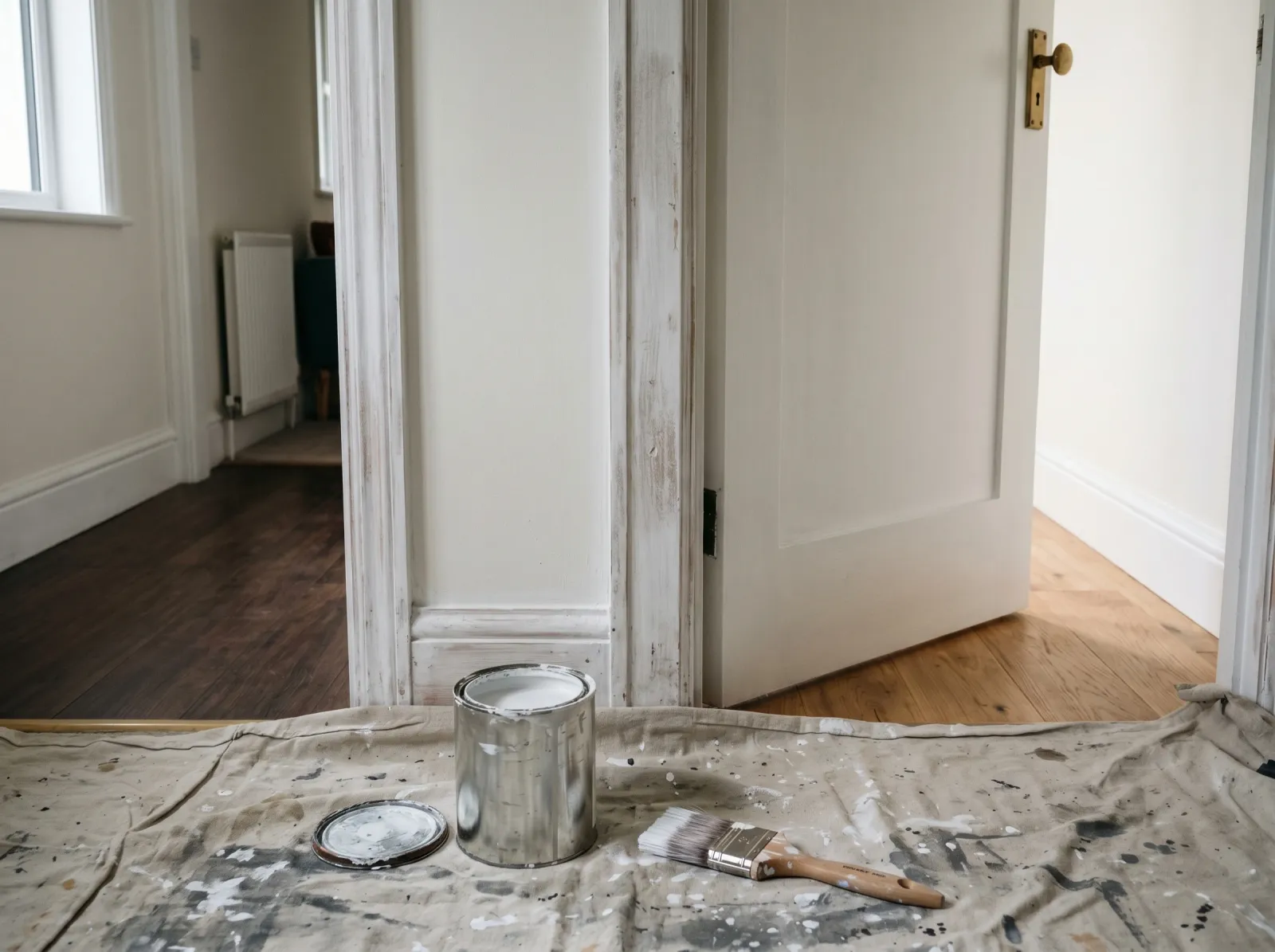 Scuff-sand the glossy old film so the primer can key in, then spot-prime any contamination that survived the wash.
Heavy nicotine or soot will bleed up through a fresh waterborne topcoat the same way tannin bleeds through latex on cedar, because the residue is solvent-soluble and the water in your paint mobilizes it. Seal it with a stain-blocking primer before you recoat. A shellac-based primer like Zinsser BIN locks nicotine and smoke under the film and dries in about 45 minutes. For the chemistry of why a shellac carrier blocks what water-based primers can’t, see what a shellac primer does. If the trim was clean binder yellowing with no contamination, you can skip the stain blocker and prime only where you’ve sanded to bare or glossy spots.
Step 4. Scuff-Sand and Spot-Prime
Old trim enamel is usually slick, and a fresh coat needs a key to bite into. Scuff-sand the whole run with 220 grit until the gloss is dulled, then dust it off. Spot-prime any bare wood, filled nail holes, or glossy patches with a bonding primer so the new film adheres uniformly. On a surface this smooth, adhesion is the failure mode that bites later, and it’s covered in how to fix trim paint that won’t stick. If the home predates 1978, treat the old paint as lead until you’ve tested it with a swab kit, and follow EPA RRP practice: wet methods only, no dry sanding.
Step 5. Repaint in a Non-Yellowing Enamel
This is the step that actually solves it, and it’s a binder choice. Recoating yellowed oil trim with more oil semi-gloss buys you white for about a year before it ambers on the same schedule, because you haven’t changed the chemistry that yellows. Switch binders instead:
- Waterborne alkyd enamels like Benjamin Moore Advance or SW Emerald Urethane Trim Enamel level almost like oil but hold a true white, because their backbone doesn’t build the same oxidation chromophores. These are the best call for a smooth, brushable trim finish that stays white in low light.
- 100% acrylic trim enamels stay white reliably and dry fast, with a slightly less buttery flow than waterborne alkyd. A strong choice if you want the simplest cleanup and fastest recoat.
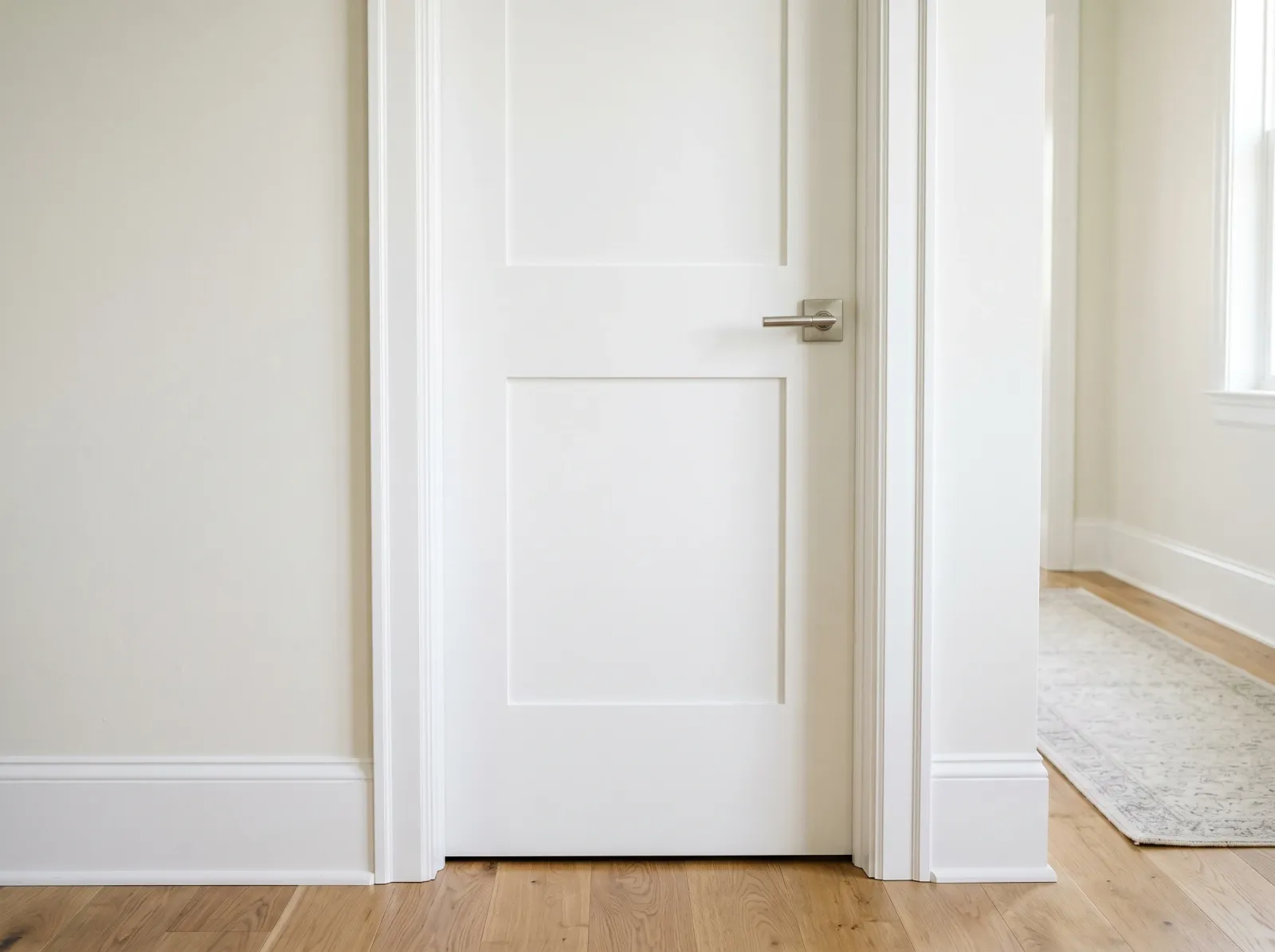 A waterborne alkyd holds a true white in the same low-UV spots where the old oil film went honey.
Two coats. For how the binders compare on durability, leveling, and yellowing, see latex vs oil for trim, and for picking a specific product, the best trim paint round-up.
Prevention
The way to keep trim white is to deny the yellowing reaction a binder it can work on, and to keep contamination off the film:
- Choose a non-yellowing binder from the start. A waterborne alkyd or acrylic enamel in any low-light room. Reserve traditional oil enamel for surfaces that get real daylight, where UV keeps it honest, or skip it indoors entirely.
- Match the sheen to the light. A satin or eggshell trim holds less surface resin than a high gloss, so it ambers more slowly. If you want gloss in a dark hallway, make it a non-yellowing acrylic.
- Vent the kitchen and fix the fireplace draw. Most patchy yellowing is combustion film. A working range hood and a fireplace that drafts correctly keep the soot off the trim in the first place.
- Wipe trim down once or twice a year in cooking and candle-heavy rooms. A damp microfiber pass clears film before it builds into a stain that needs sealing.
For the same problem on a different surface, painted cabinets yellow through the same oxidation pathway, often faster because they sit near the stove. The yellowing cabinet fix walks that one through.
When to Call a Pro
- Recent, severe yellowing near a gas appliance or fireplace, which can signal incomplete combustion venting indoors. That’s a safety question for an HVAC or chimney pro, not a paint problem.
- Heavy nicotine staining across a whole house, where sealing and repainting every surface is a real job and the odor needs addressing too.
- Pre-1978 trim where sanding or stripping the old enamel would disturb lead paint and you’d rather not handle the containment yourself.
- Trim you painted recently that yellowed fast, if you can’t identify what contaminated it, because the cause will repeat under the new coat.