When You Must Hire a Certified RRP Firm
Pre-1978 home with peeling paint? Here's exactly when the law forces you to hire a certified RRP firm, when you can DIY, and how to tell the difference before you scrape.

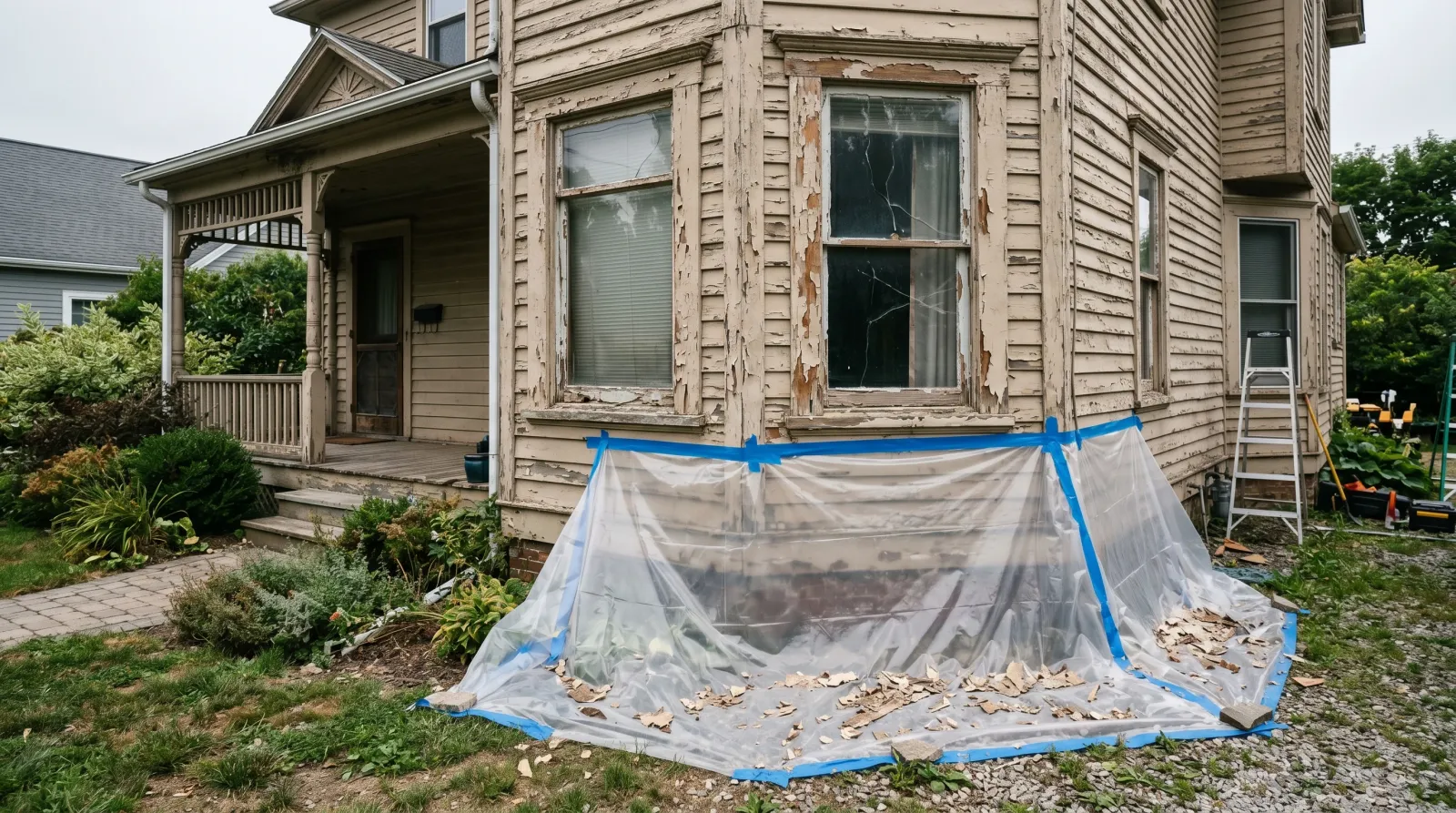
If your home was built before 1978 and you’re paying someone to disturb the paint, the law usually says that crew has to be a certified RRP firm. The trigger is the year and the square footage, not how the paint looks. Cross more than 6 square feet inside one room, 20 outside, or replace a single window, and an uncertified painter is breaking federal law on your job.
That’s the rule in one paragraph. The rest of this page is how to tell which side of the line your job is on, and when to stop and dial a pro instead of grabbing a scraper yourself.
Does This Match Your Situation?
Run these four checks before you do anything else. All four have to line up for the RRP rule to grab your job.
- Built before 1978. Federal lead-paint bans hit residential paint in 1978. Older house, assume lead until a test says otherwise.
- You’re paying a contractor. Painter, handyman, window installer, anybody who takes money to disturb the surface. A paid crew is the trigger.
- The work disturbs paint. Scraping, sanding, cutting, demo, window swaps. Brushing a fresh coat over sound, undisturbed film doesn’t count on its own.
- Above the size threshold. More than 6 square feet inside one room, more than 20 square feet outside, or any window replacement.
Miss any one of those and the full rule doesn’t apply. Hit all four and your contractor must be certified, no exceptions for “it’s just a small job.”
A few look-alikes throw people off:
- You’re doing it yourself. No certification required. The rule covers paid work, not your own home. The lead risk is identical though, so work clean.
- Built after 1978. No federal lead concern from the paint itself. RRP doesn’t apply.
- A clean recoat over intact paint, no sanding. If nothing gets disturbed, you may be under the minor-repair line. The moment a sander or scraper comes out on a chipping wall, you’re back in.
How Serious Is This?
High. This isn’t a cosmetic call like a lap mark. Lead dust is the actual hazard, and the dust is invisible.
Three things push your job to the urgent end:
- Kids under 6 or a pregnant woman in the house. Their bodies absorb lead fastest and the damage is permanent. This is the population the rule was written to protect.
- Friable, chalking, or peeling paint in a high-traffic spot. A window sill a toddler chews, a door that sheds chips onto the floor. The lead is already mobile.
- Anyone planning to dry-sand or use a heat gun on pre-1978 paint. Stop. Dry-sanding aerosolizes lead. Heat guns above 1100°F vaporize it into fumes you breathe. Both are the fastest way to poison a household.
If you can see chips on the floor or window tracks in an old house with small kids, treat it as a contain-now situation, not a someday repaint.
Why the Rule Exists (root Cause)
Lead was in paint for a reason. It made colors brighter, helped paint dry faster, and held up against weather better than anything else available. The problem is what lead does to a developing brain.
Paint stays harmless as long as the film is intact. Lead locked in a sound coat on a wall isn’t poisoning anybody. The hazard starts the second the film gets disturbed. Scrape it, sand it, slam an old window in its track a few thousand times, and the lead leaves the film as dust and chips. That dust settles on floors, sills, and carpet. A kid crawls through it, gets it on their hands, and hands go in mouths. That’s the whole exposure path, and it takes a shockingly small amount of dust to raise a child’s blood-lead level.
The EPA built the Renovation, Repair and Painting Rule around that exposure path. It went into effect in 2010. The rule doesn’t ban touching lead paint. It says that if you’re paid to disturb it in a pre-1978 home above the size thresholds, you have to do it in a contained, lead-safe way, and you have to be trained and certified to prove you know how. The certification is the EPA’s way of making sure the crew on your job knows wet-scraping from dry-sanding, knows how to seal a room, and owns a HEPA vacuum instead of a shop vac that just blows the dust around.
For the full regulatory picture, the EPA RRP rule explained walks through who’s covered, what firms must do, and the recordkeeping side.
How to Tell If Your Job Needs a Certified Firm
Work the decision in order. Stop at the first answer that ends it.
Step 1. Confirm the Build Year
Pull the year off your county assessor record or the original permit. Anything 1978 or later, the paint is lead-free by federal ban and the RRP rule doesn’t apply. Stop here.
Before 1978, keep going. Don’t trust “I think it was repainted in the 90s.” The repaint sits on top of the old lead layers. They’re still under there.
Step 2. Test for Lead (or Assume It)
You can skip the test and assume lead, which forces full lead-safe work. Cheaper to test first. 3M LeadCheck swabs run about $10 at any home center. Cut a notch through every paint layer down to bare substrate, swab the notch, and watch for pink or red. Positive on any layer means lead.
A certified renovator can also use an EPA-recognized test kit to declare a component lead-free and skip RRP practices on that component. For a full rundown of methods and their limits, see how to test for lead paint and the best lead test kits for which swabs actually read true.
Negative everywhere? Document it and you’re out. Positive anywhere the work touches, keep going.
Step 3. Is It Paid Work?
Doing it yourself, with your own hands, on your own home? The RRP firm requirement doesn’t apply to you. Skip to the DIY note below.
Paying anybody, keep going. The contractor is who has to be certified.
Step 4. Measure the Disturbance
Interior, more than 6 square feet of paint disturbed in any single room. Exterior, more than 20 square feet. Or any window replacement, at any size. Hit one of those and your contractor must be a certified RRP firm running lead-safe practices.
Under the thresholds with no window work, the job may fall under the minor-repair-and-maintenance exemption. Smart contractors still work clean on old paint regardless. The exemption is narrow. A “small patch” that turns into half a wall of peeling clapboard once you start scraping is no longer minor.
Step 5. Verify the Firm Before Hiring
Ask for two things: the firm’s EPA certification number and confirmation that a certified renovator will be on site. Both exist or the firm isn’t compliant. Search the EPA certified-firm locator by ZIP to confirm a number is real. A contractor who gets cagey when you ask about lead certification on a pre-1978 house is telling you everything you need to know. Move to the next bid.
Safety Block — Read Before Any Scraping
On pre-1978 paint: no dry-sanding, no power-sanding without a HEPA-shrouded tool, no heat guns, no open-flame. All four turn locked-down lead into airborne dust or fumes.
Never mix cleaning chemicals. Bleach with vinegar, ammonia, or hydrogen peroxide produces toxic gas. Not RRP-specific, but old-paint cleanup tempts people to mix cleaners. Don’t.
PPE for any lead disturbance: P100 respirator, not an N95 for dust this fine. Disposable coveralls, gloves, and eye protection. Plastic sheeting under the work to catch every chip. HEPA vacuum for cleanup, never a standard shop vac, which exhausts the fine dust straight back into the room.
What If I’m Doing It Myself?
The RRP firm rule exempts homeowners on their own property. Nothing stops you legally from scraping your own 1925 porch.
The lead doesn’t read the exemption. The dust poisons your household exactly the same way it would poison a paid crew’s customer. So work the certified-crew playbook anyway:
- Wet-scrape only. Mist the surface, keep the chips heavy and falling, never let them powder.
- Lay 6-mil plastic to catch everything, taped at the edges.
- P100 respirator and gloves the whole time.
- HEPA-vacuum the plastic, the surrounding floor, and yourself before you break containment.
- Bag the chips and the plastic, don’t shake them out.
If you’ve got kids under 6 in the house, I’d hire the certified firm even though you don’t have to. The margin for error on lead dust around small children is too thin to eat yourself. For the broader prep sequence once the lead question is settled, see how to fix peeling paint.
Prevention — Keep the Lead Where It Is
The cleanest lead job is the one you never disturb. Intact lead paint is not an active hazard. The whole game is keeping it sealed instead of stirring it up.
- Don’t strip what you can encapsulate. A tested lead encapsulant or a sound repaint over well-bonded film locks the lead in place with zero dust. Removal is what creates the hazard. Weigh the two in lead paint encapsulation versus removal.
- Fix the friction points first. Old double-hung windows grind lead off every time they slide. That’s where most household lead dust comes from. Sealing or replacing those sashes kills the dust source.
- Maintain the topcoat. Keep a fresh, intact coat over old lead and it stays buried. Let the topcoat fail and weather opens the lead layers back up.
- Wet-clean, don’t dry-sweep. In a known pre-1978 home, damp-wipe sills and floors. Dry sweeping launches whatever dust is already there.
- Keep records. If you hire out the work, keep the firm’s certification number and the lead-safe paperwork. It matters at resale and it matters if anyone’s blood-lead ever gets tested.
When to Call a Pro
- Any paid renovation on a pre-1978 home above the size thresholds. This is the legal line. The crew must be a certified RRP firm.
- Lead-positive paint in a home with kids under 6 or a pregnant occupant, even if you could legally DIY. Pay for the containment.
- More than a window or two of old sash work. Window lead dust is the worst category. Let a certified crew handle replacement.
- Widespread exterior peeling on an old house. Twenty square feet outside goes fast on failing clapboard, and exterior chips fall straight into the soil where kids play.
- You don’t own HEPA gear or a P100, or you can’t seal the room. No containment means no safe DIY. Hire it.
- Any plan that involved a heat gun, an open sander, or a torch on old paint. Hand that job to people set up to do it without poisoning the house.
What’ll Bite You in Two Years
Hire the cheap uncertified painter who dry-sands your 1940s trim, and the bite isn’t the paint. It’s the lead dust ground into the floor your toddler crawls on, the blood test that comes back high at the next pediatrician visit, and the cleanup that costs ten times what you saved on the bid. The paint will look fine. That’s the trap. Ask for the certification number before the first piece of sandpaper comes out, or don’t sign the bid.
Ask a Question