How to Fix Water Rings on Wood Furniture
Most water rings on wood sit in the finish, not the wood. Tell white rings from black, then pull moisture out, fix the finish, and stop the next ring before it starts.

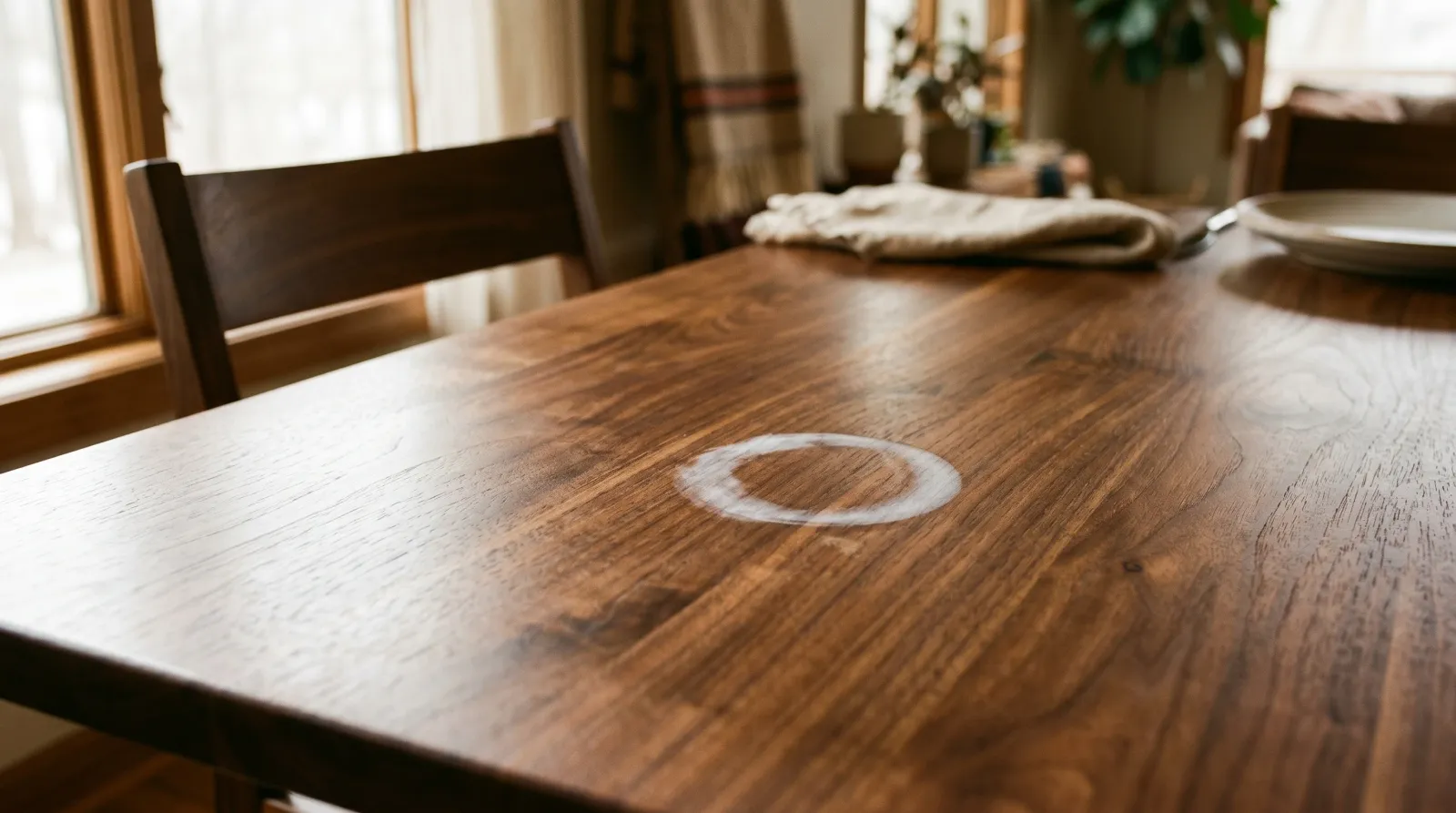
Most water rings aren’t in the wood. They’re in the finish sitting on top of it. That one fact decides whether you fix this in ten minutes or spend a weekend refinishing. Read the ring first.
TL;DR
- White ring = shallow. Moisture trapped in the clear topcoat. Heat it out with an iron or hair dryer, or polish it out. Ten-minute fix.
- Black or dark ring = deep. Water reached the wood and the tannins reacted. Needs bleaching or sanding, sometimes refinishing.
- Try the gentlest fix first. Heat, then oil, then mild abrasive. Refinish last.
- Never reach for the sander on a white ring. You’ll cut through a finish that just needed warming up.
- Stop the next one with coasters, felt, and a maintenance wax coat. A worn finish takes rings easy.
Does This Match What You’re Seeing?
Look at the ring in raking light from the side. Color tells you depth.
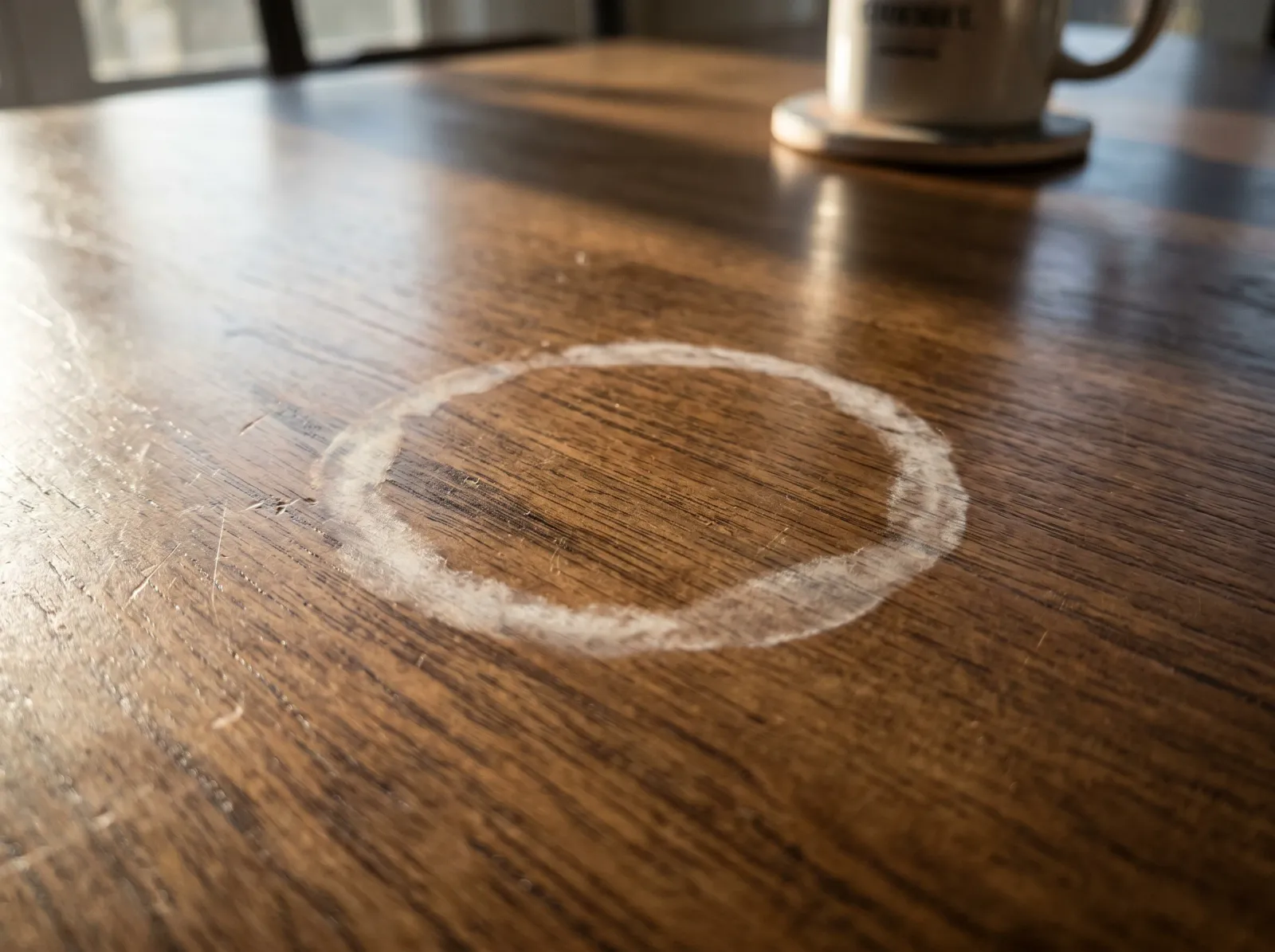 A white ring sits in the topcoat, not the wood. That’s the easy one.
- Cloudy white ring or haze: moisture trapped in the finish. Shellac and lacquer cloud easily; this is the most common and the easiest to fix.
- Dark or black ring: water got past the finish into the wood. Tannin reaction, often with iron from a can or a wet metal base. This one’s deep.
- Gray ring with no shine change: raw or oiled wood, no film finish. The water soaked straight in. Treat it like the dark-ring case.
- White ring that’s slightly raised or sticky: wax finish that softened under a hot mug. Buffs back with more wax.
- Heat mark, not water: a hot pan left a duller white patch with a sharper edge. Same heat fix as a white water ring.
If you can’t tell white from black, press a finger on it and look under a lamp. Shallow haze brightens and dims as you tilt the surface. A deep stain stays dark from every angle.
How Serious Is This?
Low. A white ring is cosmetic and the finish is still doing its job underneath. You can live with it for years and nothing bad happens to the table. You just have to look at it every morning when the light hits.
A black ring is more work but still not structural. It means the seal failed in that spot and water reached bare wood. Fix it before the next spill lands in the same place and drives the stain deeper.
Two things push this higher. An antique with original shellac or French polish is fragile, and the wrong solvent or too much heat ruins value you can’t get back. And a veneer top that’s lifting at the edge means water got under the veneer, which is a glue-and-clamp repair, not a ring repair.
Why This Is Happening (root Cause)
A water ring is moisture caught where it shouldn’t be. Where it lands depends on how good the finish is and how long the water sat.
The clear coat on most furniture, polyurethane, lacquer, shellac, or varnish, is a thin film. Cold glasses sweat. Hot mugs drive steam down. Water pushes into microscopic gaps in that film and gets trapped between the finish and the air. Light scatters off the trapped moisture and you see white haze. The wood underneath is usually untouched. That’s why heat fixes it. You’re driving the trapped water back out of the film.
A black ring is a different event. Water got all the way through, or there was no film finish to begin with, and it soaked into the wood. Tannins react with moisture and especially with iron, the same chemistry that turns oak gray when it meets a wet nail. Now the stain is in the cells of the wood, below any topcoat. No amount of heat pulls that out. You bleach the reaction or sand the stained fibers away.
Old finishes take rings easiest. Shellac and lacquer are water-sensitive by nature, and a dried-out, un-waxed surface has lost the water-shedding skin a fresh finish has. A glass that beads on a new table leaves a ring on a tired one in the same hour.
The Fix
Work gentlest to harshest. Stop the second the ring is gone. Test every method in a hidden spot first, the underside of the top or a back edge, especially on anything old or valuable.
Step 1. Identify and Dry the Spot
Confirm white versus black using the light test above. Wipe the surface clean and dry with a soft cloth, no cleaner yet. Let a fresh white ring sit uncovered in a warm, dry room for a day if you have time. Trapped moisture sometimes evaporates back out through the finish on its own and saves you the next steps. If it hasn’t cleared after a day, move on.
Step 2. Heat the White Ring Out (iron or Hair Dryer)
Heat is the cleanest fix for a white ring because it adds nothing to the finish. It just drives the water back out.
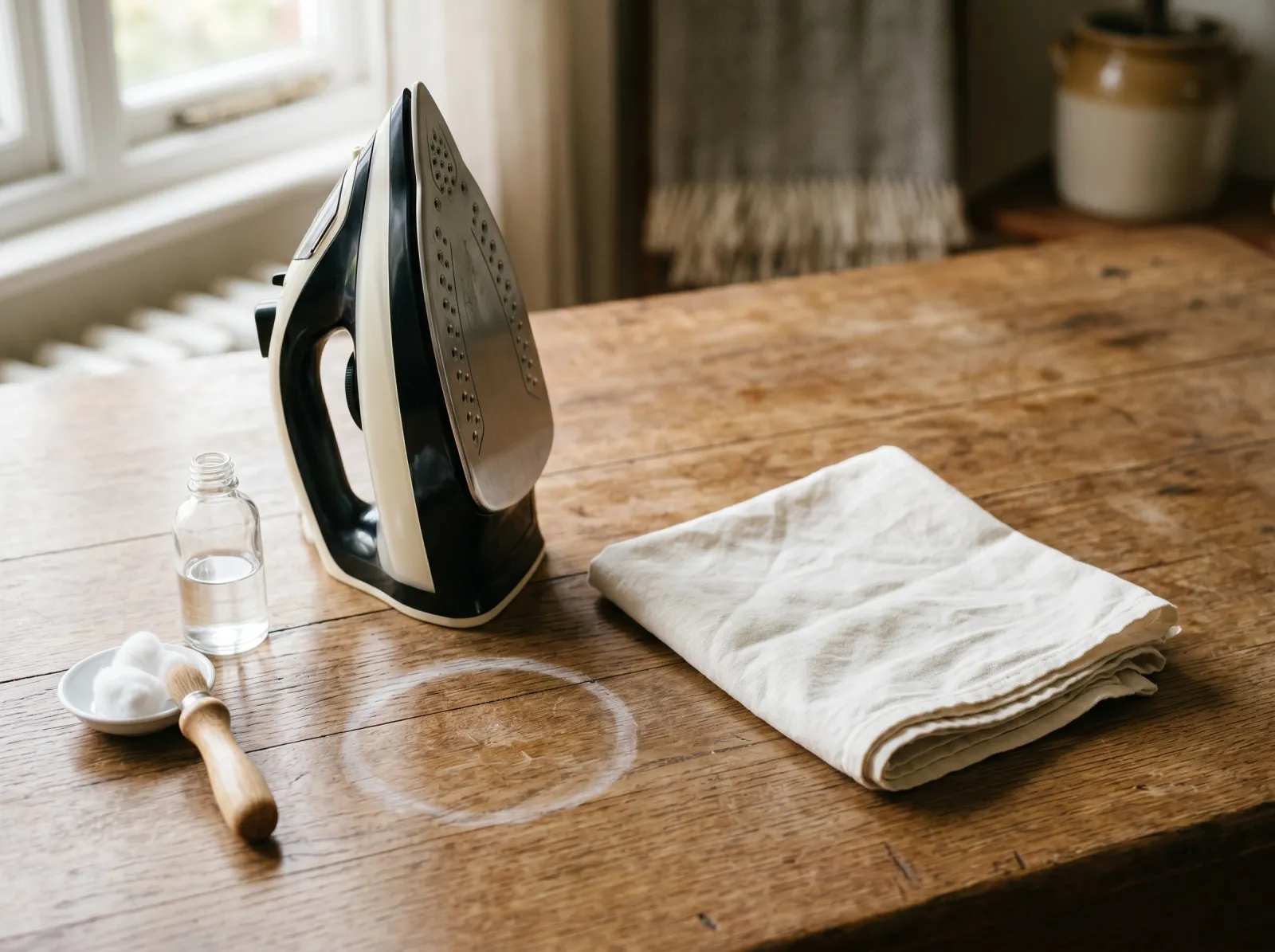 Dry cotton cloth, low heat, short bursts. Patience beats power here.
Iron method: set a clothes iron to low, no steam, completely dry. Lay a clean dry cotton cloth or a tea towel over the ring. Press the iron on the cloth for 3 to 5 seconds, lift, check. Repeat in short bursts. You’ll watch the haze fade. Never let the iron touch the finish directly and never use steam, steam is the enemy here.
Hair dryer method: hold it 6 to 8 inches off the surface on medium heat and keep it moving over the ring for several minutes. Slower than the iron, but lower risk on a delicate finish.
If the ring shrinks but won’t fully clear, give it 10 minutes and a second pass. White rings that have sat for months take longer than fresh ones.
Step 3. Oil or Polish the Stubborn White Ring
If heat got it most of the way, oil finishes the job. Rub a little petroleum jelly, mayonnaise, or furniture oil into the ring with a soft cloth, going with the grain, and leave it overnight. The oil works into the haze and displaces trapped moisture. Wipe clean in the morning.
Still there? Step up to a mild abrasive. Plain white paste toothpaste, or a 50/50 mix of toothpaste and baking soda, on a damp cloth. Rub gently with the grain, 30 seconds, wipe, check. This polishes the cloudy layer out of the topcoat. Don’t bear down. You’re polishing, not sanding. Follow any abrasive with a coat of wax or oil to restore the sheen where you buffed.
Step 4. Treat the Black Ring (deeper Work)
Heat won’t touch a black ring. The stain is in the wood, so you have to reach the wood.
First, strip the finish over the stain with a furniture refinisher or fine steel wool and mineral spirits, just the affected area. Then bleach the dark stain with oxalic acid wood bleach, sold as a crystal you mix with warm water, or a ready-mixed wood bleach. Brush it on, let it dwell 10 to 20 minutes per the label, and it lifts the iron-tannin reaction. Neutralize with a baking-soda-and-water rinse, then let the wood dry 24 hours.
If bleach doesn’t fully clear it, sand the stained fibers away with 150 then 220 grit, going with the grain, until the dark is gone. You’ll likely sand into bare wood, which means re-staining to match and re-coating. See how to paint over stained wood for matching color across an old surface.
Step 5. Re-Coat If You Sanded or Stripped
Anywhere you went to bare wood, rebuild the finish. Spot-stain to match, let it dry, then brush on a clear topcoat. Oil-based polyurethane or a wipe-on poly is forgiving and tough. Over light woods and whites, water-based polycrylic stays clear and low-odor. The two behave differently on color and over oil stain, so it’s worth knowing how polyurethane and polycrylic compare first.
Feather the new finish into the old at the edges and build it in thin coats. One thick coat runs and traps bubbles. Two or three thin ones level and match sheen better.
Safety
Wood bleach is oxalic acid. Wear gloves and eye protection, and work with the windows open. Never mix bleach products with vinegar, ammonia, or any other cleaner. Mineral spirits and refinishers are flammable and give off fumes, so cross-ventilate and keep them away from heat. If you’re heating a finish on a pre-1960s painted piece, treat any chipping paint as possible lead and don’t sand it dry.
White Ring vs Black Ring at a Glance
| White / cloudy ring | Black / dark ring | |
|---|---|---|
| Where it sits | In the clear finish | In the wood itself |
| Cause | Trapped moisture in topcoat | Water + tannin/iron reaction |
| First fix | Dry heat (iron or hair dryer) | Strip, then oxalic acid bleach |
| If that fails | Oil, then mild abrasive polish | Sand to bare wood, re-stain |
| Re-coat needed? | Rarely | Almost always |
| Time | 10–30 minutes | A few hours to a weekend |
Common Mistakes
- Sanding a white ring. It’s in the finish, not the wood. Heat it. Sanding cuts through a topcoat that didn’t need touching.
- Steam. A steam iron or a steamy cloth adds the exact thing you’re trying to remove. Dry heat only.
- Going straight to refinishing. Most rings clear with heat or polish. Stripping a whole top to chase one ring is hours you didn’t need to spend.
- Skipping the hidden-spot test. Some finishes haze or soften under heat or solvent. Find out on the underside, not in the middle of the top.
- No maintenance coat after. You buffed the sheen off in one spot. Wax or oil it back so the repair doesn’t read as a dull patch.
Prevention
- Coasters and felt. A cold glass sweats and a hot mug steams. Both leave rings on bare finish. Trivets under anything hot.
- Wipe spills fast. A ring is time plus water. Cut the time and you cut the ring.
- Keep a maintenance coat on. A wax or oil coat every few months gives the surface a water-shedding skin. Water beads instead of soaking in. A tired, dry finish is a ring waiting to happen.
- Refresh a worn finish. If your table takes a ring from every glass, the clear coat is spent. A fresh wipe-on poly or a wax top-coat fixes the underlying problem. A bare or worn-finish table that keeps soaking up rings is telling you it needs a real refinish, which is closer to a furniture repaint job than a touch-up.
- Watch humidity swings. Wood that’s been dried out by winter heat takes water harder. A stable room is a stable finish.
When to Call a Pro
- Antiques with original shellac, French polish, or marquetry. The wrong solvent or too much heat destroys value you can’t replace. A conservator, not a sander.
- Lifting or bubbling veneer. Water under veneer is a glue-and-clamp repair. Heating or sanding it makes it worse.
- A black ring across a large or visible area where matching new stain to old finish is beyond a spot repair.
- Anything you’d be heartbroken to ruin. If the piece matters and you’re unsure, the test-on-the-underside rule isn’t enough insurance. Get a quote first.
This is the same family of problem as a water stain bleeding through a ceiling: the visible mark is downstream of moisture that got somewhere it shouldn’t. Fix the ring, then stop the water that made it, or you’ll be back with a coaster in one hand and an iron in the other.
Ask a Question